


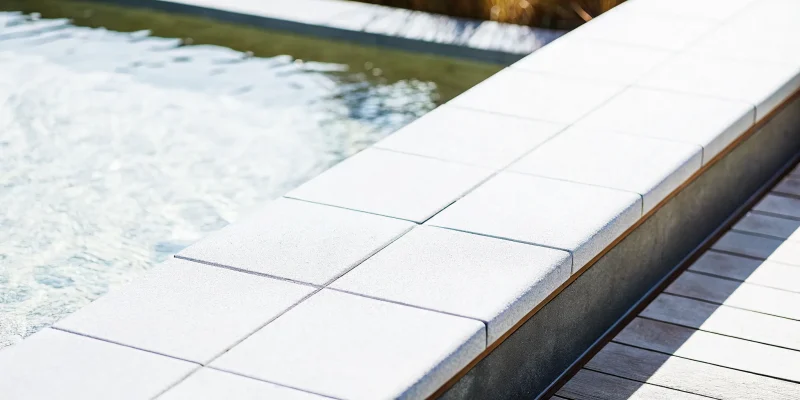
A swimming pool should be a source of relaxation, not a list of chores. Yet, many traditional coping materials demand constant attention. Natural stone needs regular sealing to prevent stains, while concrete can crack under the pressure of our harsh freeze-thaw cycles. These issues can turn your backyard oasis into a maintenance headache. This is exactly why so many homeowners are turning to a more resilient solution. Porcelain tiles for pool copings are engineered to resist stains, water damage, and fading, all without needing to be sealed. This guide will walk you through why this low-maintenance material is the perfect choice for a beautiful, worry-free pool.
Key Takeaways
- Opt for porcelain for a low-maintenance finish: Its non-porous surface resists stains, weather damage, and fading, saving you time and money on upkeep compared to materials that require regular sealing.
- Get your ideal look without compromising safety: Porcelain offers endless design options, from realistic wood grains to sleek stone, and comes in textured, slip-resistant finishes to keep your pool area safe for everyone.
- Professional installation is non-negotiable: The long-term performance of porcelain coping depends on expert installation; using the correct adhesives and techniques is essential to prevent future issues and protect your investment.
What Are Porcelain Pool Copings?
If you’re planning a new pool or renovating an existing one, you’ve probably heard the term “coping.” Think of it as the frame for your masterpiece. It’s the material used to cap the edge of the pool shell, creating a finished look. While you have a few material options, porcelain has become a favorite for good reason. It’s a man-made product crafted from fine clay and fired at high temperatures, which makes it incredibly dense, strong, and beautiful.
What they are and why they matter
Porcelain pool copings are specially designed tiles that create a smooth, rounded border around your swimming pool. Unlike other materials, porcelain is non-porous, meaning it won’t absorb water. This prevents staining, frost damage, and the growth of mold or mildew, which is a huge deal for any outdoor surface, especially one that’s constantly exposed to chlorinated water and the elements here on Long Island. This durability matters because it translates directly to less work and fewer costs for you over time. You won’t have to worry about constant sealing or frequent repairs. Instead, you get a stunning, low-maintenance finish that lasts. Gappsi offers a curated collection of premium porcelain and natural stone that provides that perfect, lasting look for your backyard oasis.
The role of copings in pool safety and style
Coping isn’t just about looks; it serves a critical purpose for both safety and the structural health of your pool. The rounded edge, often called a bullnose, provides a secure and comfortable grip for swimmers as they enter or exit the water. Many porcelain tiles also feature a slightly textured, slip-resistant finish, adding an essential layer of safety for wet feet on the pool deck. Functionally, coping acts as a protective barrier. It directs water that splashes out of the pool away from the shell and into your deck drains. This prevents water from seeping behind the pool wall, which could cause serious damage over time. Aesthetically, the coping is what ties everything together, creating a seamless transition from your pool to your patio. The right choice can elevate your swimming pool from a simple backyard feature to a luxurious retreat.
Why Choose Porcelain for Your Pool Coping?
When you’re designing your dream pool, the details make all the difference. Pool coping, the material that caps the edge of your pool shell, is one of those crucial details. It’s not just about looks; it’s about safety, comfort, and longevity. While you have several options, porcelain has become a top choice for homeowners, and for good reason. It blends incredible strength with sophisticated style, giving you a beautiful finish that’s built to last.
Porcelain is an engineered material, which means it’s designed to overcome the common issues you see with other materials. It’s strong, non-porous, and incredibly versatile. Choosing porcelain for your pool coping means you’re investing in a material that will keep your pool area looking pristine with minimal effort. Let’s get into the specific benefits that make porcelain such a smart and stylish option for your Long Island home.
Unmatched durability and weather resistance
Here on Long Island, our pool materials have to withstand a lot, from scorching summer sun to freezing winter temperatures. Porcelain is exceptionally well-suited for this challenge. Because it’s fired at extremely high temperatures, it has a very low water absorption rate. This means it won’t soak up water that can freeze, expand, and cause cracks during the winter. Unlike some natural stones that can degrade over time, porcelain maintains its integrity year after year. This durability means fewer repairs and replacements down the road, making it a cost-effective choice for your swimming pool.
Low-maintenance for easy upkeep
Your pool should be a place for relaxation, not constant chores. Porcelain coping makes that possible. Its non-porous surface is highly resistant to stains from pool chemicals, spilled drinks, and even algae growth. A simple wipe-down is usually all it takes to keep it looking brand new. You won’t need to worry about annual sealing or special cleaners. This gives you an easy-maintenance, high-end finish that lets you spend more time enjoying your pool and less time working on it. You get a product that won’t fade, crack, stain, or be damaged by weather.
A safer, slip-resistant surface
Safety is always the top priority around a swimming pool, especially if you have kids or frequently host guests. Water and smooth surfaces can be a dangerous combination. Porcelain tiles are manufactured with safety in mind and are available in textured, matte finishes that provide excellent grip underfoot, even when wet. This slip-resistant quality offers peace of mind, allowing everyone to walk around the pool edge with confidence. When selecting your tiles, it’s important to choose a product specifically rated for pool decks and coping to ensure you get the right texture for maximum safety.
Versatile styles to match your aesthetic
Your pool coping should complement your home’s overall design, and porcelain offers endless possibilities to achieve your perfect look. Whether your style is modern, rustic, or classic, there’s a porcelain tile to match. These tiles are designed to “add an elegant and lasting look to your home.” You can find porcelain that beautifully mimics the appearance of natural stone, rich wood grains, or sleek concrete, all without the maintenance headaches of the real materials. You can explore a wide variety of these styles at the Gappsi Store to find the perfect finish for your outdoor oasis.
Porcelain vs. Other Coping Materials
When you’re deciding on the perfect finishing touch for your pool, it’s helpful to see how porcelain stacks up against other popular materials. Each option has its own unique profile when it comes to appearance, durability, and overall cost. The main contenders you’ll likely consider are natural stone, concrete, and brick. While all can create a functional pool edge, they differ quite a bit in maintenance needs and long-term performance. Understanding these differences will help you choose a material that not only fits your budget and style but also suits your lifestyle. Let’s break down how porcelain compares to the classics.
Porcelain vs. Natural Stone
Natural stone, like travertine or bluestone, offers a timeless, organic beauty that’s hard to deny. Each piece is unique, adding a touch of luxury that can attract future homebuyers. However, this beauty comes with responsibility. Natural stone is porous, meaning it needs to be sealed regularly to prevent stains and water damage. It can also be more expensive upfront. Porcelain, on the other hand, gives you the high-end look of stone without the demanding upkeep. Since it’s non-porous, you never have to seal it. It provides a consistent, durable surface that mimics the look of natural materials beautifully, making it a practical and cost-effective alternative. You can explore a wide variety of both porcelain and natural stone to see the difference for yourself.
Porcelain vs. Concrete and Brick
Concrete and brick are often seen as the most budget-friendly choices for pool coping. Poured or precast concrete can get the job done at a lower initial price point, but it comes with trade-offs. These materials can be rough on bare feet and swimsuits, and they are prone to cracking over time, especially with Long Island’s freeze-thaw cycles. They also require sealing to maintain their color and integrity. Porcelain offers a significant upgrade in both feel and function. Its smooth, dense surface is comfortable to walk on and incredibly resilient. It won’t fade in the sun or crack under pressure, giving your pool a polished, modern look that lasts for years. While Gappsi’s expert masonry team can install any material flawlessly, porcelain is the clear winner for durability.
A look at cost and long-term value
Thinking about the budget for your pool project involves more than just the initial price tag. While concrete may be the cheapest option upfront, porcelain often provides better long-term value. Its durability means you’ll spend far less on maintenance and repairs down the road. Unlike natural stone or concrete, porcelain doesn’t require costly annual treatments. You can skip the expense of professional cleaning and sealing services that other materials need to stay in good shape. By reducing these recurring costs, porcelain proves to be a smart investment that saves you money and time over the life of your pool.
Exploring Styles and Colors for Porcelain Copings
One of the best parts of designing your pool area is choosing the finishes that bring your vision to life. Porcelain coping is a fantastic choice because it offers an incredible range of styles, letting you create a space that feels uniquely you. Whether you’re dreaming of a sleek, modern oasis or a cozy, rustic retreat, there’s a porcelain tile that fits perfectly. Think of the coping as the frame for your masterpiece; it’s the finishing touch that ties your pool, patio, and landscaping together into one cohesive design.
Find your look: from modern to rustic
Because porcelain is a manufactured material, the design possibilities are nearly endless. You aren’t limited by what can be pulled from a quarry. This versatility means you can find a coping style to match any outdoor aesthetic. For a contemporary look, you might choose a large-format tile in a solid, neutral color with a clean, square edge. If you prefer something more traditional or rustic, you can find porcelain that mimics the look of classic stone. The key is to think about the overall vibe you want for your backyard and select a coping that complements it.
Popular color palettes
While you can find porcelain in many colors, the most popular choices tend to be timeless neutrals. Shades of gray, beige, cream, and white are always in style and create a sophisticated backdrop for your pool. These colors beautifully complement the sparkling blue water and any surrounding greenery in your landscape. Choosing a neutral palette for your coping also gives you more freedom to play with color in your outdoor furniture, planters, and decor, knowing that your pool’s border will work with any accents you choose season after season.
Realistic wood and stone finishes
Want the warm, inviting look of wood or the earthy texture of natural stone without the demanding upkeep? This is where porcelain truly shines. Modern manufacturing techniques make it possible to create porcelain pavers with incredibly realistic wood grain or stone vein patterns. You can achieve the aesthetic of a natural material while getting all the benefits of porcelain’s strength and low maintenance. It’s the perfect way to get a high-end, natural look that’s built to last through every Long Island season.
Textured surfaces for added safety
When it comes to your swimming pool, safety is just as important as style. The area around the water will inevitably get wet, so choosing a slip-resistant material is essential. For pool decks and copings, it’s best to select a porcelain tile with a textured or matte finish rather than a smooth, polished one. This texture provides better traction underfoot, helping to prevent slips and falls. It’s a simple choice that makes a big difference in creating a safer and more enjoyable environment for your family and guests.
Finding the Best Porcelain Tile Brands
Once you’ve decided on porcelain for your pool coping, the next step is choosing a brand. This might seem like a small detail, but the manufacturer you choose can make a big difference in the quality, durability, and overall look of your finished project. Different brands specialize in different finishes, thicknesses, and styles, so it’s worth doing a little research to find the one that aligns with your vision and performance needs.
The good news is that you don’t have to sort through countless options alone. A trusted partner can guide you to collections that are proven to perform well, especially in the unique climate of Long Island. At Gappsi, we’ve spent years curating a selection of top-tier porcelain tiles that we stand behind, ensuring you get a product that is as beautiful as it is resilient. Let’s explore what makes our collection special and what to look for in other quality manufacturers.
Discover Gappsi’s premium porcelain collection
We’ve carefully selected a premium collection of outdoor porcelain pavers specifically for projects like pool copings. Unlike standard indoor tiles, our porcelain is thicker and engineered for superior durability. This is crucial for a pool area, which has to endure everything from constant sun and water exposure to heavy foot traffic and changing seasons. Our pavers are designed to resist wear and tear, so you can be confident you’re investing in a solution that will look stunning for years to come. By focusing on high-performance materials, we help you create a safe, stylish, and long-lasting outdoor oasis.
A look at other top manufacturers
When you look at the broader market, you’ll notice that leading manufacturers focus on a few key qualities. Many brands emphasize the cost-effectiveness of their porcelain, highlighting how its incredible durability reduces long-term maintenance and replacement costs. Others specialize in creating specific trim and coping pieces that are engineered for both strength and a clean, finished aesthetic around the pool’s edge. Top designers often gravitate toward brands that offer a wide range of elegant styles and realistic textures, proving that porcelain can deliver both longevity and high-end appeal. These are the hallmarks of a quality brand and the exact standards we use to select products for our own clients.
How to Choose the Right Porcelain Pool Coping
Once you’ve explored the beautiful styles and colors of porcelain, it’s time to get practical. Choosing the right coping isn’t just about picking your favorite look; it’s about selecting the perfect fit for your pool’s structure, your backyard design, and our unique Long Island environment. Thinking through a few key details will ensure your pool edge is not only stunning but also safe, durable, and built to last. Let’s walk through the most important factors to consider so you can make a choice with confidence.
Selecting the perfect size, thickness, and edge
The dimensions of your coping play a huge role in your pool’s look and function. Most porcelain coping tiles are two centimeters thick, offering a sleek, modern profile that’s incredibly strong. For a bolder look, some options come in a five-centimeter thickness. The edge style is another key decision. A rounded “bullnose” edge is a classic that provides a soft, comfortable grip, while a straight edge offers a clean, contemporary aesthetic. When you explore different porcelain pavers, consider how these details will contribute to your pool’s overall character and safety.
Coordinating colors with your overall design
Your pool coping is the frame for your pool, so its color should connect with the rest of your outdoor space. With so many styles available, you can easily find a porcelain tile to match any outdoor area. Look at your home’s siding, your patio materials, and your landscaping. Do you want the coping to blend seamlessly or create a contrast that makes the pool pop? I always recommend getting samples to see how they look under the Long Island sun. The right color will tie your entire landscape design together beautifully.
Planning for proper drainage
Water management around a pool is non-negotiable. Proper drainage is crucial to prevent water from pooling on the surface, which can create slipping hazards and strain the pool structure over time. The coping should be installed with a slight slope away from the pool’s edge to direct splashes and rainwater toward deck drains. It’s a technical detail that makes a world of difference for safety and longevity. When discussing your swimming pool project, make sure you work with your installer to create an effective drainage plan from the start.
Considering Long Island’s climate
Here on Long Island, we get the full range of seasons, and your pool coping needs to handle it all. This is where porcelain truly shines. Because it absorbs very little water, it’s highly resistant to the freeze-thaw cycles that can crack more porous materials. Its durability means fewer repairs and lower maintenance costs over the years. Porcelain is also fade-resistant, so its color will stay true even after years of summer sun. Choosing a weather-resistant material is a smart investment that looks great season after season, without needing constant restoration and sealing.
Breaking Down the Cost of Porcelain Copings
When you’re planning your pool project, the budget is always a key consideration. Understanding the costs associated with porcelain copings can help you make an informed decision that balances beauty, durability, and your finances. The price isn’t just about the tiles themselves; it’s a combination of materials, installation, and long-term value. Let’s look at what goes into the total cost.
Price factors: style and brand
Porcelain pool copings come in a wide range of price points, largely depending on the style and brand you choose. While it’s generally more affordable than premium natural stone, the specific design impacts the cost. For example, tiles that expertly mimic the look of rare marble or rustic wood may have a higher price tag than simpler, solid-color options. At Gappsi, we offer a curated selection of high-quality porcelain and natural stone to fit various budgets and design visions. Think of it like any other design element for your home: premium brands and more intricate patterns will be a larger investment upfront, but they also bring a unique character to your poolside.
What to expect for installation costs
The cost of the tiles is only one part of the equation; professional installation is the other. While materials like precast concrete might seem cheaper initially, the skill required for a flawless porcelain installation is what ensures its longevity. Proper installation prevents issues like cracking or shifting down the road, which can be expensive to fix. The process involves careful surface preparation, using the right adhesives for a poolside environment, and ensuring perfect alignment. Investing in an expert team for your swimming pool construction guarantees your coping will not only look stunning but will also be safe and durable for years of enjoyment.
How porcelain saves you money over time
Here’s where porcelain truly shines as a smart investment. While the initial cost might be higher than some alternatives, it offers significant long-term savings. Porcelain is incredibly durable and non-porous, meaning it resists stains, fading, and water damage without needing regular sealing. This saves you money on the maintenance and restoration services that other materials like natural stone often require. Its strength also means it’s less likely to chip or crack, reducing the need for costly repairs or replacements. For Long Island homeowners, this resilience against weather and wear makes porcelain a cost-effective choice that keeps your pool looking pristine with minimal effort and expense.
A Guide to Porcelain Coping Installation
Porcelain coping is an incredible choice for its beauty and durability, but the secret to making it last is all in the installation. Getting the details right ensures your pool edge looks stunning and stands up to years of sun and splashes. Here’s a look at the key steps for a flawless finish.
Preparing the surface correctly
Think of this as the foundation of your project. Before a single tile is laid, the pool’s bond beam must be perfectly clean, dry, and level. Any lingering dust or debris will prevent the new coping from bonding properly, which can lead to shifting or cracking down the road. A strong, stable base is non-negotiable for a professional result that lasts. This meticulous prep work is a hallmark of quality masonry and is the first step toward a secure pool edge.
Using the right adhesive for pools
The adhesive you use is just as important as the porcelain itself. A standard tile adhesive won’t work in a pool environment with its constant exposure to water and chemicals. For porcelain coping, you need a high-performance, polymer-modified thin-set mortar specifically formulated for wet conditions. Using the right product ensures a powerful, waterproof bond that holds your coping securely in place for decades. This is a crucial detail that protects the integrity of your entire swimming pool structure.
Ensuring proper spacing and joints
Those small gaps between each piece of coping are more than just a design choice. Proper spacing is essential, as these joints allow the tiles to expand and contract with temperature changes without cracking or buckling. Using tile spacers ensures every gap is uniform for a clean, professional look. Once the tiles are set, these joints are filled with a flexible, durable grout that can withstand the pool environment. This small detail makes a huge difference in the longevity of your coping.
The value of professional installation
While it might be tempting to tackle this project yourself, installing pool coping has many nuances. From achieving the perfect slope for drainage to cutting intricate curves, experience makes a difference. A professional installer understands the common pitfalls and has the right tools and materials to get the job done efficiently. Investing in expert installation from a team that specializes in porcelain and natural stone means you can relax, knowing your pool coping will be safe, beautiful, and correctly installed from day one.
Where to Find Porcelain Pool Copings on Long Island
Once you’ve decided on porcelain, the next step is finding the perfect tiles for your Long Island home. You have a few great options, from visiting local showrooms to partnering with a full-service expert who can manage the entire process for you. The right path depends on how hands-on you want to be. For most homeowners, a combination of seeing materials in person and getting professional guidance ensures the best results for your poolside project.
Exploring local suppliers and showrooms
There’s a real advantage to seeing your options up close. Visiting a local showroom allows you to touch the different textures, compare colors in natural light, and get a true sense of the material’s quality. Photos online can be helpful, but they don’t always capture the subtle details and finishes of a porcelain tile. At a showroom, you can lay out different samples next to each other and visualize how they’ll look with your pool and patio design. The Gappsi Store is a great place to explore a curated selection of high-quality porcelain pavers and get expert advice tailored to Long Island’s unique environment.
Shopping online vs. in-person
Shopping online offers convenience and an almost endless variety of styles at your fingertips. You can browse options from multiple brands from the comfort of your home. However, the biggest drawback is not being able to see the product before you buy. Colors can vary significantly from screen to screen, and what looks like a perfect match online might clash with your existing hardscaping. Shopping in person removes that guesswork. It also gives you the opportunity to speak with a professional who can answer your questions immediately. We always recommend seeing a physical sample before making a final decision for your project.
Partnering with an expert contractor
The simplest and most effective way to source and install your pool coping is by working with an expert contractor. A team like Gappsi not only helps you select the perfect porcelain and natural stone but also handles the entire installation process. This integrated approach guarantees that the design is cohesive and the materials are installed correctly for lasting beauty and safety. An experienced contractor understands the specific requirements for poolside applications, from ensuring proper drainage to using the right adhesives. Partnering with an expert saves you time, prevents costly mistakes, and delivers a beautiful, professional finish for your swimming pool.
Are There Any Downsides to Porcelain Copings?
Porcelain is an incredible material for pool copings, but like any choice in a big home project, it’s smart to look at the full picture. While the benefits often outweigh the drawbacks, there are a few things to keep in mind before you commit. Thinking through these points ensures you’ll be completely happy with your decision for years to come. The main considerations boil down to the initial cost, the importance of a flawless installation, and what happens if a repair is ever needed.
Understanding the initial investment
Let’s talk about budget. Porcelain coping typically costs more upfront than basic options like precast concrete. However, it’s generally more affordable than high-end natural stone like travertine or bluestone. It’s best to view porcelain as a long-term investment in your pool area. Its incredible durability means you’ll spend far less on maintenance and replacements over the life of your pool. When you factor in the savings from not having to seal it annually or deal with stains and weathering, the value becomes clear. Gappsi offers a beautiful selection of porcelain and natural stone so you can directly compare the costs and benefits.
Why proper installation is critical
The success of your porcelain coping lies almost entirely in the quality of the installation. This is not a forgiving DIY project. Because porcelain is non-porous, it requires a specific type of mortar and a perfectly prepared, clean surface for the adhesive to bond correctly. Any mistakes, like improper spacing or an uneven base, can lead to shifting, cracking, or water issues down the line. A professional installation is essential to guarantee your coping is secure, level, and built to last. Entrusting your swimming pool project to experienced installers protects your investment and ensures you get all the performance benefits porcelain has to offer.
What to know about repairs
Porcelain is tough, but it’s not indestructible. A very heavy or sharp object dropped from a height could potentially chip or crack a tile. While repairs are rare, they can be tricky. The biggest challenge is finding an exact match for the damaged tile, as dye lots can vary and styles can be discontinued over time. To be safe, I always recommend buying a few extra tiles from the same batch during your initial installation. Storing them away gives you perfect replacements for any future repairs, making a potential fix seamless and stress-free.
Related Articles
- Top 4 2-Inch Porcelain Coping Suppliers on Long Island
- Top 4 2-Inch Porcelain Coping Suppliers on Long Island
- Stones & Porcelain Archives – Gappsi Group
- Outdoor Living News: Pools, Fire Pits & Renovations | Gappsi Inc
Frequently Asked Questions
Does porcelain coping get hot in the summer sun? This is a great question, especially for Long Island summers. Porcelain’s heat retention really depends on the color you choose. Lighter shades of white, cream, or beige will reflect more sunlight and stay much cooler underfoot compared to dark grays or blacks. While no material is completely cool in direct sun, porcelain generally performs better than many types of dark natural stone or concrete.
Is porcelain coping slippery when it gets wet? Safety is a top priority, and porcelain is designed with that in mind. The key is to choose a tile specifically made for outdoor, poolside use. These products have a textured, matte finish that provides excellent traction for wet feet. You should avoid using smooth, polished porcelain tiles, which are meant for indoor applications and would be very slippery around a pool.
How do I clean and maintain my porcelain coping? This is one of the best parts about choosing porcelain: it’s incredibly easy to care for. Because the material is non-porous, it resists stains, mold, and mildew. For routine cleaning, a simple sweep to remove debris and an occasional wash with water and a mild soap is all you need. You can skip the annual sealing and special chemical treatments that other materials require.
Can porcelain be installed directly over my old pool coping? It’s almost always best to remove the old coping first. A successful porcelain installation depends on having a perfectly clean, stable, and level surface for the adhesive to bond to. Installing new tiles over an old, potentially uneven or deteriorating surface can lead to instability, cracking, and drainage problems down the road. Starting with a fresh base ensures your new coping will be secure for years.
Why is professional installation so important for porcelain? Porcelain’s durability is directly linked to how it’s installed. It requires a specific type of polymer-modified mortar to create a strong bond, since the tiles themselves don’t absorb water. A professional installer ensures the surface is perfectly prepared, uses the correct materials, and sets the tiles with the proper slope for drainage. This expert touch prevents future issues and protects your investment.