


View Gappsi’s YouTube Channel for Videos of Reviving Your Outdoor Spaces: Expert Stone Patio, Driveway, and Floor Restoration and Sealing
Thank you for taking the time to learn more about our comprehensive process for restoration and sealing stone patios, driveways, and indoor floors. At Gappsi, we believe that every stone surface deserves a personalized approach based on its material type, structural makeup, and your unique preferences. Whether you’re working with natural stone, such as marble or bluestone, or with concrete pavers, our techniques and materials are designed to ensure long-lasting beauty, durability, and protection.
Choosing the Right Sealer: It’s Never One-Size-Fits-All
One of the cornerstones of our restoration philosophy is using the right product for the right surface. We never apply a one-size-fits-all solution. Instead, we select from a range of specialized sealers tailored to each specific type of stone or concrete. The stone’s density, porosity, and structural integrity all play a role in our selection of products.
Concrete pavers and natural stones, such as marble or bluestone, require very different sealing methods. Concrete, being more porous and uniform, can be treated effectively with coating sealers. These sealers sit on the surface and create a protective layer, which is ideal for enhancing color and protecting the surface. On the other hand, natural stones are denser and require penetrating sealers, which soak into the stone’s pores and provide internal protection without altering the surface texture or sheen.
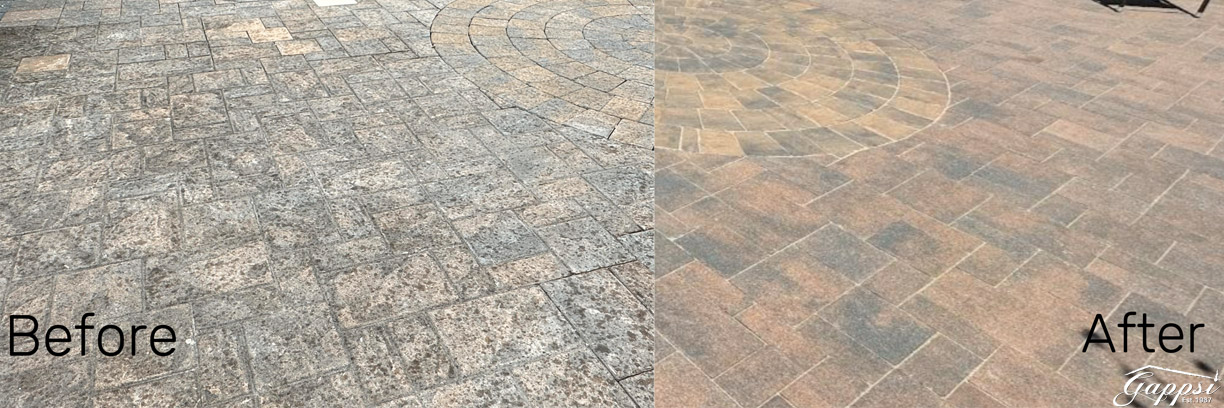 But we don’t stop there. Your vision for the final appearance matters just as much as the material itself. Some homeowners prefer a more natural, matte look, where the stone’s color remains unchanged but is still water- and stain-repellent. Others may want to enrich or enhance the stone’s natural tones, giving the surface a “wet look” or deeper hue. We tailor our sealing method accordingly, ensuring both aesthetic and functional goals are met.
Enhancing or Transforming Paver Color | Restoration and Sealing
A unique service we offer is our color enhancement process. This is ideal for older concrete pavers that have faded over time. We can breathe new life into them by adding a translucent color tint to the sealer. This approach restores their vibrancy while maintaining the natural color variation that gives them character.
Alternatively, for clients seeking a bolder transformation, we offer solid color treatments that entirely change the paver’s appearance. Again, the choice of coating or penetrating sealer depends on the paver’s composition and the desired effect. Older concrete pavers typically benefit from surface coating sealers, while new pavers and natural stones are better suited for penetrating sealers.
Contact Gappsi Today For An Estimate
Tile and Grout Restoration for Indoor Surfaces
Our services extend beyond outdoor spaces. We specialize in tile and grout restoration for interior floors, bathrooms, kitchens, and showers. Over time, grout can discolor and absorb moisture, resulting in deterioration and staining. We offer deep cleaning and sealing to protect and preserve your existing grout—or, if you’re ready for a new look, we can recolor your grout entirely.
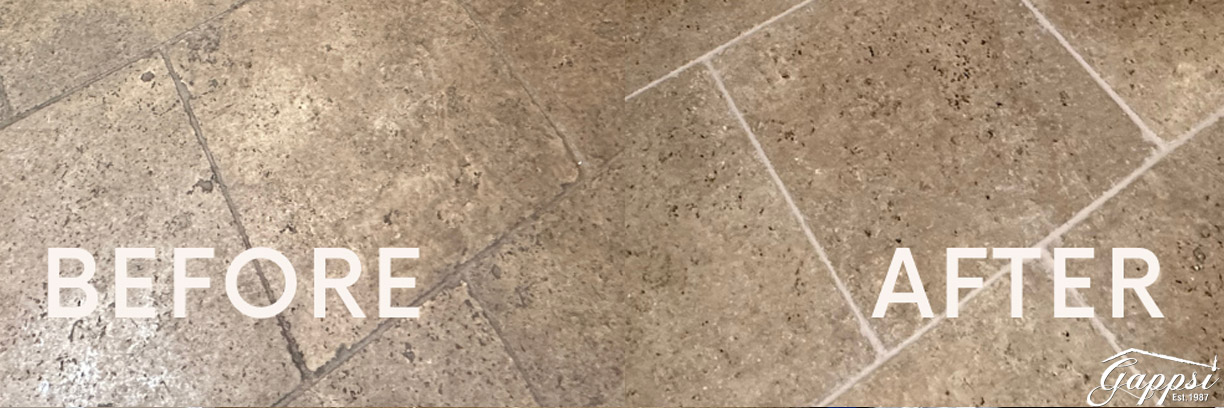 Once sealed, your grout becomes water-resistant and far easier to clean, maintaining its appearance for years to come. This is an excellent solution for both new tile installations and older surfaces that need a refresh.
Premium Joint Sand for a Polished Finish
Before sealing pavers, it is essential to fill the joints with sand appropriately. We take pride in offering our proprietary line of premium sand, imported from Italy. Unlike many coated sands on the market, our sand is naturally colored and uncoated. This makes a big difference. Coated sand does not absorb sealer properly and will not bond or harden correctly in the joints.
Available in five colors: white, gray, black, beige, and beige-gray mix. Our sand allows you to choose a look that complements your stones. The granules, sized from 0.4 to 0.8 mm, are precisely crushed and washed for optimal compaction and joint filling. When needed, we mix the sand with a resin powder. This combination, when exposed to a liquid sealer, hardens more effectively than traditional polymeric sand. In cases where resin isn’t required, our urethane sealer alone is strong enough to solidify the sand once applied.
Professional Application from Start to Finish
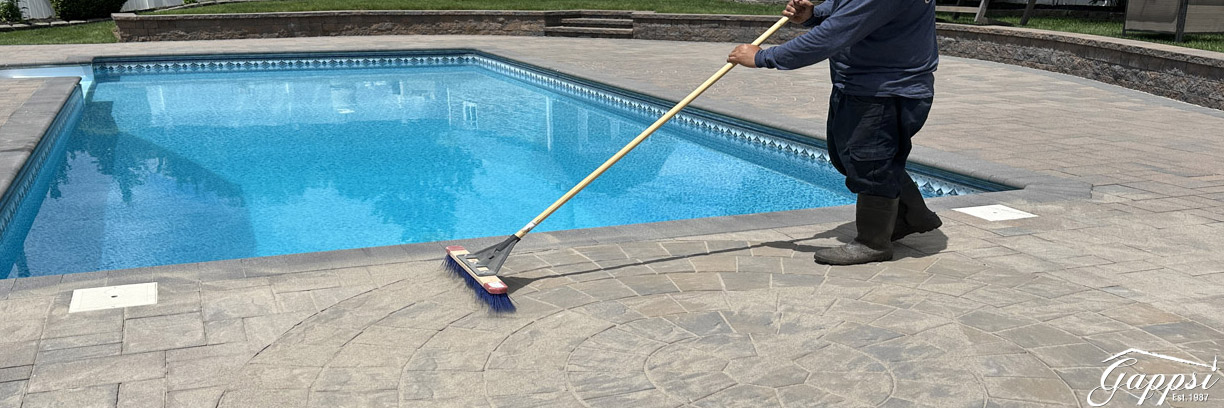
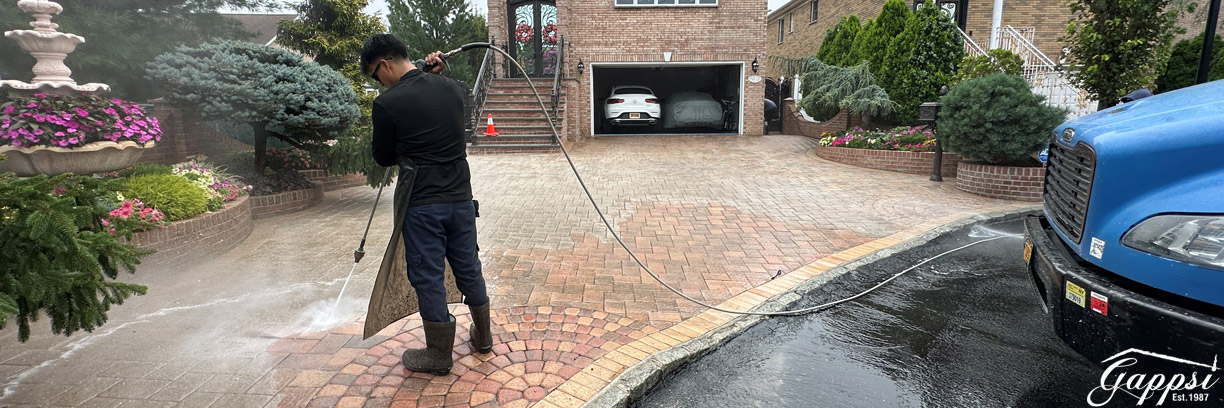
Every project we undertake follows a meticulous step-by-step process. It begins with cleaning. Using hot water and specialized equipment, we thoroughly wash the paver surfaces, removing old polymeric sand, dirt, and debris. This is the best way to ensure the new sand and sealer will bond effectively.
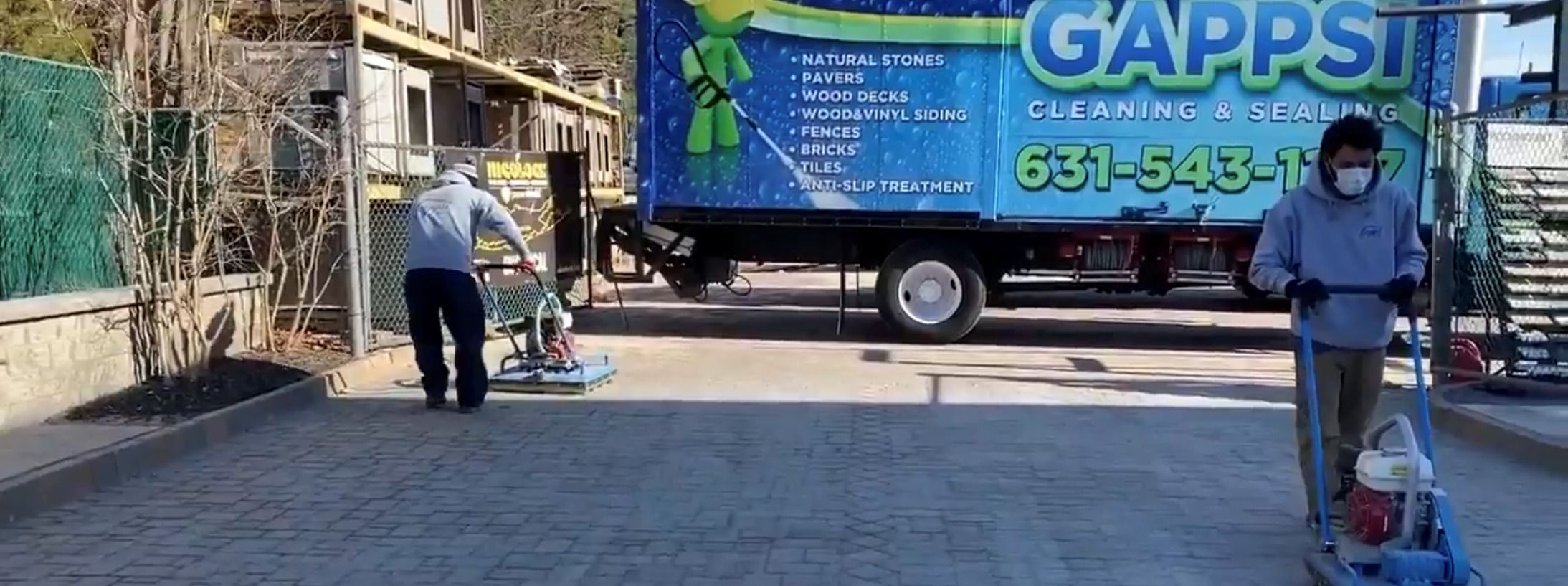
Once the surface is clean and dry, we sweep the joint sand evenly across the area. A plate compactor with rubber rollers is used to vibrate the sand deep into the joints without scratching the stones. We repeat this process twice, applying and compacting more sand to ensure that all joints are fully and densely filled.
 After brushing away any excess sand, we apply the sealer, carefully selected for the specific material and finish desired. This step not only seals and protects the stone but also locks the sand in place. Our team’s deep understanding of both surface materials and sealing products ensures a flawless application, resulting in a durable and attractive finish that lasts.
The Importance of Experience and Knowledge for Restoration and Sealing
Stone restoration and sealing isn’t just about using high-quality materials. It’s about knowing how and when to use them. Our team has years of experience and technical expertise in reading stone surfaces and selecting the correct product for each unique situation. From choosing the right sand and sealer to understanding customer preferences and environmental conditions, every decision is made with long-term results in mind.
Your patios, driveways, and floors are significant investments, and maintaining them properly is essential to protecting their value and aesthetic appeal. Whether you’re looking to restore a weathered surface, enhance the color of your pavers, or preserve your kitchen tiles and grout from future wear, we have the tools, knowledge, and products to get the job done right.
Contact us today to schedule a consultation or request a quote. Let’s bring your stone surfaces back to life. Stronger, cleaner, and more beautiful than ever.
SCHEDULE A MEETING TODAY WITH GAPPSI

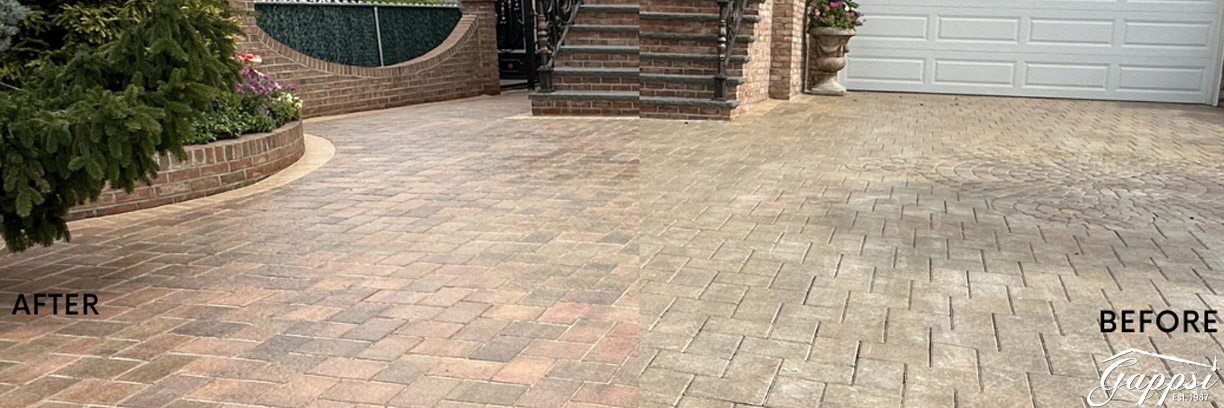 Can a poor application of driveway sealer be corrected? Depending on the severity of the problem, it may require saturation, aggressive scrubbing, and repeated applications to re-emulsify the sealer.
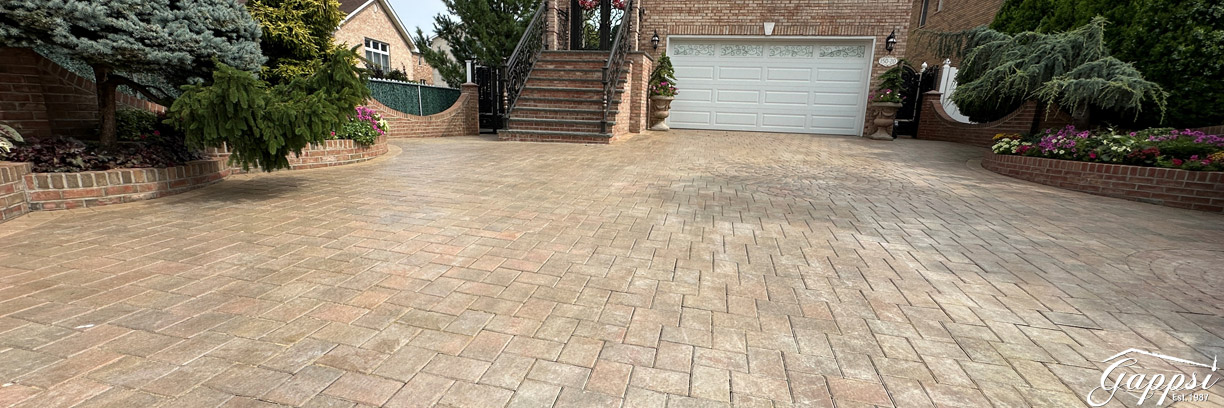 Whiting happens when your pavers have been sealed with a xylene or acrylic (solvent-based) sealer or sealed during imperfect weather conditions or application. The trapped moisture is caused by hydrostatic pressure, which brings the moisture up through the pores of the pavers and traps it under the sealer. Once your pavers have “turned white”, there is only one way to rectify the problem. The sealer must be completely stripped off and re-sealed with the correct type of sealer.
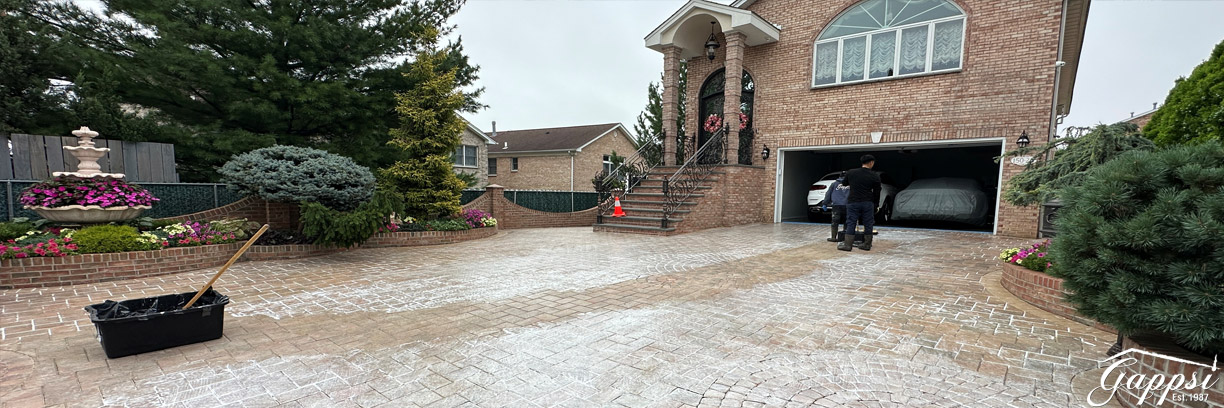 Removing and Stripping Old Sealant Off Driveway Pavers
 What type of sand material fills the joints between pavers?
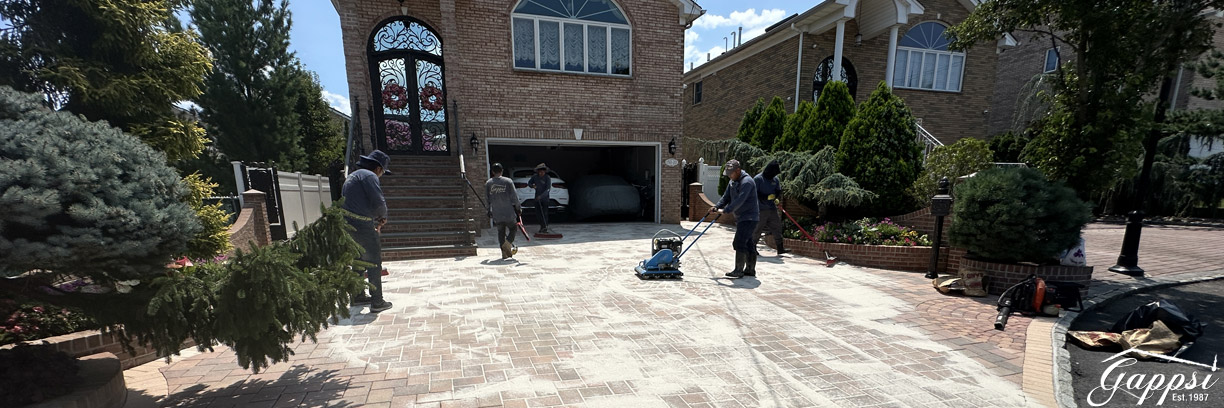 What is the best sealer for concrete pavers?
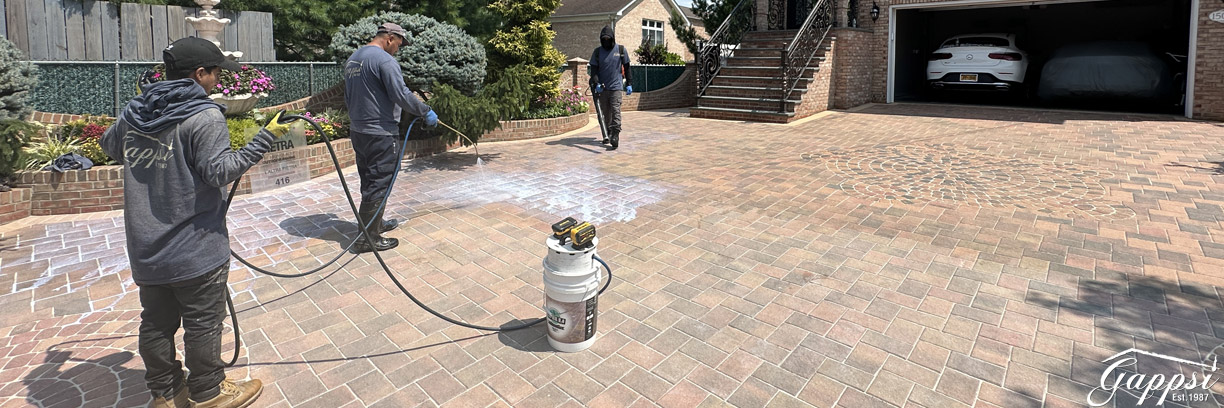 The sealer creates a very strong bond to the paving stone surface and over the sand particles in between the joints.
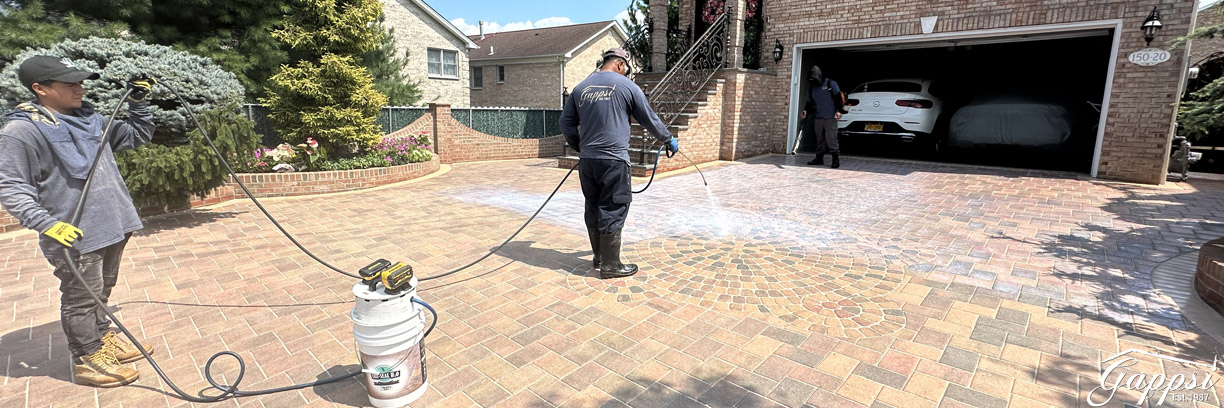 The best sealers for paving stones are water-based urethanes
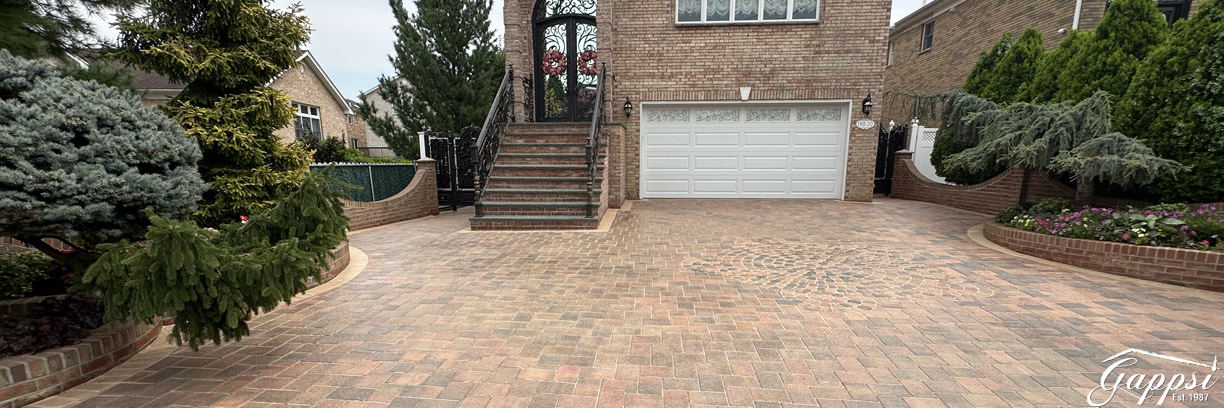 Gappsi brought back the color of the stones to look better than they did when they were originally installed. The colors are very vibrant and uniform now that the sealer is applied correctly. You can see the color variations of the Bayberry Blend, the shades of gray, beige, and peach color even after 20 years.