View Gappsi’s YouTube Channel for Videos of Backyard Basketball Dreams Realized: Cutchogue’s Custom Sports Game Court
Tucked away in the serene surroundings of Eastern Long Island lies a beautifully crafted custom sports game court that blends form, function, and family fun. This custom-built basketball court in Cutchogue is more than just a place to shoot hoops. It’s a long-lasting, high-performance space that enhances the property and fosters family engagement.
From the moment the first concrete was poured to the last tile laid and the final line striped. This 25×30-foot basketball court was built with precision, quality, and playability in mind. At the heart of the project is the use of Mateflex sport tiles. A premium sports surfacing material that has transformed this backyard into a professional-grade playing area. This court is durable, stylish, and safe for athletes of all ages.
Building the Concrete Foundation: A Solid Start
Every great sports game court begins with a strong foundation, and this project was no different. The first step involved preparing and pouring a solid concrete base. Concrete is the standard for outdoor sports game courts due to its longevity and structural integrity. In this case, the base needed to be perfectly level and properly cured. To support the interlocking tile system that would soon follow.
The court’s dimensions are 25 feet wide by 30 feet long. They were chosen to maximize available space while providing ample room for shooting, dribbling, and light gameplay. Though not full regulation size, this half-court setup is ideal for residential use. It offers the perfect balance between functionality and footprint.
 Mateflex Tiles: Performance Meets Aesthetics for a Custom Sports Game Court
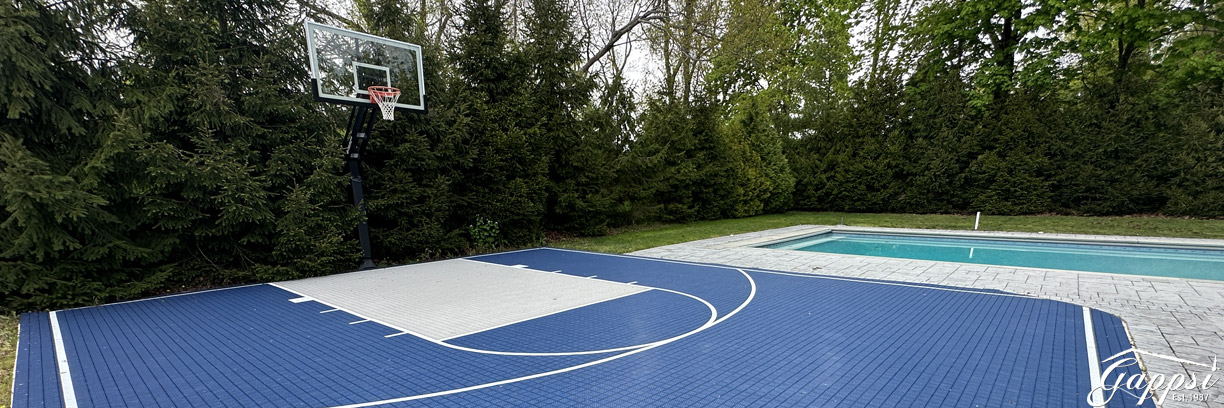
Once the concrete base had cured, it was time to install the court’s surface: Mateflex sports game court tiles. Known for their superior shock absorption, traction, and water drainage capabilities. Mateflex tiles are a top choice for outdoor basketball courts. These tiles snap together easily, forming a cohesive playing surface that’s easy on the joints and built to withstand the elements.
For this Cutchogue project, the homeowner chose a navy blue tile for the main field area. This adds a bold, professional aesthetic to the court. To create visual contrast and define the play zone, light gray tiles were used in the key. This not only enhances gameplay clarity. It also gives the court a crisp, clean look that stands out against the natural backdrop of Eastern Long Island.
Striping the Custom Sport Game Court: Attention to Detail!
With the tile system in place, the next step was to stripe the court with precision. White lines were painted to clearly define the boundaries, free throw line, and key areas, just like on a regulation court. Proper striping is essential for an authentic basketball experience, providing players with visual reference points for accurate shooting and gameplay.</p>
The white striping pops beautifully against the navy and gray tile combination. This makes the court both visually appealing and highly functional.
 The Hoop: A Professional Touch by Snap Sports
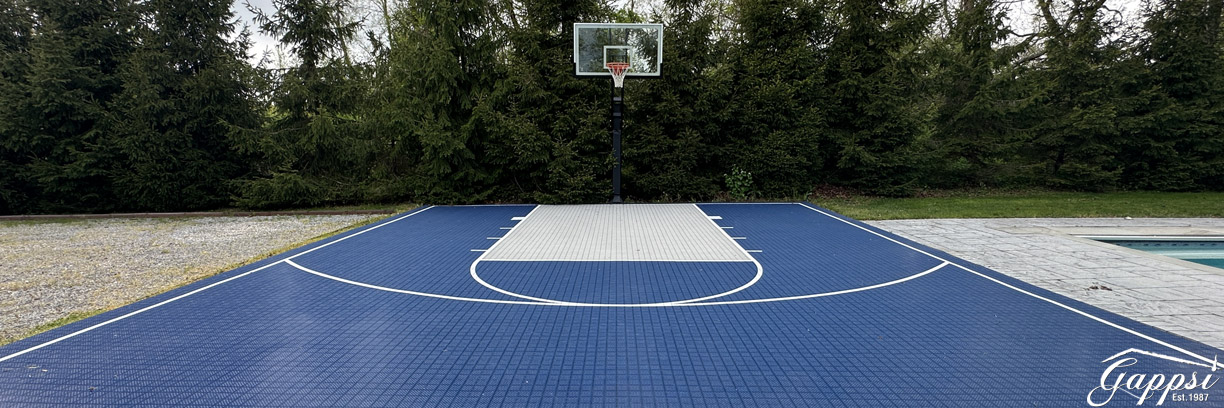
No basketball court is complete without a hoop that can handle serious play. For this court, a professional-grade 72-inch Snap Sports basketball hoop was installed. Built with durability in mind, the product features a tempered glass backboard, a heavy-duty steel frame, and a smooth height-adjustable mechanism that allows players of all ages and skill levels to enjoy the game.</p>
Whether it’s a high-flying dunk or a casual game of HORSE, the Snap Sports hoop provides the quality and stability you’d expect to find in a professional or collegiate setting, right in the comfort of your backyard.
Built to Last: Longevity and Low Maintenance
One of the standout features of this court is its long-lasting quality. Several years after installation, the court remains in excellent condition. A testament to the durability of both the concrete base and the Mateflex tile system. The tiles are UV-resistant, weatherproof, and easy to clean, requiring only minimal maintenance to keep them looking and performing their best.
Even after enduring Long Island’s varied weather from hot summers to freezing winters, the court has held up beautifully. Maintaining its vibrant color, structural integrity, and playability. This long-term durability makes it a wise investment for homeowners seeking to enhance their property with a recreational feature that will deliver value for years to come.
A Family Favorite for Gatherings
Since its completion, the Cutchogue sports game court has become a central hub for family gatherings, neighborhood games, and after-school practice sessions. It’s a space where kids can work on their jump shots, parents can get in a quick workout, and friends can challenge each other to friendly games.</p>
<p style=”text-align: justify;”>Backyard courts like this one not only promote physical fitness but also foster social interaction and family bonding. They offer a safe, private environment to enjoy the sport without the hassle of traveling to a local gym or public court.</p><h3 style=”text-align: justify;”>
Why Choose a Backyard Custom Sports Game Court?
Custom backyard courts offer several advantages for homeowners:
– Personalization: Choose your court size, colors, lines, and accessories to match your style and needs.
– Convenience: Play anytime, without leaving your property.
– Safety: High-quality surfaces reduce the risk of injury compared to uneven driveways or public courts.
– Property Value: A professionally built court can enhance your home’s appeal and increase its market value.
– Year-Round Use: With proper drainage and weather-resistant materials, your court is always ready for play
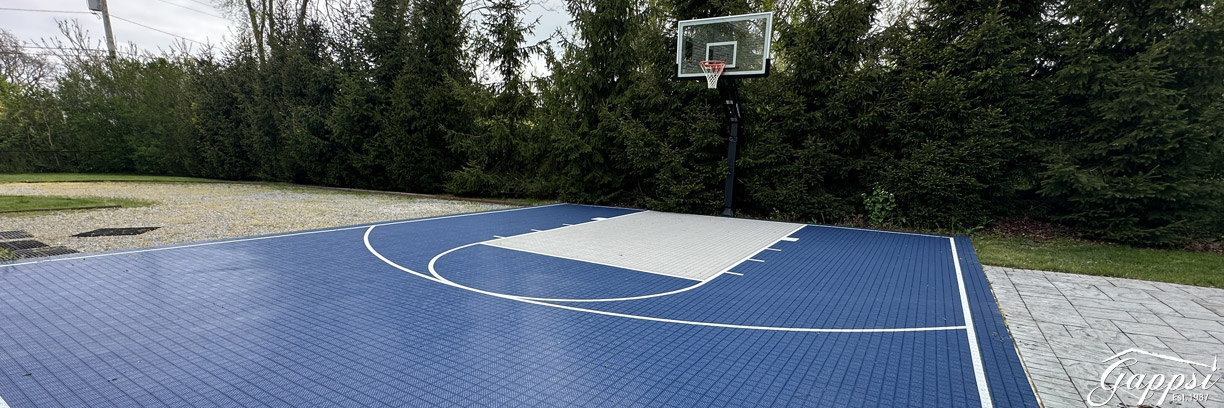
The custom sports game court in Cutchogue is a prime example of how thoughtful design, high-quality materials, and skilled craftsmanship can transform an ordinary backyard into an extraordinary recreational space. From the solid concrete base to the vibrant Mateflex tiles, professional striping, and the robust Snap Sports hoop, every element of this court was built to impress—and built to last.
Whether you’re a serious baller or just love shooting hoops with the family, a custom court like this offers endless hours of fun, fitness, and memories. And in places like Eastern Long Island, where natural beauty meets suburban charm, it’s the ultimate addition to any home.
Thinking about building your sports game court? Take a page out of Gappsi’s playbook: start with quality, design with intention, and aim for a court that brings your family together, one game at a time.
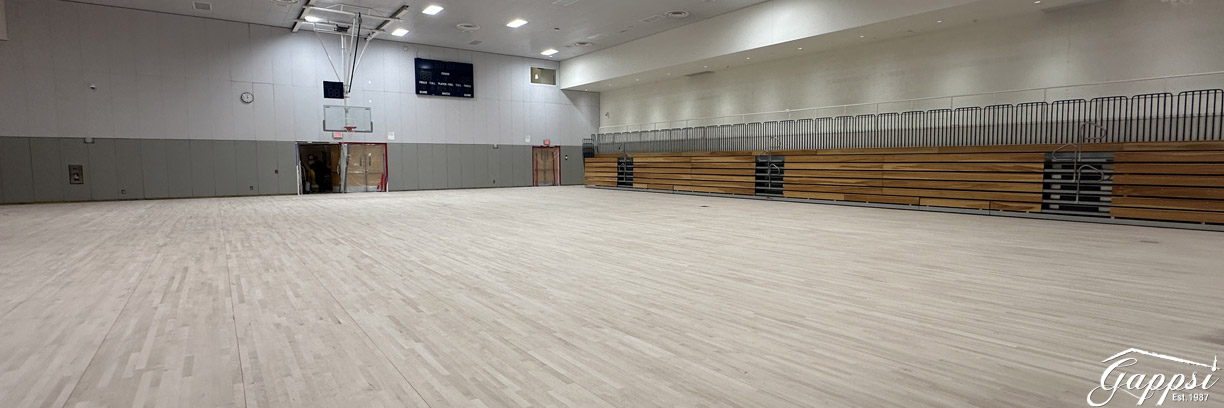 Whether it is a competitive court for professionals or a gymnasium for student-athletes, basketball floors must have optimal friction (surface finish effect), ball rebound, and provide a degree of shock absorption (force reduction).
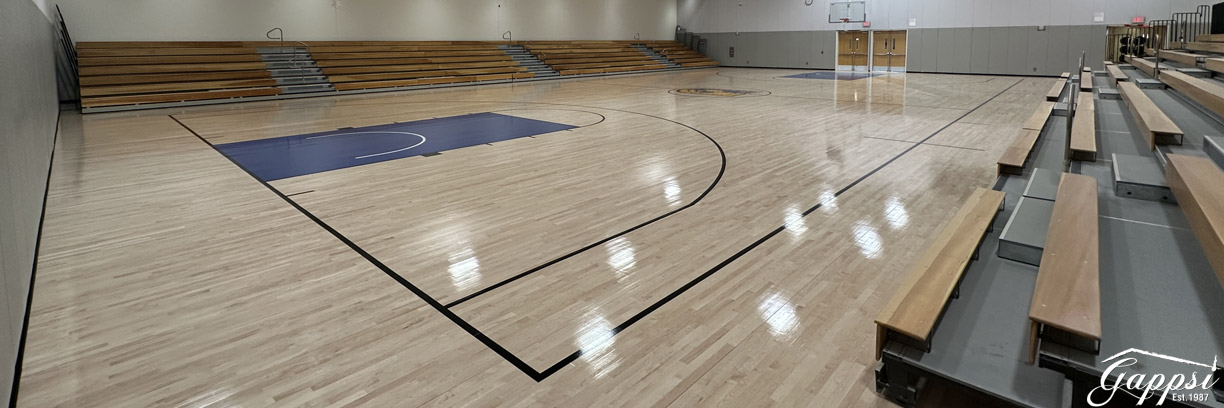 Basketball Court Zones and Areas
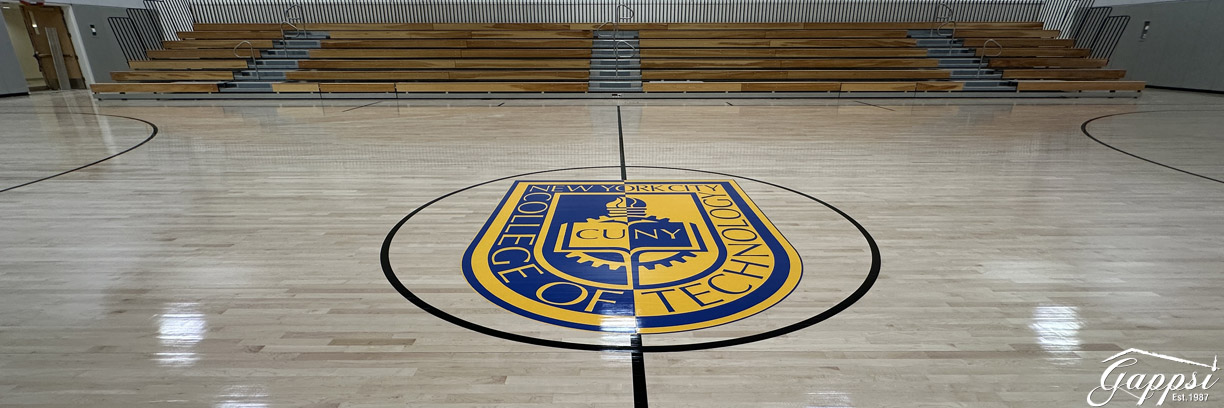
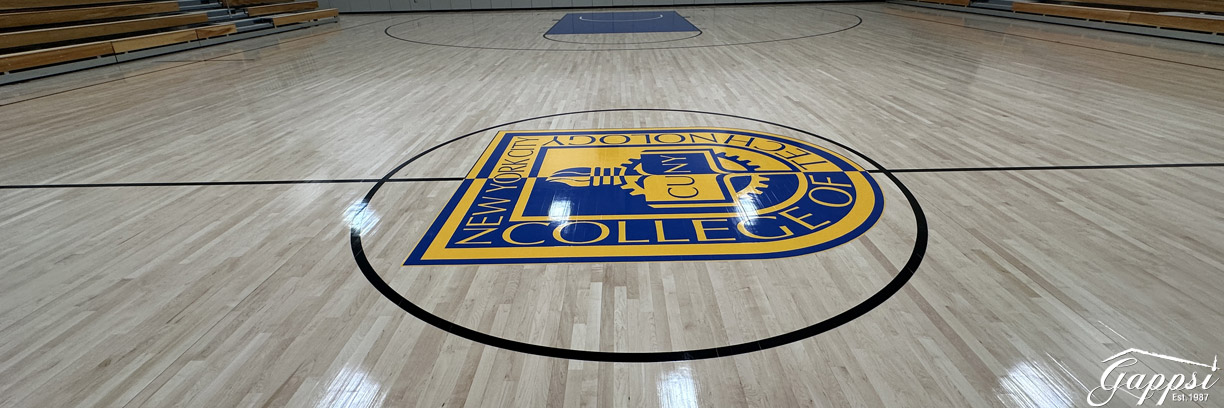 In our recent project, we utilized black paint for all the lines on the court and blue paint for the keys. The floor was replaced with a new wood flooring. Aside from being noiseless, the floor has a more bouncy cushion system below. We installed the university logo right in the center of the court in blue and yellow. This logo required many passes to create the final design. This is the latest sports game court built by Gappsi in Brooklyn, NY.