


View Gappsi’s YouTube Channel to view Natural Stone Pebbles with Urethane Resin: A Long-Lasting Solution for Concrete Slab Joints in Commack, NY
Look at our recent project, Natural Stone Pebbles with Urethane Resin. At Gappsi, we’re always looking for innovative and durable ways to enhance outdoor surfaces. Recently, our team completed a unique and visually stunning project at the Tara Condominium in Commack, NY. What started as a simple joint restoration turned into a beautiful and long-lasting upgrade. We replaced traditional fillers with natural stone pebbles bonded with urethane resin.
This project not only solved an ongoing maintenance issue but also transformed the overall look of the concrete areas, creating a high-end finish that will last for years to come.
The Problem: Rotted Wood and Failing Polymeric Sand
Like many properties built years ago, the concrete slabs at the Tara Condominium were initially separated by wooden expansion joints. These joints, while functional, tend to absorb moisture and rot over time. The deterioration of wood in outdoor concrete joints is a common problem. This is especially true in climates like Long Island, where we experience freezing winters and hot summers.
A few years back, we replaced those wooden joints with polymeric sand, a material often used for paver joints. Polymeric sand is a mixture of fine sand and polymer binders designed to harden once activated with water. The idea was that it would provide flexibility, stability, and a clean finish between the concrete slabs.
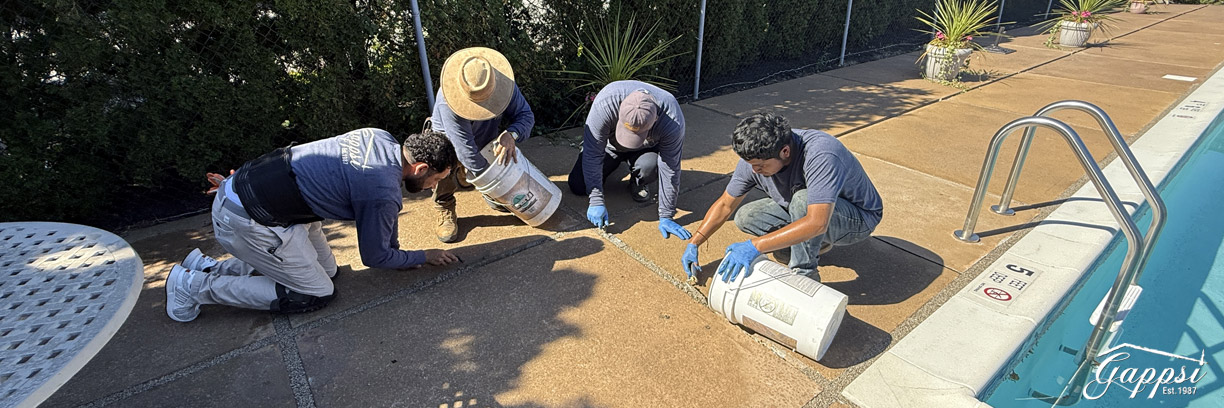 Unfortunately, over time, the polymeric sand did not hold up as expected. Despite claims from the manufacturer that it would withstand weathering and movement, the sand began to crack, wash out, and deteriorate.
At Gappsi, we stand behind our work and our customers. As a courtesy to the client, we decided to remove the failing polymeric sand and replace it with a more durable, permanent, and aesthetically superior solution: natural stone pebbles bonded with urethane resin.
The Solution: Urethane Resin and Natural Stone Pebbles
Our team carefully removed all the polymeric sand from the concrete slab joints, preparing a clean and stable base. We then introduced a urethane one-component resin system, which we mixed with Italian natural stone pebbles.
This resin-stone combination is a specialized product. Both the stones and the urethane resin are manufactured in Italy, and Gappsi is proud to be a direct importer of this high-quality material. The combination of European craftsmanship and Gappsi’s expert installation techniques resulted in an exceptional finish that offers both beauty and performance.
The urethane resin acts as a strong yet flexible binder, allowing the stones to stay firmly in place while still accommodating minor ground movement. This flexibility prevents the cracking and separation that often occur with rigid fillers or polymer-based sands.
Installation Process at Tara Condominium
The installation process required precision, expertise, and attention to detail. Hallmarks of every Gappsi project.
- Joint Preparation:
We began by carefully removing all the old polymeric sand, ensuring the joints were clean and free of debris. Proper preparation is crucial to ensure strong adhesion between the stones and the resin. - Mixing the Materials:
The natural stone pebbles were mixed with the urethane resin in precise proportions. The resin fully coats each pebble, creating a uniform, glossy finish and ensuring a consistent bond. - Application:
The resin-stone mixture was poured and spread evenly into each concrete joint. We worked carefully to achieve a smooth and flush surface, complementing the existing concrete slabs while providing a striking visual contrast. - Curing and Finishing:
Once in place, the resin mixture cures to form a solid yet flexible joint, resistant to cracking, UV damage, and water penetration. The finished product not only looks natural and elegant but also feels smooth underfoot and requires little to no maintenance.
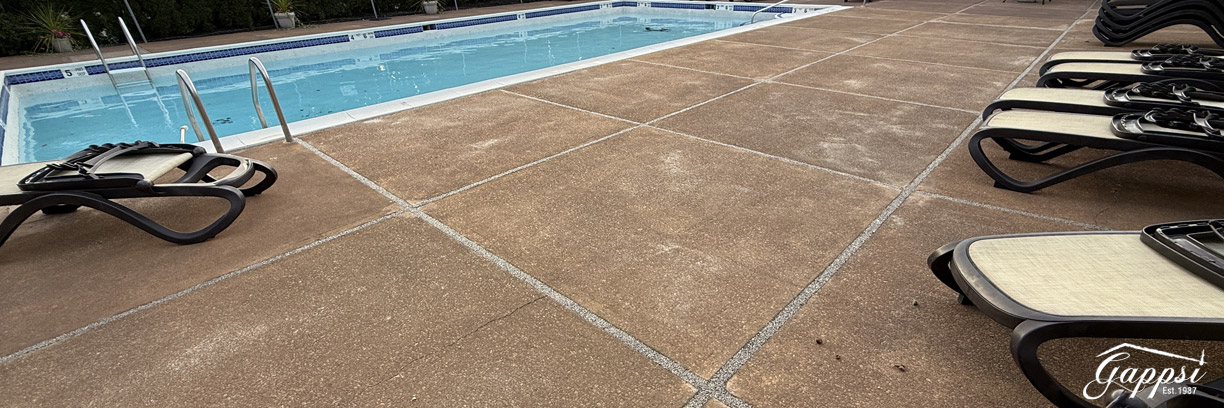 Why Urethane Resin is Superior to Polymeric Sand
When it comes to filling concrete or paver joints, not all materials are created equal. Polymeric sand has its place, but for high-traffic areas, patios, or commercial properties, urethane resin with natural stone offers several advantages:
- Durability: Urethane resin is highly resistant to weathering, UV rays, and freeze-thaw cycles. It won’t crumble, wash away, or discolor over time.
- Flexibility: Unlike rigid fillers, urethane resin expands and contracts slightly with temperature changes, preventing cracking.
- Aesthetic Appeal: The natural stone pebbles come in a range of colors and textures, adding a decorative and upscale look to any surface.
- Low Maintenance: Once installed, the surface requires minimal upkeep — no re-sanding or sealing needed.
- Water Permeability: The system allows for drainage, reducing water pooling and potential damage to the concrete.
At the Tara Condominium, the results were immediately noticeable. The joints that once looked weathered and uneven were now smooth, glossy, and beautifully finished. The subtle contrast of the natural stones against the gray concrete added depth and dimension, enhancing the property’s curb appeal.
Beyond Joints: Expanding the Application
While we used this product specifically for concrete slab joints at the condominium, the versatility of the urethane-stone system makes it suitable for many other applications. It can be used to create:
- Entire patios and walkways with a seamless, decorative finish
- Driveways that combine strength with aesthetic value
- Pool decks that are slip-resistant and visually appealing
- Garden paths or courtyard surfaces that resist weeds and erosion
This system combines the natural beauty of stone with the latest in resin bonding technology, offering a solution that is both functional and elegant.
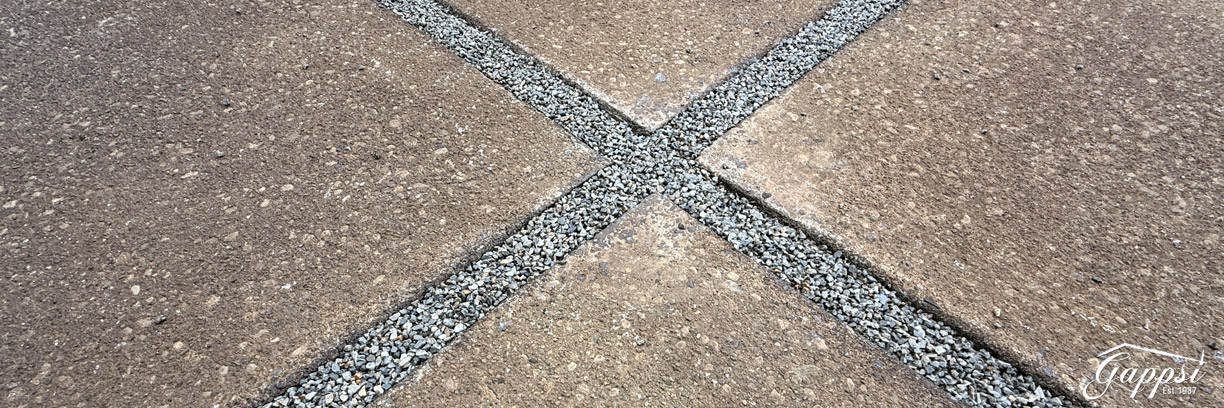 Imported Italian Quality, Installed by Gappsi
Gappsi takes pride in sourcing and importing the highest-quality materials from Italy. A country renowned for its craftsmanship in stone and architectural finishes. The stones and urethane resin used in this project are designed specifically for outdoor applications, ensuring exceptional performance and longevity.
By combining premium materials with Gappsi’s meticulous installation process, our clients enjoy results that look beautiful and last for years. Whether it’s a minor repair or a large-scale outdoor renovation, our commitment to quality never changes.
The Final Result: Beauty That Lasts
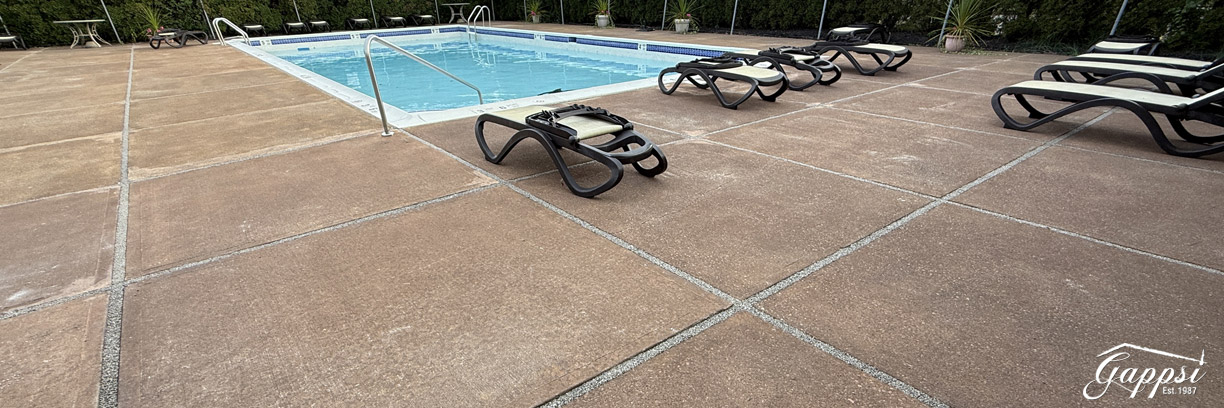
The finished project at Tara Condominium speaks for itself. The natural stone pebbles bonded with urethane resin created a clean, polished, and durable joint system that enhances the look of the entire concrete area. The contrast between the soft, rounded stones and the structured concrete provides a modern, elegant, and low-maintenance finish.
Most importantly, this solution will not deteriorate like polymeric sand or wood fillers. The residents of Tara Condominium can now enjoy a long-lasting, attractive surface that resists cracking, fading, and erosion, even under Long Island’s harsh seasonal conditions.
 Contact Gappsi for Your Next Project
If you’re dealing with failing joints, deteriorating polymeric sand, or tired-looking concrete areas, consider upgrading to a natural stone and urethane resin system. Gappsi’s expert installers can help you restore or reinvent your outdoor spaces with materials that are both innovative and timeless.
To learn more about this project or schedule a consultation, visit www.gappsi.com or call us today. Let Gappsi bring Italian craftsmanship and Long Island expertise to your next outdoor renovation.
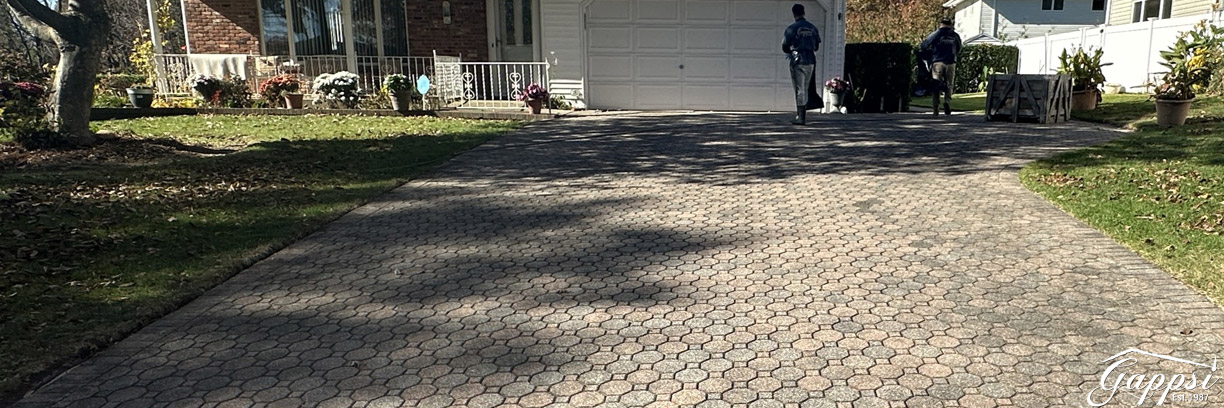 At the time, installing pavers was still a relatively new concept for residential driveways in the area. Concrete and asphalt were the norm, but we believed in offering something better, something more beautiful, resilient, and long-lasting. This driveway was part of that early vision.
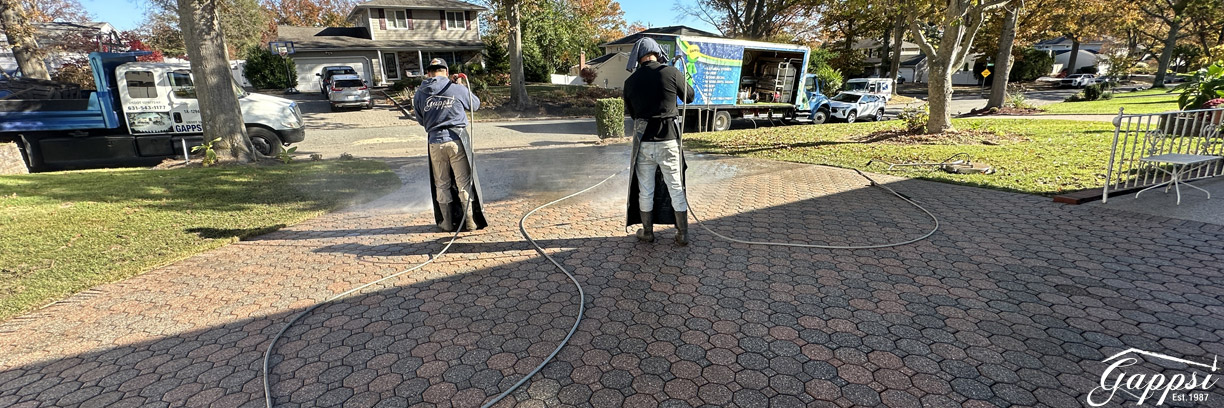
 Cleaning and Prepping the Surface
 Sealing: The Finishing Touch
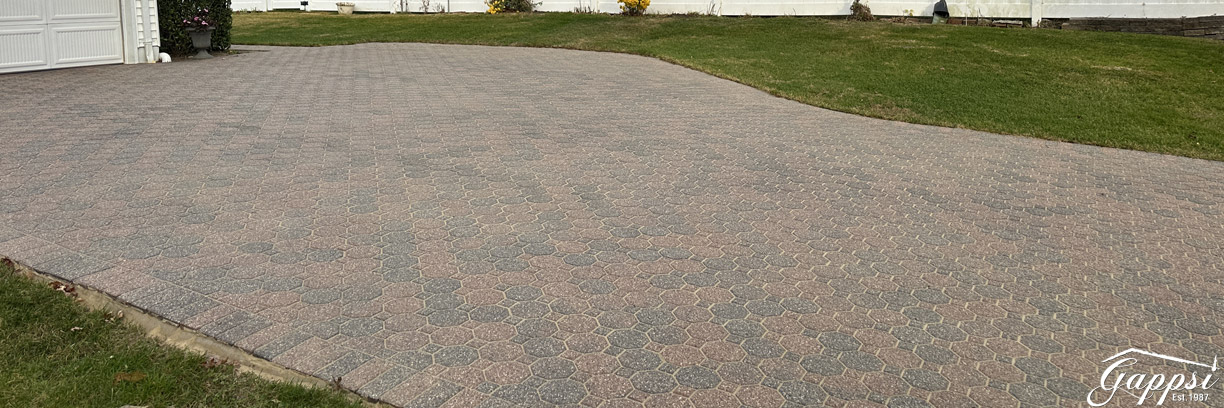 We used proper base materials from the beginning, ensured correct compaction, and adhered to best practices during installation. We chose a paver product we believed in, and Nicolock has proven to be a trusted partner in delivering quality, American-made hardscaping materials.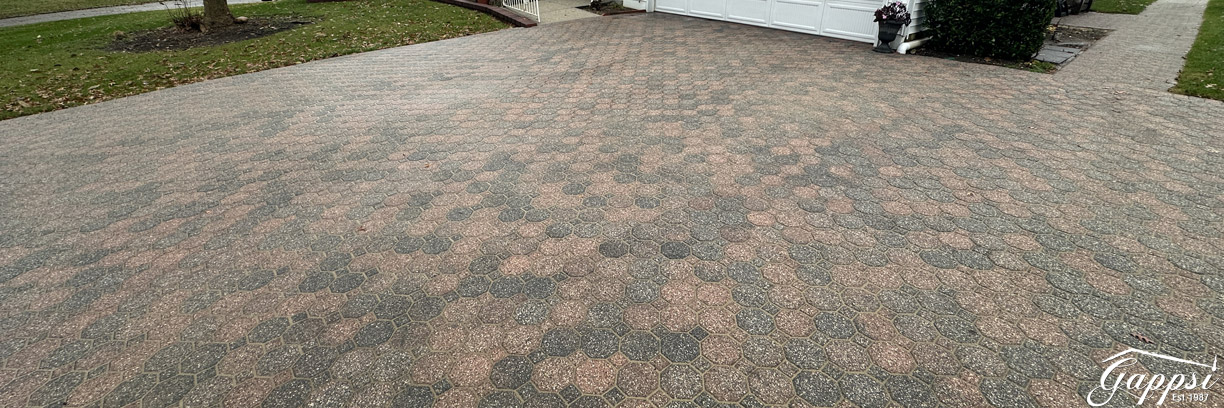
 Can a poor application of driveway sealer be corrected? Depending on the severity of the problem, it may require saturation, aggressive scrubbing, and repeated applications to re-emulsify the sealer.
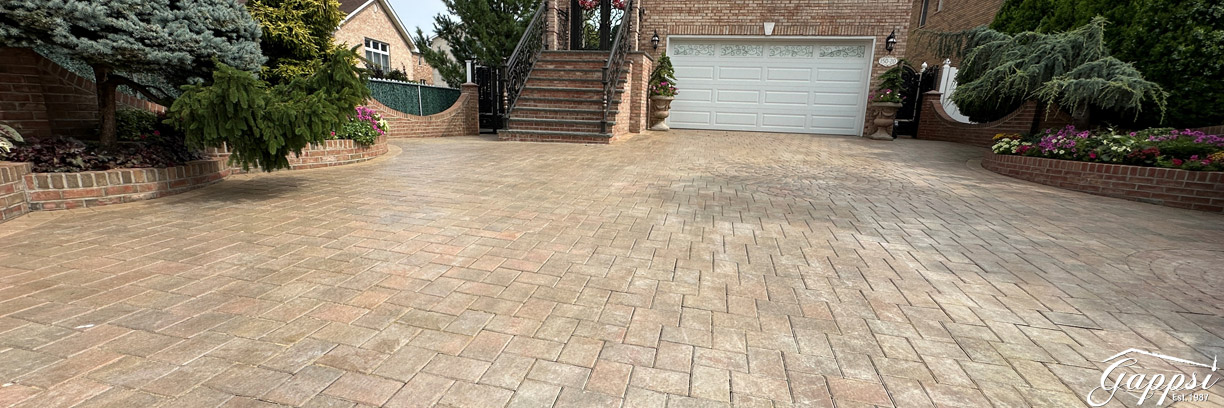 Whiting happens when your pavers have been sealed with a xylene or acrylic (solvent-based) sealer or sealed during imperfect weather conditions or application. The trapped moisture is caused by hydrostatic pressure, which brings the moisture up through the pores of the pavers and traps it under the sealer. Once your pavers have “turned white”, there is only one way to rectify the problem. The sealer must be completely stripped off and re-sealed with the correct type of sealer.
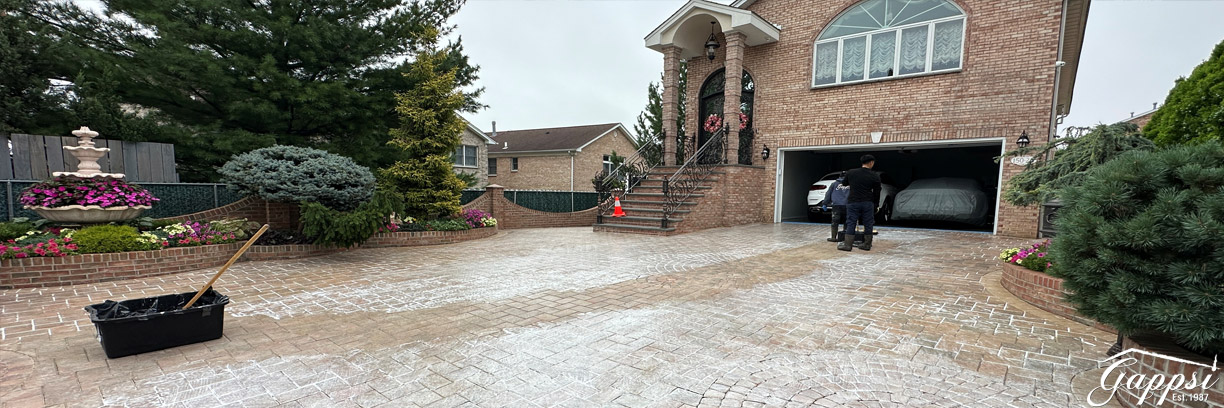 Removing and Stripping Old Sealant Off Driveway Pavers
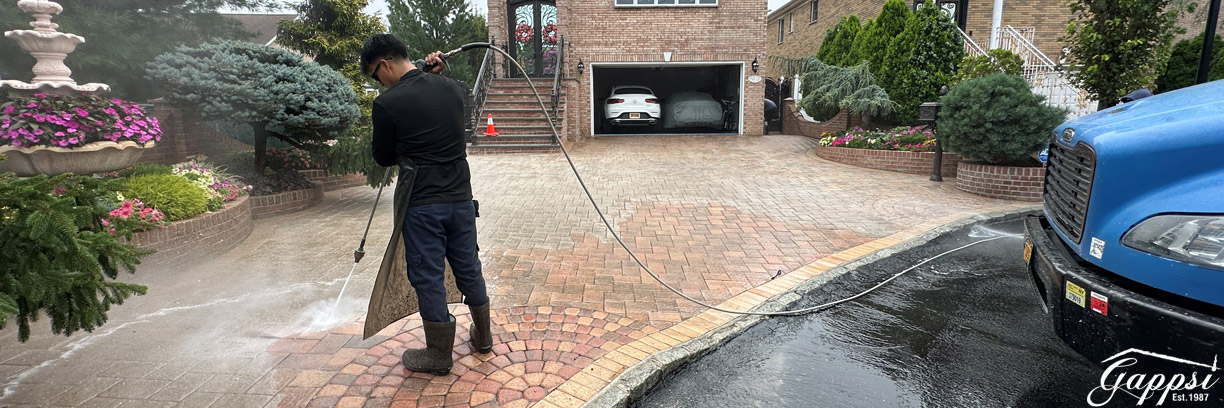 What type of sand material fills the joints between pavers?
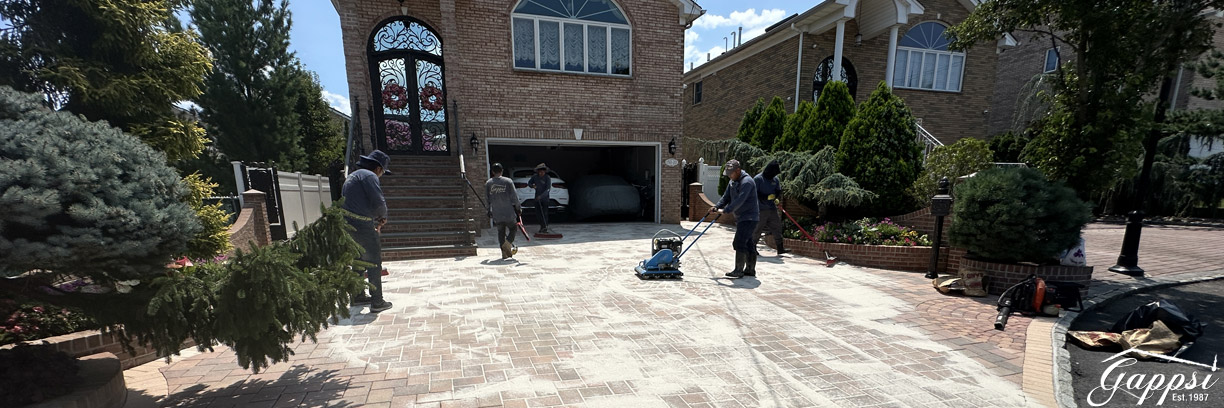 What is the best sealer for concrete pavers?
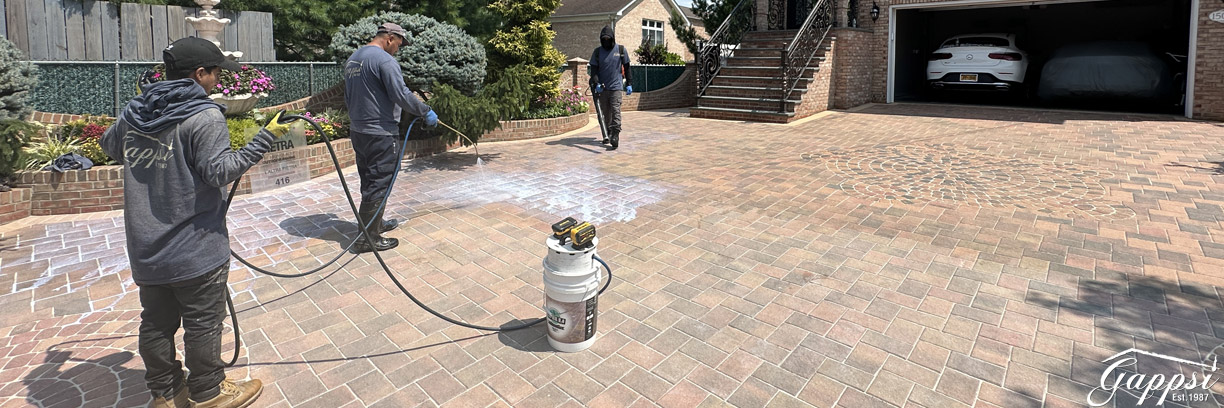 The sealer creates a very strong bond to the paving stone surface and over the sand particles in between the joints.
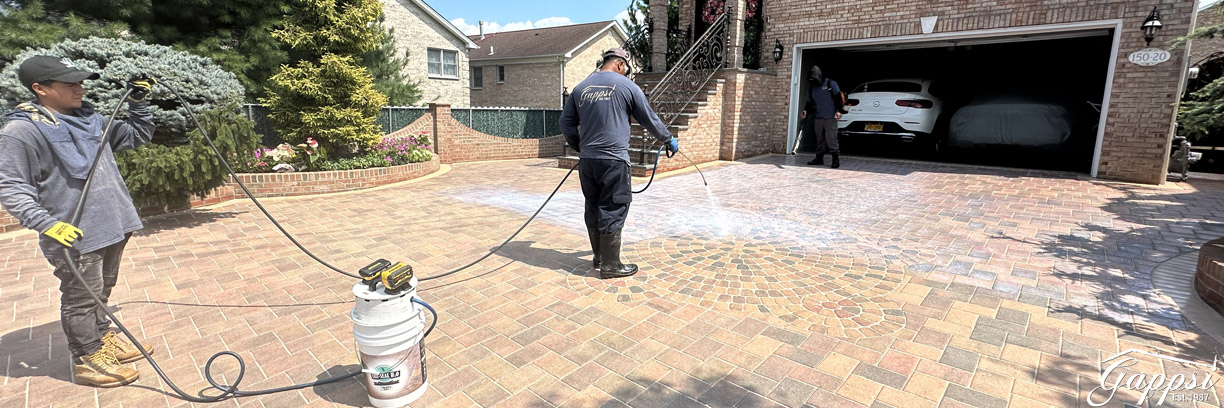 The best sealers for paving stones are water-based urethanes
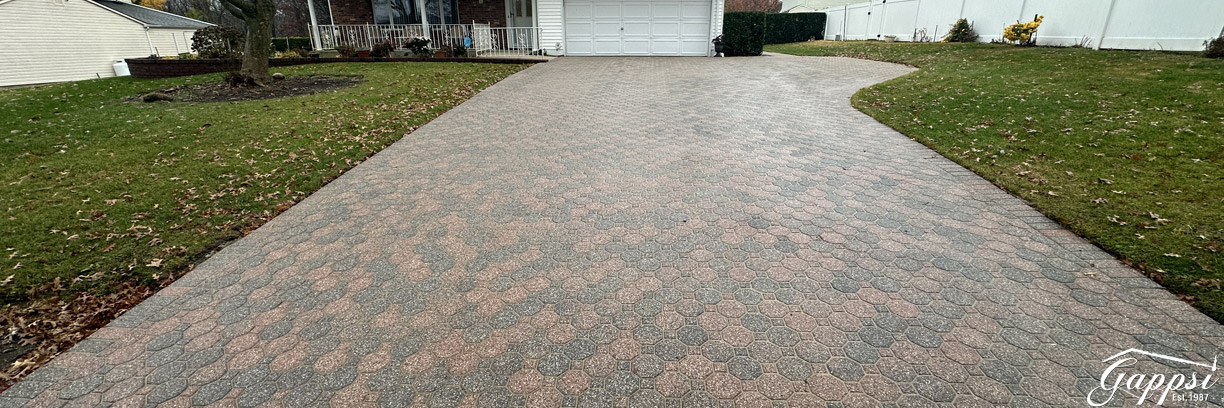
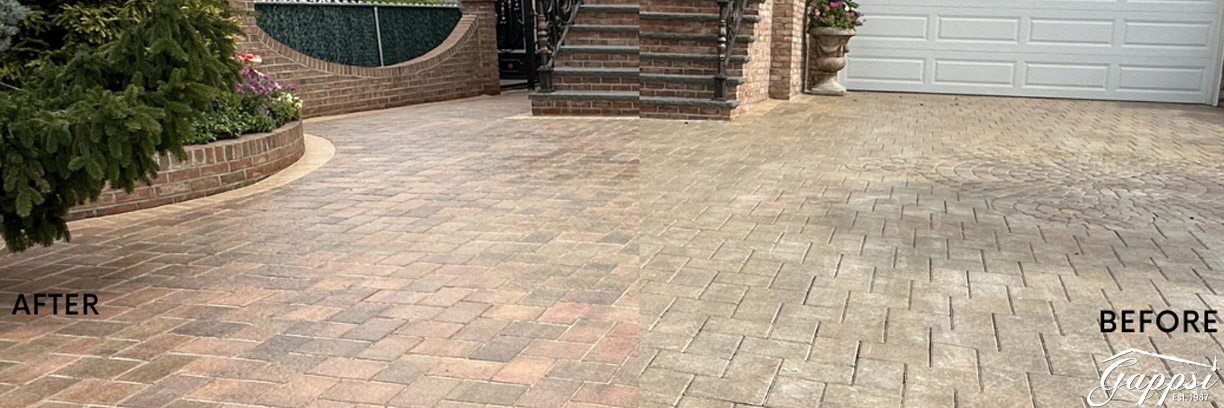
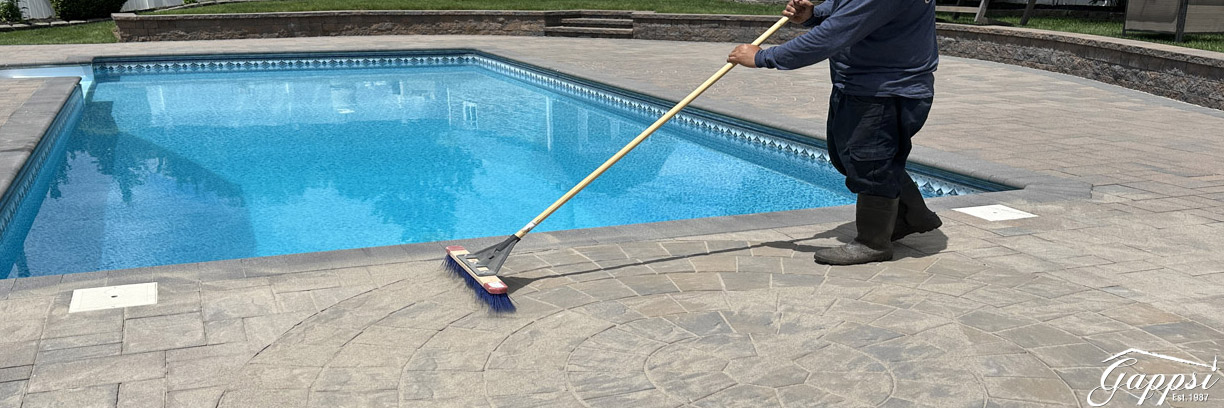
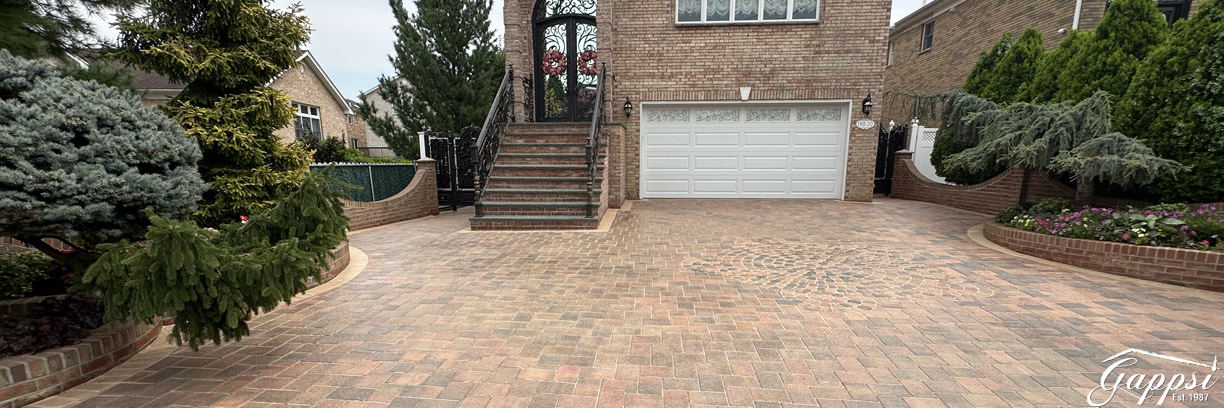 Gappsi brought back the color of the stones to look better than they did when they were originally installed. The colors are very vibrant and uniform now that the sealer is applied correctly. You can see the color variations of the Bayberry Blend, the shades of gray, beige, and peach color even after 20 years.
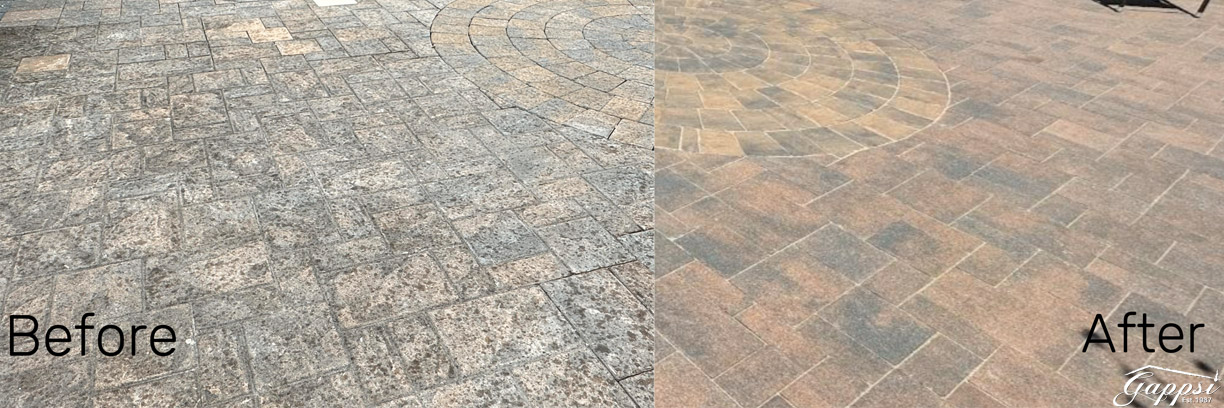 This blog will discuss cleaning and sealing concrete pavers process and why it is important. Whether you have a charming hardscape, a beautiful driveway, or an intricate walkway, your hardscape’s longevity and visual appeal depend on proper maintenance. In this blog, we’ll explore the significance of regular cleaning and sealing pavers in your hardscapes, helping you understand when, how, and why to embark on these crucial steps for preserving the beauty of your outdoor spaces.
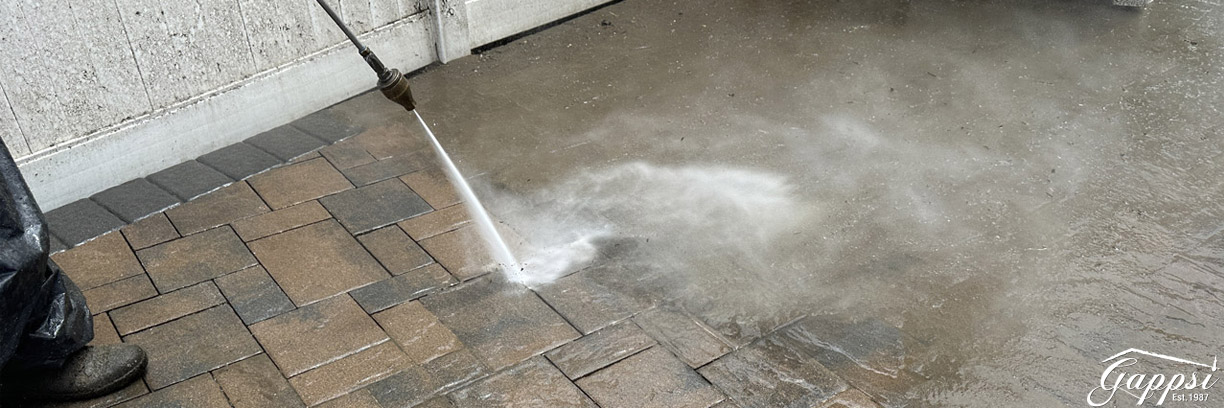 Pressure-washing concrete pavers will appear to clean them at the time. The process weathers the surface of the pavers therefore aging and expediting the aging process. As you pressure wash the concrete surface of the pavers, it becomes rougher, and in a short time dust and dirt will start to accumulate in the microscopic pores resulting in the surface being dirty again. Often people get caught up in the cycle of pressure washing their pavers every springtime. They do not realize every time it is done they worsen the problem instead of resolving it.
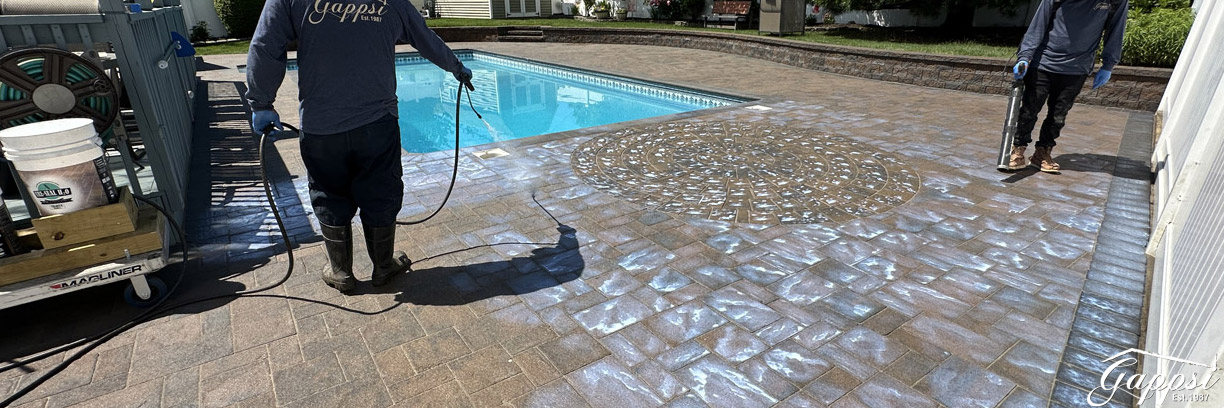
 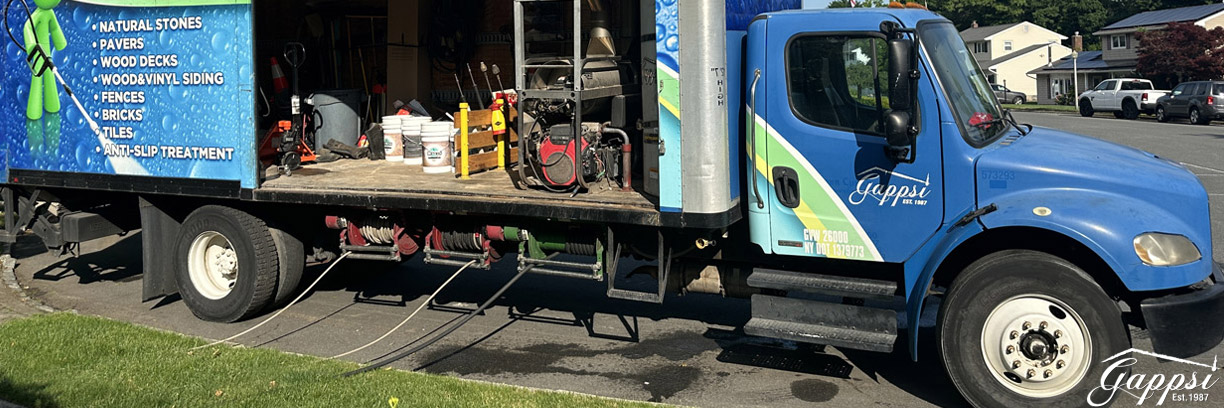 We recommend sealing your pavers to ensure their longevity and the manufacturer’s finish to last. Gappsi uses a synthetic finish product to preserve the paving stones. Sealers will make the pavers surface water repellent thus making them weatherproof. When you seal your pavers you accomplish many things besides weathering protection. You bring out the colors that fade over time even though the color is through and through or even a layer of half an inch thick. The eye sees the very top of the pavement. In only a few short years they could become faded due to the weathering from the rain or sun rays.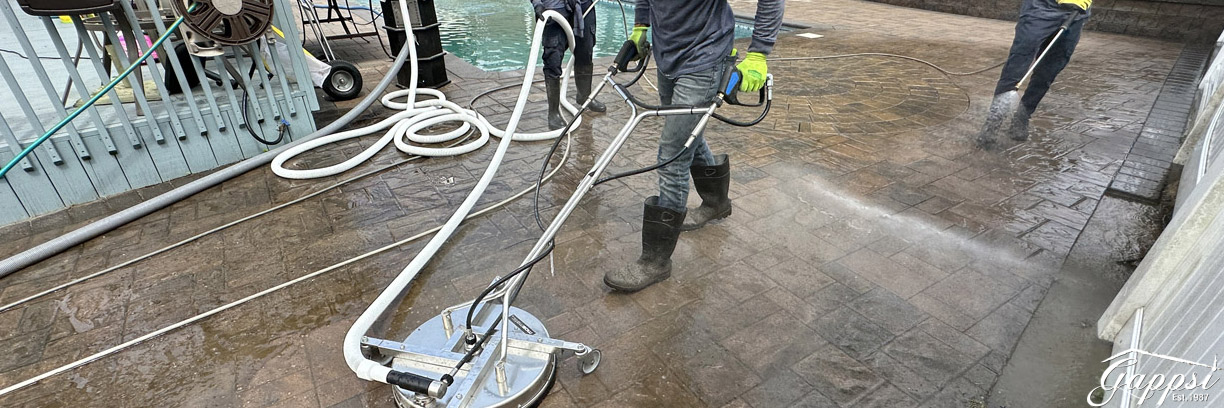
 What is Your Preference?
  6. How many types of sealers are there and what are the differences?


