


A driveway should never be an afterthought in your home’s design. It’s one of the largest features of your front yard, and it has the power to tie your entire property together. The right materials, colors, and layout can create a seamless transition from the street to your front door, complementing your home’s architecture and landscaping. Instead of seeing it as a separate project, think of it as a key element of your overall outdoor aesthetic. This guide will help you explore how a thoughtful driveway installation in East Quogue can enhance your home’s character and create a cohesive, welcoming, and polished look for your entire property.
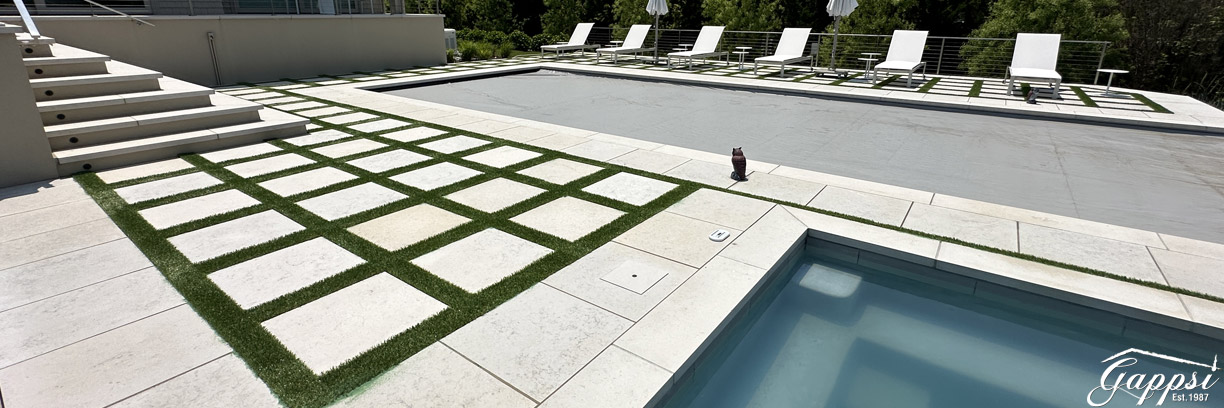
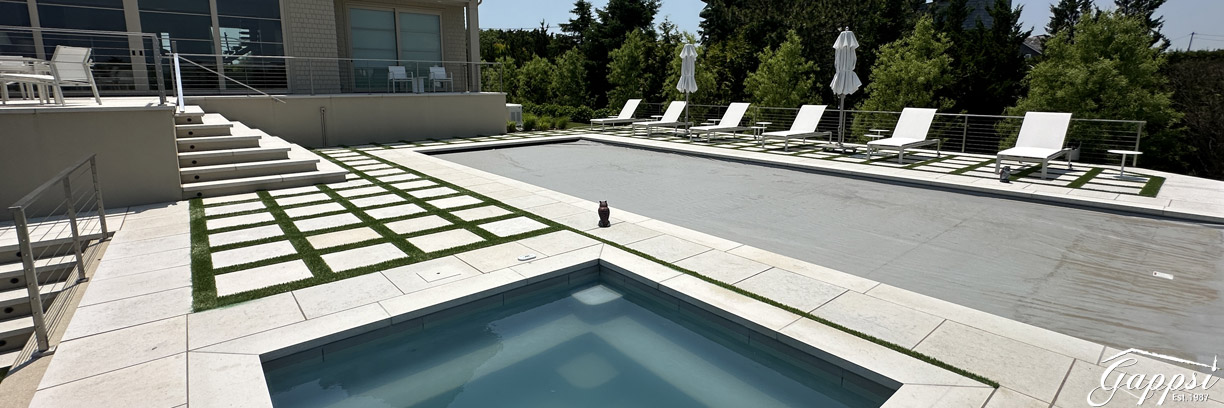
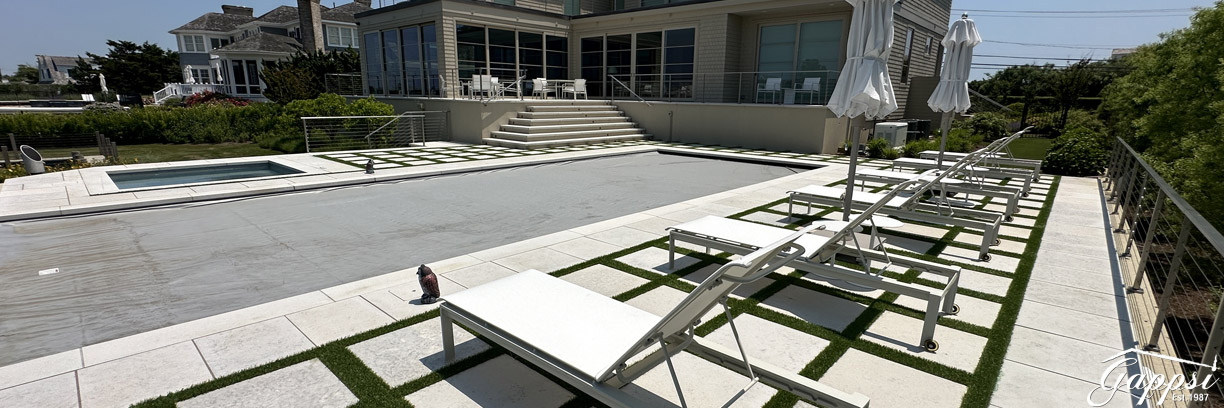 Sandblasted Marble Pavers with Synthetic Turf in East Quogue NY. Marble’s unrivaled beauty and elegance may be its most significant benefit as a paver. Gappsi installed synthetic turf strips to border the sandblasted marble tiles installed around this gunite pool in East Quogue NY. The sandblasted finish is highly slip-resistant and perfect for wet slippery areas like the pool deck and surrounding areas. Sandblasted marble pavers are extremely durable and can withstand extreme temperatures, making them ideal for outdoor use in any climate. These pavers are also easy to clean and maintain and come in a variety of sizes, shapes, and colors to fit any design. Gappsi’s natural stone collection of marble pavers will give your outdoor space a timeless and elegant look that you and your guests will enjoy for years to come.
Synthetic Turf and Silica Sand Infill
In our recent application using sandblasted marble pavers with synthetic turf, Gappsi used a recycled concrete base between the marble paver tiles, and synthetic turf nailed to the base. We used green infill on the synthetic turf. Green silica sand infill elevates your synthetic turf performance with premium material for enhanced durability.
Turf infill is those tiny bits of material sprinkling between the artificial grass blades. For example, if the edges are similar to blades of grass, then infill is the dirt for the turf. Adding silica sand infill helps your faux grass blades stand up and keep their real look in high-traffic areas. The silica sand infill also gives you the feel of walking on real grass by emulating the impact absorption qualities of soil. It helps weigh down the imitation turf and helps keep the artificial grass from getting wrinkles or ripples caused by movement. Microban is an antimicrobial product that helps prevent the growth of mold and mildew. It’s non-toxic, so it’s also safe for kids and pets.
Synthetic Turf Low Maintenance Design
Artificial turf can save money, requires minimal repairs, and requires no watering, mowing, fertilizing, or weed prevention. Synthetic turf strips between pavers are a growing trend that can enhance your outdoor living area immediately. Turf strips between pavers or slabs add a more inviting feel to landscaping by adding design elements that are easy to maintain and care for. It’s an aesthetically pleasing natural lawn alternative and looks great year-round without the need for watering or maintenance.
Elevate Your Yard with Synthetic Turf
Synthetic turf can accentuate your patio, deck, or pool with other design elements. However, it is not just for gardens or backyards. With different textures and colors, synthetic grass can be used to enhance nearly any space. It can be cut into strips or given curved edges to fit your existing landscape design.
To make a patio space with pavers, the artificial grass needs to be cut around the spacing of the concrete pavers or slabs. Alternatively, artificial grass can be cut into strips and installed between the spaces. Depending on the homeowner’s preference, the strips or sections can be completely flush with the slab tops or raised to provide a fluffy overspill.
It’s also a great choice because it is environmentally friendly, safe for the whole family, easy to care for, and non-slip. Because of its great aesthetics and functional capabilities, there’s also a lot of versatility in how and where you can lay it.
Why are Marble Pavers the Preferred Paver Choice Around Pools?
Marble pavers are the preferred choice because they have a high resistance to weather elements, including UV rays and temperature variations. Marble pavers have excellent strength and durability, capable of handling heavy foot traffic and vehicular loads. Additionally, they have a long lifespan when properly installed and maintained.
Durability: Being a natural stone, marble has a strong and durable structure. It is resistant to scratches, wear, and high temperatures. With proper maintenance and care, marble can retain its beauty for many years.
Workability: Marble is a malleable material that can be easily shaped.
 Is Marble Good for Outdoor Paving?
Marble can create an exquisite paved area in your garden and pool deck surrounding area. Its unique design patterns and stunning colors make it stand out. Don’t be fooled by its elegant and beautiful appearance. Marble is also a very durable base, which can withstand heavy objects, constant movement, and the elements of NY weather
Why Do People Want Marble?
Unlike some other flooring types, marble is timeless and will still look as beautiful 15 years down the road as it does today. It’s a natural material that offers a multitude of textures, colors, and patterns. Because of marble’s luxurious appearance, it can add significant value to a home.
Selecting Natural Stones For Around Your Pool
The correct stone can create a natural, beautiful, lifelong finish around any swimming pool. However, not all stone should be used around a swimming pool and it is almost impossible to tell suitability just by looking at a piece on display.
At Gappsi we have focused our selection process for all outdoor stones around a combination of critical characteristics:
- Salt Resistance
- Slip Resistance
- Abrasion resistance
- Wear resistance
- Compressive strength
- Porosity
- Geological structure
- Chemical makeup
Building a luxury swimming pool is a lifetime investment for your family and home in general. It is wise to choose the best natural stone paver that can provide the much-needed aesthetic, longevity, and durability that fits your lifestyle. Your selection of stone pavers should give you value for your money both on a short-term and long-term basis. For more inquiries about premium natural stone pavers for luxury pools, contact Gappsi today at 631-543-1177. This is the latest backyard project done by Gappsi in East Quogue NY.
Planning Your Driveway Installation in East Quogue
A new driveway is more than just a place to park your car; it’s the welcome mat to your home. It sets the first impression and can significantly impact your property’s curb appeal. Planning your installation in East Quogue starts with understanding that this is a major home improvement project. The key to a driveway that looks great and lasts for decades is choosing the right materials and, just as importantly, the right team for the job. A professional contractor will guide you through material selection, explain the full installation process, and manage everything from excavation to the final finishing touches. This initial planning phase is your opportunity to define your vision, set a realistic budget, and ask all the important questions before any ground is broken. Taking the time to plan properly ensures the final result not only meets but exceeds your expectations for your home.
Before you get too far into dreaming about materials and designs, it’s wise to think about the practical aspects of your project. Consider the size and shape of the driveway, how it will connect to your home and the street, and any potential challenges like slopes or drainage issues. A well-thought-out plan addresses these factors from the start. For instance, expert contractors in East Quogue can provide solutions for water runoff to protect both your new driveway and your home’s foundation. By partnering with an experienced company, you gain access to their expertise in navigating these details, ensuring a smooth process from start to finish. This foundational step helps you build a clear roadmap for a successful and stress-free driveway installation that will serve your family well for years to come.
Exploring Driveway Material Options
Choosing the right material for your driveway is one of the most exciting parts of the planning process. Your decision will influence the look, longevity, and maintenance needs of your new installation. The three most common options for Long Island homes are asphalt, concrete, and pavers. Each has its own unique set of benefits and aesthetic qualities. Asphalt offers a classic, seamless blacktop look, while concrete provides a clean, durable surface that can be customized with different finishes. Pavers, available in a vast array of materials like concrete, brick, and natural stone, offer unparalleled design flexibility and a high-end appearance. Understanding the characteristics of each option will help you select the perfect material to complement your home’s style and fit your lifestyle. It’s about finding the perfect balance between beauty, durability, and your budget.
Asphalt Driveways
Asphalt is a popular and often cost-effective choice for driveways. It provides a smooth, dark surface that is flexible and less prone to cracking from frost heave during Long Island’s cold winters. One of the main advantages of asphalt is its resilience in colder climates; it also absorbs heat, which helps melt snow and ice a bit faster. With proper installation and regular maintenance, such as sealcoating every few years, an asphalt driveway can last between 15 and 20 years. It’s a practical option that delivers a clean, uniform look while standing up to the demands of daily use and seasonal weather changes, making it a reliable choice for many homeowners in East Quogue.
Concrete Driveways
If you’re looking for incredible longevity, a concrete driveway is an excellent investment. Known for its strength and durability, a professionally installed concrete driveway can last for decades, sometimes even over 100 years with the right care. It offers a bright, clean appearance that can be customized with various finishes, from a traditional broom finish to more decorative stamped patterns that mimic stone or brick. While the initial cost may be higher than asphalt, its long lifespan and minimal maintenance requirements can make it more economical over time. Concrete provides a rigid, strong surface that can handle heavy vehicles and creates a polished, modern look for your home’s entrance.
Paver and Natural Stone Driveways
For homeowners who want to make a statement, paver and natural stone driveways offer unmatched beauty and design potential. Pavers can be arranged in stunning patterns, from classic herringbone to intricate circular designs, adding a touch of elegance and significantly increasing your property’s value. One of the biggest advantages of pavers is their repairability; if a single paver cracks or becomes stained, it can be replaced without redoing the entire driveway. Materials range from durable concrete pavers to luxurious natural stones like granite, travertine, and marble. This option allows you to create a truly custom look that perfectly reflects your personal style and enhances your home’s architectural character.
Why Gappsi Recommends Pavers for Long Island Homes
Here on Long Island, we experience a full range of weather, from hot, sunny summers to freezing, snowy winters. That’s why choosing a driveway material that can withstand these elements is so important. At Gappsi, we often recommend natural stone and high-quality pavers because of their exceptional durability and weather resistance. For example, marble pavers are highly resistant to UV rays and extreme temperature shifts, preventing fading and cracking. Pavers also offer a permeable surface option, which can help with drainage during heavy rain. With our extensive collection of porcelain and natural stone, you can achieve a luxurious, timeless look that is built to last through every season Long Island throws at it.
The Driveway Installation Process Explained
Understanding what happens during a driveway installation can make the entire experience feel much more manageable. The process is a systematic construction project that transforms your property, and it all begins long before the final surface is laid. The first step is always a thorough site evaluation and excavation. This involves removing the old driveway, if one exists, along with any soil and debris to create a clean slate. The depth of this excavation is critical, as it makes way for the most important part of the driveway: the base. A professional crew will ensure the area is properly graded for drainage and ready for the foundational layers that will support your driveway for years to come. This careful preparation is the secret to a long-lasting, stable surface, regardless of the material you choose.
Base Preparation: The Foundation of a Lasting Driveway
Think of the base as the hidden hero of your driveway. You’ll never see it, but its quality determines the lifespan and performance of the entire structure. After excavation, a thick layer of crushed stone or gravel is spread and compacted to create a solid, stable foundation. A proper base, often around 10 inches deep, is designed to distribute the weight of vehicles evenly and prevent the surface from sinking, shifting, or cracking over time. This step is especially crucial in our climate, as it helps manage the effects of ground freezing and thawing. Skipping or rushing this stage is a recipe for future problems, which is why a reputable contractor will always prioritize creating a robust and well-compacted base.
Installation Timelines and Material Thickness
The timeline for your driveway installation can vary depending on several factors, including the material you choose, the size of the project, and, of course, the weather. A simple asphalt driveway might be completed in a few days, while a complex paver design could take a week or more. Your contractor should provide a clear schedule upfront. The thickness of the material itself is also a key consideration. For a standard residential driveway, a certain thickness of asphalt or concrete is required to handle cars and SUVs. However, if you have heavier vehicles like an RV or a large truck, your contractor may recommend a thicker application and a deeper base to provide the necessary support and prevent damage.
The Importance of Proper Drainage
Water is the number one enemy of any paved surface. Without a proper drainage plan, water can pool on your driveway, seep into the base layer, and cause significant damage over time, from cracks and potholes to major structural failure. A professional installation always includes a strategy for managing water runoff. This might involve carefully grading the driveway to slope away from your home, installing channel drains, or even incorporating a dry well to collect excess water. At Gappsi, our comprehensive approach to masonry and site work ensures that drainage is a top priority, protecting your investment and giving you peace of mind every time it rains.
Understanding Driveway Installation Costs
Figuring out the budget for a new driveway is a top priority for every homeowner. The cost can vary widely, so it’s helpful to understand the factors that contribute to the final price tag. The primary driver of cost is the material you select, with options ranging from budget-friendly asphalt to premium natural stone pavers. The size of your driveway is another major factor; a larger, longer driveway will naturally require more materials and labor. However, the expenses don’t stop there. The total cost also includes site preparation, demolition and removal of an old driveway, labor, and any special features or design elements you choose. Getting a detailed quote that breaks down these costs is essential for comparing bids and making an informed financial decision for your project.
Average Costs by Material
While prices can fluctuate, it’s useful to have a general idea of what to expect. Nationally, driveway paving costs typically range from $3 to $15 per square foot. Asphalt is generally the most affordable option, falling on the lower end of that spectrum. Poured concrete is usually in the mid-range, offering a balance of cost and extreme durability. Paver driveways, including both concrete and natural stone options, tend to be at the higher end of the price range due to the higher material costs and the more intensive labor required for installation. These figures are a starting point, and a local contractor can give you a precise estimate based on your specific project in East Quogue.
Additional Factors Affecting Your Budget
Beyond the square footage and material choice, several other elements can influence your total budget. The condition of your existing site plays a big role; if significant excavation or grading is needed to ensure proper drainage, this will add to the cost. The complexity of the design also matters. A simple, straight driveway will be less expensive than one with curves, multiple colors, or intricate paver patterns. Finally, remember that the quality of the contractor is just as important as the quality of the material. While it might be tempting to go with the lowest bid, a well-established company with a proven track record provides value that can save you from costly repairs in the future.
Permits and Complex Designs
Don’t forget to account for administrative and design-related costs. Many municipalities, including those in the Town of Southampton, may require a permit for driveway installation, especially if you are creating a new curb cut or altering drainage. These permits come with fees and can add time to your project schedule. Additionally, if you opt for a high-end design with custom borders, inlays, or a mix of materials, the labor costs will increase. These intricate designs require more time, skill, and precision from the installation crew. While these elements can create a stunning result, it’s important to factor them into your budget from the beginning to avoid any surprises.
Driveway Maintenance and Long-Term Care
Once your beautiful new driveway is installed, a little bit of care will go a long way in keeping it looking and performing its best. Every driveway material requires some form of maintenance to maximize its lifespan and protect your investment. For some materials, this might mean regular cleaning and sealing, while for others, it could involve occasional repairs to small cracks or individual pavers. Proactive maintenance not only preserves the appearance of your driveway but also helps prevent small issues from turning into large, expensive problems. Establishing a simple care routine from the beginning will ensure your driveway remains a point of pride for your home for many years to come.
Sealcoating and General Upkeep
For asphalt driveways, sealcoating is the most important maintenance task. Applying a sealant every two to three years helps protect the surface from UV rays, water penetration, and oil spills, while also restoring its rich, black color. For concrete and paver driveways, sealing is also recommended to protect against stains and weather damage. At Gappsi, our restoration and sealing services can protect your investment and keep it looking new. Beyond sealing, general upkeep includes sweeping away debris, treating stains promptly, and keeping the edges clear of overgrown grass or weeds. These simple steps help maintain your driveway’s integrity and curb appeal.
Resurfacing vs. Full Replacement
Over time, you might notice signs of wear and tear. If your driveway has surface-level issues like minor cracks or discoloration but the base is still solid, resurfacing can be a great option. Resurfacing involves adding a new top layer of material, which is a faster and more affordable solution than a full replacement. However, if your driveway has deep cracks, large potholes, or significant drainage problems, these are signs of foundational failure. In these cases, a full replacement is necessary to address the root cause of the problem and ensure a lasting solution. An honest contractor can inspect your driveway and help you decide which approach is right for you.
Safe De-Icing Practices for Your Driveway
During our Long Island winters, keeping your driveway clear of ice is a top priority for safety. However, it’s important to use de-icing products that won’t harm your driveway’s surface. Harsh chemicals, particularly rock salt (sodium chloride), can be corrosive to concrete and certain types of natural stone pavers, causing pitting and scaling over time. Instead, opt for safer alternatives like calcium chloride or magnesium chloride, which are less damaging. Sand is another excellent option for adding traction without using chemicals. Using a plastic shovel instead of a metal one can also help prevent scratches and chips while clearing snow.
Key Advice for Homeowners
Embarking on a driveway installation project is a significant undertaking, and being well-prepared can make all the difference. As a homeowner, your role is to make informed decisions, and that starts with doing your homework. From selecting a contractor to understanding local regulations, taking a few key steps can help ensure your project runs smoothly and results in a driveway you love. This final piece of advice is all about empowering you with the practical knowledge you need to hire with confidence and protect your investment. By being a proactive and knowledgeable partner in the process, you can help steer your project toward a successful outcome.
Getting Multiple Quotes
One of the most important steps in the hiring process is to get at least three detailed quotes from different contractors. Don’t just look at the bottom-line price; compare the specifics of what each quote includes. Does it detail the depth of the base, the thickness of the surface material, and the plan for drainage? A thorough, written estimate is a sign of a professional and transparent contractor. This process allows you to compare apples to apples and get a feel for the different companies, helping you find a partner who understands your vision and offers fair value for high-quality work.
How to Vet Your Contractor
Choosing the right contractor is the single most critical decision you will make for your driveway project. Look for a company with a long-standing reputation in the East Quogue area. Verify that they are fully licensed and insured to protect yourself from any liability. Ask for a portfolio of their recent work and a list of local references you can contact. Reading online reviews can also provide insight into their customer service and workmanship. A trustworthy contractor will be happy to provide all of this information and will communicate clearly and professionally from the very first conversation.
Checking Local and HOA Rules
Before you finalize any plans, take a moment to check for any local regulations or Homeowners Association (HOA) rules that might apply to your project. The Town of Southampton may have specific requirements regarding setbacks, materials, or permits for driveway construction. If you live in a community with an HOA, there may be additional guidelines on driveway materials, colors, or designs to maintain a cohesive neighborhood aesthetic. A quick phone call or visit to the local building department and a review of your HOA documents can save you from potential headaches and ensure your new driveway is fully compliant.
Integrating Your Driveway with Landscape Design
Your driveway is a major feature of your front yard, and it should work in harmony with the rest of your landscape. A truly exceptional design considers how the driveway’s lines, materials, and colors connect with walkways, garden beds, and your home’s facade. Think of it as the foundation of your entire outdoor aesthetic. You can use complementary pavers for a connecting walkway, line the driveway with low-maintenance plantings, or add landscape lighting to enhance safety and create a dramatic evening look. Integrating your driveway into a cohesive design creates a polished and intentional feel that elevates your entire property. This holistic approach ensures your new driveway is not just a utility but a beautiful extension of your home.
This is where working with a full-service company can be a huge advantage. Instead of hiring a separate paving company and a landscaper, you can work with one team that sees the big picture. At Gappsi, our expertise extends from driveway installation to comprehensive landscape design and construction. Our team can help you select materials and create a layout that seamlessly blends your new driveway with surrounding plantings, walkways, and even features like retaining walls or entry pillars. This integrated approach ensures every element works together, resulting in a stunning and unified curb appeal that welcomes you home every day. By planning your driveway and landscape together, you create a more beautiful, functional, and valuable outdoor space.
SCHEDULE A MEETING TODAY WITH GAPPSI
View Gappsi’s YouTube Channel for Videos of Sandblasted Marble Pavers with Synthetic Turf | East Quogue NY
https://youtu.be/_iDZBfyAkLI
Frequently Asked Questions
How long will my driveway installation take from start to finish? The timeline for a new driveway really depends on the material you choose and the complexity of the job. A straightforward asphalt driveway might only take a few days, while an intricate paver design could take a week or more. The process includes excavation, base preparation, and installation, so weather can also play a role. Your contractor should give you a clear and realistic schedule before any work begins.
With Long Island’s weather, what’s the most durable driveway material? For our freeze-thaw cycles, pavers are an excellent choice because of their strength and flexibility. Unlike a solid slab of concrete or asphalt, individual pavers can shift slightly with the ground, which reduces the risk of widespread cracking. High-quality natural stone and concrete pavers are designed to withstand the elements, from summer sun to winter ice, making them a fantastic long-term investment for any Long Island home.
You mentioned the base is important. Why does it matter so much? The base is truly the foundation of your entire driveway, even though you’ll never see it. A deep, well-compacted layer of gravel creates a stable platform that distributes the weight of vehicles and prevents the surface from sinking or developing low spots. It also allows for proper drainage, which is critical for preventing damage from water and ice. A solid base is the secret to a driveway that lasts for decades instead of just a few years.
How much upkeep does a paver driveway really need compared to asphalt? While no driveway is completely maintenance-free, pavers are surprisingly easy to care for. Unlike asphalt that needs regular sealcoating every few years to prevent cracking, pavers just need occasional cleaning. Applying a sealant to pavers is a good idea to protect them from stains, but it’s not as frequent a requirement. Plus, if one paver ever gets damaged, you can replace just that single stone instead of having to patch or resurface the entire driveway.
Can I combine different materials, like the pavers and turf you showed, for my driveway? Absolutely. Mixing materials is a wonderful way to create a custom look that complements your home and landscape. Using synthetic turf strips between large stone pavers, for example, can soften the appearance of a large paved area and add a unique design element. You can also use contrasting paver styles to create borders or decorative inlays. A design-focused team can help you explore all the possibilities to create a driveway that is both functional and beautiful.
Key Takeaways
- Choose materials for beauty and resilience: Select a driveway material, like natural stone or pavers, that not only complements your home’s style but is also proven to withstand Long Island’s diverse weather, from summer heat to winter freezes.
- A lasting driveway starts with a solid base: The secret to a driveway that won’t crack or sink is a properly excavated, compacted, and well-drained foundation; this unseen layer is more important than the surface you see every day.
- Do your homework before hiring a contractor: Protect your investment by getting multiple detailed quotes, verifying your contractor’s license and insurance, and checking local regulations before any work begins.