


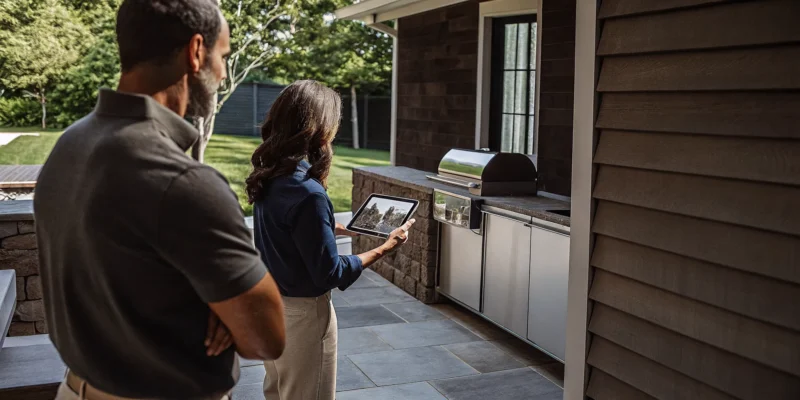
Building on Long Island comes with its own set of rules. Our weather, with its humid, salty air in the summer and freezing temperatures in the winter, can be tough on outdoor structures. An outdoor kitchen needs to be built with materials and techniques that can handle these extremes without fading, cracking, or corroding. This requires a builder who has specific local knowledge. So, the essential question becomes: which contractor installs outdoor kitchens in Suffolk County and truly understands how to build for our environment? We’ll explore the best materials for our climate, from durable porcelain countertops to solid masonry bases, and show you how to identify a contractor with the right local expertise.
Key Takeaways
- Prioritize a functional layout and durable materials: Plan your kitchen’s workflow for easy cooking and choose weather-resistant materials like porcelain and stainless steel to ensure your investment lasts through Long Island’s seasons.
- Choose your contractor based on expertise, not just price: A low bid can signal future problems, so prioritize a licensed and insured specialist with proven experience in outdoor kitchens and knowledge of local Suffolk County permits.
- Expand your kitchen into a full outdoor living area: By adding features like a pergola for shade, a nearby pool, or a sports games court, you create a cohesive and versatile backyard that offers something for everyone.
What’s Included in an Outdoor Kitchen Installation?
When you decide to build an outdoor kitchen, you’re creating a true extension of your home. A professional installation is much more than just placing a grill on your patio; it’s a comprehensive project that includes custom design, construction, and finishing touches. A great contractor handles every detail, ensuring your new space is not only beautiful but also functional and built to last. The goal is to create a seamless flow from your indoor living area to your new outdoor entertainment hub.
A complete installation package typically covers three key areas. First is the custom design and layout, which maps out the kitchen’s footprint and flow. Next comes the selection and installation of built-in appliances and features that fit your cooking style. Finally, the project includes essential elements like shade structures, lighting, and seating to make the space comfortable and inviting. Each component is carefully planned to work together, giving you a cohesive and enjoyable outdoor living experience.
Custom Designs and Layouts
Every great outdoor kitchen begins with a thoughtful design. A contractor will work with you to create a custom layout that fits your backyard and your lifestyle. The most common layouts include linear, L-shape, galley, and corner designs. An L-shaped kitchen, for example, provides extra counter space and easily incorporates bar seating, making it perfect for entertaining guests while you cook. The right layout makes your outdoor kitchen feel intuitive and turns it into a natural gathering spot.
The structure itself is a key part of the design. Your contractor will help you choose materials that complement your home’s exterior and can withstand Long Island’s weather. This often involves custom masonry to build the kitchen’s base, countertops, and any surrounding features like retaining walls or planters.
Built-In Appliances and Key Features
The heart of your outdoor kitchen is its appliances. While a high-quality grill is a must, a full installation can include so much more. Think about adding a smoker for barbecue, a pizza oven for family fun nights, or a sear burner for that perfect steak. Practical features like an outdoor refrigerator, a sink with running water, and integrated storage cabinets make cooking and cleanup a breeze. You can find many of these high-end components at the Gappsi Store.
A well-designed kitchen creates a natural workflow between your prep station, cooking area, and serving space. Your contractor will help you place each appliance strategically for an intuitive experience. Little details matter, too. Consider features like a spring-loaded grill lid, a pull-out grease pan for easy cleaning, and integrated lighting so you can see what you’re cooking after the sun goes down.
Shade Structures, Lighting, and Seating
To make your outdoor kitchen truly usable, you need to plan for comfort. A shade structure is essential for protection from the sun and light rain. Beautiful and functional pavilions and pergolas can define the kitchen area while providing necessary cover. Thoughtful lighting is just as important, creating ambiance for evening gatherings and ensuring safety around cooking surfaces and walkways.
Seating is the final piece that turns your kitchen into an entertainment zone. This can range from bar stools along a countertop to a full dining set nearby. The countertops themselves are a major feature, and you’ll want a material that is both durable and stylish. Many homeowners choose beautiful porcelain and natural stone because they hold up well outdoors and look incredible.
What Are the Best Materials for a Long Island Outdoor Kitchen?
Choosing the right materials for your outdoor kitchen is one of the most important decisions you’ll make. Here on Long Island, our weather runs the gamut from hot, humid summers to freezing, snowy winters. Your kitchen needs to withstand it all without cracking, fading, or falling apart. The best materials combine durability with a style that complements your home and backyard. Think about materials that are not only tough but also easy to clean after a summer barbecue. Let’s look at the top choices for creating a beautiful and long-lasting outdoor kitchen in Suffolk County.
Porcelain and Natural Stone Countertops
Your countertops are the workhorse of your outdoor kitchen, so they need to be tough. Forget indoor materials like laminate or marble, which can’t handle the elements. Instead, you’ll want to focus on options like porcelain and natural stone. We often recommend porcelain and natural stone pavers for their incredible durability. Porcelain is a fantastic choice because it’s non-porous, meaning it resists stains from things like wine and barbecue sauce. It’s also UV-resistant, so its color won’t fade in the sun. Natural stones like granite offer a classic, high-end look and can easily handle hot pans. Both are easy to wipe down and will give you a beautiful, functional surface for years of outdoor cooking.
Stainless Steel Appliances and Cabinetry
When it comes to outdoor kitchen appliances and storage, stainless steel is the industry standard for a reason. It’s essential to choose appliances specifically rated for outdoor use, as they are built to resist rust and corrosion from rain and humidity. The salty air on Long Island makes this even more critical. For cabinetry, stainless steel provides a sleek, modern look that is incredibly durable and low maintenance. Unlike wood, it won’t warp, rot, or attract pests. This ensures your entire kitchen structure, from the grill to the storage drawers, remains pristine and functional through every season. These built-in features are a key part of any custom home remodeling project that extends your living space outdoors.
Masonry, Brick, and Stonework
The base of your outdoor kitchen provides its structure and defines its style. Building this foundation with high-quality masonry is the best way to ensure it lasts a lifetime. A solid base built with professional masonry can be finished with a variety of materials to match your home’s aesthetic. A brick finish offers a timeless, traditional feel, while a natural stone veneer can create a more rustic, organic look. Stucco is another great option for a clean, modern appearance that can be tinted to match your home’s exterior color. These materials are not just for looks; they are incredibly resilient and can withstand ground shifts and extreme temperatures without issue, protecting your investment for decades.
Weather-Resistant Finishes and Wood Accents
While the core materials provide strength, the finishes and accents are what bring your outdoor kitchen’s personality to life. If your kitchen has a metal frame, make sure it’s powder-coated to prevent rust. For homeowners who love the warmth of wood, you can still incorporate it thoughtfully. Use naturally weather-resistant woods like ipe, teak, or cedar for decorative elements like shelving, backsplashes, or trim. Just know that wood will require more maintenance, like annual sealing, to keep it looking its best. A great way to tie everything together is by adding a matching shade structure. Incorporating similar wood or metal finishes into nearby pavilions and pergolas creates a cohesive and beautifully designed outdoor living area.
How to Choose an Outdoor Kitchen Contractor in Suffolk County
Finding the right contractor is the most important step in bringing your dream outdoor kitchen to life. The right partner will not only build a beautiful and functional space but also ensure the entire process is smooth and stress-free. With so many options in Suffolk County, it helps to know what to look for. A great contractor combines technical skill with local expertise and a commitment to your vision. This guide will walk you through the key factors to consider so you can hire with confidence and create an outdoor kitchen you’ll love for years to come.
Licensing, Insurance, and Local Experience
First things first, always verify that any contractor you consider is fully licensed and insured to work in New York. This is non-negotiable. Proper licensing confirms they meet state and local standards, while insurance protects you from any liability if an accident happens on your property. A contractor with deep roots in Suffolk County will also have valuable local experience, understanding the specific environmental factors and building styles of the area. This ensures your outdoor kitchen is not only compliant but also built to last through Long Island’s distinct seasons. A professional company will readily provide these credentials for your peace of mind.
Knowledge of Suffolk County Permits and Regulations
Building an outdoor kitchen often requires permits, and figuring out the rules of your specific town or village can be tricky. An experienced local contractor will be well-versed in Suffolk County’s specific building codes and permit requirements. They should be able to tell you exactly what’s needed for your project and manage the entire application process on your behalf. This expertise saves you from potential headaches, delays, and fines down the road. Asking a potential contractor about their experience with local permits is a great way to gauge their professionalism and familiarity with the area. They should handle the paperwork so you can focus on the exciting parts, like choosing your finishes.
In-House Teams vs. Subcontractors
When vetting contractors, ask if they use an in-house team or hire subcontractors for different parts of the job. While many companies use subcontractors, a contractor with a dedicated in-house team of designers, masons, and installers offers significant advantages. It means you have a single point of contact and a cohesive team working together on your project. This often leads to better communication, higher quality control, and a more streamlined timeline. Companies that manage everything from masonry to appliance installation internally can deliver a more consistent and personalized result, ensuring every detail aligns with the overall design.
Portfolios, Reviews, and Post-Project Support
A contractor’s past work is the best indicator of their future performance. Ask to see a portfolio of their completed outdoor kitchen projects. Look for a style that aligns with your vision and pay attention to the quality of the craftsmanship. You can often find project galleries on their website or even video tours on their YouTube channel. Beyond their curated portfolio, check online reviews and testimonials to get a sense of other clients’ experiences. Finally, ask about post-project support and warranties. A reputable contractor stands by their work and will be there to help long after the project is finished, ensuring your investment is protected.
Common Mistakes to Avoid When Hiring a Contractor
Choosing the right contractor is one of the most critical decisions you’ll make for your outdoor kitchen project. The right partner brings your vision to life, while the wrong one can lead to delays, budget overruns, and a disappointing result. Investing a little extra time in your search helps you find a reliable professional and avoid common pitfalls that can turn your dream project into a headache. Here are four key mistakes to steer clear of when you start your search.
Choosing Based on Price Alone
It’s always tempting to go with the lowest bid, but this is one of the biggest mistakes you can make. An unusually low price can be a red flag for subpar materials, inexperienced labor, or a contractor who has misunderstood the project’s complexity. Often, these low bids lead to surprise costs down the road or a finished product that doesn’t last. Instead of focusing only on the initial price, consider the overall value. A well-built outdoor kitchen made with durable materials like porcelain and natural stone is an investment that will pay off for years to come.
Skipping the Portfolio and Reference Check
Never hire a contractor without seeing their work and hearing from past clients. A reputable professional will be proud to share a portfolio of their completed projects. Ask to see examples of outdoor kitchens they have built, not just general construction. This gives you a clear idea of their style and quality. You can even check out their YouTube channel to see their work in action. Don’t stop there; ask for references and take the time to call them. Speaking with previous customers gives you honest insight into the contractor’s communication, reliability, and professionalism from start to finish.
Not Defining the Project Scope and Timeline
A vague plan is a recipe for disaster. Before any work begins, you need a detailed, written contract that clearly defines the entire project scope. This document should outline everything, including the specific materials, appliance models, layout dimensions, payment schedule, and an estimated timeline. Without this clarity, you open the door to misunderstandings, unexpected changes, and budget creep. A well-defined scope ensures everyone is on the same page and that your finished kitchen is as functional as it is beautiful, avoiding common problems like poor layout or inadequate storage. This is a standard practice for any major home remodeling project.
Overlooking Outdoor Kitchen Specialization
Building an outdoor kitchen isn’t the same as remodeling an indoor one. This type of project requires specific expertise in weather-resistant materials, proper ventilation for grills, outdoor-rated electrical and plumbing, and durable construction techniques. A general contractor may not have the specialized knowledge to handle these unique challenges, which can lead to safety hazards or a kitchen that deteriorates quickly. Look for a contractor who specializes in outdoor living spaces. They will understand how to design a functional layout and seamlessly integrate your kitchen with other features like pavilions or pergolas for a truly cohesive backyard retreat.
How Much Does an Outdoor Kitchen Cost in Suffolk County?
Figuring out the budget for your dream outdoor kitchen is a huge step. The truth is, there’s no single price tag. The cost can range from a few thousand dollars for a simple grill island to tens of thousands for a fully equipped culinary space. The final investment depends entirely on your vision, the materials you choose, and the complexity of the installation. Understanding the key cost drivers will help you set a realistic budget and have productive conversations with your contractor. It’s all about knowing what questions to ask so you can get a clear picture of the total investment from the very beginning.
Factors That Influence the Final Price
Several key factors drive the final price of an outdoor kitchen. The size and layout are the most obvious, a small, straight-line counter will cost less than a large, L-shaped kitchen with bar seating. The appliances you select, like the grill, refrigerator, and sink, are also major variables. Beyond that, your choice of materials plays a huge role. Durable and beautiful options like porcelain and natural stone for countertops and high-quality masonry for the base structure will influence the cost. Finally, don’t forget about utilities. The expense of running gas, electrical, and plumbing lines to your new kitchen space is a critical part of the budget that is sometimes overlooked in initial quotes.
What to Expect in a Detailed Estimate
A professional contractor will provide a clear, itemized estimate that leaves no room for confusion. This document should break down the costs for labor, materials, and any other services. It’s important to ask exactly what is included. For instance, does the price cover the appliances themselves, or just the installation? Are the fees for licensed plumbers and electricians part of the main quote or a separate expense? A trustworthy estimate will specify these details. It should also reflect a thoughtful design that considers your home’s layout, ensuring your new kitchen is functional and not built too far from your indoor one. A good contractor provides a comprehensive plan, not just a number.
The Installation Process From Start to Finish
Seeing your outdoor kitchen go from a simple idea to a fully functional part of your home is an exciting experience. Understanding the construction journey can help you feel confident and prepared for what’s ahead. A professional contractor will walk you through every phase, ensuring the project runs smoothly and your vision is perfectly executed. The process is generally broken down into three key stages: the initial design and planning, the site preparation and logistics, and the final construction and walkthrough.
Each step is crucial for creating a beautiful and durable outdoor kitchen that fits your lifestyle. The initial consultation is where your ideas take shape, turning your dreams into a tangible design. Next, the behind-the-scenes work of securing permits and preparing the site lays the foundation for a successful build. Finally, the construction phase brings everything to life, culminating in a final inspection to guarantee every detail is just right. At Gappsi, our team has refined this process over decades, making it a seamless and enjoyable experience for homeowners across Long Island. Our goal is to handle the complexities so you can focus on the fun part: anticipating your first cookout. You can see some of our finished projects on our YouTube channel to get inspired.
Step 1: Initial Consultation and Custom Design
This is where the magic begins. Your initial consultation is a collaborative meeting where you can share all your ideas, from the appliances you want to the overall vibe you’re hoping to create. It’s the perfect time to discuss how you plan to use the space, whether for intimate family dinners or large neighborhood parties. A great contractor will listen carefully and offer expert advice to help refine your vision.
At Gappsi, we provide complimentary masonry design services to create a custom layout tailored to your backyard and needs. We’ll help you map out everything, ensuring the workflow is practical and the style matches your home’s aesthetic. This step is all about communication, so don’t hesitate to ask questions and explore different possibilities.
Step 2: Permits, Site Prep, and Material Sourcing
Once your design is finalized, it’s time to handle the logistics. Before any ground is broken, your contractor will need to check with local authorities about necessary permits and regulations in Suffolk County. An experienced local contractor will manage this entire process for you, ensuring your project is fully compliant with all building codes. This step is critical for avoiding any potential headaches or delays down the road.
Next, the team will prepare the site, which may involve grading the land, running utility lines for gas, water, and electricity, and laying the foundation. At the same time, your contractor will source all the high-quality materials needed for the job. This includes everything from durable porcelain and natural stone for your countertops to weather-resistant cabinetry and top-of-the-line appliances.
Step 3: Construction and the Final Walkthrough
With the plans approved and materials on-site, the construction phase begins. This is when you’ll see your outdoor kitchen truly take shape as the skilled crew gets to work. A professional contractor will manage the entire build, from installing the masonry and cabinetry to connecting the appliances and lighting. They will ensure the project stays on schedule and that the craftsmanship meets the highest standards.
After the last tile is set and the final appliance is installed, you’ll do a final walkthrough with your project manager. This is your opportunity to inspect every detail and make sure everything is exactly as you envisioned. It’s the last quality check before the project is officially complete. Once you give your final approval, your new outdoor kitchen is ready for you to fire up the grill and start making memories.
Pair Your Outdoor Kitchen With Other Living Features
An outdoor kitchen is the heart of your backyard, but the features you build around it are what create a complete living space. Thinking about how your family will use the entire area helps you design a cohesive and functional retreat. By pairing your kitchen with other elements, you can transform a simple cooking station into the ultimate destination for relaxation and entertainment.
Pavilions, Pergolas, and Gazebos
An outdoor kitchen is about more than just cooking; it’s about creating an inviting space for everyone. Adding a structure like a pavilion or pergola provides essential shade and shelter, making your kitchen comfortable on hot summer days or during a light drizzle. These structures help define your outdoor room, giving it a cozy, finished feel. You can hang lights or fans to extend your entertaining season. Gappsi offers beautiful pavilions and pergolas that integrate perfectly with your kitchen design, creating a stylish and practical hub for any get-together.
Swimming Pools and Water Features
Nothing says luxury like having a beautiful pool just steps away from your outdoor kitchen. This combination creates a seamless flow for entertaining, allowing guests to move easily between swimming and dining. Imagine serving fresh-off-the-grill snacks to kids playing in the water or enjoying a cool drink by the poolside without running inside. Integrating your kitchen with one of Gappsi’s custom swimming pools establishes a resort-like atmosphere in your own backyard. The sound of a nearby water feature can also add a sense of tranquility, making your outdoor space a true oasis.
Synthetic Turf and Game Courts
To make your backyard the go-to spot for fun, consider adding a dedicated area for recreation near your outdoor kitchen. Low-maintenance synthetic turf offers a clean, green space for kids to play, while a custom sports games court can provide endless entertainment for the whole family. These features keep the fun close by, so you can keep an eye on the action while you’re grilling. It turns your yard into a versatile hub for both cooking and leisure, ensuring there’s something for everyone to enjoy during your outdoor gatherings.
Ready to Build Your Suffolk County Outdoor Kitchen?
Choosing the right contractor is the most important decision you’ll make for your outdoor kitchen project. The right team turns your vision into a beautiful, functional space that lasts for years, while the wrong one can lead to headaches and costly repairs. Working with experienced outdoor kitchen contractors ensures your project is handled with care and attention to detail from start to finish. It’s about more than just assembling appliances; it’s about creating a seamless extension of your home where you can cook, entertain, and relax. With a project of this scale, partnering with a team that understands the nuances of Suffolk County building codes, climate, and design trends is key to a successful outcome. A local expert will know which materials stand up to salty air and harsh winters, and how to design a layout that works with your specific property. This local knowledge prevents common issues and ensures your investment is protected for years to come. They can guide you through the entire process, from initial design to final installation, making sure every element is built to last and functions perfectly for your needs.
Why Partner With Gappsi for Your Project
At Gappsi, we combine decades of local experience with a commitment to exceptional quality. Our custom designs are built to withstand the Long Island climate because we use the best materials, from durable porcelain and natural stone countertops to expert masonry work. We don’t just build outdoor kitchens; we create cohesive outdoor living environments. Our in-house team of designers and craftsmen manages every detail, ensuring a smooth process and a final product that perfectly matches your home’s style. We understand the specific needs of Suffolk County homeowners, delivering a smarter, more efficient solution for modern outdoor living.
How to Get Started With a Consultation
The best time to start planning your outdoor kitchen is now. When planning starts too late, homeowners often have to make compromises on layout, utilities, and materials. We begin with a detailed consultation to understand your goals and explore all the possibilities for your space. Our design team will work with you to create a custom plan that fits your lifestyle and budget. We provide clear, detailed estimates so you know exactly what to expect before any work begins. Ready to take the first step? Contact Gappsi today to schedule your complimentary outdoor kitchen consultation and start designing the backyard of your dreams.
Related Articles
- Hiring an Outdoor Kitchen Contractor on Long Island
- Amazing Outdoor Kitchens Long Island – Gappsi Group
- Outdoor Kitchen Design & Installation in Long Island | Gappsi Inc
- Your Guide to Outdoor Kitchen Designers on Long Island
- Luxury Outdoor Kitchen on Long Island: A Case Study
Frequently Asked Questions
How long does it take to build an outdoor kitchen? The timeline for an outdoor kitchen project varies because every job is custom. A simple grill island might be completed in a few weeks, while a complex kitchen with extensive masonry and utility lines could take a couple of months. The process includes design finalization, securing local permits, site preparation, and construction. A contractor with deep experience in Suffolk County can often streamline the permitting process, which is a major factor in the overall schedule.
Can I add an outdoor kitchen to my existing patio? Yes, in many cases you can build an outdoor kitchen on an existing patio. A professional contractor will first need to assess the condition and structural integrity of your current patio to ensure it can support the weight of the new kitchen structure and appliances. The project may involve running new utility lines for gas, water, and electricity beneath the existing surface. It’s a great way to enhance a space you already use.
Do I need to hire my own plumber or electrician? You shouldn’t have to. A full-service outdoor living contractor, like Gappsi, manages all aspects of the installation with their in-house teams or trusted, licensed partners. This means they coordinate the plumbers, electricians, and masons for you. This approach ensures that all the work is done to code and that the project runs smoothly without you having to juggle multiple contacts and schedules.
What’s the difference between an indoor and an outdoor-rated appliance? The main difference is durability. Outdoor-rated appliances are built with materials like high-grade stainless steel that resist rust, corrosion, and damage from sun, rain, and salty air, which is especially important on Long Island. Their electrical components are sealed to protect against moisture, ensuring they operate safely and reliably. Using an indoor appliance outside is not only a safety risk, but it will also likely break down very quickly.
I’m not sure what design I want. Where do I even start? That’s completely normal, and it’s the perfect place to begin. The first step is the initial consultation with a design professional. You can start by thinking about how you want to use the space and what your must-have features are, like a pizza oven or bar seating. A good designer will listen to your ideas, look at your property, and help you create a custom layout that is both beautiful and perfectly suited to your cooking and entertaining style.