Cleaning and Sealing Concrete Pavers Process

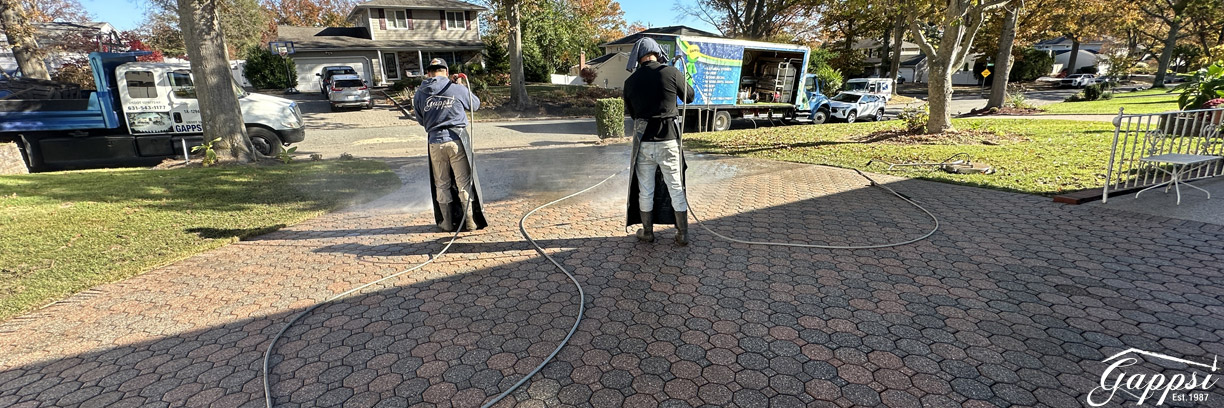
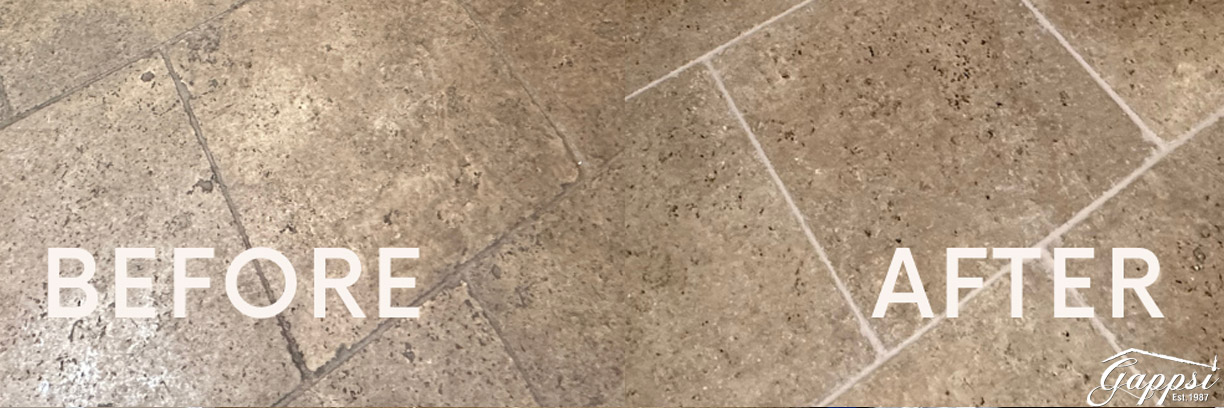
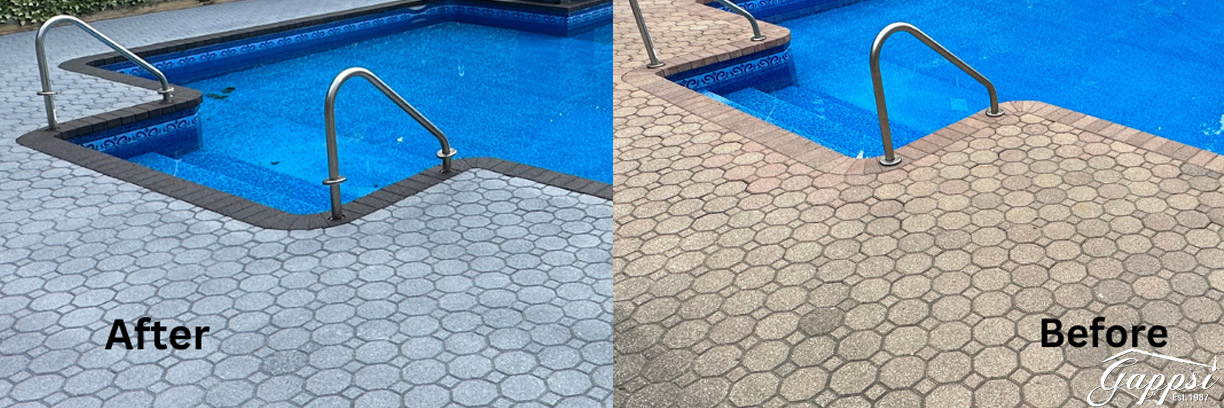
cleaning-and-sealing-concrete-pavers-process-before--afterThis blog will discuss cleaning and sealing concrete pavers process and why it is important.  Whether you have a charming hardscape, a beautiful driveway, or an intricate walkway, your hardscape’s longevity and visual appeal depend on proper maintenance. In this blog, we’ll explore the significance of regular cleaning and sealing pavers in your hardscapes, helping you understand when, how, and why to embark on these crucial steps for preserving the beauty of your outdoor spaces.

  1.  Do stone patios, driveways, and other hardscapes need to be pressure washed?

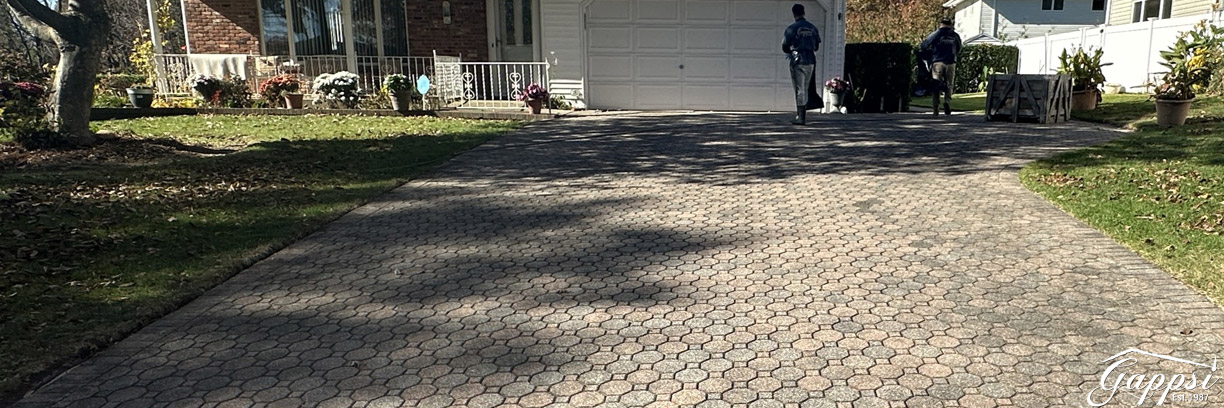
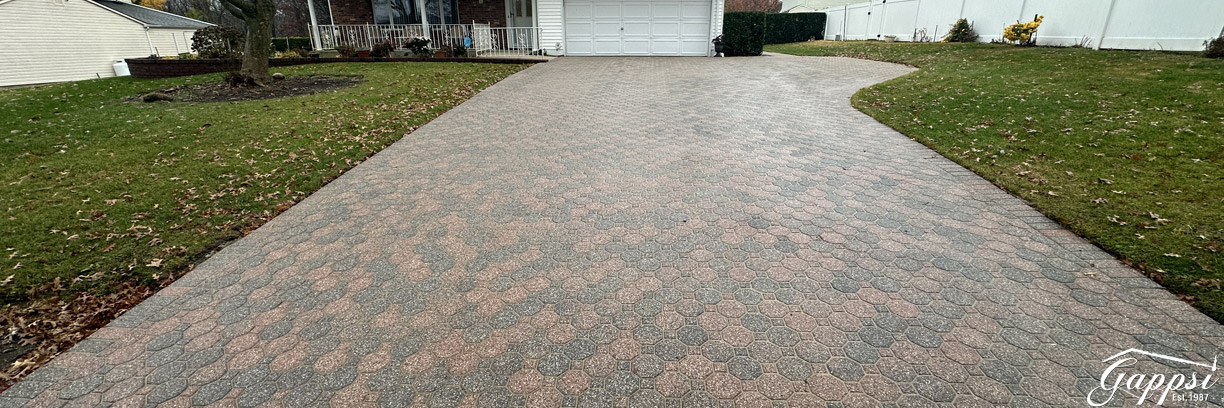
This is everyone’s first question, and the answer is NO.  The most popular interlocking concrete pavers manufacturers used in Long Island NY are Nicolock, Cambridge, Techo Bloc, Unilock, and Belgard to name a few. These pavers have been installed on patios and driveways for the past 30 years.  When you see a 10-year-old concrete paving stone floor you can notice with the naked eye that the surface is faded and lost its finer texture on the surface layer.

Patio and driveway pavers get dirty over time and grow black mold, moss, and weeds. Most paver owners think of hiring a pressure washing company to clean them or run out to the local hardware store rent a pressure washer and try to pressure wash the pavers themselves. Pressure washing concrete pavers, especially newer ones, can easily damage the surface finish and we strongly suggest not pressure washing unless you are highly experienced and have the right equipment to pressure wash pavers.

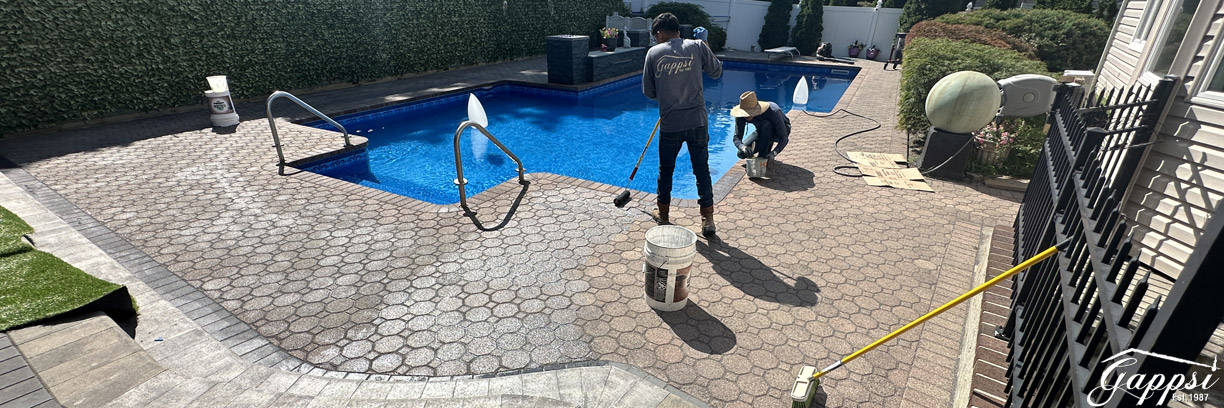
step-1-cleaning-and-sealing-concrete-pavers-processPressure-washing concrete pavers will appear to clean them at the time.  The process weathers the surface of the pavers therefore aging and expediting the aging process. As you pressure wash the concrete surface of the pavers, it becomes rougher, and in a short time dust and dirt will start to accumulate in the microscopic pores resulting in the surface being dirty again.  Often people get caught up in the cycle of pressure washing their pavers every springtime.   They do not realize every time it is done they worsen the problem instead of resolving it. 

  2.  Do concrete pavers need to be sealed? 

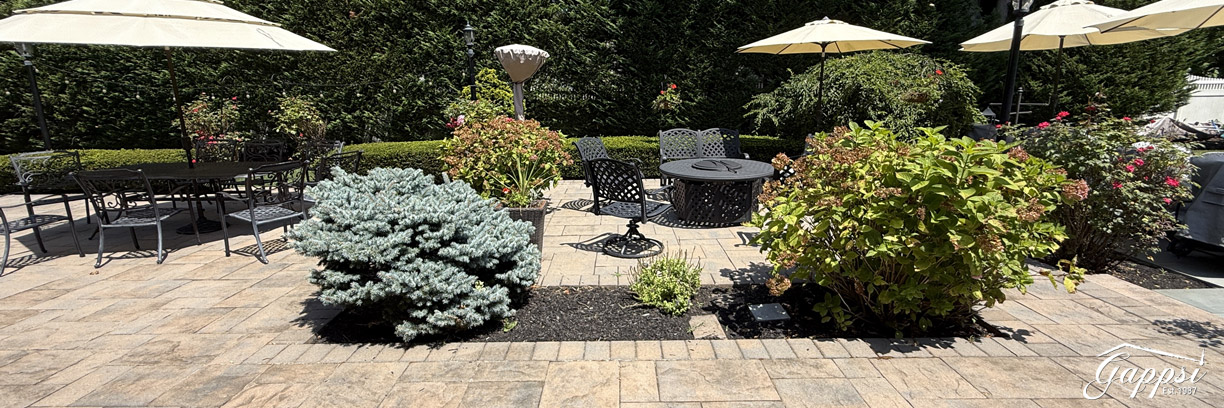
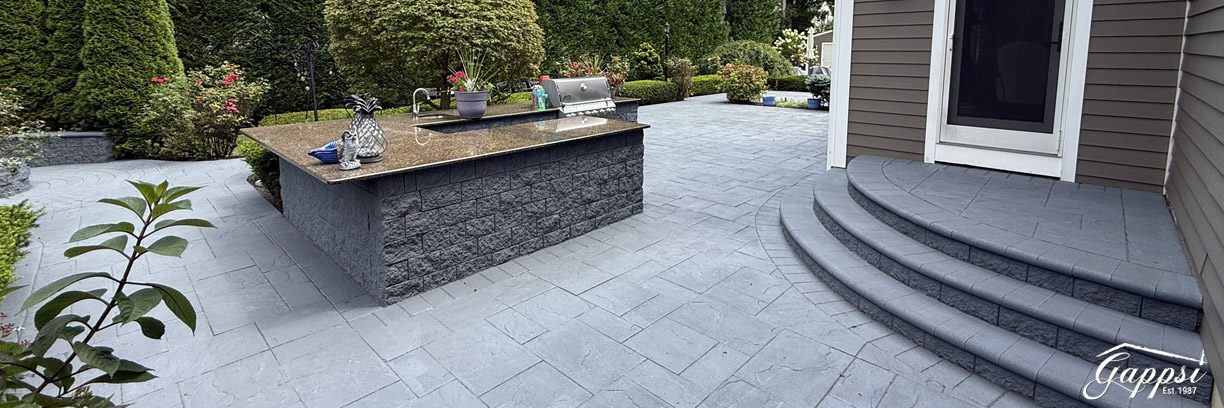
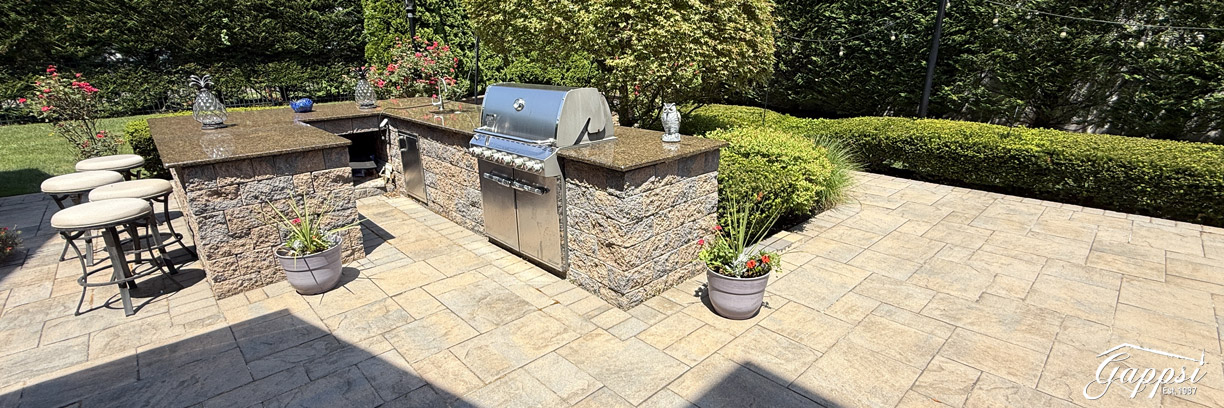
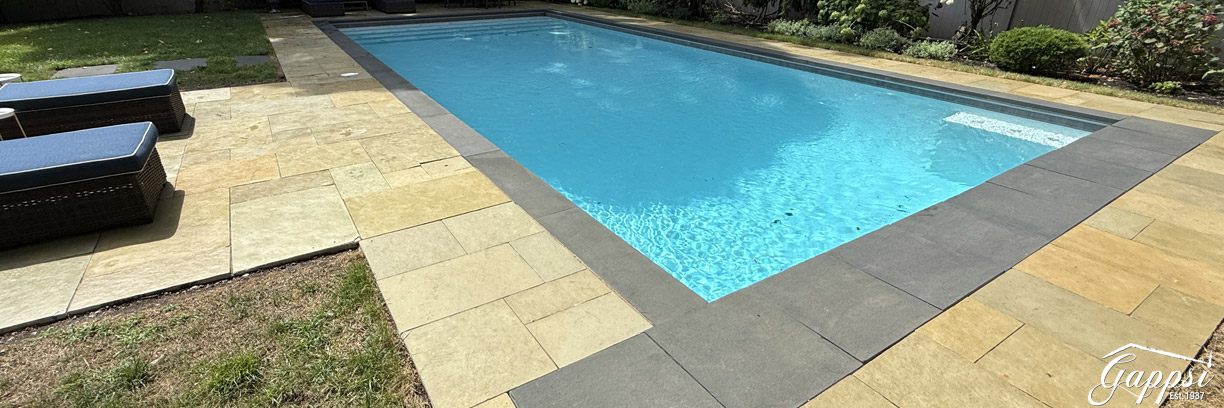
This is everyone’s next question, and the answer is YES.  Paver sealant is an important maintenance tool to keep paver patios, walkways, driveways, and pool decks looking as beautiful as the day they were installed.   To maintain the look for years to come a layer of protective sealer must be applied to the surface of the finished outdoor paver.

Concrete surfaces are corrosive to the elements and will weather over time, losing their shine and fine new texture. Just like many products need protection such as metal needs paint or a car needs wax to revive and restore its luster.  Any surface exposed to the elements after many years will lose its vibrancy and fine finished texture.

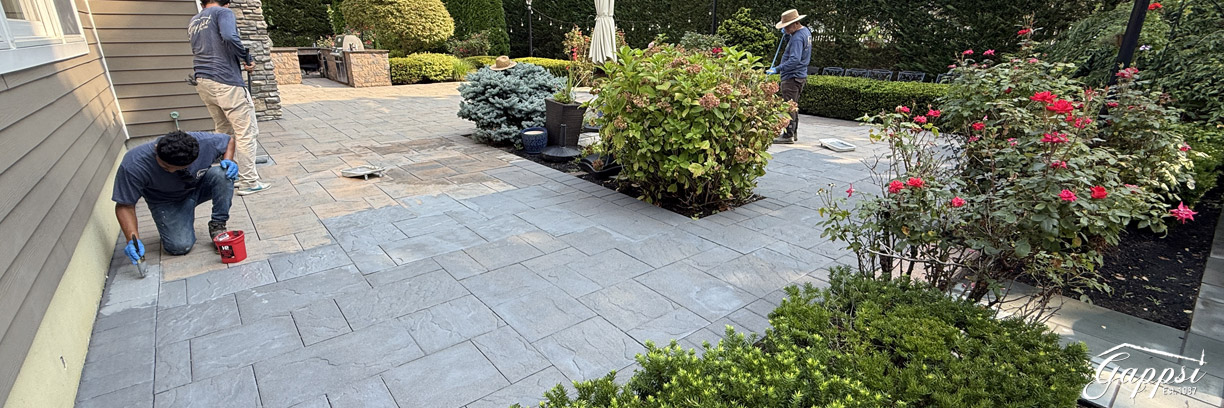
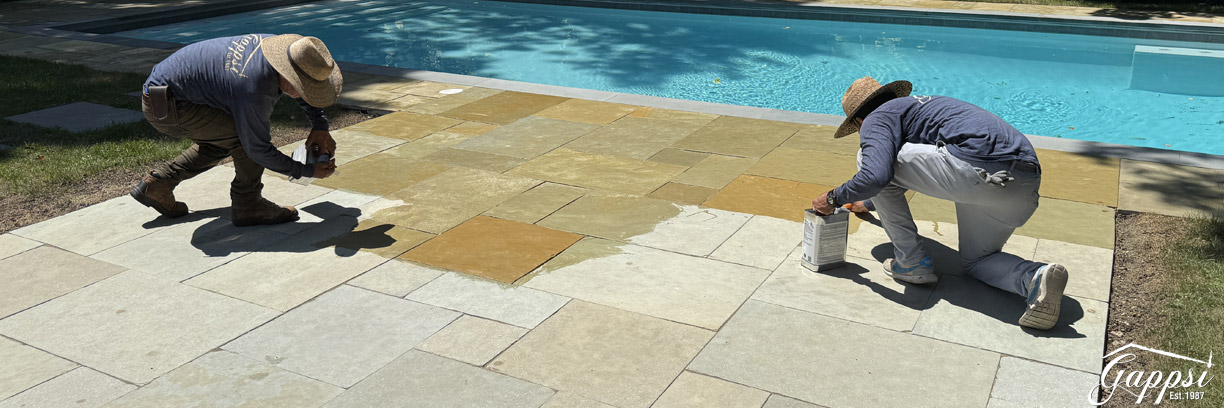
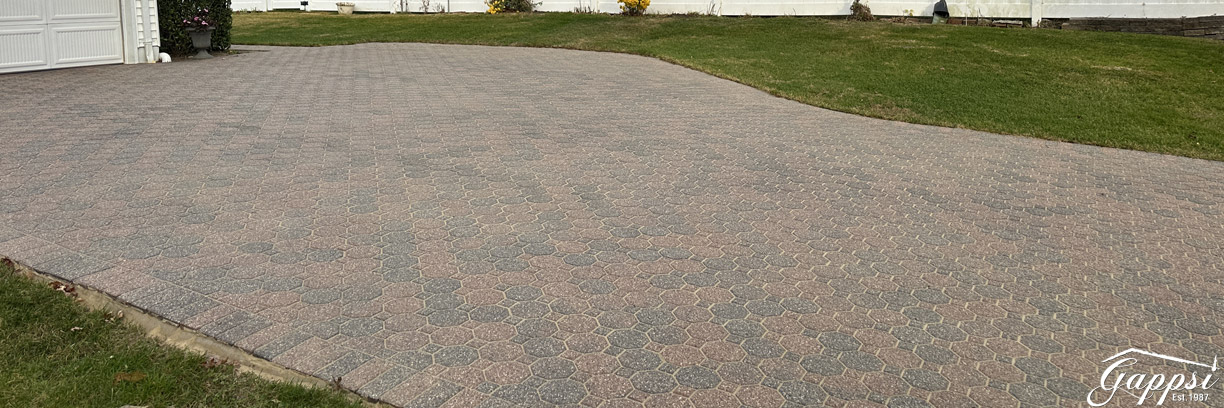
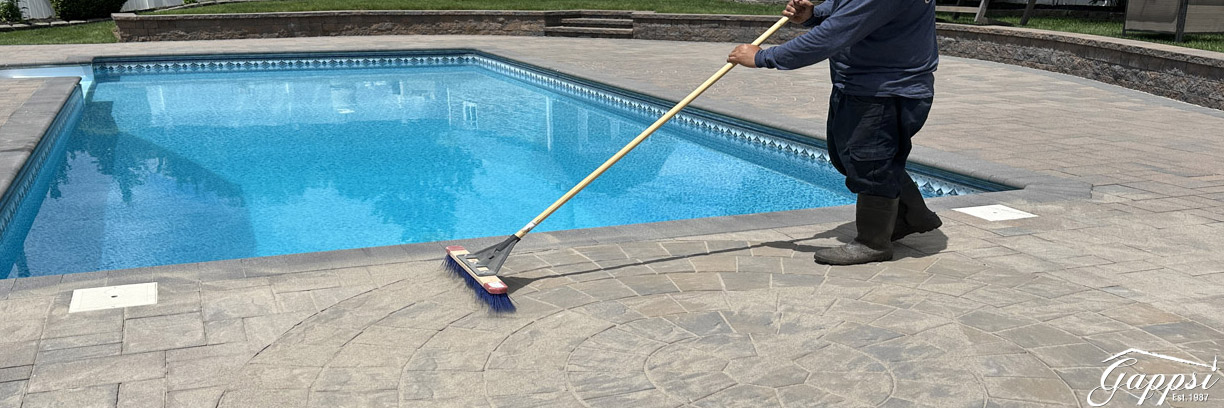
step-2-cleaning-and-sealing-concrete-pavers-processWe recommend sealing your pavers to ensure their longevity and the manufacturer’s finish to last.  Gappsi uses a synthetic finish product to preserve the paving stones.  Sealers will make the pavers surface water repellent thus making them weatherproof.  When you seal your pavers you accomplish many things besides weathering protection.  You bring out the colors that fade over time even though the color is through and through or even a layer of half an inch thick.  The eye sees the very top of the pavement.  In only a few short years they could become faded due to the weathering from the rain or sun rays.

Contact Gappsi Today For An Estimate

In addition, the color could fade simply by the curing process of the cement structure itself of which the concrete pavers are manufactured. Using a pressure washer over concrete pavers will further degrade the surface and age it faster.  Sealer products are clear and transparent.  They brighten and magnify the colors of the surface. That’s what the eye sees.  The colored light that the sealer reflects. The smoother the surface of the pavers the more light is reflected off it.  A weathered surface allows dust to collect more easily and does not reflect the light as well as a preserved smoother surface does. That is why a sealed newer surface appears to be much more colorful than a sealed more weathered surface that has been left to weather under the elements for too long without a synthetic coat protection like the proper sealer.

Perhaps the most important benefit of sealers is that they make pavers less porous, which helps limit stains, since the pavers are less able to soak up the oil or dirt, etc. Sealing your concrete pavers makes cleanup of spills easier if they do happen.

  3.  How long should you wait before cleaning and sealing your pavers? 

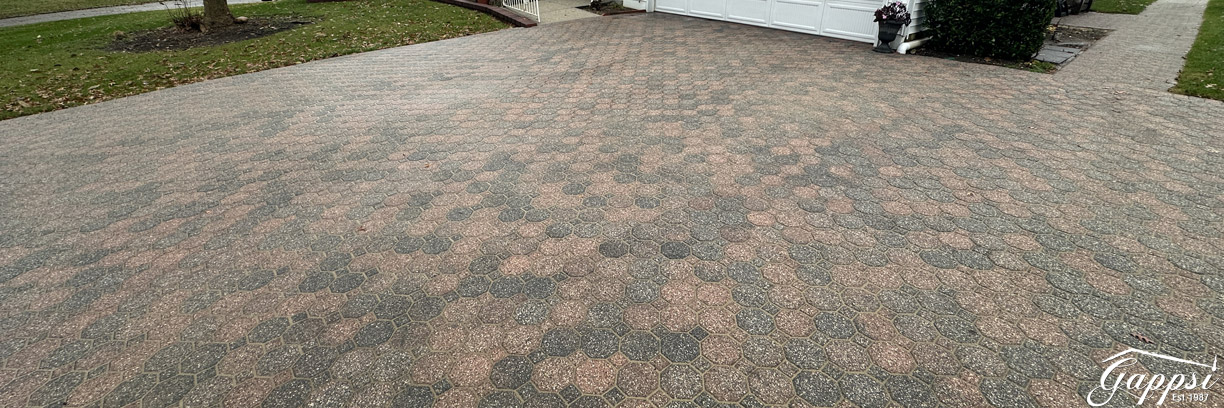
Gappsi has been installing pavers for over 40 years and sealing them for more than 20 years.  Our experience and best practice is to take care of any colored concrete surface and pavers installed on driveways and patios.  New installations should weather under the natural elements of rain, sun, and snow for at least 2 years. During this time the concrete structure of the paving stones will cure completely and any efflorescence that has reason to surface on the pavement will be washed away naturally.  The top surface of the concrete pavers has weathered enough to have developed a very fine uniform sandy texture.  This is not visible to the naked eye but enough for a sealant to grab on and allow it to penetrate the substrate. This will make the sealer applied do its job of protecting the surface. 

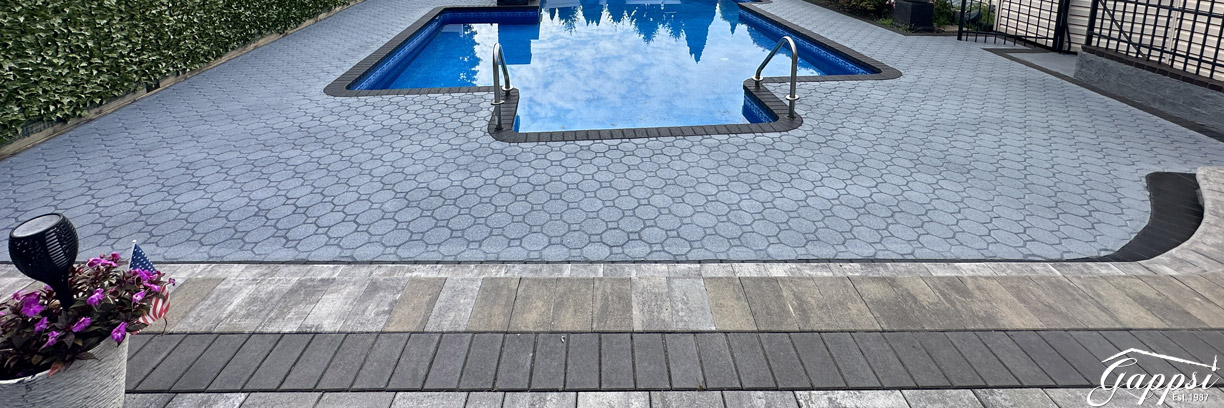
step-3-cleaning-and-sealing-concrete-pavers-process  4.  What is the right sealer and how do you select the one that fits your pavers?

This is where it can get more complicated, costly, or worsen the situation. If you don’t use the right product or the right company to seal your pavers you could degrade the surface of the paving stones.  It is important to start with what is your result you are looking to achieve.  What are your expectations for the project?  Besides planning to protect your outdoor floor investment long term, you need to ask yourself a few questions: 

  • Do you want to see your pavers color in a natural form as they look when they are dry? 
  • Do you like the wet look and want to enhance the color?
  • If you prefer the color enhancement option, what kind of shine? Shiny or Mat
  • Do you want a plastic shine look or do you like a mat color-enhanced look?

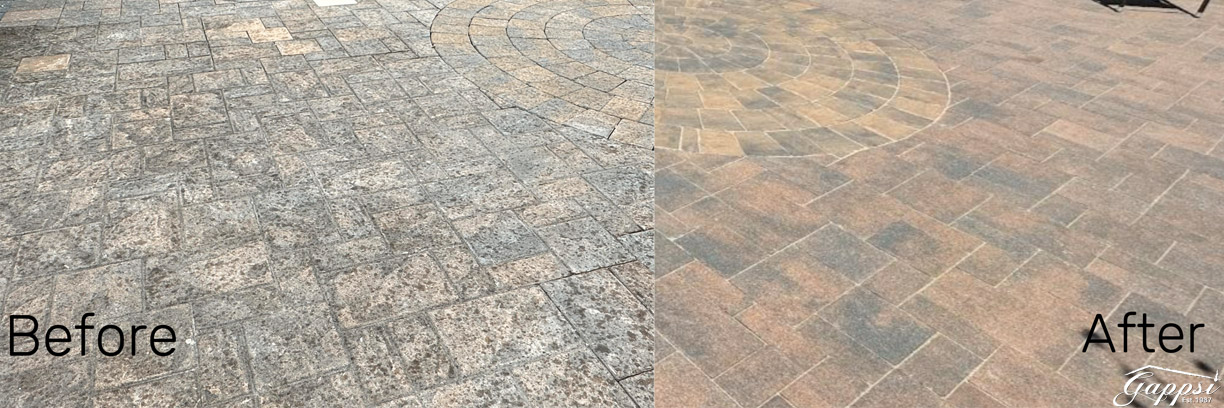
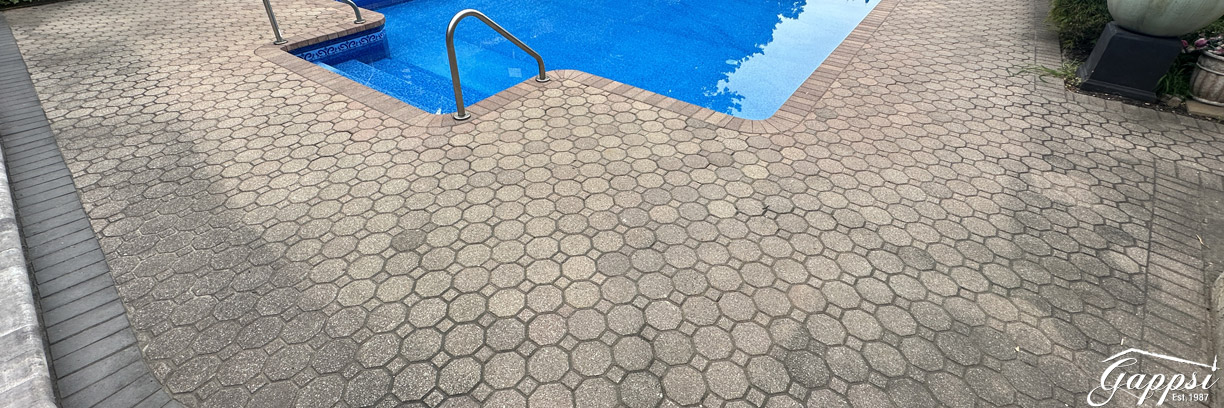
step-4-cleaning-and-sealing-concrete-pavers-processWhat is Your Preference? 

Based on your preferences we will choose the sealer products that will accomplish the look. There are many manufacturers of sealers on the market and knowing which one is better could be challenging.  In addition, the manufacturer of the sealer you select will have different ways to apply the product.  The application and knowledge of cleaning and sealing pavers are what will give you the correct result.

The quality of your sealed paving stone patio and driveway pavers comes down to the knowledge of the person you trust and hire to complete the project.

Applying sealer to your pavers does NOT automatically guarantee all the good things mentioned above, a poorly sealed job could create a worse eye sore.  It also is an expensive and challenging situation to rectify.  This is because there are not many quality sealer applicators on the market.  There are even fewer applicators willing to take the challenge or even know how to rectify a badly sealed patio and make it look right.

  5.  Best practices for sealing concrete paving stones.

We recommend lightly washing the pavers with a surface cleaner.  This will clean the floor uniformly and most importantly use a pressure washing system that makes hot water at least 150 Fahrenheit.  Once the surface is cleaned of any debris as well as old sand from the joints.  You can go at least one inch deep into the joint.  The floor has to be left until completely dry. The following step is to fill the joints of the pavers with Polymeric sand, let it harden, and then seal the pavers.)

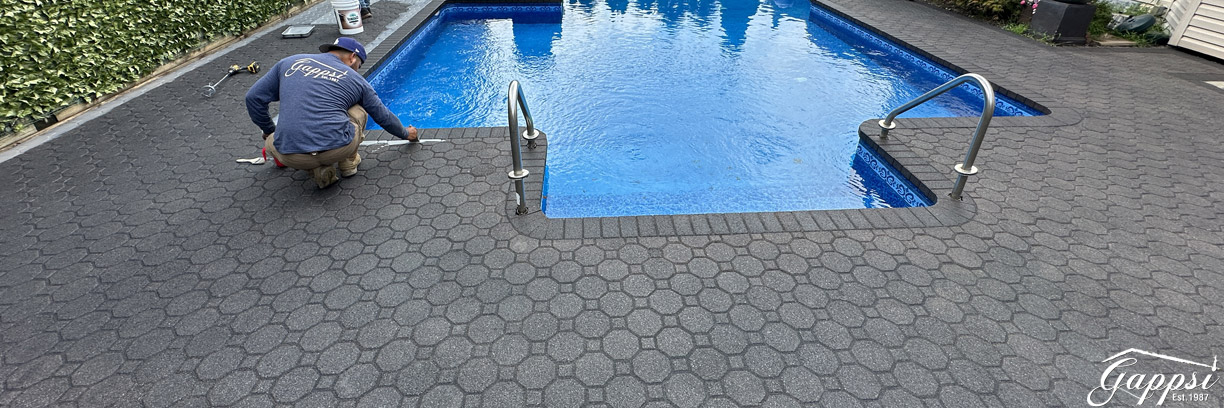
step-5-cleaning-and-sealing-concrete-pavers-process  6. How many types of sealers are there and what are the differences?

Four primary types of sealers can be used to seal concrete pavers: polyurethane, acrylic, Solvent and lastly waterbase based sealers. All these sealers can be modified by the different producers to accomplish different results. Acrylic and polyurethane sealers are the top coating that primarily covers the surface of concrete pavers, they offer color enhancement by magnifying the color pigments on the paver surfaces. solvents and waterbased sealers are penetrating sealer and can offer both a natural look and color enhancement.  If a natural look is desired in the paving stone then a solvent sealer with non enhancers or water-based solution should be used.

  7.  Which sealer is better to use?

All sealers are good as long as you understand how to apply them. 

  • Understanding the surface you are sealing
  • The age of the concrete pavers
  • Is it concrete or a natural stone surface
  • Are you going to apply a slip resistance on the surface?
  • Is it a horizontal or a vertical surface,
  • Is the area damp, the porosity of the product you are planning to seal is important to note.
  • The application procedure of each product changes based on the time of the year you are applying it and the humidity and weather (temperature).

Gappsi Cleaning and Sealing Paving Stones Process

Our experience in cleaning and sealing concrete pavers is not only shown through our expert staff in handling the products but also in the timing between each step of the process.  Using the right right people, with the right equipment to ensure a job is done right for YOU! 

STEP #1

The Gappsi process starts with focusing on losing up and the removal of soil and debris from the paver’s joints using a state-of-the-art high water volume pressure washer that produces 200 Fahrenheit hot water.

STEP #2

The 2nd step is to wash the floor surface using extractor surface cleaners.  This will clean the floors uniformly.  In addition, the suction produced by the surface cleaner extracts any loose material.  This material is loosened and sitting in the pavers gaps.  We pump them out and away from the area being prepared for sealing.

STEP #3

Once the paving stone joints and surface have been completely cleaned.  Allow the patio stones to completely dry. The selection of joint filling material is based on the selection of the sealer we use.

STEP #4

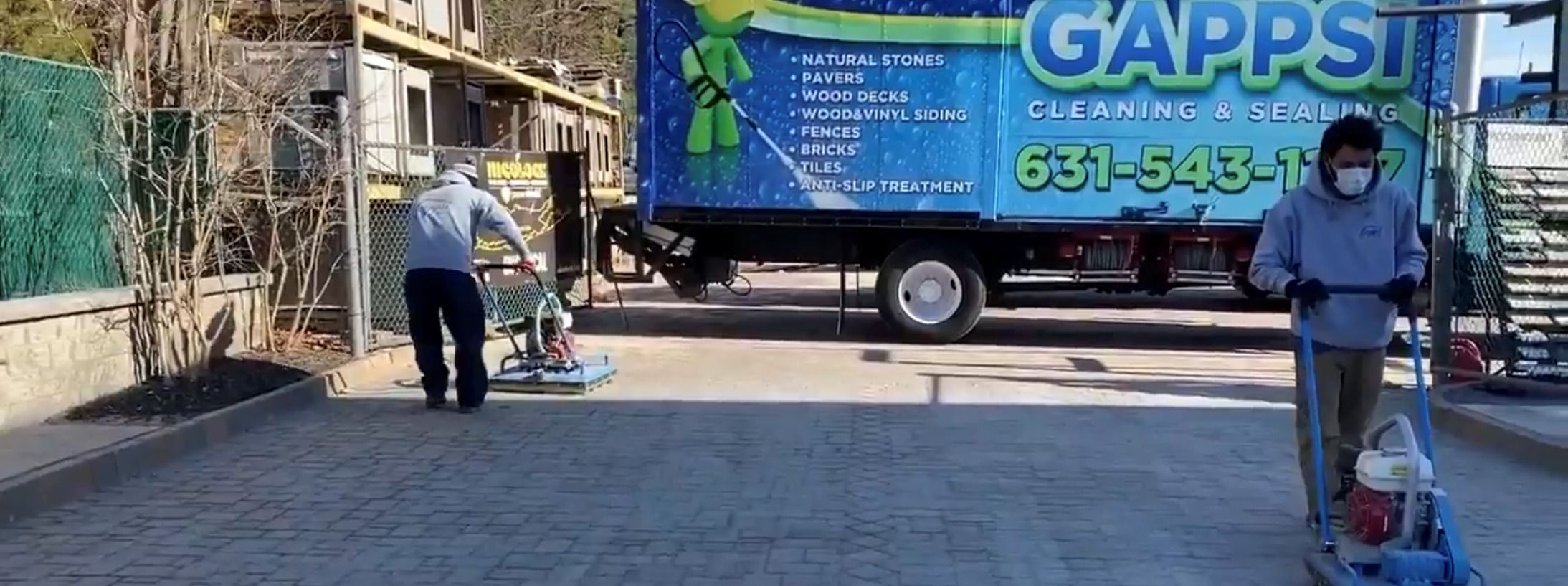
It is important to mention a few things.  If we are sealing a concrete paving surface using a color enhancer sealer.  Then we use a urethane sealer.  In this case, we also use silica sand (color of choice) to fill the joints.  Next, we vibrate the pavement with a specific vibratory roller compactor made for this application process.  This helps the sand settle in between the paver joints and fills the joints tight. Lastly, urethane sealer is applied.

STEP #5

One person sprays the sealer onto the concrete pavers.  The second person moves the sealer around with a blower filling the joints.  This process ensures that the joins fully absorb the sealer when applied to its full depth.  The surface of the pavers becomes sealed in the process while we focus on flooding the joints.  

A second coat of sealer is applied right after while the first coat is still tacky strengthening the seal to the stone.  This binds to the first coat.

STEP #6

When solvent sealers are used the process changes with the use of sand.  We use Polymeric sand instead of Silica sand.  Polymeric sand is a combination of silica sand and polymer manufactured and delivered in dry bags.  After applying to the paver joints and vibrating down, water is applied.  The water activates the polymeric in the sand and causes the sand to harden when dry. The last step is applying the solvent sealer over the entire floor surface.

A great job is only delivered by the following criteria:

  1. the experience and knowledge of the applicator
  2. the right preparation of the surface
  3. the proper equipment used
  4. the appropriate type of sealer selected for the desired outcome.

SCHEDULE A MEETING TODAY WITH GAPPSI

View Gappsi’s YouTube Channel for Videos of the Cleaning and Sealing Concrete Pavers Process

Share this page:

Grout Color Restoration: A Simple DIY Guide

Before you start planning a costly and messy tile renovation, take a closer look at what’s really making your room feel dated. Often, it’s not the tiles themselves but the discolored, stained grout between them. There’s a powerful secret for achieving a dramatic refresh without the headache of a remodel. This guide is your complete resource for grout care, from simple DIY cleaning solutions to the transformative process of grout color restoration. This technique doesn’t just clean; it applies a new, durable layer of color that seals and protects, giving your entire room a brand-new look and feel.

What is Grout and Why Does It Get Dirty?

If you have tile in your home, you have grout. It’s that stuff in between the tiles that seems to have a magnetic attraction to dirt. But what exactly is it? Grout is a dense mixture, typically made of cement, water, and sand, that fills the gaps between tiles. Its main jobs are to hold your tiles securely in place and prevent moisture from seeping underneath them. While it’s a crucial part of any tile installation, its porous nature is what makes it a challenge to keep clean. Think of it like a tiny sponge that’s ready to soak up any dirt, spills, or grime it comes into contact with. This is why a pristine tile floor can still look dingy if the grout lines are stained. Keeping your grout clean not only makes your space look brighter but also helps protect the longevity of your tile work.

Understanding the type of grout you’re dealing with can also make a difference in your cleaning approach. Different types are used depending on the tile and location. For homeowners with beautiful porcelain or natural stone, knowing your grout is the first step to proper care. While you can tackle surface-level cleaning yourself, sometimes deep-set stains or widespread discoloration require a professional touch. For a truly transformative result, especially on outdoor patios or high-traffic indoor areas, our restoration and sealing services can bring your grout and tile back to life, ensuring it stays beautiful for years to come.

Understanding Grout Composition and Types

At its core, grout is a simple but effective material. It’s a thick paste that acts as the glue and sealant between your tiles. Because it’s made with cement and sand, it has a naturally porous texture. This means it’s filled with tiny, microscopic holes that are perfect for trapping dirt, soap scum, and mildew. According to experts at Lioli Ceramica, this porosity is the primary reason grout gets dirty so easily. Regularly cleaning your grout isn’t just about looks; it helps maintain the integrity of your tile installation by preventing grime from breaking down the material over time. A little bit of maintenance goes a long way in keeping your tiled surfaces looking fresh and new.

Why Grout Collects Dirt

The porous nature of grout is its biggest weakness when it comes to cleanliness. Those tiny holes and rough texture act like a net, catching everything from spilled coffee to muddy footprints. In bathrooms, this porosity allows soap scum and moisture to settle in, creating a perfect environment for mold and mildew to grow. In kitchens, it’s food splatters and grease. Over time, this buildup doesn’t just sit on the surface; it works its way deep into the grout, leading to stubborn discoloration that can’t be wiped away. That’s why a quick mop doesn’t always do the trick for grout lines, and a more targeted cleaning approach is often necessary to lift that embedded grime.

Common Grout Types

Not all grout is created equal. The most common type you’ll find is sanded grout, which contains fine sand to provide extra strength. It’s used for wider grout lines (more than 1/8 inch) and is a go-to for flooring because of its durability. For more delicate tile or smaller gaps, unsanded grout is used. It has a smoother texture and adheres better to vertical surfaces, like a shower wall. Then there’s epoxy grout, a powerhouse option that is non-porous and resistant to stains and water. It’s more difficult to install but offers superior durability, making it a great choice for high-traffic or wet environments. Knowing which type you have can help you choose the right cleaning method.

A Homeowner’s Guide to Cleaning Grout

Ready to roll up your sleeves and get that grout sparkling again? With a few common household items and a little bit of elbow grease, you can make a huge difference in the appearance of your tile. The key is to use the right tools and techniques to lift stains without damaging the grout itself. Before you start, gather everything you need so you’re not running around mid-project. You’ll want a good grout brush or an old toothbrush, a spray bottle, microfiber cloths, and gloves to protect your hands. Most of the cleaning agents you’ll need are probably already in your pantry, like baking soda and vinegar. This DIY approach is perfect for routine maintenance and tackling minor stains before they become a major headache.

Essential Tools and Supplies for a DIY Project

Let’s get your grout cleaning kit together. You don’t need a lot of fancy equipment to get the job done right. Here’s a simple checklist of items to gather: a stiff-bristled grout brush (an old toothbrush works in a pinch), a spray bottle for your cleaning solution, and some microfiber cloths or rags for wiping. For the cleaning solution itself, you’ll want baking soda, white vinegar, and hydrogen peroxide. A pair of rubber gloves is also a must to protect your skin from irritation. Having these simple tools on hand will make the process smooth and effective, turning a dreaded chore into a satisfying project with brilliant results.

DIY Grout Cleaning Solutions

You don’t need harsh, expensive chemicals to get your grout clean. Some of the most effective cleaners can be made from simple ingredients you likely already have at home. These DIY solutions are not only budget-friendly but also gentler on your grout and home environment. We’ll walk through two of the most popular and effective methods: a paste made from baking soda and hydrogen peroxide, and a foaming combination of baking soda and vinegar. Both are fantastic for lifting everyday grime and mild stains, helping you restore that clean, fresh look to your tile floors, backsplashes, and showers without the overwhelming fumes of commercial cleaners.

Baking Soda and Hydrogen Peroxide Paste

This combination is a powerhouse for whitening stained grout. Simply mix baking soda and hydrogen peroxide together until you have a thick, spreadable paste. Apply the paste directly onto the grout lines, making sure to cover all the discolored areas. Let it sit for about 10 minutes; this gives the mixture time to work its magic, bubbling away and lifting stains from the porous surface. After waiting, grab your grout brush and scrub the lines thoroughly. You’ll be amazed at how much grime comes up. Once you’re done scrubbing, rinse the area with plain water and wipe it dry with a clean cloth.

Baking Soda and Vinegar Method

This method creates a satisfying fizzing action that helps dislodge dirt. First, make a paste using baking soda and a little water, and apply it to your grout lines. Next, fill a spray bottle with a 50/50 solution of white vinegar and warm water. Spray the vinegar solution directly onto the baking soda paste. It will immediately start to foam and bubble. This chemical reaction is what helps to break down grime and stains. Once the foaming stops, scrub the grout with your brush and then rinse the entire area with water to wash away all the residue, revealing cleaner, brighter grout lines.

Important Safety Precautions

Even when you’re using common household ingredients, it’s smart to take a few safety precautions. Always wear rubber gloves to protect your hands, as ingredients like hydrogen peroxide and even vinegar can cause skin irritation with prolonged contact. It’s also a good idea to ensure the area is well-ventilated, so open a window or turn on a fan, especially when working in a small space like a bathroom. Never mix cleaning agents unless a method specifically calls for it; for example, mixing bleach and ammonia creates toxic gas. Stick to the proven recipes and you’ll have a safe and successful cleaning session.

Chemicals and Cleaners to Avoid

When you’re faced with really tough grout stains, it can be tempting to reach for the strongest cleaner you can find, like bleach. However, many experts advise against it. Using bleach on grout can be a big mistake. While it might seem to whiten the grout initially, it can actually weaken the cement-based material over time, causing it to become brittle and crack. It can also lead to permanent discoloration, leaving you with blotchy, uneven grout lines. It’s best to stick with safer alternatives like baking soda, vinegar, or pH-neutral cleaners specifically designed for grout. Your grout will thank you in the long run.

DIY Grout Coloring and Sealing

Sometimes, no matter how much you scrub, the grout just won’t come clean. Years of foot traffic, spills, and moisture can lead to permanent staining that cleaning alone can’t fix. But don’t despair and start thinking about a total retile just yet. There’s another option: grout colorant. A grout colorant, like the popular Polyblend Grout Renew, is essentially a special paint for your grout. It not only covers up old, stubborn stains but also comes in a variety of colors, allowing you to completely refresh or change the look of your tile. Even better, it acts as a sealant, creating a protective barrier that makes the grout resistant to future stains and moisture. It’s a fantastic way to get a like-new finish without a major renovation.

Step-by-Step Grout Coloring Process

Using a grout colorant is a game-changer for stained grout. As detailed by Southern Home and Hospitality, this product is a combination of color and sealant that can completely transform your tile’s appearance. Instead of just cleaning, you’re applying a fresh, new surface that’s durable and stain-resistant. The process is straightforward but requires a bit of patience and a steady hand. You’ll need to thoroughly clean the grout first, then carefully apply the colorant to the grout lines. The result is a uniform, clean look that not only hides old stains but also protects against new ones, making future cleanup much easier.

Preparation

Proper preparation is the key to a professional-looking finish. Before you even think about opening the grout colorant, you need to give your grout a deep clean. Use your preferred cleaning method to scrub away any surface dirt, grease, or soap scum. This ensures the colorant will adhere properly to the grout and not to the grime on top of it. After cleaning, rinse the area well with water to remove any cleaning residue. Then, the most important step: let the grout dry completely. Applying colorant to damp grout can lead to a patchy, uneven finish, so give it at least 24 hours to air dry.

Application and Drying

Once your grout is clean and completely dry, it’s time to apply the colorant. Most grout colorant kits come with an applicator brush, but a small, stiff artist’s paintbrush also works well. Work in small, manageable sections. Carefully paint the colorant onto the grout line, trying your best to stay within the lines. Don’t worry if you get some on the tile; the trick is to wipe it off quickly. Keep a damp cloth or paper towel handy and wipe any excess colorant off the tile surface immediately after you paint each section. This prevents the colorant from drying on your tile. Continue this process section by section until you’re done.

Maintaining Your Grout for Lasting Results

You’ve put in the work, and your grout looks fantastic. Now, how do you keep it that way? The secret to long-lasting, clean grout is all about sealing and regular maintenance. Cleaning is only half the battle; protecting the grout from future stains is what will save you from having to do a deep scrub every few months. A simple sealing step after you clean can make a world of difference, creating an invisible shield that repels dirt and moisture. This is especially crucial for high-traffic areas or outdoor spaces exposed to the elements. A little proactive care will ensure your hard work pays off and your tile continues to look its best.

For homeowners on Long Island who want to ensure their outdoor living spaces remain in pristine condition, professional maintenance is a great option. After investing in a beautiful masonry patio or poolside area, you want it to last. At Gappsi, our restoration and sealing services are designed to do just that. We use high-quality sealants and expert techniques to protect your investment from the harsh New York weather, preventing staining and deterioration. This professional sealing service ensures your grout and stone stay clean and stable, allowing you to spend more time enjoying your backyard and less time worrying about its upkeep.

Long-Term Grout Care

After you’ve cleaned your grout, letting it dry completely and then applying a sealant is the most important step for long-term protection. As many DIYers on Reddit will tell you, skipping the sealant is a recipe for having to repeat the deep cleaning process all over again in a few months. A good quality, water-based grout sealant soaks into the porous grout and creates a protective barrier. This barrier prevents dirt, water, and other grime from penetrating the grout, making routine cleanups as easy as a quick wipe. You’ll need to reapply the sealant every year or so, but it’s a small task that pays huge dividends in keeping your grout looking new.

Setting Realistic Expectations

It’s important to have realistic expectations, especially when dealing with old grout. While the cleaning and coloring methods we’ve discussed can create dramatic improvements, some grout may have permanent discoloration that’s impossible to remove completely. This is often the case in areas with constant moisture, like around a toilet base or in the corners of a shower. Even with the best cleaning efforts, you might notice some slight shadowing remains. In these situations, grout colorant is your best friend for achieving a uniform look. Understanding that “like new” might not mean 100% perfect helps you appreciate the massive improvement your efforts have made.

View Gappsi’s YouTube Channel for Videos of Grout and Tiles Cleaning, Coloring, and Sealing Bathrooms and Kitchen Walls and Floors

https://youtu.be/Z1Fti0HmG_c

Tile & Grout – Restoration Cleaning Coloring Sealing only at Gappsi.  Tile cleaning is tough work. Grout cleaning is even harder. Over time, tile floors and surfaces lose their shine and luster. Scrubbing and mopping do not generally yield the results needed for a deep clean. Because grout is porous and absorbs all the dirt and debris on it, mopping only removes surface soil and not the embedded dirt that causes the grout to become dull.

Our residential tile and grout cleaning and grout-sealing product helps maintain the cleaned grout for months and makes your regular home maintenance more effective. Also, if your grout is discolored or you want to update the look, we offer grout re-coloring services in a variety of colors to suit your style.

Gappsi Tile and Grout Deep Cleaning

Gappsi has trained technicians who use specialized equipment.  It extracts deeply embedded dirt and grime, thoroughly cleaning and sanitizing your tile, grout, and baseboards. We use nonabrasive yet effective methods with adjustable heat and pressure for deep-down cleaning.

1-Tile-and-grout-cleaning-applying-cleanersWe service all sorts of tile: stone, ceramic, porcelain, clay, and more on floors, shower walls, backsplashes, vanities, tub surrounds, hot tub surrounds, pool decks, table tops, and more throughout Long Island.

Our steam cleaning yields stunning results! If you have soiled grout it can respond to steam cleaning as suddenly as what happens when you spill bleach on black cloths.  The grout is often restored to a uniform color and sanitized the very second the steam wand runs across the tile and grout surface.

2-Tile-and-grout-cleaning-steam-washing-and-brusching-grout-jointsTile and Grout Restoration Repair 

  • Shower Restoration, Cleaning & Caulking​ – We offer a variety of shower restoration services. We use alkaline cleaners or acid cleaners to remove soap scum, calcium deposits, and dead skin cells. We also provide caulking services and grout repairs for damaged areas of the tile floor. We can apply sealants to protect your grout from future damage.
  • Tile & Grout Repairs – When grout is cracked, crumbling, or stained over time there are several repair options. If only certain areas of the grout are damaged, we may be able to add more grout material or re-grout those areas. If the entire floor needs repair, we can either re-grout the entire floor or color your existing grout to match the original color.

4-Tile-and-grout-cleaning-and-coloring-grout-jointsGrout Recoloring | Grout Color Sealing

After thoroughly cleaning your grout, we can apply a pigmented sealer that seals your grout and covers up the stains.

With recoloring, we can change the color of your grout to a lighter or darker color or match the original color. We will work with you to choose the right color for your grout. Changing the color of the grout in a bathroom, kitchen, or any tiled area can give the room a new look and feel!

If your sanded grout has cracked due to loose tiles, broken thresholds, or other causes, we can repair it before color sealing.

Grout recoloring will save you time and effort by repelling soil and stains, making cleaning easier. The pigmented sealer will also last up to ten times longer than standard sealer; this offers the highest protection level. Grout recoloring can change your tile’s look, saving you money on costly remodels. Color-sealed grout is easy to clean, saving you time and money by eliminating the need for harsh cleaners. Give new life to your existing tile and grout by having your local Grout Doctor color seal it for you!

Color-sealed grout is easy to clean because you simply wipe down the tiles with a clean cloth or mop. There is no scrubbing needed.  The color seal protects your grout from the dirt, grime, and liquids that caused the stains in the first place.

Tile & Grout – Restoration Cleaning Coloring Sealing

6-Applying-final-coat-of-clear-sealerWhat You Can Expect from Gappsi

When you choose Gappsi for professional grout cleaning and color sealing you will receive 100% Satisfaction

Step One – Prep Existing Floor – our professionals have perfected tile and grout restoration. We can make dirty, discolored grout lines look like new regardless of the choice of color. If you prefer the original appearance, we can restore, clean, repair, and seal your existing grout. If you prefer to add something special to your existing tile floor, Gappsi can help you mix and match the tile and grout line colors.

Step Two – Select Color for Grout – Gappsi can turn dingy, dark grout lines into clean, white grout lines.  We can apply a color sealer that will also provide lasting protection. Our color matching system allows our customers to choose a new grout color for a customized appearance.

Step Three – Apply New Grout – Grout is a concrete and sand mixture.  When you have your renovated grout color sealed it protects it from accidents.  All those unexpected spills, foot traffic, and day-to-day life.  Having unprotected grout lines can absorb the stains leaving discoloration and/or create a breeding ground for odor-causing bacteria as in pet-related accidents. Protective sealant allows for a quick mop and your tile floor is as good as new.

Step Four – Tile & Grout Sealed for Protection – Our proven process for grout restoration and color sealing means you no longer have to face the dilemma of ugly, unsanitary grout lines in your bathrooms, kitchen, or family room. Don’t waste your time scrubbing discolored grout lines with harsh chemicals.

7-Wiping-off-the-access-sealer-off-the-tiles-and-spreading-it-into-the-grout-jointsGrout color sealing can break down over time and will need to be resealed to keep your grout in great condition. We recommend grout sealing once a year in areas without moisture, and as needed in high-moisture areas such as kitchens and bathrooms.

SCHEDULE A MEETING TODAY WITH GAPPSI

https://youtu.be/Z1Fti0HmG_c

In this video, you can view the process of cleaning and coloring the grout from this demonstration floor.  You can see the difference in the before and after.  We start by applying the grout and tile cleaner over the tiles and the grout joints.  We allow it to sit for a few minutes.  Next, we steam-wash the entire floor. Then, we start the cleaning process of the joints with hot steam and a brass brush.  We use a vacuum to remove leftover dirt from the grout joints for the final general cleaning of the tiles and grout.

Gappsi Coloring Process for Grout

Next is the process of coloring the grout after they have been cleaned.  There is a huge transformation from before, as you can see in the part of the floor that has not been cleaned yet.  The joints have not been colored before.  After the next step, we will apply a protective sealer on the grout and tiles. Now, when applying the final coat of clear sealer, this sealer will not enhance the color of the grout or the tiles but will prevent it from getting dirty.  We wipe off the excess sealer and get the sealer into the grout and joints and off the tile surface for a clean finish.


Frequently Asked Questions

My grout is permanently stained. Do I have to replace my tile? Not at all. Before you consider a full renovation, look into grout colorant. This product is like a durable paint for your grout lines that covers up old, stubborn stains and seals the grout from future dirt and moisture. It allows you to completely refresh the look of your tile by choosing a new, uniform color for the grout, giving the entire room a facelift without the cost and mess of a remodel.

Are DIY grout cleaners like baking soda and vinegar really effective? Yes, for routine cleaning and mild to moderate stains, DIY solutions can be very effective. A paste of baking soda and hydrogen peroxide is great for whitening, while the foaming action of baking soda and vinegar helps lift dirt from the porous grout. These methods are budget-friendly and safer than harsh chemicals, but they do require some scrubbing. For deep-set, long-term stains, a professional cleaning or a grout colorant might be necessary.

How often should I seal my grout? Sealing is the key to keeping your grout looking clean long-term. As a general rule, you should reseal your grout about once a year for most areas. However, for high-traffic zones like entryways or high-moisture areas like showers and kitchen backsplashes, you might need to reseal more frequently, perhaps every six months. A simple test is to sprinkle a few drops of water on the grout line; if it soaks in and darkens, it’s time to reseal.

Can I use bleach to get my grout white again? It’s best to avoid using bleach on your grout. While it might seem like a quick fix for whitening, bleach is a harsh chemical that can weaken the cement-based structure of the grout over time, causing it to become brittle and crack. It can also lead to uneven, blotchy discoloration. Sticking to gentler, pH-neutral cleaners or DIY solutions is a much safer and more effective long-term strategy.

What’s the difference between cleaning grout and coloring it? Cleaning removes the surface-level dirt, grime, and mildew from your grout lines, which can significantly brighten up your tile. Grout coloring, or color sealing, is a restorative process for when cleaning isn’t enough. It involves applying a pigmented sealant that creates a new, colored surface over the old grout. This not only covers permanent stains but also provides a powerful seal against future dirt and moisture, making it a more transformative and long-lasting solution.

Key Takeaways

  • Clean Before You Replace: You can often refresh your tile’s appearance without a full renovation by deep cleaning the grout. Simple, effective DIY solutions like a baking soda and hydrogen peroxide paste can remove years of built-up grime and brighten your grout lines.
  • Use Grout Colorant for Stubborn Stains: When cleaning isn’t enough to fix deep-set discoloration, grout colorant is a transformative alternative. It applies a new, durable layer of color that covers old stains and simultaneously seals the grout, offering a fresh look and added protection.
  • Seal Your Grout for Lasting Results: The most important step for long-term maintenance is applying a grout sealant after cleaning. This creates a protective barrier against dirt and moisture, which makes future cleanups much easier and prevents stains from setting in.

Related Articles

Share this page:

Grout and Tile Cleaning in Your Home | Bathrooms, Kitchens, Walls and Floors

Complete bathroom tiles and grout cleaning coloring and sealing 11

Complete Bathroom Tiles and Grout Cleaning Coloring and Sealing

Grout and tile cleaning by hand is hard work. It’s messy, uncomfortable, and impossible to get the deep-clean results that come with professional tile and grout cleaning.  This is because regular mopping will never reach the hidden dirt that lies deep within the pores of your grout lines. Grout is a porous material that collects dirt, grime, and spills, often discoloring the surface.

Have you ever wondered why the grout floors in your home don’t feel as fresh despite regular cleaning? Have you ever thought about those grout lines between your tiles?  Our homes often hold onto more than just memories. They also harbor tiny invaders of bacteria and mold, particularly in the tile grout.

Cleaning tiles and grout isn’t just about aesthetics; it’s a battle for hygiene. It’s like fighting an invisible war against these micro-organisms that can affect the overall health of our living space.

The Science Behind Tile and Grout Cleaning

Grime, mold, mildew, and bacteria lurk in your tile’s grout lines.  Your tiles may shine after a quick mop, but that doesn’t mean they’re clean. Tiles are porous materials, making them perfect hideouts for dirt and microbes. Over time and effort, this can result in a change of color or even health risks.

The magic of professional-grade grout cleaners lies in their ability to penetrate these pores deeply. We use specialized solutions to break down stubborn stains and kill harmful bacteria lurking beneath the surface.

Meanwhile, steam cleaning removes deep-seated dirt from grout lines without damaging your tiles. This method uses high-temperature steam and effectively sanitizes surfaces while breaking up tough soil deposits. So next time you look at your shiny floors, remember: there’s more than meets the eye.

before and After cleaning coloring and sealing bathroom tiles 12
Before and After Cleaning Coloring and Sealing Bathroom Tiles

Grout and Tile Cleaning, Coloring, and Sealing Bathrooms, Kitchens, Walls and Floors

We have started the process of cleaning these bathroom tiles and grout.  Our team cleaned a small spot in the middle of the floor just to show how dirty the tiles were.  The Gappsi Method to Cleaning and Sealing tiles in kitchens and bathrooms:

  • Spray the area with chemicals to break down grease, grime, and dirt on the tiles and grout lines.
  • Clean the grout and tiles with hot dry steam.
  • Sanitize the toilet bowl with hot steam.
  • Sanitize the sink faucet and countertop with hot steam.
  • Steam clean bathroom or kitchen floor tiles.
  • Color bathroom or kitchen tile grout joints.
  • Buffing tiles to remove residue on grout color.
  • Vacuum dust off bathroom floor tiles after buffing.
  • Seal bathroom tiles and grout with clear protective sealer.
  • Wipe off extra sealer from tile surfaces.
  • Complete bathroom tiles and grout cleaning, coloring, and sealing.
Cleaning Grout and Tiles with Hot Dry Steam

We start the cleaning preparation process by applying the cleaner over the tiles and grout. The cleaner will soften any grease and dirt that has accumulated on the grout over the years.  This facilitates the removal of any grease and scum when steam is applied to the tiles and grout.

⇒ CONTACT GAPPSI TODAY TO CLEAN AND SEAL YOUR BATHROOM OR KITCHEN TILES⇐

As we let the grout cleaner do its work while we sanitize all bathroom fixtures with dry steam, we clean every groove, gap, and fixture in the bathroom. The dry steam gets through every crack where dirt accumulates over the years.

Our team ensures to sanitize the area with a very hot dry steam. After cleaning and sanitizing all the fixtures we use steam to clean the entire tile area removing all the dirt and grease softened by the cleaner at a temperature of 350 degrees Fahrenheit.

Grout-and-Tile-Cleaning
Grout and Tile Cleaning

The steam alone would clean the tiles and grout but prepping the surface with a cleaner to facilitate the removal of the dirt and create a clean surface is better.  It opens all the pores in the grout for the color sealer to penetrate deeper.

This completes the steam cleaning process of the whole bathroom including the walls then finishing with the floor. The grout is ready to be sealed after we cleaned the bathroom.  Once complete we coloured the grout and sealed it too.   The colour and sealer combination will create a uniform grout coloring while sealing it and protecting it from absorbing dirt in the future.

Check out our Outdoor Cleaning and Sealing of Pavers

Cleaning-and-Sealing-Paving-Stones3After we let the color sealer absorb into the grout joints we wipe the excess that’s sitting on the tiles.  It dries for a minute or so and the process continues throughout the entire bathroom. Once all the joints are sealed, we let the grout dry.  We polish with a buffing machine and remove any dry residue that was left on the tiles during the grout cleaning process.

Buffing Bathroom Tiles to Remove Residue on Grout Color

A final vacuum is completed to remove any dust that was created during the cleaning process.  For a final coating over all the grout and colored sealer, we apply an extra step of clear sealer.  This provides further protection for the tiles and grout of the bathroom walls and floor.  The clear sealer will not enhance or change the color of the grout or stones when it dries. We then wipe off any additional residue of sealer accumulated over the tiles. This also further spreads the sealer into the joints.

Cleaning and sealing grout is a many-step process when done correctly.  Does your grout need to be cleaned and restored?  If you need to restore the kitchen or bath grout, have discolored joints, or need sealing done on the bathroom or kitchen floor.  Give Gappsi a call today at 631-543-1177 or text us at 631-831-3177.

Gappsi has extended our service of stone restoration, cleaning, and sealing from outdoor driveway and patio pavers to indoor tiles and grout.

SCHEDULE A MEETING TODAY WITH GAPPSI

View Gappsi’s YouTube Channel for Videos of Grout and Tiles Cleaning, Coloring, and Sealing Bathrooms and Kitchen Walls and Floors

Share this page:

Cleaning and Sealing Paver Stones on Long Island NY

Cleaning-and-Sealing-Paving-Stones1

Cleaning and Sealing Paver Stones is NECESSARY! We are often asked, “Do I need to seal my pavers?”  The short answer is YES!!!  Cleaning and Sealing is an important maintenance tool to keep paver patios, walkways, driveways, and pool decks looking as beautiful as the day they were installed.

However, “too much of a good thing” can come into play, and you should be wary of over-applying paver sealer by reapplying too often, which could create a haze.

What Cleaning and Sealing Paver Stones Can Do For Your Home! 

Natural pavers may be more rustic, but they have a raw, unfinished look that may not fit even with more naturalistic decor styles. Sealed pavers create a polished look and complete the look of your driveway, patio, or pool area. The shine after sealing pavers adds sophistication and can improve curb appeal or complement the rest of your home decor.

Increases Weather Resistance

  • Most pavers are naturally porous. This makes them susceptible to water damage and erosion. Simply cleaning and sealing paver stones adds a resistant layer to sun and rain. In addition, when a sealant is used the pavers are protected from UV rays, which fade the natural color.

Prevents Damage

  • Paver sealing covers the cracks between pavers, creating a smooth surface that discourages chipping and additional cracking. When air temperature changes pavers expand and contract, but cleaning and sealing reduce this effect.  This is important because less movement means less chance of cracking, helping your pavers last longer.

Improves Drainage

  • Unsealed pavers trap and absorb water.  The trapped water leads to damage and erosion, in addition, it inhibits poor drainage for your driveway, patio, or pool area. On the other hand, cleaning and sealing paving stones gives pavers a smooth surface that enables roll-off. Your paved surface area will not collect water.

Easier Maintenance

  • The protective coat of paver sealing protects pavers from oil stains and any other stain your driveway or patio may encounter. It discourages insects, weeds, algae, and mildew, and makes it easier to clean them when they do grow. With a smooth surface and fewer stains, paver maintenance can be a breeze!

Enhances & Restores The Color Of Pavers

  • UV rays cause fading in pavers, but paver sealing functions as a varnish.  The sealant draws out the color and contrast of new and old pavers. Whether you’re installing new pavers or giving a facelift to old ones, paver sealing helps them look more beautiful and vibrant!

Cleaning-and-Sealing-Paving-Stones2

Gappsi Showroom Cleaning and Sealing

The Gappsi team is cleaning and sealing the showroom parking lot located in Smithtown NY Suffolk County on Long Island. We are using hot water on low pressure with a surface cleaner to remove dirt, oil residue, and other debris collected in the crevices of the surface of the pavers. We are using a rotary wand to loosen the dirt collected in between the joints of the pavers. This is a large parking lot built with Nicolock pavers.  The colors of the paving stones are still very nice even after 15 years of being exposed to the elements and vehicular traffic.

Nicolock manufactures high-quality concrete products that withstand the test of time. Like any other concrete product, concrete is corrosive.  It weathers when exposed to the elements like heat, rain, and snow.  In addition, calcium chloride and ice melters are used during freezing times. After completing the cleaning of the entire paver parking lot, we filled the joints of the pavers with haze-free polymeric sand and vibrated it with mechanical plate compactors to allow the sand to settle in and completely fill the joints. We spray water on the pavers to allow the sand to get wet, letting the water saturate the sand all the way through the bottom of the joint, and also wash off the surface of the pavers.

Cleaning-and-Sealing-Paving-Stones3

Polymetric Sand

The polymeric sand comes in a few different colors, but the most commonly used is beige or gray. It really doesn’t matter what color you use because over time it weathers and it will eventually turn into a brownish-gray color. Polymeric sand is a combination of medium-crushed natural sand, that is combined with color and a polymer component. It is activated when in contact with water to make it glue and eventually harden. This makes it better for the pavers’ stability, makes it harder for ants to dig and nest in between the paver joints, and also makes it harder for weeds to grow through.

The next process is the installation of the sealer. We use high-quality urethane-water-based sealers, which are environmentally safe and won’t harm plants, pets, or humans. It penetrates the surface of the pavers and creates a coating to protect the pavers from the elements. It also brings out and deepens the colors. Our sealer won’t yellow, and it will create a consistent tone on the pavers during wet and or dry circumstances. We allow the sealer to cure for at least 3 days before driving on it, and depending on the temperature, it could be longer for the sealer to totally cure.

SCHEDULE A MEETING TODAY WITH GAPPSI

VIEW OUR VIDEO OF CLEANING AND SEALING PAVER STONES AT GAPPSI

We provide pressure washing and re-sanding & sealing services in the following areas of Eastern Long-Island, Western Long-Island, North-Shore Long-Island, South-Shore Long-Island, Suffolk County, and Nassau County: Glen Cove, Hempstead, North Hempstead, Oyster Bay, Babylon, Huntington, Islip, Smithtown, Brookhaven, Southampton, Riverhead, East Hampton, Southold, Old Brookville, Old Westbury, Mill Neck, Nissequogue, Lloyd Harbor, Muttontown, Cold Spring Harbor, and East Norwich.

Share this page:

Cleaning and Sealing Paving Stones on Long Island NY

Cleaning and Sealing Paving Stones on Long Island NYWe have started our 2020 cleaning and sealing season rejuvenating the Gappsi showroom parking lot in Smithtown NY located in Suffolk County on Long Island. We are using hot water on low pressure and surface cleaner to remove dirt and residue of oil and other debris collected in the crevices of the pavers surface. We are also using a rotary wand to loosen the dirt collected in between the joints of the pavers. This is a large parking lot built with Nicolock pavers, and the colors of the paving stones are still very nice even after 15 years of being exposed to the elements and vehicular traffic. Nicolock manufactures high-quality concrete products that withstand the test of time. But as any other concrete products, concrete is corrosive and it weathers when exposed to the elements like the Sun’s heat, the rain and snow, and also to the calcium chloride and ice melters used during freezing times. After completing the cleaning of the entire paver parking lot, we filled the pavers joints with haze-free polymeric sand and vibrated it with a mechanical plate compactors to allow the sand to settle in and completely fill the joints. We spray water on the pavers to allow the sand to get wet, letting the water saturate the sand all the way through the bottom of the joint, and also wash off the pavers surface.

The polymeric sand comes in a few different colors, but most commonly used is beige or gray. It really doesn’t matter what color you use because over time it weathers and it will eventually turn into a brownish-gray color. The polymeric sand is a combination of medium-crushed natural sand, that is combined with color and a polymer component. It is activated when in contact with water to make it glue and eventually harden. This makes better for the pavers’ stability, makes it harder for ants to dig and nest in between the paver joints, and also makes it harder for weeds to grow through.

The next process is the installation of the sealer. We use high-quality urethane-water based sealers, which are environmentally safe and won’t harm plants, pets, or humans. It penetrates the surface of the pavers and creates a coating to protect the pavers from the elements. It also brings out and deepens the colors. Our sealer won’t yellow, and it will create a consistent  tone on the pavers during wet and or dry circumstances. We allow the sealer to cure for at least 3 days before driving on it, and depending on the temperature, it could be long for the sealer to totally cure.

We provide Pressure washing and re-sanding & sealing services in the following areas of Eastern Long-Island, Western Long-Island, North-Shore Long-Island, South-Shore Long-Island, Suffolk County, and Nassau County: Glen Cove, Hempstead, North Hempstead, Oyster Bay, Babylon, Huntington, Islip, Smithtown, Brookhaven, Southampton, Riverhead, East Hampton, Southold, Old Brookville, Old Westbury, Mill Neck, Nissequogue, Lloyd Harbor, Muttontown, Cold Spring Harbor, and East Norwich.

Share this page: