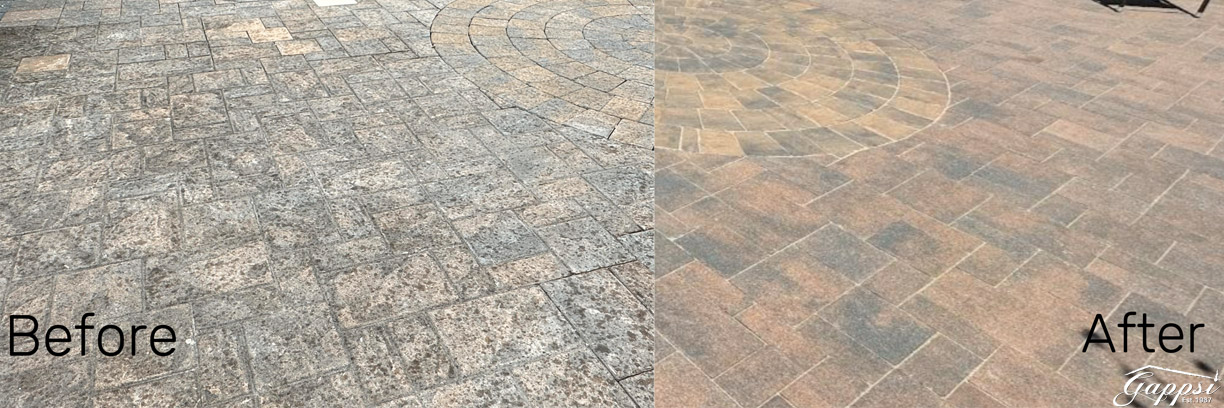
Cleaning and Sealing Concrete Pavers Process

cleaning-and-sealing-concrete-pavers-process-before--afterThis blog will discuss cleaning and sealing concrete pavers process and why it is important.  Whether you have a charming hardscape, a beautiful driveway, or an intricate walkway, your hardscape’s longevity and visual appeal depend on proper maintenance. In this blog, we’ll explore the significance of regular cleaning and sealing pavers in your hardscapes, helping you understand when, how, and why to embark on these crucial steps for preserving the beauty of your outdoor spaces.

  1.  Do stone patios, driveways, and other hardscapes need to be pressure washed?

This is everyone’s first question, and the answer is NO.  The most popular interlocking concrete pavers manufacturers used in Long Island NY are Nicolock, Cambridge, Techo Bloc, Unilock, and Belgard to name a few. These pavers have been installed on patios and driveways for the past 30 years.  When you see a 10-year-old concrete paving stone floor you can notice with the naked eye that the surface is faded and lost its finer texture on the surface layer.

Patio and driveway pavers get dirty over time and grow black mold, moss, and weeds. Most paver owners think of hiring a pressure washing company to clean them or run out to the local hardware store rent a pressure washer and try to pressure wash the pavers themselves. Pressure washing concrete pavers, especially newer ones, can easily damage the surface finish and we strongly suggest not pressure washing unless you are highly experienced and have the right equipment to pressure wash pavers.
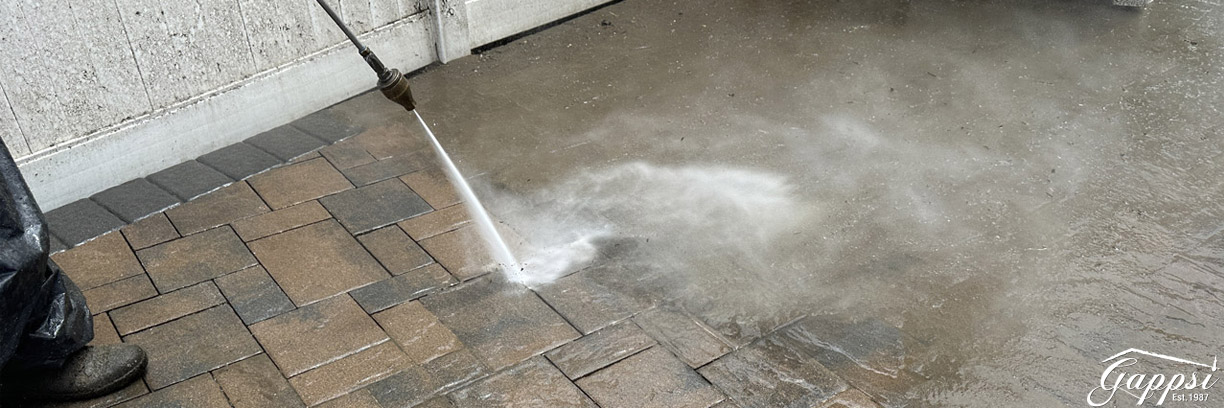
step-1-cleaning-and-sealing-concrete-pavers-processPressure-washing concrete pavers will appear to clean them at the time.  The process weathers the surface of the pavers therefore aging and expediting the aging process. As you pressure wash the concrete surface of the pavers, it becomes rougher, and in a short time dust and dirt will start to accumulate in the microscopic pores resulting in the surface being dirty again.  Often people get caught up in the cycle of pressure washing their pavers every springtime.   They do not realize every time it is done they worsen the problem instead of resolving it. 

  2.  Do concrete pavers need to be sealed? 

This is everyone’s next question, and the answer is YES.  Paver sealant is an important maintenance tool to keep paver patios, walkways, driveways, and pool decks looking as beautiful as the day they were installed.   To maintain the look for years to come a layer of protective sealer must be applied to the surface of the finished outdoor paver.

Concrete surfaces are corrosive to the elements and will weather over time, losing their shine and fine new texture. Just like many products need protection such as metal needs paint or a car needs wax to revive and restore its luster.  Any surface exposed to the elements after many years will lose its vibrancy and fine finished texture.
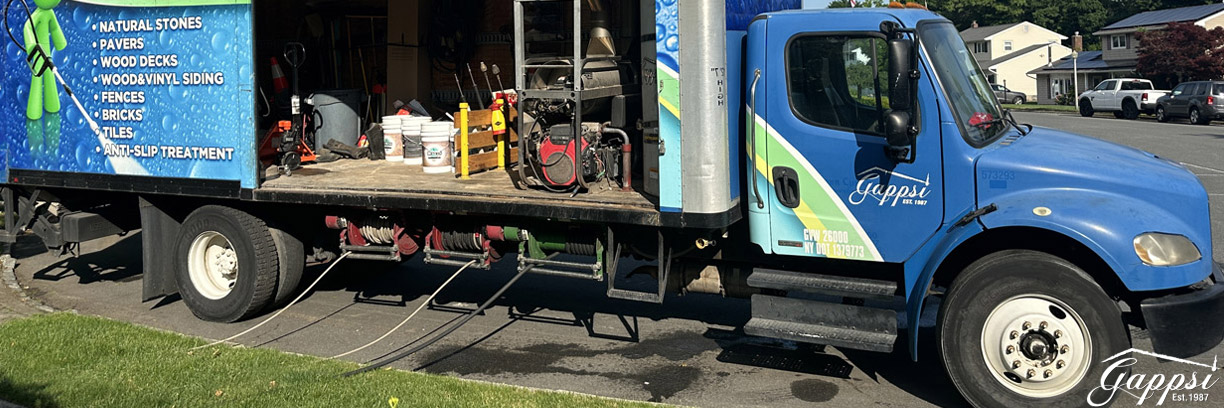
step-2-cleaning-and-sealing-concrete-pavers-processWe recommend sealing your pavers to ensure their longevity and the manufacturer’s finish to last.  Gappsi uses a synthetic finish product to preserve the paving stones.  Sealers will make the pavers surface water repellent thus making them weatherproof.  When you seal your pavers you accomplish many things besides weathering protection.  You bring out the colors that fade over time even though the color is through and through or even a layer of half an inch thick.  The eye sees the very top of the pavement.  In only a few short years they could become faded due to the weathering from the rain or sun rays.

Contact Gappsi Today For An Estimate

In addition, the color could fade simply by the curing process of the cement structure itself of which the concrete pavers are manufactured. Using a pressure washer over concrete pavers will further degrade the surface and age it faster.  Sealer products are clear and transparent.  They brighten and magnify the colors of the surface. That’s what the eye sees.  The colored light that the sealer reflects. The smoother the surface of the pavers the more light is reflected off it.  A weathered surface allows dust to collect more easily and does not reflect the light as well as a preserved smoother surface does. That is why a sealed newer surface appears to be much more colorful than a sealed more weathered surface that has been left to weather under the elements for too long without a synthetic coat protection like the proper sealer.

Perhaps the most important benefit of sealers is that they make pavers less porous, which helps limit stains, since the pavers are less able to soak up the oil or dirt, etc. Sealing your concrete pavers makes cleanup of spills easier if they do happen.

  3.  How long should you wait before cleaning and sealing your pavers? 

Gappsi has been installing pavers for over 40 years and sealing them for more than 20 years.  Our experience and best practice is to take care of any colored concrete surface and pavers installed on driveways and patios.  New installations should weather under the natural elements of rain, sun, and snow for at least 2 years. During this time the concrete structure of the paving stones will cure completely and any efflorescence that has reason to surface on the pavement will be washed away naturally.  The top surface of the concrete pavers has weathered enough to have developed a very fine uniform sandy texture.  This is not visible to the naked eye but enough for a sealant to grab on and allow it to penetrate the substrate. This will make the sealer applied do its job of protecting the surface. 
step-3-cleaning-and-sealing-concrete-pavers-process  4.  What is the right sealer and how do you select the one that fits your pavers?

This is where it can get more complicated, costly, or worsen the situation. If you don’t use the right product or the right company to seal your pavers you could degrade the surface of the paving stones.  It is important to start with what is your result you are looking to achieve.  What are your expectations for the project?  Besides planning to protect your outdoor floor investment long term, you need to ask yourself a few questions: 

  • Do you want to see your pavers color in a natural form as they look when they are dry? 
  • Do you like the wet look and want to enhance the color?
  • If you prefer the color enhancement option, what kind of shine? Shiny or Mat
  • Do you want a plastic shine look or do you like a mat color-enhanced look?
step-4-cleaning-and-sealing-concrete-pavers-processWhat is Your Preference? 

Based on your preferences we will choose the sealer products that will accomplish the look. There are many manufacturers of sealers on the market and knowing which one is better could be challenging.  In addition, the manufacturer of the sealer you select will have different ways to apply the product.  The application and knowledge of cleaning and sealing pavers are what will give you the correct result.

The quality of your sealed paving stone patio and driveway pavers comes down to the knowledge of the person you trust and hire to complete the project.

Applying sealer to your pavers does NOT automatically guarantee all the good things mentioned above, a poorly sealed job could create a worse eye sore.  It also is an expensive and challenging situation to rectify.  This is because there are not many quality sealer applicators on the market.  There are even fewer applicators willing to take the challenge or even know how to rectify a badly sealed patio and make it look right.

  5.  Best practices for sealing concrete paving stones.

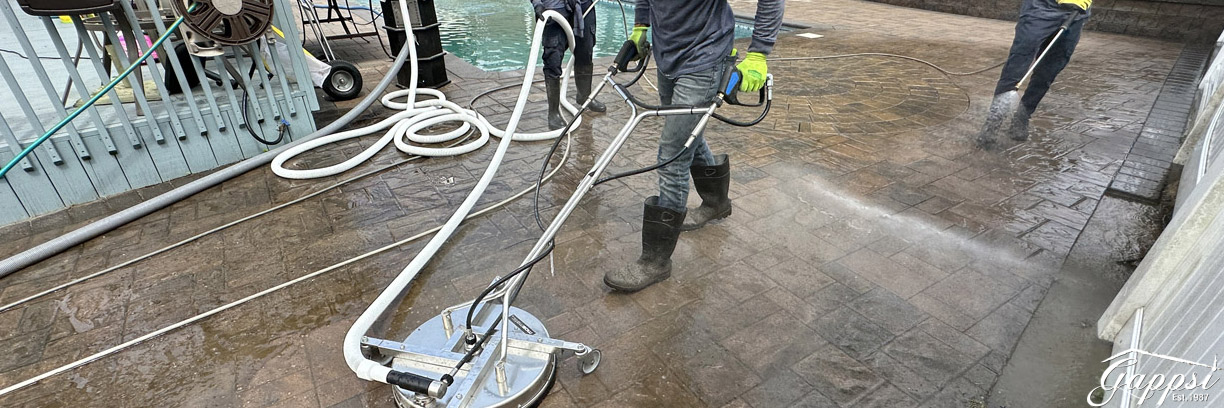
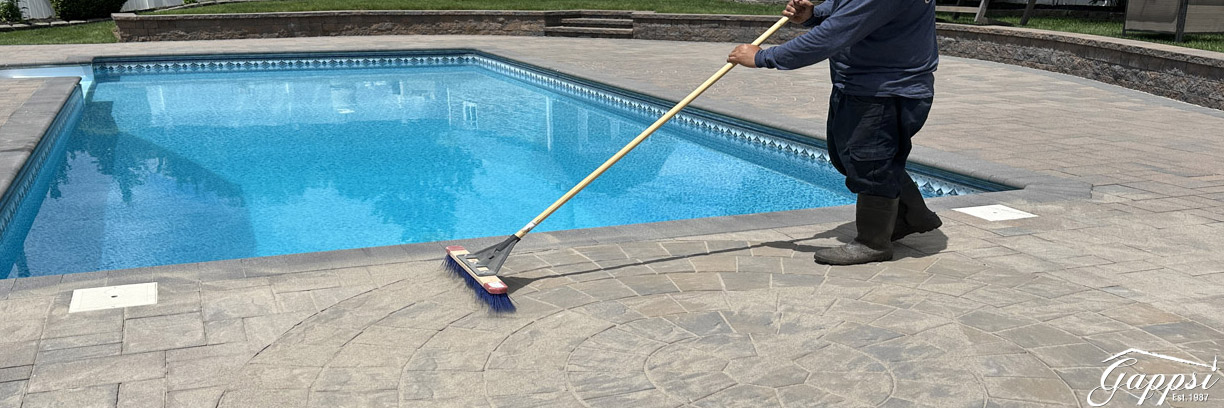
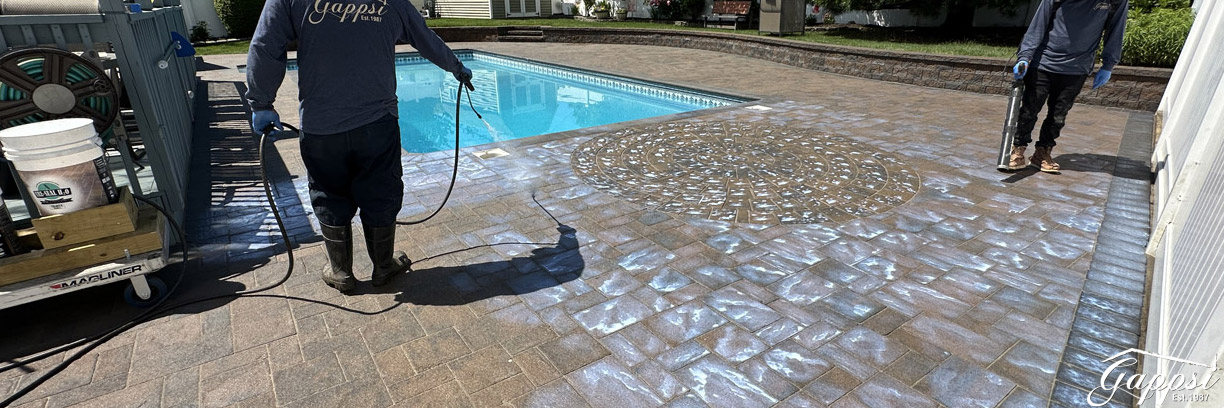
We recommend lightly washing the pavers with a surface cleaner.  This will clean the floor uniformly and most importantly use a pressure washing system that makes hot water at least 150 Fahrenheit.  Once the surface is cleaned of any debris as well as old sand from the joints.  You can go at least one inch deep into the joint.  The floor has to be left until completely dry. The following step is to fill the joints of the pavers with Polymeric sand, let it harden, and then seal the pavers.)
step-5-cleaning-and-sealing-concrete-pavers-process  6. How many types of sealers are there and what are the differences?

Four primary types of sealers can be used to seal concrete pavers: polyurethane, acrylic, Solvent and lastly waterbase based sealers. All these sealers can be modified by the different producers to accomplish different results. Acrylic and polyurethane sealers are the top coating that primarily covers the surface of concrete pavers, they offer color enhancement by magnifying the color pigments on the paver surfaces. solvents and waterbased sealers are penetrating sealer and can offer both a natural look and color enhancement.  If a natural look is desired in the paving stone then a solvent sealer with non enhancers or water-based solution should be used.

  7.  Which sealer is better to use?

All sealers are good as long as you understand how to apply them. 

  • Understanding the surface you are sealing
  • The age of the concrete pavers
  • Is it concrete or a natural stone surface
  • Are you going to apply a slip resistance on the surface?
  • Is it a horizontal or a vertical surface,
  • Is the area damp, the porosity of the product you are planning to seal is important to note.
  • The application procedure of each product changes based on the time of the year you are applying it and the humidity and weather (temperature).

Gappsi Cleaning and Sealing Paving Stones Process

Our experience in cleaning and sealing concrete pavers is not only shown through our expert staff in handling the products but also in the timing between each step of the process.  Using the right right people, with the right equipment to ensure a job is done right for YOU! 

STEP #1

The Gappsi process starts with focusing on losing up and the removal of soil and debris from the paver’s joints using a state-of-the-art high water volume pressure washer that produces 200 Fahrenheit hot water.

STEP #2

The 2nd step is to wash the floor surface using extractor surface cleaners.  This will clean the floors uniformly.  In addition, the suction produced by the surface cleaner extracts any loose material.  This material is loosened and sitting in the pavers gaps.  We pump them out and away from the area being prepared for sealing.

STEP #3

Once the paving stone joints and surface have been completely cleaned.  Allow the patio stones to completely dry. The selection of joint filling material is based on the selection of the sealer we use.

STEP #4

It is important to mention a few things.  If we are sealing a concrete paving surface using a color enhancer sealer.  Then we use a urethane sealer.  In this case, we also use silica sand (color of choice) to fill the joints.  Next, we vibrate the pavement with a specific vibratory roller compactor made for this application process.  This helps the sand settle in between the paver joints and fills the joints tight. Lastly, urethane sealer is applied.

STEP #5

One person sprays the sealer onto the concrete pavers.  The second person moves the sealer around with a blower filling the joints.  This process ensures that the joins fully absorb the sealer when applied to its full depth.  The surface of the pavers becomes sealed in the process while we focus on flooding the joints.  

A second coat of sealer is applied right after while the first coat is still tacky strengthening the seal to the stone.  This binds to the first coat.

STEP #6

When solvent sealers are used the process changes with the use of sand.  We use Polymeric sand instead of Silica sand.  Polymeric sand is a combination of silica sand and polymer manufactured and delivered in dry bags.  After applying to the paver joints and vibrating down, water is applied.  The water activates the polymeric in the sand and causes the sand to harden when dry. The last step is applying the solvent sealer over the entire floor surface.

A great job is only delivered by the following criteria:

  1. the experience and knowledge of the applicator
  2. the right preparation of the surface
  3. the proper equipment used
  4. the appropriate type of sealer selected for the desired outcome.

SCHEDULE A MEETING TODAY WITH GAPPSI

View Gappsi’s YouTube Channel for Videos of the Cleaning and Sealing Concrete Pavers Process

Share this page:

Natural Granite Pavers Driveway Designers and Installers Long Island, NY

Natural Granite Pavers Driveway Designers and Installers Long Island, NYNatural Granite Pavers Driveway Designers and Installers Long Island, NYDriveway installed in Huntington Bay, NY by Gappsi with granite pavers and blue limestone accents, inlays, and borders. The installation was done on gravel base and grated fine sand; the joints were filled with polymeric sand. The custom design inlay of a Nordic star was created by cutting a combination of Pompeii blue and Melfi brown limestone pavers. The colors of the pavers compliment the stucco and roof tiles of the custom house and its unique shape and style.

Share this page:

Limestone Pool Patio Pavers and Coping Designer, Supplier, and Installer

Limestone Pool Patio Pavers and Coping Designer, Supplier, and InstallerThis limestone patio and pool coping was designed and installed by Gappsi in Centerport, Long Island NY. A combination of roman pattern and smaller set random design pattern, fills the patio area. This is all surrounded by 6×9 outside borders and 2 inch random sized pool coping, with a natural-finished surface and a tumbled split rock-faced front.
Installation was done on 4 inches of poured concrete base and one inch of fine sand. The joints between the limestone pavers were filled with beige polymeric sand.
The color variation of this limestone varies containing browns, grays, greens, beige, and maroon colors. They are natural colors that blend in with any surrounding landscape.

Share this page:

Paving Stone Sealer Company Long Island NY

Gappsi Inc provides professional cleaning and sealing services in Suffolk and Nassau County, Long Island, NY. With our state of the art equipment and top of the line products, we clean patios, walkways, walls, and driveways without damaging the pavers. Our power washer consists of 180 degrees of low pressure steam. Our polymeric sand is haze-free and environmentally friendly, and the urethane water-based sealer protects the surface of any pavers from future weathering and fading.
[wpvideo SnD7MiSA]

Best Sealer Company Suffolk County Long Island NY

Share this page:

Patio Pavers Woodbury: A Complete Buyer’s Guide

Are you tired of looking at that cracked concrete slab or constantly re-staining a splintering wood deck? Your outdoor space should be a source of relaxation, not a weekend chore. If you’re ready for an upgrade that combines lasting beauty with low-maintenance living, it’s time to consider pavers. Unlike other materials, pavers are engineered to be flexible and incredibly durable, resisting the cracks and wear that plague other surfaces. The repair process is also refreshingly simple. For anyone researching patio pavers Woodbury, making the switch is a decision you won’t regret. This article breaks down all the benefits, material options, and what to expect during installation.

Paving Stone Cleaning & Sealer Company Woodbury Long Island NYSwimming pool and Retaining wall Built by Gappsi in Woodbury NY, with Travertine patio and coping. Refurbished with the cleaning and sealing process. Using low pressure hot water the paver’s surface gets clean uniformly with no impact of wear on the stone surface. The joints in between the pavers got filled with high quality polymeric sand and vibrated with heavy mechanical plate compactor with rubber rolling system to prevent pavers from getting scratched or damaged. Then sealed with high quality urethane sealer To learn more about Gappsi products, please contact us at 631-543-1177 or visit our web site at www.gappsi.com

Swimming Pool Contractor Woodbury NY

Why Choose Pavers for Your Patio?

When you start dreaming up your perfect backyard oasis, the foundation of that dream is, quite literally, the ground beneath your feet. Choosing the right material for your patio is one of the most important decisions you’ll make. While options like poured concrete or wood decking exist, pavers offer a unique combination of beauty, strength, and flexibility that makes them an outstanding choice for any Long Island home. They provide a classic, elegant look that can be customized to fit any style, from rustic charm to modern minimalism. More than just a pretty face, a paver patio is a practical, long-term addition to your home that you’ll enjoy for years to come.

Durability for Long Island Weather

Here on Long Island, we experience the full spectrum of seasons, from hot, humid summers to freezing, snowy winters. Your outdoor materials need to be tough enough to handle it all. Pavers are engineered to withstand these demanding conditions. Unlike a solid slab of concrete that can crack under the pressure of freeze-thaw cycles, the joints between individual pavers allow for natural expansion and contraction. This inherent flexibility prevents widespread damage, ensuring your patio remains stable and beautiful year after year. Choosing a durable material means less worry and more time enjoying your outdoor space, no matter what the weather brings.

Low Maintenance and Easy Repairs

Let’s be honest, you want to spend your weekends relaxing on your patio, not working on it. Pavers are wonderfully low-maintenance, typically requiring just a seasonal sweep and rinse to keep them looking fresh. Should a paver ever become stained or damaged, the repair process is incredibly simple. Instead of a costly and complicated patch job, you can just replace the single affected paver. For long-term care, professional cleaning and sealing services can protect your investment from the elements and keep the colors vibrant, making sure your patio looks as good as the day it was installed.

Endless Design Flexibility

Your home is a reflection of your personal style, and your patio should be no exception. Pavers open up a world of design possibilities that other materials simply can’t match. They come in a vast array of shapes, sizes, colors, and textures, allowing you to create a truly custom look. You can mix and match different types to create intricate patterns, borders, and focal points. Whether you envision a classic herringbone pattern with brick or a sleek, contemporary design using large-format porcelain pavers, the creative freedom is all yours. This flexibility ensures your new patio will perfectly complement your home’s architecture and your landscaping.

A Smart Investment for Your Home

A well-designed paver patio is more than just an outdoor living area; it’s a valuable addition to your property. Beautiful and functional outdoor spaces are highly sought after by homebuyers, and a paver patio significantly enhances your home’s curb appeal and overall market value. It extends your living space, providing a designated area for dining, entertaining, or simply relaxing with family. This investment not only enriches your daily life but also provides a solid return should you ever decide to sell your home. It’s a home improvement project that pays dividends in both lifestyle and equity.

Sustainable and Eco-Friendly

For homeowners who prioritize sustainability, pavers are an excellent choice. Many are crafted from natural and recyclable materials like clay and concrete aggregates, making them an environmentally responsible option. Additionally, you can opt for permeable pavers, which are specifically designed to allow rainwater to filter through the surface and back into the ground. This system helps reduce stormwater runoff, replenishes groundwater, and prevents soil erosion. Choosing an eco-friendly paving solution allows you to create a beautiful outdoor space while also being a good steward of the environment.

Exploring Paver Materials and Options

Once you’ve decided on a paver patio, the next exciting step is choosing the right material. The type of paver you select will define the patio’s overall look, feel, and performance. From the timeless appeal of classic brick to the sophisticated elegance of natural stone, there’s a perfect paver for every aesthetic and budget. Understanding the unique characteristics of each option will help you make an informed decision that aligns with your vision for your backyard. Let’s look at some of the most popular choices for Long Island homes.

Interlocking Concrete and Clay Brick Pavers

Interlocking concrete pavers are the workhorses of the patio world. They are engineered for strength and designed to fit together tightly, creating an incredibly strong and stable surface that resists shifting over time. Available in a huge variety of colors and shapes, they can mimic the look of natural stone or classic brick, offering great design versatility. Clay brick pavers provide a timeless, traditional look with rich, warm colors that won’t fade. Both are excellent choices for creating durable and beautiful masonry surfaces, perfect for patios, walkways, and driveways that need to stand the test of time.

Elegant Porcelain and Natural Stone Pavers

If you’re aiming for a touch of luxury, porcelain and natural stone pavers are unmatched. Natural stone, such as travertine, bluestone, or granite, offers one-of-a-kind beauty, with unique colors and textures shaped by nature. Each stone is distinct, creating a patio with unparalleled character and elegance. Porcelain pavers are a manufactured alternative that provides a sleek, modern aesthetic with exceptional durability. They are non-porous, making them highly resistant to stains, mold, and water damage. You can explore a wide selection of high-quality porcelain and natural stone options to find the perfect fit for your upscale outdoor living space.

Permeable Pavers for Superior Drainage

Living on Long Island means dealing with occasional heavy rainfall, and proper drainage is key to protecting your property. Permeable pavers are an innovative and eco-friendly solution designed to manage stormwater effectively. Unlike traditional solid surfaces that cause water to run off, permeable pavers have larger gaps between them filled with small stones. This allows rainwater to pass through the surface and be absorbed naturally into the ground below. This system reduces puddling on your patio, minimizes runoff into storm drains, and helps recharge the local groundwater. It’s a smart, sustainable choice for a resilient landscape.

Understanding the Cost of a Paver Patio

Budgeting is a key part of any home improvement project, and it’s helpful to have a clear idea of the potential costs involved in building a new paver patio. The final price can vary widely based on several factors, including the size of the patio, the materials you choose, and the complexity of the design and site preparation. While it’s always best to get a detailed quote for your specific project, understanding the general cost structure can help you plan effectively. Let’s break down the average costs and the variables that can influence your total investment.

Average Installation Cost Per Square Foot

On average, you can expect the professional installation of a paver patio to cost somewhere between $10 and $30 per square foot. This range typically includes the cost of materials, labor, and the necessary base preparation. Basic concrete pavers will fall on the lower end of this spectrum, while premium materials like natural stone or high-end porcelain will be at the higher end. The intricacy of the design can also play a role; a simple square patio will cost less per square foot than one with complex curves, patterns, and multiple levels.

Paver Patio Cost Examples by Size

To give you a better sense of what to expect, here are a few cost estimates based on common patio sizes. Keep in mind these are general ranges, and your actual cost will depend on the specific factors of your project.

Small Patio (10×10 ft)

A small, 100-square-foot patio is perfect for a cozy bistro set or a couple of lounge chairs. For a project of this size, you can generally expect the cost to be between $1,000 and $2,500.

Medium Patio (12×12 ft)

A 144-square-foot patio offers a bit more room for a small dining table or a conversation set. The typical cost for a medium-sized patio like this usually falls between $1,400 and $3,600.

Large Patio (16×20 ft)

For those who love to entertain, a large 320-square-foot patio provides ample space for a full dining set and a separate seating area. The investment for a larger patio can range from $3,200 to $8,000 or more.

Factors That Influence the Final Price

Several key factors will determine the final price tag for your new patio. The material you select is one of the biggest variables—natural stone is typically more expensive than concrete pavers. The condition of the installation site also matters; a sloped or difficult-to-access yard may require more extensive excavation and preparation, adding to the labor costs. Finally, any custom features like built-in seating walls, fire pits, outdoor kitchens, or intricate paver patterns will increase the overall project cost. A detailed consultation will help clarify these costs for your unique vision.

The New Paver Patio Installation Process

Bringing your dream patio to life is an exciting process that involves careful planning and expert execution. While the idea of a brand-new outdoor space is thrilling, knowing what to expect during the installation can make the experience smooth and stress-free. A professional installation process is methodical and precise, ensuring that every detail is handled correctly from start to finish. This meticulous approach guarantees not only a beautiful result but also a durable, long-lasting patio that you and your family will enjoy for many years. Here’s a look at the key steps involved in a professional paver patio installation.

Step 1: The Design Consultation

Every great patio begins with a great plan. The first step is a design consultation where you’ll meet with a professional to discuss your vision, goals, and budget. This is your opportunity to share your ideas about the patio’s size, shape, style, and how you plan to use the space. An experienced designer will listen to your needs, offer expert advice on materials and layout, and help you refine your concept. They will also assess your property to identify any potential challenges, ensuring the final design is both beautiful and functional for your specific backyard.

Step 2: Proper Ground Preparation

The longevity of your paver patio depends entirely on what’s underneath it. Proper ground preparation is the most critical phase of the installation process. This step involves excavating the area to the correct depth, followed by the installation and compaction of a multi-layer base, typically consisting of gravel and sand. This solid foundation is essential for providing stability, ensuring proper drainage, and preventing the pavers from shifting, sinking, or becoming uneven over time. A professional team will use specialized equipment to ensure the base is perfectly graded and compacted for a flawless finish.

Step 3: Professional Installation and Finishing Touches

With the foundation securely in place, it’s time for the transformation to begin. Skilled installers will carefully lay each paver according to the planned design, making precise cuts to ensure clean edges and a perfect fit around any curves or obstacles. Once all the pavers are set, a specialized polymeric sand is swept into the joints. This sand locks the pavers together, preventing weed growth and insect intrusion. The final step often involves compacting the entire surface one last time to create a smooth, level patio that’s ready for you to furnish and enjoy.

Choosing Your Paver Patio Contractor

Selecting the right contractor is just as important as choosing the right pavers. The quality of the installation will determine how your patio looks and how well it performs over the long term. You need a team with the right skills, experience, and commitment to quality to bring your vision to life correctly. A great contractor will not only deliver a beautiful finished product but will also provide a seamless and positive experience from the initial design consultation to the final cleanup. Here are a few key things to look for when choosing a paver patio contractor for your Long Island home.

Finding a Full-Service Company

Your patio project may be part of a larger backyard transformation that includes landscaping, a swimming pool, or even a pavilion. Working with a full-service company that can manage all aspects of your outdoor project can save you a significant amount of time, money, and stress. A company like Gappsi, which handles everything from design and masonry to landscaping and construction, ensures a cohesive vision and streamlined execution. This integrated approach means you have a single point of contact, and all elements of your project will work together harmoniously, creating a truly unified outdoor living space.

The Importance of Experience and Credentials

When it comes to paver installation, experience matters. Look for a contractor with a long history of successful projects and a strong portfolio you can review. An established company will have a deep understanding of local soil conditions, building codes, and the best materials for the Long Island climate. Don’t hesitate to ask for references or look at examples of their past work—you can often find project videos on platforms like YouTube. Verifying that a contractor is licensed and insured is also crucial for protecting yourself and your property throughout the construction process.

Ongoing Maintenance and Sealing Services

A great contractor’s commitment to their clients doesn’t end when the project is complete. Your paver patio will require some care over the years to keep it looking its best. Choosing a company that offers ongoing maintenance services is a smart move for any homeowner. Services like professional cleaning, re-sanding the joints, and applying a protective sealant can extend the life of your patio and revitalize its appearance. Knowing you have a trusted partner you can call on for future restoration and sealing provides valuable peace of mind and protects your investment for the long haul.

Frequently Asked Questions

How long can I expect a new paver patio to last? A professionally installed paver patio is built for the long haul. With a solid, compacted base and proper installation, you can expect it to last for 25 to 50 years, or even longer. The key is the foundation. Regular maintenance, like cleaning and occasional re-sanding of the joints, will ensure it stays beautiful and functional for decades.

Can you install pavers directly over my old concrete patio? While it might seem like a convenient shortcut, installing pavers over an existing concrete slab is generally not recommended. The old concrete can crack or shift over time, which will cause the new pavers on top to become uneven and unstable. For a lasting result, the best approach is to remove the old concrete and build a proper, compacted base from scratch.

Are pavers slippery when they get wet, especially around a pool? This is a great question and a valid safety concern. Many pavers, especially concrete and natural stone, have a naturally textured surface that provides good traction. If you’re looking for pavers for a pool deck, you can choose options with a higher slip resistance rating. For example, many porcelain pavers are specifically designed with anti-slip finishes, making them an excellent and safe choice for poolside areas.

How long does the installation process usually take from start to finish? The timeline for a paver patio installation depends on a few things, like the size of the patio, the complexity of the design, and weather conditions. For an average-sized patio, the entire process from excavation to final cleanup typically takes about three to five days. Larger or more intricate projects might take a week or more.

What is the real benefit of sealing my pavers? Sealing your pavers is like applying sunscreen to protect your skin. While not strictly necessary, it provides a protective layer that offers significant benefits. A good quality sealer can help protect the pavers from stains, prevent fading from UV rays, and make them easier to clean. It also helps lock the joint sand in place, which reduces weed growth and keeps the surface stable. Think of it as a smart way to protect your investment.

Key Takeaways

  • Choose pavers for lasting value and minimal upkeep: Unlike concrete or wood, pavers are built to withstand Long Island’s weather, are simple to repair, and offer endless design options, making them a practical and beautiful addition to your home.
  • Match your patio material to your style and budget: You can achieve any look, from classic brick to modern porcelain or elegant natural stone, ensuring your new patio perfectly complements your home’s aesthetic and financial plan.
  • Prioritize professional installation for a patio that lasts: The long-term stability of your patio relies on proper ground preparation and expert craftsmanship, so choosing a qualified contractor is the most important step in protecting your investment.

Related Articles

Share this page: