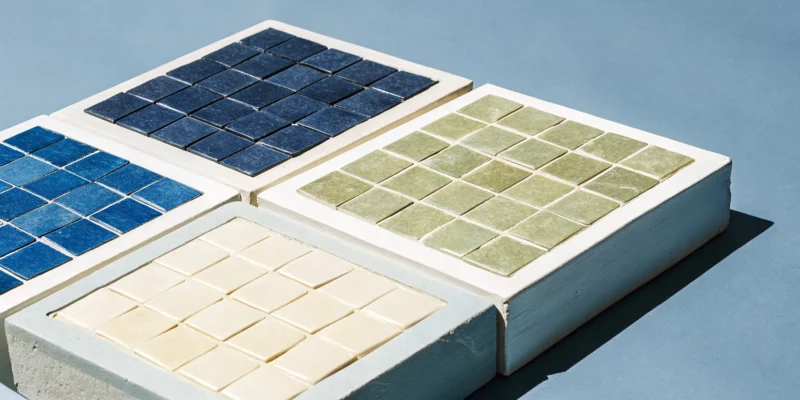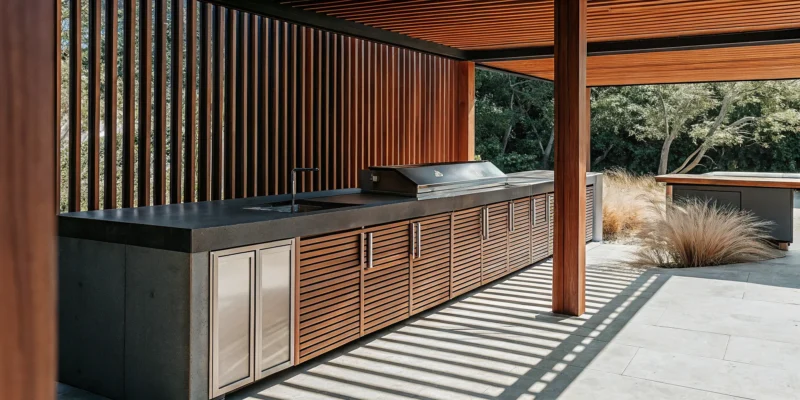
Modern weatherproof outdoor kitchen cabinets with stainless steel and wood-look finishes.

Best Materials for Weatherproof Outdoor Kitchen Cabinets

What does “weatherproof” actually mean when it comes to outdoor cabinetry? It’s a term that goes far beyond a simple water-resistant coating. It refers to a cabinet built from the ground up with materials and construction techniques that are completely impervious to the elements. A truly weatherproof cabinet won’t absorb moisture, so it can’t rot, swell, or delaminate. Its color is integrated throughout the material, so it won’t fade or peel after years in the sun. Understanding these core differences is the first step to making a smart purchase. We’ll break down what to look for in weatherproof outdoor kitchen cabinets, from marine-grade polymers to corrosion-resistant hardware.

Key Takeaways

  • Choose materials built for the outdoors: Your cabinet’s durability starts with its material. Select options like marine-grade HDPE or high-quality stainless steel that are naturally waterproof and UV-stable to prevent common issues like warping, fading, and rust.
  • Look beyond the cabinet box: The small details make a huge difference in longevity. Confirm that your cabinets have rust-proof stainless steel hardware, integrated color that won’t chip or fade, and a seamless design for easy cleaning and superior water resistance.
  • Don’t underestimate professional installation: Even the best cabinets can fail if installed incorrectly. Working with an experienced local team ensures proper drainage, secure placement, and a final result built to withstand Long Island’s specific weather challenges.

What Makes an Outdoor Kitchen Cabinet Weatherproof?

An outdoor kitchen cabinet needs to do more than just look good; it has to stand up to everything nature throws at it. Unlike indoor cabinets that live in a climate-controlled environment, outdoor versions face sun, rain, snow, and humidity. A truly weatherproof cabinet is built from the ground up with materials and construction techniques specifically chosen to resist moisture, temperature swings, and UV damage. It’s the difference between a beautiful outdoor kitchen that lasts for years and one that starts to warp, fade, or fall apart after just a few seasons. Understanding what makes a cabinet weatherproof is the first step in making a smart investment for your backyard.

Key Features of a Weatherproof Design

The secret to a durable outdoor cabinet lies in its material. Top contenders are marine-grade High-Density Polyethylene (HDPE) and stainless steel. HDPE is a solid polymer, which means the color runs all the way through, so you won’t see scratches, and it will never chip, peel, or delaminate. It’s completely waterproof and stands up to harsh coastal air without a problem. Stainless steel is another excellent choice, prized for its strength and modern look. When you’re choosing materials for your outdoor kitchen, think about how they will complement your porcelain and natural stone countertops and patios. Quality construction also includes features like seamless design and rust-resistant hardware to keep everything functioning smoothly.

Why Weatherproofing Is Essential for Long Island Homes

Here on Long Island, our weather can be tough on outdoor structures. From humid, salty summer air along the coast to freezing winter temperatures and heavy rain, your outdoor kitchen cabinets need to be resilient. Choosing weatherproof materials isn’t just a good idea; it’s essential for protecting your investment. Cabinets that aren’t designed for the outdoors can quickly warp, rot, or rust, leading to expensive repairs. By selecting materials built to withstand our specific climate, you ensure your outdoor kitchen remains a beautiful and functional part of your home for years to come. This focus on durability is a core part of any successful home remodeling project, inside or out.

Discover the Best Materials for Outdoor Cabinets

When you’re designing your dream outdoor kitchen, the cabinets are more than just storage. They form the foundation of your space, and they need to withstand everything Long Island weather throws at them, from humid summers to icy winters. Choosing the right material is the key to creating a beautiful, functional kitchen that lasts for years without constant upkeep. The best options are engineered to resist moisture, sun, and temperature swings, ensuring your investment looks great season after season. Let’s look at the top contenders so you can make a confident choice for your home.

Marine-Grade HDPE

Imagine a material so tough it’s used on boats to withstand constant exposure to sun and saltwater. That’s marine-grade High-Density Polyethylene, or HDPE. It is an exceptional choice for outdoor cabinets because it simply will not crack, rot, or rust. Because it’s 100% waterproof, you never have to worry about the swelling or warping that can ruin wood cabinets. This makes HDPE an incredibly durable, low-maintenance option for a lifetime of outdoor entertaining. It’s a perfect fit for custom masonry projects where you can set it and forget it, spending more time enjoying your patio instead of working on it.

Stainless Steel

For a sleek, professional look, nothing beats stainless steel. It gives your outdoor space the same high-end feel as a gourmet kitchen, and it’s incredibly strong. Stainless steel stands up well to high heat, making it a perfect choice for cabinets surrounding your grill, and it’s a breeze to clean after a big family barbecue. It is important to choose a high-quality grade of stainless steel to ensure it resists rust and corrosion over the long term, especially in our coastal climate. When done right, stainless steel cabinets give your outdoor kitchen a modern, polished feel that’s both stylish and incredibly functional.

Polymers and Composites

Polymer and composite cabinets are another fantastic, modern solution for outdoor spaces. These materials are essentially high-performance plastics engineered to endure the outdoors. One of their biggest advantages is their resistance to UV rays, so their color won’t fade after a few sunny summers. They also don’t absorb water, which helps prevent mold and mildew from growing during our humid months. This means your cabinets will maintain their look and function for years with very little upkeep, giving you more time to simply enjoy your beautiful landscape design.

How Each Material Holds Up to the Elements

So, how do these materials really perform when a storm rolls in? The best outdoor cabinet materials are built for resilience. Materials like HDPE and high-grade polymers have been tested against extreme weather, and they pass with flying colors. They are so waterproof that you can often clean them with just a garden hose after a storm. This durability also means they are strong enough to support heavy natural stone countertops without buckling or compromising their structure. Investing in the right material gives you peace of mind, ensuring your outdoor kitchen remains a functional centerpiece, no matter the season.

Must-Have Features in Weatherproof Cabinets

When you’re investing in an outdoor kitchen, the details matter. Beyond choosing the right material, you need to look for specific design features that ensure your cabinets can handle everything Long Island weather throws at them. From summer humidity and salt-laced air to winter storms, the right construction will keep your outdoor space looking beautiful and functioning perfectly for years. These are the non-negotiable features that separate high-quality, long-lasting cabinets from those that will need replacing in just a few seasons.

A truly weatherproof cabinet is designed as a complete system, where every component works together to resist the elements. It’s about more than just a waterproof box; it’s about smart design that anticipates the challenges of an outdoor environment. Think about how your outdoor kitchen will be used. It’s a hub for entertaining, a place for family meals, and an extension of your home. The last thing you want is to worry about warping doors, rusted hinges, or faded finishes. High-performance cabinets are built to prevent these issues from the start, giving you a functional and stress-free space. We’ll cover the essential features to look for, from superior sealing that keeps water out to hardware that won’t corrode, ensuring your investment is a lasting one.

Superior Sealing and Water Resistance

Your outdoor cabinets need to be completely unfazed by moisture. Look for materials that are inherently waterproof, not just water-resistant. Materials like high-density polyethylene (HDPE) are a fantastic choice because they are non-porous and will not swell, crack, or warp when exposed to rain or humidity. Unlike wood, which can absorb water and rot over time, a truly waterproof material provides peace of mind. This is especially important for maintaining the structural integrity of your cabinets and protecting the items you store inside. Proper sealing ensures that your investment is protected from the damp coastal air and seasonal downpours.

UV Protection to Prevent Fading

The sun’s rays can be just as damaging as rain. Over time, direct sunlight can cause colors to fade and materials to become brittle. The best weatherproof cabinets have UV protection built right into the material. For example, some polymer cabinets have color integrated throughout, so there is no outer layer to chip, peel, or fade away. This means your cabinets will maintain their vibrant look without you ever needing to paint or stain them. This built-in protection is a key feature for a low-maintenance outdoor kitchen, ensuring your space looks brand new season after season.

Hardware That Resists Rust and Corrosion

Even the most durable cabinet box can be ruined by low-quality hardware. Hinges, handles, and drawer slides are constantly exposed to the elements, making them vulnerable to rust and corrosion. Always check that the hardware is made from a corrosion-resistant material like stainless steel. High-quality, slow-close stainless steel hinges and drawer slides not only prevent unsightly rust stains but also ensure your cabinets continue to open and close smoothly. It’s a small detail that makes a huge difference in the longevity and usability of your outdoor kitchen. Gappsi offers expert restoration and sealing services to protect all elements of your outdoor space.

Designs That Make Cleaning Easy

An outdoor kitchen is meant for enjoyment, not endless upkeep. The best weatherproof cabinets are designed with easy maintenance in mind. Look for smooth, non-porous surfaces that you can simply wipe down with soap and water or even spray with a hose. A simple design without intricate crevices where dirt and grime can collect will make cleanup much faster. This practical feature means you can spend more time cooking and entertaining and less time scrubbing. When you visit the Gappsi Store, you can explore options designed for both beauty and effortless maintenance.

Finding the Right Weatherproof Cabinets for Your Home

Choosing the right cabinets is about more than just looks; it’s about making a smart investment in your outdoor living space. You need cabinets that can handle everything Long Island weather throws at them, from humid summer days to icy winters. The right choice will save you from the hassle of repairs and replacements down the road, giving you more time to actually enjoy your beautiful outdoor kitchen. By focusing on quality materials, expert craftsmanship, and local knowledge, you can find cabinets that are as durable as they are stylish.

Gappsi’s Premium Cabinet Solutions

When you’re ready to find cabinets built to last, Gappsi offers premium solutions designed specifically for the Long Island climate. We focus on providing high-quality materials that ensure your outdoor kitchen remains a beautiful and functional centerpiece for years to come. Our selection is curated to offer superior durability and longevity, so you can feel confident in your investment. We believe your outdoor space should be a source of enjoyment, not constant upkeep, which is why we stand behind the resilience and craftsmanship of our cabinet options.

Understanding Quality and Craftsmanship

True weatherproof cabinets are built differently. Look for options constructed from marine-grade HDPE (High-Density Polyethylene), a material engineered to be completely waterproof. Unlike wood or certain metals, HDPE won’t warp, rot, or delaminate when exposed to moisture. In fact, top-tier cabinets made from this material have been tested to withstand extreme weather, including major hurricanes. This level of quality construction ensures your cabinets will last a lifetime, providing a solid foundation for your outdoor kitchen no matter the season.

Why Local Expertise Matters

Working with a local expert who understands the specific challenges of our region is a game-changer. A team with deep roots in Long Island knows how to account for salty air, humidity, and freeze-thaw cycles when designing and installing an outdoor kitchen. Gappsi’s extensive design and construction expertise means we can offer personalized advice on the best materials and designs for your home. We’ll guide you through the options and ensure your installation is handled with the highest standards, resulting in an outdoor space that’s perfectly suited to our unique climate.

How Much Do Weatherproof Outdoor Cabinets Cost?

Setting a budget for your outdoor kitchen is a crucial first step, and cabinets are a significant part of that investment. The cost of weatherproof cabinets can vary widely, depending on the materials, brand, and level of customization you choose. Think of it less as a simple purchase and more as an investment in your home’s value and your family’s enjoyment for years to come. Understanding the price range and what drives costs will help you make a confident decision that aligns with your vision and budget.

Typical Costs by Material

When you start shopping, you’ll find a broad spectrum of pricing. Simple, entry-level weatherproof cabinets might start around $400 to $800 per unit. These are often basic designs made from durable polymers. As you move into higher-end materials and brands, the price increases. For example, a single premium cabinet made from marine-grade polymer can range from $1,700 to $2,400. For a complete set of cabinets from a well-known brand like WeatherStrong, you could expect to invest between $3,000 and $5,000 or more, depending on the size and complexity of your layout.

What Influences the Final Price?

Several key factors determine the final cost of your outdoor cabinets. The quality of the material is the biggest driver; marine-grade HDPE or 316-grade stainless steel will cost more than standard polymers or lower-grade steel. Brand reputation also plays a role, as established manufacturers often have a track record of durability and superior warranties. Beyond that, customization and extra features add to the price. Things like soft-close hinges, pull-out trash bins, custom colors, and unique configurations will increase the total. An outdoor kitchen cost breakdown often shows that these personalized touches are what truly shape the final budget.

How to Get the Best Value

Getting the best value doesn’t always mean finding the lowest price. It’s about balancing cost with long-term quality and performance. Start by comparing different materials and brands to see what fits your needs. Keep an eye out for seasonal promotions or discounts from manufacturers. The most important step, however, is working with an experienced designer and installer. At Gappsi, our team helps you select the right cabinets from our premium collections and ensures they are installed perfectly. This integrated approach prevents costly errors and guarantees your outdoor kitchen not only looks beautiful but also withstands Long Island’s weather for decades.

What to Look for in Customer Reviews

When you’re planning a big project like an outdoor kitchen, customer reviews are your best friend. They offer a peek into what it’s actually like to live with a product, long after the installation crew has packed up. While product descriptions give you the specs, reviews tell a story. They reveal how cabinets handle a surprise nor’easter or a summer of backyard barbecues. Think of it as getting honest advice from a neighbor who has already been through the process.

Reading reviews helps you move past the marketing and understand the real-world performance of your potential investment. You can learn which materials truly stand up to Long Island’s climate and which ones require more upkeep than you bargained for. Look for detailed comments, not just star ratings. People often share specifics about their experience with a company’s masonry work, customer service, and the product’s longevity. These details are invaluable for making a choice you’ll be happy with for years to come.

Insights on Durability and Lifespan

Durability is one of the most important factors for any outdoor feature. Customer reviews can provide unfiltered insights into how well cabinets hold up over time. Look for comments that mention specific materials and their resilience. For example, you might find a review explaining that certain cabinets are made from a special plastic (HDPE) that makes them fully waterproof. Some homeowners even report their cabinets have survived major storms, including being completely submerged in floodwaters. This kind of feedback is a powerful testament to a product’s ability to withstand extreme conditions. It’s the kind of assurance you just can’t get from a brochure.

Real-World Weather Performance

Long Island weather is no joke. We get it all: humid, salty air in the summer and freezing temperatures in the winter. That’s why it’s so important to find reviews from homeowners in our area or similar coastal climates. They can tell you how cabinets perform in the real world. You might see someone mention that their marine-grade HDPE cabinets have lasted years outdoors without cracking, rusting, or peeling, even in the salty air. This kind of firsthand account is gold because it confirms the material can handle the specific challenges our weather presents. These details help you choose products that are built to last right here on Long Island and may need less frequent restoration and sealing.

Feedback on Upkeep and Maintenance

Let’s be honest, you want to spend your time enjoying your outdoor kitchen, not constantly cleaning it. Reviews are a great place to get a realistic idea of the maintenance involved. Keep an eye out for comments that discuss the ease of upkeep. You might find a gem of a review where a customer raves about their cabinets requiring almost zero maintenance, just a simple wipe-down with soap and water. This is the kind of practical information that helps you set realistic expectations. It clarifies whether you’re signing up for a weekend chore or a simple, easy-to-care-for addition to your home. You can find great cleaning products and other essentials at the Gappsi Store to make upkeep even easier.

Common Installation Mistakes to Avoid

Investing in high-quality weatherproof cabinets is a great first step, but a flawless installation is what truly guarantees their longevity. Even the most durable materials can fail if they aren’t installed correctly. Knowing what pitfalls to look for will help you ensure your outdoor kitchen is built to last from the ground up.

Overlooking Drainage and Ventilation

Proper water management is one of the most critical, yet frequently overlooked, aspects of an outdoor kitchen installation. Your patio or base must be graded correctly to ensure water flows away from your cabinets, not toward them. Without a gentle slope, rainwater and snowmelt can pool at the base, leading to water damage, mold, and premature decay. It’s also important to consider ventilation, especially for cabinets housing grills or refrigerators. Good airflow prevents moisture and heat from getting trapped, protecting both your appliances and the cabinet structure itself. A professional masonry and design team will always assess the site to create a solid, well-drained foundation.

Choosing the Wrong Materials or Sealants

It’s easy to assume any material labeled “for outdoor use” will work, but that’s a costly mistake. The quality and type of material matter immensely. For example, not all stainless steel is the same; a lower grade might rust quickly in a coastal environment. Similarly, wood cabinets require diligent sealing to prevent rot, and some composites can warp or fade under intense sun. The sealants and hardware are just as important. Using interior-grade screws or hinges will lead to rust streaks and failure. Always confirm that every component, from the cabinet doors to the smallest screw, is specifically designed to withstand the elements and is appropriate for your project’s stone and paver selections.

Forgetting Long Island’s Unique Climate

Long Island weather is a true test for any outdoor structure. We have hot, humid summers, salty air near the coast, and harsh winter freeze-thaw cycles. A common mistake is failing to account for these specific local conditions. Materials that absorb moisture can crack when water freezes and expands inside them. Salty air accelerates corrosion on metal components that aren’t marine-grade. This is where working with a local expert makes all the difference. A contractor with deep Long Island home remodeling experience understands these challenges and will recommend materials and installation techniques proven to hold up year after year in our unique environment.

Choose the Right Cabinets for Your Outdoor Space

Selecting the right cabinets is one of the most important decisions you’ll make for your outdoor kitchen. It’s about more than just looks; it’s about choosing a solution that will stand up to Long Island’s weather and fit how you live. Your cabinets are a long-term investment in your home’s comfort and value, so it’s worth taking the time to get it right. By thinking through your needs, matching materials to our local climate, and understanding the value of a professional touch, you can create a beautiful and functional outdoor space that lasts for years.

Assess Your Outdoor Kitchen Needs

Before you start looking at materials and styles, take a moment to think about how you’ll use your outdoor kitchen. Are you planning large get-togethers with friends and family, or will it be a quiet spot for weeknight dinners? The answer will guide how much storage you need and what kind of layout works best. The materials you choose are critical because they need to be strong enough to handle weather and temperature shifts while maintaining their appearance. Consider what you’ll be storing, from grilling tools and serving platters to cleaning supplies. Planning for your specific needs from the start ensures your outdoor kitchen is not only beautiful but also perfectly practical.

Match Cabinets to Your Climate and Lifestyle

Living on Long Island means your outdoor cabinets will face sun, rain, humidity, and chilly winters. That’s why material selection is so important. You need something that won’t warp, fade, or rust. Materials like marine-grade HDPE (High-Density Polyethylene) are an excellent choice because they are built to last a lifetime outdoors without cracking, rotting, or peeling. This solid plastic material holds its color all the way through, so you don’t have to worry about chipping or fading over time. Choosing a durable, low-maintenance material means you can spend more time enjoying your outdoor kitchen and less time on upkeep, which is a perfect fit for a busy lifestyle.

Why Professional Installation Matters

While a DIY project can be tempting, installing outdoor kitchen cabinets is a job best left to the pros. These cabinets are often very heavy and require precise placement to ensure they are level, secure, and properly sealed from moisture. A professional installation from a team like Gappsi guarantees that every detail is handled correctly, from ensuring proper alignment to using the right hardware that resists corrosion. Plus, professionals can build custom-made cabinets designed specifically for your space, using rot-resistant materials and protective finishes. This expertise ensures your investment is protected and your outdoor kitchen is ready for years of enjoyment.

Maintain Your Weatherproof Outdoor Kitchen Cabinets

An outdoor kitchen is a fantastic way to extend your living space, but you want to make sure it stays looking its best. While choosing high-quality, weatherproof materials is the most important first step, a little routine care will keep your cabinets in pristine condition. The good news is that maintaining modern outdoor cabinets is surprisingly simple. With a few easy habits and seasonal checks, you can protect your investment and ensure your outdoor kitchen is always ready for your next gathering.

Simple Daily Care

One of the best features of premium weatherproof cabinets, especially those made from marine-grade HDPE, is how little maintenance they require. You can forget about the constant sealing or refinishing that wood demands. For daily upkeep, all you need is a soft cloth with mild soap and water to wipe away spills, pollen, or dust. It’s a good idea to clean up messes from sauces or drinks quickly to prevent any potential staining. Always avoid using abrasive cleaners or scouring pads, as these can scratch the cabinet surfaces. A gentle approach is all it takes to keep them looking brand new.

Your Seasonal Maintenance Checklist

A quick inspection at the beginning and end of each season will help you catch any minor issues before they become problems. As you open up your outdoor kitchen in the spring or prepare it for winter, take a few minutes to check for common concerns. Look for stubborn stains from fallen leaves, signs of sun exposure, or any rust on metal hardware like handles and hinges. In the winter, be mindful of ice accumulation that could prevent doors and drawers from closing properly. This simple checklist helps ensure everything remains in top shape through Long Island’s changing seasons.

Strategies for Long-Term Protection

The best strategy for long-term durability starts with selecting the right materials. Cabinets made from 100% high-density polyethylene (HDPE) are built to withstand the elements because the material is fully waterproof and won’t rot or rust. To further protect your investment, consider using protective covers for your entire outdoor kitchen during the off-season. This shields your cabinets from harsh winter weather and keeps them clean. You can also add drawer liners to protect the interiors from scratches from grilling tools. By combining quality materials with thoughtful protection, you can enjoy a beautiful and functional outdoor kitchen for many years.

Related Articles

Frequently Asked Questions

What is the most durable, low-maintenance material for outdoor cabinets in Long Island’s climate? For our specific coastal weather, marine-grade High-Density Polyethylene (HDPE) is an outstanding choice. This material is completely waterproof, so it will not swell, rot, or fall apart from humidity or rain. The color is solid all the way through the material, which means it won’t fade from the sun, and scratches won’t show. It gives you a beautiful kitchen with almost no upkeep.

Will stainless steel cabinets rust from the salt air on Long Island? This is a great question and a valid concern for coastal homes. The key is the quality, or grade, of the stainless steel. A high-quality grade, like 316 stainless steel, contains additives that make it highly resistant to corrosion from salt and moisture. Lower-grade steel, however, can show rust over time. When choosing stainless steel, it’s important to confirm you are getting a marine-grade quality to ensure it stays looking sleek and new.

How much care do weatherproof cabinets actually need? One of the best parts about modern weatherproof cabinets is how little maintenance they require. For materials like HDPE, daily care is as simple as wiping them down with a cloth and some mild soap and water. You can forget about the yearly sanding and sealing that wood requires. A quick check-in the spring and fall to clean off any grime and inspect the hardware is all it takes to keep them in great shape.

Can I save money by installing the cabinets myself? While DIY can be tempting, installing outdoor cabinets correctly is more complex than it looks. A professional installation ensures the cabinets are perfectly level on a properly graded surface, which is critical for drainage and preventing water damage. Experts also use the correct, corrosion-resistant hardware and techniques to guarantee a secure fit that will last for decades. A small mistake in installation can lead to much bigger, more expensive problems down the road.

Besides the material, what other features should I look for? The details really matter for longevity. Always check that the hardware, including hinges and drawer slides, is made from high-quality stainless steel to prevent rust. Look for cabinets with smooth, non-porous surfaces and simple designs, as they are much easier to clean. Finally, superior sealing and a seamless construction will keep water and pests out, protecting the cabinet’s structure and whatever you store inside.
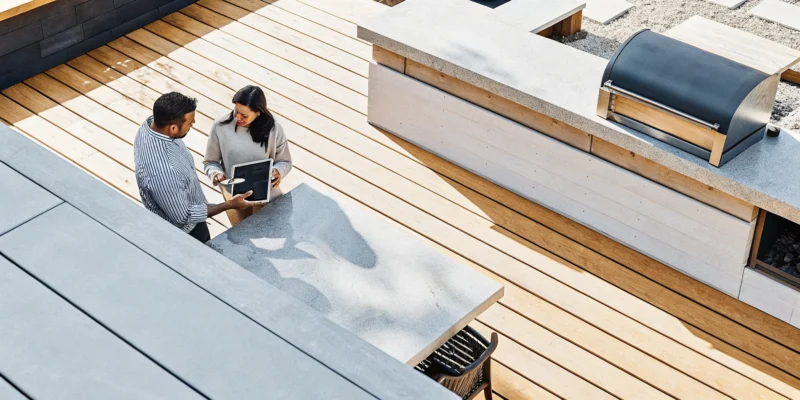
An outdoor kitchen contractor in Long Island, NY, reviewing design plans on a modern patio.

How to Find the Best Outdoor Kitchen Contractor in Long Island

Moving beyond a simple grill on the patio and creating a true outdoor kitchen is about designing a space that works perfectly for you. It’s a chance to build a custom layout with ample counter space, integrate high-end appliances, and choose beautiful finishes that complement your home’s style. This level of personalization is what transforms a backyard into a genuine extension of your indoor living area. Achieving this requires a team that can handle every phase of the project with precision and creativity. A professional Outdoor Kitchen Designer Installer Contractor Long Island NY combines your unique vision with expert craftsmanship to build a space that is both highly functional and deeply personal, making your outdoor entertaining dreams a reality.

Key Takeaways

  • Focus on finding the right builder: Your project’s success depends on hiring an experienced, licensed, and insured contractor. A true professional will manage everything from the initial design and permits to the final installation, making the process smooth and stress-free.
  • Choose materials that last: For a Long Island outdoor kitchen, durability is non-negotiable. Opt for weather-resistant materials like natural stone and stainless steel to ensure your investment can handle coastal weather and look great for years.
  • Plan your project before you build: A detailed design and a clear budget are your best tools for a successful outcome. Knowing what you want and what you can spend helps you make smart decisions and prevents costly changes down the road.

What to Expect from an Outdoor Kitchen Contractor

Hiring a contractor for your outdoor kitchen is a big step, and knowing what to expect can make the process feel much more manageable. A great contractor is more than just a builder; they are your partner in creating a space that fits your lifestyle and home perfectly. From the initial sketches to the final cleanup, they guide you through every phase. This involves detailed planning sessions, professional construction using durable materials, and the flawless integration of all your appliances. They handle the technical details so you can focus on planning your first backyard barbecue. A true professional ensures the final product is not only beautiful but also functional and built to last for years of enjoyment.

Custom Design and Planning

The first thing a great contractor will do is sit down with you to create a custom design. This isn’t just about picking a grill; it’s about mapping out the entire space. They’ll help you think through the layout, making sure there’s a natural flow between your cooking, prep, and dining areas. Expect them to create a detailed blueprint that considers everything from the placement of your refrigerator to the amount of counter space you need. This collaborative design process ensures the final kitchen is tailored specifically to how you and your family want to use it. A thoughtful plan is the foundation of a successful project.

Professional Installation and Construction

Once the design is finalized, the focus shifts to building. Professional installation is where a contractor’s expertise really shines. This process is far more complex than just setting up some appliances on your patio. It involves building a sturdy, level foundation and using construction techniques that ensure your kitchen can withstand the elements. A skilled team handles everything from masonry and stonework to running utility lines for gas, water, and electricity. Their experience in home construction guarantees that every component is installed safely and correctly, giving you a durable and reliable outdoor cooking space.

Sourcing High-Quality Materials

The materials used in your outdoor kitchen are critical for its longevity, especially in Long Island’s coastal climate. A reputable contractor will guide you toward options that are both beautiful and incredibly durable. They have access to high-quality materials and know which ones perform best outdoors. Expect them to recommend weatherproof choices like stainless steel for cabinetry and tough surfaces like granite or natural stone pavers for countertops and patios. Choosing the right materials from the start saves you from costly repairs and maintenance down the road, ensuring your investment looks great for years to come.

Seamless Appliance Integration

An outdoor kitchen is only as good as its appliances, and a skilled contractor ensures they all work together perfectly. They will design cabinetry and countertops to fit your specific grill, sink, and refrigerator for a clean, built-in look. Beyond just making things fit, they manage the technical side of appliance integration. This includes ensuring proper ventilation for grills, connecting plumbing for sinks and ice makers, and running safe electrical wiring for outlets and lighting. This attention to detail is what transforms a collection of appliances into a fully functional and cohesive outdoor kitchen where everything is exactly where you need it.

Choosing the Best Materials for Your Outdoor Kitchen

Selecting the right materials is one of the most important steps in creating an outdoor kitchen that lasts. Here on Long Island, our beautiful coastal environment also means we deal with salt air, humidity, and changing seasons. Your material choices need to stand up to these elements while matching the style of your home. A well-designed outdoor kitchen uses a combination of durable, weather-resistant, and beautiful materials to create a space that’s both functional and inviting for years to come. It’s about finding the perfect balance between strength and style, ensuring your investment looks great and performs well no matter the weather.

Durable Countertops for a Coastal Climate

Your countertops are the workhorse of your outdoor kitchen, so they need to be tough. For a coastal climate like ours, you want materials that resist moisture, salt, and sun without staining or fading. We highly recommend materials like porcelain and natural stone for this reason. Granite is another excellent choice, known for its incredible durability and timeless look. These options are not only resilient against the elements but are also easy to clean, which means you can spend more time enjoying your space and less time on upkeep. They provide a beautiful, high-end finish that truly completes your outdoor cooking area.

Weatherproof Cabinetry and Storage

Outdoor kitchen cabinetry needs to do more than just look good; it has to protect your tools and supplies from the weather. Metal frames, particularly those made from stainless steel, are a top choice for their strength and resistance to rust and corrosion. To ensure your investment lasts, look for marine-grade materials, which are specifically designed to withstand harsh, wet environments. This type of construction ensures your cabinets won’t warp or rot after a few seasons. Gappsi’s custom masonry work can also create durable, built-in storage solutions that blend seamlessly with your patio and home.

Essential Appliances and Grilling Gear

When it comes to appliances, you can’t simply move your indoor equipment outside. Outdoor appliances are built differently, using materials like stainless steel that can handle temperature swings and moisture without failing. This includes everything from your grill and side burners to your refrigerator, sink, and ice maker. Investing in products specifically rated for outdoor use is crucial for both safety and longevity. The great thing about a custom outdoor kitchen is that the cabinetry and layout can be designed to accommodate any cooking appliance you want, giving you a truly personalized and functional setup.

Must-Have Features for Long Island Homes

A great outdoor kitchen is more than just a place to cook; it’s a destination for entertaining. To make your space truly functional, consider incorporating features like a built-in grill, which creates a sleek, integrated look. Ample counter space is another must-have for prepping food and serving guests. Don’t forget about creating a comfortable atmosphere. Adding a seating area under one of our custom pavilions or pergolas provides shade and defines the space, making it the perfect spot for family and friends to gather while you cook.

Popular Design Ideas

If you’re looking for design inspiration, modular outdoor kitchens are becoming very popular. They offer a sleek, modern aesthetic and can be customized to fit your specific needs and backyard layout. Another growing trend is the use of sustainable and natural materials that blend with the surrounding landscape. This approach creates a cohesive, eco-friendly design that feels both stylish and grounded. For more visual ideas and to see how these concepts come to life, you can find plenty of inspiration from our past projects. A thoughtful design ensures your outdoor kitchen is a beautiful extension of your home.

How to Hire the Right Outdoor Kitchen Contractor

Choosing the right contractor is the single most important decision you’ll make for your outdoor kitchen project. This is the team that will turn your vision into a functional, beautiful space where you’ll make memories for years to come. A great contractor doesn’t just build; they guide you through the entire process, from initial design to final installation, ensuring every detail is perfect. They understand the unique challenges of building on Long Island and have the expertise to create a durable and stunning addition to your home. Finding a partner with a proven track record in high-end masonry and outdoor living is key to a smooth and successful project. The right team makes all the difference, transforming a complex construction job into an exciting creative process.

Verify Their Experience and Specialization

When you start talking to contractors, ask specifically about their experience with outdoor kitchens. This is a specialized field that requires more than general construction knowledge. A good rule of thumb is to look for a builder who has completed at least 25 outdoor kitchens and has been specializing in them for several years. This level of experience means they understand the nuances of outdoor construction, from selecting weather-resistant materials to properly running utility lines for water, gas, and electricity. They’ll know how to design a layout that is both beautiful and practical, ensuring your new kitchen can withstand Long Island’s coastal climate while functioning perfectly for your family’s needs.

Check for Proper Licensing and Insurance

This step is straightforward but absolutely critical. Before you sign any contracts, ask for proof of licensing and insurance. A reputable contractor will have this information readily available and will be happy to share it with you. Proper licensing ensures that the contractor meets local and state regulations, while comprehensive insurance protects you and your property from any liability in case of an accident during construction. Think of it as your safety net. Working with a fully licensed and insured company gives you peace of mind, knowing that your project is in professional hands and that you are financially protected from start to finish.

Review Their Portfolio and Design Style

A contractor’s portfolio is their resume, and it’s your best window into their quality of work and design aesthetic. As you look through photos of their past projects, remember that you’re seeing their absolute best work. Pay close attention to the details. Do the lines look clean? Is the stonework precise? How well are the appliances integrated into the cabinetry? Most importantly, does their style align with your vision? Whether you’re dreaming of a sleek, modern setup or a rustic, stone-clad kitchen, you want to see examples that resonate with you. Looking at the porcelain and natural stone they’ve used can also give you a great sense of their craftsmanship.

Assess Communication and Project Management

You’re about to enter a partnership with your contractor, so clear and consistent communication is essential. During your initial conversations, pay attention to how they listen to your ideas and answer your questions. A great contractor will have a structured process and will be able to explain it clearly. Ask who your main point of contact will be and how they will provide updates on the project’s progress. You want a team that is organized, responsive, and transparent. Feeling comfortable and confident in your contractor’s communication style will make the entire home remodeling process much more enjoyable and stress-free.

Red Flags to Watch For

Trust your instincts during the hiring process. If something feels off, it probably is. Be wary of any contractor who can’t provide a portfolio of their outdoor kitchen work or seems hesitant to share references. Vague estimates that don’t mention costs for utilities or permits are another major red flag. A professional will discuss these details upfront. Similarly, be open about your budget from the very first conversation. A trustworthy contractor will respect your budget and help you make smart decisions to stay within it. Avoiding contractors who overpromise or pressure you into a quick decision will help you find a reliable partner for your project.

Understanding the Design and Installation Process

Bringing an outdoor kitchen to life is an exciting project, and knowing what to expect can make the entire experience smooth and enjoyable. A professional contractor will guide you through a structured process, turning your initial ideas into a fully functional and beautiful space. From the first conversation to the final sign-off, each step is designed to ensure your vision is realized perfectly. Think of it as a collaborative journey where your input is combined with expert design and construction skills. This process ensures every detail is considered, from the layout and materials to local regulations and the final installation, resulting in an outdoor kitchen you’ll love for years.

The Initial Consultation and Site Visit

The first step is a conversation. This is where you share your vision, your must-haves, and how you imagine using the space. A project manager will visit your home to see the area, take precise measurements, and discuss the possibilities. This on-site visit is crucial because it allows the team to assess factors like sun exposure, existing utility lines, and the overall flow of your backyard. It’s the perfect time to ask questions and explore different design ideas. This initial meeting lays the groundwork for the entire project, ensuring that the proposed design is both beautiful and practical for your specific property.

Developing the Design and Selecting Materials

After the consultation, the design phase begins. Your contractor will create a detailed plan or even a 3D rendering so you can visualize the final product. This is where you’ll finalize the layout, including the placement of appliances, countertops, and seating areas. You’ll also select the materials. For a Long Island home, choosing durable, weather-resistant options is key. Your contractor can guide you through high-quality choices for everything from the base structure to the countertops. Selecting the right porcelain and natural stone not only defines the kitchen’s style but also ensures it withstands coastal weather, giving you a lasting investment.

Navigating Permits and Local Regulations

Building an outdoor kitchen often involves connecting utilities like water, gas, and electricity, which means you’ll likely need permits. This part of the process can feel complicated, but an experienced contractor will handle it for you. They understand the local building codes and regulations in towns across Long Island, from Suffolk to Nassau County. Your contractor will prepare and submit all the necessary paperwork, coordinate inspections, and ensure your project is fully compliant. This service is a major benefit of working with a professional, as it saves you time and prevents potential headaches down the road.

The Construction and Installation Timeline

Once the design is approved and permits are secured, construction begins. Many modern contractors, including Gappsi, build components of your kitchen off-site in a controlled environment. This approach minimizes disruption to your home and yard and can speed up the overall timeline. When the components are ready, the on-site installation is often completed quickly and efficiently. Your project manager will keep you updated throughout the process, providing a clear timeline so you know what to expect. This streamlined method is also used for other structured projects, like installing custom pavilions and pergolas.

Final Walk-Through and Project Completion

The final step is the most rewarding. Once the installation is complete, your contractor will do a final walk-through with you. This is your opportunity to inspect every detail of your new outdoor kitchen. You can test the appliances, check the finishes, and make sure everything is exactly as you envisioned. It’s the time to ask any final questions about using and caring for your new space. A reputable contractor won’t consider the job finished until you are completely satisfied. After the walk-through, all that’s left to do is fire up the grill and start making memories.

How to Budget for Your Outdoor Kitchen

Creating a budget for your outdoor kitchen is one of the most important first steps you can take. It’s easy to get swept up in the excitement of picking out grills and finishes, but a solid financial plan is what truly sets your project up for success. Think of your budget not as a restriction, but as a roadmap that guides every decision, ensuring the final result is exactly what you dreamed of without any stressful surprises. An outdoor kitchen is a significant investment that adds incredible value and enjoyment to your home. Taking the time to plan your spending helps you and your contractor work together as a team, turning your vision into a beautiful, functional space where you’ll make memories for years to come. A clear budget empowers you to make informed choices, prioritize what matters most, and move forward with confidence.

Key Factors That Influence Cost

The total investment for an outdoor kitchen can range from around $15,000 for a simple setup to well over $100,000 for a high-end, custom design. Several key elements will shape your final cost. The overall size and complexity of the layout are the biggest drivers, along with the materials you select. For Long Island’s coastal climate, choosing durable, weather-resistant options is a must. Investing in high-quality porcelain and natural stone for countertops and patios will pay off in the long run by minimizing maintenance and repairs. The number and grade of appliances, from the grill and refrigerator to sinks and side burners, also significantly impact the price. Finally, don’t forget to account for the professional installation of utility lines for gas, water, and electricity, which is essential for both safety and function.

Smart Budgeting Strategies

The best way to keep your project on track financially is to be open and honest about your budget with your contractor from the very first conversation. A clear number allows your designer to create a plan that aligns with your goals and financial comfort zone. I always recommend making a list of priorities: what are your absolute must-haves, and what features are nice-to-haves that could potentially be added later? This gives you flexibility if you need to make adjustments. Working with a professional masonry designer during this phase is invaluable. They can help you allocate funds effectively and suggest creative solutions to get the look you want while respecting your budget, preventing expensive changes once construction is underway.

Understanding Financing and Payment Schedules

Before you sign any contracts, it’s crucial to understand the financial terms. Make sure you know the difference between an estimate, which is a ballpark figure, and a fixed quote, which is a firm price for the work detailed in your agreement. Ask your contractor how they handle “change orders,” which are modifications to the original plan that can increase the final cost. A transparent contractor will have a clear process for this. Your contract should also outline a payment schedule tied to specific project milestones, like the completion of the foundation or the installation of appliances. This approach is a hallmark of professional home remodeling and ensures you only pay for work as it’s completed, giving you peace of mind throughout the process.

How Seasonal Timing Can Affect Your Project

Believe it or not, the time of year you begin your outdoor kitchen project can influence both the timeline and cost. Spring and summer are the busiest seasons for outdoor construction on Long Island, meaning contractors are in high demand and schedules are tight. If you plan your project during the off-season, like late fall or early winter, you may find more scheduling flexibility. An experienced local contractor knows how to manage a project through Long Island’s unpredictable weather patterns, ensuring progress continues safely. Planning ahead for complementary structures, such as pavilions and pergolas, at the same time can also create a more efficient and cohesive construction process, regardless of the season you start.

Maintaining Your New Outdoor Kitchen

Your outdoor kitchen is the heart of your backyard, a place for making memories and sharing meals. To keep it looking and functioning beautifully for years, a little routine maintenance is key. Think of it as protecting your investment. When your kitchen is built with expert masonry and high-quality materials, the foundation for longevity is already there. Still, regular care ensures it’s always ready for your next gathering.

Proper upkeep prevents small issues from becoming costly problems and keeps your appliances in top working order. By creating a simple maintenance plan, you can avoid common pitfalls and ensure your outdoor kitchen remains a source of pride and enjoyment. From quick cleanups after a barbecue to seasonal preparations for our Long Island winters, these simple habits will make all the difference.

A Simple Maintenance Checklist

Keeping your outdoor kitchen in great shape doesn’t have to be a major chore. A few simple habits can make a world of difference. After each use, wipe down countertops and appliance surfaces to prevent stains and buildup. Clean your grill grates while they’re still warm to easily remove any food residue. It’s also a good practice to regularly check your gas connections for leaks and ensure your propane tank has enough fuel for your next cookout. Finally, empty trash receptacles promptly to keep pests away and use fitted covers for your grill and appliances to protect them from the elements.

Seasonal Care and Winterizing Tips

Living on Long Island means preparing your outdoor kitchen for changing seasons. As colder weather approaches, proper winterization is essential to prevent damage. Start by shutting off the water supply to your sink and ice maker, and drain the lines completely to avoid frozen, burst pipes. Disconnect the gas line to your grill and other appliances for safety. Give everything a deep clean to remove grease and food particles that can attract pests over the winter. Once clean and dry, cover all your appliances, cabinets, and furniture with heavy-duty, waterproof covers to shield them from snow, ice, and moisture. This small effort in the fall ensures a quick and easy startup next spring.

Strategies for Long-Term Protection

The best way to protect your outdoor kitchen long-term starts with the initial build. Choosing durable, weather-resistant materials is the most critical step. High-quality porcelain and natural stone for countertops and patios can withstand coastal weather without fading or cracking. Beyond material selection, periodic sealing is a fantastic strategy. Applying a quality sealant to stone surfaces every few years protects them from stains and water damage. If you notice any grout cracking or surfaces looking worn, consider professional restoration and sealing services to bring them back to life. Regular inspections will help you catch any minor wear and tear before it becomes a larger issue.

Solving Common Issues

Even the best-built outdoor kitchens can face occasional issues. One of the most important safety considerations is proper ventilation, especially if your kitchen is located under one of Gappsi’s beautiful pavilions and pergolas. Ensure your grill has adequate clearance and that smoke and fumes can escape easily. Grease buildup is another common problem, so be sure to clean your grill’s drip pan regularly to reduce the risk of flare-ups. Many potential problems, from poor drainage to cracked countertops, can often be traced back to an inexperienced contractor. Working with a specialist from the start is the best way to ensure your kitchen is designed and built to avoid these issues altogether.

Related Articles

Frequently Asked Questions

How long does it typically take to build an outdoor kitchen? The timeline can vary quite a bit depending on the complexity of your design and the permit process in your town. A straightforward project might take a few weeks from the start of construction, while a more elaborate kitchen with extensive masonry and utility work could take a couple of months. A good contractor will give you a clear and realistic timeline during the design phase, factoring in everything from material delivery to inspections.

What is the single most important factor when choosing materials for a coastal climate like Long Island? Durability against the elements is, without a doubt, the most critical factor. Here on Long Island, materials have to stand up to salt air, humidity, and freezing temperatures. You want to choose options like stainless steel for cabinetry and dense natural stone or porcelain for countertops because they resist corrosion, moisture, and temperature swings. Investing in weatherproof materials from the start is the best way to ensure your kitchen looks beautiful for years, not just a season or two.

Can I save money by using indoor appliances outside? This is a common question, but the simple answer is no. Indoor appliances are not built to withstand the elements. Moisture, humidity, and temperature changes can cause them to rust, short-circuit, and fail quickly, which is both a waste of money and a safety hazard. Outdoor-rated appliances are constructed with materials like stainless steel that are specifically designed to handle outdoor conditions, ensuring they operate safely and last for a long time.

How much does an outdoor kitchen really cost? The cost depends entirely on your vision, from the size and materials to the appliances you choose. A simple, compact kitchen might start around $15,000, but a large, custom-built space with high-end appliances, extensive stonework, and features like a sink or refrigerator can easily exceed $100,000. The best approach is to be upfront about your budget with your contractor. This allows them to design a kitchen that includes your must-have features while staying within a price range you’re comfortable with.

What happens if I want to change something after construction has started? It’s definitely possible to make changes, but it’s important to understand how they affect the project. Any modification to the original plan is handled through a “change order,” which is a formal document that details the new work and any associated costs or timeline adjustments. A professional contractor will have a clear process for this and will discuss the implications with you before proceeding. This transparency ensures there are no surprises and that you remain in control of the budget and schedule.

Fully Screened Vinyl Country Lane Gazebo Installation in Huntington, NY

Outdoor living spaces are becoming more popular on Long Island as homeowners seek ways to enjoy their backyards comfortably while staying protected from the elements. A screened gazebo is a great solution. Gappsi recently completed a 12′ x 14′ fully screened vinyl Country Lane Gazebo for a homeowner in Huntington.  This gazebo combines classic craftsmanship with modern materials, creating an elegant and practical space that keeps insects out and has become the highlight of the backyard.

A Custom Country Lane Gazebo Built for Comfort

The new gazebo is 12 feet by 14 feet, giving plenty of room for seating, relaxing, and entertaining. The homeowners wanted a spot to place outdoor furniture and enjoy time outside without worrying about mosquitoes or other insects common in Long Island’s warmer months.
To solve this, the gazebo has full screening that allows fresh air in while keeping insects out, making it comfortable to use from spring through fall.  Inside, a sitting area with outdoor furniture invites homeowners to relax, read, enjoy coffee, or host guests in a peaceful, bug-free setting.

Durable Vinyl Exterior for Long-Term Protection

A key feature of this gazebo is its vinyl-wrapped exterior. The whole structure is covered in high-quality vinyl, which has several advantages over traditional wood.  Vinyl-wrapped gazebos are durable and need little maintenance. Unlike wood, vinyl does not need regular staining, painting, or sealing. It also resists moisture, rot, and insect damage, making it a great choice for Long Island’s changing weather.
The clean white vinyl finish gives the gazebo a timeless look that fits many home styles in Huntington and nearby areas.  Thanks to its weather-resistant vinyl, homeowners can enjoy long-term use with minimal maintenance.

Natural Wood Ceiling with Rich Mahogany Finish

While the gazebo’s exterior features modern vinyl protection, its interior highlights the warmth and character of natural wood. The structure’s ceiling was intentionally left exposed, creating a classic gazebo aesthetic.  The wood ceiling has a mahogany finish, adding depth and richness to the inside. The darker color looks great next to the bright vinyl exterior, making the space even more attractive. charm, blending wood craftsmanship with modern durability, an approach many homeowners value.  The mahogany finish enhances the ceiling’s appearance and protects the wood, preserving its natural texture and grain.

Classic Roof Design with Decorative Cupola

Another eye-catching element of this gazebo installation is the cupola at the roof peak. Cupolas are a traditional architectural feature often found on gazebos, barns, and other classic structures.  Cupolas look attractive and can also help with ventilation, keeping the inside comfortable.
The cupola adds an extra layer of elegance to the overall design, making the structure a true focal point in the backyard. From a distance, the roofline and cupola lend the gazebo a refined, polished appearance that enhances the entire outdoor space.

A Mosquito-Free Outdoor Retreat

Screened gazebos are great for keeping out mosquitoes, which can make it hard to use outdoor spaces in the evening.  The screened design lets the homeowners relax insect-free, while enjoying fresh air and natural light.
This makes the gazebo ideal for:
  • Outdoor dining
  • Relaxing with family
  • Reading or working outside
  • Hosting friends and guests
  • Enjoying warm summer evenings
This gazebo creates a comfortable outdoor room that combines nature with protection.

Enhancing Outdoor Living in Huntington, NY

Backyard structures, such as gazebos, can significantly enhance a property’s value and usability. In communities like Huntington, where outdoor living is highly valued, a professionally installed gazebo becomes both a lifestyle upgrade and an attractive design feature.
This Country Lane gazebo by Gappsi shows how good design and craftsmanship can change a backyard. It provides a useful place to gather and adds beauty to the property.  More homeowners now see their backyards as extensions of their homes. By adding things like screened gazebos, patios, and outdoor kitchens, they can create great spaces for entertaining, relaxing, and enjoying nature.

Professional Gazebo Installation by Gappsi

Every gazebo installation requires careful planning, proper site preparation, and expert construction to last a long time. The Gappsi team specializes in designing and installing custom outdoor structures for each homeowner’s needs. From the first design to the final installation, the team pays close attention to every detail. The result is a gazebo that looks great and stands up to changing weather.
This 12′ x 14′ fully screened vinyl Country Lane gazebo in Huntington, NY, is another example of the quality outdoor projects Gappsi has completed across Long Island.

Creating the Perfect Backyard screened gazebo can transform a backyard by adding comfort, protection, and style for outdoor enjoyment.

The new Country Lane screened gazebo in Huntington, NY, offers just that: a peaceful, stylish, and practical space where the homeowners can enjoy the outdoors while staying safe from mosquitoes.  With its vinyl-wrapped exterior, mahogany wood ceiling, and classic roof cupola, this gazebo blends traditional craftsmanship with modern durability. It is a beautiful addition to the property and will provide relaxation and outdoor enjoyment for years to come.

Contact Gappsi Today

📍 Serving all of Long Island, NY — Nassau & Suffolk Counties
🌐 www.gappsi.com
📞 Call now for a free consultation and estimate!

SCHEDULE A MEETING TODAY WITH GAPPSI

Person searching for an expert outdoor living contractor in Long Island, NY on a phone.

How to Hire an Outdoor Living Contractor in Long Island

Do you dream of having a backyard that’s perfectly suited for how you and your family live? Maybe you envision hosting summer barbecues, relaxing by a fire pit on cool evenings, or having a safe place for your kids to play. A great outdoor space is designed around your specific lifestyle, with dedicated zones for dining, lounging, and recreation. A talented Outdoor living expert, designer contractor long island ny can help you map out a functional layout that makes the most of every square foot, transforming your property into a personalized oasis that becomes the go-to spot for making memories with family and friends.

Key Takeaways

  • Hire a single contractor for a seamless experience: A full-service professional manages every aspect of your project, from initial design to final construction, ensuring all elements like pools, patios, and landscaping work together perfectly.
  • Do your homework before choosing a partner: The right contractor will have a strong portfolio, proper licensing and insurance, and positive client reviews. Always ask detailed questions about their process, timeline, and warranties to ensure they are a good fit.
  • A solid plan prevents costly surprises: Before starting, define your budget, understand local permit rules, and select durable materials designed for Long Island’s weather. This upfront planning is key to a smooth process and a result you’ll love for years.

What Can an Outdoor Living Contractor Do for You?

Thinking about transforming your backyard? An outdoor living contractor is your go-to partner for turning that vision into a reality. These professionals do more than just build patios; they design and construct entire outdoor environments from the ground up. A great contractor handles every detail, from the initial design concepts to the final installation, ensuring all the different elements work together beautifully. They combine skills in landscaping, construction, and design to create a space that’s not only stunning but also perfectly suited to your lifestyle. Whether you’re dreaming of a serene garden retreat, a lively entertainment hub, or a family-friendly play area, a contractor brings the expertise needed to manage the entire project. They help you select the right materials, plan the layout, and build a cohesive outdoor space you’ll love for years. They act as a single point of contact, coordinating all the specialized tradespeople, from masons to electricians, which simplifies the process for you. This integrated approach prevents costly mistakes and ensures your project stays on schedule and within budget, resulting in a seamless and stress-free experience.

Design and Install Swimming Pools

A contractor can turn your backyard into a private oasis by designing and installing a custom swimming pool. They work with you to create a pool that fits your property’s size and shape while reflecting your personal style. Whether you want a classic rectangular pool for swimming laps or a freeform design with a waterfall, they can make it happen. A full-service company like Gappsi can manage the entire process, from excavation to the final tile work. They also help you choose features like lighting, heating, and decking to create a complete and functional swimming pool area that becomes the centerpiece of your summer.

Build with Masonry and Hardscaping

Beyond the pool, a contractor uses masonry and hardscaping to build the foundation of your outdoor living space. This includes creating patios for dining, walkways to connect different areas, and retaining walls to add dimension to your yard. These elements provide structure and define the functional zones of your outdoor area. Using high-quality materials like natural stone or porcelain pavers, a skilled mason can construct beautiful and durable surfaces. They can also build features like outdoor fireplaces or fully equipped kitchens, adding both function and a touch of luxury to your backyard gatherings.

Create Custom Landscapes

Landscaping is what brings your outdoor space to life, and a contractor can design a custom plan that ties everything together. They select plants, trees, and shrubs that thrive in Long Island’s climate and arrange them to create color, texture, and privacy. A thoughtful landscape design softens the hardscape elements and integrates your new outdoor area with the natural surroundings. From lush garden beds to serene water features like koi ponds, a contractor can craft a landscape that enhances the beauty of your property and creates a peaceful atmosphere for you to enjoy.

Craft Outdoor Entertainment Areas

An outdoor living contractor specializes in creating spaces designed for fun and relaxation. They can build multi-level decks for hosting parties, cozy patios for intimate dinners, or even install synthetic turf for a personal putting green or Sports Games Courts. The goal is to design an area that fits how you like to entertain and spend your free time. By combining features like built-in seating, ambient lighting, and outdoor sound systems, they can craft an inviting atmosphere for any occasion. These dedicated entertainment spaces make your home the perfect spot for making memories with family and friends.

Add Pavilions, Pergolas, and Gazebos

To make your outdoor space comfortable in any weather, a contractor can add stylish and functional overhead structures. Pavilions provide full coverage from sun and rain, creating a true outdoor room perfect for a dining area or lounge. Pergolas offer partial shade with a slatted roof, defining a space without completely closing it off. Gazebos add a classic, charming focal point to a garden. These pavilions and pergolas not only provide shelter but also add architectural interest and vertical dimension to your backyard design, extending the time you can comfortably spend outside.

How to Choose the Right Outdoor Living Contractor

Choosing the right outdoor living contractor is the most important step in turning your backyard dreams into reality. This is the team you’ll trust with your home and vision. To find the perfect partner for your Long Island project, focus on these key areas.

Review Their Experience and Portfolio

A contractor’s portfolio is their resume. You want to see a proven track record of high-quality work that aligns with your style. Look for a company with extensive experience in a variety of projects, from custom swimming pools to detailed masonry. A diverse portfolio shows they have the skills to handle complex jobs and can manage a project from the initial design to the final installation. Look beyond the finished photos to understand the scope and quality of their craftsmanship.

Verify Licensing and Insurance

This step is non-negotiable. Before signing anything, confirm your contractor is fully licensed to work in Long Island and carries comprehensive liability and workers’ compensation insurance. This protects you from any potential accidents or property damage during the project. A professional company will readily provide their documentation. It’s a safety net that ensures your project is in responsible hands and meets all local regulations.

Check Customer Reviews and References

What past clients say is one of the best indicators of what your experience will be like. Spend time reading online reviews to get a feel for the contractor’s reputation. Don’t be afraid to ask for references you can speak with directly. Hearing firsthand about their communication, timeliness, and quality of work is invaluable. You can also check out a company’s YouTube channel to see projects in action.

Understand Their Design and Communication Process

A successful project relies on clear communication. Ask potential contractors to walk you through their entire process, from the first design consultation to the final walkthrough. How do they handle project updates or unexpected issues? A great contractor will have a structured approach that keeps you informed. This ensures there are no surprises and that the final result perfectly matches your vision. A seamless process is key for large-scale home remodeling projects.

Why Hire a Professional for Your Outdoor Design?

Tackling a backyard renovation yourself can be tempting, but bringing in a professional outdoor living contractor is one of the smartest decisions you can make. An expert brings a level of design knowledge, project management, and craftsmanship that ensures your new space is not only beautiful but also functional and built to last. They see the big picture, from the initial concept to the final touches, turning your vision into a reality without the common pitfalls of a DIY project.

Increase Your Property Value

Think of your outdoor space as a true investment in your home. A professionally designed patio, pool, or outdoor kitchen doesn’t just add to your quality of life; it can significantly increase your property’s market value. Well-planned outdoor living areas are a huge draw for potential buyers, and you can often recoup a large portion of your investment upon resale. A professional contractor understands how to create timeless, appealing designs using durable natural stone and high-quality materials that add lasting value. They know what features are in demand in the Long Island market and can guide you toward choices that will pay off in the long run.

Improve Your Yard’s Functionality

A professional designer can see the hidden potential in your yard and transform it into a highly functional extension of your home. They can help you create distinct zones for dining, lounging, and recreation, effectively making your home feel much larger. Whether you dream of an outdoor kitchen for entertaining, a cozy fire pit area for family nights, or even custom sports games courts, an expert can map out a logical and beautiful layout. They solve practical problems like grading issues or lack of privacy, ensuring every square foot of your property is used to its fullest potential and tailored perfectly to your family’s lifestyle.

Enjoy Your Outdoor Space Year-Round

Here on Long Island, we know the weather can be unpredictable. A professional designer knows how to create an outdoor space you can enjoy well beyond the summer months. By incorporating smart features, they can extend the usability of your backyard through spring, fall, and even parts of winter. Imagine gathering around a built-in fireplace on a crisp autumn evening or relaxing under a covered pavilion during a light spring rain. Elements like heated pools, outdoor lighting, and protective structures can make your outdoor living area a year-round destination, giving you far more value from your investment and more opportunities to make memories at home.

Create a Seamless Indoor-Outdoor Flow

One of the hallmarks of exceptional design is a smooth transition between your indoor and outdoor spaces. A professional contractor doesn’t just build a patio; they create a cohesive environment that connects your home to your yard. They consider your home’s architectural style, color palette, and interior finishes to ensure the outdoor design feels like a natural extension of what’s inside. This can be achieved by using complementary masonry materials, aligning doors and windows with key landscape features, and creating clear pathways that invite you outside. The result is a harmonious living space that feels both expansive and thoughtfully connected.

Key Considerations for Planning Your Outdoor Space

Before you can break ground on your dream backyard, a little planning goes a long way. Thinking through the practical details of your project will help you create a clear vision, set realistic expectations, and ensure the entire process runs smoothly from start to finish. A well-thought-out plan is the foundation of an outdoor space that you and your family will enjoy for years. By addressing key areas like your budget, local regulations, climate, and materials upfront, you can work more effectively with your contractor and avoid surprises down the road. These considerations will help you transform your ideas into a functional and beautiful reality.

Plan Your Budget and Timeline

First things first, let’s talk numbers and dates. Establishing a clear budget is one of the most important steps in any home improvement project. Knowing what you’re comfortable spending helps you and your contractor make decisions about the scope, materials, and features of your outdoor space. It’s also wise to set a realistic timeline, keeping in mind that things like weather and material availability can cause delays. When discussing finances with potential contractors, don’t hesitate to ask about their payment schedules and if they offer any financing options. This can provide the flexibility you need to bring your vision to life without financial strain.

Understand Local Zoning and Permits

Navigating local regulations can feel complicated, but it’s a non-negotiable step. Before any work begins, you need to understand the specific zoning laws and permit requirements in your area. Every town in Nassau and Suffolk County has its own set of rules for things like pools, fences, and new structures. An experienced local contractor will be well-versed in these codes and can manage the permit application process for you. This ensures your project is fully compliant from the start, saving you from potential fines and legal issues. This is where hiring a professional with deep local knowledge really pays off.

Factor in Long Island’s Climate

Long Island weather brings a little bit of everything, from hot, sunny summers to cold, snowy winters. Your outdoor space needs to be able to handle it all. When planning, think about how the seasons will affect your new area. This might mean choosing furniture with weather-resistant fabrics, incorporating a covered area like a pergola, or planning for proper drainage. Regular maintenance is also key. Simple tasks like covering furniture, cleaning patios, and applying a protective finish to certain surfaces will keep your investment looking its best. Gappsi offers professional restoration and sealing services to help protect your patios and walkways year-round.

Select Durable, High-Quality Materials

The materials you choose are critical to the beauty and longevity of your outdoor living space. While aesthetics are important, durability is just as vital, especially with Long Island’s climate. For example, natural stone and high-quality porcelain pavers are excellent, low-maintenance choices for patios and walkways that can withstand freeze-thaw cycles. For structures like pergolas and decks, treated wood or modern composite materials offer resilience against the elements. Investing in quality materials from the start means less maintenance and fewer repairs in the future. You can explore a wide selection of premium porcelain and natural stone to find the perfect fit for your home’s style.

Understanding Outdoor Living Project Costs in Long Island

Budgeting for your dream backyard is a crucial first step. The final cost of an outdoor living project in Long Island can vary quite a bit, but understanding the key components will help you plan effectively and invest with confidence.

What Factors Influence the Final Price?

The final price tag on your project depends on several key variables. The scope is the biggest factor; a simple stone patio will cost less than a multi-level outdoor kitchen with a built-in grill and a swimming pool. The materials you choose also play a significant role. For example, high-end porcelain pavers may have a different price point than natural bluestone. Your property’s current condition, like whether it needs extensive grading or tree removal, will also affect the cost. Remember, a well-designed outdoor space is an investment that can increase your home’s value, often returning a large portion of what you spent when it’s time to sell.

How to Get an Accurate Estimate

The only way to get a truly accurate price is through a detailed consultation and a written estimate. Look for a contractor who can manage the entire project from design to completion. When one team handles everything, from masonry to landscaping, it’s easier to get a precise and comprehensive quote. A professional estimate should be itemized, clearly breaking down the costs for materials, labor, permits, and any other expenses. This transparency ensures there are no surprises down the road and helps you understand exactly where your money is going. A thorough plan from the start is the best way to keep your project on budget.

Exploring Your Financing Options

A beautiful outdoor living area is a significant home improvement, and you have several ways to fund it. Many homeowners use savings, a home equity line of credit (HELOC), or a personal loan to cover the costs. It’s also worth asking your contractor about their payment options. Many established companies partner with lenders to offer convenient financing solutions that can make your project more affordable. These programs often feature simple application processes and flexible payment plans, allowing you to build your dream backyard now and pay for it over time. You can explore Gappsi’s financing options to see how you can make your vision a reality.

Essential Questions to Ask a Potential Contractor

Once you’ve narrowed down your list of potential contractors, it’s time to start the interview process. Think of this as hiring a partner for a very important project: your home. Asking the right questions upfront will help you understand their process, communication style, and commitment to quality. A reputable contractor will be happy to provide detailed answers and will appreciate your thoroughness. This conversation is your best tool for gauging whether a company is the right fit for you and your vision. Being prepared with these key questions will give you the confidence to make a well-informed decision.

What is the project timeline?

Understanding the project timeline is about more than just knowing the start and end dates. Ask for a breakdown of the major phases of the project, from design and permitting to construction and final walkthrough. A professional contractor should be able to explain how they manage the entire process, from the first idea to the final installation. Inquire about how they handle potential delays, like bad weather, and how they will keep you updated on progress. A clear and realistic timeline sets expectations from the beginning and is a strong indicator of a contractor’s organizational skills. This ensures your swimming pool installation or patio project stays on track.

Do you offer warranties or maintenance?

Your outdoor living space is a significant investment, so you want to know it’s built to last. A contractor who offers a warranty on their work shows confidence in their craftsmanship and materials. Be sure to ask for specifics: What does the warranty cover, and for how long? Some firms offer a five-year warranty on their projects, which provides excellent peace of mind. It’s also smart to ask about ongoing maintenance. Do they offer services to keep your new patio or landscape looking its best? Gappsi, for example, provides restoration and sealing services to protect and maintain your investment for years to come.

Where do you source your materials?

The quality of the materials used will directly affect the beauty and durability of your outdoor space. Ask potential contractors where they get their supplies and why they choose certain products. A great contractor will emphasize using high-quality materials and precise installation for long-lasting results. They should be able to explain which materials, like specific porcelain and natural stone pavers, are best suited for the Long Island climate. This conversation will give you insight into their expertise and their commitment to building a project that won’t just look good on day one, but for many years down the road.

How do you handle change orders?

Even with the best planning, changes can happen during a construction project. You might decide to add a feature, or an unexpected issue could arise. What’s important is how your contractor manages these adjustments. Ask about their process for handling change orders. A professional will have a clear system, typically involving a written document that outlines the new work, the cost, and any impact on the timeline. This process should require your approval before any changes are made. A streamlined approach to change orders prevents miscommunication and budget surprises, keeping your home remodeling project running smoothly.

Where to Find Reliable Contractor Reviews

Finding the right contractor often starts with hearing from other homeowners. Past client experiences can tell you a lot about a company’s professionalism, quality of work, and reliability. Knowing where to look for honest feedback is the first step in building a list of potential partners for your outdoor living project. From dedicated review sites to local business directories, you have plenty of resources to research contractors in Nassau and Suffolk counties. Combining these sources will give you a well-rounded picture of a company’s reputation.

Check Online Review Platforms

Online review platforms are a great starting point. Websites dedicated to customer feedback allow you to see what past clients are saying about a contractor’s work. Look for detailed reviews that mention specific aspects of the project, like communication, scheduling, and the final quality. For example, positive client testimonials often highlight a contractor’s ability to stick to the timeline and budget while delivering beautiful results. Reading these firsthand accounts helps you understand what it’s like to work with a particular company and whether they’re a good fit for your vision.

Look Through Local Directories

Local directories like Yelp and Angi are another valuable resource for finding and vetting outdoor living contractors. These sites often feature a wide range of businesses, from large companies to smaller, specialized teams. You can filter by location and service, making it easy to find professionals in your area. Pay attention to how companies respond to reviews, both positive and negative, as this reveals a lot about their customer service. Reading through the top-rated patio pros in Long Island can give you a quick snapshot of the most reputable contractors.

Verify Professional Memberships

A contractor’s professional standing can speak volumes about their commitment to quality and industry standards. Check if a company is part of any local or national trade organizations. An established presence in the community is also a strong indicator of reliability. For instance, Gappsi has been providing home improvement services across Long Island for decades, specializing in everything from swimming pools to custom masonry. A long history of successful projects and a solid local reputation show that a contractor is invested in their craft and their clients’ satisfaction. This background provides an extra layer of confidence as you make your decision.

Start Your Outdoor Living Project

When you’re ready to transform your backyard, your first step is to find a qualified contractor who can bring your vision to life. Look for a local Long Island company with a strong portfolio and a reputation for handling projects from the initial idea to the final installation. Working with a single, dedicated team simplifies the entire process, ensuring a seamless experience without the headache of coordinating multiple vendors. A full-service company can manage every detail, from designing a custom swimming pool to laying the final stone on your new patio.

A great contractor will work with you to create a custom design that fits your ideas and your budget. They should offer a curated selection of high-quality products and materials, giving you plenty of options to choose from. At Gappsi, we pride ourselves on our collaborative design process and our ability to manage the entire project in-house. You can even see and touch many of the materials for yourself at the Gappsi Store, which helps make your decisions feel more concrete. This approach ensures the final result is a perfect match for your home and lifestyle.

Before making a final decision, take the time to review a contractor’s past work and read testimonials from previous clients. Hearing directly from other homeowners can give you confidence in your choice. A contractor who is proud of their work will be happy to share examples and references with you. By carefully selecting a partner who aligns with your goals, you can ensure your outdoor living project is a success that enhances your home for years to come.

Related Articles

Frequently Asked Questions

Do I need a complete design plan before contacting a contractor? Not at all. You just need to have a general idea of how you want to use your space. A great outdoor living contractor acts as your design partner. They will take your initial thoughts, whether it’s for a new pool or a patio for entertaining, and help you develop a professional plan. They bring the expertise to suggest materials, create a functional layout, and turn your vision into a detailed design that works for your property and budget.

What’s the difference between an outdoor living contractor and a regular landscaper? Think of a landscaper as a specialist for the living elements of your yard, like plants, trees, and lawn care. An outdoor living contractor is the general contractor for your entire backyard. They manage complex construction projects that combine hardscaping (patios, walkways, walls), structures (pavilions, kitchens), and major features (swimming pools, Sports Games Courts), and then integrate them perfectly with the landscape design.

How long does a typical outdoor renovation project take? The timeline depends entirely on the scope of your project. A straightforward patio might be completed in a few weeks, whereas a more complex installation involving a swimming pool, extensive masonry, and a pavilion could take several months from start to finish. This includes the time for design, local permitting, and the construction itself. A professional contractor will always provide you with a detailed schedule before they begin.

Can I build my dream backyard in phases to fit my budget? Yes, building in phases is a very practical approach. You can start with the core elements, like a patio and some foundational landscaping, and then add features like an outdoor kitchen or a fire pit in the following years. The most important step is to create a complete master plan with your contractor from the beginning. This ensures that each new phase connects seamlessly with the last, resulting in a cohesive and well-designed space.

What is the single most important factor when choosing a contractor? While a strong portfolio is crucial, the most important factor is clear and consistent communication. You are trusting this team with your home, so you need a partner who listens, provides regular updates, and has a clear process for handling questions or changes. A project is most successful when you feel confident and informed from the first conversation to the final walkthrough.

Pavers with a wet look sealer showing the glossy, color-enhancing finish.

Best Paver Sealer Wet Look: Our Top 4 Picks

If you’ve ever wished you could bottle that rich, vibrant look your patio has right after a rainstorm, you’re not alone. That deep, saturated color that makes every stone pop is exactly what a high-quality sealer can achieve, giving your outdoor space a polished appearance all year long. A paver sealer wet look finish does more than just look good; it creates a permanent sheen that enhances your stonework day in and day out. But it’s not just about aesthetics. This protective coating is one of the smartest things you can do for your investment, guarding it against stains, sun fading, and pesky weeds.

Key Takeaways

  • It’s about protection, not just looks: A wet look sealer provides a beautiful glossy finish, but its main job is to create a durable barrier against UV rays, stains, and moisture, which helps your pavers last longer.
  • Proper preparation is non-negotiable: The secret to a flawless, even finish is starting with a completely clean and dry surface. Sealing over dirt or damp pavers is the number one cause of a cloudy or blotchy result.
  • Hiring a pro protects your investment: While you can apply sealer yourself, a professional service handles the intensive prep work and uses high-quality products correctly, preventing common mistakes and ensuring a durable finish.

What Is a Wet Look Paver Sealer?

If you love how your stone pavers look right after it rains, a wet look sealer is for you. It’s a special coating designed to give your patio, walkway, or driveway that rich, glossy sheen all the time. These sealers are typically high-solids acrylic formulas that darken the pavers just enough to make their natural colors pop, creating a vibrant, polished appearance. Think of it as a permanent enhancement that brings out the best in your stonework.

Beyond the beautiful finish, these sealers are a key part of paver maintenance. They create a protective barrier on the surface of the stone, which is essential for preserving its beauty and integrity over the long term. Whether you have brand new pavers or are looking to bring older ones back to life, applying a quality sealer is one of the best ways to protect your investment. Gappsi offers professional restoration and sealing services to ensure your outdoor spaces always look their best.

How It Creates That Signature Shine

That signature wet look comes from a liquid polymer that, when applied, forms a clear, durable film over the paver surface. This film acts like a lens, deepening the colors and creating a high-gloss finish that reflects light. It essentially locks in the saturated look that water creates, but without the moisture. Products like Techniseal’s high-gloss sealer for concrete pavers are specifically formulated to achieve this effect, giving your hardscape a clean, vibrant appearance that makes the entire space feel more refined and put-together.

Why It’s More Than Just a Good Look

While the aesthetic improvement is a major draw, the protective benefits are just as important. A wet look sealer guards your pavers against all sorts of potential damage. It helps prevent stains from oil, grease, and fallen leaves, making cleanup much easier. It also provides crucial UV protection to stop the sun from fading the beautiful colors of your porcelain and natural stone pavers. Plus, it hardens the sand in the paver joints, which helps prevent weed growth and keeps the pavers from shifting over time, ensuring your patio remains stable and beautiful for years.

A Look at the Best Wet Look Paver Sealers

When you’re ready to give your patio or driveway that polished, just-rained-on look, you’ll find plenty of sealers on the market. The key is finding one that delivers a beautiful finish and offers serious protection against the elements. We’ve worked with countless products over the years, and a few consistently stand out for their performance and durability. Here are four of the best wet look paver sealers that we recommend to homeowners looking for that perfect combination of style and strength.

Gappsi’s Professional-Grade Sealers

We’ve spent decades perfecting outdoor spaces, so we know exactly what Long Island pavers need to withstand our specific climate. That’s why we developed our own line of professional-grade sealers. These products are formulated to provide a rich, wet look that deeply enhances the color of your natural stone or concrete pavers. More importantly, they create a durable shield against UV damage, which prevents fading, and protect against common stains from spills or leaves. When you want a product you know is tough enough for our local weather and designed to keep your investment looking its best, our sealers are a reliable choice.

Eagle Sealer Products

If you’re aiming for a high-impact, super-glossy appearance, Eagle’s Clear Wet Look Sealer is a popular option for homeowners. As a solvent-based acrylic, it creates a noticeable sheen that makes paver colors pop. This sealer does a great job of protecting surfaces from moisture, UV fading, and everyday stains. It’s a solid all-around performer that typically keeps its vibrant look for about two to three years before a reapplication is needed. It’s a fantastic choice for a patio or pool deck where you want that striking, reflective finish.

Techniseal Solutions

Techniseal is another trusted name in the industry, and their WL4 high-gloss sealer is a fantastic product for concrete pavers and slabs. It’s specifically designed to create what they call a “permanent wet look,” preserving that fresh, clean appearance long after it’s applied. We like it because it not only makes pavers look great but also offers excellent protection against stains from oil or grease. This makes it a practical choice for driveways and outdoor kitchen areas where spills are more likely to happen. It helps keep your surfaces beautiful and simplifies cleanup.

Seal N Lock Options

For a more advanced formula, Seal ‘n Lock’s Ultra Wet Look® paver sealer is an impressive choice. This product uses what they call Nano Technology, which allows the water-based urethane-modified acrylic to penetrate deeper into the paver’s surface. This deep penetration creates an incredibly strong and long-lasting protective barrier from within. The result is a beautiful wet look that doesn’t just sit on the surface but truly enhances the stone. It’s a top-tier option for anyone looking for maximum durability and a rich, lasting finish for their outdoor living spaces.

What Are the Pros and Cons of Wet Look Sealers?

Choosing a sealer for your pavers is a big decision that impacts both the look and longevity of your outdoor space. Wet look sealers are a popular choice for a reason, but they aren’t a one-size-fits-all solution. Understanding the benefits and potential drawbacks will help you decide if that glossy, vibrant finish is the right move for your patio, walkway, or driveway. It’s all about weighing what you gain in appearance and protection against the specific needs of your property and lifestyle.

The Advantages You’ll Love

The most obvious benefit is the stunning visual transformation. A wet look sealer deepens and enriches the color of your pavers, making them pop with a vibrant, glossy sheen. It brings out the beautiful, natural tones in the stone that might otherwise look faded. Beyond aesthetics, these sealers offer serious protection. They form a durable barrier against UV rays that cause fading, and they repel stains from spills or leaves. This protective layer also helps lock the sand in the joints between pavers, which maintains the integrity of the surface and keeps weeds from sprouting. Proper restoration and sealing can truly extend the life of your investment.

Things to Keep in Mind

While the benefits are compelling, there are a few things to consider. The biggest factor is moisture. Applying a sealer to pavers that are even slightly damp can trap water underneath, leading to a cloudy or milky appearance that ruins the finish. This is why waiting for a dry stretch of weather and ensuring the surface is completely arid is critical. Another point is that some high-gloss sealers can make the surface a bit slippery when wet, which is an important safety consideration around swimming pools or on sloped walkways. Over-applying the product can also make this issue worse. These potential problems highlight why professional application is often the best route to ensure a flawless and safe result.

How Do You Choose the Right Sealer for Your Pavers?

Picking the right sealer can feel like a big decision, but it’s pretty straightforward when you know what to look for. The goal is to find a product that not only gives you the beautiful wet look you want but also provides serious protection for your investment. It’s about finding the perfect balance between aesthetics and durability, ensuring your patio, walkway, or driveway looks fantastic for years. Let’s walk through the key factors to consider so you can choose with confidence.

What to Look for in a Sealer

Think of a high-quality sealer as a shield for your pavers. Its main job is to protect them from the elements. You’ll want a sealer that offers excellent UV protection to prevent the sun from fading your pavers’ beautiful colors. It should also be water-resistant to guard against mold, mildew, and stains from spills. Another key feature is joint stabilization. A good sealer will harden the sand between your pavers, which helps stop weeds from sprouting and keeps ants from setting up camp. The best products offer a comprehensive defense that keeps your outdoor spaces looking clean and vibrant. Gappsi’s restoration and sealing services focus on using sealers that provide this complete protection.

Matching the Sealer to Your Pavers

Not all pavers are created equal, and neither are sealers. The right choice depends entirely on the material you’re working with. Porous surfaces like natural stone and concrete pavers absorb sealer differently than dense materials like porcelain. Using a sealer that isn’t compatible with your paver type can result in a blotchy finish, a white haze, or inadequate protection. Before you buy, confirm the sealer is formulated for your specific pavers. For instance, some wet look sealers are designed to deeply penetrate and enrich the color of natural stone, while others are made to form a protective film over the top. Always read the product specifications to ensure a perfect match.

Choosing a Sealer for Long Island Weather

Here on Long Island, our pavers face a unique set of challenges. From hot, humid summers to harsh, freezing winters, the weather can take a toll. A sealer for our climate needs to be tough. Look for a product that can handle the freeze-thaw cycles of winter, which can cause pavers to crack and shift. A breathable, water-based sealer is often a great choice because it allows moisture trapped beneath the surface to escape without clouding the finish. It also needs to stand up to salt if your patio or driveway is near areas treated with de-icing products. Choosing a sealer built for our specific weather is a critical step in any masonry project to ensure long-lasting results.

What’s the Best Way to Apply a Wet Look Sealer?

Applying a wet look sealer isn’t complicated, but it does require attention to detail. The secret to a flawless, lasting finish lies in proper preparation and application. Getting these steps right ensures your pavers look stunning and stay protected. We’ll walk through the entire process, from getting your pavers ready to avoiding common slip-ups that can derail your project.

How to Prep Your Pavers

Think of this as the most important step. Applying sealer to a dirty or damp surface is a recipe for disappointment. Before you even think about opening the sealer, your pavers must be completely clean and dry. This means scrubbing away all dirt, grime, oil stains, and any of that chalky white residue called efflorescence. A pressure washer can be a great tool here, but make sure you let the pavers dry thoroughly afterward, which can take at least 24 to 48 hours. A pristine surface allows the sealer to bond correctly, giving you that beautiful, even sheen. If the prep work feels overwhelming, our restoration and sealing services can handle it for you.

The Right Tools and How to Use Them

Once your pavers are prepped, it’s time to apply the sealer. The right tools make all the difference. For a smooth, consistent coat, use a garden sprayer that can handle solvents, a low-pressure sprayer, or a natural bristle brush. One tool you should absolutely avoid is a roller. Rollers tend to create bubbles and can leave an uneven, streaky finish on the textured surface of pavers. Also, check the weather forecast. The ideal time to apply sealer is on a mild, dry day with the temperature somewhere between 40 and 75 degrees Fahrenheit. This helps the sealer cure properly without drying too fast or too slow.

Common Application Mistakes to Avoid

A few common mistakes can turn your project into a headache, so let’s make sure you avoid them. The biggest error is applying sealer to pavers that are still damp. Even if they look dry on the surface, moisture can be trapped underneath, leading to a cloudy, milky finish that’s difficult to fix. Another major misstep is skipping the cleaning process. Sealing over dirt or stains just locks them in permanently and prevents the product from adhering properly. Be patient and give your pavers plenty of time to dry after cleaning. Taking your time ensures your beautifully sealed patio looks professional and lasts for years.

How Long Does a Wet Look Sealer Last?

One of the most common questions we get is about the longevity of a wet look sealer. It’s a great question, because you want to know your investment of time and money is going to pay off. Generally, a high-quality wet look sealer can last up to five years under the best conditions. However, “best conditions” can be a bit of a unicorn, especially here on Long Island where our patios and walkways face everything from blazing summer sun to winter ice. Think of your sealer as a hardworking shield for your beautiful pavers. Its main job is to protect against moisture, UV rays, stains, and everyday wear and tear, which is crucial for preserving the beauty of your outdoor living space.

The actual lifespan really depends on a few key variables. The amount of foot traffic your patio gets, its exposure to direct sunlight, and how well the surface was prepared before application all play a huge role. A walkway that sees constant use will naturally show wear faster than a quiet, shaded seating area. For these high-traffic spots or surfaces that get a lot of direct sun, you might find that you need to reapply a maintenance coat every couple of years to keep that rich, glossy finish looking its best. Creating a regular maintenance schedule is the best way to protect your pavers for the long haul, and our professional restoration and sealing services can help you figure out a plan that makes sense for your specific space.

What Makes Your Sealer Last Longer

Several key factors determine how long your wet look sealer will maintain its shine and protective qualities. First is the quality of the sealer itself. Products with a higher percentage of solids tend to form a thicker, more durable film, offering better protection and a longer-lasting gloss. Another major factor is the environment. A patio that’s shaded for most of the day will hold its seal longer than one that bakes in the sun. The type of porcelain and natural stone you have can also play a role, as some materials are more porous than others. Proper application on a thoroughly cleaned and completely dry surface is also critical for maximum adhesion and durability.

Signs It’s Time to Reapply

Knowing when to reapply sealer is all about observation. Your pavers will give you some clear signals. The most obvious sign is that the wet look has started to fade and the surface looks dull or dry. You might also notice that water no longer beads up on the surface when it rains; instead, it soaks in. This is a key indicator that the protective barrier is wearing down. In some cases, you might see peeling or flaking, which often points to an issue with the initial application, like moisture being trapped underneath. If your pavers are looking tired or are getting harder to clean, it’s probably time for a fresh coat.

How Do You Maintain Sealed Pavers?

Applying a wet look sealer is a fantastic way to enhance and protect your patio, walkway, or driveway. But the work doesn’t stop once the sealer is dry. To keep that beautiful, glossy finish looking its best for years to come, a little routine maintenance is essential. Proper care not only preserves the aesthetic appeal of your pavers but also extends the life of the sealant, protecting your investment against the elements. Think of it as simple upkeep that pays off big time. By following a few straightforward tips for cleaning and long-term protection, you can ensure your outdoor space remains a stunning feature of your home.

Simple Cleaning Tips

Keeping your sealed pavers clean is easier than you might think. The best approach is gentle and consistent. Start by regularly sweeping away leaves, dirt, and other debris to prevent stains and mildew from setting in. For a quick refresh, a simple rinse with a garden hose often does the trick. If you encounter spills, like from a barbecue or a dropped drink, try to clean them up right away with a mild soap and water. Avoid using harsh, acidic cleaners or a high-pressure washer, as these can strip away the sealer and damage the paver surface. For stubborn stains that won’t budge, it’s best to call in experts who offer professional cleaning and restoration.

How to Protect Your Pavers for the Long Haul

Long-term protection is all about preserving the integrity of the sealant. After the initial application, it’s crucial to let the sealer fully cure for at least 24 hours before walking on it or placing furniture. This prevents peeling and ensures a durable bond. Every season, take a walk around your patio or driveway to inspect for any signs of wear, paying close attention to high-traffic areas. Most sealers will need to be reapplied every three to five years to maintain that vibrant wet look and protective barrier. When it’s time to reapply, ensuring the surface is perfectly clean is the most important step for a lasting finish. A professional resealing will guarantee your pavers are properly prepped and sealed.

How Much Does Professional Paver Sealing Cost?

When you start looking into professional paver sealing, you’ll find that prices generally fall between $0.75 and $2.00 per square foot here on Long Island. This range can shift based on a few key things: the current condition of your pavers, the type of material they’re made from, and the total size of your patio, walkway, or driveway. For example, older pavers that need extensive cleaning or have a lot of weeds will likely be on the higher end of that scale. It’s important to remember that this price isn’t just for a can of sealer. It covers a complete service designed to protect and beautify your investment for years to come.

A professional quote typically includes a thorough power washing to remove dirt and grime, re-sanding the joints between the pavers, and the precise application of a high-quality sealer. Think of it as a full spa treatment for your outdoor surfaces. The goal is to restore their original beauty and shield them from the elements. At Gappsi, our restoration and sealing services are tailored to handle the specific challenges of our local climate, ensuring your pavers look great and last longer. Getting a professional estimate is the best way to understand the exact cost for your project and what that investment covers, giving you a clear picture of how to best protect your outdoor space.

DIY vs. Professional Application

Going the DIY route might seem like a good way to save money, and for small, simple projects, it can be. However, sealing pavers correctly involves more than just rolling on a coat of sealer. A professional job, which usually costs between $1.50 and $2.00 per square foot, includes critical prep work that makes all the difference. This means a deep, powerful cleaning to lift stubborn stains and organic growth, followed by adding new sand to the joints. This step is essential for stabilizing the pavers and preventing weeds. When you hire a professional, you’re paying for their expertise, commercial-grade equipment, and premium products that deliver a flawless, even finish that lasts.

Why Professional Sealing Pays Off

Investing in professional sealing is really about protecting your larger investment: your beautiful paver patio or driveway. A pro knows exactly how to handle different materials, from porous natural stone to durable porcelain pavers, using the right cleaning methods and sealers for each. This expertise prevents costly mistakes, like trapping moisture or creating a cloudy finish, which can be difficult and expensive to fix. Professionals also use high-quality sealants that offer superior protection against UV rays, stains, and water damage. In the long run, this expert application extends the life of your pavers, keeps them looking fantastic, and saves you money on future repairs and intensive maintenance. It’s a smart move for maintaining your home’s value and curb appeal.

Related Articles

Frequently Asked Questions

Will a wet look sealer make my patio slippery, especially around a pool? This is a great question, and the answer is that it can. High-gloss sealers create a smooth, non-porous film that can reduce traction, particularly when it gets wet. If you’re sealing an area around a swimming pool or a sloped walkway, safety is key. You can ask your professional installer about adding a non-slip additive to the sealer. This creates a slightly textured finish that provides more grip without significantly dulling the shine.

How often will I really need to reseal my pavers here on Long Island? While a high-quality sealer can last up to five years, the real timeline depends on your specific property. A patio that gets intense, direct sun all day or a walkway with heavy foot traffic will likely need a maintenance coat every two to three years to keep it looking its best. The key is to watch for the signs. When you notice the glossy finish has faded or that rainwater is soaking in instead of beading up, it’s time to think about resealing.

What happens if I apply the sealer and it looks cloudy or hazy? A cloudy or milky white haze is almost always caused by one thing: trapped moisture. This happens when a sealer is applied to pavers that weren’t completely dry. Unfortunately, it’s not an easy fix and usually requires stripping the sealer off with a special solvent and starting the process over. This is one of the biggest reasons we recommend professional application, as we can ensure the surface is perfectly prepped and arid before any product is applied.

Can I apply a new coat of wet look sealer over an old one? It depends on the condition of the existing sealer. If the old coat is simply faded but still intact, you can often clean the surface thoroughly and apply a new coat right on top. However, if the old sealer is peeling, flaking, or has turned cloudy, it must be completely stripped off first. Applying a new layer over a failing one will only cause the new coat to peel off as well, so a clean slate is essential for a lasting finish.

Is a solvent-based or water-based sealer better for my pavers? Both types have their advantages, and the best choice often depends on the paver material and the finish you want. Solvent-based acrylic sealers tend to penetrate deeply and create a very rich, high-gloss finish that really makes colors pop. Water-based sealers are more environmentally friendly, have a much lower odor during application, and offer excellent breathability. This breathability is a great feature for our climate, as it allows any moisture vapor from under the pavers to escape without clouding the finish.