


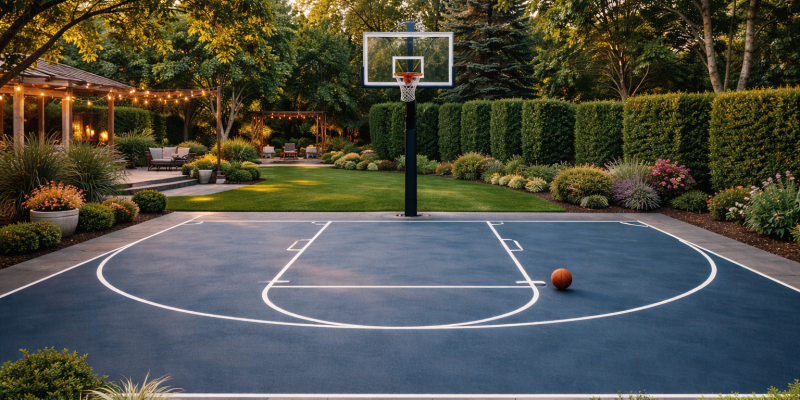
A new basketball court is more than just a place to play; it’s a long-term investment in your home and your family’s lifestyle. Like any significant home improvement project, smart financial planning is the key to success. Figuring out the budget can feel like the most challenging part, but it doesn’t have to be. Using a concrete basketball court cost calculator helps you explore different options and understand how your choices impact the bottom line. It empowers you to make informed decisions about your investment, ensuring the final result not only meets your vision but also fits comfortably within your financial goals. Let’s break down the costs so you can build a court that delivers value for years to come.
Key Takeaways
- Budget for the entire project, not just the concrete: Your total investment includes more than the slab itself; remember to account for essential costs like site preparation, drainage systems, surface coatings, and accessories like hoops or lighting.
- Prioritize professional installation for long-term value: While a DIY approach might seem cheaper initially, professional installation prevents costly future repairs from issues like cracking or improper drainage, ensuring your court is safe and durable.
- Use calculators for planning, not for final numbers: Online cost estimators are great for initial budgeting and exploring options, but a formal quote from a contractor after a thorough site evaluation is necessary for an accurate project cost.
What is a Concrete Basketball Court Cost Calculator?
If you’re dreaming of adding a basketball court to your backyard, one of your first questions is probably about the cost. A concrete basketball court cost calculator is an online tool designed to give you a preliminary estimate for your project. Think of it as a starting point to help you budget. It considers factors like materials, labor, and site preparation to give you a general idea of the investment required. For example, a typical outdoor basketball court can range anywhere from $12,500 to over $115,000. That’s a huge range, and it’s because every court is different. The final price depends on the size, materials, and any special features you want to include.
These calculators are great for initial planning, helping you turn a vague idea into a more concrete financial picture before you even pick up the phone to call a professional. By using one, you can get a feel for the numbers involved in creating your perfect home game court. It helps you explore different options and see how they impact the bottom line, making you a more informed homeowner when it’s time to discuss the project with a contractor. It’s the perfect first step in figuring out what’s possible for your space and your budget.
How Do They Work?
These calculators are pretty straightforward. They work by asking you to input specific details about your planned basketball court. You’ll typically enter the court’s dimensions, the type of materials you’re considering, and other features you want to include. The tool then uses this data to generate a cost estimate. To get the most reliable number, it’s important to be as accurate as possible with your inputs. Some common measurement errors include guessing the dimensions instead of measuring, mixing up units like feet and meters, or forgetting to account for a sloped yard. Taking a few extra minutes to gather precise information will give you a much more useful estimate to work with.
Why Use One?
Using a cost calculator is all about smart planning. It helps you understand the financial side of your project right from the start, which is key for effective budgeting. Knowing the potential costs allows you to make informed decisions about what you can realistically afford and which features are most important to you. As the experts at Legendary Sports Construction point out, a basketball court is an “investment in lifestyle,” not just an addition to your property. A calculator gives you the clarity you need to move forward confidently, ensuring your budget aligns with your vision for a fun, active space for your family to enjoy for years to come.
What Makes a Calculator Accurate?
The accuracy of a cost calculator really comes down to two things: the quality of the information you provide and the data programmed into the tool itself. While a calculator is a fantastic starting point, building a high-quality sports court involves a lot of specific expertise. Professionals understand the nuances of site preparation, drainage, and material performance that online tools can’t fully capture. According to CourtMaster Sports, it’s essential for homeowners to understand the specific maintenance needs of their court to ensure its longevity. This kind of expert knowledge is what ultimately turns a simple estimate into a precise, reliable project quote.
What Factors Influence the Cost of a Concrete Court?
When you start budgeting for a backyard basketball court, you’ll quickly find that no two projects are exactly alike. The final price tag depends on a handful of key variables that can swing the cost significantly. Understanding these factors will help you get a more accurate estimate and make informed decisions about your project. From the size of the court to the type of hoop you install, every choice plays a role in the total investment. Let’s break down the main components that influence the cost of building a concrete court.
Court Size and Dimensions
The most straightforward factor affecting your court’s cost is its size. A larger court requires more materials, more labor, and more time to build. Costs are often calculated per square foot, with estimates typically ranging from $4 to $16 per square foot for the concrete slab itself. A small half-court for practice shooting will naturally be much more affordable than a full-sized court designed for 5-on-5 games. Before you decide, think about how you’ll use the space. Do you need a regulation-size key, or is a simple shooting area enough? Defining the court’s purpose will help you and your contractor determine the ideal dimensions for your yard and budget.
Site Preparation and Drainage
Before any concrete can be poured, the ground needs to be properly prepared. This is often one of the biggest and most variable costs of the entire project. If your Long Island backyard is sloped, has poor soil, or is difficult for construction equipment to access, the cost of excavation and grading will increase. Proper site preparation also includes ensuring adequate drainage to prevent water from pooling on the court and causing damage over time. As one expert notes, “If your yard has a big slope or is hard to get to, preparing the ground can be the most expensive part.” This step is critical for the longevity of your court.
Concrete Type and Thickness
The foundation of your court is the concrete slab, and its quality is non-negotiable for a durable, long-lasting playing surface. For a high-performance sports court, a standard pour won’t cut it. Most professional-grade game courts are built over a 4- to 5-inch thick steel-reinforced concrete slab. This thickness, combined with a concrete strength of 3500 PSI, ensures the surface can withstand intense play and changing weather without cracking or shifting. While using a thinner or lower-grade concrete might save a little money upfront, it will likely lead to expensive repairs down the road. Investing in a quality foundation is essential for a court that will last for years.
Surface Finishes and Coatings
The raw concrete slab is just the beginning. To create a safe and playable surface, you’ll need the right finish. A “medium broom finish” is often recommended for the concrete itself, as this texture provides excellent grip for players’ shoes and helps prevent slips and falls. Beyond the texture, you can add acrylic color coatings, game lines for basketball and other sports, and even custom logos. These finishes not only give your court a professional look but also protect the concrete from the elements. Each layer of paint or coating adds to the material and labor costs, but it’s what transforms a simple slab into a true home court.
Optional Features and Upgrades
Finally, the features you add to your court will influence the total cost. A high-quality, adjustable basketball hoop is a must, but you can also incorporate features for other activities. Many homeowners choose to add multi-sport versatility with net systems for tennis, pickleball, or volleyball. Other popular upgrades include rebounder nets, powerful LED lighting for playing after dark, and perimeter fencing for safety and convenience. These optional features and their installation will add to your budget, but they also maximize the fun and functionality of your new outdoor space.
How Much Does a Concrete Basketball Court Cost?
Figuring out the budget for your dream basketball court is one of the most important first steps. The final price tag can vary quite a bit, as it depends on everything from the size of the court to the finishes you choose. Think of it less as a single price and more as a range that you can adjust based on your priorities. Whether you’re planning a simple half-court for family fun or a premium, multi-sport surface, understanding the key cost components will help you plan effectively and avoid surprises down the road. Let’s break down what you can expect to invest in a new concrete court.
The Price of a Basic Court
If you’re looking for a straightforward space to practice your free throws, a basic concrete court is a great starting point. Generally, you can expect the cost to pour a concrete slab to fall between $15,000 and $45,000. This price typically covers a standard-sized half-court, including the concrete itself and the labor for installation. A “basic” court usually means you get a durable, playable surface without extra features like acrylic coatings or high-end hoops. The final cost within this range often comes down to site accessibility and the specific masonry expertise of the team you hire.
The Price of a Premium Court
For those who want to create a truly standout athletic space, a premium court offers endless customization. The cost for these installations is often calculated per square foot, typically ranging from $4 to $16 for outdoor courts. What makes a court “premium”? This is where you can add features like multi-layer acrylic surfaces for better cushioning and ball response, custom colors and logos, professional-grade hoops, and even fencing or lighting. These upgrades transform a simple slab into a high-performance sports game court that’s perfect for serious players and entertaining guests.
How Location Affects Your Budget
Where you live plays a significant role in the overall cost of your basketball court. The final price can vary significantly based on your location due to regional differences in labor rates, material transportation costs, and local building regulations. Here on Long Island, for example, factors like property accessibility and the need for extensive site preparation on sloped or uneven ground can influence the budget. Working with a local contractor who understands the area’s specific challenges and permit requirements ensures a smoother process and a more accurate initial quote for your project.
Factoring in Long-Term Maintenance
One of the best things about a concrete court is its durability. While sports courts generally require minimal upkeep, a little maintenance goes a long way in protecting your investment. To ensure your court has a long and playable life, you’ll want to plan for periodic cleaning to remove debris and prevent staining. Every few years, it’s also a good idea to have the court inspected for any small cracks that need filling and to apply a fresh sealant. These restoration and sealing services protect the concrete from weathering and keep the surface in top condition for years of play.
What to Look For in a Cost Calculator
When you start searching for concrete basketball court cost calculators, you’ll quickly find there are a lot of options out there. But not all of them are built to give you a truly helpful estimate. A good calculator is more than just a simple multiplication tool; it’s a planning partner that helps you understand the variables and make informed decisions. The best ones are detailed, flexible, and easy to use, guiding you toward a budget that reflects your actual project goals.
Think of it as the first step in your project’s blueprint. A vague calculator will give you a vague number, which isn’t very useful when you’re trying to plan. A great one, however, will ask the right questions and allow you to explore different scenarios. It should help you see how your choices, from the size of the court to the type of hoop you install, impact the final price tag. Knowing what features to look for will help you find a tool that gives you confidence in your budget and a clear path forward.
Essential Inputs for an Accurate Estimate
The accuracy of any calculator depends entirely on the information you provide. To get a realistic estimate, you need a tool that asks for specific details, not just generic dimensions. Look for calculators that prompt you for precise length and width measurements, information about the current state of the site, and any potential challenges like slopes or drainage issues. As one source points out, common measurement errors like guessing instead of measuring or forgetting site-specific factors can throw off your numbers significantly. The more detailed the inputs, the more reliable your estimate will be.
Material and Customization Options
A backyard court is a personal project, and a good calculator should reflect that. It should allow you to explore different material and customization options to see how they affect the cost. For example, you should be able to select different concrete thicknesses, surface coatings, and paint choices. Building a high-quality court requires specialized knowledge, and understanding your material options is a key part of the process. This feature lets you weigh your aesthetic preferences against your budget, helping you decide where to invest and where you might be able to save.
Helpful Visuals and Comparisons
Sometimes, numbers on a screen can feel a bit abstract. That’s why calculators with helpful visuals and cost comparisons are so valuable. Seeing a rendering of different court layouts or a side-by-side comparison of various features can make the planning process much more tangible. Some tools provide a rough price range for different tiers of courts, which helps you see where your project might land. This visual context helps you make choices that not only fit your budget but also match the vision you have for your backyard.
A Simple, User-Friendly Interface
Finally, the best calculator is one you’ll actually use. A clunky, confusing interface can be frustrating and may even lead to mistakes in your estimate. Look for a tool with a clean design and a straightforward, step-by-step process. The goal is to simplify the budgeting process, not complicate it. While a calculator is a great starting point, it’s always best to work with an experienced court builder to finalize your plans. A user-friendly calculator makes it easier to gather your thoughts and prepare for that professional consultation.
Common Cost Misconceptions About Concrete Courts
When you start budgeting for a new basketball court, it’s easy to get tripped up by a few common assumptions about the cost. Thinking through these potential pitfalls ahead of time will help you create a realistic budget and ensure your project runs smoothly from start to finish. A beautiful, durable court is a fantastic investment in your home and lifestyle, and getting the finances right is the first step.
Let’s clear up some of the biggest misconceptions so you can plan your project with confidence.
The Myth of “Cheaper is Better”
We all love a good deal, so it’s tempting to jump on the lowest bid you receive for your court installation. But when it comes to construction, a surprisingly low price can be a red flag. A quality concrete slab is a significant investment, and cutting corners on materials or labor often leads to bigger expenses down the road. A poorly poured court can crack, settle unevenly, or drain improperly, resulting in costly repairs.
Instead of focusing only on the initial price, think about the long-term value. A well-built court from an experienced team will last for years with minimal issues. Investing in quality craftsmanship for your sports game courts ensures you get a safe, playable surface that truly enhances your property.
Uncovering Hidden Project Costs
A basic price-per-square-foot estimate rarely tells the whole story. The final cost of your concrete court depends on much more than just its size. Many essential steps can add to the budget, and it’s important to know what they are upfront.
Be sure to ask if your quote includes site preparation, which can involve excavation, grading, and installing a proper drainage system. Other potential costs include local permits, custom line painting, premium surface coatings, and accessories like fencing or lighting. A transparent contractor will provide an itemized estimate that breaks down every expense, so you know exactly where your money is going. This level of detail is standard for professional masonry construction.
Costly Planning Mistakes to Avoid
Building a high-performance sports court requires specialized knowledge. It’s not as simple as just pouring a slab of concrete. One of the most expensive mistakes a homeowner can make is underestimating the technical details involved in the planning phase.
Proper site evaluation is critical to guarantee your court performs well and lasts for decades. An expert will assess your property’s soil conditions, water table, and overall landscape to prevent issues with drainage and stability. They will also help you select the right concrete mix and thickness for Long Island’s climate. Working with a professional from the beginning is the best way to avoid fundamental errors that are difficult and expensive to fix later.
How to Lower Your Concrete Basketball Court Costs
Building a backyard basketball court is an exciting project, but it’s also a significant investment. The good news is that you don’t have to break the bank to create a high-quality, durable court your family will love for years. With some strategic thinking and careful decision-making, you can manage your budget effectively without cutting corners on what matters most. It all comes down to making smart choices with your materials, understanding the value of professional work, and having a solid plan from the very beginning.
Choose Your Materials Wisely
Your choice of materials is one of the biggest factors influencing the final price tag. The concrete slab alone can be a substantial part of the budget, but there are ways to be cost-effective. Opting for a standard, high-quality concrete mix, like 3500 PSI steel-reinforced concrete, provides the perfect balance of durability and affordability for a residential court. While premium finishes and coatings look great, you can start with a simpler finish and plan to upgrade it later. Working with an expert can help you explore all the options for sports game courts and find materials that fit your budget without compromising on safety or performance.
DIY vs. Professional Installation
The idea of a DIY installation can be tempting if you’re looking to save money, but building a basketball court is more complex than it looks. It requires specialized knowledge to ensure proper grading, drainage, and a perfectly level surface. A small mistake in pouring the concrete can lead to cracking, pooling water, and an unsafe playing area, resulting in costly repairs down the road. Investing in professional installation from a team experienced in athletic courts guarantees the job is done right the first time. This not only ensures the longevity and safety of your court but also saves you from the headaches and hidden costs of a DIY project gone wrong.
Save Money with Smart Planning
A well-thought-out plan is your best tool for keeping costs in check. Before any work begins, take the time to finalize your court’s size, location, and features. Making changes mid-project is one of the fastest ways to inflate your budget. Proper site preparation is also crucial; addressing any grading or drainage issues upfront will prevent expensive problems later. Partnering with a design-build firm helps streamline this process, as they can create a comprehensive plan that covers everything from excavation to the final hoop installation. This integrated approach ensures every detail is accounted for, helping you stick to your budget and avoid unexpected surprises.
Concrete vs. Other Surfaces: A Cost Comparison
When you’re planning your dream basketball court, one of the first big decisions is the surface material. While concrete is a popular choice for its durability and performance, it’s helpful to see how it stacks up against other common options, like asphalt. Looking at the numbers is important, but the real story is in the long-term value and how each surface holds up to years of play and Long Island weather. A court is more than just a slab of pavement; it’s an investment in your home and your family’s enjoyment. Let’s break down the costs and benefits to help you make the best choice.
Concrete vs. Asphalt Breakdown
At first glance, asphalt often looks like the more budget-friendly option. An asphalt court can have a lower initial installation cost, which is certainly appealing. However, that upfront price doesn’t tell the whole story. A professionally installed concrete court is a significant project, and its price reflects the quality of materials and labor involved. While the initial investment for concrete might be higher, it’s crucial to think about the costs that come after the installation. Asphalt is more susceptible to weather damage, requiring more frequent and costly maintenance over its lifespan to fix cracks and uneven spots.
Comparing Long-Term Value and Durability
This is where concrete truly shines. A high-quality sports game court is built to last, and that starts with a solid foundation. We build our concrete courts over a 4- to 5-inch thick, steel-reinforced slab using high-strength concrete. This robust construction makes it incredibly resilient against wear and tear, from intense games to harsh freeze-thaw cycles. While asphalt might need patching and resurfacing every few years, a well-built concrete court requires minimal upkeep. This durability means you’ll spend less time and money on repairs and more time enjoying the game, making it a smarter investment for the long run.
How to Get an Accurate Project Estimate
Getting a clear and accurate estimate is one of the most important steps in planning your backyard basketball court. A reliable quote isn’t just a number; it’s a detailed roadmap for your project that prevents surprises down the line. It shows that your contractor understands your vision and has a solid plan to bring it to life. To get a quote you can trust, you need to have a productive conversation with your contractor, understand the site-specific challenges, and use budgeting tools to set realistic expectations from the start. This process ensures everyone is on the same page and helps you feel confident as you move forward with building the court of your dreams.
What to Ask Your Contractor
Your first conversation with a professional installer is your best opportunity to set the project up for success. It’s smart to connect with an expert early on to choose the right materials for a long-lasting court. A seasoned pro can walk you through the pros and cons of different concrete mixes, surface coatings, and hoop systems. Come prepared with questions about their experience, the project timeline, and how they handle material selection. Ask them to explain the installation process from start to finish. This initial discussion will help you find a partner who can build the high-quality sports and game courts your family will enjoy for years.
Planning for Permits and Site Evaluation
Before any concrete is poured, a thorough site evaluation is essential. The unique characteristics of your property play a huge role in the final cost. If your yard has a big slope or is hard to get to, preparing the ground can be the most expensive part. This work often involves moving a lot of dirt, building retaining walls, and ensuring good drainage to protect your investment. You’ll also need to account for local building permits, which vary across Long Island. A professional contractor can assess your property, identify potential challenges, and manage the permitting process for you, ensuring your project complies with all local regulations.
Using a Calculator to Finalize Your Budget
Online cost calculators are a great tool for getting a preliminary budget in place. You can use a calculator to get a quick price estimate, which helps you understand the general cost range for a project like yours. Most concrete courts fall somewhere between $4 and $16 per square foot, but this can change based on your specific design choices. While a calculator gives you a helpful starting point, remember that it’s just an estimate. The final step is to get a detailed, formal quote from your contractor that reflects your specific materials, site conditions, and any custom features you’ve chosen for your home remodeling project.
Related Articles
Frequently Asked Questions
How accurate are online cost calculators, really? Think of an online calculator as a great first step for ballpark budgeting. It can give you a general idea of the costs based on standard sizes and materials. However, it can’t see your backyard. It won’t know if your property has a steep slope or tricky access for equipment, which are details that can significantly affect the final price. Use it to get a foundational number, then talk to a professional for a precise quote based on your specific site.
What’s the biggest unexpected cost I should plan for? Site preparation is almost always the biggest variable. The initial quote for a concrete slab is one thing, but the cost to get the ground ready for it is another. If your yard needs extensive excavation, grading to create a level surface, or a complex drainage system to handle water runoff, this work can add a substantial amount to your budget. It’s a critical step you can’t skip, so be sure to discuss it in detail with your contractor.
Can I save money by pouring the concrete myself? While the DIY spirit is admirable, building a sports court is a project best left to professionals. Pouring a concrete slab that is perfectly level, properly graded for drainage, and finished for optimal playability requires specialized skill and equipment. A small mistake can lead to major problems like cracking, pooling water, or an uneven surface, which are incredibly expensive to fix. Investing in professional installation ensures your court is safe, durable, and built right the first time.
Why is concrete a better long-term investment than asphalt? Asphalt may seem cheaper at first, but concrete offers far better long-term value. A steel-reinforced concrete court is incredibly durable and can withstand intense play and harsh weather with very little upkeep. Asphalt is softer and more prone to developing cracks and low spots, meaning you’ll spend more time and money on repairs and resurfacing over the years. Concrete’s resilience makes it a smarter, more cost-effective choice for a court that will last for decades.
What’s the difference between a basic court and a premium one? A basic court gives you a fantastic, high-quality playing surface. It typically includes the professionally installed, steel-reinforced concrete slab with a standard broom finish for good traction. A premium court builds on that foundation with custom features. This can include multi-layer acrylic coatings for color and improved cushioning, painted lines for various sports like pickleball or volleyball, professional-grade adjustable hoops, and additions like fencing or lighting.