


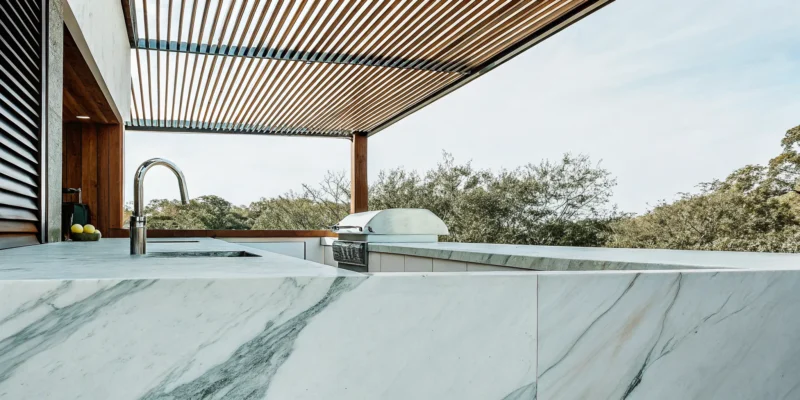
Building an outdoor kitchen on Long Island means choosing materials that are as tough as they are beautiful. Our four-season climate, with its humid summers and freezing winters, puts everything to the test. So, when homeowners ask us about marble outdoor kitchens countertops, they’re really asking if this elegant stone can handle our local weather. The answer is yes, but it requires the right knowledge. This article is your local guide to choosing, installing, and caring for marble outdoors. We’ll cover how to protect it from the elements and why working with a local expert makes all the difference.
Key Takeaways
- Embrace Marble’s Unique Character: Marble offers an unmatched, luxurious look for your outdoor kitchen, but it’s a natural stone that will age and patina over time. Understanding that it requires more care than granite, like wiping up spills quickly, is key to loving it for years.
- Seal Your Countertops Twice a Year: This is the most important maintenance step. Applying a quality sealer in the spring and fall protects the porous stone from stains, moisture, and damage from Long Island’s weather.
- Choose Your Slab and Design with an Expert: The best results come from selecting a dense marble slab in person and working with a professional. An expert helps you create a cohesive outdoor kitchen design that considers the local climate and ensures your countertop is installed correctly.
The Beauty of Marble Outdoor Countertops
There’s a reason marble has been a star material for centuries. It brings an immediate sense of luxury and classic style that’s hard to match. When you bring that elegance into your backyard, it transforms your outdoor kitchen from a simple cooking area into a stunning focal point. As a natural stone, every slab has a story told through its unique colors and patterns. While we’ll cover durability later, there’s no denying its visual appeal. The right masonry design can integrate these countertops seamlessly, creating a truly custom look for your Long Island home.
Its Timeless Style and Unique Veining
The real magic of marble lies in its individuality. Because it’s a natural stone, no two countertops will ever be identical. Each piece features its own distinct veining, which looks like delicate, artful brushstrokes. This natural variation ensures your outdoor kitchen is one of a kind. Unlike manufactured materials, marble offers an authentic beauty that adds sophistication to your outdoor living area. When you choose your slab, you’re selecting a piece of natural art that will define your space. Gappsi offers a wide selection of porcelain and natural stone to help you find that perfect piece.
Carrara vs. Calacatta: Which Marble Is for You?
When you start looking at marble, you’ll likely hear two names come up often: Carrara and Calacatta. Both are beautiful Italian marbles with distinct personalities. Carrara is the understated, elegant choice, with a soft white or light gray background and fine, feathery gray veining. It’s a classic look that works wonderfully in modern outdoor spaces. Calacatta, on the other hand, makes a bolder statement. It features a brighter white background with thick, dramatic veining in shades of gray or gold. If you want your countertops to be the undeniable star of the show, Calacatta is an excellent option.
How Marble Ages with Character
One of the most special qualities of marble is the way it evolves over time. Exposure to the elements will cause it to develop a patina, a soft, matte finish that many people find incredibly beautiful. Instead of looking worn out, it takes on a rustic, storied character that adds to its charm. This natural aging process is part of the appeal for those who appreciate authentic materials. Of course, proper care is still important, and regular restoration and sealing can protect your investment while allowing it to age gracefully.
Is Marble Durable Enough for an Outdoor Kitchen?
It’s a question we hear all the time: can a material as elegant as marble really hold up in an outdoor kitchen? The short answer is yes, it absolutely can, but its longevity depends on understanding its unique properties. Marble is not a set-it-and-forget-it material. It requires a partnership. When you know how it interacts with heat, weather, and daily use, you can keep it looking beautiful for years. Its durability comes down to proper care and knowing what to expect.
How It Handles Heat
One of marble’s best features for an outdoor kitchen is its impressive heat resistance. You can place your grill or pizza oven nearby without worrying about the stone cracking or discoloring from the high temperatures. This quality is essential for any functional cooking space. As an added bonus, marble naturally stays cool to the touch. Even on a hot summer day in Long Island, your countertops will remain relatively cool, making them a comfortable surface for food prep. This heat tolerance is a key reason why marble is a top contender for luxury outdoor kitchen designs.
How It Resists Weather and Sun
From humid summers to freezing winters, Long Island’s weather puts outdoor materials to the test. Marble stands up surprisingly well, especially against the sun. Its natural composition means it won’t fade or lose its beautiful color, even in direct sunlight. However, to protect it from moisture and the freeze-thaw cycles of winter, proper sealing is non-negotiable. A high-quality sealant creates a protective barrier that prevents water from seeping in and causing damage. With the right restoration and sealing services, your marble countertops can gracefully handle whatever the seasons throw at them.
What to Expect from Stains and Scratches
Now for the part that requires a little more awareness: protecting your marble from stains and scratches. Marble is a porous stone, which means it has tiny, microscopic holes that can absorb liquids. Spills like red wine, lemon juice, or oil can lead to stains if they aren’t wiped up quickly. This is why sealing is so important. We recommend sealing your outdoor marble countertops at least twice a year. Marble is also softer than granite, so it can scratch. The simple solution is to always use a cutting board for chopping and to avoid dragging heavy pots across the surface. Knowing this ahead of time helps you properly care for your beautiful natural stone.
Marble vs. Other Countertop Materials
Choosing the right countertop is one of the most important decisions for your outdoor kitchen. You’re not just picking a surface; you’re setting the tone for the entire space. Marble is a classic choice, but it’s helpful to see how it compares to other popular materials. Each one has its own personality and practical considerations, so let’s break down the key differences to help you find the perfect fit for your home.
Marble vs. Granite
Think of this as a choice between unique elegance and rugged durability. Both marble and granite are beautiful natural stones, but they behave differently. Granite is incredibly tough and resistant to scratches and heat, making it a practical workhorse for a busy outdoor kitchen. If you expect a lot of wear and tear, granite is a very safe bet. Marble, on the other hand, offers a softer, more luxurious look with its distinctive, flowing veins. While granite is beautiful in its own right, it can’t quite replicate the timeless, artful appearance of marble. The decision often comes down to whether you prioritize unmatched durability or one-of-a-kind beauty.
Marble vs. Quartz
Here, the main difference is natural versus engineered. Marble is quarried directly from the earth, giving it an authentic, organic feel. Quartz countertops are man-made products, created by mixing ground quartz with resins and pigments. This process makes quartz non-porous, so it doesn’t need sealing and is highly resistant to stains. While that sounds great, many quartz products are not warrantied for outdoor use because the resins can yellow or fade with prolonged sun exposure. Marble, while it does require sealing to protect it, is a natural material that has graced outdoor structures for centuries and holds up well when cared for properly.
Marble vs. Concrete
This comparison is all about style. Concrete countertops offer a modern, industrial, or rustic vibe and can be customized into any shape or color. They make a bold statement and are perfect for a contemporary outdoor design. However, much like marble, concrete is porous and requires diligent sealing to protect it from stains and weather-related cracking. Your choice here really depends on the aesthetic you’re aiming for. If you love a classic, elegant, and high-end feel, marble is the clear winner. If you prefer an edgy, minimalist, or industrial look, concrete is an excellent alternative with similar maintenance needs.
The Pros and Cons of Marble Countertops
Let’s be honest, every material has its strengths and weaknesses. Marble’s biggest pro is its stunning appearance; it brings a sense of luxury and sophistication to an outdoor kitchen that few other materials can match. It also handles high temperatures well, so you don’t have to worry about placing a hot pan on it. The main con is the maintenance. Marble is not a “set it and forget it” material. It’s softer than granite, so it can scratch, and it’s porous, meaning you must seal it regularly (at least twice a year outdoors) to prevent stains from things like wine or lemon juice. For many homeowners, the extra care is a small price to pay for its incredible beauty.
How to Maintain Marble Outdoor Countertops
Marble is a beautiful choice for an outdoor kitchen, but like any premium material, it needs a little care to stay that way. The good news is that maintaining your marble countertops is straightforward. With a simple routine, you can protect your investment and ensure your outdoor space remains a stunning centerpiece for years. It’s all about gentle cleaning and consistent protection.
How Often to Seal Your Marble
Sealing your marble is the single most important step in protecting it from the elements. Think of sealant as an invisible shield for your stone. For an outdoor kitchen, you’ll want to apply a quality sealer at least twice a year. This regular application prevents moisture from seeping into the porous stone, which helps guard against stains from spilled wine or food. It also protects the marble from the freeze-thaw cycles we experience on Long Island. If you prefer a hands-off approach, our professional restoration and sealing services can handle this for you, ensuring your countertops are properly protected season after season.
Best Practices for Cleaning Marble
When it comes to daily cleaning, simplicity is key. All you need is a soft cloth and a gentle solution of mild soap and warm water. Wipe down your countertops regularly to remove dust, pollen, and any residue from cooking or entertaining. This prevents buildup and keeps the marble’s surface looking fresh and vibrant. Avoid letting spills sit for too long, especially acidic ones like citrus juice or tomato sauce. A quick wipe-down after use is the best habit you can form. This consistent, gentle care is fundamental to the work we do across all our masonry projects, as it preserves the natural beauty of the stone.
What to Avoid When Cleaning
Just as important as knowing how to clean your marble is knowing what not to use. Marble is a calcium carbonate stone, which means it’s sensitive to acids. Harsh, acidic cleaners, including common household products like vinegar or lemon-based sprays, can etch the surface. Etching is a chemical reaction that dulls the finish, and it’s not something you can simply wipe away. You should also steer clear of abrasive powders or rough scrubbing pads, as these can scratch the stone. Always stick to pH-neutral, non-abrasive cleaners specifically made for stone or just the simple soap and water solution we mentioned earlier.
Protecting Marble from the Elements
One of the best qualities of marble is its ability to stay cool to the touch, even in direct sun. With proper care, it stands up beautifully to the outdoors. A well-sealed marble countertop can handle Long Island’s hot summers and cold winters without losing its color or integrity. The sealant is your first line of defense, blocking UV rays and preventing moisture from getting in. While covering your outdoor kitchen during the harshest winter months is always a good idea, you can feel confident that your choice of porcelain and natural stone is built to last when maintained correctly.
Finding Your Perfect Marble Countertop on Long Island
Once you’ve decided that marble is the right fit for your outdoor kitchen, the exciting part begins: finding the perfect slab and bringing your vision to life. This part of the process is where your personal style really gets to shine. Choosing a countertop isn’t just a practical decision; it’s about selecting the centerpiece for your future get-togethers, family barbecues, and quiet mornings with a cup of coffee. It’s an investment in your home’s beauty and your family’s lifestyle, creating a focal point that will host countless memories.
Here on Long Island, we have specific considerations that make this choice even more important. Our coastal climate, with its salt air and distinct four seasons, demands materials that are as resilient as they are beautiful. You need a countertop that can stand up to sunny summer days and chilly autumn evenings. Making the right choice means finding a piece that is not only stunning but also durable enough to handle everything our environment throws at it. This is why taking the time to explore your options and consult with professionals is so crucial. With a little guidance, you can find a piece of marble that you’ll love for years, ensuring your outdoor kitchen is a source of pride and enjoyment.
How to Choose the Right Marble Slab
Think of choosing a marble slab less like picking a material and more like selecting a piece of art for your backyard. Because marble is a natural stone, no two pieces are exactly alike. Each slab has its own unique veining, coloring, and character, which is a huge part of its charm. When you’re looking at options, consider the overall feel you want for your outdoor kitchen. Do you prefer soft, subtle veining or a bold, dramatic pattern? For outdoor use, it’s also smart to lean toward denser types of marble, like Carrara or Calacatta, as they tend to be more resilient. Visiting a showroom to see the porcelain and natural stone options in person is the best way to find a slab that speaks to you.
Customizing Your Outdoor Kitchen
Your marble countertop will be the star of the show, but it needs a strong supporting cast. The beauty of a custom outdoor kitchen is how all the elements come together to create a cohesive and functional space. Imagine your beautiful new marble countertop paired with sleek stainless steel appliances, creating a cooking area that feels both professional and inviting. You can also integrate custom masonry for your base, adding texture and durability. Think about the entire experience, perhaps placing your kitchen under a new pavilion to provide shade and define the space as a true outdoor room. It’s these thoughtful details that transform a simple cooking area into a complete outdoor living destination.
Why Work with a Local Design Expert
Bringing an outdoor kitchen project together involves a lot of moving parts, and it can feel a bit overwhelming. This is where working with a local design expert becomes invaluable. A seasoned professional can guide you through every step, from selecting the perfect marble slab to designing a layout that fits your lifestyle and your property. At Gappsi, we have decades of experience helping Long Island homeowners create their dream outdoor spaces. We understand the local climate and building codes, and we can help you design a cohesive kitchen that integrates seamlessly with your landscape. Our comprehensive approach to home remodeling ensures that every detail, from the countertop to the lighting, is handled with care and expertise.
Frequently Asked Questions
Is marble really durable enough for Long Island’s weather? Yes, it absolutely can be. The key to marble’s longevity outdoors, especially with our four distinct seasons, is proper care. Its natural composition helps it resist fading from the sun, and it handles heat from a grill very well. The most important factor is sealing it correctly to protect it from moisture during our humid summers and the freeze-thaw cycles of winter. With a good maintenance routine, marble is a beautiful and lasting choice for a local outdoor kitchen.
How much maintenance does an outdoor marble countertop actually need? It’s more about consistency than difficulty. The most important task is sealing the countertop at least twice a year to protect its porous surface. For daily cleaning, all you need is a soft cloth with mild soap and water to wipe away spills and pollen. The main thing to remember is to avoid harsh, acidic cleaners like vinegar, which can damage the stone’s finish. It’s a simple routine that keeps your investment looking its best.
Will my marble countertop stain easily from spills like red wine or lemon juice? This is a common concern, and it’s a valid one. Because marble is a porous stone, it can absorb liquids, which may lead to stains if spills are left to sit. However, this is exactly why sealing is so crucial. A quality sealant acts as a protective barrier, giving you time to clean up messes. As long as you wipe up acidic or colorful spills promptly and keep up with your sealing schedule, you can greatly minimize the risk of staining.
What’s the main reason to choose marble over a tougher stone like granite? The choice between marble and granite often comes down to aesthetics. While granite is incredibly durable and resistant to scratches, it doesn’t offer the same unique, soft elegance as marble. Marble’s distinctive, flowing veining makes each slab a one-of-a-kind piece of natural art. People choose marble when they want their countertops to be a luxurious and sophisticated focal point, accepting that it requires a bit more mindful care in exchange for its unmatched beauty.
How do I pick the right slab for my outdoor kitchen? Choosing your slab is the most personal part of the process. I always recommend seeing the options in person, as photos don’t capture the full depth and character of the stone. Think about the overall style of your outdoor space. Are you looking for the subtle, feathery lines of Carrara or the bold, dramatic veining of Calacatta? Consider how the colors in the stone will complement your home and landscaping. It’s about finding a piece that you connect with visually and that will serve as the perfect centerpiece for your new kitchen.