


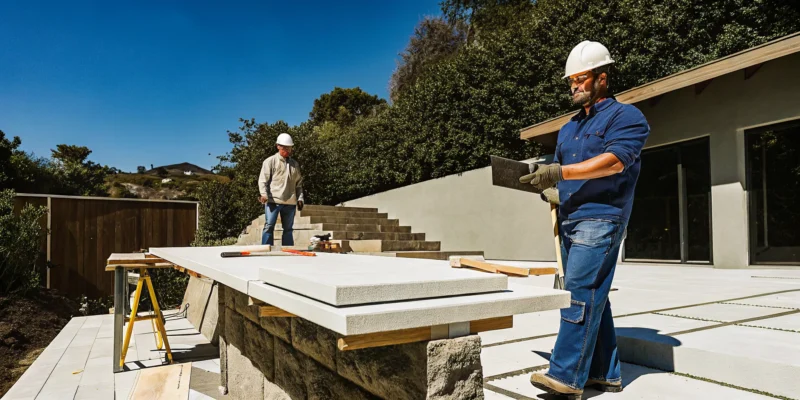
If you’re tired of dealing with a cracked concrete patio, a splintering wood deck, or endless weeds popping up between old pavers, you’re not alone. Porcelain pavers offer a beautiful and permanent solution to these common frustrations. They are stain-resistant, incredibly strong, and require almost no maintenance. But here’s the secret: all those benefits are only unlocked with a flawless installation. The foundation beneath the pavers is what guarantees a level, stable surface for decades. This is why finding the right professional is so important. We’ll walk you through exactly how to determine which contractor installs porcelain pavers in Nassau County with the skill to deliver on the promise of this amazing material.
Key Takeaways
- Prioritize a Low-Maintenance Material: Porcelain pavers are a top choice for Long Island homeowners because they are incredibly durable, resisting weather damage and fading. Their non-porous surface means no sealing is required, saving you time and money on upkeep.
- Hire a Partner, Not Just a Paver Layer: Your project’s success hinges on your contractor, so look beyond the lowest price. Choose a licensed, insured professional with specific porcelain experience, get a detailed contract, and check references to ensure you’re hiring for long-term value.
- Know What You’re Paying For: A quality installation starts with a solid, well-prepared foundation, which is the most critical step for durability. Ensure your quote is itemized, breaking down costs for materials, labor, and site prep, so you can accurately compare offers and avoid surprise fees.
Why Choose Porcelain Pavers for Your Nassau County Home?
When you’re dreaming up a new patio, walkway, or pool deck, one of the biggest decisions you’ll make is the material. For homeowners in Nassau County, porcelain pavers are a fantastic choice that balances beauty, strength, and practicality. They offer a modern solution that stands up to the Long Island climate while providing a high-end look for your outdoor living space. If you’re looking for a material that will look great for years with minimal fuss, porcelain is worth serious consideration. It’s an investment in your home’s beauty and functionality, giving you more time to simply enjoy your backyard.
Unmatched Durability and Weather Resistance
Living on Long Island means dealing with a full range of weather, from hot, sunny summers to cold, icy winters. Porcelain is an ideal material for this environment. Because it’s fired at extremely high temperatures, it becomes incredibly dense and non-porous. This means it absorbs very little water, so it won’t crack during the freeze-thaw cycles that can destroy other materials. Plus, its color is baked all the way through, so it won’t fade in the sun, keeping your patio looking vibrant for years. This built-in resilience makes porcelain and natural stone pavers a reliable foundation for any outdoor project, from a simple walkway to an elaborate poolside lounge.
Simple, Low-Maintenance Upkeep
One of the best things about porcelain pavers is how easy they are to care for. You can forget about spending your weekends on intense maintenance. Porcelain pavers don’t need much work; a simple sweep or a rinse with your garden hose is usually enough to keep them looking clean. Their dense surface is naturally resistant to stains, mold, and mildew, which is a huge plus for areas around the pool or under leafy trees. Unlike natural stone or concrete pavers, porcelain never needs sealing to protect it from the elements. This not only saves you time and effort but also reduces long-term costs associated with restoration and sealing services.
Endless Style and Design Versatility
Your outdoor space should be a reflection of your personal style, and porcelain pavers offer the flexibility to bring any vision to life. Thanks to modern manufacturing, they can be designed to look like all sorts of materials, including natural stone, rich hardwoods, or sleek concrete. You can choose from a huge variety of colors, patterns, and textures to perfectly match your home’s architecture and your landscaping design. Whether you want the rustic charm of a wooden deck without the splinters and rot or the elegant look of slate without the fragility, there’s a porcelain paver for you. This design versatility ensures your new patio or walkway will be a truly custom feature.
A Smart Long-Term Investment
While porcelain pavers might have a higher initial cost than some other options, they are a smart long-term investment in your property. Their incredible durability means you’ll save a significant amount of money over the years on repairs and replacements. Since they don’t require sealing or specialized cleaning, your maintenance costs are practically zero. A beautiful and long-lasting outdoor space also adds significant curb appeal and can increase your home’s overall value. When you choose high-quality masonry work with a premium material like porcelain, you’re not just building a patio; you’re adding a valuable asset to your home that will pay for itself in enjoyment and equity.
The Porcelain Paver Installation Process
Understanding what goes into a professional porcelain paver installation helps you appreciate the craftsmanship and see why cutting corners is never a good idea. While the pavers themselves are incredibly tough, their performance and lifespan depend entirely on the quality of the installation. A well-installed paver patio can completely upgrade your outdoor space, but only if it’s done right. The process isn’t just about laying down tiles; it’s a multi-step construction project that requires precision, expertise, and the right equipment. A great paver design transforms your outdoor living space, and a strong installation approach shapes how long it lasts.
From the initial layout to the final grain of sand, a skilled contractor manages every detail to ensure your new patio, walkway, or pool deck is not only beautiful but also built to withstand Long Island’s weather for decades. The entire project can be broken down into three key phases: creating a solid plan, preparing a bulletproof foundation, and executing a flawless installation. When you hire an experienced team, you’re investing in a process that guarantees a stunning and durable result, giving you peace of mind and a space you’ll love for years to come. Gappsi offers a wide selection of high-quality porcelain and natural stone pavers to bring your vision to life.
Step 1: Design and Planning
This first step is all about creating a blueprint for success. A great design does more than just look good; it ensures your new space is functional and integrates seamlessly with your home and yard. Your contractor should work with you to map out the exact dimensions, shape, and pattern of your paver area. This is also the time to discuss crucial details like water drainage, lighting, and how the space will connect to other parts of your property. A thoughtful landscape design considers the entire environment, ensuring your new patio or walkway feels like a natural extension of your home. This collaborative planning phase prevents surprises and ensures the final product matches your vision perfectly.
Step 2: Site Prep and Foundation
This is where the hard work begins, and it’s arguably the most critical step for long-term durability. Proper site preparation starts with excavation to clear the area and create clean boundaries. Your contractor will then grade the soil to ensure proper slope for drainage, preventing water from pooling on or under your pavers. One of the biggest mistakes in any paver project is failing to prepare a strong foundation. A solid base, typically made of compacted aggregate, provides the stable support your porcelain pavers need to stay level and avoid shifting or cracking over time. This meticulous masonry work is what separates a professional job from one that will fail in a few years.
Step 3: Expert Installation and Finishing Touches
With a solid foundation in place, it’s time to lay the pavers. A professional installer will carefully place each paver according to the design, ensuring tight, consistent lines and a level surface. Once the pavers are set, the job isn’t finished. Filling the joints between pavers with polymeric sand is a critical step that locks them together and prevents weed growth. The contractor will also install a durable edge restraint around the perimeter to keep the pavers from spreading apart. These finishing touches are what create a polished, professional look and ensure your investment remains beautiful and stable for years. You can see examples of these stunning final results on the Gappsi YouTube channel.
How to Find the Right Porcelain Paver Contractor
Once you’ve decided on beautiful, durable porcelain pavers for your home, the next big step is finding the right team to bring your vision to life. This is arguably the most important part of the process. The right contractor ensures your project is a stunning success, while the wrong one can lead to costly repairs and a lot of frustration. A great paver contractor doesn’t just lay stones; they are a partner in your home improvement project, offering design expertise, skilled craftsmanship, and reliable communication from start to finish.
Finding a qualified professional in Nassau County means looking for someone with a proven track record, a deep understanding of the materials, and a commitment to quality. You want a team that not only knows how to properly install porcelain but also understands Long Island’s specific climate and soil conditions. Taking the time to vet your options thoroughly will give you peace of mind and a finished patio, walkway, or pool deck that you’ll love for years to come. Think of it as building the foundation for a stress-free project and a lasting investment in your home.
Verify Their License and Insurance
Before you get into the exciting details of design and style, start with the fundamentals. The very first thing you should confirm is that any contractor you consider is fully licensed and insured to work in Nassau County. This isn’t just a formality; it’s your primary layer of protection as a homeowner. A valid license shows that the contractor meets local and state requirements and is accountable for their work.
Insurance is just as critical. General liability insurance protects your property from damage, while workers’ compensation covers any injuries that might happen on-site. Without it, you could be held financially responsible for accidents. Any professional and reputable company will readily provide proof of their credentials. If a contractor is hesitant or can’t produce these documents, consider it a major red flag and move on.
Look for Specific Porcelain Experience
Not all paver installation is the same, and working with porcelain requires a special touch. This material is incredibly dense and durable, which means it needs specific tools and techniques for cutting and handling. A general contractor or a team that primarily works with concrete pavers might not have the necessary expertise. An installer with deep porcelain and natural stone experience will know how to prepare the base correctly, achieve clean cuts without chipping, and use the right setting materials to ensure your pavers don’t shift or crack over time.
When you speak with potential contractors, ask them directly about their experience with porcelain. Inquire about the types of porcelain projects they’ve completed and how they approach the unique challenges of the material. A true specialist will be able to speak confidently about their process and why it’s suited for porcelain.
Review Their Portfolio of Work
A picture is worth a thousand words, especially when it comes to craftsmanship. A reputable contractor will be proud of their past projects and eager to share them with you. Ask to see a portfolio of their completed porcelain paver installations. Look for high-quality photos that show off their attention to detail, the precision of their cuts, and the overall beauty of their finished work. Pay attention to the alignment of the pavers, the consistency of the grout lines, and the complexity of the designs they’ve executed.
Don’t stop at photos. Many top-tier companies also have video galleries that can give you an even better sense of their work. Seeing their projects on a YouTube channel can provide a more dynamic view of their capabilities. If possible, you can even ask for addresses of local projects you can drive by to see their work in person.
Check Customer Reviews and Testimonials
Hearing from other homeowners in your area is one of the best ways to gauge a contractor’s reliability and quality. Look for reviews on independent sites like Google and Yelp, as well as testimonials on the contractor’s own website. While a perfect five-star record is rare, you should look for a consistent pattern of positive feedback. Pay attention to comments about professionalism, communication, timeliness, and how the team handled any issues that arose during the project.
Reading reviews gives you insight into the entire customer experience, from the initial consultation to the final walkthrough. If you see a contractor taking the time to thoughtfully respond to feedback, both positive and negative, it’s a good sign they care about their reputation and are committed to client satisfaction.
Ask About Warranties
A solid warranty is a mark of a contractor who stands confidently behind their work and the materials they use. When discussing your project, be sure to ask about the warranties they offer. There are typically two types to inquire about: a warranty on the materials and a warranty on the workmanship. The material warranty is usually provided by the paver manufacturer and covers defects in the product itself.
The workmanship warranty is provided by the contractor and covers issues related to the installation, like pavers becoming loose or uneven. Ask for the details of both warranties in writing. Understanding the duration and coverage will give you long-term peace of mind, knowing that your investment is protected. A contractor who offers a strong masonry and installation warranty shows confidence in their skill and a commitment to lasting quality.
Contractor Red Flags to Watch Out For
Choosing a contractor is the most critical decision you’ll make for your porcelain paver project. While most professionals are honest and skilled, knowing the warning signs of a bad one can save you from headaches, hidden costs, and a finished product that falls short of your vision. A beautiful new patio or walkway is a significant investment in your home, so it’s essential to find a partner you can trust. Think of this as your checklist for spotting trouble before it starts, ensuring your project is handled with the care and expertise it deserves. A quality contractor will deliver a stunning final product, like the beautiful porcelain and natural stone installations we create for our clients across Long Island. Being an informed homeowner is your best defense against a project gone wrong.
Bids That Seem Too Good to Be True
We all love a good deal, but an unusually low bid on a paving project should raise immediate concerns. If one quote is drastically lower than the others, it’s often a sign that the contractor is cutting corners somewhere. This could mean using subpar materials, hiring unskilled labor, or skipping crucial preparation steps. Opting for the cheapest contractor can result in poor workmanship and a surface that fails well before its time. What seems like savings upfront can quickly turn into expensive repairs or even a complete replacement down the road. A fair price reflects quality materials and expert craftsmanship, which is what truly adds value to your home.
No Proof of Licensing or Insurance
This is a simple, non-negotiable rule: never hire a contractor who cannot provide proof of proper licensing and insurance. When you ask, “Are you licensed and insured?” the answer should be a confident “yes,” followed by documentation. A valid license proves they meet local and state requirements to perform the work legally. More importantly, liability insurance and workers’ compensation protect you, the homeowner. If an accident happens on your property, you won’t be held financially responsible for injuries or damages. A professional company that handles everything from home remodeling to outdoor projects will always have its credentials in order.
Vague Contracts or Verbal-Only Agreements
A handshake and a promise are nice, but they won’t protect you if a dispute arises. A reputable paving contractor will always provide a detailed written contract before any work starts. This document is your project’s blueprint and your safety net. It should clearly outline the full scope of work, the specific materials being used, a complete payment schedule, and a projected timeline. A verbal-only agreement is a massive red flag because it leaves too much room for miscommunication and disagreement. A clear contract protects both you and the contractor, ensuring everyone is on the same page from start to finish.
High-Pressure Sales Tactics
A contractor’s job is to be your project partner, not a pushy salesperson. Be wary of anyone who uses high-pressure tactics to get you to sign a contract on the spot. This can include “today only” special pricing, warnings that their schedule is filling up fast, or making grand promises that sound unrealistic. A trustworthy paver contractor will not make promises they can’t keep. Instead, they will provide a detailed schedule so you can manage expectations and plan your life around the project. You should feel comfortable and confident in your decision, not rushed or pressured. A professional will give you the time and information you need to choose wisely.
Key Questions to Ask Your Paver Contractor
Once you have a shortlist of potential contractors, it’s time to start the interview process. Think of this as a partnership. You want to find someone whose expertise you trust and whose communication style works for you. Asking direct, specific questions is the best way to gauge their professionalism and ensure there are no surprises down the road. Here are the key areas to cover.
About Their Experience and Techniques
Start with the basics to confirm you’re dealing with a true professional. Always ask, “Are you licensed and insured?” This is non-negotiable. A valid license proves they meet local standards, and insurance protects you from liability in case of accidents on your property. Next, ask to see their work. A great question is, “Do you have any completed projects nearby that I can see?” This gives you a real-world look at their craftsmanship. You can also inquire about industry certifications, like from the Interlocking Concrete Pavement Institute (ICPI), which shows a commitment to quality installation. A contractor’s masonry expertise should be evident in their answers and their portfolio.
About Materials, Warranties, and Sealing
A beautiful patio is an investment, so you need to know it will last. Ask, “What kind of warranty do you offer on your workmanship and on the materials?” A reputable contractor will stand by their work with a clear, written guarantee. This gives you peace of mind that they will address any issues that might arise after the project is complete. You should also discuss long-term care. Ask, “How should I maintain the pavers, and how often do they need sealing?” Understanding the upkeep helps you protect your investment for years to come. A professional will provide clear instructions and may even offer restoration and sealing services to keep your patio looking its best.
About the Project Timeline and Permits
Clear communication about the project schedule is essential for a smooth experience. Ask your contractor, “How long do you expect the project to take, and what does the daily schedule look like?” While weather can cause delays, a professional should be able to provide a detailed timeline from start to finish. This helps you manage your expectations and plan your life around the construction. Another critical topic is permits. Ask, “Will this project require a permit, and if so, will you handle the application process?” An experienced local contractor will be familiar with Nassau County’s regulations and should manage the entire permitting process for you, ensuring everything is done correctly and legally.
About What the Quote Includes
To avoid any surprise costs, you need a crystal-clear understanding of what you’re paying for. Request a detailed, itemized quote that breaks down all expenses, including materials, labor, site preparation, and cleanup. This allows you to compare offers accurately and see exactly where your money is going. Also, ask if they provide design services. A contractor who can help you visualize the final layout, choose materials, and refine your ideas adds tremendous value. A comprehensive quote that includes design, materials, and installation ensures a seamless process from the initial concept to the finished patio, with no hidden fees along the way.
How to Compare Contractor Quotes
Once you have a few potential contractors in mind, the next step is to gather and compare their quotes. This isn’t just about finding the lowest number. A quote is a window into a contractor’s professionalism, process, and the quality you can expect. Looking at them side-by-side helps you understand the true scope of your project and ensures you’re making a smart, informed decision for your home.
What a Detailed Quote Should Cover
A professional quote should be clear, detailed, and leave no room for surprises. Vague estimates are a red flag. Instead, look for a comprehensive breakdown that itemizes every aspect of the job. This includes the specific costs for materials, like the type of porcelain pavers you’ve chosen, as well as expenses for the base preparation, sand, and edge restraints. Labor costs should also be clearly listed.
A trustworthy contractor will also provide a detailed project schedule so you can plan your life around the work. This transparency is key. It shows the contractor has thoroughly planned the project and is committed to open communication, helping you manage expectations from start to finish. Insist on this level of detail before signing anything.
Comparing Overall Value, Not Just the Price Tag
It’s tempting to jump at the lowest bid, but when it comes to home improvements, the cheapest option can end up being the most expensive. Poor workmanship or low-quality materials often lead to cracks, shifting pavers, and drainage issues that require costly repairs down the road. Instead of focusing only on the price, think about the overall value you’re receiving.
A higher quote might reflect superior materials, more experienced masonry craftsmanship, and a better warranty. Consider the contractor’s reputation, the quality of their past projects, and their commitment to standing behind their work. Investing a little more upfront for a durable, beautiful patio that lasts for decades is a much better value than saving a little now on a project you’ll regret later.
How Many Quotes to Get Before Deciding
To get a solid sense of the market and what a fair price for your project looks like, a good rule of thumb is to get at least three detailed quotes from different contractors. This allows you to see a range of prices and approaches. You’ll quickly notice differences in the level of detail, the quality of materials proposed, and the professionalism of each company.
Comparing several quotes empowers you to make a confident choice. You’ll have a clear benchmark for what your home remodeling project should cost and what a high-quality installation entails. Choosing the right paver contractor is a big decision, and gathering a few options helps ensure you find a partner who can create the backyard retreat you’ve been dreaming of, not a costly mess.
Common Mistakes to Avoid When Hiring a Contractor
Hiring a contractor for your porcelain paver project is a major decision, and you want to feel confident you’re making the right choice. A great contractor will bring your vision to life, while the wrong one can lead to headaches and disappointment. The good news is that you can sidestep most common issues by being prepared and knowing what to look for. It’s all about doing your homework before signing on the dotted line.
By avoiding a few frequent missteps, you can ensure your project runs smoothly and the final result is a beautiful, durable outdoor space you’ll love for years. Let’s walk through the most common mistakes homeowners make so you can hire your contractor with total peace of mind.
Choosing Based on Price Alone
It’s always tempting to go with the lowest bid, but when it comes to home improvement, a bargain price can be a huge red flag. Opting for the cheapest contractor often means you’re getting less experienced labor or lower-quality materials, which can lead to poor workmanship and a paver patio that fails long before it should. Think of your new patio or driveway as an investment in your home’s value and your family’s enjoyment.
Instead of focusing only on the price tag, consider the overall value. A reputable contractor using high-quality porcelain and natural stone pavers might cost more upfront, but their expertise ensures a beautiful, long-lasting installation that saves you money on future repairs.
Not Reading the Contract Carefully
A handshake agreement might feel friendly, but it offers you zero protection. A detailed, written contract is absolutely essential before any work begins. This document is your best tool for ensuring everyone is on the same page, and it protects your investment by clearly outlining every aspect of the job. Don’t just skim it; read every single line.
Make sure the contract specifies the exact scope of work, the materials to be used, a project timeline with start and end dates, and a clear payment schedule. If something you discussed isn’t in the contract, insist that it be added. A professional masonry and construction company will always provide a thorough contract and be happy to review it with you.
Forgetting to Ask for References
One of the best ways to gauge a contractor’s quality of work is to see it for yourself. Always ask for a list of references and recent projects. A confident contractor will be proud to share their past work. Go a step further and ask, “Have you installed any projects near my home that I can take a look at?” Driving by a completed job gives you a real-world sense of their craftsmanship.
You can also check for online galleries or videos. Many contractors now have extensive digital portfolios that showcase their skills across different types of projects. Seeing their work on platforms like YouTube can give you valuable insight into their process and the quality of their finished installations.
Ignoring Future Maintenance Needs
Your beautiful new porcelain paver patio is installed, and the project is done, right? Not quite. To keep your pavers looking their best for decades, you need to know how to care for them. A great contractor’s service doesn’t end when the last paver is laid. They should provide you with clear instructions for long-term maintenance.
Before you even hire them, ask about upkeep. Inquire about what cleaning products they recommend and how often the surface might need to be cleaned or sealed. Understanding the maintenance plan from the start helps you protect your investment. A company that also offers cleaning and sealing services is often a great choice, as they are invested in the long-term performance of their work.
What Does Porcelain Paver Installation Cost in Nassau County?
Let’s talk about one of the most important questions for any home project: the budget. When you’re planning a beautiful new porcelain paver patio or walkway in Nassau County, understanding the potential cost is key. The final price tag isn’t just one number; it’s a combination of a few key elements. The total investment depends on the specific pavers you fall in love with, the labor required for a flawless installation, and the unique conditions of your property. While every project is different, we can break down the typical expenses to give you a clear idea of what to expect.
Think of it as three main categories: the cost of the materials themselves, the cost of the skilled labor to install them, and any extra costs related to your specific site or design choices. Knowing these components will help you create a realistic budget and have a more informed conversation with your contractor. A professional quote will always give you the most accurate figure, but this guide will provide a solid foundation for your financial planning. It ensures there are no surprises and you can feel confident moving forward with your project.
Understanding Material Costs
The first part of your budget is the cost of the porcelain pavers. In Nassau County, you can generally expect the materials to range from $7 to $9 per square foot. The price difference comes down to factors like the paver’s thickness, finish, size, and overall design quality. Some premium styles with unique textures or patterns might be at the higher end of that range, while more standard options can be more budget-friendly. The great thing about porcelain is the sheer variety available. You can find beautiful porcelain and natural stone options that mimic wood, slate, or marble, allowing you to achieve a high-end look that fits your financial plan.
Factoring in Labor Costs
Next, you need to account for the professional installation. Labor costs for laying porcelain pavers typically run between $5 and $10 per square foot. This fee covers the expertise, time, and precision of the installation crew. A seasoned team ensures your pavers are set on a proper foundation, cut perfectly, and laid correctly for a durable, long-lasting finish. The cost can vary based on the contractor’s experience and the complexity of the job. While it might be tempting to cut corners here, investing in skilled masonry professionals is what guarantees your new patio or walkway will look amazing for years to come and withstand Long Island’s weather.
Other Factors That Affect the Final Price
Beyond materials and labor, a few other factors can influence your total project cost. If your yard needs significant site preparation, like excavating soil or removing an old concrete patio, that will add to the final price. The design itself also plays a role. A simple, rectangular layout will be more straightforward and less expensive to install than an intricate pattern with lots of custom cuts and curves. Site accessibility can also be a factor; if it’s difficult for the crew to bring in materials and equipment, it may require more time and labor. Always discuss these details with your contractor so they are included in your quote from the start.
Start Your Porcelain Paver Project
Taking the first step on your porcelain paver project is exciting, and it all begins with finding the right contractor. When you start your search in Nassau, make sure any potential partner has the proper license and insurance. This is a non-negotiable first check that protects you and ensures your project meets all local standards. A great contractor will also have a strong portfolio. Don’t hesitate to ask to see pictures of their past work and inquire about their warranty. A solid track record and a clear guarantee on the work provide essential peace of mind.
Beyond credentials, look for specific experience. You can even ask if they have completed any projects near your home that you could see in person. This gives you a real-world look at their craftsmanship. Remember, the success of your patio or walkway lies in what you can’t see. The ground underneath your pavers needs to be prepared perfectly to prevent them from sinking or developing drainage issues later on. This is where true design and construction expertise comes into play. Hiring a seasoned professional helps you avoid the common pitfalls that can lead to uneven surfaces or shifting borders. By asking the right questions and choosing a qualified team, you set your project up for a beautiful, long-lasting result.
Related Articles
- A Guide to Long Island’s Largest Porcelain Pavers Suppliers
- Best Porcelain Paver Installers on Long Island: A Guide
- Guide to Rooftop Porcelain Pavers in Long Island
- 5 Largest Porcelain Pavers Suppliers on Long Island NY
- Long Island’s Largest Porcelain Pavers Installers
Frequently Asked Questions
Are porcelain pavers slippery when they get wet? This is a great question, especially for families with pools or kids who love to run around the yard. The answer is no, they are designed to be safe. Manufacturers create porcelain pavers with textured, non-slip surfaces specifically for outdoor use. This means they provide excellent traction even when wet, making them a secure and popular choice for pool decks, patios, and walkways.
How do porcelain pavers handle Long Island’s freeze-thaw cycles? They handle our tough winters exceptionally well. Because porcelain is fired at such high temperatures, it becomes incredibly dense and non-porous, meaning it absorbs almost no water. During a freeze, there is no trapped water inside the paver to expand and cause cracks. This gives porcelain a major advantage over more porous materials that can be damaged by the constant freezing and thawing we experience.
Why is professional installation so important? Can’t I just do it myself? While a DIY project can be tempting, the performance of your porcelain pavers depends entirely on the foundation beneath them. A professional installation ensures the ground is properly excavated, graded for drainage, and compacted to create a stable base that won’t shift over time. Porcelain is also extremely hard, so it requires specialized diamond-tipped saws for clean cuts. A pro has the right tools and expertise to prevent costly mistakes and ensure your investment lasts for decades.
What does “low-maintenance” really mean for porcelain pavers? It truly means you get your weekends back. Low-maintenance for porcelain means you will never have to seal them to protect against stains or water damage. Their dense surface naturally resists mold, moss, and stains from things like spilled wine or grill grease. For cleaning, a simple sweep to remove debris or a quick rinse with a garden hose is usually all it takes to keep them looking brand new.
How much will my porcelain paver project actually cost? The final cost is unique to each project, but it generally breaks down into three parts: the cost of the pavers you choose, the labor for professional installation, and any site-specific needs. Factors like the complexity of your design, the amount of site preparation required, and ease of access to the work area all influence the price. The best way to get an accurate number is to get a detailed, itemized quote from a qualified contractor who can assess your property in person.