Patio Pool And Fire Pit Paver Design

Patio-Pool-And-Fire-Pit-Paver-Design3The patio, pool, and fire pit paver design are backyard staples and make an excellent addition to any home. Have you ever been hit with the cool air as you were climbing out of the swimming pool? Did it make you think about jumping back in to get warm again?  If you answered yes then you know what we’re talking about.

While shivering in a towel is a small price to pay for swimming in less-than-ideal weather, we want you to know that it doesn’t have to be this way. In fact, getting out of the pool can be just as pleasant as getting in.

A fire pit is a perfect spot to warm up after your swim, and it creates a great entertainment center for family and guests.  Fire pits can be used year-round in many climates. They also take up a relatively small footprint, making them a good option for large and small spaces alike.

Many fire pits that you see are above-ground fire pits, they retain a wall or barrier around the fire on all or most sides.  They are usually at least a foot high, but they can be up to 20 inches high on one or more sides.  In addition, fire pits are built to sit slightly below the seating area, but if you want to sit on the edge of the fire pit rather than on chairs or benches, your fire pit should be around 18 to 20 inches high.

The Freeform Vinyl Pool

The freeform pool shape can incorporate dramatic curves for a modern look or maximize available swimming space with a more relaxed wavy design. If you’re looking for a more fun, informal, natural-looking pool shape, the freeform pool design is your best choice.

  • Patio-Pool-And-Fire-Pit-Paver-Design2Design Benefits: Organic freeform shape seamlessly integrates features and add-ons.
  • Common Features: Customize your freeform swimming pool with a tanning ledge, swim-up seating, and slip-resistant steps.
  • Considerations: Freeform pools are available in a wide variety of sizes, shapes, and styles and can work with any backyard design.

Sandblasted Marble Pavers

Sandblasted Marble Pavers offer an elegant feel to your home with a blend of cream and taupe hues. The pavers enhance any outdoor space and are great for patio decks, pathways, driveways, outdoor steps, and pool decks.  Stone is a product of nature and will vary in color, marking, and texture.

Marble Pavers are high quality, durable, and resistant to heat and pressure. Marble is a type of limestone that is formed after being exposed to extreme pressure and temperatures. The texture of the stone is sandblasted, which provides a non-slippery finish. Being a natural stone, marble remains cool to the touch, even on a hot day.  As the temperature rises, it’s the perfect time to hop into the pool. However, it’s important to make sure that your pool has the right pool deck to offer an eye-catching way to make sure your pool fits into your landscape and that you have a nice place to dry off and hang out around the pool.
Patio-Pool-And-Fire-Pit-Paver-Design1There are pros & cons to any material you use as a pool deck or otherwise around your home. 

  1. Beautiful stone material – You can rely on marble for a bit of natural beauty around your pool.
  2. Range of marble colors – A marble pool deck is available in a variety of stone colors. You can find marble in colors such as shades of brown, cream, and silver.
  3. Cool surface to walk on – Marble stays fairly cool. This means that even when you’re enjoying a dip in the pool during the hottest part of the day, you won’t have to worry as much about hurting your feet on a hot pool deck.
  4. Durable & weather resistant – Marble is also highly sought after because it’s a durable material. Another great part of using marble is that it’s weather-resistant which means that you won’t see damage from use outside over the years.
  5. Increase home property value – Having a pool already boosts your property value but using marble as a pool deck tends to add property value as well. It can be a gain in property value compared to other pool deck materials.

Not everything about marble can be positive. Like any other material, there are a few drawbacks to marble.

  1. High-cost material – A con of marble actually relates to the last pro we brought up. As a luxury item, marble can increase your property value but it comes at a higher cost than some other material options. Luckily, the good news is that the added property value can help mitigate this upfront cost.
  2. Marble can stain – Beware of staining your marble pool deck since it is a porous material. For a pool deck, this isn’t usually a problem but if you host pool parties with food and drinks, for example, it’s a good idea to try to avoid spills and clean up any directly after they happen.

Patio-Pool-And-Fire-Pit-Paver-DesignVinyl Pool With Breeo Smokeless Fire Pit Nesconset NY

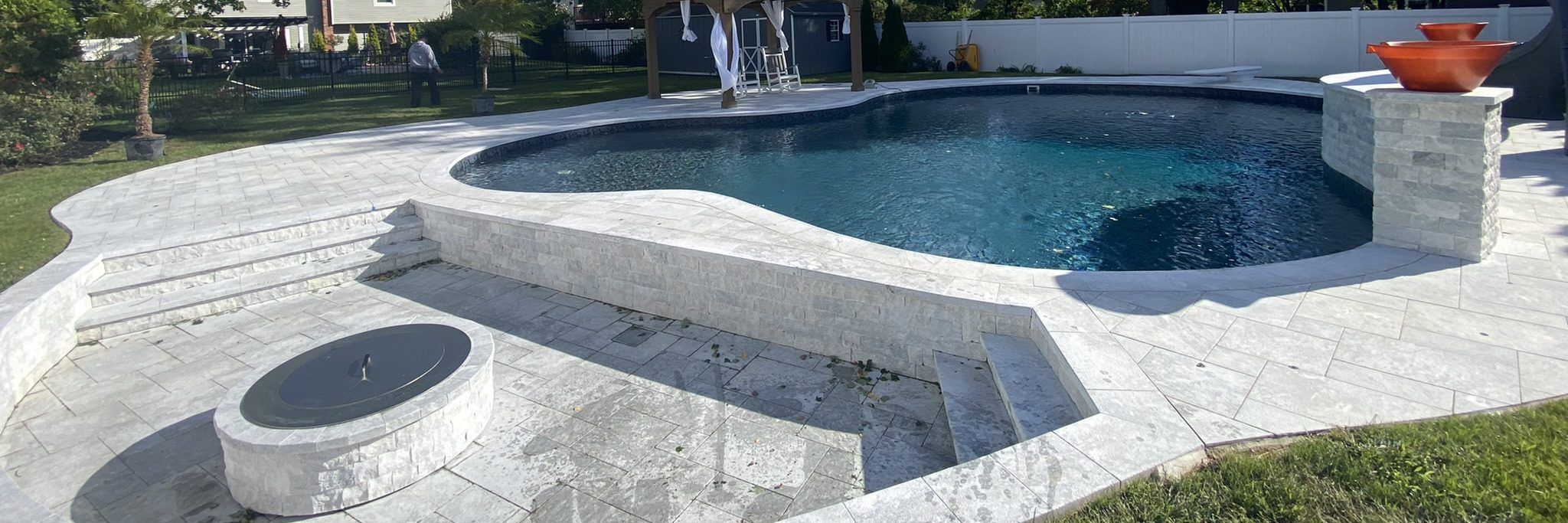
We built this large vinyl pool in Nesconset NY. It is a concrete wall freeform pool with a vinyl liner. We installed this sunk-down fire pit area and a wall in the background with water features. A large S.R. Smith turbo twister pool slide in gray was installed along with a diving board. The Gappsi team installed G041 sandblasted marble pavers from the Gappsi natural stone collection. The customer chose a french pattern for the patio with a two-inch coping for the pool. Marble veneers were chosen for the sheer descent walls and two spillover acrylic water balls.  The Breeo fire pit was built with eldorado cement reinforced kit and veneered with white marble veneers the coping for the fire pit is G041 sandblasted marble and the firepit insert is the Breeo X Series 30 Smokeless wood burning insert.

SCHEDULE A MEETING TODAY WITH GAPPSI

View Gappsi’s YouTube channel for videos of Patio Pool And Fire Pit Paver Design

Patio-Pool-And-Fire-Pit-Paver-Design-YoutTube

Share this page:

Bocce Court Materials: What to Know Before You Build

A backyard bocce court is an amazing feature that offers endless hours of fun, but the thought of constant maintenance can be a deal-breaker for busy homeowners. Nobody wants to spend their weekends raking, weeding, or leveling a playing surface. The good news is that you don’t have to. The secret to a beautiful, hassle-free court lies in choosing the right surface from the start. While traditional sand courts require a lot of work, modern options provide a perfect playing experience with minimal effort. In this guide, we’ll explore the full spectrum of bocce court materials, helping you find the perfect balance between authentic gameplay and easy, year-round enjoyment.

Bocce-Ball-Court-Material---Nassau-County-NY1A new trend in backyards is to include the fun and relaxing game of Bocce Ball, let’s talk about Bocce Ball Court Material and how you can have one in your home. It’s a great use of empty space that provides hours of entertainment as well as an attractive aesthetic. Properly constructed Bocce Ball Courts consist of an oyster shell bed for proper texture & drainage.

Bocce Ball Court Materials For The Surface

Choose the best surface materials: A variety of materials are used to create playing surfaces, including grass, artificial turf, and clay. Professionals recommend using sand, crushed stone, or oyster blend. These materials allow the balls to roll fast and track straight.

Bocce ball is one of the oldest Italian lawn games and is now played widely throughout the world by people of all ages and skill levels. This simple game has grown in popularity over the years in the country, and many people now consider adding a bocce ball court to their bac Bocce-Ball-Court-Material---Nassau-County-NY2kyard and having fun with friends and family to make the most of the warm, sunny weather. Traditionally, bocce ball is played on even ground covered with sand or grass and wooden border siding. Homeowners mostly prefer artificial turf in their backyard bocce ball court due to its durability, longer lifespan, and minimal maintenance needs.

Bocce Ball Court Considerations 

A bocce ball court is easy to set up, as long as the backyard has a flat area, regardless of its size. However, homeowners need to consider a few things before installing a bocce ball court to ensure it adds beauty to the yard and the players enjoy the game to the fullest.

  • Size – A long, narrow court is ideal for a bocce game. Regulation bocce courts are 91 feet by 13 feet, and building a court close to these dimensions provides an authentic playing experience. (minimum of 70 feet by 10 feet)
  • Placement – Their long and narrow shape makes bocce ball courts suitable as a side-yard installation for occasional playing.
  • Design features – Plan shaded seating areas, fountains, pergolas, flower beds, shrubs, and other design features to beautify the yard.
  • Material – The top surface options include gravel, sand, crushed stone, ground oyster shells, and synthetic turf.
  • Drainage and Grading – It is essential to keep the bocce ball court as dry as possible.  One solution is to install French drains below the ground to prevent rainwater pooling. Grading is critical for site preparation.
  • Boundary – Choose a concrete or wooden border about six inches high nicely anchored to the ground around the court keeps the balls within the court boundary.

It is advisable to hire a professional sports game courts design and construction company for bocce ball court installation as the process is time-consuming. If anything goes wrong, the process can turn into a big hassle. It is essential to pay attention to small details for quality and long-lasting installation. Professional installation using quality materials ensures that you enjoy the game for years to come.

Choosing the Best Material for Your Bocce Court

When you’re planning your backyard bocce court, the surface material is one of the most important decisions you’ll make. It directly impacts how the balls roll, how the court drains, and how much time you’ll spend on maintenance versus actually playing. The right surface ensures a fast, straight track for the balls, giving you the best and most consistent playing experience for every game. Traditional options often include natural materials like sand, crushed stone, or a special oyster shell blend. Each has its own unique feel and set of benefits, so it’s worth thinking about what kind of court you envision for your family gatherings and friendly competitions.

For a truly authentic, professional-grade court, many enthusiasts turn to crushed oyster shell. This material is often considered the gold standard because it compacts to create a firm, smooth surface that locks together beautifully. This ensures the balls roll true and provides excellent drainage, which is key for keeping your court ready for action after a Long Island rain shower. While it provides an incredible playing experience and a classic aesthetic, it does require some occasional raking and upkeep to stay in top condition. This choice gives your court a timeless, tournament-style look that can beautifully complement a traditional landscape design.

If low maintenance is at the top of your priority list, synthetic turf has become an incredibly popular and practical choice for homeowners. It offers a perfectly consistent playing surface year-round without the need for watering, weeding, or raking that natural surfaces require. Modern turf and game courts are designed to drain exceptionally well and are built to withstand all kinds of weather, making them a durable and hassle-free option. We often recommend turf for bocce courts because it provides that perfect balance of great performance and minimal upkeep, letting you spend more time enjoying the game with family and friends instead of working on it.

A Detailed Comparison of Bocce Surface Materials

The surface of your bocce ball court is the single most important factor in how the game plays. It influences ball speed, roll, and overall enjoyment. The right material for your court depends on your budget, how much maintenance you’re willing to do, and the aesthetic you want for your backyard. From traditional oyster shells to modern synthetic turf, each option has its own unique characteristics. Understanding these differences is key to building a court that you and your family will love for years. Let’s explore the most common choices to help you find the perfect fit for your Long Island home.

Pros, Cons, and Costs of Common Surfaces

Choosing a surface isn’t just about looks; it’s about performance and upkeep. Some materials offer a professional-grade experience but require more care, while others provide a durable, all-weather solution with minimal effort. We’ll break down the benefits and drawbacks of each popular option, including synthetic turf, decomposed granite, oyster shells, and more. This will give you a clear picture of what to expect in terms of initial cost, long-term maintenance, and playing conditions, so you can make a confident decision for your custom game court.

Synthetic Turf

For a low-maintenance and consistently great playing experience, synthetic turf is an excellent choice. It provides a smooth, predictable roll and drains exceptionally well, meaning a little rain won’t sideline your game for long. This durability makes it a favorite for many Long Island homeowners who want a beautiful court without the constant upkeep of natural surfaces. While the upfront investment is higher than for materials like sand or gravel, the long-term savings on maintenance and its all-weather usability make it a fantastic value. At Gappsi, we specialize in designing and installing high-quality synthetic turf courts that look pristine year-round.

Decomposed Granite (DG)

Decomposed granite, or DG, creates a firm and stable playing surface that is both durable and affordable. This material consists of fine granite particles that compact tightly, resulting in a hard court that stands up well to frequent use and requires very little maintenance. Its natural, earthy appearance blends beautifully into landscape designs, complementing nearby stone patios or walkways. DG provides a classic feel with a reliable ball roll, making it a solid middle-ground option for those who want something more permanent than sand but less costly than synthetic turf. It’s a practical and attractive material for a backyard bocce court.

Oyster Shell: Crushed vs. Flour

If you’re aiming for an authentic, tournament-style court, crushed oyster shell is the professional standard. This material locks together to form a firm, smooth, and fast surface that allows the bocce balls to track straight and true. Often, you’ll see a top layer of finer oyster shell “flour” over a coarser base to achieve the perfect finish. While it delivers an unparalleled playing experience, it does require regular maintenance, including raking and watering, to keep it in top condition. This is the ideal choice for the true bocce enthusiast who wants to replicate the feel of a traditional Italian court in their own backyard.

Sand, Pea Gravel, and Clay

Sand and pea gravel are popular budget-friendly options that offer a very traditional, beach-like aesthetic. They are easy to install but are also the most high-maintenance, as they require frequent raking and leveling to prevent divots and ensure a fair playing surface. Clay is another traditional choice known for its toughness, but it comes with significant downsides. Clay surfaces drain poorly and can become rock-hard, leading to cracking and the need for constant loosening and repairs. While these materials can work, they require a commitment to upkeep that many homeowners find outweighs the initial cost savings.

Poured-in-Place Rubber

A modern and innovative option, poured-in-place rubber offers a unique combination of safety and durability. This surface is soft and forgiving, making it an excellent choice for families with children or for public and commercial spaces where safety is a top priority. It provides a consistent and true ball roll and is available in a wide variety of colors to match your backyard design. While it requires professional installation to ensure it’s set up correctly, a poured-in-place rubber court is extremely low-maintenance and built to last, offering a safe and reliable playing surface for years to come.

Understanding Bocce Court Construction

Building a bocce court that lasts for years and plays like a dream isn’t just about clearing a patch of grass. A truly great court is built from the ground up with a specific structure in mind. Think of it like a layer cake, where each component has a critical job to do. From ensuring rainwater drains away properly to providing a perfectly smooth surface for the balls to roll on, every step is important. This methodical approach prevents common issues like pooling water, an uneven playing field, and a surface that quickly deteriorates. When you get the construction right, you create a durable, low-maintenance feature that becomes a centerpiece of your backyard entertainment. A well-built court ensures a fast, straight roll, proper drainage, and long-term stability for countless games with family and friends.

The Three-Layer System for a Lasting Court

The secret to a professional-quality bocce court lies in its three-layer system. This structure is designed to handle everything from heavy rain to years of gameplay without losing its form. The first layer is the drainage base, which acts as the court’s foundation and keeps it from becoming a muddy mess. Next comes the leveling aggregate, which creates a stable and even plane. Finally, the top layer is the playing surface itself, the material you see and play on. Each layer must be properly installed and compacted before adding the next. Skipping a layer or rushing the process can lead to a court that is bumpy, holds water, and requires constant repairs. By following this proven method, you ensure your court remains a source of enjoyment rather than a maintenance headache.

Layer 1: The Drainage Base

The foundation of any good bocce court is its drainage base. This bottom layer is typically made of three to six inches of crushed rock or gravel. Its main purpose is to provide a stable footing for the entire court while allowing water to drain through and away from the playing surface. Without a solid drainage base, rainwater would pool, turning your court into a soggy pit and causing the surface materials to shift and become uneven. Proper site preparation, including this foundational layer, is something our masonry and construction teams handle with precision, ensuring your court is built on solid ground from the very start.

Layer 2: The Leveling Aggregate

Once the drainage base is in place and compacted, the next step is to add the leveling aggregate. Before you do, it’s essential to completely clear the area of any grass, plants, or topsoil that could decompose and create soft spots later on. This second layer is usually a finer material than the base, which helps create a perfectly flat and smooth plane for the playing surface. It fills in any minor imperfections in the base layer and provides a transitional zone that helps lock everything together. This meticulous preparation is key to achieving a court that offers a true and consistent ball roll.

Layer 3: The Playing Surface

The final layer is the playing surface, and this is where you can really customize the look and feel of your court. The best surfaces allow bocce balls to roll fast and straight with minimal bounce, and they should also drain well. Popular choices include decomposed granite, crushed oyster shells, sand, or even high-quality synthetic turf. The material you choose will affect the speed of the game and the amount of maintenance required. A professionally selected and installed surface ensures the best possible playing experience, turning your backyard into a premier spot for a friendly game of bocce.

Building a Solid Foundation

Beyond the three layers, a few extra steps in the foundation stage can make a huge difference in your court’s longevity and appearance. Think of this as the prep work that sets you up for success. Simple additions like a weed barrier can save you hours of tedious work down the line, while taking the time to properly compact each layer ensures the court remains level and smooth for years. These foundational details are what separate a DIY project that looks good for a season from a professionally constructed court that becomes a permanent and cherished feature of your home’s landscape. It’s this attention to detail that guarantees a high-quality, lasting result.

Weed and Pest Prevention

Nothing ruins the clean look of a bocce court faster than weeds poking through the surface. To prevent this, it’s a great idea to lay down a high-quality landscape fabric directly over the cleared dirt before you add the first layer of stone. This weed block fabric creates a physical barrier that stops unwanted growth from below without interfering with drainage. It’s a simple, effective step that protects your investment and keeps your court looking pristine with far less effort. This is a standard practice in our professional landscape design projects to ensure long-term beauty and reduced maintenance.

The Importance of Compaction

Compaction is arguably one of the most critical steps in building a bocce court. Each of the three layers—the drainage base, the leveling aggregate, and the top surface—must be thoroughly compacted, usually with a mechanical plate compactor. This process removes air pockets and locks the material particles together, creating a dense, stable base that won’t settle or shift over time. Proper compaction is crucial for achieving a smooth, hard surface that will stand up to regular use and changing weather conditions. It’s the key to a long-lasting court that plays consistently year after year.

Frame and Border Details

The frame, or border, of your bocce court does more than just keep the balls in play; it defines the court’s aesthetic and integrates it into your landscape. A well-chosen and properly installed border provides a clean, finished edge and adds to the overall durability of the structure. Whether you prefer the rustic look of wood or the permanence of stone, the frame is a key design element. It needs to be strong enough to withstand stray shots and securely anchored to prevent it from shifting or bowing over time. This finishing touch is what makes the court look like a deliberate and professional addition to your yard.

Choosing the Right Wood

For a classic and cost-effective border, pressure-treated wood is an excellent choice. Timbers or planks are relatively easy to work with and create a traditional look that complements many backyard designs. When selecting wood, it’s important to choose pieces that are straight and free of large knots or cracks to ensure a uniform and sturdy frame. While wood is a great option, it will require some maintenance over the years to protect it from the elements and keep it looking its best. It provides a nice visual boundary and effectively contains the playing surface materials.

Anchoring the Frame

A border is only effective if it stays in place. A frame that is simply laid on the ground will inevitably shift, allowing surface material to escape and compromising the court’s integrity. That’s why it’s essential to have a border that is nicely anchored to the ground. For wooden frames, this is often done with rebar stakes driven through the wood and into the ground. For a more permanent and upscale solution, a concrete or masonry border can be installed, offering unmatched durability and a sophisticated look that ties in beautifully with other hardscaping elements like patios and walkways.

How Materials and Climate Affect Gameplay

The performance of your bocce court is directly tied to the materials you choose and the climate you live in. A surface that works perfectly in a dry, arid region might become a maintenance nightmare in a place with frequent rain, like here on Long Island. Understanding how different materials react to moisture and temperature is key to building a court that is both enjoyable to play on and easy to care for. The texture of the surface material also has a major impact on the game itself, influencing how fast the balls roll and how they react upon landing. By considering these factors, you can select materials that are perfectly suited to your environment and your preferred style of play.

Maintenance for Natural Surfaces

Natural surfaces like crushed oyster shell or sand offer a traditional playing experience but require regular upkeep to stay in top condition. These courts often need to be watered, rolled, and raked to maintain a consistent and compact surface. Watering helps keep dust down and ensures the material binds together properly, while rolling smooths out any bumps or indentations from play. Raking helps to redistribute the surface material evenly. While this maintenance routine might sound like a lot, it’s a ritual that many bocce enthusiasts enjoy, as it keeps them connected to the game and ensures their court is always ready for a match.

How Climate Affects Material Choice

Your local climate should play a significant role in your material selection. In wetter climates, for example, it’s wise to choose materials with excellent drainage properties. A higher concentration of oyster shell in a surface blend can help facilitate drainage and prevent the court from becoming waterlogged after a storm. Conversely, in very dry climates, you might use a blend with less shell and more binder to help retain a bit of moisture and prevent the surface from becoming too loose and dusty. Tailoring your materials to the local weather patterns is a smart way to ensure better performance and reduce maintenance issues.

How Surface Material Affects Ball Speed

The size and texture of the particles in your top surface will determine the speed of your court. Finer materials, like finely ground oyster flour, create a harder, smoother surface that allows the balls to roll much faster. This is often preferred by more competitive players who enjoy a quick-paced game. Coarser materials, such as sand or larger crushed stone, will result in a slower roll, which can be more forgiving for casual, family-friendly games. Thinking about who will be using the court most often can help you decide whether a fast or slow surface is the right choice for your backyard.

Designing Your Perfect Bocce Court

Once you have the construction fundamentals down, you can focus on the design elements that will make your bocce court uniquely yours. This is where you can go beyond a simple playing rectangle and create a complete outdoor entertainment zone. Think about how the court will fit into your overall landscape, who will be using it, and at what times of day. Adding features like seating, lighting, and shade can transform the space from just a game court into a social hub for your family and friends. A thoughtful design considers not only the game itself but also the comfort and enjoyment of players and spectators alike.

Official Court Markings

If you’re a bocce purist or plan on hosting competitive games, you might want to build your court to regulation size. A standard court is 13.12 feet wide and 86.92 feet long, with specific lines marked for foul lines and pitching points. While many backyard courts are built smaller to fit the available space, adhering to these official dimensions provides the most authentic playing experience. Even if you opt for a custom size, incorporating the proper markings can add a professional touch and help players follow the official rules of the game, making every match feel a little more special.

Lighting and Shade Features

To get the most use out of your bocce court, consider adding features that make it comfortable to play at any time of day. The right lighting can extend your playing hours well into the evening, while a well-placed shade structure can offer a welcome escape from the hot afternoon sun. These additions not only improve the functionality of the court but also enhance the overall ambiance of your backyard, creating an inviting atmosphere for both players and guests. Thoughtful additions like these can turn a simple court into a true outdoor destination.

Playing After Dark with Court Lighting

Don’t let the sunset put an end to your game. Installing court lighting allows you to enjoy playing bocce on cool evenings, which is perfect for summer gatherings that last into the night. Strategically placed, low-voltage landscape lighting can illuminate the playing surface without creating harsh glare, ensuring visibility while maintaining a pleasant atmosphere. Adding lights makes the court more versatile and significantly increases the amount of time you can spend enjoying it, making it a worthwhile investment for anyone who loves to entertain outdoors.

Adding a Pergola for Shade and Style

A bocce court is a fantastic spot to gather, but the summer sun can be intense. Integrating a shade structure like a pergola not only provides relief from the heat but also adds a beautiful architectural element to your backyard. A pergola or pavilion can be positioned alongside the court to create a shaded seating area for spectators or a comfortable spot for players to rest between games. It helps define the space as a dedicated social area and can be customized with climbing plants, fans, or lighting to create the ultimate outdoor lounge.

Accessibility Considerations

When designing your court, it’s a great idea to think about making it welcoming and usable for everyone, including family members or guests with mobility challenges. This can be as simple as ensuring there is a smooth, level path leading to the court and that the surrounding area is free of obstacles. You might also consider a firmer playing surface or a border with a flush entry point to make access easier. Creating an inclusive space ensures that people of all ages and abilities can join in the fun, making your bocce court a place where everyone feels welcome.

Artificial Grass Bocce Ball Court Surfaces

Bocce ball has quickly become a fun game across many households that both adults and children enjoy playing. With an easy setup for a fun-filled game, many residential and commercial properties have added the game of bocce ball. Gappsi’s synthetic grass provides stunning court surfaces for both indoor and outdoor bocce ball courts. Our highly skilled artificial grass bocce ball installation professionals can install premium synthetic grass courts on a variety of surfaces. From concrete floors and patios, wooden decks, and right in your very own backyard!

Bocce-Ball-Court-Material---Nassau-County-NYAn Artificial Grass Bocce Court is Hassle-Free!

We provide highly durable maintenance-free playing surfaces that are unbelievably realistic. Once your synthetic grass playing court is installed, there is no need for watering, mowing, raking, or trimming. Thus, providing you with a clean enjoyable playing surface! Unlike regular grass, synthetic grass allows for use year-round. All without the worries of the court turning brown and becoming rough and uneven.

Gappsi’s bocce courts not only provide for just an excellent game of bocce ball but also can be used for the game of lawn bowling. Lawn bowling is a perfect game for all ages from the youngest to the oldest to enjoy! Our innovative technology allows for optimal ball roll with our smooth artificial turf courts. Artificial bocce ball courts and lawn bowling courts give you and your family yearly game time with our advanced drainage system. Rainwater quickly passes through the artificial grass court leaving a mud-free playing surface for your family and friends to enjoy. No more worries about canceling game night over a rainy day!

Are you ready to start playing on your very own synthetic grass bocce ball court? Our expert staff can install our high-quality synthetic grass bocce ball courts both indoors and outdoors for all your fun ball rolls with family and friends!

Bocce Ball Court Built in Sands Point

Gappsi designed and built this bocce ball court in Sands Point NY. The court base consists of a recycled concrete base and bluestone screening with bocce grass for the surface. Gappsi also utilized silica sand to fill in the pores of synthetic turf. The framing was done with pressure-treated lumber. In the surrounding area of the bocce court, we used synthetic turf. Very nice synthetic turf, and very natural looking. The clients are extremely happy. The latest bocce ball court construction was built by Gappsi in Sands Point Nassau County Long Island NY.

SCHEDULE A MEETING TODAY WITH GAPPSI

View Gappsi’s YouTube channel for videos of Bocce Ball Court Materials – Nassau County

Bocce-Ball-Court-Material---Nassau-County-NY-YoutTube-

Frequently Asked Questions

What is the most low-maintenance surface for a backyard bocce court? If your goal is to spend more time playing and less time working, synthetic turf is the clear winner. It gives you a perfectly smooth and consistent playing surface all year without any of the raking, watering, or weeding that natural surfaces require. Modern turf drains quickly after rain, so you can get back to your game without delay. It’s a fantastic “set it and forget it” option for busy homeowners.

Do I really need a regulation-size court in my backyard? Not at all. While a regulation court offers an authentic experience, it’s quite large and not practical for most residential spaces. The most important thing is to maintain the long, narrow shape of the court. We can easily design a custom-sized court that fits perfectly into your yard while still providing a fantastic playing experience for family and friends.

Why is the three-layer construction system so important? Think of the three-layer system as the essential foundation for a court that lasts. The bottom drainage layer prevents water from pooling, the middle layer creates a perfectly level base, and the top layer is your chosen playing surface. Building a court this way ensures it remains stable, drains properly, and won’t develop bumps or soft spots over time. It’s the professional method for guaranteeing a durable, high-quality court.

What other design features can make my bocce court better? A great bocce court can be the centerpiece of an entire entertainment area. Consider adding landscape lighting so you can enjoy games on cool summer evenings. A pergola or pavilion built alongside the court provides much-needed shade and a comfortable spot for guests to sit and watch the game. These features transform the court from just a playing field into a true social hub.

Is a traditional oyster shell court difficult to take care of? Oyster shell provides an incredible, professional-grade playing experience, but it does require a commitment to regular maintenance. To keep the surface firm, smooth, and fast, you will need to rake it, water it down occasionally to control dust, and roll it to keep it compact. For bocce enthusiasts who love the tradition, this upkeep is part of the ritual, but it is definitely more hands-on than a synthetic turf surface.

Key Takeaways

  • Prioritize Your Surface Material: Your court’s surface determines its playability and how much maintenance it needs. Synthetic turf provides a consistent, low-effort playing field, while materials like crushed oyster shell offer a classic, professional experience that requires regular attention.
  • Build a Strong Foundation: A durable court relies on a three-layer system for drainage, leveling, and the final playing surface. Properly compacting each layer is the key to preventing common problems like pooling water and an uneven field, ensuring your court lasts for years.
  • Create a Complete Outdoor Space: Think beyond the court itself by adding features like a pergola for shade, lighting for evening games, or comfortable seating. These elements transform the area into a true social hub, extending its use and making it more inviting for everyone.

Related Articles

Share this page:

What Can You Cook in a Brick Oven? A Complete Guide

One of the most remarkable features of a well-built brick oven is its incredible ability to retain heat long after the fire has died down. This efficiency opens up a whole new approach to cooking. The question isn’t just what can you cook in a brick oven, but for how long can you cook with a single fire? After the high-heat pizza making is done, the oven’s residual warmth is perfect for baking bread the next morning or slow-cooking a tender roast for dinner that evening. This turns your oven from a weekend luxury into a hardworking tool for multi-day meal prep.

Brick Oven Bread MakingAre you wondering if it’s really worth investing in a pizza oven or can you cook anything in a brick oven?

Did you know that is just the start of what you can cook in a wood-fired pizza oven? There are so many different options and recipes available, both in terms of the style of cooking and the food you can create.

What Foods Can Be Cooked in a Pizza Oven?

The amazing thing about wood-fired pizza ovens is just how versatile they are. Just like with your regular oven in your kitchen, you can pretty much cook anything you like – all you need is the right tools and to find the right temperature.

Once you have got the hang of your outdoor pizza oven, you can cook foods such as:

  • Roasted vegetables
  • Baked or grilled fish
  • Slow cooked meats
  • Flamed ribeye steak
  • Smoked and barbecued meats
  • Jacket potatoes
  • Freshly baked bread loaves
  • Focaccia and flatbreads
  • Side dishes such as shrimp, potato wedges, and baked feta
  • Stews and casseroles
  • Hot desserts
  • In fact, you really can be as adventurous as you like!

Are You Unsure Why You Use A Brick Oven?

One of the main benefits of cooking with a brick oven is that it can reach higher temperatures than a conventional oven. This is due to the fact that bricks are excellent thermal conductors, meaning they can quickly and evenly distribute heat.

How Does A Wood-Fired Brick Oven Work?

After starting a fire in the oven, the dome chamber absorbs the heat until it becomes white hot (sometimes up to 800 Fahrenheit or more). At that point, the fire is either extinguished or left burning gently. The embers from the fire can be swept out before using the oven to cook. Once the oven is up to the correct temperature, the oven door is closed to contain the heat. After the heat has lessened a bit and evened itself throughout the oven, it’s ready to use. The heat that has been absorbed by the oven walls and floor now radiates from them.

Construction of Outdoor Italian Brick Ovens by Gappsi IncWhat Materials Are Used To Build A Wood-Fired Brick Oven?

A wood-fired brick oven can be built from regular red clay bricks but the placement and design are key to a consistent temperature. They can also be built from a heat-resistant concrete mix or refractory fire bricks used in kilns. Ovens often have fancy trim or decorative brickwork as they are constructed by specially trained craftsmen, frequently trained in southern Italy. If the wood-fired brick oven is meant to cook pizza, the walls are thinner. Ovens meant for bread have thicker walls that hold the heat longer.

What Fuel Does A Wood-Fired Brick Oven Use?

As long as it isn’t coated with fire-retardant chemicals or paint, any type of wood can be used. Tree branches, waste wood, and old furniture also work well.

A wood-fired brick oven is a great tool for making pizzeria-quality pizza and meals of all kinds. However, it involves some expertise to monitor the temperature for optimal results, and get the perfect pizza you desire.

They all come with a standard finish. Which includes stucco, pebble rocks, random cut stones, and tiles. We also offer custom finishes to your specifications such as personalized engraving of your favorite pictures hand-painted by our artists on the exterior of the

Brick Ovens Construction Methods

As part of our Brick Ovens Construction Methods, we can also cast your desired words on the oven metal door. If you are in the market for a brick oven and do enough researches you will learn about the Biscotto di Sorrento, many companies that use something similar to the Biscotto di Sorrento will make a big deal about it, and also will charge you more money as an upgrade of the floor of the oven. Many of you would ask? What is the Biscotto di Sorrento? The Biscotti di Sorrento is a terracotta brick manufactured from clay that is only found in Italy in the region of Campania in the Sorrento area on the Amalfi coast. This clay is rich in natural minerals that will absorb, retain and release the heat uniformly; making your cooking process the most natural cooking experience you can get using a brick oven.

The difference between a Gappsi Biscotto di Sorrento and the competition is that many companies claim to use the only use to make the base on the oven,

Gappsi builds the entire oven, floor, walls, and dome with the same material. The Gappsi method of building brick ovens is a tradition that dates back over 300 years From one of the first producers of the Biscotto di Sorrento is still in business in Italy today after many generations.

What Makes Our Italian Brick Ovens Superior?

We construct Gappsi’s brick pizza ovens in Nassau & Suffolk County using a special clay. We get this clay from Sorrento, Italy, and mix it using a traditional mixer. This particular clay is rich in volcanic pumice and silicon. We place a wood mold on top of a platform and spread the clay in it by hand. It creates a spongy finished product, which allows the heat to spread evenly and slowly in the finished oven. Our clay bricks cannot be mass-produced since we pour them by hand for each new Italian outdoor brick oven.

Can You Cook Anything In A Brick Oven?Outdoor wood Fired Oven Ridge Long Island NY

This Sorrento oven was delivered to a Gappsi client in ridge New York. The Sorrento oven has a Uniquely shaped smoke stack built on the outside of the oven over the volcanic marble mantel. The Sorrento oven stands on a custom-built cart constructed of fine materials starting with the stainless steel base and door. The exterior of the oven is veneered with rustic-cut brown limestone. This oven was sealed with a clear natural stone sealer to make it watertight and water-repellent. Gappsi offers many styles of ovens including custom-size options.  In addition, the oven can be fitted for gas, propane, or wood-fired, or we have a hybrid option as well.

Meats and Poultry

The intense, radiant heat of a brick oven is perfect for cooking meats and poultry, creating results you just can’t get from a conventional oven. The high temperatures are ideal for searing a thick ribeye steak, locking in the juices and forming a delicious crust. For lower, slower cooking, you can use the retained heat to make tender BBQ ribs, succulent pulled pork, or even a whole spatchcock chicken. The wood fire imparts a subtle smoky flavor that enhances every bite. Imagine hosting a backyard gathering where the centerpiece is a perfectly cooked turkey, pulled directly from your beautiful custom-built masonry oven. It’s a fantastic way to make any meal feel like a special occasion.

Seafood Dishes

You might think the high heat of a brick oven is too intense for delicate seafood, but it’s actually an amazing tool for cooking fish and shellfish. The key is using the right technique. For flaky fish like salmon or mahi-mahi, try baking it on a cedar plank. The plank protects the fish from the direct heat while infusing it with a wonderful, smoky aroma, keeping it incredibly moist. Shrimp and scallops cook in minutes; just toss them in a cast-iron skillet with some garlic and herbs and place it in the oven. The even, dry heat cooks them quickly without making them rubbery, giving you perfectly tender results every time.

Breads and Baked Goods

Long before they were used for pizza, these ovens were the heart of the home for baking bread, and they still excel at it today. The heat stored in the oven floor, or hearth, creates the perfect environment for an incredible “oven spring,” giving your loaves a light, airy interior and a perfectly crisp crust. You can bake rustic loaves of ciabatta with those signature airy holes or fresh, pillowy naan bread cooked directly on the hot stone floor, just as it has been for centuries. This is where the quality of an authentic Italian brick oven really shines, providing the consistent, radiant heat needed for bakery-quality results right in your own backyard.

Vegetables and Sides

A brick oven can transform simple vegetables into standout side dishes. The high, dry heat works wonders, caramelizing their natural sugars and bringing out a sweetness you never knew was there. This method can turn even the pickiest eaters into veggie lovers. Toss some broccoli, bell peppers, and onions with a bit of olive oil and seasoning, and roast them until they’re tender with slightly charred edges. You can also cook corn on the cob directly in the oven; leaving the husks on steams the kernels inside, keeping them juicy while they get a delicious grilled flavor. It’s a simple, healthy, and incredibly flavorful way to round out any meal.

Delicious Desserts

Don’t let the fire die down after dinner—your brick oven is ready for dessert. You can use the residual heat to create some truly memorable sweet treats. For a classic, family-friendly option, toast marshmallows over the glowing embers for perfect s’mores. If you want something a bit more dramatic, a cast-iron skillet is all you need to make a bubbling fruit crumble or a show-stopping Bananas Foster; the heat helps caramelize the sugar and creates an impressive flame. Enjoying a warm, wood-fired dessert under a custom pavilion or pergola is the perfect way to end an evening of outdoor dining.

The Unmistakable Smoky Flavor

One of the biggest draws of cooking in a brick oven is the incredible flavor it gives your food. Cooking with a wood fire creates a special smoky taste that you simply can’t replicate with a standard kitchen oven. The intense, dry heat perfectly sears meats and vegetables, forming a delicious crust while keeping the inside tender and juicy. This unique cooking environment infuses everything with a subtle, rustic aroma that highlights the natural flavors of your ingredients. Whether you’re baking a loaf of bread, roasting a chicken, or grilling fish, an expertly built brick oven transforms a simple meal into a memorable experience for your family and friends.

A Cooking Method with a Rich History

Using a brick oven connects you to a way of cooking that’s been around for thousands of years. People have been using clay and brick ovens for over 4,000 years, a method perfected by ancient civilizations like the Romans. This time-tested technique has been passed down through generations because it’s one of the best ways to cook food evenly and efficiently. When you install a brick oven, you’re not just adding a cooking appliance; you’re embracing a piece of history and creating a focal point for gathering with loved ones. It’s a way to slow down and enjoy the process of making food, turning your backyard into one of those timeless outdoor living spaces where memories are made.

Cooking with Residual Heat: A Multi-Day Strategy

One of the most remarkable features of a quality brick oven is its ability to hold onto heat. After you’ve finished making pizzas at scorching temperatures, the oven stays hot for days, gradually cooling down. This creates a fantastic opportunity to plan your meals for the next few days, all using the residual heat from a single fire. It’s an incredibly efficient way to cook that transforms your pizza oven from a single-use appliance into the hardworking centerpiece of your outdoor kitchen. This amazing heat retention is thanks to the dense, high-quality materials used in its construction, designed to absorb and radiate heat slowly and evenly over time.

Let’s map out what this multi-day cooking adventure could look like. On day one, you fire up the oven to its peak temperature for perfect, crispy pizzas. Once the pizza party is over, you can use that intense, searing heat for steaks or flash-roasting vegetables. By day two, the oven will have cooled to a perfect baking temperature, ideal for a rustic loaf of bread, a whole roasted chicken, or a hearty casserole. On day three, the gentle, consistent warmth that remains is perfect for slow-cooking. Think tender, fall-off-the-bone ribs, pulled pork, or even drying out herbs from your garden.

This strategy does more than just save on firewood; it completely changes the way you cook outdoors. Planning your meals around the oven’s cooling cycle allows you to create a diverse menu with minimal effort. The intense, dry heat caramelizes vegetables beautifully, bringing out a sweetness that can win over even the pickiest eaters. Everything you cook, from fish to focaccia, will be infused with that subtle, smoky flavor that only a true wood-fired oven can provide. It’s a versatile and rewarding experience that makes a brick oven a truly worthwhile addition to any Long Island home.

Tips for Perfect Brick Oven Cooking

Choosing the Right Cookware

The intense, radiant heat of a brick oven is what creates those incredible flavors, but it also means your standard kitchen pans might not be up to the task. This is where materials like cast iron truly shine. A good cast iron skillet is practically essential for any brick oven owner, as it can withstand extreme temperatures while distributing heat evenly for a perfect sear. It’s ideal for cooking everything from scallops to thick-cut steaks. Other great options include stoneware and terracotta dishes, which are perfect for baking casseroles or roasting vegetables. Investing in the right cookware ensures you can safely and effectively use your oven for a wide range of delicious meals beyond pizza.

Techniques for Moist and Juicy Results

One common concern with high-heat cooking is the risk of drying out your food, especially delicate items like fish. A fantastic technique to prevent this is to cook on a cedar plank that has been soaked in water. As the plank heats up in the oven, it releases steam, gently cooking the fish while infusing it with a subtle, smoky flavor that is absolutely delicious. Another simple method is to create a foil packet with herbs, lemon, and a splash of wine to seal in moisture. These techniques aren’t just for fish; using covered roasting pans or braising dishes for meats and poultry will also help trap steam and ensure your final dish is tender and juicy every time.

Cooking While the Oven Heats Up

Getting your brick oven to the perfect pizza temperature takes a little time, but that doesn’t mean the heating process has to be wasted. You can use the changing temperatures to your advantage to cook an entire meal. As the oven climbs toward its peak heat, you can use the lower and more moderate temperatures for other dishes. Think about roasting a tray of seasoned vegetables or baking a rustic loaf of bread while the flames are still building. Once those are done, the oven will be perfectly hot and ready for your pizzas. This approach turns your oven into a versatile workhorse for your entire outdoor kitchen, making your cooking process more efficient and enjoyable.

Can You Cook Anything In A Brick OvenSCHEDULE A MEETING TODAY WITH GAPPSI

View Gappsi’s YouTube channel for videos of Can You Cook Anything In A Brick Oven?

https://youtu.be/vaOfxegxeCo  

Frequently Asked Questions

Is a brick oven only useful for the high heat needed for pizza? Not at all! While they excel at creating perfect pizza, the real magic lies in their ability to retain heat. After the fire dies down, a well-built oven stays hot for days. This residual heat is perfect for baking bread the next morning, slow-cooking a roast for dinner, or even dehydrating herbs as it continues to cool. Think of it less as a single-use appliance and more as a multi-day cooking center.

Do I need special equipment to cook in a brick oven? You’ll want to invest in cookware that can handle the intense heat. Your standard glass baking dishes won’t be safe. A cast-iron skillet is your best friend here; it’s incredibly durable and creates a fantastic sear on everything from steaks to vegetables. Other great options include terracotta and stoneware dishes, which are ideal for roasts, casseroles, and baked goods.

Will all my food have a strong, smoky flavor? The flavor a wood fire imparts is more of a subtle, rustic enhancement than the heavy taste you’d get from a smoker. The dry, radiant heat sears the outside of food quickly, locking in moisture and creating a delicious crust. This process infuses your dishes with a wonderful, authentic aroma that you just can’t get from a conventional oven, but it won’t overpower the natural flavors of your ingredients.

How do you manage different cooking temperatures for different foods? Instead of setting a dial, you learn to work with the oven’s natural heat cycle. The highest temperatures, when the fire is roaring, are for things that cook fast, like pizza and flatbreads. As the oven begins to cool, it enters the perfect range for roasting meats and vegetables. The gentle, lingering heat that lasts into the next day is ideal for baking bread or slow-cooking stews. It’s a more intuitive way of cooking that connects you to the process.

What’s the difference between a high-quality brick oven and a basic one? The difference really comes down to materials and construction, which directly impacts performance. A superior oven is built with materials specifically designed to absorb and radiate heat evenly for a very long time. This is why authentic Italian ovens use special clays that create incredible heat retention. This quality is what allows you to cook for several days off a single fire and ensures there are no hot spots, giving you consistent, reliable results every time you cook.

Key Takeaways

  • Think Beyond Pizza: Your brick oven is a culinary powerhouse. Use its intense heat for searing steaks and charring vegetables, then take advantage of the lingering warmth for baking fresh bread or slow-cooking a tender roast.
  • Cook for Days on One Fire: Plan your meals around the oven’s cooling cycle to make the most of its amazing heat retention. After pizza night, use the residual heat for baking the next day and slow-cooking on day three, saving time and effort.
  • Use the Right Gear for Great Results: The intense heat of a brick oven requires the right tools. A cast iron skillet is a must-have for searing, while techniques like cooking fish on a soaked cedar plank will keep your food moist and add incredible flavor.

Related Articles

Share this page:

Hydrazzo Pool Finish: Pros, Cons, and Colors

The color of your pool water sets the entire mood for your backyard. It can be a crisp, light blue, a deep sapphire, or a serene gray-green. This color isn’t from a dye; it’s created by the way light reflects off the pool’s interior surface. While traditional plaster offers limited options, a Hydrazzo pool finish opens up a world of design possibilities. With over 15 unique color blends, its variegated appearance creates a stunning, natural look with incredible depth. This allows you to customize the aesthetic of your oasis, ensuring your pool perfectly complements your home and landscaping.

Hydrazzo-Pool-Plaster-In-Gulfstream-Blue2Pool Bubbler and Hydrazzo Pool Plaster in Gulfstream Blue color were chosen for the plaster to finish the interior of the pool for this backyard design in Commack, NY.  Hydrazzo offers a silky smooth texture, combined with the proven durability of exposed aggregates, which are two prime features of this state-of-the-art pool finish.

Polished Pool Finishes

Polished marble consists of blended white marble aggregates, graded color aggregates, and other composites.  When the materials are combined it achieves a silky smooth, yet non-slip, finish. Popular for “entertainment pools” and spas, the Hydrazzo® line is highly sought after for its luxurious feel.

Hydrazzo Pool Plaster

Hydrazzo was the first polished pool finish in the industry.  For over 20 years the company has produced the product in the USA.  A silky smooth polished texture combined with the proven durability of exposed aggregates are prime features of this state-of-the-art pool plaster finish.

With 15+ unique color options and a natural variegated appearance, Hydrazzo compliments all poolscape designs. The polished pool surface creates a finish unlike any other pool plaster available on the market today; it is naturally resistant to spot etching, topical stains, permanent scale & algae adhesion.

Some of the most beautiful pools in the world are surfaced with the hand-polished magic of Hydrazzo. It is the smoothest, richest, and most luxurious surface available. Hydrazzo combines naturally beautiful coarse-graded crystalline and colored marble, along with white Portland cement and a host of other performance-enhancing ingredients. The results are like no other.

Hydrazzo-Pool-Plaster-In-Gulfstream-Blue1Hydrazzo Pool Plaster Benefits

Polished aggregate finishes not only offer a timeless beauty that works well with nearly any pool design but is extremely durable.

  • Smoothest Exposed Aggregate Surface Available
  • Proven Natural Ingredients
  • Proven Durability
  • Resists Permanent Algae & Scale Adhesion
  • Rich in Color Options
  • Lower Maintenance

Hydrazzo is an industry-first, state-of-the-art finish that combines a silky smooth texture with the proven durability of exposed aggregates. Offering unique color selections and natural resistance to spot etching, topical stains, permanent scale, and algae adhesion, Hydrazzo® delivers timeless beauty and easy maintenance.

Hydrazzo®  Pacifico

By utilizing the highest quality raw materials available, Pacifico becomes the most luxurious and smoothest polished marble pool finish in today’s marketplace. Hydrazo Pacifico’s use of large aggregates than the standard Hydrazzo® makes applying the product and polishing easier than ever. With 8 unique colors, Pacifico delivers elegance to the industry.

A Closer Look at Hydrazzo Specifications

When you’re choosing a finish for your swimming pool, the details really matter. You want something that not only looks stunning but also feels great and stands the test of time. Hydrazzo checks all those boxes, and its unique specifications are what set it apart. From a rich palette of colors that can define your backyard’s entire mood to the high-quality materials that ensure its longevity, this finish is engineered for luxury and durability. Let’s get into the specifics of what makes Hydrazzo a top-tier choice for homeowners who want the best for their swimming pools and outdoor living spaces.

Available Hydrazzo Colors

One of the most exciting parts of designing a pool is choosing the water color, and the finish you select plays the biggest role in that. Hydrazzo offers a beautiful selection of over 15 unique colors, giving you plenty of options to create the exact look you’re dreaming of. Each color has a natural, variegated appearance, which means the finish isn’t just a flat, single tone. Instead, it has subtle variations and depth that make your pool look like a natural body of water. This allows the finish to complement any style of poolscape, whether you’re aiming for a modern, minimalist vibe or a lush, tropical retreat. The right color can tie your entire backyard design together, from the patio stones to the landscaping.

Popular choices like Arctic White, Catalina Blue, and Hatteras Gray

With so many options, it helps to look at a few favorites. Arctic White creates a crisp, classic look that makes the water appear a brilliant, light blue on a sunny day. For a deeper, more dramatic effect, Catalina Blue gives the water a rich, sapphire tone that feels like a luxurious private lagoon. If you’re leaning toward a more contemporary and sophisticated aesthetic, Hatteras Gray is an excellent choice, providing a serene, slate-blue hue that is both calming and incredibly chic. These popular choices showcase the versatility of the Hydrazzo line, offering a perfect starting point for envisioning your own backyard oasis.

Technical Product Information

The beauty of a Hydrazzo finish isn’t just skin deep; its durability comes from its unique composition. As the very first polished pool finish developed in the industry, it has a track record of over 20 years of proven performance. The formula combines coarse-graded crystalline and colored marble with white Portland cement and other performance-enhancing ingredients. This special blend is precisely what creates the signature silky-smooth texture that feels so incredible. It’s hand-polished on-site to achieve that luxurious feel while maintaining the strength and resilience of an exposed aggregate surface. This meticulous process ensures your pool finish is not only beautiful but also built to last for years of enjoyment.

How Hydrazzo Compares to Other Finishes

Hydrazzo vs. Durazzo

When you’re deciding on a pool finish, Hydrazzo and Durazzo often come up as top contenders, and for good reason. Hydrazzo is celebrated for its incredibly luxurious, silky-smooth texture. It’s made from a blend of white marble and colored aggregates that are polished down to create a surface that feels gentle on your skin and swimsuits. This makes it a fantastic choice if comfort and a high-end feel are at the top of your list. It’s the kind of finish that transforms a simple swim into a more spa-like experience, offering both beauty and the proven durability of exposed aggregates.

On the other hand, Durazzo is primarily known for its exceptional toughness and resistance to common pool problems like staining and discoloration. It’s a robust finish designed to handle years of use while looking great. While both options are durable, the choice often comes down to your main priority. If you want a finish that combines a stunning, variegated appearance with a uniquely smooth feel, Hydrazzo is an excellent pick. Our team at Gappsi often helps homeowners weigh these factors to select the perfect finish for their custom swimming pools, ensuring the final result is both beautiful and practical for their lifestyle.

How Long Does Hydrazzo Pool Plaster Last?

Its life expectancy is 15 to 20 years and offers one of the smoothest finishes you can achieve and comes in a variety of colors, and it is also the hardest.

Toughness Without Roughness!

The secret to the Hydrazzo finish is the final step: polishing the surface to a brilliant luster, thereby unlocking the marble’s natural beauty and extraordinary strength. The color is breathtaking, achieving a soothing, color-intensifying effect. Hydrazzo is the “smooth sensation” in exposed aggregate pool finishes, friendly to fingers, toes, and swimsuits.

Pool Bubbler Design Ideas, Inspiration & Considerations.  

Pool bubblers are a popular water feature for many pool owners, because of the tranquility and peace created by the water.  It also helps the Pool Bubbletrs are attractive to look at too!  We see a request for pool bubblers also when there is a spa attached to the pool. Bubblers are small fountains that create water columns in shallow areas of your pool. They are commonly used on shallow shelves, spas, and pool steps. Below, I’ll walk through some of the main benefits and watch-outs of pool bubblers.

Main Benefits

Outside of being pretty to look at, bubblers provide a few additional benefits for your pool.

  • Sound Blocking – Bubblers can be a great sound blocker for noisy neighbors or a busy street in front of your house. The rush of the water has a wonderful calming effect, much like a waterfall or spillover.
  • Cooling Down Water – Bubblers and many other water features are also great for cooling down your pool water. The rush of the water out of the column keeps your pool water moving, introducing oxygen into your water and reducing the temperature. This is a blessing for those shallow pool areas if you live in a hot climate. Bubblers can help keep that water cool and enjoyable.
  • Aesthetics – When it comes to design, the surrounding environment of your pool is almost as important as the pool itself. If you have a lot of natural landscaping around your pool, bubblers can be a great way to keep that zen feeling that your trees and other greenery help establish.

Hydrazzo-Pool-Plaster-In-Gulfstream-BlueTypes of Swimming Pool Bubblers

Bubblers don’t really come in too many varieties. You can have different water stream widths and color lighting or automation.

Marble Stone Pavers And Pool Coping Commack NY

Gappsi designed a backyard in Commack NY that included a gunite swimming pool that was 20×40.  The pool design included a sundeck and a built-in spa. We installed 2 pool bubblers on the sundeck and 4 jets on the bench along the 44 ft side of the pool and in front of the spa as well.

Our team installed glass tiles to outline the edge of the spa bench, the steps, and the sundeck. The plaster to finish the interior of the pool is the Hydrazzo Gulfstream quartz color and the interior is finished with an acid wash and then polished.  The pool is also equipped with an autocover in charcoal gray. The patio installation consists of G038 marble pavers selected from the Gappsi stone collection and marble coping 2 inches thick for the pool coping and the spa coping. This was a very large patio to install. The steps were accented with gray pavers as well as the bench and the column. The bench, column, and steps were accented with gray pavers this is another beautifully designed project installed by Gappsi.

Installation and Long-Term Care

The Importance of Proper Application and Honing

Getting that signature Hydrazzo look isn’t just about the material itself; it’s about the craftsmanship behind the installation. As the original polished pool finish, Hydrazzo has a unique final step that sets it apart: a meticulous polishing process. This isn’t just a top coat; it’s a technique that hones the surface to a brilliant luster, which is what reveals the marble’s inherent strength and silky-smooth feel. This crucial step is why professional installation is so important. When you build a pool with experienced technicians, you ensure the finish is applied and polished correctly, guaranteeing the durability and luxurious texture that Hydrazzo is famous for. It’s this expert touch that transforms the raw materials into a stunning, resilient surface.

Maintaining the Silky-Smooth Texture

One of the best things about a Hydrazzo finish is its longevity and relatively simple upkeep. It’s specifically designed for lower maintenance, resisting common issues like stains and algae growth. But what really makes it a smart long-term investment is its restorability. Over years of use, if the surface ever begins to feel less smooth, it doesn’t require a complete overhaul. Instead, the finish can be re-polished to bring it right back to its original, brand-new feel and appearance. This ability to restore the surface is a significant advantage, saving you time and money down the road. It ensures your pool remains a beautiful, timeless centerpiece of your backyard for many years to come.

Potential Considerations with a Hydrazzo Finish

Hydrazzo is an absolutely stunning choice for a pool finish, offering a level of luxury and smoothness that’s hard to match. But like any premium home improvement material, it’s wise to go in with a full understanding of what to expect. Thinking through the investment and long-term care ensures you’ll be happy with your decision for years to come. These aren’t drawbacks, but rather important points to consider as you plan your dream pool. Being informed is the first step to a successful project, and it helps you appreciate the craftsmanship that goes into creating such a beautiful and durable surface for your backyard oasis.

Understanding the Upfront Cost

There’s no getting around it—Hydrazzo is a premium, high-end finish, and its price reflects that. The upfront cost is typically higher than what you might see for a standard plaster or a more basic aggregate finish. This is because it uses high-quality materials, including polished marble aggregates, and involves a specialized, multi-step application process that requires a high degree of skill. Think of it as an investment in long-term beauty and durability. While the initial number might be bigger, the finish is designed to last 15 to 20 years with proper care, making it a cost-effective choice over its entire lifespan. A professional team can walk you through a detailed quote so you know exactly where your investment is going.

Finish Sensitivity and Maintenance Needs

One of the most common questions about Hydrazzo is how it holds up over time. While incredibly durable, the silky-smooth texture can be sensitive to its environment. Improper water chemistry, particularly in saltwater systems, or significant temperature shifts can sometimes cause the surface to feel less smooth over the years. This doesn’t mean it’s fragile, but it does mean that consistent maintenance is key. Staying on top of your pool’s chemical balance and following a routine care schedule will go a long way in preserving that signature polished feel. Working with experienced pool professionals who understand the nuances of a Hydrazzo finish can help you protect your investment and keep it feeling brand new.

Toughness Without Roughness!

So, how does Hydrazzo manage to be so strong yet so smooth? The secret is in the final step of the installation process: polishing. After the material is applied, the surface is meticulously polished to a brilliant luster. This technique doesn’t just make it look beautiful; it hones the marble aggregates and other components, creating an incredibly dense and strong surface. This process is what unlocks the material’s natural durability and gives it that “toughness without roughness” quality. It’s a finish that’s gentle on your skin and swimsuits but tough enough to stand up to years of fun in the sun.

How to Restore a Rough Finish

If you do notice your Hydrazzo finish losing some of its smoothness over time, don’t panic. One of the biggest advantages of this material is that it can be restored without needing a complete overhaul. Unlike other finishes that might require being completely chipped out and replaced, a Hydrazzo surface can often be brought back to life. A professional can simply re-polish the surface, removing any minor imperfections and bringing back that original silky texture and brilliant shine. This ability to restore the finish makes it a truly sustainable and valuable long-term choice for your pool.

SCHEDULE A MEETING TODAY WITH GAPPSI

View Gappsi’s YouTube channel for videos of Pool Bubbler And Hydrazzo Pool Plaster In Gulfstream Blue

https://youtu.be/TFEhS0cDAF8  

Frequently Asked Questions

What makes Hydrazzo different from a standard plaster pool finish? Think of it as the difference between a basic paint job and a hand-polished marble countertop. Standard plaster is a simple, one-note surface. Hydrazzo is crafted from a blend of high-quality marble aggregates and cement that is meticulously hand-polished on-site. This final polishing step is what creates its signature silky-smooth feel while also making the surface incredibly dense and durable.

Is a smooth finish like Hydrazzo slippery to walk on? It’s a common question, but the answer is no. While the finish feels incredibly smooth and luxurious to the touch, it’s not slippery underfoot. The composition of the polished aggregates provides a safe, non-slip surface. This makes it an excellent choice for every part of your pool, including steps, benches, and shallow sun shelves where you and your family will be walking.

How do I choose a Hydrazzo color to get the water look I want? The color of the finish directly creates the color of your water. To get that classic, crisp light-blue pool, a white-based finish like Arctic White is a great choice. If you’re dreaming of a deep, sapphire-toned lagoon, a darker finish like Catalina Blue will get you there. For a more modern, serene look, a gray finish can create a beautiful slate-blue water color. We always suggest looking at samples and considering how the color will complement your patio stone and landscaping.

What does long-term maintenance look like for a Hydrazzo pool? One of the best parts of a Hydrazzo finish is that it’s designed for lower maintenance. Its dense, polished surface naturally resists algae growth and staining better than traditional plaster. The most important task is simply maintaining proper water chemistry. Consistent, balanced water is the key to preserving that smooth texture and vibrant color for its entire 15 to 20-year lifespan.

What happens if the finish starts to feel rough after several years? This is where Hydrazzo truly stands out. Unlike other finishes that might need to be completely chipped out and replaced, a Hydrazzo surface can be restored. If years of use or inconsistent water chemistry cause any roughness, a professional can re-polish the existing surface. This process brings it right back to its original silky-smooth feel and brilliant appearance, extending the life of your investment.

Key Takeaways

  • Prioritize Comfort with a Silky-Smooth Finish: Hydrazzo uses polished marble aggregates to create a luxurious surface that’s incredibly gentle on your skin and swimsuits, setting it apart from rougher plaster alternatives.
  • Count on a Finish That Lasts and Renews: This durable surface is designed to last 15-20 years and can be re-polished down the road to restore its original luster, making it a smart, sustainable investment for your pool.
  • Define Your Backyard’s Vibe with Color: Your pool’s finish determines the water color, and with over 15 variegated blends, you can create a custom look—from a crisp light blue to a deep sapphire—that perfectly complements your home’s style.

Related Articles

Share this page:

MultiSports Game Courts For Pickleball And Tennis

MultiSports-Game-Courts-For-Pickleball-And-Tennis1

MultiSports Game Courts For Pickleball and Tennis in the backyard are a great way to optimize space in your driveway, on your property, or playground. With the growing popularity of Pickleball, there has been a demand for smaller courts and combination courts to accommodate players. In areas where the interest in Pickleball exceeds tennis, blended lines are added in another color so that the courts can be used for both sports.

Pickleball has become one of the fastest-growing sports in the nation. The demand for places to play Pickleball leads to the question, “Can Pickleball be played on a tennis court?”

Yes, Pickleball can be played on a tennis court surface, and we will discuss some great options to keep Tennis and Pickleball players happy.

Pickleball Lines Blended With Tennis Court Lines

A common option, that is working well, is to maximize the current “real estate” of existing tennis courts. That is usually a “win-win” and has been done for years with tennis and basketball court combinations. By USTA and ITF rules, tennis court lines must be white. Pickleball court lines can be added in a different color so that tennis or pickleball can be played on the same court (at different times, of course) and the eye can focus on the applicable set of playing lines.

**The USTA’s children’s tennis program known as 10 & under tennis recommends painting the Pickleball lines in the same color family as the court surface color. For example, if the court base color is blue, apply Pickleball lines in a shade of blue that is lighter or darker than the surface color. This makes the lines less distracting to tennis players.

What Is a Custom MultiSports Game Courts?

When it comes to active sports, most games require a large area of land e.g., tennis or soccer. Then it may also be challenging when different family members have different sports preferences.

That’s where multisports game courts come to your rescue.

Multisports game courts have a customized design that caters to all your favorite sports. And it is only a quarter the size of a standard tennis court. An average multi-game court is about 30’ x 60’ or 1,800 sq. ft. You can alter the multi-game court dimensions based on your requirements.

How Is It Beneficial?

Customized multisports game courts create more efficient use of space and land. When you have a limited budget, multi-purpose sporting courts are an economical solution.

Custom multi-game courts can accommodate up to 8 games. These include games like:

  • giant chess
  • badminton
  • basketball
  • shuffleboard
  • bocce ball
  • giant pool
  • tetherball
  • batting cage
  • putting green

Various combinations of these can be incorporated depending on your preference and the size of the court. Most court dimensions range from 18′ x 18′ to 56′ x 104′.

Further, these courts allow you to play different sports depending on the season. For instance, you can practice hockey on an outdoor court in January. So instead of building separate areas for the different games, you can simply take down the nets and play hockey on your tennis courts. Or add a couple of all-pro-hoops to your court for basketball games. This way, you can save land, money, and tonnes of expenses in maintenance.

MultiSports-Game-Courts-For-Pickleball-And-TennisReasons Why You Should Consider Custom Multi  Sports Game Courts

It provides a safe place for your children to play with their friends and family. Multi-sport game courts offer a great option with convenience for a healthy lifestyle in the comfort of your backyard.  Allows your kids some time away from their digital screens and gadgets by diverting them from video games, the internet, and televisions, and getting them off their phones.  It is a great way to develop, practice, and fine-tune your sports skills.  Custom multi-game court dimensions ensure optimum use of land resources while creating a fun environment that allows everyone in the family to engage in their favorite game.  Custom multi-game courts are low maintenance and a great way to make the most of your space when you have a limited budget.  Having multisports game courts in your backyard helps in developing a habit of sports and fitness that will benefit your entire family.

VIEW OUR PICKLEBALL SPORTS GAME COURTS GALLERY

**Remember Sports Game Courts Lighting & Fencing For Night Time Play**

Consider this step if you wish to play at night. The standard protocol is to install two 1500-watt light poles near the court’s center.

Fencing is essential when building multiple courts. It promotes safe playing and viewing and prevents the ball from getting out of the playing area. Rust-resistant wire materials are more popular, and the preferred height ranges from 4 feet to 10 feet.

Our Pickleball Court Construction Jobs Include:

  • Clearing the land for your pickleball court
  • Grading the space to achieve proper terrain
  • Ensuring there is no slope
  • Attending to soil and drainage issues
  • Landscaping around the pickleball court, if required
  • Net installation, fencing, painting, color coding of the pavement, and more
  • Cost of Installing a Pickleball Court
  • The cost of installing a pickleball court varies depending on several factors including the desired size of the court, drainage, excavation, grading, and site layout which all affect the cost per square foot.

Pickleball Miniature Tennis Sports Game Courts Glen cove NY

Gappsi built this sports gaming court in Glen cove NY. It is a Pickleball Sports Game Court with Miniature Tennis Court. The client wanted a specific size for the sports game courts. The court was designed and built with an asphalt base bordered using a Nicolock Fire Island paver. The sports game court was primed and painted with asphalt paint. Our team used tennis green for the out-of-bounce lines and the court was painted performance blue and striped with white lines.

We installed tennis netting and surrounded the perimeter of the court with an 8-foot-high black chain link fence. Around the perimeter of the sports game courts Gappsi’s team built a retaining wall to retain the soil that is higher than the court area. The latest multisports game courts was built by Gappsi in Glen Cove NY.

SCHEDULE A MEETING TODAY WITH GAPPSI

View Gappsi’s YouTube channel for videos of MultiSports Game Courts For Pickleball And Tennis

MultiSports-Game-Courts-For-Pickleball-And-Tennis-YouTubeGappsi also offers sports game courts in Badminton Sports Game CourtsBasketball Sports Game CourtsBocce Sports Game CourtsHorseshoe Sports Game CourtsPickleball Sports Game CourtsShuffleboard Sports Game CourtsTennis Sports Game CourtsVolleyball Sports Game Courts, and Playground installations too!

Share this page: