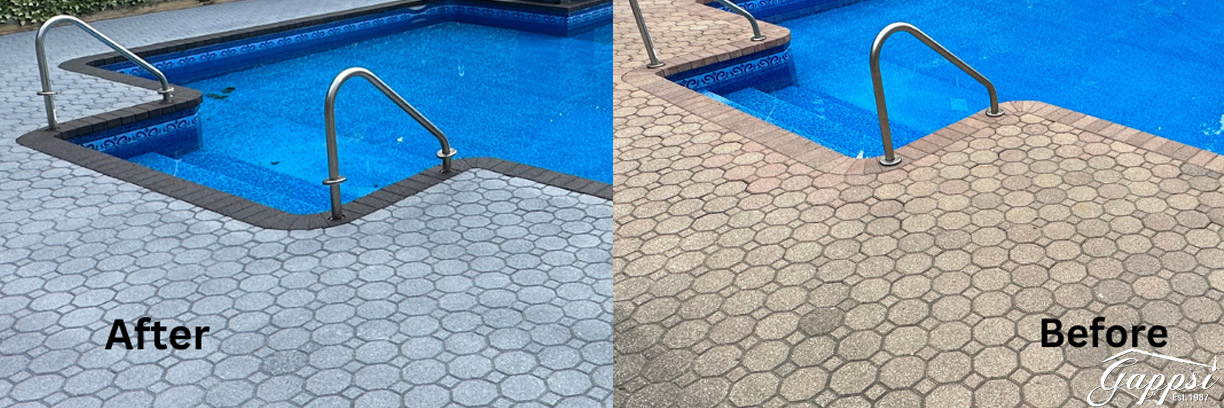
View Gappsi’s YouTube Channel to view Cambridge Paver Color Transformation & Urethane Sealing | Gappsi Brightwaters, NY
Paver Color Transformation for outdoor living spaces can be central to how homeowners enjoy their properties today. This is especially true in places like Long Island, where patios and backyard areas are used for entertainment, relaxation, cooking, and gathering with family and friends. Over time, however, even the best hardscape materials begin to show signs of wear or no longer fit a homeowner’s preferred aesthetic. That’s where professional restoration, staining, and sealing services come in.
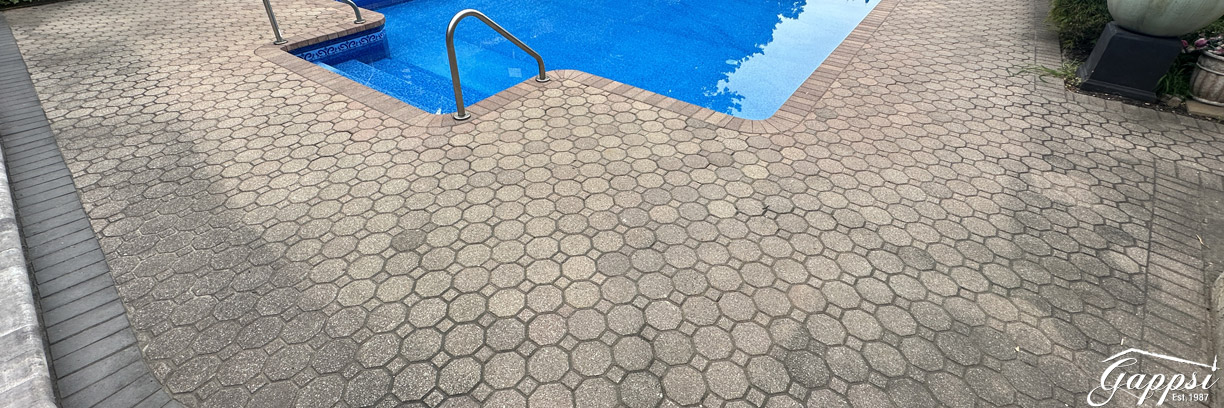
In this project, Gappsi completed a dramatic transformation of a Cambridge paving stone patio in Brightwaters, NY. They turned an outdated color palette into a sleek, modern gray finish. What began as a typical Toffee Onyx surface featuring salmon-brown undertones blended with gray became a contemporary monochromatic look that completely refreshed the backyard.
This process not only updated the color but also protected the stones. It added depth, enhanced durability, and unified the entire hardscape design. Here’s a detailed look at how the transformation was achieved.
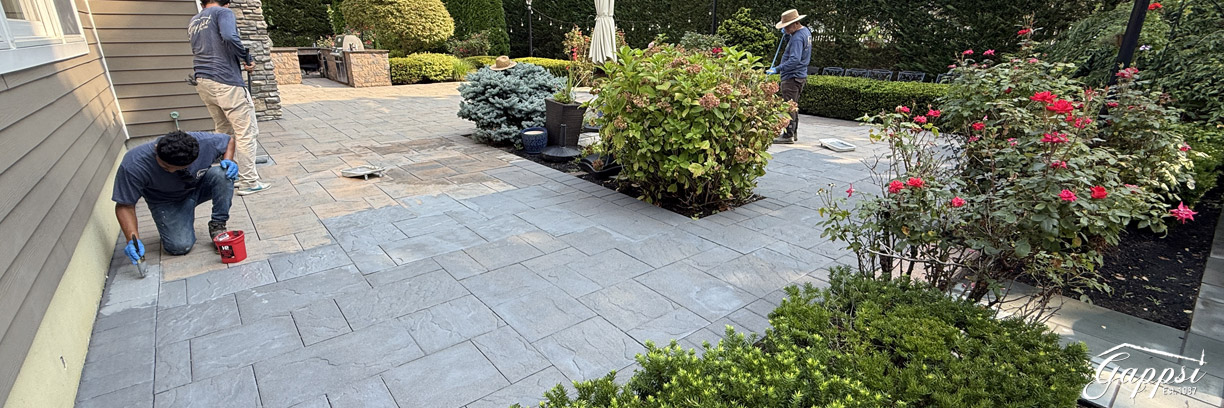 Understanding the Original Surface: Cambridge Toffee Onyx Pavers
Cambridge Pavers in the Toffee Onyx color blend are known for their multi-toned appearance, combining shades of salmon, brown, and gray. While attractive to many homeowners, some eventually prefer a more modern or neutral appearance, especially as outdoor trends shift toward cooler, more uniform tones.
Over time, UV exposure, weather, and foot traffic can also dull the surface, making color restoration or enhancement necessary. In this case, the clients wanted to eliminate the warm salmon hues and transition to a solid gray finish.
Step 1: Professional Cleaning to Prepare the Surface
The first step was a thorough cleaning of the entire patio and surrounding hardscape. Proper cleaning is crucial because:
- It removes dirt, algae, mold, and surface contaminants.
- It lifts old residues, enabling fresh stain to penetrate properly.
- It prepares the surface for even sealer absorption.
Gappsi uses commercial-grade equipment and environmentally safe cleaning solutions to ensure pavers are fully prepared without damaging the material before any paver color transformation.
Once the patio was thoroughly cleaned and dried, it became ready for the next phase: custom color transformation.
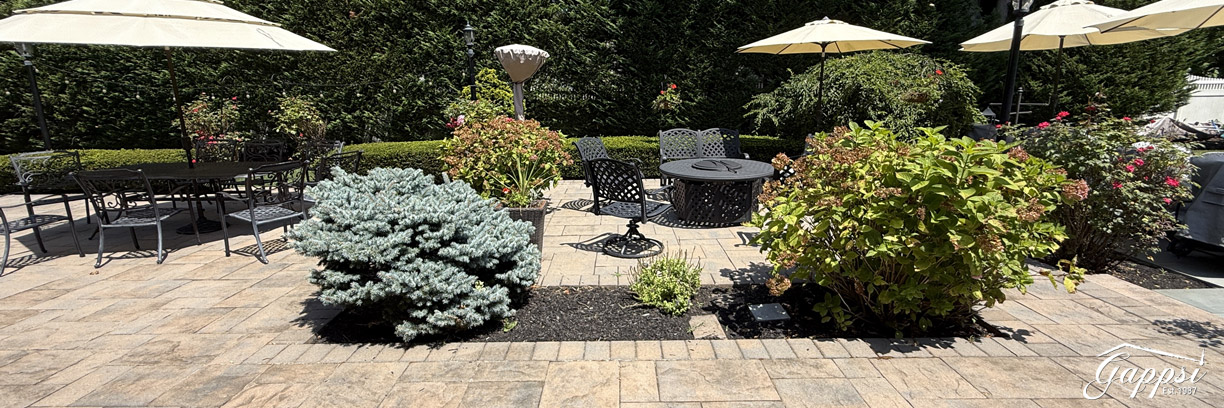 Step 2: Creating Color Samples for Client Approval
Because color staining is a permanent and noticeable change, Gappsi prepared several gray sample options to show the homeowner exactly how the finished product would look. This is a critical step in the process; it ensures:
- The new color aligns with the homeowner’s vision
- The client understands the depth, tone, and finish of the stain
- The selection blends well with existing structures like the firepit, stoop, and retaining walls
After reviewing samples, the client selected a custom combination of two gray tones: Slate Gray and Gray Washed.
Step 3: Custom Staining to Eliminate Salmon Tones
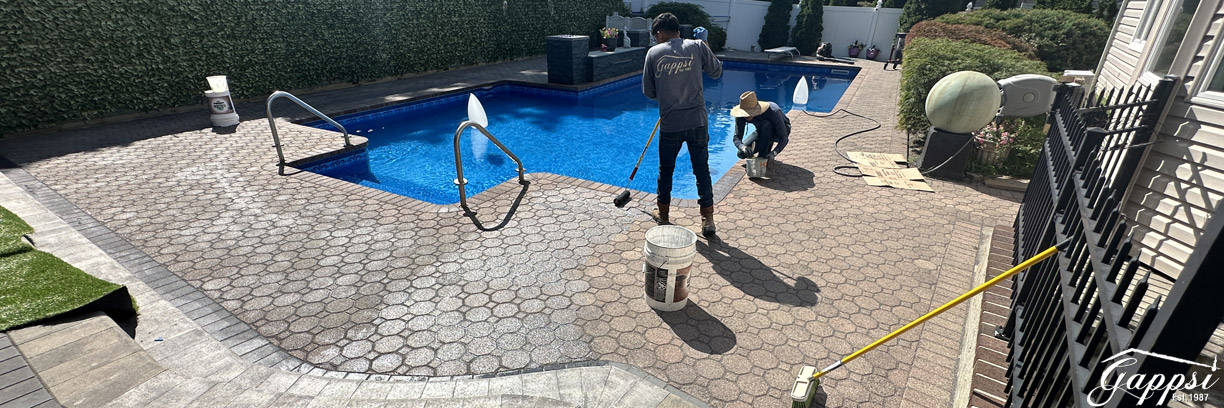
The transformation required full-surface staining to remove the warm undertones of the Toffee Onyx pavers completely. This technique allows homeowners to dramatically change the color of their pavers without removing or replacing them, a complete paver color transformation.
Using a specialized urethane-compatible stain, Gappsi evenly coated the patio, transitioning the stones from their original brown-salmon hues to the chosen shades of gray. This process effectively “reset” the color palette and created a cleaner, more contemporary appearance.
The staining work extended beyond the patio to ensure a cohesive look across the entire outdoor living area. This included:
- The retaining wall of the island
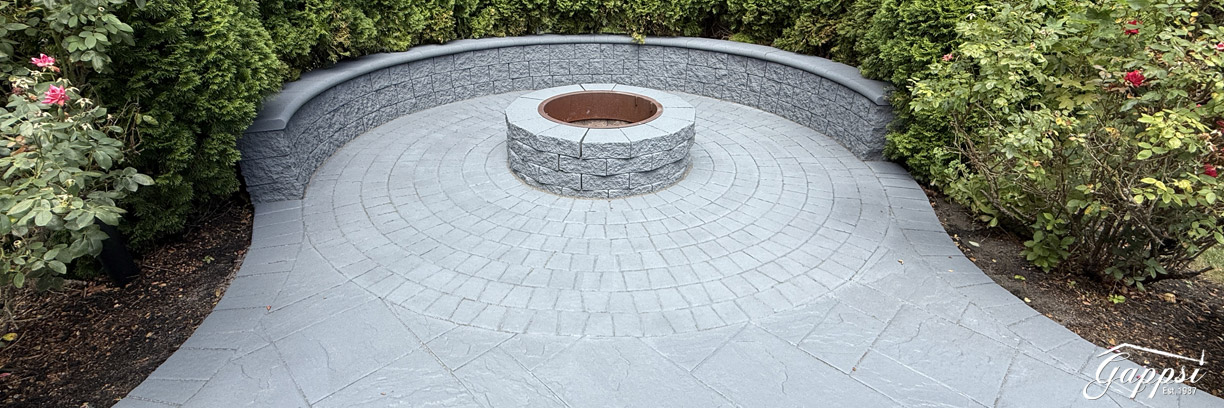
- The firepit area
- The stoop and bullnose
- The island walls and surrounding structures
Every surface was blended to match the new gray color scheme, creating a complete backyard makeover.
 Step 4: Sealing with Premium Urethane Sealer
After staining was complete, the next step was to seal the entire hardscape with a high-quality urethane sealer. Unlike basic acrylic sealers, urethane provides:
- Superior durability
- A long-lasting protective barrier
- Enhanced color richness
- Excellent resistance to UV, stains, and weathering
- A more premium finish and depth
For this project, Gappsi applied three coats of urethane sealer to achieve maximum protection and the richest color results.
The sealer helps lock in the stain while providing enhanced protection from:
- Oil and food spills
- Sun fading
- Water penetration
- Wear from foot traffic
- Seasonal freeze-thaw cycles
The final finish delivered both beauty and long-term durability.
The Final Result: A Complete Modern Look for Paver Color Transformation
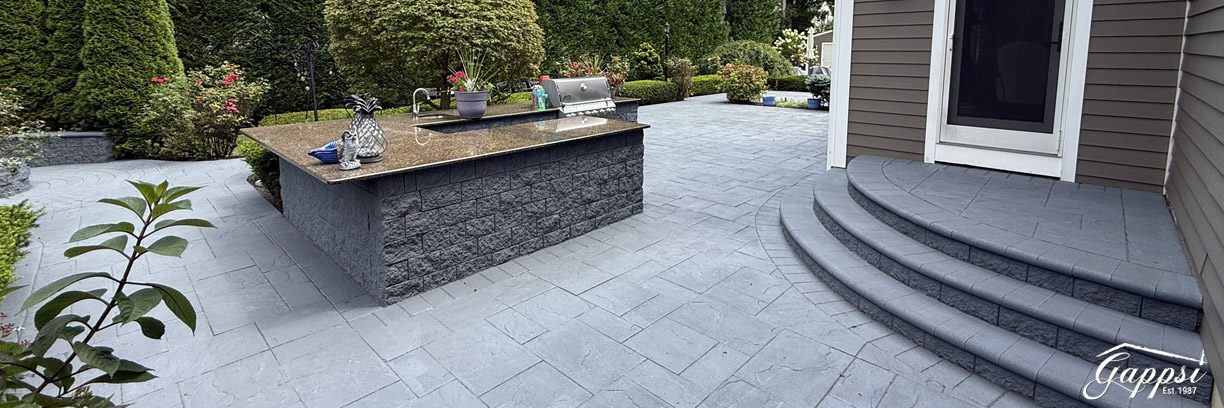
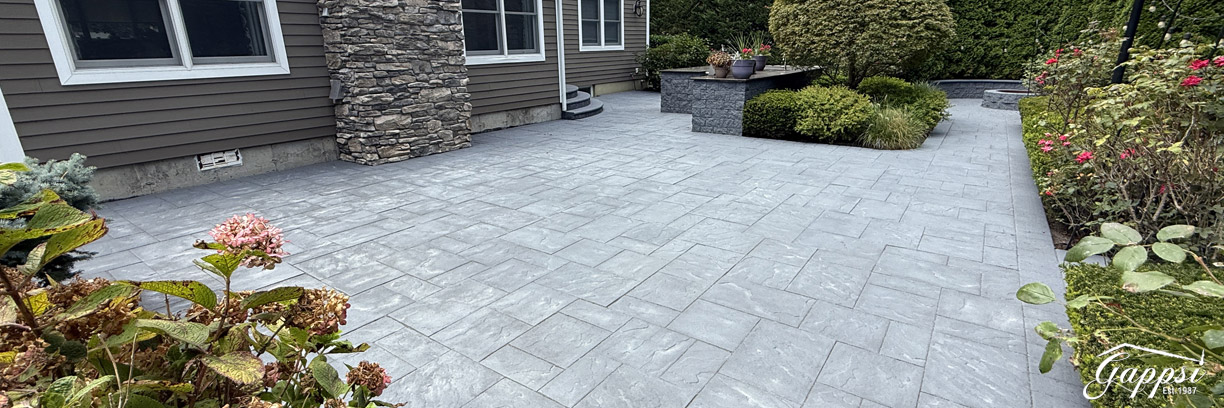
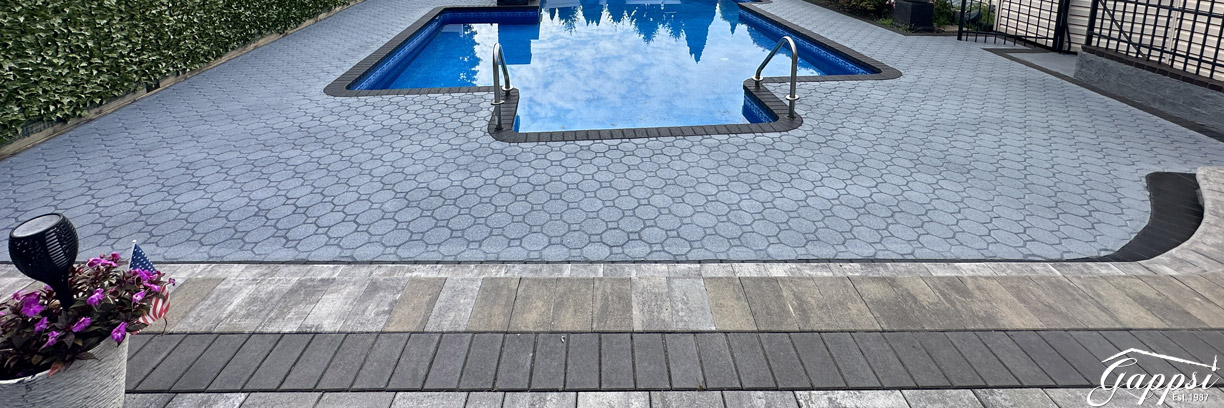
The completed project resulted in a striking transformation. What was once a warm-toned Cambridge Toffee Onyx patio now presents as a contemporary gray outdoor environment, clean, cohesive, and visually refreshed.
The uniform gray palette pairs perfectly with modern outdoor furniture, stainless-steel appliances, and today’s trending backyard design styles. The urethane sealer adds a subtle sheen that enhances the pavers’ texture and elevates the space’s overall aesthetic.
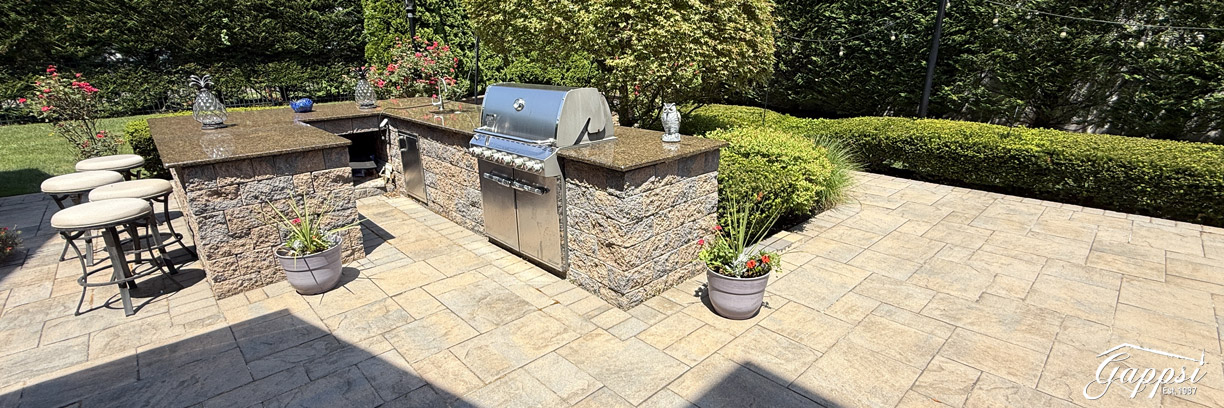 This project showcases what’s possible when homeowners want to update their outdoor living area without tearing out and replacing existing pavers. Through expert staining and sealing, Gappsi delivered a like-new surface at a fraction of the cost of rebuilding.
Why Homeowners Choose Gappsi for Paver Sealing and Color Restoration
Gappsi is known throughout Nassau and Suffolk Counties for professional expertise in:
- Paver cleaning
- Paver staining and color restoration
- Sealing with high-grade urethane sealers
- Repairs and joint stabilization
- Complete backyard design and masonry services
With decades of experience and a reputation for craftsmanship, Gappsi has become the go-to contractor for homeowners seeking long-lasting results and premium materials.
 Transform Your Pavers Without Replacing Them
If your patio or walkway looks faded, outdated, or no longer fits your style, color changing and sealing may be the perfect solution. Whether you want a natural enhancement, a deeper tone, or a complete color overhaul, Gappsi can deliver stunning results customized to your vision.
This Brightwaters, NY project is just the latest example of how staining and sealing can completely transform a backyard.
Contact Gappsi Today
📍 Serving all of Long Island, NY — Nassau & Suffolk Counties
🌐 www.gappsi.com
📞 Call now for a free consultation and estimate!
SCHEDULE A MEETING TODAY WITH GAPPSI
 Factors Behind the Color Change:
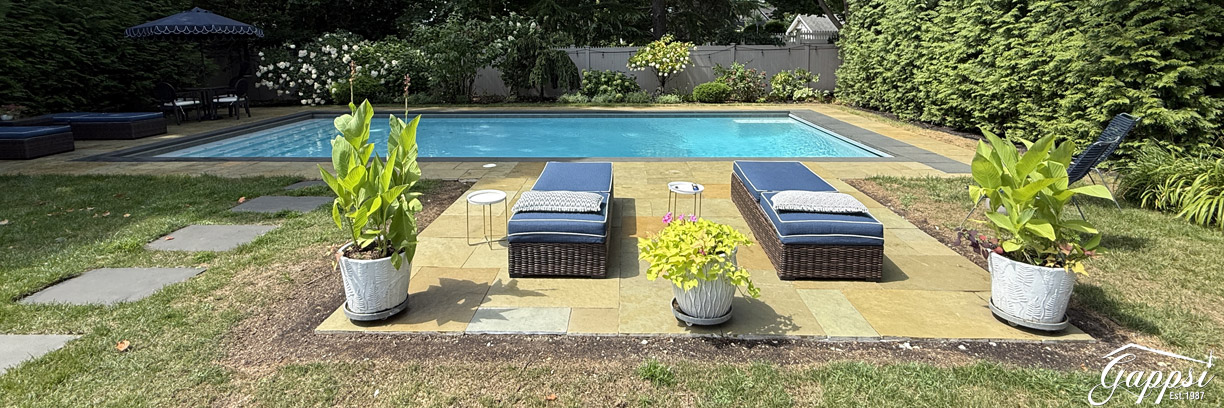 What Does Sealing Do?
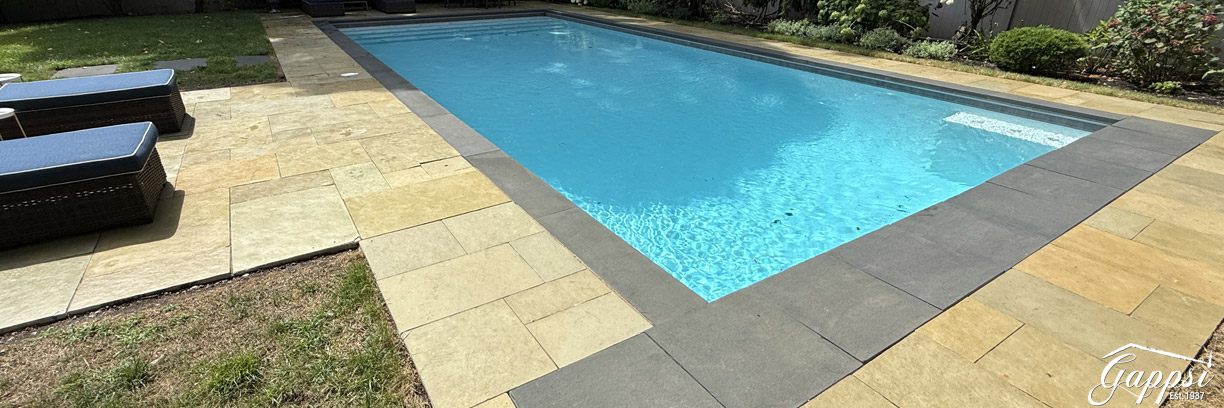 Best Practices for Sealing the Natural Stone Patio
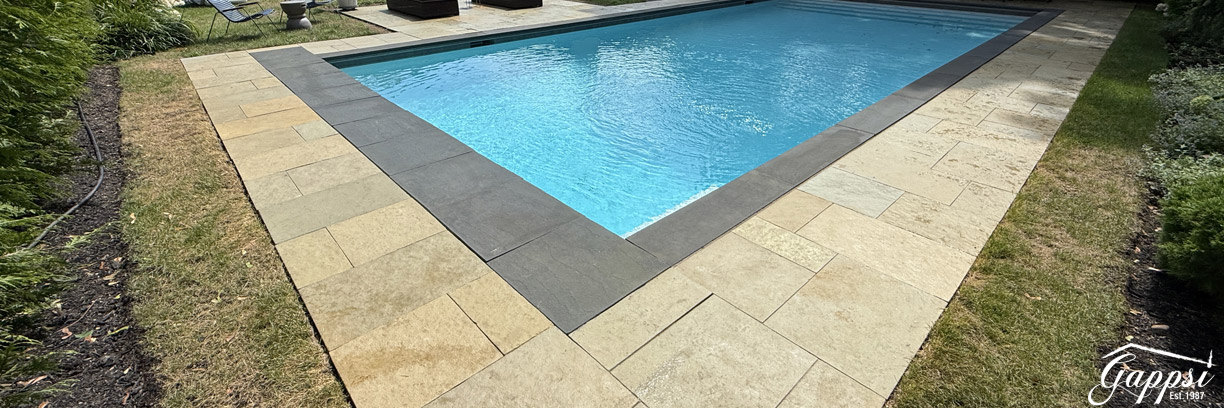
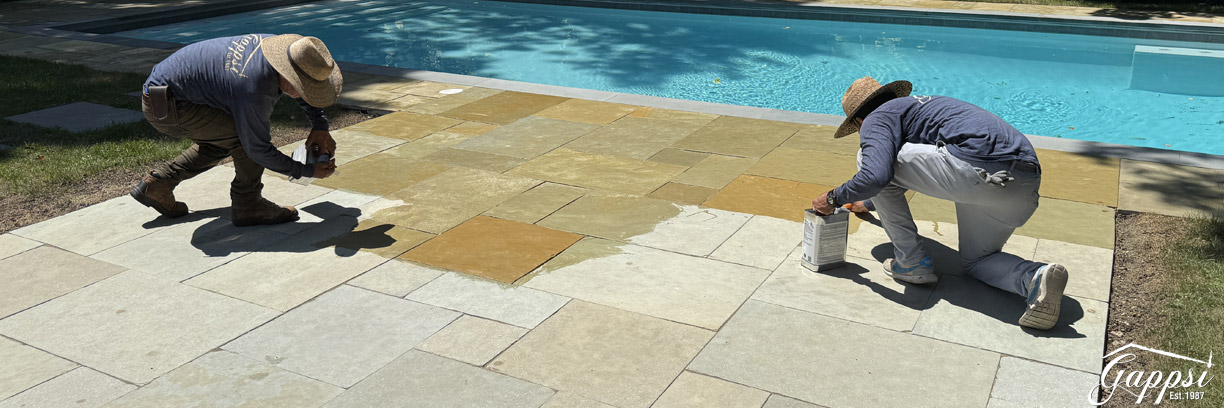 Your outdoor living space is an extension of your home, and the natural stone you’ve chosen deserves proper care. Bluestone Coping Color Change is a natural process, but with the proper cleaning and maintenance, it doesn’t have to diminish the beauty of your pool or patio. Meanwhile, Sealing the Natural Stone Patio is one of the best preventive measures you can take to protect your investment for years to come.
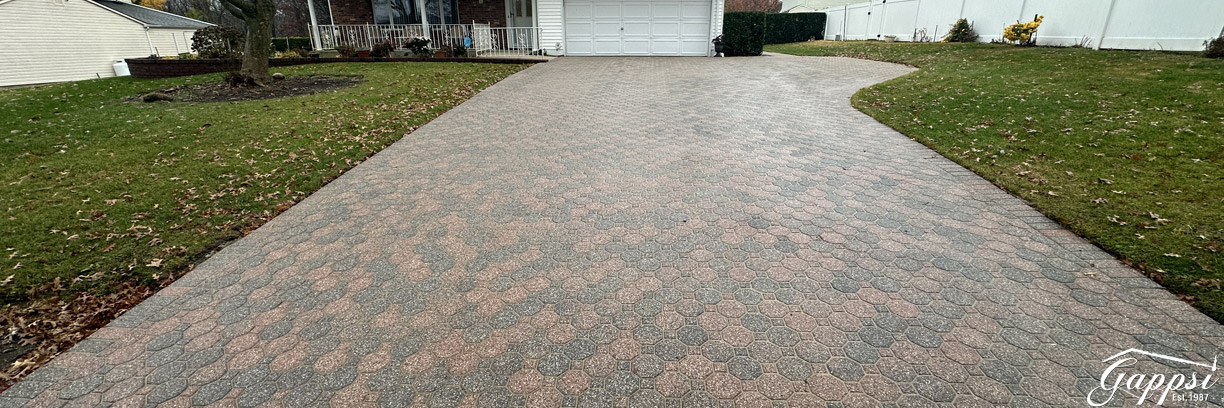
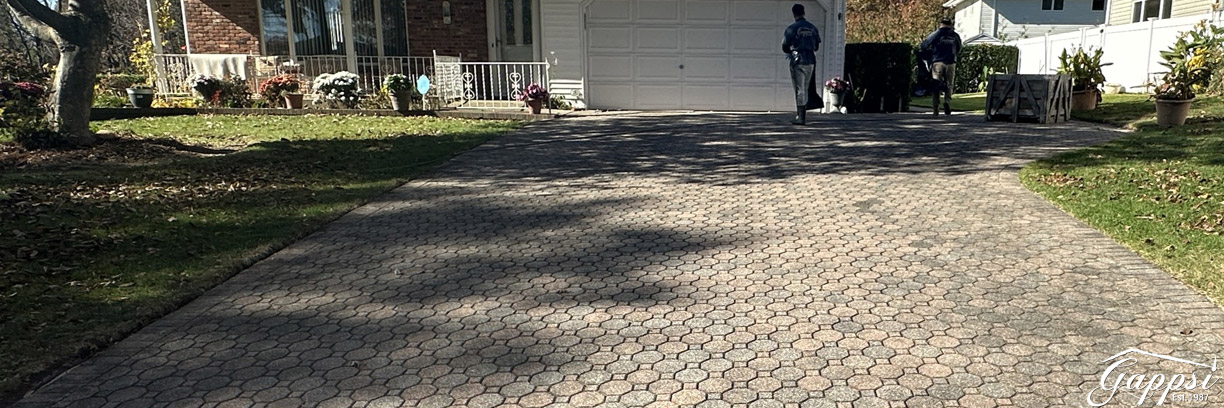 At the time, installing pavers was still a relatively new concept for residential driveways in the area. Concrete and asphalt were the norm, but we believed in offering something better, something more beautiful, resilient, and long-lasting. This driveway was part of that early vision.
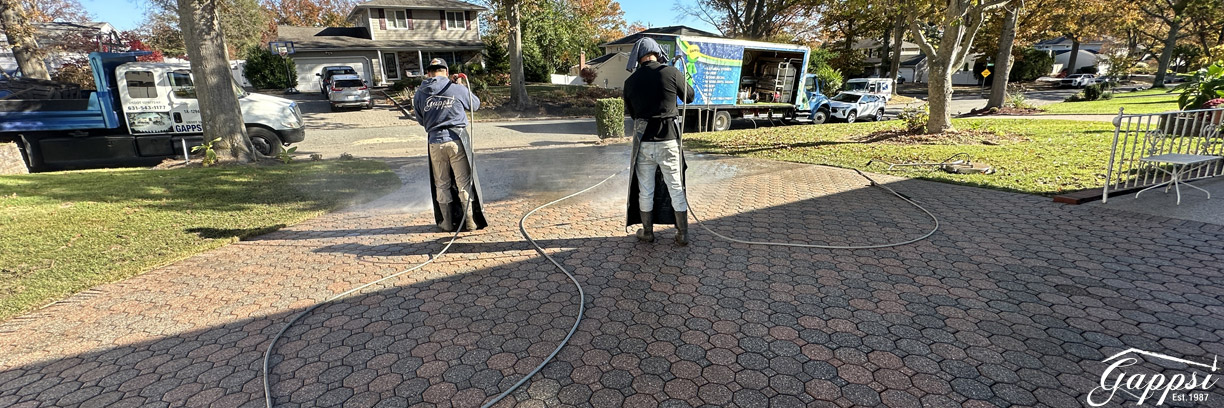
 Cleaning and Prepping the Surface
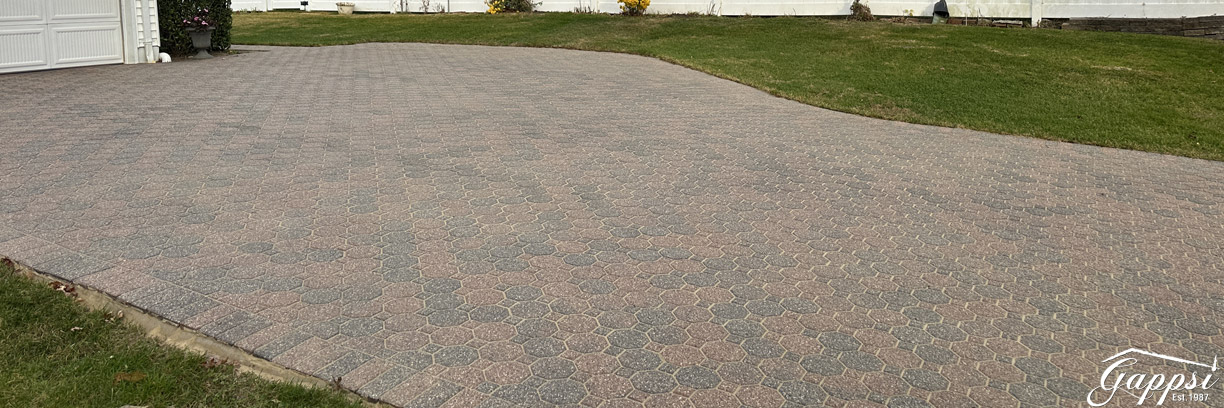
 Sealing: The Finishing Touch
 We used proper base materials from the beginning, ensured correct compaction, and adhered to best practices during installation. We chose a paver product we believed in, and Nicolock has proven to be a trusted partner in delivering quality, American-made hardscaping materials.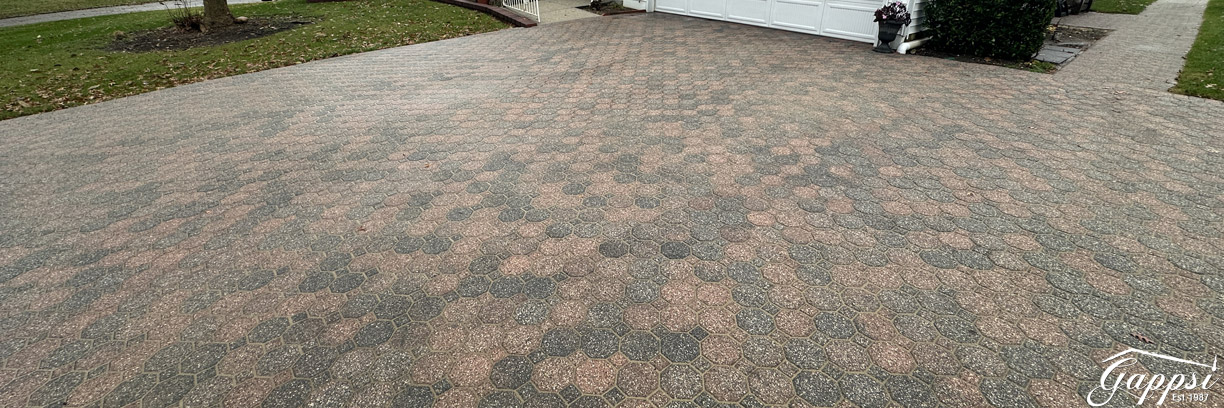
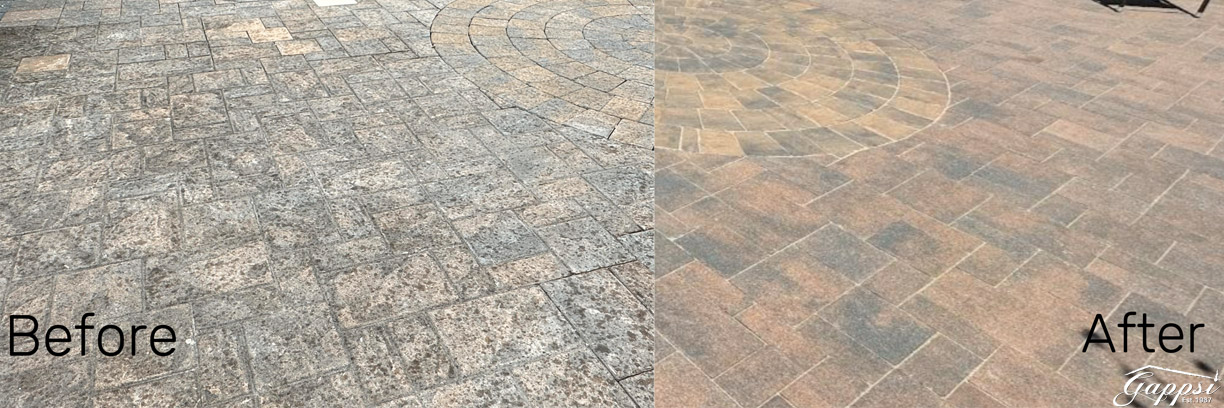 But we don’t stop there. Your vision for the final appearance matters just as much as the material itself. Some homeowners prefer a more natural, matte look, where the stone’s color remains unchanged but is still water- and stain-repellent. Others may want to enrich or enhance the stone’s natural tones, giving the surface a “wet look” or deeper hue. We tailor our sealing method accordingly, ensuring both aesthetic and functional goals are met.
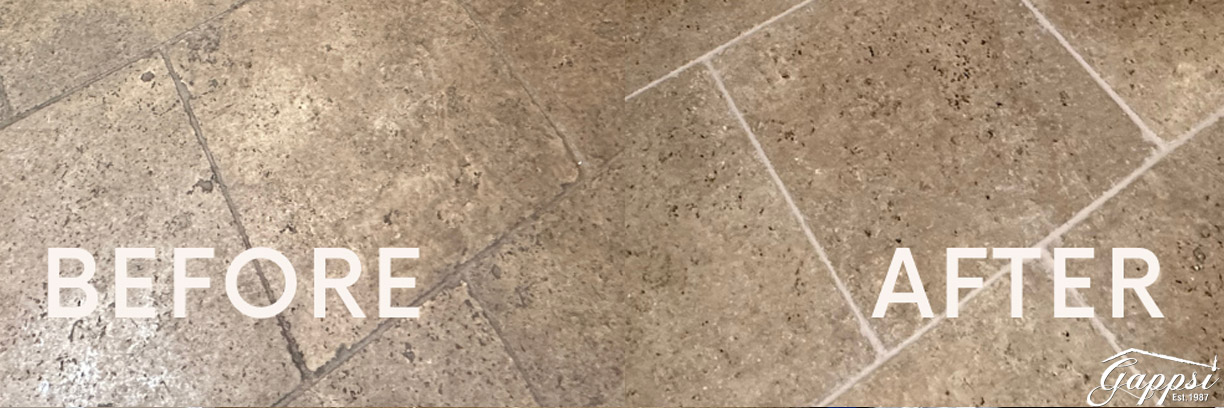 Once sealed, your grout becomes water-resistant and far easier to clean, maintaining its appearance for years to come. This is an excellent solution for both new tile installations and older surfaces that need a refresh.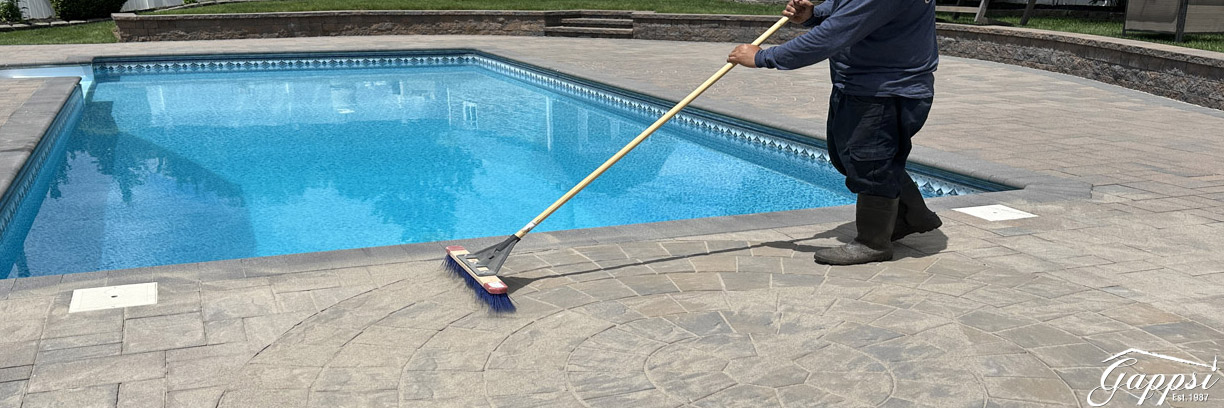
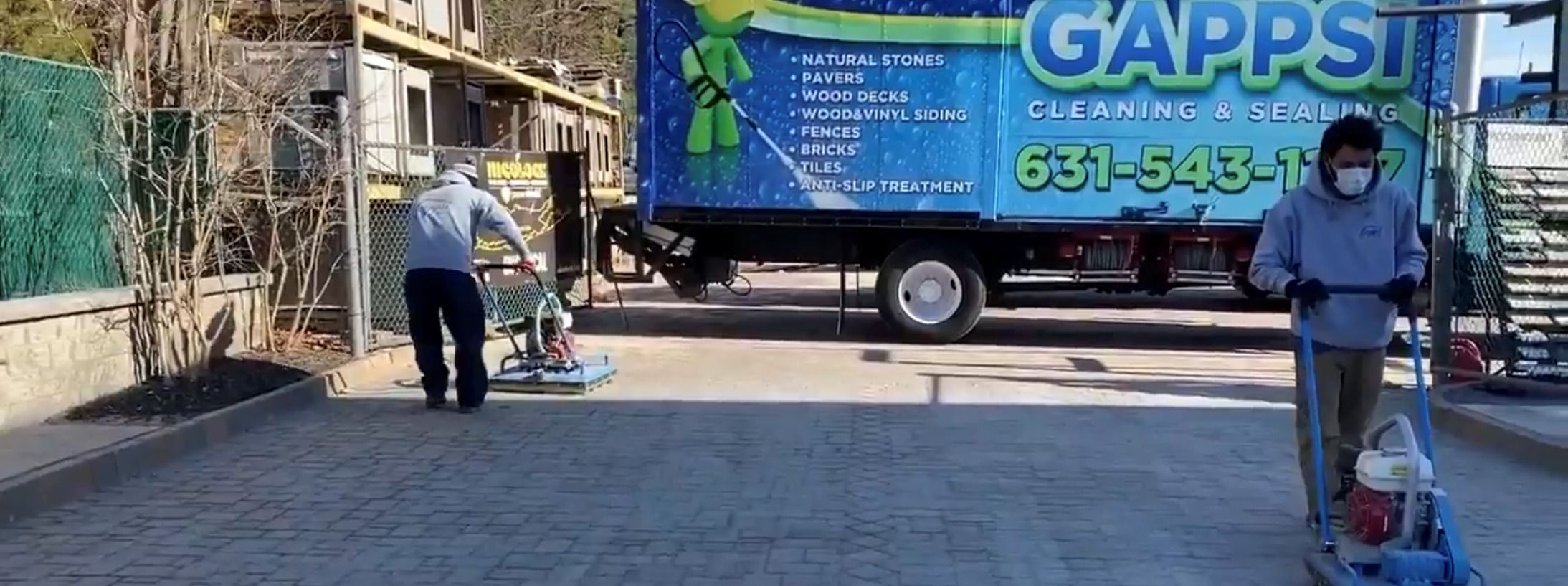 After brushing away any excess sand, we apply the sealer, carefully selected for the specific material and finish desired. This step not only seals and protects the stone but also locks the sand in place. Our team’s deep understanding of both surface materials and sealing products ensures a flawless application, resulting in a durable and attractive finish that lasts.
 We will blend it in with the existing Cambridge patio. The color staining for this backyard in Smithtown NY has been completed.
 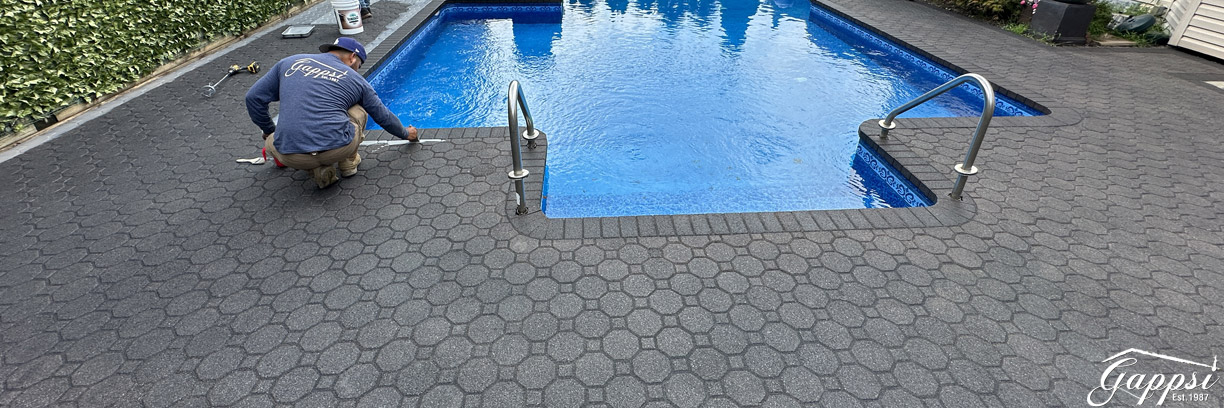 The homeowners have changed the color of the backyard to be more gray-toned throughout the years. The existing old patio did not match the style, so they decided to color stain the pavers to blend in. This color that we used is also a sealer that stains the stones. This is the latest stone staining project done by Gappsi in Smithtown, NY.