


Building a driveway on Long Island requires a special kind of expertise. Our unique climate, with its harsh winters and humid summers, puts materials to the test. A driveway that works well in a milder region might not stand a chance here. That’s why understanding how different materials react to our freeze-thaw cycles and coastal air is so important. This guide is written specifically for local homeowners, focusing on the solutions that offer the best durability and value in our area. We’ll explain what to look for in a quality installation and how to find a driveway contractor Setauket who knows how to build for our specific conditions.
Masonry Contractor Setauket Long Island NY
Gappsi Designed and installed this Nicolock driveway in Setauket NY 11733, 11777, 11790, using combinations 6×6 and 6×9 rustico craborchiard tumbled stones. Installation was done on oversized rca and fine sand, for more information’s about driveways pavers installations and designs , please call 631-543-1177 or visit Gappsi.com for more information’s about Gappsi products and services
Exploring Your Driveway Material Options
Choosing the right material for your driveway is one of the most significant decisions you’ll make for your home’s exterior. It’s the first thing guests see, and it sets the tone for your entire property. The material you select impacts not just curb appeal but also your budget, maintenance routine, and the driveway’s overall longevity. From classic asphalt and concrete to rustic gravel and elegant pavers, each option comes with its own set of benefits and considerations. For Long Island homeowners, it’s especially important to think about how our specific climate—with its freezing winters and warm summers—will affect performance over time. Making an informed choice now means you’ll have a driveway you love looking at and using for years to come.
Asphalt Driveways
Lifespan and Maintenance
Asphalt is a popular choice for its affordability and quick installation. It offers a smooth, dark surface that can look very clean and uniform. With proper care, an asphalt driveway can last between 15 to 30 years. However, it does require consistent maintenance to reach that lifespan. This includes sealcoating it every few years to protect it from water penetration, UV damage, and chemical spills. Asphalt is also flexible, which can be an advantage in colder climates, but it’s also susceptible to cracks and potholes over time, especially if the base isn’t properly prepared. Regular inspections and filling small cracks promptly can prevent them from turning into larger, more expensive problems.
Concrete Driveways
Lifespan and Maintenance
Concrete driveways are known for their durability and strength, often lasting 30 to 40 years with minimal upkeep. They provide a clean, modern look and can be customized with stamps or colors for a more decorative finish. While concrete is incredibly tough, it’s not indestructible. It can be prone to staining from oil and rust, and de-icing salts used during Long Island winters can cause the surface to spall or flake. Cracking can also be an issue, and unlike pavers, repairing a section of a concrete slab can be difficult to blend seamlessly. Sealing the concrete every few years can help protect it from moisture and stains, preserving its appearance and structural integrity.
Gravel Driveways
Lifespan and Maintenance
Gravel offers a charming, rustic aesthetic at a very budget-friendly price point. It’s a great option for long driveways or for homeowners seeking a more natural look. A standard gravel driveway typically lasts 5 to 10 years before needing significant replenishment. The main maintenance tasks involve occasional raking to keep the surface level and adding new gravel to fill in low spots. One common challenge is keeping the stones contained. To solve this, modern systems like GravelFix use a stabilizing base to hold the gravel in place, preventing ruts and migration while ensuring excellent drainage—a perfect solution for a polished yet natural look.
Paver Driveways
Lifespan and Maintenance
Paver driveways are the top-tier choice for both beauty and longevity, with a lifespan that can exceed 30 to 50 years. Made from concrete, brick, or natural stone, pavers offer endless design possibilities, allowing you to create a truly custom look that complements your home’s architecture. One of their biggest advantages is repairability; if a paver gets stained or cracked, you can simply replace that single stone instead of redoing the entire surface. While the initial investment is higher, their durability and low maintenance needs provide excellent long-term value. At Gappsi, we specialize in designing and installing stunning masonry driveways using high-quality porcelain and natural stone pavers that stand up beautifully to the Long Island climate.
How Climate Affects Your Material Choice
Here on Long Island, our weather plays a huge role in how different materials perform. The freeze-thaw cycles of winter are particularly tough on driveways. Water seeps into small cracks, freezes, expands, and widens the cracks. This is where pavers truly shine. Their interlocking system allows for slight movement, so they can shift with the ground instead of cracking under pressure. In contrast, large surfaces like concrete and asphalt are more rigid and prone to cracking. Additionally, the salt and de-icers we use to combat ice can be corrosive to concrete and asphalt over time, while high-quality pavers are manufactured to resist such damage, ensuring your investment looks great for decades.
Understanding the Cost of a New Driveway
Figuring out the budget for a new driveway involves more than just the price of the material itself. The total cost is a combination of materials, labor, site preparation, and even the removal of your old driveway. On average, you can expect paving a driveway to cost anywhere from $3 to $15 per square foot, but this is a wide range. The final price tag depends heavily on the material you choose, the size and slope of your driveway, and the amount of prep work required to create a stable, long-lasting foundation. It’s always a good idea to get a detailed quote that breaks down all these elements so you know exactly what you’re paying for.
Average Driveway Installation Costs
Cost Per Square Foot
The cost per square foot is the most common way contractors price a driveway project, as it accounts for both materials and labor. This figure helps you compare different material options on an apples-to-apples basis. While a general national average provides a good starting point, remember that local factors can influence the final price. The complexity of the job, such as intricate patterns for a paver driveway or the need for significant grading, will also affect the per-square-foot rate. Always confirm what is included in this price—does it cover excavation, base preparation, and debris removal?
Costs in the Northeast
In regions like the Northeast, and specifically on Long Island, driveway installation costs can be slightly higher than the national average. This is often due to higher costs for labor, materials, and transportation. Additionally, contractors in our area understand the importance of building a robust base to withstand our freeze-thaw cycles, which may require deeper excavation and more base material than in milder climates. While it might add to the upfront cost, this proper preparation is essential for preventing heaving and cracking down the road, ultimately protecting your investment and ensuring your driveway lasts for decades.
Cost Breakdown by Material
Asphalt Paving Costs
Asphalt is one of the more budget-friendly paving options, typically costing between $3 and $7 per square foot. The price can vary based on the thickness of the asphalt layers and the current price of petroleum, which is a key component. While the initial outlay is lower, remember to factor in the long-term maintenance cost of sealcoating every three to five years to keep it in top condition. This recurring expense is an important part of the total cost of ownership for an asphalt driveway.
Concrete Paving Costs
A standard concrete driveway generally runs from $5 to $15 per square foot. The cost can increase if you opt for decorative finishes like stamping, staining, or exposed aggregate. The thickness of the concrete slab and the need for reinforcement like wire mesh or rebar will also influence the final price. Although it costs more upfront than asphalt, its longer lifespan and lower maintenance needs can make it a more cost-effective choice over the long term for many homeowners.
Gravel Installation Costs
Gravel is the most economical option for a new driveway, with installation costs typically ranging from $1 to $3 per square foot. The price depends on the type of stone you choose and the depth of the gravel layer. While the initial cost is very low, keep in mind that you’ll need to budget for occasional top-ups to replenish displaced stones. For a more permanent and stable solution, using a system like GravelFix may have a higher initial cost but reduces long-term maintenance by keeping the gravel securely in place.
Paver Installation Costs
Paver driveways represent the highest initial investment, typically costing between $10 and $30 per square foot. This higher price reflects the cost of the premium materials (like natural stone or high-quality concrete pavers) and the meticulous, labor-intensive installation process. However, their exceptional durability, minimal maintenance, and the ability to easily repair small sections make them a wise long-term investment. The unparalleled curb appeal and design versatility also add significant value to your home, making a custom paver driveway a feature that pays for itself over time.
Potential “Hidden” Costs to Consider
Old Driveway Removal
If you’re replacing an existing driveway, you’ll need to account for the cost of demolition and removal. This process typically costs between $1 and $4 per square foot, depending on the material being removed (asphalt is generally easier and cheaper to remove than thick concrete). This fee covers the labor and equipment needed to break up the old surface and the expense of hauling away the debris for proper disposal. Make sure this is itemized in your contractor’s quote so there are no surprises.
Ground Preparation and Grading
The foundation is the most critical part of a new driveway, and proper ground preparation is non-negotiable. This step can cost $1 to $3 per square foot and includes excavating the area, grading it for proper drainage, and compacting a solid base of crushed stone or gravel. Skimping on the base will lead to premature sagging, cracking, and failure, no matter how high-quality the surface material is. A reputable contractor will emphasize the importance of this step and detail their process in the project plan.
Drainage System Installation
Proper drainage is essential for protecting your driveway and your home’s foundation from water damage. Depending on the slope of your property, you may need to install a drainage system, such as a French drain or a channel drain, to divert water away from the surface. This is especially important on Long Island, where heavy rain and snowmelt can cause issues. The cost for this varies widely based on the complexity of the system required, but it’s a crucial investment in preventing erosion, cracking, and pooling water.
Permit Fees
Many towns and villages in Setauket and across Long Island require a permit for installing a new driveway, especially if you are altering the curb cut. Permit fees can range from $50 to over $500, depending on your municipality’s regulations. Your contractor should be familiar with local requirements and can typically handle the permit application process for you, but it’s always wise to confirm who is responsible for securing and paying for the necessary permits before the project begins.
Resurfacing as a Cost-Effective Alternative
If your existing asphalt or concrete driveway has a solid foundation but is showing surface-level wear like minor cracks and discoloration, resurfacing can be a great option. Resurfacing, or adding an overlay, involves applying a new top layer of asphalt or concrete over the old one. This process is faster and less expensive than a full replacement because it avoids the costs of demolition and building a new base. However, it’s only a viable solution if the underlying structure is sound. If you have deep cracks, potholes, or drainage issues, a full replacement is the better long-term solution.
Maintaining Your Driveway for Lasting Appeal
Your new driveway is a significant investment in your home’s value and curb appeal, and a little maintenance goes a long way in protecting it. Just like any other part of your home, your driveway needs regular care to keep it looking its best and performing well for years to come. The specific maintenance tasks will depend on the material you chose, but the core principle is the same: proactive care prevents major repairs. By staying on top of simple tasks, you can extend the life of your driveway and ensure it remains a beautiful and functional feature of your property.
Immediate Care for a New Driveway
Once your new driveway is installed, it needs some time to cure and settle properly. For asphalt, it’s best to wait at least two to three days before driving on it, and even longer in hot weather. Avoid parking in the same spot every day for the first few weeks to prevent indentations. For concrete and paver driveways with sealed joints, you’ll also want to give them a few days to fully cure before subjecting them to heavy traffic. Your contractor will provide specific instructions based on the materials used and the weather conditions during installation—be sure to follow them closely.
Long-Term Maintenance Tips
Asphalt Sealcoating
Sealcoating is the most important maintenance task for an asphalt driveway. This process involves applying a thin liquid layer over the surface to protect it from water, oil, and UV rays, which can cause it to become brittle and crack. A new asphalt driveway should be sealed about six months to a year after installation, and then every three to five years after that. This simple, recurring task can dramatically extend the life of your asphalt and keep it looking fresh and black.
Paver Sealing and Restoration
While pavers are very low-maintenance, sealing them every few years is a great way to enhance their color and protect them from stains. Sealing also helps to lock the jointing sand in place, which prevents weed growth and insect infestations. Over time, if your pavers look a bit dull or have stubborn stains, professional cleaning and restoration can bring them back to life. Our restoration and sealing services can rejuvenate your paver driveway, making it look as good as the day it was installed.
When to Resurface vs. When to Replace
Deciding whether to repair, resurface, or completely replace your driveway depends on the extent of the damage. If you have a few small, shallow cracks or minor stains, simple repairs are usually sufficient. For asphalt or concrete driveways with widespread surface issues but a stable base, resurfacing is a cost-effective option. However, if you’re dealing with deep, wide cracks (often called “alligator cracks”), significant potholes, crumbling edges, or drainage problems, it’s a sign that the foundation has failed. In these cases, a full replacement is the only way to truly fix the problem and ensure a lasting result.
How to Hire a Driveway Contractor in Setauket
Choosing the right contractor is just as important as choosing the right material for your driveway. A quality installation is key to ensuring your driveway’s longevity and performance. You want to find a local, reputable professional who has extensive experience working with the materials you’re interested in and understands the specific challenges of building on Long Island. Taking the time to vet potential contractors thoroughly will give you peace of mind and a final product that you’ll be proud of for years to come. It’s about finding a partner you can trust to bring your vision to life with skill and professionalism.
Get at Least Three Detailed Quotes
It’s always wise to get quotes from at least three different contractors for your driveway project. When you review them, don’t just look at the bottom-line price. A good quote should be a detailed, itemized document that breaks down the costs for materials, labor, excavation, base preparation, and any other services like demolition or drainage. Comparing detailed quotes allows you to see if one contractor is cutting corners on crucial steps, like the depth of the base, which could lead to problems later on. This helps you make a decision based on value, not just price.
Verify Credentials and Reputation
Licensing and Insurance
Before hiring any contractor, it’s essential to verify that they are properly licensed and insured. In Suffolk County, contractors are required to have a license from the Office of Consumer Affairs. This ensures they meet local standards and are accountable for their work. Equally important is confirming they carry both liability insurance and workers’ compensation. Liability insurance protects your property from damage, while workers’ compensation protects you from being held liable if a worker is injured on your property. Ask for proof of both and don’t hesitate to verify them.
Customer Reviews
In addition to official credentials, take some time to research the contractor’s reputation. Look for online reviews on sites like Google and Houzz to see what past clients have to say about their experience. Pay attention to comments about communication, timeliness, cleanliness of the job site, and how the company handled any issues that arose. You can also ask the contractor for a list of local references or addresses of recent projects in the Setauket area so you can see their work firsthand.
Key Questions to Ask Potential Contractors
When you meet with potential contractors, come prepared with a list of questions to help you gauge their expertise and professionalism. Ask them how long they’ve been in business and how much experience they have with the specific material you want. Inquire about their process for base preparation, as this is critical for a durable driveway. Ask for a projected timeline for the project and what their payment schedule is. A professional contractor will be happy to answer all your questions and provide clear, confident responses.
The Importance of a Written Warranty
A reputable contractor will always stand behind their work with a written warranty. This document is your protection against defects in both materials and workmanship. Be sure to read the warranty carefully to understand what is covered and for how long. A typical warranty might cover issues like cracking or settling for a period of one to five years. A company that offers a solid warranty is showing you that they are confident in the quality of their work and are committed to your satisfaction long after the project is complete.
Comprehensive Driveway and Outdoor Services
Your driveway is more than just a place to park your car; it’s the grand entrance to your home and a key element of your property’s overall design. A truly stunning result is achieved when the driveway is thoughtfully integrated with the rest of your landscape. That’s why it’s beneficial to work with a company that can see the bigger picture. At Gappsi, we don’t just install driveways—we create cohesive outdoor living spaces. From the front curb to the back patio, our team has the expertise to design and build a harmonious environment that reflects your style and enhances your lifestyle, ensuring every element works together beautifully.
More Than Just Paving
Landscape Masonry
A beautiful driveway can be further enhanced with complementary landscape masonry. Imagine a paver driveway flanked by elegant stone pillars at the entrance, or a retaining wall that creates a stunning terraced garden alongside it. We can design and build custom walkways that lead from the driveway to your front door, using materials that match or complement your paving choice. These masonry elements add dimension, character, and a high-end, finished look to your entire front yard, creating a seamless transition from the driveway to your home.
Poolscapes and Patios
Creating a cohesive design flow from the front of your house to the back is key to a well-designed property. We can help you select materials and styles that connect your driveway to your backyard oasis. Imagine a natural stone driveway that transitions into a matching walkway leading to a beautiful stone patio and pool deck. By using a consistent design language and material palette across your entire property, from the swimming pool to the driveway, you create a unified and luxurious outdoor living environment that feels both intentional and inviting.
Curbing and Drainage Solutions
The details are what separate a good driveway from a great one. Professional curbing provides a clean, crisp edge that defines the driveway and prevents landscaping from encroaching on the paved surface. It also plays a role in water management. We can install a variety of curbing options, from simple concrete to decorative stone, that add a polished finishing touch. Furthermore, we can design and integrate effective drainage solutions directly into your driveway and landscape plan, ensuring that water is managed effectively to protect your investment for the long haul.
Frequently Asked Questions
What’s the best driveway material for Long Island’s weather? While every material has its place, pavers are exceptionally well-suited for our climate. The freeze-thaw cycles we experience can cause solid surfaces like asphalt and concrete to crack under pressure. Pavers, with their interlocking system, have built-in flexibility that allows them to shift slightly with the ground’s movement. This makes them far more resistant to the cracking and heaving that can plague other materials, ensuring a durable and long-lasting surface.
How long will my driveway installation take from start to finish? The timeline for a new driveway depends on its size, the material you choose, and the amount of prep work needed. A straightforward asphalt or gravel installation might only take a few days. A more intricate paver driveway, which requires detailed excavation, base preparation, and the careful laying of each stone, can take a week or more. We can give you a precise timeline once we’ve discussed your specific project.
Is it really that simple to repair a paver driveway? Yes, it truly is one of the biggest advantages of pavers. If a stone becomes stained from an oil leak or happens to crack, a professional can carefully lift out the single damaged paver and replace it with a new one. The repair blends in seamlessly, unlike a patch on an asphalt or concrete surface, which is often very noticeable. This makes long-term maintenance much easier and more cost-effective.
Why can’t I just hire the cheapest contractor I find? A low price often signals that corners are being cut, and the most common place to do that is with the foundation. A driveway’s longevity depends entirely on the quality of the base prepared underneath it. An improperly prepared base will lead to sinking, cracking, and a complete failure of the driveway in just a few years, regardless of the surface material. Investing in a reputable contractor ensures the job is done right from the ground up.
Do I need to worry about a permit for my new driveway? Many municipalities on Long Island, including those in the Setauket area, do require a permit for driveway installations, especially if you’re changing the size or location of the entrance from the street. The requirements and fees vary from one village or town to the next. A professional, local contractor will be familiar with these regulations and can handle the entire permitting process for you, ensuring your project is fully compliant.
Key Takeaways
- Prioritize Pavers for Long Island Durability: Our local freeze-thaw cycles are the biggest threat to a driveway’s lifespan. Pavers are designed to shift with the ground, preventing the large cracks that often plague solid asphalt and concrete surfaces.
- Look Beyond the Surface-Level Price: A comprehensive quote should always detail costs for essential prep work, including excavation, grading for drainage, and old driveway removal. This ensures you’re comparing apples-to-apples and investing in a proper foundation.
- Hire a Vetted and Insured Local Contractor: The quality of the installation is just as crucial as the materials. Always verify your contractor has a current Suffolk County license and proper insurance, and make sure you get a written warranty to protect your investment.
 Front door entrance way step and platforms built with oyster blend mini colonial wall and granite city caps. Walkway inlay from steps to street extends the entrance way. Retaining walls built on both sides of the driveway and oyster blend stone ridge were used for walkway platforms and to border the asphalt driveway inlay. Gappsi provides asphalt driveways installation and masonry construction and design. For all residential and commercial applications in plain view New York. For more information visit www.gappsi.com or call us at 631-543-1177.
 Nicolock oyster ridge stone pavers being sealed in Patchogue NY 11772. The sealing process begins with pressure washing the entire patio, removing all dirt/debris from the stone surface and in between the joints. Next, Nexgel Techniseal synthetic sand is applied in between the pavers joints and vibrated with a mechanical plate compactor. The plate compactor has rubber rollers to prevent the stones from cracking or scratching. This vibrating process allows the sand to fall in between the joints and density. Then, we clean the pavers with brooms and landscape blowers, to clean the excess sand from the pavers surface and to evenly spread the sand in between the pavers joints. The next step is to wash the pavers by misting water to penetrate the synthetic sand into the pavers joints all the way down below the pavers. The sand and water activate a chemical reaction of the pollen that’s in the sand to cause the sand to harden. Finally, the application of the sealer, two parts components urethane dealer, specially formulated for Gappsi, is applied to the pavers surface and the sand joints to prevent stones from staining, extend their life cycle and further enhance their texture, color, and surface. Call Gappsi at 631-543-1177 for any cleaning, sealing, paver driveways/patio restoration and repairs in Patchogue 11772 NY.
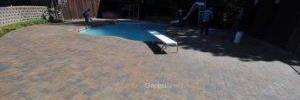
 This 16′ by 32′ vinyl pool was built with concrete walls and liner. The pool has steps across the full width of the shallow end and a standing ledge/two corner benches in the deep end. The pool is also equipped with an auto cover. Stoops were built by backyard sliding doors with platforms and several steps going down to the backyard level. Patio pavers and pool coping used were Griggio Dorato travertine pavers selected from the Gappsi stone collection. The travertine colors vary in grays, beige, whites, and blacks. It has a very soft marbleized style that can compliment any home sidings and backyard furniture. If you’re looking for vinyl pool and pavers installation, visit
  This 20′ by 50′ gunite swimming pool was built in Cold Spring Harbor Long Island, NY. This gunite swimming pool has a double Roman end shape with a raised spillover spa along the 50′ side. Steps are incorporated on each side of the spa for entering and exiting the pool. A full-width sun deck is equipped with reversed circular steps to mirror the pool Roman end. The 6′ high Porcelain tile was installed and styled to create a unique mosaic design, under the entire pool, coping and spa. The finish for the inside of the pool is Taho Blue Diamond Bright, which was applied on the walls and then acid washed for an etched texture and finish. The masonry for the pool was designed to complement the pool shape and give the customer plenty of patio area around the entire pool. The masonry was also designed to work with the great changes in the backyard slopes. The pool coping, patio and venire for the spa walls, including the retaining walls and steps, are the Melfi natural stones selected from the Gappsi natural stone collection. The pool coping is a multi-sized pattern with a split tumble rock face front. The venire is a combination of 2’ and 4’ split face Tumble. The pavers is a roman pattern, multi-sized natural stones with a natural cleft and tumbled. A 5’ aluminum fencing was installed to surround the entire pool area and a simple landscaping was needed for the aesthetic. The pool and patio design layout have an immaculate beauty because when using the same color and type of stones for the floors/walls in different finishes gives the appearance of a cohesive finish. The design was manufactured by Giuseppe Abbrancati and the job was constructed by Gappsi Group.