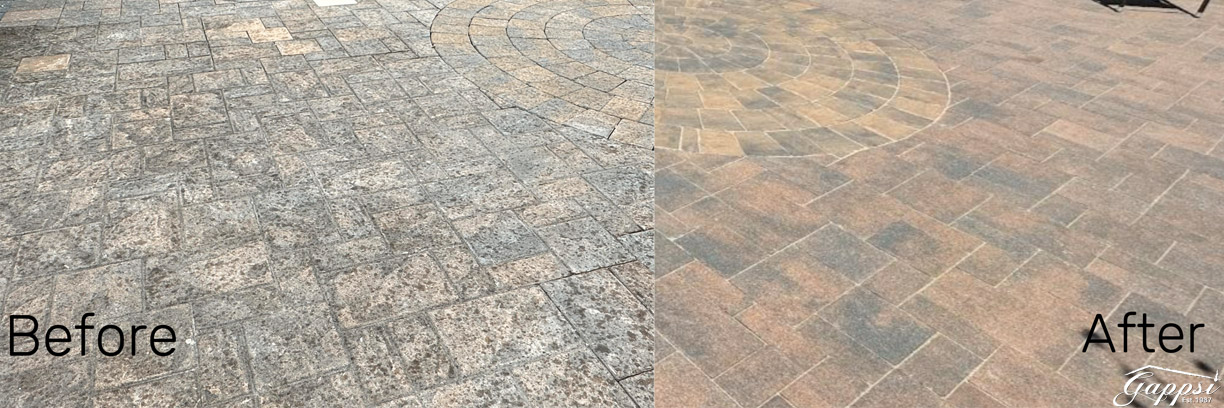
Cleaning and Sealing Concrete Pavers Process

cleaning-and-sealing-concrete-pavers-process-before--afterThis blog will discuss cleaning and sealing concrete pavers process and why it is important.  Whether you have a charming hardscape, a beautiful driveway, or an intricate walkway, your hardscape’s longevity and visual appeal depend on proper maintenance. In this blog, we’ll explore the significance of regular cleaning and sealing pavers in your hardscapes, helping you understand when, how, and why to embark on these crucial steps for preserving the beauty of your outdoor spaces.

  1.  Do stone patios, driveways, and other hardscapes need to be pressure washed?

This is everyone’s first question, and the answer is NO.  The most popular interlocking concrete pavers manufacturers used in Long Island NY are Nicolock, Cambridge, Techo Bloc, Unilock, and Belgard to name a few. These pavers have been installed on patios and driveways for the past 30 years.  When you see a 10-year-old concrete paving stone floor you can notice with the naked eye that the surface is faded and lost its finer texture on the surface layer.

Patio and driveway pavers get dirty over time and grow black mold, moss, and weeds. Most paver owners think of hiring a pressure washing company to clean them or run out to the local hardware store rent a pressure washer and try to pressure wash the pavers themselves. Pressure washing concrete pavers, especially newer ones, can easily damage the surface finish and we strongly suggest not pressure washing unless you are highly experienced and have the right equipment to pressure wash pavers.
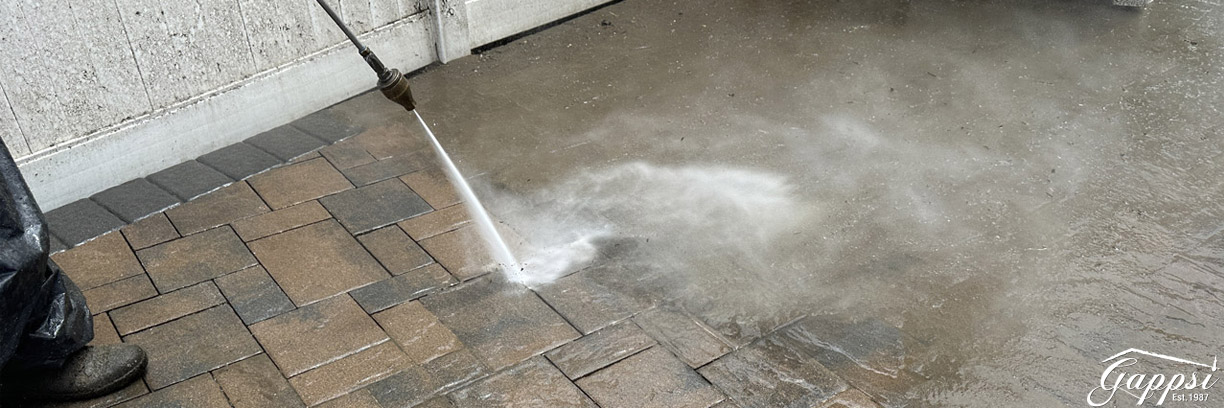
step-1-cleaning-and-sealing-concrete-pavers-processPressure-washing concrete pavers will appear to clean them at the time.  The process weathers the surface of the pavers therefore aging and expediting the aging process. As you pressure wash the concrete surface of the pavers, it becomes rougher, and in a short time dust and dirt will start to accumulate in the microscopic pores resulting in the surface being dirty again.  Often people get caught up in the cycle of pressure washing their pavers every springtime.   They do not realize every time it is done they worsen the problem instead of resolving it. 

  2.  Do concrete pavers need to be sealed? 

This is everyone’s next question, and the answer is YES.  Paver sealant is an important maintenance tool to keep paver patios, walkways, driveways, and pool decks looking as beautiful as the day they were installed.   To maintain the look for years to come a layer of protective sealer must be applied to the surface of the finished outdoor paver.

Concrete surfaces are corrosive to the elements and will weather over time, losing their shine and fine new texture. Just like many products need protection such as metal needs paint or a car needs wax to revive and restore its luster.  Any surface exposed to the elements after many years will lose its vibrancy and fine finished texture.
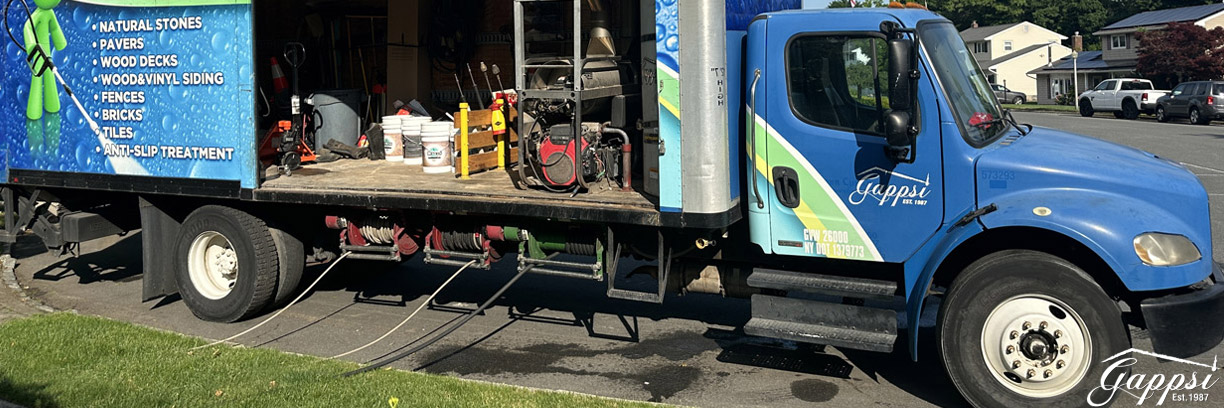
step-2-cleaning-and-sealing-concrete-pavers-processWe recommend sealing your pavers to ensure their longevity and the manufacturer’s finish to last.  Gappsi uses a synthetic finish product to preserve the paving stones.  Sealers will make the pavers surface water repellent thus making them weatherproof.  When you seal your pavers you accomplish many things besides weathering protection.  You bring out the colors that fade over time even though the color is through and through or even a layer of half an inch thick.  The eye sees the very top of the pavement.  In only a few short years they could become faded due to the weathering from the rain or sun rays.

Contact Gappsi Today For An Estimate

In addition, the color could fade simply by the curing process of the cement structure itself of which the concrete pavers are manufactured. Using a pressure washer over concrete pavers will further degrade the surface and age it faster.  Sealer products are clear and transparent.  They brighten and magnify the colors of the surface. That’s what the eye sees.  The colored light that the sealer reflects. The smoother the surface of the pavers the more light is reflected off it.  A weathered surface allows dust to collect more easily and does not reflect the light as well as a preserved smoother surface does. That is why a sealed newer surface appears to be much more colorful than a sealed more weathered surface that has been left to weather under the elements for too long without a synthetic coat protection like the proper sealer.

Perhaps the most important benefit of sealers is that they make pavers less porous, which helps limit stains, since the pavers are less able to soak up the oil or dirt, etc. Sealing your concrete pavers makes cleanup of spills easier if they do happen.

  3.  How long should you wait before cleaning and sealing your pavers? 

Gappsi has been installing pavers for over 40 years and sealing them for more than 20 years.  Our experience and best practice is to take care of any colored concrete surface and pavers installed on driveways and patios.  New installations should weather under the natural elements of rain, sun, and snow for at least 2 years. During this time the concrete structure of the paving stones will cure completely and any efflorescence that has reason to surface on the pavement will be washed away naturally.  The top surface of the concrete pavers has weathered enough to have developed a very fine uniform sandy texture.  This is not visible to the naked eye but enough for a sealant to grab on and allow it to penetrate the substrate. This will make the sealer applied do its job of protecting the surface. 
step-3-cleaning-and-sealing-concrete-pavers-process  4.  What is the right sealer and how do you select the one that fits your pavers?

This is where it can get more complicated, costly, or worsen the situation. If you don’t use the right product or the right company to seal your pavers you could degrade the surface of the paving stones.  It is important to start with what is your result you are looking to achieve.  What are your expectations for the project?  Besides planning to protect your outdoor floor investment long term, you need to ask yourself a few questions: 

  • Do you want to see your pavers color in a natural form as they look when they are dry? 
  • Do you like the wet look and want to enhance the color?
  • If you prefer the color enhancement option, what kind of shine? Shiny or Mat
  • Do you want a plastic shine look or do you like a mat color-enhanced look?
step-4-cleaning-and-sealing-concrete-pavers-processWhat is Your Preference? 

Based on your preferences we will choose the sealer products that will accomplish the look. There are many manufacturers of sealers on the market and knowing which one is better could be challenging.  In addition, the manufacturer of the sealer you select will have different ways to apply the product.  The application and knowledge of cleaning and sealing pavers are what will give you the correct result.

The quality of your sealed paving stone patio and driveway pavers comes down to the knowledge of the person you trust and hire to complete the project.

Applying sealer to your pavers does NOT automatically guarantee all the good things mentioned above, a poorly sealed job could create a worse eye sore.  It also is an expensive and challenging situation to rectify.  This is because there are not many quality sealer applicators on the market.  There are even fewer applicators willing to take the challenge or even know how to rectify a badly sealed patio and make it look right.

  5.  Best practices for sealing concrete paving stones.

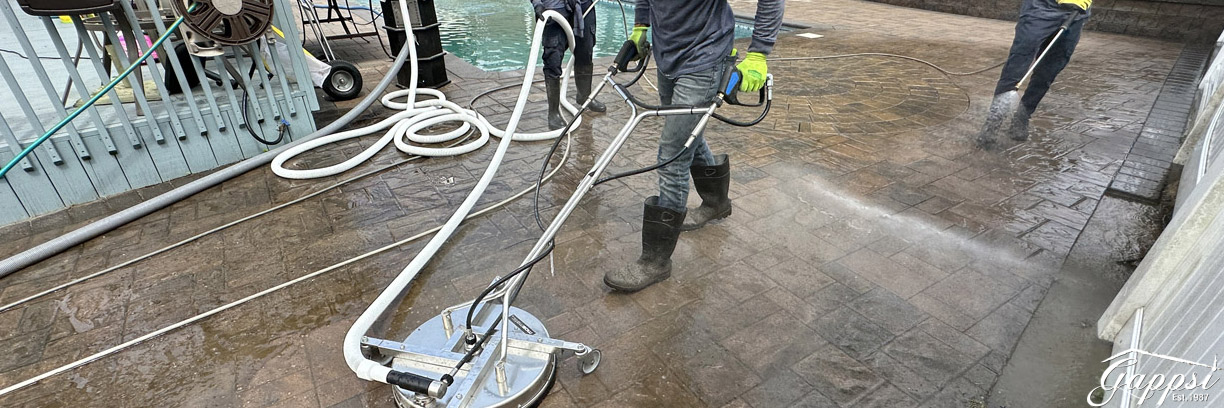
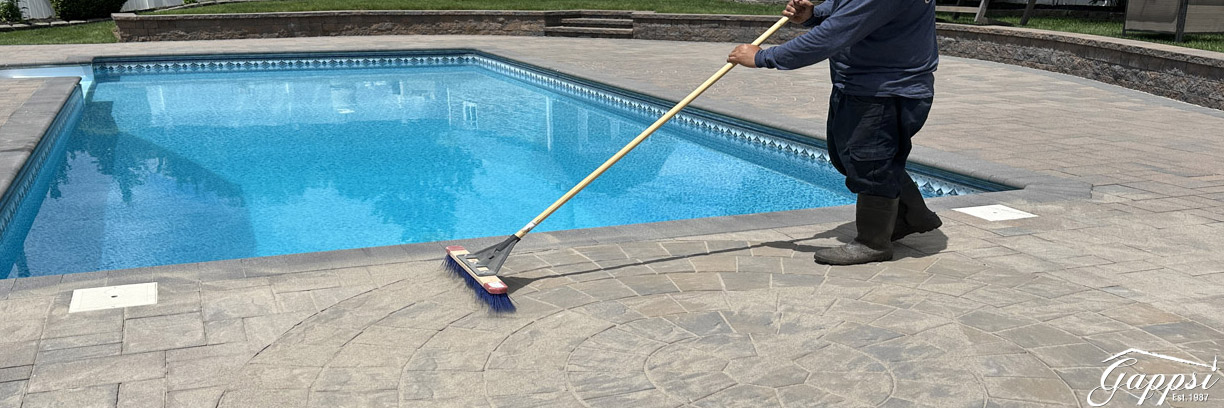
We recommend lightly washing the pavers with a surface cleaner.  This will clean the floor uniformly and most importantly use a pressure washing system that makes hot water at least 150 Fahrenheit.  Once the surface is cleaned of any debris as well as old sand from the joints.  You can go at least one inch deep into the joint.  The floor has to be left until completely dry. The following step is to fill the joints of the pavers with Polymeric sand, let it harden, and then seal the pavers.)
step-5-cleaning-and-sealing-concrete-pavers-process  6. How many types of sealers are there and what are the differences?

Four primary types of sealers can be used to seal concrete pavers: polyurethane, acrylic, Solvent and lastly waterbase based sealers. All these sealers can be modified by the different producers to accomplish different results. Acrylic and polyurethane sealers are the top coating that primarily covers the surface of concrete pavers, they offer color enhancement by magnifying the color pigments on the paver surfaces. solvents and waterbased sealers are penetrating sealer and can offer both a natural look and color enhancement.  If a natural look is desired in the paving stone then a solvent sealer with non enhancers or water-based solution should be used.

  7.  Which sealer is better to use?

All sealers are good as long as you understand how to apply them. 

  • Understanding the surface you are sealing
  • The age of the concrete pavers
  • Is it concrete or a natural stone surface
  • Are you going to apply a slip resistance on the surface?
  • Is it a horizontal or a vertical surface,
  • Is the area damp, the porosity of the product you are planning to seal is important to note.
  • The application procedure of each product changes based on the time of the year you are applying it and the humidity and weather (temperature).

Gappsi Cleaning and Sealing Paving Stones Process

Our experience in cleaning and sealing concrete pavers is not only shown through our expert staff in handling the products but also in the timing between each step of the process.  Using the right right people, with the right equipment to ensure a job is done right for YOU! 

STEP #1

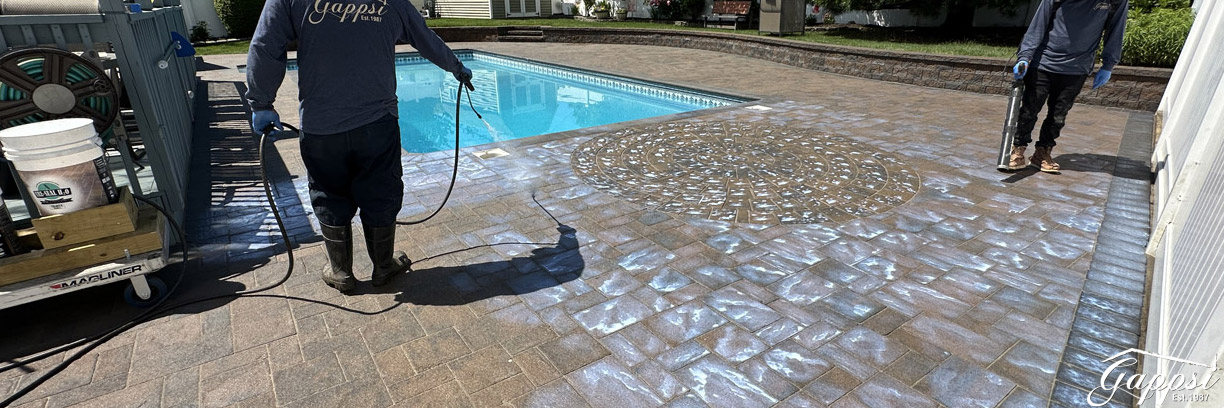
The Gappsi process starts with focusing on losing up and the removal of soil and debris from the paver’s joints using a state-of-the-art high water volume pressure washer that produces 200 Fahrenheit hot water.

STEP #2

The 2nd step is to wash the floor surface using extractor surface cleaners.  This will clean the floors uniformly.  In addition, the suction produced by the surface cleaner extracts any loose material.  This material is loosened and sitting in the pavers gaps.  We pump them out and away from the area being prepared for sealing.

STEP #3

Once the paving stone joints and surface have been completely cleaned.  Allow the patio stones to completely dry. The selection of joint filling material is based on the selection of the sealer we use.

STEP #4

It is important to mention a few things.  If we are sealing a concrete paving surface using a color enhancer sealer.  Then we use a urethane sealer.  In this case, we also use silica sand (color of choice) to fill the joints.  Next, we vibrate the pavement with a specific vibratory roller compactor made for this application process.  This helps the sand settle in between the paver joints and fills the joints tight. Lastly, urethane sealer is applied.

STEP #5

One person sprays the sealer onto the concrete pavers.  The second person moves the sealer around with a blower filling the joints.  This process ensures that the joins fully absorb the sealer when applied to its full depth.  The surface of the pavers becomes sealed in the process while we focus on flooding the joints.  

A second coat of sealer is applied right after while the first coat is still tacky strengthening the seal to the stone.  This binds to the first coat.

STEP #6

When solvent sealers are used the process changes with the use of sand.  We use Polymeric sand instead of Silica sand.  Polymeric sand is a combination of silica sand and polymer manufactured and delivered in dry bags.  After applying to the paver joints and vibrating down, water is applied.  The water activates the polymeric in the sand and causes the sand to harden when dry. The last step is applying the solvent sealer over the entire floor surface.

A great job is only delivered by the following criteria:

  1. the experience and knowledge of the applicator
  2. the right preparation of the surface
  3. the proper equipment used
  4. the appropriate type of sealer selected for the desired outcome.

SCHEDULE A MEETING TODAY WITH GAPPSI

View Gappsi’s YouTube Channel for Videos of the Cleaning and Sealing Concrete Pavers Process

Share this page:

Choosing The Right Paver And Base Material

Choosing-The-Right-Paver-And-Base-Material2Choosing the right paver and base material is important when considering your outdoor project.  Key factors are water drainage, durability, and how thick you need the subgrade material to be.  Sand is one of the most common materials used as a paver base. It’s very accessible and can be spread out to fit most projects.

Discover The Difference With Nicolock® Paving Stones

Pavers with paver-shield™ have a tight, smooth surface texture and will not expose heavy aggregate as they wear. The ultra-dense surface has more color and more protection. Nicolock has color from top to bottom throughout the paver ensuring a lifetime of beauty. Iron oxide pigments are guaranteed not to fade!

Brilliant color can always be found in Nicolock pavers with paver-shield™. Rich vibrant colors are the hallmark of everything they make. With Nicolock’s paver-shield technology, colors stay rich and vibrant. When choosing Nicolock, you are getting pavers with color from top to bottom. The pavers will not expose heavy aggregate as they wear. The ultra-dense surface has more color and more protection, ensuring a lifetime of beauty.

Cherry Valley Country Club Nicolock Pavers With Twin Eagle Outdoor Kitchen Appliances

Gappsi updated the outside areas at Cherry Valley Country Club located in Garden City NY.  We installed Nicolock Graphite Pearl Stone Ridge XL and Stone Ridge Regular.  Both pavers were used to pave the walkways, entranceway, and patio at the country club.  Gappsii’s team removed the old Hanover Paving Stone patio and added a new base of recycled concrete.  New Nicolock pavers were installed over one inch of fine sand. New pavilions and outdoor Twin Eagles kitchens with all new appliances were installed in the outdoor kitchen.

Choosing-The-Right-Paver-And-Base-Material3TYPES OF PAVER BASE MATERIALS

Your base will determine whether your pavers remain smooth and level or grow uneven over time. Qualities of a suitable base material include:

  • Proper water drainage allowance
  • Durability to support weight and endure time
  • Appropriate thickness for your subgrade material

Here are some things to know about the most common paver bases and their properties.

SAND BASE: Sand paver bases are one of the most popular options due to sand’s spreadability. However, sand is not an ideal base on its own. Over time, sand shifts and can create an uneven foundation. If your foundation is anything but level, your pavers will show it.  Sand is often used in conjunction with crushed stone for increased durability. Because sand comes in different fineness and coarseness, all types may not be suited for a paver base. Concrete sand, also known as bedding sand, is coarse and doesn’t trap excess moisture beneath the paver surface. This allows pavers to drain after heavy rain in addition they maintain their structural integrity.

STONE DUST:  Stone dust is a powdery mixture of finely ground stones that has a sand-like texture. Though it can be a helpful base ingredient when mixed with other materials, most professionals recommend that you never use stone dust on its own as a base.  Stone dust and finely ground stone or “screening” fall into a material category that has excessive amounts of dust particles.  This traps large quantities of water that prevent the base layer from adequately draining.   Did you know that water storage compromises a base’s ability to bear and distribute loads? To keep your pavers safe and prevent them from shifting, opt for a base material with a little more durability.

Choosing-The-Right-Paver-And-Base-Material

CONTACT GAPPSI TODAY TO GET STARTED WITH YOUR OUTDOOR PROJECT

RECYCLED CONCRETE AGGREGATE:  Recycled concrete aggregate (RCA) is a crushed stone alternative with environmental benefits. Crushed stone is broken into pieces and sold. RCA is made by breaking down existing concrete into gravel. Though RCA functions similarly to crushed stone in a paver base, it is impossible to know the different rock mixtures it contains. This unpredictability may make RCA a less reliable base choice when compared to crushed stone.

CRUSHED STONE:  A crushed stone paver base is made of small stone pieces that have been broken and screened for uniformity. The most common rock types of crushed stone are – limestone, dolomite, and granite. Stone aggregate comes in a variety of sizes, but most experts recommend 3/4-inch gravel for paver bases.  Crushed stone makes a solid paver base because it allows water drainage and is easy to work with. Like sand, crushed stone comes in several varieties. The best aggregate for paver bases is a dense grade aggregate.

COMPACTED SOIL: Soil base compacted soil typically serves as the subgrade level underneath pavers. While you could technically lay your pavers directly into compacted dirt, this can cause issues, such as:

  • Poor drainage
  • Initial unevenness
  • Weather warping

Many of our clients ask us what is the difference between pavers and natural stone.  Unlike concrete, the colors of natural stones are not pigmented, which only adds to their beauty. They’re also not made from mixtures of composite aggregate like concrete pavers, so they can preserve their beauty as they age, mature, and fade.

Top 4 Benefits Of Natural Stone Pavers Vs Concrete Pavers

1. Timeless Elegance – Natural stone pavers come in varying types, from light beige sandstone if you want to get that tropical vibe to dark ebony granite for achieving a majestic feel to your patio.

2. Low Maintenance – Natural Stone pavers don’t usually develop cracks. If for some reason they do, they are easy to repair and replace. Simply remove the paver with cracks and replace it. That’s it! Plus, they also have smaller joints. That means their sand joints are less likely to encounter seed germination. And the best thing about natural stones? They’re effortless to clean!

3. Ages Beautifully – There is no doubt that stones look even better as they age and have a very long lifespan. Unlike concrete, the colors of natural stones are not pigmented, which only adds to their beauty.  And they will look as beautiful as the day of their installation even after hundreds of years.

4. Investment – Utilizing natural stones on your landscape will add more value to your home. It’s an investment that will pay for itself in the long run. They are also regarded as materials with high value and quality. Traits like prominence, elegance, and sophistication are connected to them as well.

Choosing-The-Right-Paver-And-Base-Material1

Concrete Pavers And Natural Stone Pavers Installation

Concrete pavers and natural stone pavers both require a fair amount of preparation and skilled labor.  When properly installed and maintained, natural stone pavers will stand the test of time and look great. It’s one of the reasons why people are so attracted to natural stone. However, if natural stone isn’t installed properly, the paving stones can shift over time and even crack prematurely under extreme circumstances. This is especially common if natural stone is set into concrete; poured concrete slabs are notoriously susceptible to cracking caused by fluctuations in the ground underneath. This kind of damage can be extremely expensive to fix.

Concrete pavers also offer outstanding longevity; they can last for many decades even with heavy traffic and wear. One benefit of concrete pavers over natural stone pavers is that it is much more affordable to repair a cracked concrete paver and it’s also very easy to re-level a dislodged concrete paver that isn’t grouted.

Whatever your dreaming of natural paving stones or concrete pavers for your next hardscaping project but wishing there was a more affordable option? Gappsi can meet your paver patio needs.

So, if you’re looking for elegant handcrafted pavers and excellent service, contact us to request a quote today.

SCHEDULE A MEETING TODAY WITH GAPPSI

View Gappsi’s YouTube channel for videos of Choosing The Right Paver And Base Material


Share this page:

Nicolock Pavers Long Island: Cost, Pros & Cons

We’ve all seen it: a paver patio that looks faded, uneven, or overrun with weeds after just a few years. These common problems are frustrating, but they aren’t inevitable. They’re often the result of choosing subpar materials and improper installation. A successful hardscaping project starts with a product engineered for longevity. That’s why choosing high-quality Nicolock pavers on Long Island is such a critical first step. Their advanced manufacturing process ensures a dense, durable surface with rich color that won’t wash away. This guide explains how pairing a superior product like Nicolock with expert installation is the key to a beautiful, low-maintenance outdoor space that lasts.

Nicolock Pavers For Patios And PoolsHomeowners on Long Island, New York are constantly looking for ways to boost both home value and curb appeal with Nicolock pavers for patios and pools.  Increasing curb appeal can boost home value. It’s a self-perpetuating circle of home value.

Nicolock Pavers Add Value & Curb Appeal to Suffolk & Nassau County Long Island Homes

Did you know that Nicolock pavers are manufactured in 1,000 different combinations of colors and textures? You can create a custom look to fit your style and your vision; by simply adding hardscaping elements to your backyard.  Some hardscape ideas to add are patios, walkways, and retaining walls to your backyard you add a touch of class to your living space.  Your outdoor space increases the home’s curb appeal too. Nicolock paving stones have great slip resistance with a “smooth as silk” appearance. They are ideal for patios, walkways, pool decks, and driveways. All Nicolock pavers use Nicolock’s patented Paver-Shield technology. The paver blocks have color throughout the entire block, giving them a richer more vibrant color that will not fade over time, and they provide superior protection against all outdoor elements.   Superior quality and protection make these paving blocks great for patios, driveways, poolside areas, and walkways.

Benefits vs Disadvantages of Pavers?

Nicolock is a 100% U.S.-owned and operated company specializing in the production of patio pavers and other hardscaping products. Nicolock manufactures a complete line of interlocking concrete paving stones, architectural paving slabs, precast concrete products, and segmental retaining wall systems.

Benefits of Paving Stones

  • Affordable: Nicolock paving slabs are beautiful and very cost-effective options. They are an affordable way to increase the aesthetic value and functionality of your home.
  • Curb Appeal: Nicolock paver patios are incredibly attractive and Nicolock’s patented manufacturing technology – Paver-Shield™ – ensures that your pavers will look great for a long, long time
  • Home Value: With an average return on investment (ROI) over 80%, according to Remodeling Magazine’s annual Cost vs. Value report, a new patio is an excellent way to boost your home value.
  • Durability: Because the rich, vibrant color is throughout the full thickness of the paver, it will not fade over time. Green: Nicolock manufactures several variations of eco-friendly permeable paving products.
  • Warranty: All Nicolock products come with a limited lifetime warranty.

What Makes Nicolock Pavers a Great Choice?

When you’re planning a new patio, walkway, or pool surround, the materials you choose are just as important as the design. Nicolock has become a go-to choice for many Long Island homeowners, and for good reason. They combine aesthetic appeal with serious performance, ensuring your investment looks fantastic for years to come. Their commitment to quality starts from the inside out, using a proprietary manufacturing process that sets them apart from the competition. This focus on innovation means you get a product that not only enhances your home’s curb appeal but also stands up to the demanding Northeast weather, from scorching summer sun to freezing winter nights. It’s this reliability that makes them a staple in our masonry and hardscape projects across Suffolk and Nassau counties.

Strength and Durability

One of the biggest concerns for any outdoor installation is how long it will last. Nicolock addresses this head-on by engineering pavers that are built for a lifetime. They are so confident in their product’s resilience that they offer a limited lifetime warranty for residential use, covering your pavers for as long as you own your home. This durability is crucial for high-traffic areas like driveways and patios. The pavers are designed to resist cracking, splitting, and fading, which means less worry about maintenance and more time enjoying your beautiful outdoor space. This long-term performance ensures that your investment not only adds immediate value but continues to pay off season after season.

Paver-Shield™ Technology

What’s the secret to Nicolock’s vibrant, long-lasting color? It’s their signature Paver-Shield™ technology. Unlike pavers where color is only applied to the surface, Nicolock infuses a concentrated layer of iron oxide pigment, ultra-fine sand, and Portland cement throughout the top of each paver. This process creates a tight, smooth surface with deep, rich color that won’t fade away. It also provides superior protection against the elements, ensuring your patio looks just as brilliant in ten years as it did on day one. This technology is a key reason why Nicolock pavers maintain their “smooth as silk” appearance and structural integrity over time.

A Company with Experience

Trust is a major factor when selecting building materials, and Nicolock has earned it. As a 100% U.S.-owned and operated company, they have decades of experience specializing in hardscaping products. Their long-standing reputation is built on a foundation of quality manufacturing and consistent innovation. For us at Gappsi, working with experienced and reliable manufacturers like Nicolock is essential. It allows us to confidently design and build stunning swimming pool patios and outdoor living areas, knowing the materials we use are backed by a history of excellence and a commitment to American manufacturing.

Helpful Planning Tools

Getting started on a hardscaping project can feel overwhelming, but Nicolock provides tools to make the planning process easier. Their website features helpful resources, including a Paver Calculator that allows you to estimate the amount of material you’ll need for your project. This is a great first step for budgeting and visualizing the scope of your new patio or walkway. While these tools are fantastic for initial planning, bringing your vision to life requires professional expertise. Our design team at Gappsi can take your ideas and create a detailed plan that considers drainage, layout, and the perfect paver combination for your home.

Nicolock Paver Styles and Options

Your outdoor space should be a reflection of your personal style, and Nicolock’s extensive selection makes that possible. With hundreds of combinations of shapes, colors, and textures, you can achieve any look, from rustic charm to modern sophistication. This variety allows for incredible design flexibility, whether you’re creating an intricate pattern for a walkway or a sleek, contemporary patio for your backyard oasis. The ability to mix and match different paver lines means you can create a truly custom hardscape that complements your home’s architecture and your landscape design. This level of choice ensures your project will be unique and perfectly tailored to your vision.

Popular Product Lines

Nicolock is always innovating, regularly introducing new products to meet evolving design trends. Popular lines like the Blue Ridge Contemporary pavers offer clean lines and a modern aesthetic perfect for minimalist designs. For a more traditional feel, their classic cobblestone and colonial styles provide timeless appeal. They also offer practical solutions like Dimensional Steps for creating beautiful, integrated stairways and even Constellation Pro path lights to illuminate your hardscapes at night. This diverse product range means we can source the perfect materials for any project, whether it’s a cozy fire pit area or an expansive multi-level patio.

Specialty Paver Types

Beyond standard patio pavers, Nicolock manufactures products designed for specific applications. They offer a range of pavers with enhanced strength and thickness specifically engineered for driveways, capable of withstanding the weight of vehicles without shifting or cracking. They also produce permeable pavers, an eco-friendly option that allows rainwater to pass through the surface and seep into the ground naturally. This can help manage stormwater runoff, a growing concern for many homeowners. Having these specialized options allows us to provide tailored solutions that meet both the functional and aesthetic needs of your property.

Nicolock vs. Other Paver Brands

When researching pavers, you’ll quickly find there are several major brands to choose from, each with its own set of features and benefits. Understanding the key differences can help you make a more informed decision for your home. While many companies produce high-quality pavers, the manufacturing process and proprietary technologies are often what set them apart. Factors like color-fading technology, surface texture, and overall durability can vary significantly from one brand to another. We often get questions about how Nicolock stacks up against other popular choices on the market, particularly Cambridge pavers, as both are frequently used in Long Island projects.

Nicolock vs. Cambridge Pavers

Both Nicolock and Cambridge are respected manufacturers, but their core technologies differ. The primary distinction lies in their approach to color and durability. As we’ve discussed, Nicolock uses its Paver-Shield™ technology, which creates a smooth, dense surface with color integrated throughout the top layer. This results in a paver that is exceptionally strong, vibrant, and resistant to fading. Cambridge, on the other hand, utilizes its ArmorTec technology, which also aims for a durable, colorfast paver. While both are excellent products, many find that the Paver-Shield™ process gives Nicolock pavers a smoother finish and a richer, more consistent color profile that truly lasts a lifetime.

Nicolock-Pavers-For-Patios-And-Pools2Disadvantages of Paving Stones

  • Moss will grow in between pavers: Just like weeds, moss growth in between pavers is a common problem. Moss likes to grow in wet, shady areas. If moss gets out of hand it can be a big pain.  It is important to note that it is not only unsightly, but it can be very slippery when wet.
  • Weeds will grow in between pavers: In between each of the pavers is a layer of sand that acts as a grout line. Over time, sand washes out and requires to be refilled periodically to maintain proper spacing. Homeowners can either do this on their own or hire a contractor to do it for them.  It is important to note that if restoring the sand is neglected, chances increase that weeds will grow in between each paver.
  • Pavers will wobble: Pavers always need a strong base, and many contractors who do not specialize in installing pavers fail to provide the strong base pavers need. Some contractors lay a scarce amount of sand under the pavers which can cause the pavers to sink.

Cleaning-and-Sealing-Paving-Stones1Long Island NY Stone Patios Driveways Cleaning Sealing Experts!

We are often asked, “Do I need to seal my pavers?” The short answer is YES!!! Cleaning and Sealing is an important maintenance tools to keep paver patios, walkways, driveways, and pool decks looking as beautiful as the day they were installed.

However, “too much of a good thing” can come into play.  You should be wary of over-applying paver sealer by reapplying too often, which could create a haze. Below are a few of the most popular questions we have received.  To read the entire list of questions check out the Cleaning and Sealing page:

Is it necessary to Seal Pavers?

Gappsi recommends sealing concrete pavers and cleaning regularly. Although paving stones use the highest quality cement, cement is a corrosive material.  Cement wears under natural elements such as rain and snow. The sun, rain, and cold can easily wear the surface of pavers, and a good sealing job with the right sealing product, applied by a professional technician of sealing, will create a layer of protection over the paving stones making them water-repellent and weatherproof. This will protect the concrete surface from corrosion. A good sealer penetrates the paver surface and stays there for many years, even when the look of the sealer goes away the color and texture of the pavers will stay new.

Do you need to pressure wash pavers before sealing them?

Gappsi recommends pressure washing pavers before sealing the surface and the surface should be free of debris. It is very important the surface is cleaned first.  Once the sealant is on the pavers any stains or materials that get trapped under the sealer will not be able to be cleaned after it’s sealed.


Pressure washing pavers is just as important as sealing them. Using the wrong pressure washing tools could also hurt the pavers. A pressure washer with the wrong nozzle could mark or wear the pavers. The best-recommended tool is a high-volume, low-pressure, hot water-pressure washer. The hot water cleans the pavers and prepares the surface for the best result sealing job.

Understanding the Cost of Nicolock Pavers

When you’re planning a new patio or walkway, one of the first questions that comes to mind is, “How much will this cost?” Budgeting is a crucial part of any home improvement project, and understanding the factors that influence the price of Nicolock pavers can help you plan effectively. The total cost isn’t just about the pavers themselves; it includes the materials needed for a solid foundation, the labor involved in a professional installation, and the specific design you choose. Think of it as an investment in your home’s functionality and curb appeal—one that pays off in both enjoyment and increased property value for years to come.

Material and Installation Costs

Let’s break down the numbers. The Nicolock pavers themselves typically cost between $2 and $4 per square foot on average, though some premium styles can vary. However, the material is just one piece of the puzzle. The complete installation, which includes the base materials, labor, and equipment, is where the bulk of the investment lies. When you factor in professional installation, the total cost generally ranges from $10 to $30 per square foot. This ensures a durable, long-lasting surface that won’t shift or sink over time. A proper masonry installation is key to avoiding issues like wobbling pavers down the road.

Example Project Cost: A Paver Patio

To make this more concrete, let’s imagine you’re building a standard 20-foot by 20-foot patio, which is 400 square feet. Based on average installation costs, you can expect this project to fall somewhere between $3,800 and $6,800. While the final price depends on the specific paver style and complexity of the design, this range gives you a solid starting point for your budget. Investing in a professionally installed paver patio not only creates a beautiful outdoor living area for your family to enjoy but also significantly enhances the overall value and appeal of your Long Island home.

Hiring the Right Contractor for Paver Installation

Remember how we talked about wobbly pavers? That’s almost always a sign of a poor installation job. Choosing the right contractor is just as important as picking the perfect paver. You want a team that specializes in hardscaping and has a proven track record. When vetting potential installers, look through their portfolio of completed projects to get a real sense of their craftsmanship. A company with decades of experience in masonry and paver installation will know exactly how to prepare the base to prevent sinking and shifting, ensuring your new patio or driveway is built to last.

Once you have a shortlist, do your homework by checking online reviews and asking for references. During your consultation, don’t be shy about asking questions about their process, the project timeline, and who will be on-site. A reputable contractor will be happy to walk you through every step and provide clear answers. This initial communication is a great indicator of the service you can expect. Finding a team that also handles long-term maintenance, like professional paver restoration and sealing, is a huge plus, as it shows they are committed to the longevity of your investment.

Nicolock’s Lifetime Warranty

When you invest in your home, you want that investment to last. Nicolock stands behind its products with a commitment that gives homeowners peace of mind. They offer a limited lifetime warranty on their pavers, which means the product is covered for as long as you own your home. This isn’t just a marketing promise; it’s a testament to the quality and durability built into every stone. This warranty reflects the company’s confidence that their pavers, when installed correctly, will withstand the test of time and the varied Long Island weather, from hot summers to freezing winters. It ensures that the vibrant color and structural integrity you fall in love with will remain a feature of your home for years to come. Choosing a product with such a strong guarantee makes the decision to upgrade your outdoor space feel secure and sensible.

Of course, a product is only as good as its installation. To ensure your project qualifies for this extensive warranty and performs beautifully, it’s crucial to have it installed by experienced professionals. At Gappsi, our masonry and construction teams are experts in laying Nicolock pavers according to the manufacturer’s precise specifications. We build the proper foundation and ensure every detail is handled correctly, so your new patio, walkway, or driveway not only looks stunning but is also built to endure. A professional installation is the key to unlocking the full potential and longevity of your Nicolock pavers, protecting your investment from day one.

Transferable Warranty for Homeowners

One of the most significant advantages of Nicolock’s warranty is that it’s transferable to the next homeowner. This is a powerful feature that adds tangible value to your property. When it comes time to sell, you can present the transferable warranty as a major selling point. Potential buyers will see the paver installation not as a potential future expense, but as a durable, protected feature of the home. This added assurance can make your home more attractive on the market and reinforces the idea that you invested in high-quality materials. It’s a benefit that extends beyond your own enjoyment, making your hardscaping project a smart financial decision for the future.

Where to Find Nicolock Pavers on Long Island

While Nicolock pavers are available through various suppliers across Long Island, finding the right material is only the first step. A successful outdoor project depends on a cohesive vision, expert design, and flawless execution. Simply buying the pavers doesn’t guarantee a beautiful or long-lasting result. The real magic happens when you partner with a team that can guide you through the entire process, from selecting the perfect color and style combination to preparing the site and installing each stone with precision. This is where having a dedicated partner makes all the difference, turning a simple purchase into a transformative home improvement project.

At Gappsi, we provide a complete solution for your hardscaping needs. You can visit our showroom to see and feel the different Nicolock options in person, helping you visualize how they will look in your space. Our design experts will work with you to create a plan that complements your home’s architecture and fits your lifestyle. From there, our skilled installation crews take over, ensuring every aspect of the project is handled professionally. Instead of coordinating between a supplier and a separate contractor, you get a seamless experience with a single, trusted company that has been beautifying Long Island homes since 1987. We manage everything, so you can simply enjoy the process and look forward to your stunning new outdoor space.

Read more questions on our Cleaning and Sealing Paving Stones page

Gappsi completed a backyard renovation in Smithtown NY. We installed Nicolock Pavers around a Vinyl Pool. Gappsi reinstalled a new liner and new equipment for the swimming pool.  In addition, we designed and built new stairs across the l shape shallow area of the swimming pool. Charcoal Nicolock 12×8 bullnose was chosen for around the pool.  The patio was paved with Granite City Stone Ridge. Several raised patio areas were created near the backyard sliding doors to add dimensional depth to the backyard scape.

SCHEDULE A MEETING TODAY WITH GAPPSI

VIEW OUR VIDEO OF A FREE-FORM VINYL POOL WITH SUNDECK

https://youtu.be/r7aN4I5Anvw

Frequently Asked Questions

What makes Nicolock pavers different from other brands I see on Long Island? The biggest difference is how they handle color. Nicolock uses a special process called Paver-Shield™ technology, which mixes concentrated color and cement deep into the top portion of each paver. This creates a dense, smooth surface with rich color that is part of the stone itself, so it won’t fade over time. This commitment to a durable, vibrant surface is what sets them apart.

I’ve seen paver patios get weedy and uneven. How do I prevent that from happening to mine? This problem almost always comes down to the installation, not the pavers themselves. Weeds and wobbly pavers are signs of a weak or improperly prepared base. A professional installation focuses heavily on creating a solid foundation that won’t sink or shift. When the base is done right, there’s very little room for weeds to take hold, and your patio will remain stable and level for years.

Is sealing my new paver patio really necessary? Yes, we highly recommend it. Think of sealer as a protective layer for your investment. It helps shield the pavers from rain, sun, and stains, making them easier to clean and helping to preserve their original color and texture. While Nicolock pavers are incredibly durable on their own, sealing is a straightforward maintenance step that ensures they look their best for as long as possible.

What should I realistically expect to budget for a new paver patio? The final cost depends on the size and complexity of your project, but a good general range for a professionally installed patio is between $10 and $30 per square foot. This price includes not just the pavers, but also the crucial base materials, labor, and equipment needed for a proper installation. Investing in a quality installation is what prevents the common issues and protects the longevity of your patio.

How does Nicolock’s lifetime warranty actually work? Nicolock is so confident in their product’s durability that they cover it with a limited lifetime warranty for as long as you own your home. This protects against any structural issues with the pavers themselves. A great feature is that the warranty is transferable one time to the next owner, which can be a real asset if you decide to sell your home in the future.

Key Takeaways

  • Choose Pavers with Through-Body Color: Nicolock’s Paver-Shield™ technology infuses color deep into the stone, not just on the surface. This is the secret to a patio that resists fading and maintains its rich appearance for years.
  • A Great Paver Needs a Great Installer: The long-term stability of your patio depends entirely on the foundation beneath it. Hiring a specialized contractor is the only way to prevent common issues like sinking, shifting, and wobbling pavers.
  • Protect Your Patio with Regular Sealing: Think of sealing as essential maintenance, not an optional extra. A professional cleaning and sealing service protects your pavers from weathering, keeps them looking new, and is necessary to uphold the product’s lifetime warranty.

Related Articles

Share this page:

Nicolock Paving Stones Installation

Nicolock Paving Stones InstallationThis residential project was designed and installed by Gappsi in Lindenhurst NY. From the driveway apron to the backyard patio, a combination of many colors and patterns were used to create inlays and designs. Granite City Stone Ridge Pavers were installed on the driveway apron, the concrete sidewalk was replaced, and the inlay with pewter colored plank paver and charcoal border outlines the driveway, walkway, and circle inlay. Granite City Mini Colonial wall was installed on the front stoop with bluestone copings. A combination of Granite City and Westchester blend was used to pave the driveway up to the backyard entrance.

The backyard incorporates two levels of patio, both paved with Travertina Alpine Ridge pavers. A raised patio and firepit were built with the Travertina Mini Colonial wall and the fire pit was built with the Verona wall system. The outdoor kitchen on the raised patio was also built with a Mini Colonial wall and the columns are capped with 3 inch manufactured precast caps. A Gappsi bocce court was also installed next to the patio with a step down into the court from the patio level. It was built with pressure treated lumber and Gappsi bocce grass for the floor.

We also provide these services in the following areas of Eastern Long-Island – Western long-Island – North-Shore long-Island – South-Shore long-Island, Suffolk County, Nassau County, Glen Cove, Hempstead, North Hempstead, Oyster Bay, Babylon, Huntington, Islip, Smithtown, Brookhaven, Southampton, Riverhead, East Hampton, Southold, Old Brookville, Old Westbury, Mill Neck, Nissequogue, Lloyd Harbor, Muttontown, Coldspring Harbor, East Norwich, and both Nassau and Suffolk County.


Share this page:

Nicolock supplier on Long-Island |  Pavers, Copings, Walls

Nicolock supplier on Long-Island |  Pavers, Copings, WallsNicolock supplier on Long-Island NY, from pavers, retaining walls, bullnose, and any Nicolock concrete products. Gappsi displays them all at the Smithtown showroom. Gappsi history with Nicolock goes back to the very beginning of the Nicolock brand. As a matter of fact, Gappsi is the very first Nicolock customer, dealer, and installer. Gappsi personnel are very knowledgeable of the Nicolock products. Over the years, we have installed many retaining walls, patios, and bullnose swimming pool copings. If you are looking for a Nicolock supplier on Long-Island, the Gappsi showroom is conveniently located in Smithtown NY approximately in the center of Long Island. It is a very convenient location and we have Nicolock material displayed for you to view and select. We offer free delivery for all Nicolock products and assist with your Nicolock products selection. Gappsi is a premier Nicolock supplier on Long-Island NY. We display dry and wet cast Pavers, Copings, and Walls. Gappsi has won numerous national awards and we are recognized from ICPI (Interlocking Concrete Pavers Institute) as a top designer and installer of large graphics in paving-stone installation projects. Nicolock products are used for many applications, such as walkways, driveways, patios, pool copings, retaining walls, steps, and wall veneers. We also have other amenities, such as fire pits and fireplaces. Nicolock products are of the highest quality. The color is through and through and are manufactured with patented paver shield technology. You can find Nicolock suppliers on Long-Island NY, but Nicolock also has manufacturing facilities in New Jersey, Maryland, and Connecticut, and they also have Dealerships thought out the northeast of the USA. Gappsi provides Design services for any hardscape project that includes Nicolock products. We can supply and also offer installation services all over Long Island. For your next project, visit the Nicolock supplier on Long-Island NY at the Gappsi showroom in Smithtown, you will be educated on Nicolock products but also guided in your product selections.

Share this page: