Indoor Bocce Ball Sports Game Court

View Gappsi’s YouTube Channel for Videos of an Indoor Bocce Ball Sports Game Court

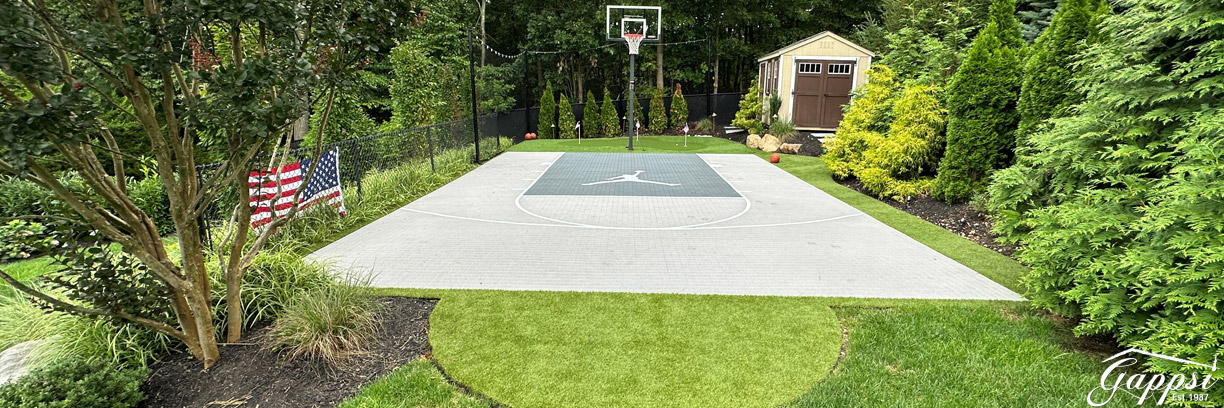
Our team installed an indoor bocce ball sports game court in Murray Hill, Manhattan, NY, in our latest project. The indoor use sports game court is in the Mr B Bar.

The Benefits of an Indoor Bocce Ball Sports Game Court for a Bar

Bars constantly seek new ways to attract patrons, enhance customer experience, and encourage repeat business. While traditional elements like great food, drinks, and music play an essential role, adding interactive entertainment options can significantly boost a bar’s appeal. One popular trend is incorporating an indoor bocce ball sports game court. This classic and engaging game can transform a bar’s ambiance, draw diverse crowds, and contribute to increased revenue. Below, we explore the many benefits of adding an indoor bocce ball court to a bar.

1. Unique Entertainment Offering

Many bars offer pool tables, darts, and shuffleboard, but few have an indoor bocce ball sports game court. This distinct attraction sets a bar apart from the competition, offering customers a unique experience that they won’t find at every other venue. Bocce ball is easy to learn, requires minimal athletic ability, and is an inclusive game that appeals to all age groups. It gives patrons a reason to choose your bar over others in the area.

indoor-bocce-ball-sports-game-court2. Encourages Social Interaction

Bocce ball is a highly social game that encourages group participation. Unlike games requiring a high skill level or one-on-one competition, bocce ball allows for casual, friendly matches between friends, coworkers, and strangers. This fosters a lively and welcoming environment, encouraging customers to stay longer, order more drinks, and return with larger groups in the future.

3. Boosts Customer Retention and Repeat Business

Bars thrive on repeat business, and providing a fun, engaging activity increases patrons’ likelihood of returning. An indoor bocce ball court creates an additional reason for customers to visit regularly, whether to practice their skills, challenge friends or participate in organized tournaments. Bocce leagues and special bocce nights can build a loyal customer base that returns weekly, creating a sense of community around your bar.

4. Increases Revenue Per Visit

Interactive games encourage patrons to stay longer, increasing food and beverage sales. Unlike passive entertainment, such as watching sports on TV, bocce ball keeps customers engaged and in the establishment for extended periods. The longer they stay, the more drinks they order, and the more revenue your bar generates.

Additionally, bocce ball tournaments and leagues provide an opportunity for entry fees, sponsorship deals, and special promotions, further increasing your bottom line. Hosting themed events, corporate outings, or private bocce parties can also lead to lucrative opportunities for additional revenue streams.

5. Space-efficient and Customizable

One advantage of an indoor bocce ball court is its flexibility in design and space requirements. Unlike bowling alleys or large-scale gaming areas, bocce ball courts can be customized to fit various spaces within a bar. Whether a venue has an open floor plan, an unused corner, or a dedicated game room, an indoor bocce ball court can be tailored to fit the available area without disrupting the overall flow of the establishment.

Additionally, the bocce court’s design can complement the bar’s aesthetic, whether rustic, industrial, modern, or vintage. Stylish flooring, LED lighting, and branding elements can create a visually appealing and immersive customer experience.

6. Year-Round Playability

Unlike outdoor bocce sports game courts, an indoor bocce ball court allows for year-round play, regardless of weather conditions. This ensures the game remains attractive even during colder months, rainy seasons, or extreme heat. An indoor court eliminates seasonal limitations and provides consistent customer entertainment throughout the year.

7. Appeals to a Wide Demographic

Bocce ball is a game that transcends age groups and skill levels. Unlike high-energy sports that may only attract a younger crowd, bocce ball is enjoyed by people of all ages, from young adults looking for a fun night out to older patrons seeking a relaxed social activity. This broad appeal means a bar can attract a diverse customer base, from millennials looking for a trendy game night to retirees who appreciate the nostalgia of a classic pastime.
indoor-bocce-ball-sports-game-court18. Encourages Group Outings and Special Events

An indoor bocce ball court makes a bar ideal for group outings, corporate team-building events, birthday parties, and other special occasions. Many companies and social groups look for unique venues to host gatherings, and having a bocce ball court can make a bar stand out as a top choice. Offering bocce party packages with food and drink specials can further enhance revenue while creating a fun and memorable experience for guests.

9. Enhances Marketing and Branding Opportunities

Incorporating a bocce ball court into a bar opens various marketing and branding opportunities. Social media engagement can be amplified through photo opportunities, live-streamed matches, and hashtag campaigns. Bars can create their bocce leagues with branded merchandise, further promoting their establishment through T-shirts, hats, and custom bocce balls.

Additionally, partnering with local businesses or beverage brands for sponsored tournaments can increase revenue and brand visibility. A bocce court also presents opportunities for influencer collaborations and media coverage, further boosting the bar’s reputation and reach.

10. Low Maintenance and Long-Term Value

Unlike electronic gaming systems that require regular updates or mechanical games that can break down, bocce ball courts have relatively low maintenance costs. A well-constructed bocce court with quality materials requires minimal upkeep, making it a long-term investment with continuous returns. Regular sweeping and occasional resurfacing keep the court in prime condition, ensuring patrons a consistent and enjoyable experience.

Let Gappsi Install Your Bocce Ball Sports Game Court Today!

An indoor bocce ball sports game court is more than just an entertainment feature—it’s a strategic investment that enhances a bar’s appeal, encourages social interaction, and drives revenue growth. By offering a unique, interactive experience, bars can differentiate themselves from competitors, attract a broad demographic, and foster customer loyalty. With the added benefits of space efficiency, low maintenance, and year-round playability, a bocce ball court is a valuable asset for any bar looking to elevate its atmosphere and business success.

An indoor bocce ball court is a winning addition to bars that seek innovation and a dynamic social environment. It delivers entertainment and profitability.

Bocce Court Construction in Manhattan, NY

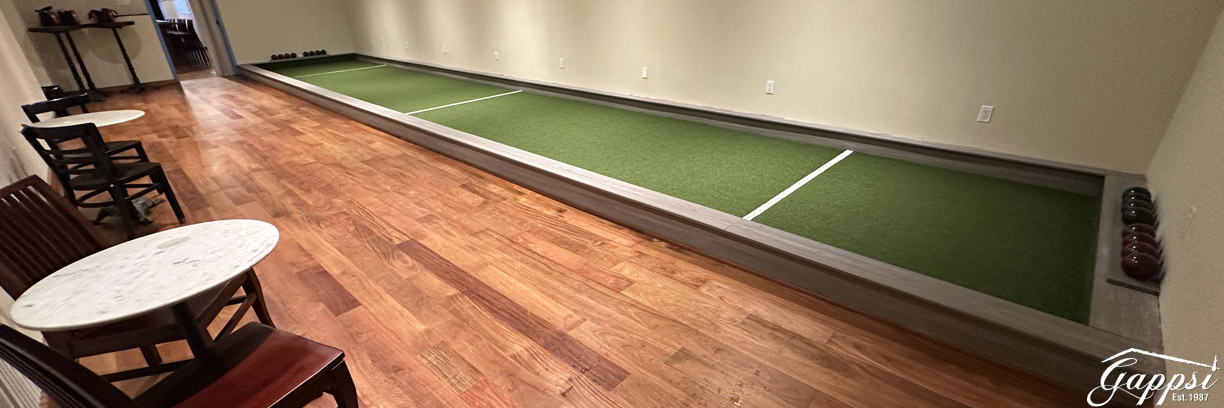
We installed this bocce court in Murray Hill, Manhattan, NY. The bar’s name is Mr. B Bar, and it is for indoor use in a bar. We installed synthetic turf against the back and the front wall—the ball asset on a custom-cut wood. For the holder, we painted regulations lines over the artificial turf installed over a set leveling base with foam. As you can see, the ball bounces back from the wall without making too much noise. The walls of the bocce court are built out of synthetic wood. This is the latest sports game court, a bocce game court built in Manhattan, NY, by Gappsi.
SCHEDULE A MEETING TODAY WITH GAPPSI

Share this page:

Basketball Court Installation Near Me? Read This First

That unused patch of grass or old, cracked concrete pad in your yard holds so much potential. Instead of being an eyesore or a maintenance chore, it can be transformed into a high-performance sports game court for the whole family. As we did for a recent client in Smithtown, renovating an old surface can breathe new life into your outdoor space. The key is expert preparation, from leveling the ground to ensuring proper drainage. When you start looking for a “basketball court installation near me,” you need a team that understands the foundation is just as important as the playing surface. Here, we’ll cover the entire process, showing you how to turn a forgotten space into your family’s favorite destination.

https://youtu.be/yht4W_U37VY

View Gappsi’s YouTube Channel for Videos on Backyard Basketball Court Renovation in Smithtown, Long Island, NY

Does your backyard basketball court need renovation?  We build more than backyard sports game courts. We Build Memories!  If our customers can dream it, we can design and install it. We cater to homeowners, condominiums/HOAS, schools, camps, country clubs, gyms, recreation centers, real estate developers, and area businesses.  We design and build incredibly customized courts such as basketball, tennis, pickleball, and golf for residential and commercial use. Our personalized sports projects range from purchasing and installing basketball hoops and other sports equipment and accessories to full-court sports facilities encompassing single and multi-court offerings. Additionally, we offer our customers personalized court painting and court maintenance services, including patches and repairs.

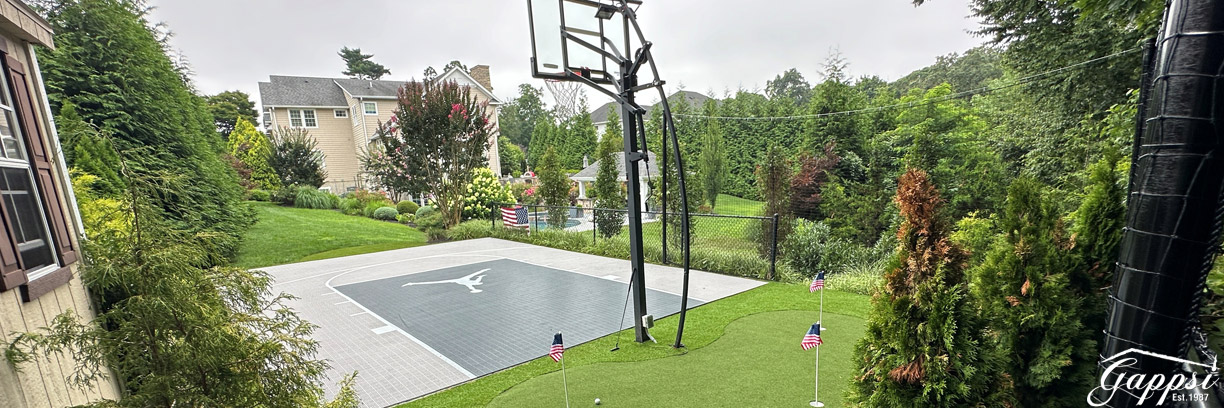
backyard-basketball-court-renovation-smithtown-nyIn our recent backyard basketball court renovation project in Smithtown, NY, we installed a MateFlex basketball court over an asphalt base. The basketball court was an existing asphalt court that needed many repairs. We re-leveled all the sunk and cracked areas using Patch Bond.  Patch bond for asphalt repair holes, cracks, and ruts in asphalt or concrete surfaces.
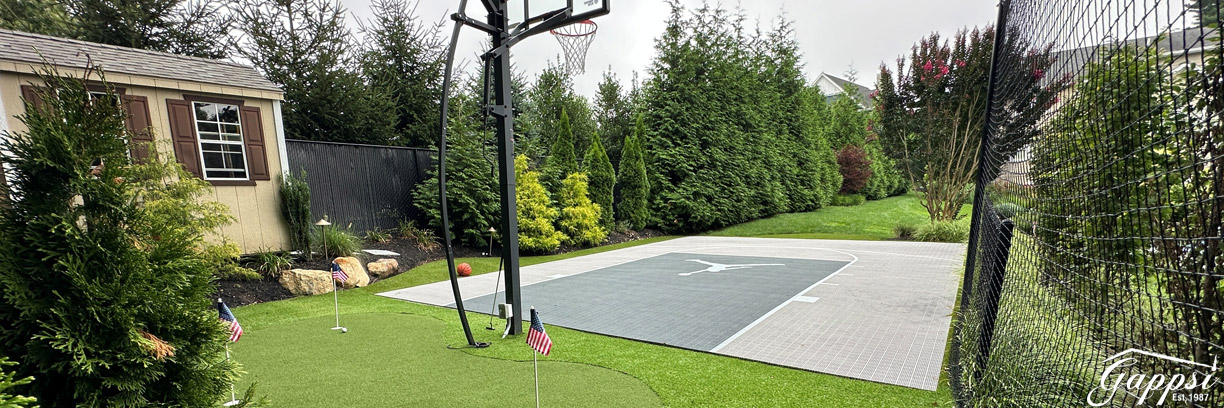
The entire basketball sports game court floor was rel-leveled and then Mateflex tiles were installed. Mateflex tiles are famous for sports flooring because they are durable, comfortable, and versatile. They are a superior choice among other sports game court tile options.

Planning Your Backyard Basketball Court

Adding a basketball court to your backyard is an exciting project, but it requires careful planning before you can break ground. Thinking through the key details first ensures the process goes smoothly and the final result meets your expectations. From securing the right permits to choosing the perfect spot in your yard, each step is crucial for building a court that your family will enjoy for years. This initial phase is all about laying the groundwork, both literally and figuratively, for a successful installation. It involves understanding local rules, evaluating your space, and making smart decisions that will impact the entire project.

Navigating Permits and Local Regulations

Before you get too far into the design, it’s essential to understand the local regulations in your area. Most significant backyard projects require permits, and a basketball court is no exception. According to My Backyard Sports, “If you’re building something with a solid base, like a tennis court or basketball court, you will almost always need a building permit.” This is especially true on Long Island, where different towns have their own specific requirements. The permit process is in place to ensure your project is safe, structurally sound, and compliant with local zoning laws, so it’s a step you can’t afford to skip.

The Permit Application Process

The permit application process typically involves submitting detailed plans of your proposed court to your local building department. These plans need to show the court’s dimensions, location on your property, materials used, and information about drainage and foundation. For larger projects, you will likely need permits to ensure everything is up to code. This might sound intimidating, but it’s a standard part of any major home improvement project. It’s the official way to get approval for your build and ensures that your new court is a legitimate and safe addition to your home.

Why Starting Work Without a Permit is a Costly Mistake

It might be tempting to start construction without waiting for a permit, but this can lead to serious problems. Building without a permit is against the rules and can result in significant fines, with My Backyard Sports noting they can range from $250 to $2,000. Beyond the financial penalty, the town could issue a stop-work order, forcing you to halt construction until the proper paperwork is filed. In the worst-case scenario, you might even be required to tear down what you’ve already built. It also creates potential issues when you decide to sell your home in the future.

How Professional Court Builders Simplify the Process

This is where hiring a professional team makes a world of difference. An experienced contractor can manage the entire permit process for you, saving you time and preventing costly errors. A company like Gappsi, which has been designing and building sports games courts across Long Island since 1987, has a deep understanding of the local codes in Nassau and Suffolk counties. Professionals handle the paperwork and ensure your project complies with all regulations, allowing you to focus on the exciting parts of designing your court without the headache of administrative hurdles.

Site Selection and Size Considerations

Choosing the right location for your court is just as important as the materials you use. The ideal spot should be on relatively level ground to minimize the need for extensive excavation and grading. You also need to consider drainage to prevent water from pooling on the surface. Think about the court’s proximity to your home and property lines, as well as any potential noise impact on your neighbors. The size of your court will largely depend on the available space. You could opt for a simple free-throw lane and hoop, a 30×30 foot half-court, or go even larger if your yard allows.

Budgeting for Your Basketball Court Installation

Understanding the costs involved is a critical part of planning your backyard basketball court. The total investment can vary widely based on the court’s size, materials, and the amount of site preparation required. It’s helpful to break down the budget into key components: the court surface, the hoop and its installation, and any “hidden” costs like excavation or landscaping. By looking at each element separately, you can create a more accurate budget and make informed decisions that align with your financial plans. This approach helps prevent surprises and ensures you can afford the court you’re dreaming of.

Understanding Full Court Costs

The price of a full basketball court depends on many factors, including whether it’s built indoors or outdoors and the type of surface you choose. While most homeowners focus on outdoor courts, it’s useful to know the cost spectrum. An outdoor court is generally more affordable, but the final price tag will be influenced by the size and materials. A larger court requires more materials and labor, naturally increasing the cost. Thinking about these variables early on will help you set a realistic budget for the project from the very beginning.

Indoor vs. Outdoor Court Pricing

There is a significant price difference between indoor and outdoor courts. According to Junckers Hardwood, “A new indoor basketball court can cost anywhere from $10,000 to $150,000.” This higher cost is due to the need for a structure to house the court, as well as climate control and specialized flooring like hardwood. For homeowners considering a major renovation, incorporating an indoor court could be part of a larger home remodeling project. However, an outdoor court remains the more common and budget-friendly choice for a residential backyard setting.

Cost Per Square Foot

To get a clearer picture of your budget, it helps to think in terms of cost per square foot. For the court surface itself, Junckers Hardwood estimates that “on average, the installed cost is $8 to $19 per square foot.” This range typically covers the surface material and the labor to install it. Keep in mind that this figure doesn’t usually include the cost of the concrete or asphalt base, the basketball hoop, or any necessary site preparation. It’s a good starting point for estimating the bulk of your court’s expense.

Hoop Installation and Component Costs

The basketball hoop is a separate but essential component of your court’s total cost. The price can vary dramatically depending on the quality and type of hoop you select. According to Assembly Smart, the equipment for in-ground hoops can range from $400 to over $2,000. Professional installation is highly recommended for safety and stability, which can add another $1,626 to $2,581 or more to the cost. Investing in a high-quality, professionally installed hoop ensures it can withstand aggressive play and the elements for years to come, making it a worthwhile part of your budget.

Factoring in Hidden Costs and Site Preparation

Some of the most important costs are the ones you don’t see in the finished product. Site preparation is a perfect example. As noted by Assembly Smart, “If your yard isn’t flat, you might need to pay for landscaping, removing rocks, or leveling the ground.” This can add hundreds or thousands to your budget. Before any digging begins, you must also check for buried utility lines, which is a small but critical expense. A full-service company like Gappsi can manage all aspects of site preparation, from excavation to grading, ensuring a solid foundation for your court.

Budgeting Tips and Financing Options

There are a few ways to be strategic with your budget. Assembly Smart suggests that you can “try to schedule installation in fall or winter,” as contractors may be less busy and offer more competitive pricing. For a large-scale project like a full court, it’s also worth looking into financing. Since a well-built basketball court can increase your property’s value, a home improvement loan can be a sensible way to fund the investment. This approach allows you to build the court you want now while paying for it over time.

Designing Your Court: Materials and Features

Once you have a plan and a budget, it’s time for the most creative part: designing your court. The materials you choose will have the biggest impact on your court’s performance, appearance, and longevity. From the playing surface to the substructure it rests on, every choice matters. Do you want a surface that offers excellent traction and shock absorption, or is a more traditional look your priority? This is your chance to customize the court to fit your playing style and aesthetic preferences, creating a space that is uniquely yours.

Choosing the Right Surface

The playing surface is the heart of your basketball court. For outdoor courts, modular tiles like Mateflex have become a very popular choice. As we saw in our recent Smithtown project, these tiles are known for being durable, comfortable, and versatile. They provide excellent ball response and traction while also being easier on your joints than traditional concrete or asphalt. The interlocking design also allows for great drainage, so your court dries quickly after it rains. These tiles come in various colors, allowing you to create custom designs, logos, and game lines for a truly personalized court.

Hardwood and Other Indoor Surfaces

When you think of a classic basketball court, you probably picture polished hardwood. Maple hardwood is the gold standard for indoor courts, including those used by the NBA, because of its hardness, durability, and light color. It provides a consistent and high-performance surface for serious play. However, hardwood is not suitable for outdoor use as it cannot withstand moisture and temperature fluctuations. For homeowners building an indoor gym, hardwood is the premium choice, but other synthetic options can also provide excellent performance for multi-sport indoor spaces.

The Importance of a Quality Substructure

Beneath every great court is an even greater foundation. A solid substructure is essential for the longevity and performance of your basketball court. This base, typically made of reinforced concrete or asphalt, provides the stable, level surface needed to support the playing tiles or coating. Without a properly constructed base, your court is at risk of cracking, shifting, or developing low spots where water can pool. This is why expert masonry and construction work is so critical. A well-built substructure ensures your investment is protected and your court remains playable for decades.

Why Choose Mateflex Sports Game Court Tiles

  • Comfort – Mateflex tiles have a leaf spring design that absorbs impact and reduces stress on joints and muscles. This allows players to play longer and harder with less stress on their legs and knees.
  • Durability – Mateflex tiles are made from high-grade, durable materials that are resistant to wear and tear. They can withstand a sustained load of 16,000 pounds per square foot.
  • Drainage – Mateflex tiles have a rib system that allows superior drainage, so courts can be used quickly after rain.
  • Versatility – Mateflex tiles can be used for indoor or outdoor courts and customized to fit any playing space.
  • Easy to install and maintain – Mateflex tiles are easy to install and maintain.

The basketball hoop was already there. As the customer requested, we added the Jordan logo imprinted onto the tiles.  You can add different colors to Mateflex sport court tiles to create custom patterns or boundaries:

  • Standard colors: Mateflex HomeCourt tiles come in 16 standard colors.
  • Custom logos and designs: You can paint custom logos and designs directly onto the tiles.
  • Multiple colors: You can select multiple colors to create custom patterns or boundaries.
  • Game lines: You can mask out game lines with tape, then apply a specialized primer and polyurethane paint.

backyard-basketball-court-renovation-smithtown-ny1Synthetic Turf and Putting Green

Behind the basketball hoop, there was an unused area. It used to be a big mulch bed that the customer had to take care of. We turned it into a small putting green area, and the client loved this idea.  We installed synthetic turf with a putting green, including three American flags and cups.

With a putting green composed of artificial grass, you can enjoy golfing with your family every day of the week.  If you’re an avid golfer or just considering adding a fun outdoor activity to your home, give Gappsi a call today!  With artificial turf instead of natural grass, the putting green is the exact right height and beautifully green every day of the year.

Putting Green Turf Terminology

To know what you are shopping for, spend the time to become acquainted with the specifications and terms used by the artificial turf industry.  Once you understand what each item means, you can hone in on which products would or wouldn’t work for your backyard putting green.  Even though there’s a bit of variety to artificial grass products, there’s not much variety in the base materials they’re made of.  There are three options:

  1. Polyethylene
  2. Polypropylene
  3. Nylon

Polyethylene is mainly used in the turf’s backing, not the yarn fibers. Fake grass for putting greens is usually made from polypropylene or nylon, and each has distinct advantages.  Nylon is the more durable (and more expensive) of the two.  Most of the best-putting green turf products will have nylon fibers.  Polypropylene more closely approximates the look and feel of real grass, though it’s more prone to matting and ruts than nylon is.

The silica sand infill absorbs some of the ball’s bounce, like soil.  Turf infill is those tiny bits of material sprinkling between the artificial grass blades. For example, if the edges are similar to blades of grass, then infill is the dirt for the turf. Adding silica sand infill helps your faux grass blades stand up and keep their real look in high-traffic areas. The silica sand infill also gives you the feel of walking on real grass by emulating the impact absorption qualities of soil. It helps weigh down the imitation turf and helps keep the artificial grass from getting wrinkles or ripples caused by movement. We add Microban, too.  Microban is an antimicrobial product that helps prevent the growth of mold and mildew. It’s non-toxic, so it’s also safe for kids and pets.

Synthetic Turf Grass Fringe

We used synthetic turf to frame the court and putting green area as a fringe. A fringe is a section of the fairway, sometimes called the “apron.” This apron connects the green and the fairway. Based on the design, synthetic turf fringe can be several feet wide and as narrow as six inches. Do you need it? I would say yes unless you want the ball to roll off the green.

We created a little sitting area on the opposite side with synthetic turf and installed out-of-bounce netting to prevent the basketball from entering the woods.

The clients are pleased. They made a lot of use of their minor sports game court. This is the latest sports game court built by Gappsi in Smithtown, NY.

Essential Features and Add-Ons

Once you have the core components of your basketball court decided, like the surface and the hoop, it’s time to think about the features that will take it to the next level. These add-ons are what transform a standard playing surface into a fully functional and personalized space that reflects your style and meets your family’s needs. Think of it as the difference between a basic court and a premier athletic facility right in your backyard. Features can range from purely aesthetic touches, like adding a custom logo to your Mateflex tiles, to highly practical additions that improve safety and extend your playing time. These details are where you can truly make the court your own.

Planning for these elements from the beginning ensures they are integrated seamlessly into the final design. Essential add-ons focus on three key areas: safety, usability, and neighborhood harmony. For instance, proper containment netting keeps the ball in play and out of your garden beds, while strategic lighting means a game of HORSE doesn’t have to end just because the sun goes down. A professional design and build team, like our experts at Gappsi, can walk you through all the available options, helping you select the features that will provide the most value and enjoyment for your investment. By considering these elements, you create a comprehensive outdoor entertainment area that is safe, versatile, and ready for action anytime.

Wall Padding, Soundproofing, and Lighting

Three of the most impactful add-ons for any backyard court are wall padding, soundproofing, and lighting. Wall padding is a critical safety feature, especially for courts built near retaining walls, fences, or the side of a garage. It provides a cushioned barrier that helps prevent injuries during fast-paced games. Soundproofing is another important consideration, particularly for maintaining peace in your neighborhood. While not completely silent, options like sound-dampening fence panels or even thoughtful landscaping can reduce the noise from bouncing balls. Finally, lighting is what truly maximizes your court’s potential. Professionally installed lighting extends your playing hours well into the evening, ensuring visibility and safety for every shot and pivot. These features are key to creating professional-grade sports game courts that are as safe and considerate as they are fun.

The Installation Process: DIY vs. Hiring a Professional

Once you decide to add a basketball court to your backyard, the next big question is how to get it built. You’re essentially facing two paths: tackling it as a do-it-yourself project or hiring a professional contractor. The DIY route can seem tempting, especially if you’re handy and looking to save on labor costs. Modern materials, like Mateflex tiles, are often designed for straightforward installation, which can make the project feel more approachable. However, it’s crucial to look past the surface-level tasks. A truly durable and safe court requires a perfectly prepared and level base, which is a significant construction project in itself. Any mistakes made during this foundational stage can lead to bigger, more expensive problems down the road, turning your cost-saving project into a costly repair job.

On the other hand, bringing in a professional team removes the guesswork and ensures the job is done right from the start. Experienced contractors have the expertise to handle every aspect of the installation, from site evaluation and preparation to the final touches. They understand the nuances of proper drainage, base construction, and material performance. As professionals, we believe that if our customers can dream it, we can design and install it. This means you get a fully customized court that fits your space and style without having to manage the complexities of construction yourself. A professional build is an investment in quality, longevity, and peace of mind, ensuring your court is ready for play for years to come.

The DIY Approach: Pros and Cons

The biggest draw of a DIY basketball court installation is, without a doubt, the potential for cost savings. By cutting out labor expenses, you can allocate more of your budget toward materials or other backyard features. For those who enjoy hands-on projects, building your own court can also be a rewarding experience. Materials like Mateflex tiles are marketed as being “easy to install and maintain,” which can give you the confidence to get started. However, the “easy” part usually refers to clicking the tiles together. The real challenge lies beneath the surface. Creating a stable, level base, whether from concrete or compacted asphalt, requires precision, the right equipment, and a deep understanding of site preparation, which most weekend warriors simply don’t have.

The cons of a DIY approach can quickly outweigh the pros if you’re not careful. An improperly prepared base can lead to an uneven playing surface, poor drainage, and premature cracking or shifting. These issues not only create a safety hazard but can also damage the court tiles themselves. What starts as a way to save money can quickly become a financial headache when you have to pay a professional to come in and fix the mistakes. Before you commit to a DIY build, be honest about your skill level, the tools you have available, and the time you can dedicate to the project. For many, the risk of a costly error isn’t worth the initial savings.

Working With Professional Basketball Court Contractors

When you choose to work with professional basketball court contractors, you’re investing in expertise and a seamless experience. Professionals bring a level of knowledge that ensures every detail is handled correctly, from navigating local building codes to selecting the ideal location in your yard for optimal drainage and usability. At Gappsi, we have experience working with a wide range of clients, as we “cater to homeowners, condominiums/HOAs, schools, camps, country clubs, gyms, recreation centers, real estate developers, and area businesses.” This breadth of experience means we’ve encountered and solved nearly every challenge imaginable, so your project is in safe hands.

Beyond technical skill, hiring a professional opens up a world of customization. We work with you to create a court that is uniquely yours, whether it’s a specific color scheme, custom logos, or a multi-sport layout that includes pickleball or other games. The process is collaborative; we listen to your vision and then use our expertise to bring it to life. Instead of spending your weekends wrestling with heavy equipment and complex instructions, you can relax and watch as your dream backyard takes shape. A professional handles the stress so you can focus on the fun part: planning that first game on your brand-new court.

The Gappsi Approach to Design and Construction

At Gappsi, we combine high-quality materials with expert craftsmanship to deliver exceptional results. We see every project as a unique opportunity to transform a space. For example, “in our recent backyard basketball court renovation project in Smithtown, NY, we installed a MateFlex basketball court over an asphalt base.” The existing court was in rough shape, with numerous cracks and sunken areas. A DIY approach would have struggled to address these underlying issues, but our team was equipped for the challenge. We meticulously repaired and prepared the foundation before laying a single tile, ensuring a flawless and durable final product.

Our process begins with a thorough assessment of the existing site. For the Smithtown project, “we re-leveled all the sunk and cracked areas using Patch Bond,” a specialized material designed for repairing asphalt and concrete. This critical step ensures the new surface is perfectly flat and stable, which is essential for both player safety and the longevity of the court. By addressing the root problems instead of just covering them up, we guarantee a court that not only looks fantastic but also performs beautifully for years. This commitment to quality is what defines the Gappsi approach to designing and building sports game courts.

Long-Term Care for Your Court

Building your backyard basketball court is just the beginning of the journey. To keep it looking and playing its best for years, a little long-term care is essential. The good news is that modern court materials, especially high-quality tiles, are designed for durability and low maintenance. Regular sweeping to remove leaves, dirt, and other debris is often all that’s needed to keep the surface clean. Occasionally, you might want to rinse the court with a hose to wash away dust or pollen. It’s also a good practice to periodically inspect the surface for any issues, such as shifting tiles or damage to the hoop and net, so you can address them before they become bigger problems.

While daily maintenance is simple, professional support can be invaluable for ensuring the longevity of your investment. At Gappsi, “we offer our customers personalized court painting and court maintenance services, including patches and repairs.” Having a trusted partner to call for periodic check-ups or to handle more significant repairs gives you peace of mind. Proper care not only preserves the appearance of your court but also maintains its safety features. For instance, the “leaf spring design” of Mateflex tiles, which “absorbs impact and reduces stress on joints and muscles,” works best when the underlying surface is stable and the tiles are in good condition. Consistent care ensures your court remains a safe and enjoyable place for your family to play.

Basketball Court Painting and Customization

One of the most exciting parts of designing a basketball court is making it your own. Customization transforms a standard playing surface into a personalized centerpiece of your backyard. With modern tile systems, the possibilities are vast. For example, “Mateflex HomeCourt tiles come in 16 standard colors,” allowing you to create a unique color combination that matches your home, favorite team, or personal style. You can design anything from a classic two-tone look to a vibrant, multi-colored court that makes a bold statement. The game lines for basketball, and even other sports like pickleball, can be integrated directly into the design for a clean, professional look.

Beyond color choices, you can take personalization a step further with custom graphics. “You can paint custom logos and designs directly onto the tiles,” which is a fantastic way to add a personal touch. Whether it’s a family crest, your initials, or the logo of your favorite NBA team, a custom graphic makes the court uniquely yours. While this is something you can attempt yourself, hiring a professional for court painting ensures a crisp, durable, and perfectly scaled design. A pro will use specialized primers and paints that adhere properly to the tile surface, so your custom logo will withstand intense gameplay and harsh weather without chipping or fading.

Common Hoop and Surface Repairs

Even the most well-built basketball court will experience some wear and tear over time. Being prepared for common repairs is key to maintaining a safe and playable surface. For courts with an asphalt or concrete base, cracks and holes can develop due to weather and ground movement. It’s important to address these issues promptly to prevent them from worsening. A product like “Patch bond for asphalt repair holes, cracks, and ruts in asphalt or concrete surfaces” is an effective solution. Applying this can fill in damage and restore a level, stable foundation for your court tiles, preventing tripping hazards and ensuring proper drainage.

Beyond the base, the hoop and the court tiles themselves may need attention. Regularly check that the hoop is secure and that the net is in good condition. If a court tile becomes damaged, one of the major advantages of a modular system is that you can typically pop out the single broken tile and replace it without having to redo the entire surface. For more extensive maintenance, like deep cleaning or resealing, it’s often best to call in the experts. Professional restoration and sealing services can revitalize your court, protect it from the elements, and extend its life for many more seasons of play.

SCHEDULE A MEETING TODAY WITH GAPPSI

backyard-basketball-court-renovation-smithtown-ny2

Frequently Asked Questions

How long does it take to build a backyard basketball court? The timeline can vary quite a bit depending on the project’s complexity and the local permit process. Securing permits can sometimes take the longest, but working with an experienced team helps streamline this step. Once the groundwork begins, the actual construction, from site preparation to laying the final tiles, is a relatively efficient process. A professional crew can often complete the installation in a matter of weeks, getting you on the court much faster than you might think.

My old concrete court is a mess. Can you really just put new tiles over it? This is a great question, and the answer is yes, but with a critical first step. We don’t just cover up the problems. As we did for the Smithtown project, the key is to completely repair and re-level the existing base. We use professional-grade materials to fill cracks and fix uneven spots, creating a perfectly smooth and stable foundation. Only then do we install the new sports game court tiles, ensuring your new court is safe, durable, and performs beautifully.

How much space do I really need for a court? You might be surprised by how little space you need to create a fun and functional playing area. While a full-sized court is a dream, it’s not a requirement. Many homeowners opt for a half-court, which is typically around 30×50 feet, or even a smaller custom size to fit their yard. You can also create a great practice space with just a free-throw lane and a high-quality hoop. We can design a court that makes the most of whatever space you have available.

Are the tile surfaces like Mateflex slippery when they get wet after it rains? Safety is a top priority, and these tiles are designed with that in mind. Mateflex tiles have a special open-rib design that allows water to drain right through them, so the surface dries much faster than solid concrete or asphalt. This means less time waiting after a rainstorm and a reduced risk of slipping on puddles. The surface itself also provides excellent traction for secure footing during play.

Can I use these sports game courts for anything besides basketball? Absolutely. That’s one of the best parts about a modular tile court. We can easily incorporate the lines for other sports right into the design. Pickleball is an incredibly popular option, but you can also add lines for volleyball or badminton. The space also works perfectly as a general-purpose play area for kids. It transforms a single-use court into a versatile hub for all kinds of family activities.

Key Takeaways

  • Proper Planning is Non-Negotiable: Before any work begins, you must secure the correct local permits and choose a suitable, level spot in your yard. A professional handles this complex paperwork and site analysis, preventing costly fines and ensuring your project starts on the right foot.
  • The Foundation Determines Performance: A high-quality sports game court relies entirely on its substructure. Investing in expert site preparation for a solid concrete or asphalt base is the key to a level, safe playing surface that will not crack or shift over time.
  • Professional Installation Guarantees Quality: Hiring an experienced team is an investment in a stress-free process and a superior outcome. Professionals manage the entire project, offer full customization with high-grade materials, and deliver a durable, personalized court that is ready for play.

Related Articles

Share this page: