


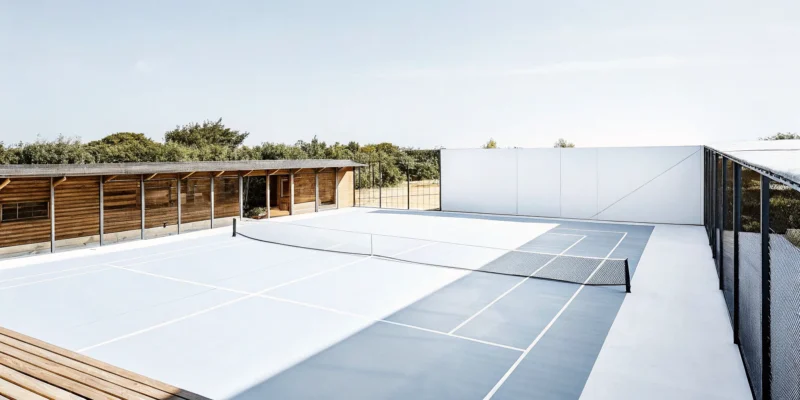
Building in the Hamptons comes with its own unique set of considerations. The coastal environment, local aesthetics, and specific town regulations all play a role in how a project should be designed and constructed. A sports court is no exception. You need a surface that can withstand the salt air and a design that complements your home’s architecture and landscape. This requires more than just general construction knowledge; it demands local expertise. That’s why choosing a Hamptons Long Island new york sports courts builder company with deep roots in the community is so critical to the success and longevity of your project. They understand the nuances of building here, ensuring a seamless process and a beautiful, lasting result.
Key Takeaways
- Choose the right game for your family: The best sports court is one that fits your family’s interests, whether you prefer a classic tennis court, a trendy pickleball court, or a versatile multi-sport surface that offers something for everyone.
- Prioritize materials and craftsmanship: A court’s durability comes from high-quality materials and expert installation. Vet your builder by reviewing their portfolio, checking their credentials, and asking about the specific surfaces and construction methods they use.
- Understand the process from start to finish: A professional team will guide you through every step, including the initial design, permit handling, and construction. Ask about the project timeline and financing options early on to ensure a smooth and predictable experience.
What Are Your Sports Court Options in the Hamptons?
Adding a sports court to your Hamptons home is about more than just having a place to play; it’s about creating a hub for family, friends, and fitness right in your backyard. Imagine stepping outside for a morning tennis match, watching the kids play a game of basketball after school, or hosting a lively pickleball tournament during a summer barbecue. The right court becomes a natural extension of your home, a place where memories are made and a healthy, active lifestyle is easy to maintain.
Choosing the perfect court depends entirely on how you and your family love to spend your time. You might be drawn to the timeless tradition of a tennis court or the fast-paced fun of basketball. Or perhaps you’re looking for something that everyone can enjoy together, like a versatile multi-sport court that adapts to any game you can think of. Gappsi offers a complete range of turf and game courts designed to fit your space and your passions. From classic games to more leisurely pursuits like bocce ball, you can design a recreational space that perfectly complements your property and provides endless hours of enjoyment for years to come.
Tennis Courts
A private tennis court is a classic and elegant addition to any Hamptons estate. It offers the ultimate convenience for enthusiasts who want to practice their serve or play a match without having to book a time at a local club. Tennis courts are a fantastic way to stay fit and are a beautiful feature that can enhance your property’s landscape. High-quality court construction ensures a professional-grade playing surface that stands up to the elements, providing a consistent and reliable game experience. Whether you’re a seasoned player or just starting, having a dedicated space for tennis encourages you to get outside and enjoy the sport you love, right at home.
Basketball Courts
For a high-energy addition that the whole family will love, a basketball court is an unbeatable choice. It’s a place where kids can burn off energy, practice their skills, and have friends over for a friendly game. You don’t need a massive yard to make it happen; even a well-designed half-court can become the go-to spot for after-school fun and weekend activity. Professional installation ensures the surface is safe, durable, and provides the right amount of grip and bounce for an authentic playing experience. A basketball court quickly becomes the heart of the backyard, a social hub for all ages to enjoy.
Pickleball Courts
It’s no secret that pickleball has become incredibly popular, and for good reason. This fun, social sport is easy for beginners to learn but can be fast-paced and competitive for experienced players. Because a pickleball court is smaller than a tennis court, it’s a fantastic option for properties where space is a consideration. It’s a wonderful multi-generational activity, making it perfect for family gatherings. Building a dedicated pickleball court ensures you have the correct dimensions and a professional-grade surface, so you can fully enjoy one of the fastest-growing sports in the country with friends and family.
Multi-Sport Courts
If your family has a wide range of athletic interests, a multi-sport court is the perfect solution. Why choose just one game when you can have them all? These incredibly versatile sports game courts can be designed to accommodate everything from basketball and pickleball to volleyball, badminton, and even roller hockey. By using different colored lines and adjustable equipment, you can switch from one activity to another in minutes. A multi-sport court is a smart, space-efficient investment that provides endless entertainment options, ensuring there’s always something fun for everyone to do right in your own backyard.
Beyond the Basics: Specialty and Recreational Courts
Your backyard entertainment doesn’t have to be limited to high-impact sports. Sometimes, the best moments come from more leisurely activities. Specialty courts for games like bocce ball or shuffleboard can create a relaxed, sophisticated atmosphere perfect for entertaining guests or enjoying a quiet afternoon. These games are accessible to all ages and skill levels, making them a wonderful addition to any family’s outdoor living space. Gappsi can design and build beautiful, low-maintenance courts for these classic games, offering everything from basic setups to deluxe options that integrate seamlessly into your landscape design.
What Makes a Great Sports Court? Materials and Features to Look For
A sports court is more than just a slab of concrete with lines painted on it. The best courts are carefully engineered spaces designed for performance, safety, and longevity. When you’re planning your backyard court, the materials you choose will have the biggest impact on how it plays and how long it lasts. From the foundation under the surface to the type of fencing around the perimeter, every detail matters.
Think about what you want from your court. Are you training a future tennis star who needs a professional-grade surface? Or are you looking for a versatile multi-sport court for family fun? The answers will guide your material choices. A great court starts with a solid base, typically concrete or asphalt, to ensure a perfectly level playing field. From there, you can select a surface tailored to your favorite sports, whether it’s cushioned acrylic for tennis or interlocking tiles for basketball and pickleball. At Gappsi, we help you explore all the options, from synthetic turf to classic pavers, to create a court that fits your home and your lifestyle.
The Right Surface for Your Game
The foundation of any great sports court is, quite literally, its foundation. Every court needs a strong, level base, and concrete or asphalt are the most common choices for ensuring stability. On top of that base goes the playing surface, which is where you can really customize for your sport. For tennis enthusiasts, a surface like DecoTurf, famously used at the U.S. Open, provides the consistent ball bounce and speed serious players expect. For basketball or pickleball, you might prefer a surface with a bit more grip and shock absorption to protect your joints during fast-paced games. The right surface makes the game safer, more enjoyable, and even helps you play better.
All-Weather Play: Drainage and Protection
Here in the Hamptons, we know the weather can be unpredictable. A great sports court is one you can use for as much of the year as possible, not just on perfectly sunny days. This is where all-weather features come in. Proper drainage is essential to prevent water from pooling on the surface after it rains, which can be a safety hazard and cause damage over time. Some modern materials, like modular court tiles, are designed with tiny gaps that allow water to drain right through, so the court dries quickly. UV-resistant coatings are also important for protecting the surface from sun damage, preventing colors from fading and the material from becoming brittle.
Modular vs. Traditional: What’s the Difference?
When it comes to court surfaces, you generally have two main paths: traditional or modular. Traditional courts are typically made of asphalt or concrete with an acrylic topcoat. They provide a classic, uniform playing surface with a true ball bounce, which is why they’re a staple for tennis. Modular courts, on the other hand, are built with interlocking tiles made from a durable polymer. These tiles offer more flexibility, are easier to install, and provide excellent drainage. They also have a bit more give, which can be easier on your knees and back. Choosing between them often comes down to your preferred sport, aesthetic, and maintenance goals.
Built to Last: Quality and Durability
A backyard sports court is a significant addition to your home, and you want it to last for decades. Durability comes down to two things: high-quality materials and expert installation. A builder who uses top-tier products, from the sub-base aggregate to the final coat of paint, is setting you up for success. At Gappsi, we use a range of proven materials for our sports and game courts, including Mateflex tiles, synthetic turf, asphalt, and even durable Nicolock Pavers. A company that stands behind its work with a strong warranty is also a good sign. This shows they have confidence in their materials and craftsmanship, giving you peace of mind that your investment is protected.
How Do You Choose the Right Sports Court Builder in the Hamptons?
Finding the right builder is the most important step in bringing your dream sports court to life. The right team will not only deliver a high-quality court but also make the entire process smooth and enjoyable. To make sure you’re partnering with a true professional, focus on a few key areas: their local experience, credentials, materials, and past work. Taking the time to vet your options will pay off for years to come with a court your family will love.
Why Local Experience Matters
A builder with deep roots in the Hamptons brings more to the table than just construction skills. They understand the local landscape, from the soil conditions to the coastal climate, which influences how a court should be built to last. A seasoned local team knows the permitting processes and community standards, ensuring your project moves forward without unnecessary delays. They have established relationships with local suppliers and a reputation to uphold right in your neighborhood. This kind of specialized knowledge is invaluable for a project that’s a permanent addition to your home.
Checking Credentials: Licensing and Insurance
Before you sign any contracts, make sure your builder is fully licensed and insured. This is a fundamental check that protects you as a homeowner. Proper licensing confirms that the builder meets state and local professional standards, while comprehensive insurance covers any potential accidents or property damage during construction. Don’t hesitate to ask for proof of both. A reputable company will be happy to provide their documentation. This simple step gives you peace of mind, knowing you’re working with a legitimate and responsible professional who stands by their work.
Reviewing Their Materials and Methods
The quality of your court comes down to the materials used and the techniques applied. A top-tier builder will offer a range of high-performance surfacing options and explain the benefits of each. For example, Gappsi provides a variety of surfaces for turf and game courts, including specialized tiles, synthetic turf, and classic asphalt. Ask potential builders about their construction methods, drainage solutions, and the materials they recommend for your specific needs. Their answers will reveal their expertise and commitment to building a durable, high-performance court that you can enjoy for years.
Seeing Their Work: Portfolios and Reviews
The best way to gauge a builder’s quality is to see it for yourself. Ask to see a portfolio of their completed projects. This will give you a clear idea of their design style and the quality of their craftsmanship. You can often find project videos and galleries on a builder’s website or social media, like the Gappsi YouTube channel, which showcases real-world examples. Also, take time to read through client testimonials and online reviews. Hearing from past customers provides honest insight into their experience with the company’s professionalism, communication, and final results.
What to Expect During the Sports Court Construction Process
Building a sports court is an exciting project, but it helps to know what’s coming. Understanding the process from start to finish makes everything feel more manageable and lets you focus on the fun part: planning your first game. A professional team will guide you through every stage, but here’s a general roadmap of what the journey looks like.
Step 1: The Consultation and Site Check
Everything begins with a conversation. During an initial consultation, a project manager will visit your home to see the proposed space and discuss your vision. This is your chance to talk about which sports you want to play, your aesthetic preferences, and your budget. The builder will assess the terrain, check for potential drainage issues, and take measurements. This first meeting is all about making sure your ideas are feasible for the space and establishing a clear plan. It’s a collaborative first step to creating the perfect custom game court for your family.
Step 2: Designing Your Court and Handling Permits
Once the site check is complete, the design phase begins. This is where you’ll finalize the details, from the court’s dimensions and orientation to the color scheme and surface materials. At Gappsi, we offer a range of high-performance surfaces, including synthetic turf, classic asphalt, and even elegant Nicolock Pavers for a truly unique look. Your builder will create a detailed design for your approval. They will also handle the logistics of securing any necessary town or village permits, ensuring your project meets all local regulations without you having to deal with the paperwork.
Step 3: The Build: Timeline and Quality Checks
With the design approved and permits in hand, construction can start. This phase typically begins with excavation and site preparation to create a stable foundation. Our masonry experts then construct a solid base, which is critical for the court’s longevity and performance. After the base is set, the chosen surface is installed. Throughout the build, a reputable contractor will provide a clear timeline, maintain a clean and safe worksite, and perform regular quality checks to ensure every detail meets the highest standards.
Step 4: Finishing Touches and Future Care
The final step is all about the details that transform a construction project into a playable court. This includes painting crisp, accurate lines for your chosen sports, installing the net posts and hoops, and adding any other features like fencing or lighting. Once everything is complete, your builder should walk you through the finished court and provide instructions on proper care and maintenance. Understanding how to look after your investment ensures it will provide years of fun. And with services like professional cleaning and sealing, you can keep your court in top condition for years to come.
Financing Your Sports Court Project
A custom sports court is an exciting addition to your home, but it’s also a significant investment. The good news is you don’t have to let the initial cost stand in the way of creating the backyard of your dreams. Many homeowners in the Hamptons use financing to make their projects a reality, spreading the cost over time into manageable monthly payments. This approach allows you to build the high-quality court you want now, rather than waiting or compromising on features like professional-grade surfaces or custom lighting. It turns a large, one-time expense into a predictable part of your monthly budget.
Thinking about financing early in the process helps you set a realistic budget and explore all your options with your builder. A great contractor will not only design and build a fantastic court but also guide you through the financial side of things. They can connect you with trusted lending partners and help you understand the terms, making the entire experience feel less overwhelming. At Gappsi, we believe in making this process as smooth as possible, which is why we help our clients find the right financing solutions for their projects. By exploring these options, you can move forward with confidence, knowing you have a clear financial plan for bringing your vision to life.
Exploring Payment Plans and Financing
Once you decide to move forward, you’ll find that many builders offer flexible payment plans and financing options. This isn’t about taking on unnecessary debt; it’s about smart financial planning. Reputable companies often have established relationships with lenders, which can simplify the application process for you. Instead of searching for a loan on your own, your builder can provide a direct link to an application, streamlining the entire experience. This partnership ensures you’re working with financial institutions that understand home improvement projects. The goal is to find a plan with reasonable terms that fits comfortably within your budget, making your dream court an affordable reality.
Planning Your Budget and Understanding Costs
Before you can finance your project, you need a clear picture of the total cost. A trustworthy builder will provide a detailed, transparent quote that breaks down every expense, from site preparation and materials to fencing and lighting. This clarity is key to creating an accurate budget. Many financing programs allow you to see personalized monthly payment options within minutes, often without impacting your credit score. This lets you explore different scenarios and understand what you can comfortably afford. Having a solid budget helps you make informed decisions about which turf and game court features are most important to you and your family.
Making the Investment in Your Home
A sports court is more than just a place to play; it’s an investment in your home and your family’s lifestyle. It adds significant value to your property, creating a unique feature that can attract future buyers. More importantly, it provides a dedicated space for health, fun, and making memories with loved ones for years to come. Think of it as part of a larger strategy to enhance your property. A sports court can be the centerpiece of a complete backyard transformation, complementing a new patio, pool, or landscaping. Integrating it into your overall home remodeling plans ensures a cohesive and beautiful result that you’ll enjoy every day.
Related Articles
Frequently Asked Questions
How long does the entire process take, from design to completion? The timeline for building a sports court can vary quite a bit depending on the project’s complexity, the permitting process in your specific town, and of course, the weather. Generally, you can expect the process to take several weeks from the initial consultation to the final line painting. The design and permitting phase can take some time upfront, while the actual construction, including excavation, base installation, and surfacing, follows a more predictable schedule. We always provide a clear and realistic timeline before any work begins.
I don’t have a huge yard. What are my best options for a sports court? You don’t need a massive property to enjoy a fantastic sports court. Pickleball courts are a very popular choice because their smaller footprint fits well in many backyards. A basketball half-court is another great space-saver that provides endless fun. For the most flexibility, a compact multi-sport court can be designed to accommodate several games in one area, making it an incredibly efficient and versatile option for nearly any size yard.
What kind of upkeep is involved with a new sports court? Modern sports courts are designed to be fairly low-maintenance, but a little care goes a long way. The most important task is simply keeping the surface clean from leaves, dirt, and other debris to ensure proper drainage and prevent staining. A quick sweep or pass with a leaf blower is usually all it takes. Depending on the surface you choose, we might recommend a professional cleaning or sealing service every few years to keep it looking and performing its best.
Can a sports court be designed to fit the specific look of my Hamptons home? Absolutely. A sports court should feel like a natural part of your property, not something that was just dropped into the yard. We can customize nearly every element to match your home’s aesthetic. This includes choosing surface colors that complement your home and landscape, selecting unique materials like pavers for a more integrated look, and designing the surrounding fencing and landscaping to create a cohesive and beautiful outdoor space.
How do I decide between a traditional asphalt court and a modern modular tile court? The choice often comes down to your primary sport and personal preference. Traditional asphalt courts with an acrylic topcoat are the classic choice for tennis, offering a true and consistent ball bounce. Modular tile courts are fantastic for multi-sport use, pickleball, and basketball. They provide excellent drainage, are easier on your joints due to their slight give, and come in a wide variety of customizable colors. We can walk you through the pros and cons of each based on how you plan to use your court.