


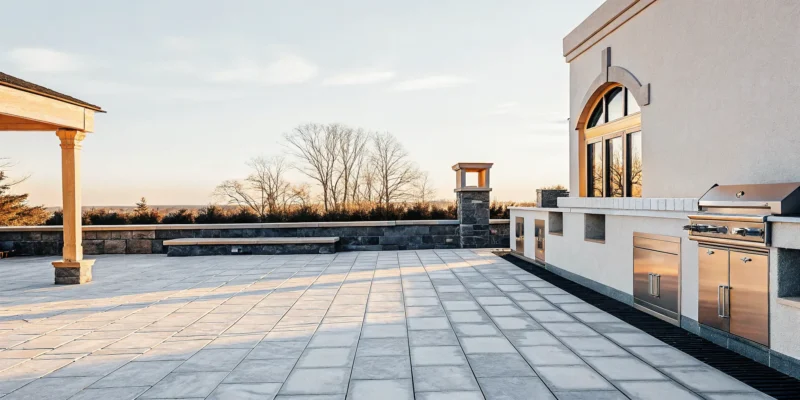
Precision stonework from a trained Italian mason turns a simple patio into a permanent piece of art. Giuseppe Abbrancati began learning these skills in Italy at age seven before bringing his work to Long Island.
Ready to bring Italian masonry craftsmanship to your Long Island home? Call (631) 486-4662 or schedule your free consultation with Gappsi today.
Italian masonry craftsmanship is the unique blend of precision engineering and artistic vision that makes outdoor structures both beautiful and strong. This tradition relies on centuries of refined skills passed through generations of master builders. These methods create patios, walkways, and fireplaces that stand up to harsh Long Island weather while maintaining their beauty for decades. Gappsi carries this heritage forward with Long Island masonry design that adds lasting value to home remodel projects across Suffolk and Nassau Counties.
Many homeowners wonder why certain stone structures stay perfect for years while others crumble after a few seasons. The answer lies in the deep history and rigorous training required to master these timeless building methods.
What Makes Italian Masonry Craftsmanship Different from Standard Construction?
Italian masonry craftsmanship stands apart through its emphasis on structural intelligence and artistic precision. Unlike standard construction that prioritizes speed, Italian-trained masons cut every stone to create tight bonds with clean lines. This method prevents gaps where water might settle and cause freeze-thaw damage, which is essential for Long Island’s climate.
The difference comes down to training and technique. Italian masons learn to balance load distribution, material density, and geometric precision from the start of their careers. This produces structures that not only look refined but also resist cracking, shifting, and weathering far longer than conventional builds.
- Precision cutting: Each stone is shaped by hand to fit its neighbors with minimal mortar gaps
- Load distribution: Weight is spread evenly through the structure to prevent stress points
- Material selection: Only dense, low-absorption stones are chosen for outdoor use
- Foundation depth: Proper excavation and compacted bases prevent settling over time
These principles trace back to rules documented by Italian architects like Carlo Fontana in 1694. Fontana used mathematical formulas to determine how shapes affect structural strength. Bernardo Antonio Vittone later expanded these rules in 1760 to allow taller and steeper dome designs. According to research from MDPI Applied Sciences, these same geometric methods underpin the stability of iconic structures like Brunelleschi’s Dome in Florence, which has remained intact since 1436.
The Heritage of Italian Masonry Craftsmanship
The history of Italian masonry craftsmanship goes back hundreds of years. This legacy bonds art and hard science together. For generations, master builders in Italy have refined their trade, passing down secrets from fathers to sons. These skills changed how we approach stone and brick construction today.
Italian masonry heritage is rooted in an unbroken chain of apprenticeship that stretches back to the Renaissance. Master builders like Brunelleschi developed techniques that allowed massive stone structures to support themselves without internal framing. Modern builders on Long Island still apply these same engineering principles to patios, outdoor kitchens, and fireplaces.
The science of Renaissance domes
One of the best demonstrations of Italian masonry skill appears in the great domes of the Renaissance. Builders created massive curved roofs without using wooden centering frames to hold the weight during construction. They used a double-helix brick pattern that lets the dome support itself as it rises. This technique combines sophisticated geometry with meticulous hand craftsmanship.
The science relies on the way bricks lock together at specific angles. Masons tilted each brick to create a self-supporting curve, eliminating the need for huge timber scaffolds. A 2021 study in Applied Sciences confirmed that Brunelleschi’s design distributes thrust evenly through supporting piers, keeping all sections compressed at safe stress levels. The UNESCO World Heritage Centre recognizes the Historic Centre of Florence for preserving these original building techniques and traditional materials like pietra serena stone.
Bringing Italian skills to America
In the late 1800s and early 1900s, skilled Italian masons brought their tools and knowledge to the United States. Their work appears in the stone facades of historic downtown buildings and the cobblestone paths of older neighborhoods. They taught their children the value of precise cutting and patient craftsmanship, keeping the tradition alive across generations.
Today, this heritage guides how Gappsi builds outdoor spaces on Long Island. Whether constructing a custom patio or a stone fireplace, the old rules still apply. Modern masons combine power tools with old-world care to ensure each project meets the quality standards established centuries ago, while coordinated landscape design services connect masonry to the surrounding yard.
How Italian Craftsmanship Elevates Outdoor Masonry Design
Italian masonry craftsmanship produces structures that are both structurally superior and visually striking. The method requires exact cutting to create stone surfaces that look refined and last for decades.
Italian-trained masons apply geometric principles to every project, ensuring that retaining walls, patios, and fireplaces distribute weight correctly and resist shifting. This engineering mindset, combined with an artistic eye for stone color and texture, produces outdoor spaces that function flawlessly while enhancing the home’s appearance.
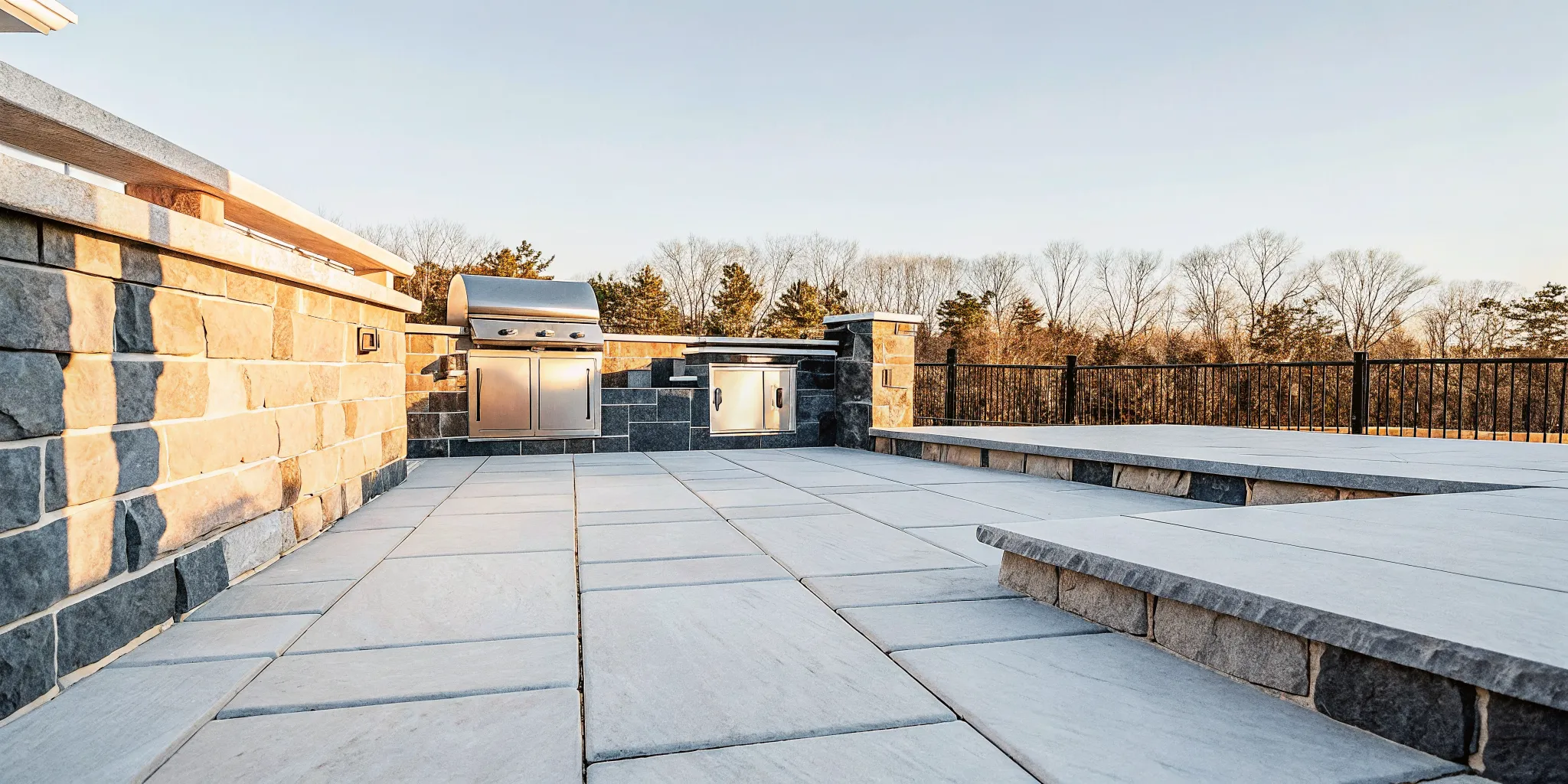
Precision in every stone cut
In Italian design, masons shape each stone to create tight bonds and clean lines. This level of detail prevents gaps where water might settle and cause freeze-thaw damage during Long Island winters. By following geometric rules first established by Renaissance architects, masons ensure that every arch and wall remains stable for generations.
Strength through smart engineering
Building for the Long Island climate demands durability above all else. Italian-trained masons use techniques that allow walls to support their own weight without relying solely on mortar adhesion. This self-supporting approach was first perfected in the great domes of Italy, which have stood for over 500 years without structural failure.
Research from MDPI Applied Sciences confirms that Brunelleschi’s brick-herringbone pattern creates self-bracing during construction. When applied to residential masonry, these same principles ensure that patios and fireplaces remain stable through decades of freeze-thaw cycles, heavy rain, and seasonal ground movement.
Premium Materials Define the Italian Masonry Standard
The heart of Italian masonry craftsmanship lies in the quality of the materials used. To meet enduring standards, builders must select stones and bricks that offer both beauty and strength.
Gappsi uses premium natural stone like bluestone, travertine, and granite alongside top paver brands such as Cambridge, Nicolock, Techo-Bloc, Belgard, and Renox. These materials are chosen for their density, low water absorption, and resistance to Long Island’s freeze-thaw climate.
Authentic Italian bricks and stone
High-end masonry projects often start with materials that have deep historical roots. Biscotto di Sorrento bricks, sourced from the Sorrento region of southern Italy, are prized for their heat retention and durability under thermal stress. These bricks have been used for centuries in Italian pizza ovens and fireplaces.
For patios and walkways, homeowners can choose from marble, travertine, granite, and bluestone. Each stone offers distinct texture and color that adds depth to an outdoor space. Granite provides exceptional hardness and longevity, while travertine stays cool under direct sun. According to Corsino Construction’s research on natural stone patios in Suffolk County, properly installed natural stone can last 30 to 50 years when base preparation and drainage are handled correctly.
Partnerships with top paver brands
Gappsi works with leading paver manufacturers to give clients a wide range of options. These partners include Cambridge Pavers, Nicolock, Techo-Bloc, Belgard, and Renox. These brands offer many colors and shapes that replicate the look of natural stone while providing consistent sizing for easier installation across large areas.
Each paver is engineered to handle heavy loads and resist weather damage. They are formulated to withstand road salt and ice melt, which is critical for Long Island driveways and walkways. A properly built base with compacted gravel layers and correct drainage slope prevents the settling and shifting that causes premature failure in lesser installations.
- Cambridge Pavers: Known for large-format stones with tight joint systems
- Nicolock: Wide color selection with high compressive strength
- Techo-Bloc: Premium textures that mimic natural cleft stone
- Belgard: Interlocking designs for superior edge retention
- Renox: European-style pavers with antique finishes
The Gappsi Difference: Italian Craftsmanship on Long Island
The Gappsi story began in Italy long before the company opened its doors in Smithtown. Giuseppe Abbrancati started learning the trade at seven years old in 1974, working alongside his father and grandfather to master traditional masonry skills.
With over 38 years of experience, Gappsi bridges old-world Italian training with modern construction methods. The company’s 10 divisions handle everything from initial 3D design through permitting and final installation. The Smithtown showroom displays the full range of materials and design options available to Long Island homeowners.
A legacy of skilled masonry
Giuseppe founded Gappsi at age 21 with a focus on quality and trust. The company has since grown to include 10 divisions, offering full-service coverage from the first 3D design concept through obtaining municipal permits and final construction. The Smithtown showroom lets homeowners see premium masonry and paver installations in person before making decisions about their own projects.
True Italian masonry relies on precise cutting and engineered strength to last for decades. Renaissance architects like Fontana and Vittone used mathematical rules to create stone structures that remain standing today. Gappsi applies these same core principles to ensure every patio, outdoor kitchen, and fireplace is both beautiful and structurally sound.
Built for the Long Island climate
Long Island’s weather can be extremely hard on outdoor stonework. Salty coastal air and repeated freeze-thaw cycles cause cheap masonry to crack, shift, or spall within a few years. This is why proper drainage, deep base preparation, and dense materials are non-negotiable for lasting results.
Choosing the right materials is central to the Gappsi process. The team uses top paver brands alongside natural stone, combining old-world installation methods with modern material science. Every project balances artistic vision with the structural strength needed to survive many seasons of coastal weather.
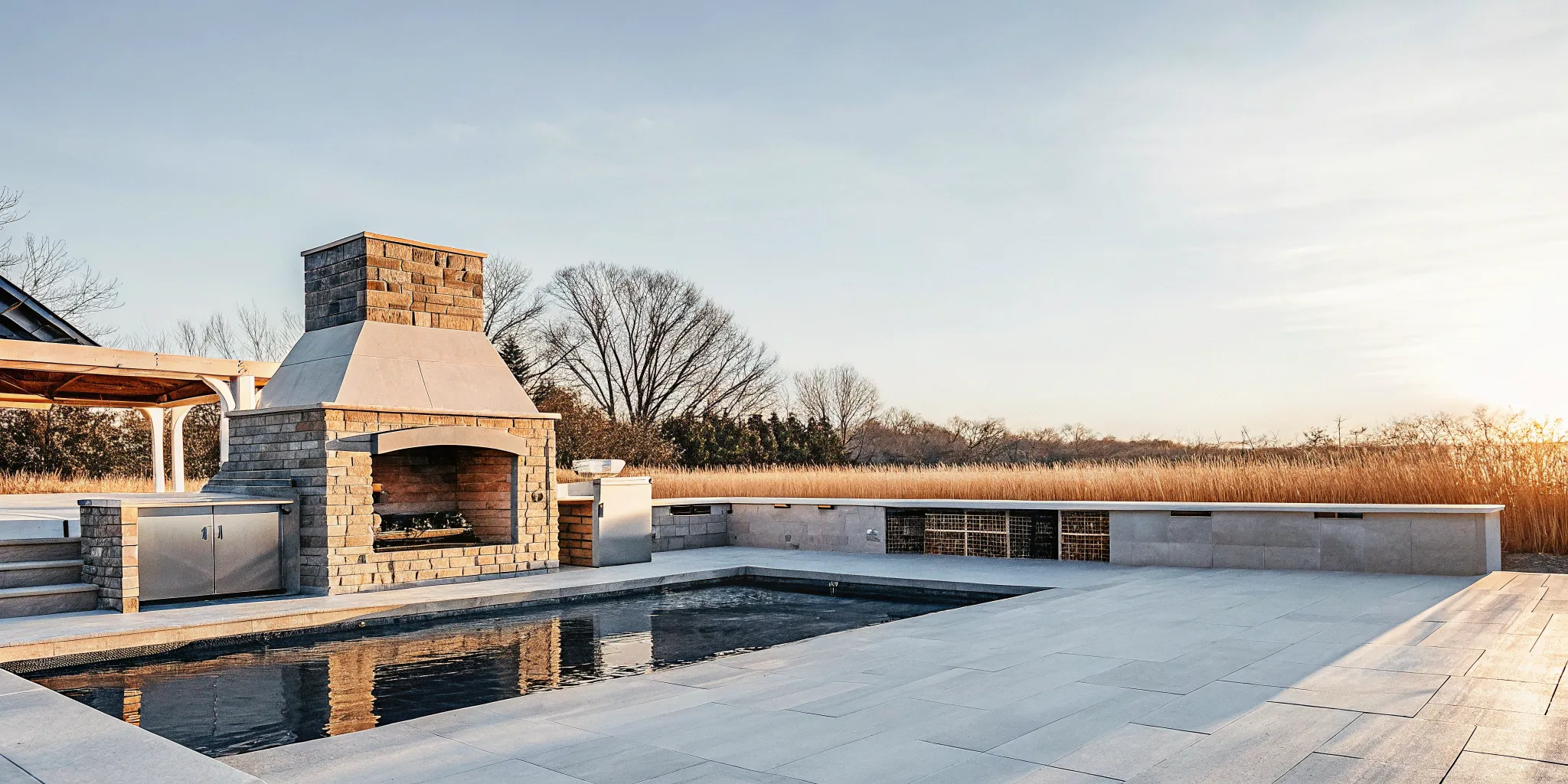
What Sets Italian-Trained Masonry Apart for Patios and Fireplaces
Italian masonry craftsmanship takes years to master. It starts with deep respect for the stone and the tools used to shape it. For homeowners on Long Island, this means choosing a team that values artistry as much as structural integrity.
Italian-trained masons bring generational knowledge that standard crews cannot replicate. The difference shows in tight stone joints, thoughtful material selection, and structures that remain level and crack-free for decades. Investing in proper training and technique produces outdoor spaces that add lasting value to the home.
Focus on precision and artistry
True Italian masonry is defined by exact cutting and artistic stone placement. Each piece is selected for its color, shape, and fit within the overall design. This attention to detail ensures that patios and fireplaces function as cohesive works of art that complement the landscape.
When a mason understands the natural flow and grain of the stone, the result is a structure with tight joints and balanced visual weight. This level of craftsmanship is increasingly rare in an industry that often prioritizes speed over quality.
| Feature | Italian-Trained Masonry | Standard Masonry Approach |
|---|---|---|
| Attention to Detail | Hand-cut stone with precision fitting | Power tools with批量 cuts and wider joints |
| Longevity | Designed for 30-50 year service life | Often needs repairs within 5-10 years |
| Material Selection | Natural stone and premium imported brick | Standard pavers and common concrete |
| Visual Integration | Custom designs matched to the home’s architecture | Template layouts reused across projects |
| Quality Control | Master mason oversees every stage | Split between multiple crews with less oversight |
Training and the legacy of the craft
A mason’s training directly affects the quality of the finished work. In Italy, the craft has traditionally been passed from master to apprentice over many years. This stands in contrast to standard crews that prioritize speed over precision. Research from Oxford Brookes University documents that traditional drystone walling in Italy relies on apprenticeship-style transmission where knowledge is passed through hands-on practice rather than written manuals alone.
Gappsi’s founder learned directly from his father and grandfather, starting at age seven. This type of generational training instills a sense of pride that appears in every finished project. When homeowners choose a mason with this background, they get more than a contractor. They get a craftsman who treats every stone patio and fireplace as a legacy piece.
How to Choose the Right Masonry Contractor for Long Island
Selecting the right contractor determines whether your outdoor investment lasts for decades or needs replacement within a few years.
The best masonry contractor for Long Island combines old-world training with local climate knowledge. Look for a team that sources premium materials, manages projects from design through completion. And has a portfolio of work that demonstrates precision stone joints and thoughtful material selection.
Heritage and background
When evaluating masonry contractors, start with their training roots. A mason who understands Italian masonry craftsmanship brings a level of care developed over generations. This style of work is more than laying stones. It reflects centuries of refined technique passed down through families and apprenticeships.
In Italy, masons learn to balance artistry and structural engineering from the beginning of their training. A true expert will explain how their background influences every cut and joint. They treat each project as a bespoke creation rather than a routine job.
Portfolio and material knowledge
A reliable contractor should show a portfolio of completed projects. Look for stone patios, outdoor kitchens, retaining walls, and fireplaces with tight joints and balanced proportions. Pay attention to the stone types used and how they have weathered over time.
A skilled mason knows which materials work best for Long Island’s specific conditions. Some stones resist freeze-thaw damage better than others. Granite and bluestone have very low water absorption rates, making them ideal for outdoor use in cold climates. Travertine stays cooler underfoot for pool surrounds. A knowledgeable contractor will explain why each material suits its intended location.
Key questions to ask
- How do you prepare the base for freeze-thaw resistance?
- What stone types do you recommend for Long Island’s climate and why?
- Can you show examples of projects that are 5+ years old and still in good condition?
- Do you handle permits, 3D design, and project management in-house?
- What warranty do you offer on materials and workmanship?
A contractor who answers these questions with specific, technically grounded answers is more likely to deliver lasting results than one who gives vague assurances.
Frequently Asked Questions
What is Italian masonry craftsmanship?
Italian masonry craftsmanship is a building tradition that combines precise stone cutting, structural engineering, and artistic design. It emphasizes tight joints, load-balanced construction, and the use of dense natural materials. The methods trace back to Renaissance builders like Brunelleschi and have been preserved through family apprenticeships over centuries.
How long does an Italian-style stone patio last on Long Island?
A properly installed natural stone patio with Italian masonry techniques can last 30 to 50 years on Long Island. The key factors are deep base preparation, correct drainage slope, dense stone selection, and precise joint work that prevents water infiltration and freeze-thaw damage.
What makes Gappsi different from other masonry contractors on Long Island?
Gappsi was founded by Giuseppe Abbrancati, who began his Italian masonry training at age seven under his father and grandfather. With over 38 years of experience and 10 in-house divisions covering design, permitting, and installation, Gappsi provides full-service project management rooted in multi-generational Italian craftsmanship. The Smithtown showroom lets clients view materials in person before construction begins.
What materials are best for Italian masonry on Long Island?
The best materials for Long Island’s climate include bluestone, granite, and travertine for natural stone, plus premium pavers from Cambridge, Nicolock, Techo-Bloc, Belgard, and Renox. These materials offer the density and low water absorption needed to resist freeze-thaw cycles and salt air exposure.
Do Italian masonry techniques work for outdoor kitchens and fireplaces?
Yes. Italian masonry techniques are especially suited for outdoor kitchens and fireplaces because they emphasize heat management, structural stability, and weather resistance. Biscotto di Sorrento bricks are commonly used for pizza oven interiors due to their heat retention, while natural stone surrounds provide durability and aesthetic appeal.
Ready to Start Your Italian Masonry Project?
Italian masonry craftsmanship delivers outdoor spaces that are built to last for generations. Gappsi brings three generations of Italian building heritage to every project on Long Island, from custom patios and outdoor kitchens to stone fireplaces and retaining walls. Visit the Smithtown showroom to explore materials, view completed projects, and speak with the design team.
Call (631) 486-4662 or schedule a free consultation online to discuss your custom masonry project. From the first 3D rendering to the final stone placement, Gappsi handles every detail so you can start enjoying your outdoor living space sooner.