


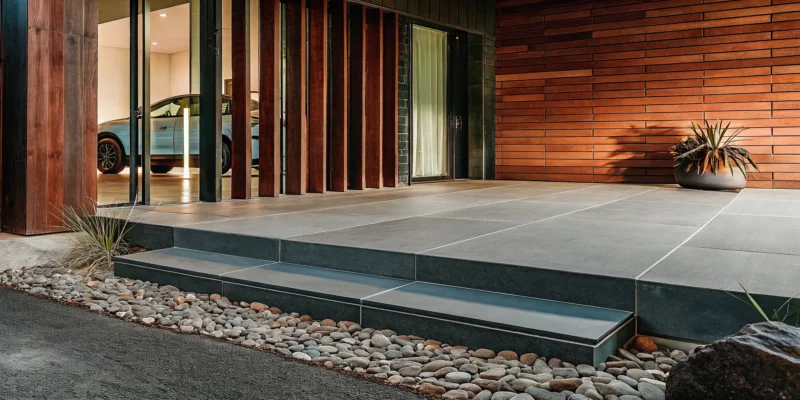
When you hear the word “porcelain,” you might think of delicate teacups, not a surface strong enough to park your SUV on. It’s a common misconception, but the material used for a porcelain paver driveway is in a league of its own. These pavers are specifically engineered to be incredibly dense, thick, and durable, often exceeding the strength of concrete. They are designed to handle the daily weight of vehicles and the harsh Long Island climate without chipping or cracking. This article explains how this high-tech material provides a powerful combination of sophisticated elegance and pure, functional strength for your home.
Key Takeaways
- Choose Driveway-Rated Pavers: Not all porcelain is strong enough for a driveway. You must select pavers specifically engineered for vehicle traffic, which are at least 20-30mm thick, to support the weight and prevent cracking.
- A Solid Foundation is Non-Negotiable: The success of a porcelain driveway lies beneath the surface. It requires a professionally installed base with compacted stone and proper edge restraints to prevent shifting and ensure a level, durable result.
- Enjoy Decades of Low Maintenance: A key benefit of porcelain is its minimal upkeep. The non-porous surface naturally resists stains, moisture, and fading, so you will never need to seal it, making it a practical choice that stays beautiful with simple cleaning.
What Is a Porcelain Paver Driveway?
A porcelain paver driveway is a surface built with high-strength porcelain tiles specifically engineered for outdoor use. It’s a modern alternative to traditional materials like concrete, asphalt, or natural stone, offering a unique combination of durability and refined style. These pavers are created to withstand the daily pressures of a driveway, including the weight of vehicles and the full spectrum of Long Island weather, from hot summer sun to freezing winter ice. Their sleek, clean lines can dramatically improve your home’s curb appeal, creating a welcoming and polished first impression.
Unlike natural stone, which varies from piece to piece, porcelain pavers are manufactured, ensuring remarkable consistency in color, size, and texture. This uniformity results in a sophisticated and seamless look across your entire driveway. Because they are non-porous, they resist stains from oil or spills, and they won’t fade over time from UV exposure. This makes them an excellent option for homeowners who value both aesthetics and practicality. Choosing a porcelain driveway means you are investing in a surface that is not only visually stunning but also incredibly resilient and easy to care for over the long term. It’s a choice that delivers lasting beauty and performance.
What Goes Into a Porcelain Paver?
Porcelain pavers are crafted from a very dense mix of fine clay and other natural materials like feldspar and quartz. This carefully selected blend is pressed into the shape of a paver and then baked in a kiln at extremely high temperatures, often exceeding 2200°F. This intense heating process, called vitrification, is what gives porcelain its signature strength and density. It fuses the materials together, creating a tile with extremely low porosity. This means it absorbs very little water, making it highly resistant to stains, mold, and freeze-thaw cycles.
Porcelain vs. Concrete and Natural Stone
When comparing driveway materials, porcelain stands out for its superior performance. While concrete and natural stone are classic choices, porcelain is stronger, denser, and less likely to chip or crack under pressure. Its low porosity means it doesn’t require sealing to resist stains, unlike porous materials that can absorb oil and other liquids. This makes cleaning much simpler. Though porcelain may have a higher initial cost, it often proves more economical over time. You’ll save on maintenance, repairs, and the need for sealing, making it a smart long-term investment for your home’s masonry.
Are Porcelain Pavers Strong Enough for a Driveway?
It’s a fair question, especially when you think of porcelain as the delicate material used for fine china. But when it comes to pavers, we’re talking about a completely different product. The short answer is yes, porcelain pavers are absolutely strong enough for a driveway, provided you use the right kind. You can’t simply install standard patio tiles and expect them to hold up under the weight of a vehicle. Driveway applications require specially engineered, thick-bodied porcelain designed for heavy-duty use.
These pavers are manufactured to be incredibly dense and durable, often exceeding the strength of traditional concrete. They are built to withstand not just the weight of cars but also the demanding weather cycles we experience here on Long Island. When installed correctly over a proper base, a porcelain paver driveway offers a unique combination of sophisticated style and serious strength. It’s a surface that resists stains, scratches, and fading while providing a high-end look that truly sets your home apart. Exploring a collection of high-quality porcelain and natural stone pavers is a great first step to see the variety available.
Understanding Thickness and Strength
When choosing porcelain for your driveway, thickness is the most important factor. Standard porcelain tiles are too thin for vehicle traffic. You need to look for pavers specifically rated for driveways, which are typically 20 to 30 millimeters (about three-quarters of an inch to 1.2 inches) thick. This extra thickness gives them the structural integrity to handle the repeated stress and weight of cars without cracking or shifting.
Beyond thickness, these pavers have an impressive compressive strength, often greater than 15,000 pounds per square inch (psi). This means they can handle immense pressure, making them even stronger than many types of poured concrete. This strength ensures your driveway will not only look beautiful for years but will also perform exceptionally well under daily use.
Standing Up to Long Island Weather
One of the biggest advantages of porcelain is its resilience against harsh weather. Porcelain pavers are created by firing a dense mixture of clay and other natural materials at extremely high temperatures. This process makes them non-porous, so they absorb very little water (less than 0.5%). For Long Island homeowners, this is a huge benefit. It means they are highly resistant to the freeze-thaw cycles that can cause other materials like concrete or certain natural stones to crack and spall over winter.
This dense structure also makes them resistant to fading from UV rays, staining from oil or salt, and damage from moisture. While other surfaces may require regular sealing to stay protected, porcelain maintains its color and integrity with minimal effort. This durability makes it a smart, long-term investment for any home.
Choosing a Safe, Non-Slip Surface
A driveway needs to be more than just strong and beautiful; it also needs to be safe. The good news is that driveway-rated porcelain pavers are designed with safety in mind. They are manufactured with textured, anti-slip surfaces that provide excellent traction, even when wet from rain or snowmelt. This is an essential feature, especially if your driveway has a slope.
This enhanced grip helps prevent slips and falls, giving you peace of mind as your family and guests walk to and from your home. Unlike some polished stones that can become slick, the textured finish of porcelain ensures a secure footing in all conditions. This focus on safety is a key part of our masonry design and construction, where we help you select materials that are both functional and secure for your specific property.
The Pros and Cons of a Porcelain Driveway
Choosing the right material for your driveway is a big decision, and it’s smart to weigh the benefits against the potential drawbacks. Porcelain is a fantastic, high-performance option, but like any premium material, it has specific characteristics you should know about before committing. Understanding both sides of the coin will help you decide if a porcelain driveway is the perfect fit for your Long Island home and lifestyle.
The Upside: Why You’ll Love a Porcelain Driveway
Porcelain’s biggest advantage is its incredible durability. Because it has a high density and very low porosity, it’s naturally resistant to stains from oil, salt, and grime, which makes cleanup a breeze. This non-porous surface also means it won’t absorb water, so it stands up beautifully to freeze-thaw cycles without cracking. Beyond its strength, the porcelain and natural stone options offer amazing design versatility. You can find pavers in a huge range of colors and styles that mimic natural stone or wood, allowing you to achieve a truly custom look. Many finishes are also inherently anti-slip, providing a safer surface during wet or icy weather, which is a huge plus for any driveway.
The Downside: What to Keep in Mind
The main thing to consider with porcelain is that its strength comes with a catch: it requires a highly skilled installation. The material can be challenging to cut and must be laid on a perfectly prepared base to prevent cracking under the weight of vehicles. This is not a DIY-friendly project. Because it demands expert masonry work, the labor costs can be higher than for traditional concrete or asphalt. The initial investment for both the materials and the specialized installation is greater, so it’s important to factor that into your budget. While the pavers themselves are tough once installed, they need careful handling during transport to avoid chips or breaks.
What Does a Porcelain Paver Driveway Cost?
Understanding the cost of a new driveway is a major part of planning your project. A porcelain paver driveway is a premium upgrade, and its price reflects the high-quality materials and specialized labor required for a lasting installation. While the total investment can be higher than for materials like asphalt or concrete, you are paying for exceptional durability, low maintenance, and a stunning look that adds significant value to your home.
The final cost is not just a single number; it’s a combination of material choices, site preparation, and installation expertise. Let’s break down what goes into the total price so you can get a clearer picture of the investment.
Breaking Down Material Costs
The first component of your total cost is the pavers themselves. The price for porcelain pavers can vary quite a bit, generally ranging from $30 to over $100 per square foot. This range depends on factors like the brand, the specific finish, the size of the paver, and most importantly, its thickness. For a driveway application, you need thicker, more robust pavers, which naturally fall at the higher end of that price scale. While it might be tempting to choose a thinner, less expensive option, those are best suited for patios and walkways, not for supporting the weight of vehicles. You can explore a wide variety of high-quality porcelain and natural stone options to find a style that fits your home and budget.
Factoring in Professional Installation
A porcelain paver driveway is not a weekend DIY project. The material’s density and weight require professional handling to ensure a level, stable surface that will last for decades. Because they are so dense, porcelain pavers need expert installation to be spaced and set correctly, preventing cracks or shifting down the road. Professional installation costs cover the skilled labor, specialized cutting tools, and the technical knowledge needed to build a proper foundation. Think of it less as an added expense and more as a crucial investment in the longevity and performance of your driveway. A team with masonry design and construction experience will get the job done right.
Key Factors That Influence Your Total Cost
Several key elements will determine your final project quote. First is the paver thickness. Driveway porcelain pavers should be at least 20-30mm thick to handle the weight of cars and SUVs without issue. Second is the foundation. A porcelain driveway requires a very strong base system, which involves excavating the area, laying and compacting multiple layers of crushed stone, and adding a stable bedding layer. The size and complexity of your driveway also play a role. A long, winding driveway or one with an intricate pattern will require more labor and materials than a simple, straight one. Finally, the condition of the existing site, such as the need to remove an old driveway, will also affect the total cost.
Installing and Maintaining Your Porcelain Driveway
A porcelain paver driveway is a fantastic investment, but its beauty and longevity depend entirely on proper installation and care. Getting it right from the start ensures your driveway will handle everything from daily car traffic to Long Island’s seasonal shifts. Think of it less like a simple surface and more like a complete system, where every layer plays a crucial role. With the right approach, you’ll have a stunning, low-maintenance driveway that lasts for decades. Here’s what you need to know about the process, from selecting the perfect pavers to keeping them looking brand new.
Choose the Right Style and Strength
The first step is selecting the right material, and it’s important to know that not all porcelain is created equal. You can’t use standard, thin porcelain tiles meant for a patio or bathroom. For a driveway, you need special driveway-rated porcelain pavers. These are significantly thicker, usually at least 20 to 30 millimeters, and engineered to withstand the heavy, repeated weight of vehicles without cracking. When you explore Gappsi’s collection of porcelain and natural stone, we’ll guide you to the specific products designed for driveway applications. This ensures you get the necessary strength along with the sophisticated style you want for your home’s entrance.
Build a Solid Foundation: Base, Drainage, and Edging
The real strength of a porcelain driveway isn’t just in the pavers themselves, it’s in the foundation built beneath them. A solid base is absolutely essential for performance and durability. This process involves excavating the area and building up multiple, compacted layers of crushed stone to create a stable, unmoving platform. A simple layer of sand won’t work for a surface that needs to support vehicles. Proper masonry techniques also ensure correct drainage, so water flows away from the driveway instead of pooling and causing issues later. Finally, a strong edge restraint is installed to lock the pavers in place and prevent any shifting over time.
Avoid These Common Installation Pitfalls
Porcelain pavers require a specific installation method that differs from traditional concrete or stone pavers. Because porcelain tiles don’t interlock, a dry-laid installation can cause them to shift under the pressure of tires, leading to joint failure and an unstable surface. This is a common mistake that can ruin an otherwise beautiful driveway. Another potential issue is improper repairs. While porcelain is incredibly tough, if a paver does get damaged, it can’t just be pulled out and replaced. The base underneath must be carefully addressed to ensure the new paver sits perfectly level and secure. This is why professional home remodeling expertise is so important for a flawless, long-lasting result.
Simple Tips for Long-Term Care
One of the best things about a porcelain driveway is how easy it is to maintain. The non-porous surface is highly resistant to stains, moisture, and fading. Spills like oil or grease won’t soak in, so they can be cleaned up without leaving a permanent mark. Unlike natural stone or concrete, porcelain pavers do not need to be sealed, ever. For routine cleaning, all you typically need is a good sweep to remove loose debris and a rinse with a garden hose. This simple care routine will keep your driveway looking pristine for years. While porcelain is self-sufficient, our restoration and sealing team is always available for other outdoor surfaces that may need attention.
Find the Perfect Porcelain Pavers for Your Home
Choosing the right materials and the right team is the final, most important step in bringing your vision to life. A porcelain paver driveway is a significant investment in your home’s curb appeal and functionality, so it’s essential to get it right. From selecting the perfect style to ensuring a flawless installation, every detail matters. At Gappsi, we guide you through the entire process, making sure your new driveway exceeds your expectations and serves your family for years to come. We combine premium materials with decades of design and construction experience to deliver results that are both beautiful and durable.
Explore Gappsi’s Curated Porcelain Collection
Porcelain pavers are a fantastic choice for outdoor spaces, especially in a place like Long Island. They are crafted from a dense blend of clay and other natural materials, which makes them incredibly hard and durable. This composition allows them to handle heavy loads and stand up to harsh weather without a problem. At Gappsi, we offer a wide selection of high-quality porcelain and natural stone pavers to match any home’s aesthetic. Whether you prefer a modern, sleek look or a more traditional, rustic feel, you can find the perfect style in our collection. Exploring your options is the first step toward creating a driveway that is both beautiful and built to last.
Why Professional Design and Installation Matters
When it comes to a driveway, not just any porcelain paver will do. It’s crucial to use heavy-duty, driveway-rated porcelain that can handle the weight of vehicles day in and day out. Using thinner patio pavers is a recipe for cracks and costly repairs. Just as important is what lies beneath. A successful porcelain driveway requires a robust base system, which involves proper excavation, compacted layers of crushed stone, and a stable bedding layer. This isn’t a simple weekend project. Trusting a team with deep masonry expertise ensures your driveway is installed correctly from the ground up, giving you a surface that performs as beautifully as it looks.
Get Inspired by Our Porcelain Driveway Projects
Sometimes, the best way to start planning is to see what’s possible. Porcelain pavers offer incredible versatility, making them an excellent choice for a wide range of exterior projects beyond just driveways. Their durability means they can handle heavy foot traffic and vehicles without cracking, and their lighter weight compared to some other materials can simplify the installation process. To see how these pavers can transform a property, we invite you to get inspired by our work. Seeing completed projects can help you visualize different colors, patterns, and styles, sparking ideas for your own home and showing you the level of quality you can expect from a professional installation.
Related Articles
- Porcelain Pavers for Driveways: The Ultimate Guide
- Porcelain Tiles for Driveways Archives
- Driveway Paver Installation & Design Guide
- Porcelain Pavers Archives
- Porcelain Driveway and Walkway Pavers Archives
Frequently Asked Questions
Do I need to seal a porcelain paver driveway? No, you don’t, and that’s one of the best things about it. Because porcelain is manufactured to be non-porous, it doesn’t absorb liquids or stains the way materials like concrete or natural stone do. This means you can skip the yearly sealing routine completely. Spills like oil or salt residue from winter roads will sit on the surface, making them easy to clean without leaving a lasting mark.
How do porcelain pavers handle Long Island’s snow and ice? They handle our winters exceptionally well. The same non-porous quality that resists stains also prevents water from seeping into the paver. During a freeze-thaw cycle, this is critical. Water trapped inside other materials can freeze, expand, and cause cracks. Since porcelain absorbs almost no water, it is highly resistant to this kind of winter damage, making it a durable choice for our climate.
Are porcelain driveways slippery when wet? Safety is a valid concern, but driveway-rated porcelain pavers are designed with this in mind. They are manufactured with a textured, anti-slip finish that provides excellent grip for both feet and tires, even in rainy or icy conditions. This is different from the smooth, polished porcelain you might see indoors. The surface is engineered to provide secure footing, so you can feel confident walking on it year-round.
Why is professional installation so important for porcelain? A porcelain driveway’s success depends entirely on what’s underneath it. The material is incredibly dense and requires a specialized, multi-layered base to support vehicle weight without shifting or cracking. This is not a simple DIY project. Professionals have the right equipment to cut the dense pavers precisely and the expertise to build the robust foundation needed for a long-lasting, level surface.
What makes a porcelain driveway a good long-term investment? While the initial cost is higher than some alternatives, a porcelain driveway provides excellent value over its lifetime. You save significant time and money by never having to seal it, and its stain resistance means you won’t be paying for special cleaning or repairs. Its incredible durability and resistance to fading, scratching, and weather damage mean your driveway will look brand new for decades with very little effort, adding lasting curb appeal to your home.