


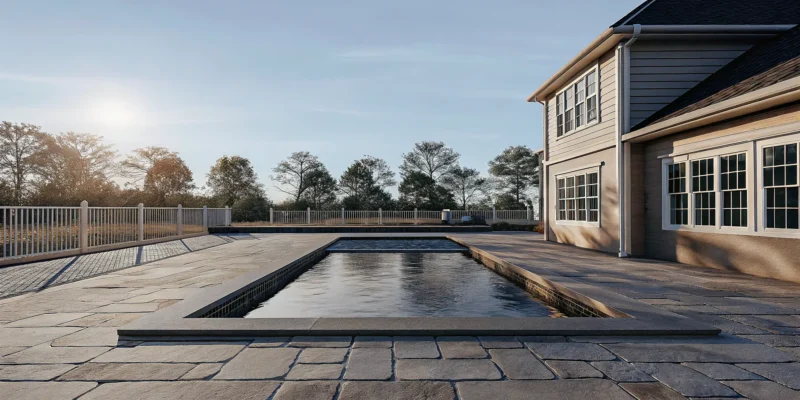
A pool deck does more than frame the water. On Long Island, it must stay comfortable under summer sun, provide dependable footing when wet, and handle repeated freeze-thaw cycles without becoming a maintenance burden. The right choice also needs to complement the pool shape, coping profile, and the way your family uses the yard.
Each material behaves differently in direct sunlight, around standing water, and through a Long Island winter. Start by looking at why those local conditions should shape the decision, then compare the strengths and tradeoffs of each deck and coping material.
Does the Pool Deck Material Really Matter on Long Island?
The material does more than set the color and texture of the space around your pool. The material you choose affects traction, surface temperature, upkeep, and long-term appearance, so the decision should reflect how your family uses the backyard and how Long Island weather will affect it. A pool deck that feels comfortable in July also needs to perform after repeated winters, clean easily, and remain visually compatible with the pool coping, planting, and home exterior. Material selection influences safety, comfort, maintenance, and the way the backyard looks for decades. Ready to compare pool deck materials for your Long Island backyard? Call Gappsi Group at Contact Gappsi through our contact page for a free consultation.
Summer heat changes how the surface feels
Pool decks receive direct sun for much of the day. Dark, dense surfaces can become uncomfortable for bare feet, especially around lounging areas and the path between the pool and the house. Light-colored porcelain pavers and travertine are commonly selected for their ability to stay cooler in direct sunlight. Although the final result also depends on color, shade, orientation, and installation. Travertine and light-colored porcelain pavers are recognized for cooler surface temperatures in sunny pool areas. This is one reason homeowners should evaluate samples outdoors instead of choosing from a small indoor color chip.
Freeze-thaw cycles test the installation
Long Island winters bring freezing temperatures, while spring thaw introduces repeated moisture and temperature changes. Water that enters vulnerable concrete can expand as it freezes, placing stress on the material. Research on concrete freeze-thaw durability found that mixes with proper air entrainment, measured at 6% or greater under ASTM C231, showed good resistance in the tested conditions. That finding highlights why concrete specification and installation details matter, not only the surface pattern selected during design.
Maintenance belongs in the decision
Every material has a care profile. Some surfaces benefit from periodic sealing, while pavers may allow individual units to be reset if localized movement occurs. Drainage, base preparation, joint treatment, coping details, and the transition to the lawn or planting beds all influence how the deck performs. Gappsi Group has served Long Island homeowners since 1987 through an integrated design-build-supply approach. Giving clients a way to review material samples and coordinate the deck with the larger pool project. Compare the surface underfoot, the expected maintenance, and the repair options before committing to a material based only on appearance.
Porcelain Pavers: The Coolest, Most Durable Modern Choice
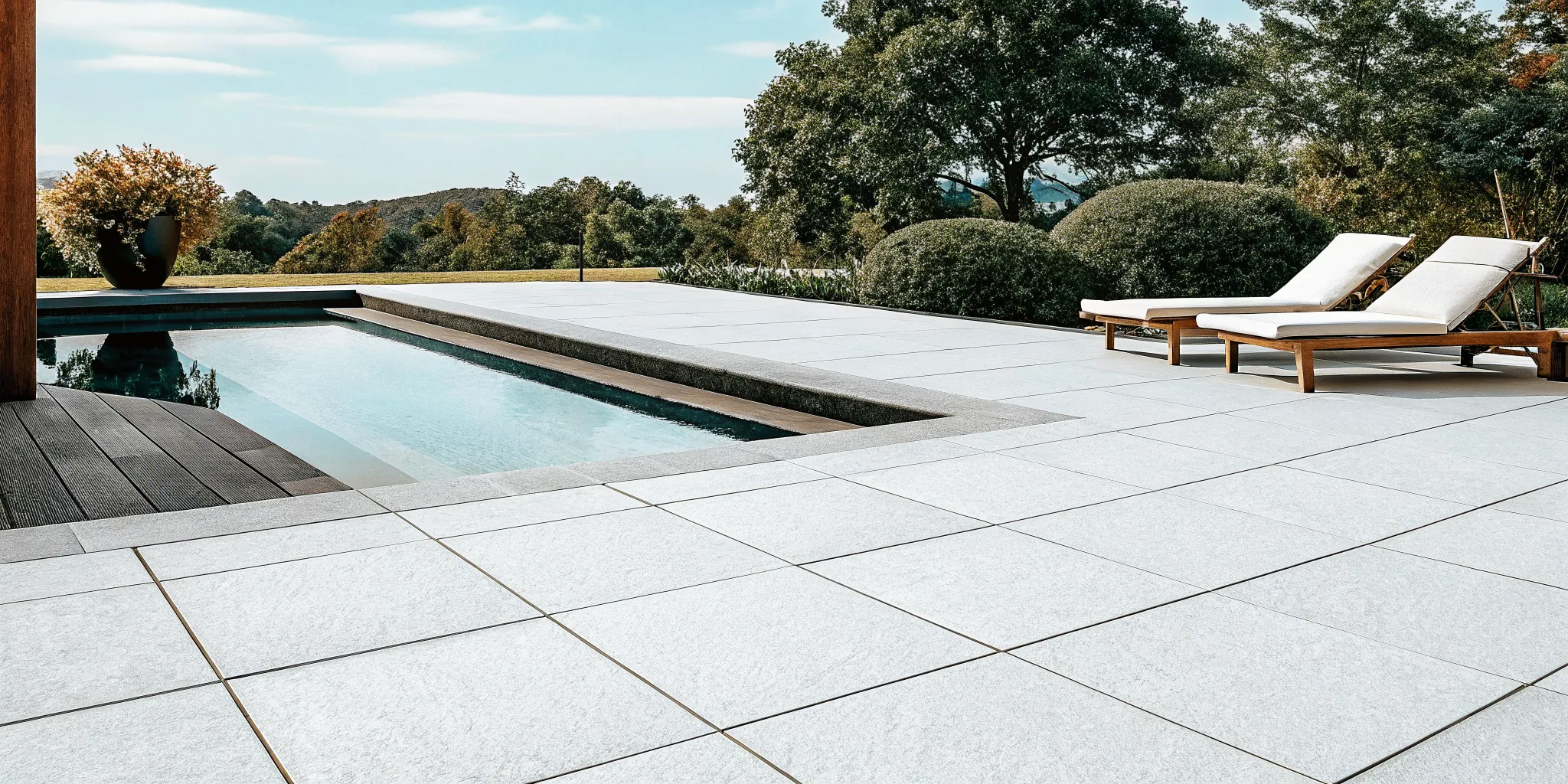
For homeowners comparing pool deck materials on Long Island, porcelain pavers offer a clean, contemporary surface with practical advantages in summer heat and winter weather. Light-colored porcelain stays cooler in direct sunlight, which can make the walk from the pool to the lounge area more comfortable on hot afternoons. Color selection still matters, so compare pale gray, sand, and warm stone tones with the surrounding masonry before choosing a finish. Porcelain is also a low-absorption material. That characteristic limits the amount of water that can enter the paver, an important consideration when a pool deck faces repeated freezing and thawing. Technical documentation for porcelain pavers describes low water absorption and freeze-thaw performance requirements. But the installer should confirm that the selected product is rated for exterior use and the local climate. Review the porcelain paver specifications before finalizing the product.
Slip resistance belongs in the specification
A pool deck should not be selected by color alone. Ask for the product’s slip-resistance rating, surface texture, edge details, and recommended use around wet areas. A lightly textured finish can provide traction without creating a rough surface that is uncomfortable under bare feet. Samples should be viewed wet as well as dry, because glare, color, and texture can change after water is applied.
Two installation systems, two different design directions
Porcelain pavers can be installed over a prepared mortar setting bed or used in a pedestal system where the surrounding construction and drainage design allow it. Mortar installation creates a fixed surface suited to many conventional pool decks. A pedestal installation can create a level, accessible surface over an engineered base while helping manage drainage and service access. Neither system should be treated as a shortcut. The base, perimeter restraint, slope, joints, and transitions at the coping must all be designed for the site.
Large formats and coordinated colors
Large-format porcelain can create long, orderly visual lines with fewer visible joints, while smaller formats can better suit curves, steps, and detailed borders. Use one color for the main field and a contrasting tone at steps or coping when visual guidance is helpful. Before installation, review the full layout with the rest of your paving materials for pool patio so the deck, coping, drainage, and planting areas read as one plan.
Why Travertine Stays a Classic for Long Island Pool Decks
Travertine feels comfortable underfoot when summer sun heats the pool area. Its light, porous surface is known for staying cooler in direct sunlight than many darker paving materials. Which can make the walk from the water to a lounge area more pleasant. The naturally varied texture can also provide useful traction around a wet pool, especially when the finish and installation are selected with slip resistance in mind. Its appearance is another reason homeowners continue to choose a travertine pool deck. Earthy beige, cream, and warm brown tones work with planting beds, masonry walls, and the blue-green color of a swimming pool without competing with them. Tumbled edges and natural surface variation create a relaxed look, while more carefully cut pieces can support cleaner lines around steps, coping, and rectangular pool shapes. Because each stone has its own pattern, the finished deck feels less repetitive than a single-color manufactured surface.
How does travertine handle Long Island weather?
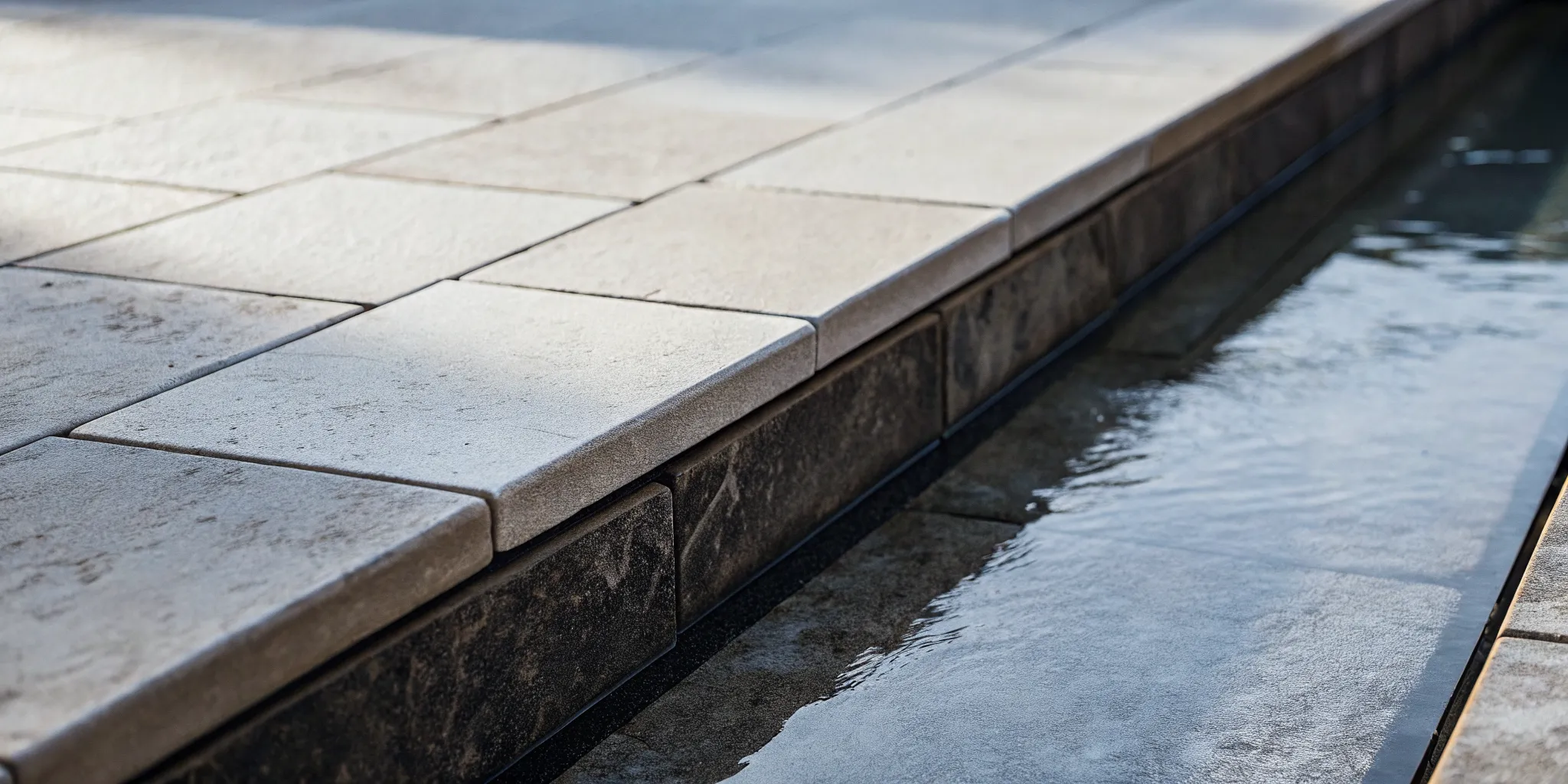
Travertine is natural stone, not a maintenance-free surface. Water, salt, and seasonal exposure can gradually affect stone, particularly where the material contains areas with different mineral or sediment composition. A study of travertine weathering found that detritic-rich portions can produce heterogeneous erosive patterns during salt weathering, meaning the stone may not weather uniformly across every piece. You can review the research in the PubMed study on travertine weathering behavior. That is why proper sealing matters on a Long Island pool deck. A suitable sealer helps limit water and contaminant penetration, but it does not replace sound drainage, correct base preparation, or regular cleaning. Freeze-thaw cycles place additional stress on any porous outdoor material. If water enters the stone or the joints, freezes, and expands, weak areas can deteriorate over time. Professional installation should account for slope, joint detailing, edge restraint, and the condition of the substrate before the stone is placed.
What should homeowners look for?
Choose pieces with a consistent thickness and an appropriate poolside finish, then plan a maintenance schedule that includes inspection, cleaning, and resealing when needed. Travertine works best when its cool feel, organic color, and textured surface are matched with installation details suited to wet conditions and winter exposure. That combination keeps the classic appearance practical for a Long Island backyard.
Bluestone: A Long Island Pool Deck Material That Handles Freeze-Thaw
Bluestone is a common choice for Long Island pool decks because it combines a substantial natural-stone appearance with practical performance around water. Its dense composition and regional availability make it a useful option for homeowners who want a surface that feels connected to the landscape while standing up to seasonal weather. A natural cleft finish gives bluestone a gently textured face rather than a polished, glass-like surface. That texture can provide useful traction when the deck is damp, especially when paired with proper slope and drainage. The surface is also comfortable for outdoor living, and blue-gray tones work with masonry, planting beds, coping, and the architectural style of many Long Island homes.
Why does freeze-thaw performance matter?
Long Island decks move through wet summers, freezing winters, and repeated temperature changes. Water that enters a porous or damaged surface can expand as it freezes, placing stress on the stone and its installation. Bluestone’s dense structure and durable exterior help it perform well in this environment when the base, joints, drainage, and edge details are designed correctly. Material selection matters, but installation quality determines how effectively the deck manages water and movement over time.
How should bluestone be protected?
A penetrating stone sealer can help reduce staining from leaves, food, soil, and poolside spills. Sealing does not replace regular cleaning or correct drainage, and it should be renewed according to the product and the deck’s exposure. Before installation, confirm that the selected bluestone has a suitable outdoor specification and that the installer understands local freeze-thaw conditions. For a coordinated natural-stone design, compare bluestone with other natural stone coping and pavers. The right choice depends on texture, color, maintenance expectations, pool-edge details, and how the entire outdoor area will be used.
Concrete Pavers vs Porcelain: Which Holds Up Better?
Both materials can create a durable pool surround, but they perform differently under Long Island’s sun, salt, rain, and freeze-thaw cycles. Concrete pavers offer an interlocking installation with replaceable units, while porcelain pavers provide a dense, low-absorption surface with a clean, consistent appearance. The better choice depends on how you prioritize heat, traction, maintenance, and installation budget.
Concrete pavers at a glance
- Heat reflection: Light colors can reduce heat absorption, although darker units may become hot in direct summer sun.
- Slip resistance: Textured finishes and joint patterns can provide dependable traction when the surface is wet.
- Freeze-thaw durability: Properly manufactured and installed units can perform well. Air-entrained concrete with at least 6% air content showed good freeze-thaw resistance in testing using ASTM C231 measurements..
- Maintenance: Routine sweeping, washing, joint care, and periodic sealing may be needed. Individual damaged pavers can usually be replaced.
- Cost: Often offers a lower initial material cost and flexible repair options, depending on the pattern and base preparation.
Porcelain pavers at a glance
- Heat reflection: Light-colored porcelain is known for staying cooler in direct sunlight..
- Slip resistance: Choose a pool-rated, textured finish. Smooth decorative tile is not automatically suitable beside water.
- Freeze-thaw durability: Low water absorption can help limit moisture-related damage, but the product must be rated for exterior freeze-thaw exposure and installed correctly.
- Maintenance: Routine cleaning is straightforward, but cracked or poorly supported units can be more involved to replace without matching the original batch.
- Cost: Often carries a higher material and installation cost because cutting, handling, and base precision require more care.
For many Long Island properties, concrete pavers remain a practical option because they are durable and stand up to local weather conditions. Their modular format also makes future repairs less disruptive. Porcelain is a strong fit when a homeowner wants a crisp contemporary finish, lower water absorption, and a carefully selected cool surface. In either case, the base, drainage, slope, edge restraint, and joint treatment matter as much as the visible paver. Compare additional paving materials for pool patio options before choosing a system.
Concrete Coping vs Stone Coping Around a Gunite Pool
Coping is the finished edge that separates the pool shell from the surrounding deck. It directs water away from the pool, protects the top of the wall, and gives the entire installation a defined visual line. The right choice should coordinate with the deck surface, the pool shape, and how the edge will be used for sitting, entering, and exiting the water.
Poured and precast concrete coping
Poured concrete coping is formed and finished on site, so it can follow curved gunite pool walls and unusual layouts with fewer visible joints. It can be brushed for additional texture or colored to relate to concrete pavers and other pool deck materials. The installer must control the forms and finish carefully, because uneven edges are noticeable around a pool. Precast concrete coping arrives in manufactured pieces with consistent dimensions and repeatable profiles. That makes it practical for straight runs and standard-radius corners. Joints remain part of the design, however, and the pieces must be laid out accurately so the pattern does not drift as it moves around the pool.
Natural stone coping
Natural stone coping brings a distinct edge profile and surface character. Bluestone offers a structured, blue-gray appearance that works well with Long Island masonry. Granite provides a dense, crisp edge, while travertine has natural variation and a more textured feel underfoot. Homeowners comparing granite pool coping should review the stone’s finish and edge treatment, not just its color. A honed, bullnose, or thermal finish changes both appearance and traction.
How accurate layout protects the investment
Before coping is set, the pool geometry and deck framing need to be checked together. The 3-4-5 rule is a practical layout method for confirming a square corner: measure three units along one side, four along the other, and verify that the diagonal measures five. This helps keep rectangular framing true and prevents small errors from carrying into coping joints, deck lines, and nearby features. That precision matters on a custom project. Long Island gunite pools commonly start in the $90,000-$140,000 range, so the coping should be selected as part of the complete design rather than treated as a last-minute border. Gappsi designs and installs custom gunite swimming pools with the coping, deck, drainage, and surrounding hardscape considered together.
What Pool Deck Materials Last Longest on Long Island?
Longevity depends on more than the material name. The installation base, drainage, joint details, winter protection, and maintenance routine all influence how a deck performs through Long Island summers and freeze-thaw winters. A practical care plan for the most common options looks like this:
- Porcelain pavers: Their low water absorption makes them a strong choice for freeze-thaw exposure. And their dense surface generally needs routine sweeping, rinsing, and prompt removal of leaves or organic stains rather than recurring sealing. Inspect grout or joint systems and reset any movement before water can enter beneath the installation.
- Travertine: Travertine stays relatively cool in direct sun and offers a naturally textured walking surface, but porous stone benefits from professional sealing and periodic review of that seal. Clean with a stone-safe product, avoid harsh acids, and address chips or weathered areas early. Research on travertine weathering also shows that stone composition can affect how erosion develops over time. So maintenance should be based on the installed material, not a generic schedule: review the research on travertine weathering.
- Bluestone: Regular sweeping and gentle washing help prevent dirt and organic buildup. A penetrating sealer can help manage stains, but it should be reapplied according to the product and the stone’s exposure rather than on an arbitrary calendar. Check joints and edges after winter for shifting, spalling, or settlement.
- Concrete pavers: Their individual units and flexible joints make localized repairs practical. Keep joint sand filled, remove weeds, and inspect low areas where water collects. A compatible sealer may be useful for color and stain control, while properly air-entrained concrete supports freeze-thaw durability. ASTM C231 research identifies approximately 6% or greater air content as important for good freeze-thaw resistance in concrete mixes: see the concrete durability findings.
- Concrete coping: Keep the edge clean, watch for cracking, and ensure water drains away from the pool structure. Repairs should address the cause of movement or moisture, not only cover the visible crack.
In practice, porcelain often minimizes routine maintenance, while pavers offer straightforward spot repairs. Travertine and bluestone reward careful cleaning and sealing. Gappsi Group has served Long Island since 1987 through an integrated design-build model, and its Smithtown showroom lets homeowners view these materials firsthand before choosing a maintenance commitment. Explore Gappsi’s hardscaping services, then continue to the FAQs for answers to common material questions.
Frequently Asked Questions
What is the best material to use for a pool deck in Long Island?
There is no single best choice for every property. Concrete pavers, bluestone, travertine, and porcelain pavers can all work well when the base, drainage, coping, and finish are designed for the site. Concrete pavers are a practical option for many Long Island homes because they handle local weather and allow individual units to be replaced if needed. Compare color, heat retention, slip resistance, maintenance, and the look of the material beside your pool and home.
Why are concrete pavers popular for Long Island pool decks?
Concrete pavers offer a broad range of colors, patterns, and edge details, while their jointed installation can make future repairs more manageable than replacing one continuous slab. Their performance still depends on proper excavation, compaction, drainage, and installation. For freeze-thaw exposure, ask whether the concrete mix includes adequate air entrainment. Research from Iowa State University found that mixes with at least 6% air content showed good freeze-thaw resistance: Iowa State University research.
What materials stay cool in the summer around a pool?
Travertine and light-colored porcelain pavers are commonly selected for a cooler feel in direct sunlight. Color, shade, surface texture, and the amount of exposed sun all affect how hot a deck feels, so review samples outdoors before choosing. A lighter surface may improve comfort, but it still needs a slip-resistant finish and a properly prepared base.
Is travertine a good choice for a Long Island pool deck?
Travertine can be a strong choice when you want natural variation, a cooler underfoot feel, and a textured surface around the water. It requires appropriate sealing and routine care. Natural stone can weather unevenly depending on its composition and exposure to salt, as documented in this study of travertine weathering. Review the specific stone, edge treatment, drainage plan, and maintenance schedule before installation.
Ready to Compare Pool Deck Materials?
The right deck and coping combination can help you weigh comfort, maintenance, and the look you want for your Long Island pool. Schedule a free consultation with Gappsi Group to compare suitable materials for your home and discuss the details of your project. Schedule your consultation by Contact Gappsi through our contact page.