


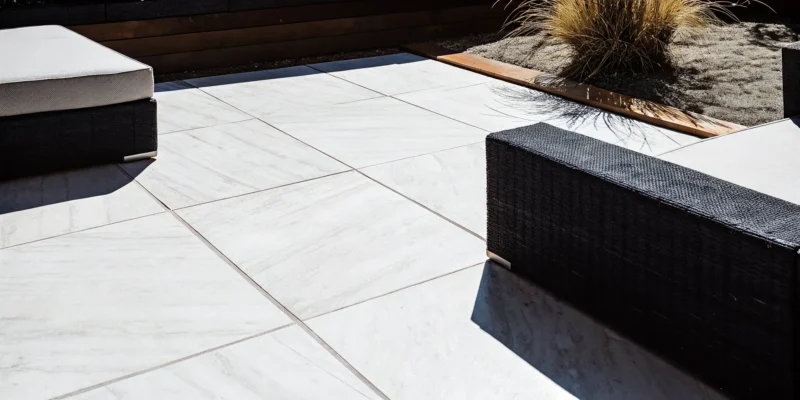
On Long Island, a patio or driveway has to handle more than summer foot traffic. Freeze-thaw cycles, salt, rain, vehicle weight, and changing light all test the materials and the installation beneath them. The right paving system starts with choosing a format suited to the space, then matching the base, drainage, and joint treatment to its intended use. Contact Gappsi through our contact page
From large-format stone-look finishes to thresholds, drainage, and winter performance, the best choice depends on how the surface will be used. The material benefits become clearer when viewed alongside the comfort, appearance, and climate demands shaping Long Island outdoor projects.
Why Long Island Homeowners Are Switching to Porcelain Pavers
Long Island patios and walkways need to handle bright summer sun, wet weather, and repeated winter freeze-thaw cycles. Porcelain pavers give homeowners a way to combine a deliberate design with practical outdoor performance. Their dense surface can reproduce the appearance of wood, slate, or natural stone, while the material avoids some of the upkeep associated with those finishes. For a broader look at available materials and applications, explore these porcelain and natural stone pavers. Schedule a free porcelain paver design consultation with Gappsi at contact page.
Design flexibility without a busy surface
Porcelain makes it easier to coordinate a patio with the rest of an outdoor living project. A wood-look finish can add warmth around a seating area, while a slate or stone-look surface can connect a patio to masonry, planting beds, or a pool surround. Large-format pavers reduce the number of visible joints, creating a cleaner, more continuous field across a patio. That proportion can make a compact Nassau or Suffolk yard feel more organized without relying on decorative patterns that compete with the landscape. The material also offers a consistent appearance from one piece to the next. Natural stone can vary in color and texture, which some homeowners appreciate, but porcelain provides more control when the goal is a coordinated installation. It can support a restrained palette across patios, walkways, and other connected surfaces.
More comfortable surfaces in direct sun
Outdoor paving should be comfortable as well as attractive. Porcelain pavers have a low thermal mass compared with natural stone, so they stay cooler to the touch in direct sunlight. That difference can matter around outdoor dining areas, lounge furniture, and paths used by children and guests during the hottest part of the day. Shade, color, and site orientation still affect surface temperature, but material selection is an important part of the planning process.
Built for Long Island weather
Winter performance is a central consideration for any Long Island hardscape. 20mm porcelain pavers offer frost resistance, helping them withstand freeze-thaw conditions when the system is designed and installed correctly. Their resistance to frost-thaw damage helps reduce the risk of winter cracking or flaking. This does not eliminate the need for proper grading, drainage, edge restraint, and base preparation. Instead, it gives the installation a material suited to the local climate, whether the project is a patio, walkway, or another low-traffic outdoor surface.
Porcelain Pavers vs. Concrete Pavers: Which Is Right for You?
The better surface depends on how you use the space, the base beneath it, and how much maintenance you want to handle. Porcelain pavers offer a dense, non-porous surface with a consistent appearance, while concrete pavers provide a familiar, adaptable option for patios, walkways, and other hardscape applications. The comparison below highlights the practical differences that matter on Long Island properties.
| Consideration | Porcelain pavers | Concrete pavers |
|---|---|---|
| Water absorption | Non-porous and highly resistant to water absorption, stains, mold, and moss. See the technical background on porcelain paving. | More porous than porcelain, so surface exposure and joint condition can influence staining and moisture management. |
| Sealing | Does not require sealing to maintain its appearance or functional properties. | May require sealing depending on the selected product, finish, and the owner’s maintenance preference. |
| Maintenance | Routine cleaning with soap and water is generally sufficient. Exterior-grade or polymeric sand in the joints helps inhibit weeds. | Maintenance can include cleaning, joint care, and periodic attention to stains or surface wear. |
| Lifespan | 20mm porcelain is rated for commercial-grade use because of its breaking strength and abrasion resistance. | Service life depends heavily on product quality, base preparation, drainage, traffic, and freeze-thaw exposure. |
| Freeze-thaw performance | 20mm porcelain is frost-resistant and designed to withstand Long Island winter freeze-thaw cycles when correctly installed. | Performance varies with the concrete mix, installation, drainage, and winter exposure. Poor preparation can increase cracking or movement risk. |
| Vehicle rating | Vehicle-rated porcelain can serve driveways, but it must be installed over a reinforced concrete base to help prevent cracking under vehicle weight. | Concrete pavers are commonly used for driveways, but the base, edge restraint, drainage, and installation method still determine performance. |
| Aesthetics | Large-format pieces create fewer joints, with looks that can mimic stone, slate, or wood. Porcelain also provides consistent color and texture. | Offers broad shape, color, and pattern flexibility, though color consistency and surface appearance depend on the selected product. |
Porcelain also has practical advantages around entertaining areas. It resists heat and grease stains from grills, making it a useful surface for an outdoor kitchen. Its 20mm thickness is approximately 3/4 inch, compared with traditional 2 to 3 inch concrete pavers. So it can integrate more easily with existing door thresholds when the assembly and drainage are properly planned. In short, choose porcelain when low absorption, no sealing, freeze-thaw resistance, and a refined large-format look are priorities. Concrete may be the better fit when a different pattern, thickness, or installation budget aligns with the project. The right decision should account for the complete system, not just the paver material.
What Makes 20mm Porcelain Pavers Different for Patios and Driveways?
The 20mm specification is more than a measurement. It identifies a thick, dense porcelain paving product engineered for exterior residential and commercial applications, rather than a thin indoor tile adapted for outdoor use. Italian porcelain paving in this format is designed to provide load-bearing performance when the installation system matches the intended use. You can review material options in a porcelain paver showroom on Long Island before choosing a surface for a patio, walkway, or driveway. That distinction matters because the paver and the base work together. A 20mm slab can be suitable for demanding outdoor areas, but a driveway still requires a properly designed foundation and vehicle-rated installation. For vehicle applications, the pavers should be installed over a reinforced concrete base to help prevent cracking under the weight of a car. Patios and pedestrian areas may use different systems depending on soil conditions, drainage, traffic, and the finished elevation.
High density for busy outdoor spaces
High density gives 20mm porcelain pavers strong resistance to weight and impact, which is useful on patios that hold dining furniture, grills, planters, and regular foot traffic. The same properties support commercial-grade use in public spaces, where abrasion and repeated traffic place greater demands on the surface. This does not eliminate the need for correct handling or installation. The sub-base, slab, bedding material, edge restraints, and joints must all be selected for the site.
Resistance to stains, mold, and moss
Porcelain pavers are highly resistant to staining, mold, and moss. Their non-porous composition also means they do not require sealing to maintain their appearance or functional properties. Occasional cleaning with soap and water can remove surface debris before it builds up. This makes the material a practical choice for outdoor dining areas and patios where food, soil, and seasonal moisture are part of normal use.
Slip resistance around water
For pool decks and other wet areas, look for an R11 slip-rated finish. This rating supports safer footing where water is frequently present. Porcelain is also resistant to salt and chlorine exposure, which can be important around pools. The finish, slope, drainage, and installation details still matter, so the paver should be evaluated as part of the complete outdoor surface rather than as an isolated product.
How Do You Install Porcelain Pavers Over Gravel or a Concrete Base?
The right installation method depends on the surface, expected traffic, drainage needs, and finished elevation. A low-traffic garden path may use a dry-lay approach, while a driveway requires a structural base designed for vehicle loads. In every case, the installer should confirm grading, account for water movement, and protect the finished height at doors and other thresholds. 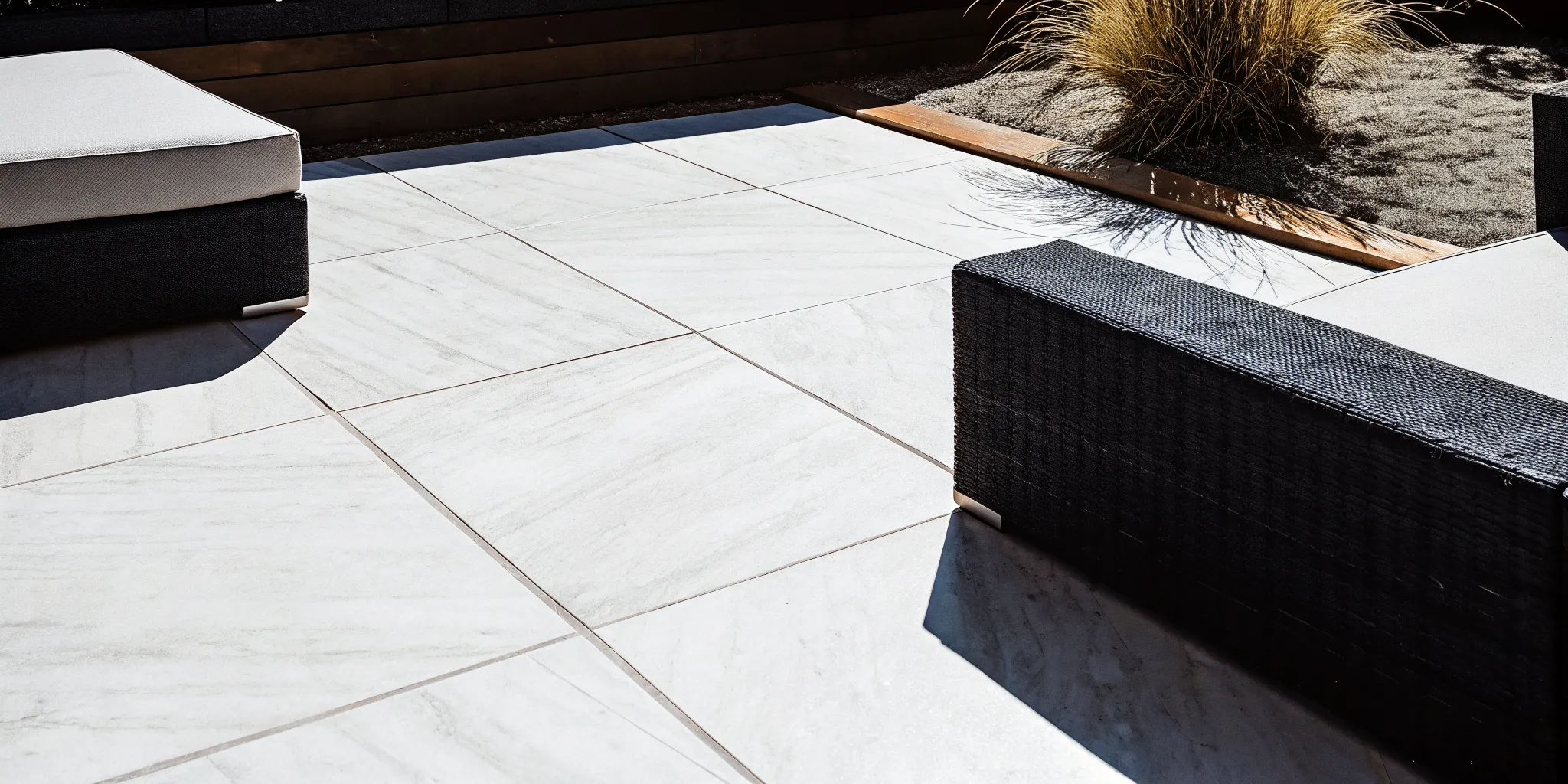
Compacted Granular Sub-Base
For a driveway or a heavily used patio, base preparation is the part that determines long-term stability. The typical assembly includes a compacted granular sub-base, a geotextile layer, and a rigid concrete slab where the application requires it. The granular material must be placed and compacted evenly rather than left loose beneath the pavers. Proper grading should direct water away from the foundation, and the edge restraint should keep the installation from shifting laterally. Vehicle-rated porcelain pavers must be installed over reinforced concrete to help prevent cracking under the weight and movement of vehicles. A gravel-only installation is not an appropriate substitute for a reinforced structural base in a driveway. The paver specification, slab design, drainage plan, and joint treatment should be reviewed together before installation begins.
Dry-Lay Over Grass or Gravel
A dry-lay application can work for a temporary or low-traffic landscape path. Porcelain pavers may be set directly onto prepared grass or gravel, creating stepping areas without the same structural assembly used for a driveway. This approach is useful when the goal is a flexible garden route or a surface that can be adjusted later. It is not the right choice for vehicle traffic, concentrated loads, or areas where unstable soil may cause movement. Spacing, level transitions, and drainage still matter. The pavers should sit firmly, remain reasonably flush with surrounding surfaces, and avoid locations where runoff can undermine the supporting material. An installer can recommend whether the site needs excavation, additional aggregate, or a more rigid system.
Thin-Set Over a Stable Concrete Slab
When an existing concrete slab is stable and level, 20mm porcelain can be installed with a thin-set mortar system. The slab should be evaluated for cracking, settlement, drainage, and bond suitability before mortar is applied. This method can simplify a renovation because the 20mm thickness integrates more easily with existing doors and thresholds than thicker concrete pavers. It still requires appropriate exterior-rated materials, sound surface preparation, and movement-joint planning.
Pedestal Systems for Elevated Decks
For elevated decks or rooftop-style outdoor areas, a pedestal system supports the pavers above the structural surface. The open assembly can conceal drainage pipes and leave access for utility maintenance without removing the entire surface. Pedestal height, spacing, edge detailing, and load requirements must be designed for the specific deck. This system is best handled as a coordinated design and installation project rather than treated as a simple gravel placement.
Are Porcelain Pavers a Good Choice for a Long Island Driveway?
Yes, porcelain pavers can be used for a driveway, but only when the product and installation system are designed for vehicle traffic. A driveway is not the place for a casual dry-lay installation over soil, grass, or loose gravel. Gappsi offers residential and commercial vehicle-rated porcelain pavers, with installation planned around the loads, drainage, and winter conditions specific to the property.
The base matters as much as the paver
For vehicle-rated applications, 20mm porcelain pavers must be installed over a reinforced concrete base. The rigid slab distributes the weight of cars and helps prevent cracking. Without that structural support, even a strong paver can be exposed to movement or concentrated loads that the surface system was not designed to handle. Proper driveway preparation typically includes a compacted granular sub-base, a geotextile layer where appropriate, and a reinforced concrete slab. The base should also be properly graded so water moves away from the home rather than collecting beneath the paving. If an existing concrete driveway is stable, level, and structurally sound, 20mm porcelain may be installed over it with a thin-set mortar system. The condition of that slab must be evaluated before selecting this approach.
Why 20mm porcelain works for vehicle areas
At 20mm, these large-format pavers provide a practical balance between exterior durability and finished elevation. Their thin profile integrates more easily with thresholds than traditional 2 to 3 inch concrete pavers, which can simplify transitions at a garage, walkway, or front entry. Larger formats can also reduce the number of joints across the driveway, creating a cleaner surface with fewer joint lines to coordinate. Look for a product with a commercial-grade load and abrasion rating, not simply a decorative outdoor tile. High-density 20mm porcelain is engineered for exterior residential and commercial applications. And its resistance to weight and impact makes it suitable for high-traffic areas when installed over the correct base.
What about stains, winter weather, and joints?
Porcelain’s non-porous surface is highly resistant to oil stains, mold, and moss, and it does not require sealing to preserve its functional properties. However, the joints and drainage details still matter. Exterior-grade or polymeric joint material helps stabilize the surface and inhibit weeds. On Long Island, frost resistance is another important consideration, since freeze-thaw cycles can expose weak installation systems. The right answer is therefore conditional but clear: vehicle-rated porcelain pavers are a sound Long Island driveway option when installed over a reinforced concrete base. Product rating, slab design, slope, joints, and transitions should be reviewed together before work begins.
How Do You Maintain Porcelain Pavers to Keep Them Looking New?
Do porcelain pavers require maintenance? Yes, but the routine is straightforward. Their non-porous surface does not absorb moisture or common spills the way porous concrete and natural stone can. So they do not need periodic sealing to preserve their appearance or performance. For homeowners who use a patio, pool deck, or outdoor kitchen regularly. That difference can reduce both upkeep and the risk of a surface that becomes difficult to clean.
Clean spills before they become surface buildup
For ordinary care, sweep away leaves, soil, and other loose debris, then wash the surface occasionally with soap and water. This removes surface residue before it accumulates in textured areas or joints. Porcelain is highly resistant to staining, so common outdoor messes such as food, oil. And wine are less likely to leave a permanent mark than they would on an unsealed porous surface. Its dense finish also helps resist acids and pool chemicals, although wiping up concentrated spills promptly is still a sensible practice. Unlike tinted concrete, porcelain pavers maintain color stability under intense UV exposure, so sunlight does not cause the same type of gradual fading. The material also contains no organic binders, which means it does not provide a food source for mold or fungus. That resistance helps keep the surface cleaner between washings, particularly in shaded or damp parts of a Long Island property.
Keep the joints stable and weed-resistant
Maintenance also depends on what surrounds each paver. Joints should be filled with an appropriate exterior-grade or polymeric sand. This helps stabilize the surface and inhibits weed growth, reducing the need for repeated hand removal or chemical treatments. Check the joints after heavy rain, winter weather, or pressure washing. If sand has been displaced, have the affected areas replenished using the correct joint material rather than sweeping in ordinary loose sand.
Use the right approach for seasonal care
Long Island freeze-thaw cycles make sound installation important, but 20mm porcelain is designed for frost resistance and should not crack or flake simply because of severe winter conditions. Use a broom or a suitable plastic shovel for snow removal, and avoid striking the pavers with metal tools. For pool areas, porcelain’s resistance to salt and chlorine supports easier seasonal care. For a patio or driveway with a persistent stain, consult the installer before using an abrasive cleaner or aggressive pressure-washing setting. In most cases, occasional gentle cleaning, sound joints, and prompt attention to spills are enough to keep the surface looking consistent for years. Contact Gappsi through our contact page
Frequently Asked Questions
Can porcelain pavers be used for driveways?
Yes, but a driveway requires vehicle-rated 20mm porcelain pavers installed over a reinforced concrete base. A compacted granular sub-base, geotextile layer, and rigid slab help support vehicle loads and reduce the risk of cracking. Dry-laying directly on grass or gravel is intended for temporary or low-traffic paths, not driveways.
What installation methods are available for porcelain pavers?
The right method depends on the site and traffic level. Low-traffic landscape paths may use a dry-lay installation over grass or gravel. Patios can be installed over a properly prepared base or set with thin-set mortar over a stable existing concrete slab. Pedestal systems are useful for elevated decks because they provide hidden drainage and access to utilities.
Are 20mm porcelain pavers suitable for Long Island winters?
20mm porcelain is designed for exterior use and offers frost resistance suited to Long Island’s freeze-thaw cycles. The installation still needs proper drainage, a stable base, and correctly prepared joints. The paver itself cannot compensate for settlement or trapped water beneath the surface.
Do porcelain pavers require sealing or extensive maintenance?
No sealing is typically required because porcelain is non-porous. Regular cleaning with soap and water removes surface debris, while exterior-grade or polymeric sand in the joints helps stabilize the installation and inhibit weeds. The surface also resists staining, mold, and moss.
Are porcelain pavers slippery when wet?
Choose a product with an appropriate slip-resistance rating for the intended location. An R11-rated porcelain paver is suited to areas frequently exposed to water, including pool decks. Surface texture, slope, drainage, and professional installation also affect how safely the finished area performs when wet.
Schedule Your Porcelain Paver Consultation
A thoughtful plan can help match your patio or driveway installation to the right paver thickness, base, drainage approach, and finish. Schedule a free porcelain paver design consultation with Gappsi for your Long Island project. Contact Gappsi through our contact page to discuss your goals and next steps with the team.