


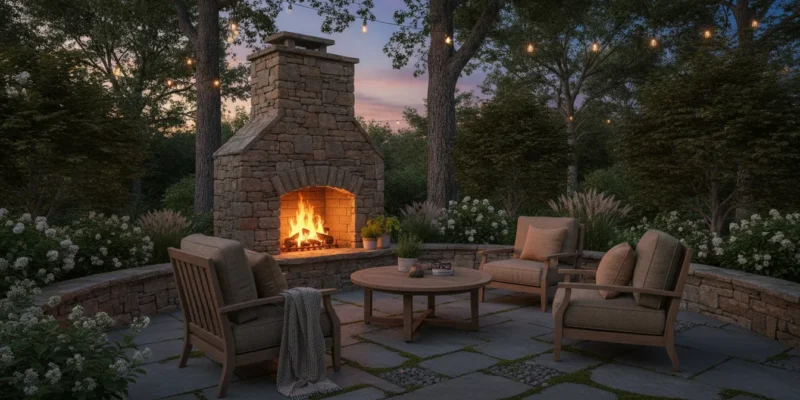
An outdoor fireplace can turn a Long Island patio into a more useful gathering space, but the final investment depends on much more than the fireplace unit itself. The structure, fuel type, chimney, finish materials, patio foundation, drainage, permits, and access to the property can all affect the design and installation plan.
The right starting point is to compare the major cost drivers together, then decide which construction approach suits your home and how you plan to use the space. Call Contact Gappsi through our contact page to discuss your outdoor fireplace project and request a site-specific Long Island quote.
What Does Outdoor Fireplace Installation Cost on a Long Island Patio?
The outdoor fireplace installation cost for a Long Island patio depends on more than one advertised figure. The design must be supported, finished, and connected to the rest of the property. Material selection, design complexity, and fireplace type all affect the scope. A simple freestanding unit may involve less structural work, while a built-in masonry fireplace can require footings, a chimney, custom veneer, and coordination with the patio. Call Contact Gappsi through our contact page to discuss your project and request a site-specific quote.
What price range should homeowners use for early planning?
Published market guides can provide a rough orientation, but they are not a substitute for a site-specific proposal. A prefabricated outdoor fireplace with installation is often listed in the range of approximately $1,500 to $9,000. A custom-built fireplace is commonly shown at roughly $6,000 to $20,000, depending on the construction and finish. These broad bands can help establish an initial budget, but they may not include every cost associated with a Long Island outdoor living project. For a custom design-build project, the final scope may include excavation and stable footings. It also covers masonry, a hearth, chimney or venting, and fuel connections. Permits, drainage, and restoration around the work area are part of the plan. An outdoor fireplace is generally built from brick, stone, concrete, or stucco, and each material brings different labor, detailing, and maintenance considerations. Natural stone veneer can also be selected to coordinate with the house facade or surrounding landscape.
Which factors have the greatest effect on the quote?
Fireplace type is one of the first decisions. Freestanding fireplaces are often easier to install and can suit a smaller budget or a patio that may change in the future. Built-in fireplaces create a more permanent, architectural feature, but their construction usually involves more planning and structural integration. The choice between wood and gas also changes the work. Gas units may require professional plumbing and gas-line installation, while wood-burning designs need appropriate combustion, flue, and spark-control planning. Material and design complexity are equally important. A straightforward rectangular surround has a different labor profile from a fireplace with a broad hearth. Raised seating, custom niches, a chimney cap, or retaining walls add to the design. Patio materials matter as well. Natural bluestone, travertine, and concrete pavers each affect the installation cost, appearance, and long-term durability of the surrounding area. On Long Island, Gappsi does not publish a fixed price for every fireplace because each property presents different conditions. The design-build quote depends on the required footings, selected materials, permits, access, utilities, drainage, and site conditions. A consultation allows the team to review how the fireplace will relate to seating, circulation, safe clearances, and the existing patio. That process produces a custom scope rather than an unrealistic one-size-fits-all number.
Built-In vs. Freestanding: Which Outdoor Fireplace Fits Your Budget?
The choice between a built-in and freestanding fireplace affects more than the appearance of your patio. It influences the amount of excavation, masonry, foundation work, permitting, and future flexibility required. A freestanding unit can be a practical solution when you want a defined gathering point without committing to permanent construction. A built-in fireplace becomes part of the architecture, with its proportions, veneer, chimney, and hearth designed around the home and patio. For Long Island homeowners comparing outdoor fireplace installation cost, the lowest initial price is not the only consideration. A site that needs new footings, drainage improvements, utility checks, or a rebuilt patio can change the scope of either option. The right comparison starts with how you plan to use the space and how permanently you want the fireplace integrated.
| Consideration | Built-in fireplace | Freestanding fireplace |
|---|---|---|
| Appearance | Permanent and architectural, with masonry, veneer, hearth, and chimney coordinated with the home. | More flexible and visually separate, with a compact footprint and a finished unit that can define a zone without becoming part of the structure. |
| Installation and permits | Usually involves layout planning, excavation, footings, foundation work, masonry, ventilation, and applicable municipal approvals. | Often easier to install, although clearances, fuel connections, ventilation, and local requirements still need professional review. |
| Cost range | Typically carries a larger project scope because construction includes structural preparation and custom finishes. A fixed price requires a site-specific quote. | Often a more budget-friendly starting point because less structural work may be needed. Final cost still depends on the unit, base, fuel, patio, and installation conditions. |
| Longevity | Designed as a long-term masonry feature when the foundation, drainage, firebox, and weather protection are properly built. | Can provide long service, but the unit and finish may be easier to replace or update as preferences change. |
| Maintenance | Requires attention to masonry joints, chimney or vent components, flue performance, and the surrounding hearth. | Maintenance is generally concentrated on the appliance, fuel connection, cover, and immediate base or enclosure. |
| Best for | Homeowners planning a permanent outdoor room, a coordinated patio renovation, or a fireplace that should look original to the property. | Homeowners seeking installation flexibility, a smaller commitment, or a defined fire feature within an existing outdoor living area. |
Why built-in masonry needs more site preparation
A built-in masonry fireplace is not simply a heavy object placed on top of pavers. On Long Island, the design must account for soil conditions and the load of the structure. Footings and foundation work are essential to stability, particularly where the fireplace, chimney, and hearth create concentrated weight. Excavation should also be preceded by a check for underground utility lines. That additional groundwork can raise the installation cost, but it also protects the finished fireplace from settlement and movement. A freestanding unit may avoid much of this structural work, yet it still needs a stable, properly prepared base and safe clearances. A careful design-build review can compare both options against your patio layout and fuel choice. It should also weigh your intended seating and long-term plans. This avoids treating the fireplace price as a stand-alone number.
Natural Stone or Stone Veneer: How Material Choice Shapes the Cost
The surround and hearth establish much of an outdoor fireplace’s visual character. They also influence the installation budget. Material selection affects both cost and durability, so the right choice depends on the structure, the patio surface, exposure to weather, and the appearance of the house. Full natural stone, including granite, bluestone, and travertine, is substantially heavier than a manufactured or natural stone veneer system. That added weight can require more masonry labor, stronger structural support, and a heavier footing beneath the fireplace. On a new built-in installation, those foundation requirements may affect excavation, reinforcement, delivery, and installation time. They are part of the real outdoor fireplace installation cost, even when they are not visible after construction.
When does full natural stone make sense?
Full stone can be a strong fit when the fireplace is intended to read as permanent architecture rather than a decorative feature. Natural bluestone provides a durable, classic surface for hearths and patios, with a color that can connect naturally to masonry, planting beds, and existing hardscape. Granite can provide a dense, structured appearance, while travertine offers a lighter, textured look when the surrounding design calls for it. The hearth deserves particular attention because it receives heat, foot traffic, ash, and weather exposure. The selected stone should be evaluated for its intended location, finish, drainage conditions, and compatibility with the firebox. A designer can also coordinate the hearth with materials for your fireplace so the surround does not look disconnected from the rest of the outdoor room.
Why is stone veneer often more budget-friendly?
Stone veneer reduces structural weight while preserving the visual texture of masonry. Because it is lighter than a full-depth stone assembly, it can require less support and may reduce handling and installation labor. That does not make every veneer project inexpensive. The substrate, weatherproofing, corners, transitions, hearth material, and underlying fireplace construction still need to be installed correctly. However, veneer can be a practical way to control the material and labor portion of the budget while achieving a layered stone appearance. Good veneer selection begins with the architecture already present on the property. Natural stone veneers can match existing home aesthetics or landscape features. The best result usually comes from matching the veneer to the house facade rather than choosing a finish in isolation. Color, scale, joint pattern, and texture should relate to the siding, foundation, retaining walls, and patio. The surface underfoot matters as well. Travertine pavers provide a textured, cool-to-the-touch surface around a fire feature, while bluestone can create a more grounded, classic transition from hearth to patio. Compare these options with the broader range of natural stone pavers before finalizing the surround and hearth. A coordinated material plan can prevent costly changes after the footing, patio layout, or veneer has already been installed.
Why Chimney and Ventilation Requirements Matter for the Final Price
A masonry outdoor fireplace is not complete when the firebox is finished. The chimney or vent system must move smoke away from occupied areas, create reliable draft, and fit the fireplace type, fuel, structure, and local requirements. Proper installation is critical for directing smoke away from living areas, as reflected in fireplace safety guidance from the Ohio Administrative Code. These requirements are an important reason an outdoor fireplace installation cost estimate can differ substantially between two projects that appear similar in photographs. For a wood-burning fireplace, the scope may include a correctly sized flue, a properly constructed chimney, and a spark arrestor to help contain burning embers. The flue design must work with the firebox and chimney dimensions rather than being selected as a generic add-on. Chimney height also matters. It must follow the manufacturer’s instructions or applicable local building codes so the system can develop proper draft. A taller or more complex chimney may require additional masonry, reinforcement, flashing, weather protection, and labor.
Clearances and municipal code can change the installation scope
Outdoor fireplaces must be positioned with safe separation from siding, rooflines, fences, pergolas, wood structures, and other combustible materials. Municipal building codes often regulate the minimum clearance from combustible structures, so the location selected during design may need to change before construction begins. Review the applicable requirements with the project team rather than assuming that an existing patio location is automatically suitable. The cost may include site revisions, a longer chimney, noncombustible construction, or additional protection around nearby surfaces. Fuel choice can also affect the planning process. Some jurisdictions restrict or prohibit wood-burning outdoor fireplaces because of air-quality concerns. That possibility should be checked before materials are ordered or masonry begins. A gas fireplace may avoid some wood-burning components, but it still requires a properly designed venting approach where applicable, along with professional gas-line work and inspections. The safest and most economical design is the one that addresses these conditions early, not the one that postpones them until installation. 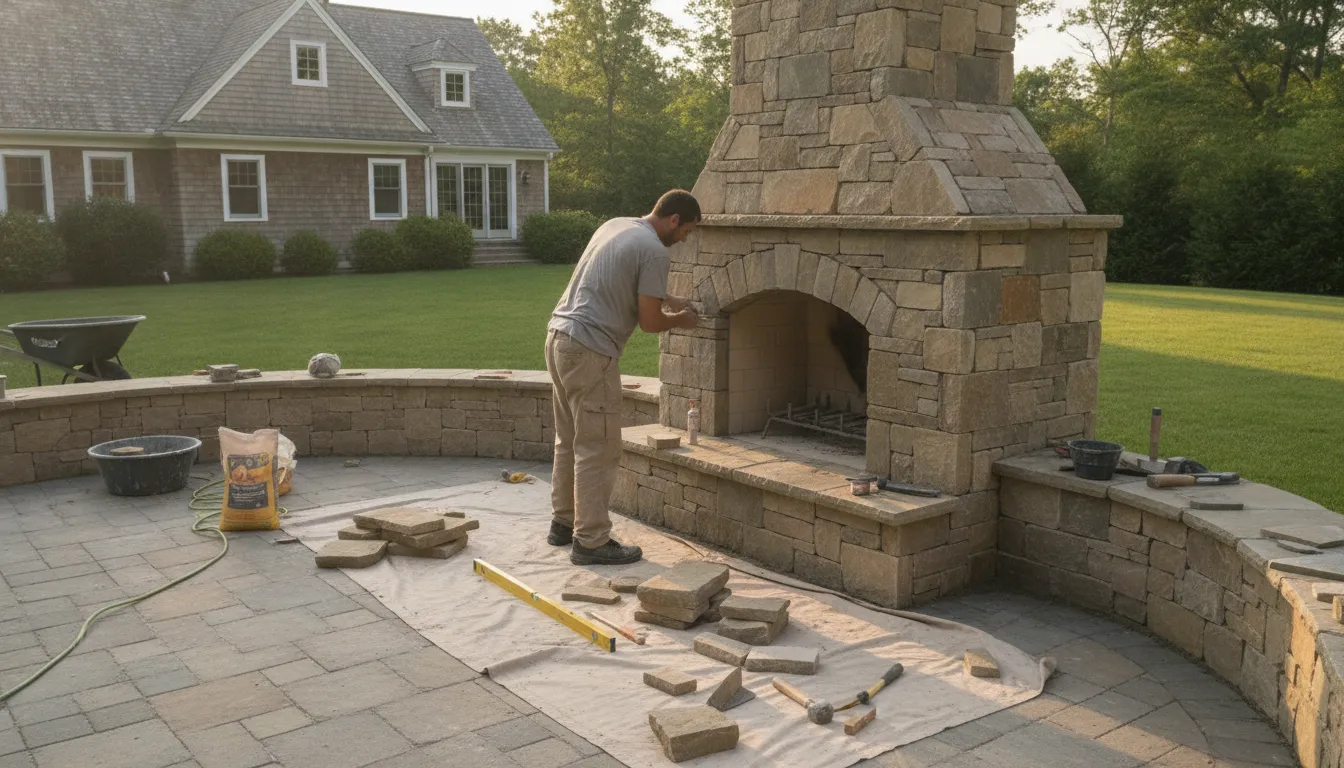 This is where an expert mason contractor adds value. A qualified mason can coordinate the firebox, chimney, flue, cap, hearth, clearances, and surrounding masonry as one system. The team can also align the structure with the patio and home, using a coordinated plan for masonry design and construction. In the final quote, ask whether chimney materials, ventilation components, code-related changes, engineering, and inspections are included. Transparent scope makes the price easier to evaluate and reduces the risk of expensive corrections after the work has started.
How Patio Design, Permits, and Site Prep Affect Outdoor Fireplace Installation Cost
The patio is not merely the surface beneath an outdoor fireplace. Its size, materials, drainage, circulation, and relationship to the house all influence the scope of work. That is why outdoor fireplace installation cost should be part of the complete outdoor living plan. It is not just the price of the firebox and chimney alone. A well-designed patio can extend a home’s usable living space and contribute to overall home value. Rutgers landscape guidance identifies outdoor living areas as an extension of the home. The practical cost of a patio depends on square footage, material selection, and site preparation. A compact fireplace terrace may require less paving than a larger entertaining area with seating walls, walkways, and dining space. Natural bluestone, travertine, and concrete pavers also carry different material and installation considerations.
Plan the patio around how people will use the fireplace
Good design begins with movement and use. The layout should provide enough seating capacity for the intended gatherings, preserve a clear path between the house and yard, and maintain safe clearance around the firebox. A fireplace placed too close to a doorway can disrupt traffic. One positioned without room for chairs, side tables, or circulation may look attractive in a drawing but function poorly after installation. These decisions can expand the patio footprint and add related construction, such as a larger hearth, integrated seating walls, lighting, or a connecting walkway. A pergola or other shade structure may also be incorporated to create a more comfortable, multi-season outdoor living zone. The result is a more useful plan, but each additional structure or hardscape element should be included in the initial scope instead of treated as an afterthought. For broader planning ideas, review these Long Island outdoor fireplace designs.
Permits and site preparation are normal parts of the scope
Homeowners in Nassau and Suffolk Counties should expect permitting and code review in a properly planned fireplace project. The exact requirements can vary by municipality and by the fireplace’s construction, fuel type, location, and relationship to nearby structures. Planning for permits early helps the design account for required clearances and avoids pricing a layout that cannot be approved as drawn. Site preparation can include excavation, removal of existing paving or soil, grading, base installation, and footing work for a built-in masonry structure. Before excavation begins, professional installers check for underground utility lines. The crew must also evaluate how water moves across the property. Proper site drainage is essential around a new patio and fireplace area because it helps prevent water pooling, settlement, and premature wear. These conditions explain why two properties with similar fireplaces can have different project totals. A level, accessible site with an existing suitable base may need less preparation than a sloped area requiring demolition, excavation, drainage corrections, and a larger foundation. A site-specific design and quote should account for those conditions before construction begins.
Does an Outdoor Fireplace Add Value to a Long Island Home?
An outdoor fireplace can add value to a Long Island home when it is part of a useful, cohesive outdoor living area. It should not be installed as an isolated feature. A well-designed patio can extend a home’s living space, which may strengthen its overall appeal to future buyers. Research from Rutgers identifies expanded outdoor living space as one way a patio can contribute to home value. That value is not limited to resale potential. An outdoor fireplace creates a practical reason to use the patio after summer evenings become cool. On Long Island, homeowners may use the area for conversation, dining, or quiet time during more of the spring and fall. The fireplace also gives the patio a clear focal point, helping organize seating and entertaining zones instead of leaving a large paved area without a natural center.
How Does a Fireplace Extend Outdoor Living Season?
Heat and structure work together. A properly scaled fireplace can make a patio more comfortable during cooler evenings, while its mantel, hearth, or surrounding wall gives the space architectural definition. The result is an outdoor room that feels intentional and usable beyond the hottest part of the year. That extended use can matter to buyers who want outdoor space that supports regular living, not just occasional summer gatherings. The design should account for seating capacity, movement through the patio, and safe clearance around the firebox. A fireplace that blocks circulation or leaves guests too close to the heat may reduce usability. Integrated seating walls, lighting, and a connected dining area can make the feature more functional after dark. A pergola or other shade structure may also help create a multi-season outdoor zone, provided the fireplace and structure are planned with appropriate clearances.
Why Can Outdoor Living Improve a Home’s Everyday Appeal?
Outdoor space can support more than entertaining. The University of Delaware notes that access to green spaces and outdoor living areas is associated with improved mental health and well-being. Research published through Johns Hopkins likewise connects outdoor living environments with physical and mental health benefits through relaxation and social interaction. These findings do not establish a guaranteed dollar return for one fireplace. But they explain why a comfortable, well-planned outdoor area can contribute to how homeowners experience and value their property. 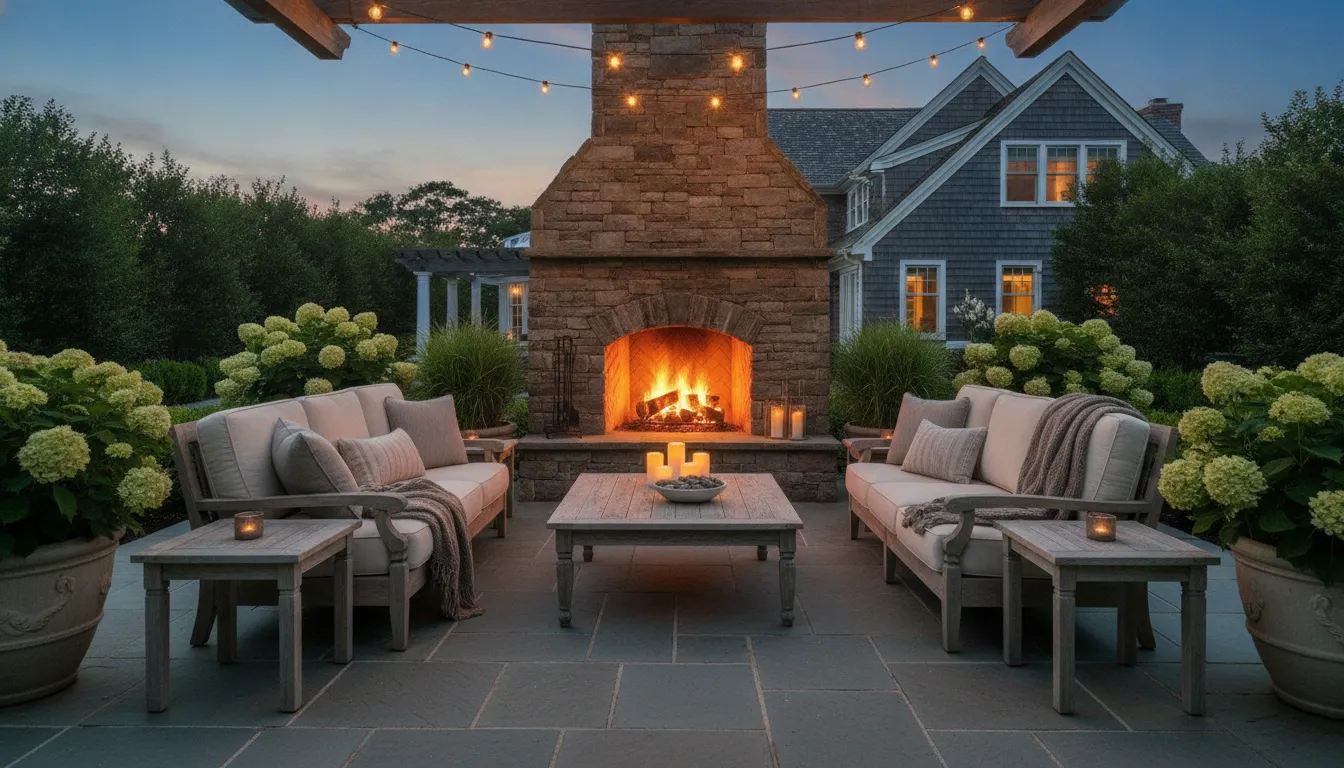 For Long Island buyers, the surrounding landscape and construction quality are part of that impression. A fireplace integrated with the home’s architecture, patio materials, planting beds, drainage, and walkways is more likely to feel like a lasting extension of the house. Coordinating those elements through landscape design and construction can also prevent the disconnected appearance that comes from adding a feature without planning the full setting. The practical answer: an outdoor fireplace may add value by extending patio use, improving the function of outdoor living space, and creating a memorable gathering point. Its contribution depends on workmanship, code-compliant construction, durable materials, and how naturally it fits the property. A custom design should support the way the household lives now while remaining understandable and useful to the next owner. Schedule a free outdoor fireplace design consultation and review your patio, materials, and ventilation plan before construction begins. Call Contact Gappsi through our contact page to get started.
Frequently Asked Questions
How far should an outdoor fireplace be from your house?
The required distance depends on the fireplace design, nearby combustible materials, manufacturer instructions, and local building requirements. Municipal codes often regulate clearances from combustible structures, so the layout should be reviewed before construction. A professional design should also account for seating flow, rooflines, windows, and safe access around the firebox. Local outdoor fireplace clearance guidance is a useful reference, but Long Island homeowners should confirm requirements with the authority having jurisdiction.
What is the cheapest way to build an outdoor fireplace?
A freestanding unit is often the lower-cost starting point because it can be easier to install than a built-in masonry fireplace. Keeping the design compact, selecting a straightforward finish, and avoiding major patio excavation can also reduce the scope. However, the right choice depends on the site, fuel type, foundation needs, chimney or venting, and utility work. A custom estimate should compare the complete installed project rather than only the firebox price.
What is the cost difference between wood and gas outdoor fireplaces?
There is no single difference that applies to every project. Wood-burning designs may require a chimney, specific flue design, and spark arrestor, while gas units require professional plumbing and gas-line installation. Gas features offer quick ignition and less cleanup, while wood creates a traditional fire experience. The best comparison includes equipment, fuel connections, venting, permits, masonry, and long-term maintenance.
How much does outdoor fireplace installation cost per square foot?
There is no reliable universal price per square foot because the fireplace and patio are priced by different scopes. The total changes with patio size, material selection, site preparation, drainage, foundation work, veneer, chimney construction, and utility access. Natural bluestone, travertine, and concrete pavers can each affect the finished budget differently. A site-specific design and installation proposal is more useful than applying a generic square-foot figure.
Ready to Plan Your Long Island Outdoor Fireplace?
A thoughtful design consultation can help you connect the fireplace, patio layout, materials, ventilation, and site requirements before installation begins. Gappsi can help shape an outdoor fireplace plan around your property and how you want to use the space. Schedule a free outdoor fireplace design consultation with Gappsi on Long Island by calling Contact Gappsi through our contact page.