


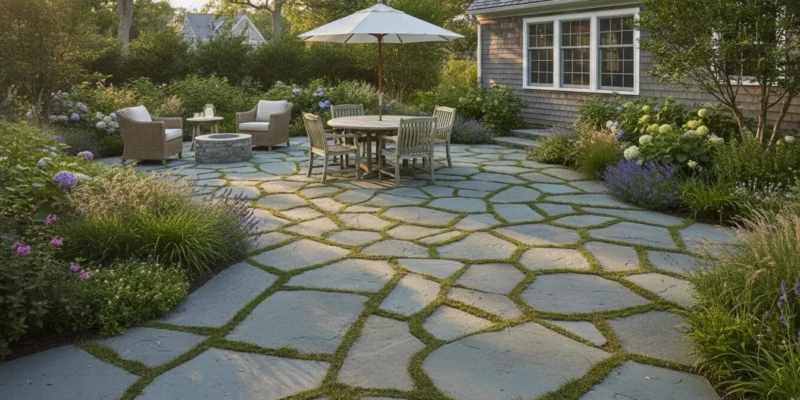
On Long Island, a patio has to do more than look inviting in July. It must fit the architecture of the home, manage water, and remain dependable through freeze-thaw winters in Nassau and Suffolk Counties. That makes the choice of stone, joint treatment, base, and maintenance plan just as important as the pattern you see from the back door.
Contact Gappsi through our contact page
A flagstone patio can be tailored to your property with natural bluestone, sandstone, or quartzite, using irregular or cut pieces and either flexible or mortared joints. Its performance depends on proper grading, drainage, installation, sealing, and seasonal care, not simply on the stone selected.
The right design balances the look you want with traffic, exposure, and how much maintenance you are prepared to manage. Start by considering why natural flagstone works so well for Long Island outdoor living. Then compare the materials and construction choices that determine how your patio performs over time.
What Draws Long Island Homeowners to a Flagstone Patio?
For homeowners in Nassau and Suffolk, a patio has to do more than create a place for a table and chairs. It must complement the architecture, handle changing weather, and connect naturally with the rest of the landscape. Flagstone answers those needs with flat slabs of natural stone that bring variation in color, texture, and shape to an outdoor living area. Unlike manufactured surfaces designed to look uniform, each stone has its own character, giving the finished patio a timeless appearance.
Long Island’s seasonal weather is another reason homeowners consider natural stone. Freeze-thaw cycles can stress outdoor paving when water enters weak points and expands as it freezes. When the base, grading, joints, and stone are selected and installed correctly. Natural stone pavers can remain stable through temperature fluctuations and resist the wear caused by the elements. The material choice matters, but the installation system matters just as much. Gappsi evaluates the site conditions before recommending a layout and setting method for a particular property.
A flagstone patio can also support a more deliberate approach to drainage. Permeable jointing, such as carefully designed sand or gravel-filled spaces where appropriate, allows some stormwater to infiltrate instead of sending every drop across the surface. The U.S. Environmental Protection Agency explains that permeable paving can help manage stormwater runoff and protect water quality. On a residential site, proper grading and drainage planning are especially important near the foundation, where uncontrolled runoff can contribute to pooling and moisture concerns. See the EPA’s guidance on green infrastructure maintenance for more context.
Homeowners also value the long-term design flexibility. Irregular pieces create an organic, relaxed setting around gardens and planting beds, while cut stone can support cleaner lines near a pool, addition, or formal entertaining area. Bluestone, sandstone, and quartzite each offer different visual and performance characteristics, so the right choice depends on traffic, exposure, color preferences, and the surrounding materials. A thoughtfully designed patio can become a lasting property asset, adding usable outdoor space and a natural focal point that may support property value over time.
Gappsi brings design, masonry, and site planning together for Long Island projects. That design-build perspective helps coordinate the patio with grading, planting, walkways, lighting, and the home’s existing style rather than treating the stone surface as an isolated installation.
Contact Gappsi through our contact page
The Best Flagstone Materials for Your Patio
The stone you choose shapes the patio’s color, texture, maintenance needs, and long-term performance. Natural flagstone options include bluestone, sandstone, and quartzite, each suited to a different design direction and level of use. Gappsi offers all three natural materials as part of its masonry and outdoor living services. Giving Long Island homeowners a way to compare samples before committing to a layout.
Bluestone: a dependable Long Island choice
Bluestone is one of the most frequently used natural stones for a Long Island flagstone patio. Its blue-gray coloring works with contemporary, traditional, and coastal landscapes, while its dense composition performs well in both dry and wet climates. That versatility makes it a practical choice for patios exposed to changing weather, regular entertaining, and the region’s seasonal temperature swings.
Bluestone can be selected in irregular pieces for a more organic arrangement or in cut shapes for cleaner lines. The final appearance depends not only on the stone itself, but also on the joint width, edge treatment, and relationship between the patio and surrounding planting beds. Gappsi’s flagstone patio materials guide provides additional context for comparing natural stone surfaces.
Sandstone: warmer color and softer character
Sandstone brings a warmer visual language to an outdoor space. Its earthy tans and browns blend naturally with planted borders, wood details, and homes with warm exterior finishes. Compared with bluestone, sandstone is softer, so the selection and installation should account for how much foot traffic, furniture movement, and exposure the patio will receive. It can be a strong fit when color and a relaxed, natural appearance are central to the design.
Because sandstone has a softer character, ask how the specific variety will perform in your setting and what sealing or maintenance plan is appropriate. A material consultation should consider the patio’s use, drainage, shade, and exposure rather than relying on color alone.
Quartzite: built for demanding use
Quartzite is extremely hard and well suited to high-traffic areas where the surface must withstand frequent use. It resists abrasion, fading, and staining, making it an option for busy patios. Outdoor kitchens, and entertaining areas where chairs, tables, and foot traffic are part of daily use. Its natural variation can also add visual interest without requiring an ornate pattern.
- Bluestone: blue-gray tones, broad design flexibility, and dependable performance in wet or dry climates.
- Sandstone: warmer tans and browns with a softer surface and an earthy appearance.
- Quartzite: exceptional hardness with resistance to fading and staining for high-traffic spaces.
| Material | Color and look | Best fit | Care notes |
|---|---|---|---|
| Bluestone. | Blue-gray tones that suit coastal and traditional settings. | Broad use across patios, walkways, and wet or dry climates. | Dense and dependable; reseal every 3 to 5 years. |
| Sandstone. | Warm tans and browns with an earthy character. | Patios that pair with planting beds and warm exterior finishes. | Softer surface; match traffic and exposure to the variety. |
| Quartzite. | Sparkling, varied surface that resists fading. | High-traffic spaces, outdoor kitchens, and entertaining areas. | Hard and low maintenance; requires proper joint upkeep. |
The best choice is the one that matches your home’s architecture, the way you use the patio, and the maintenance you are prepared to provide. Gappsi can help compare natural bluestone, sandstone, and quartzite in the context of your Long Island property.
Flagstone Patio Patterns: Irregular vs. Cut Stone
The pattern you choose establishes how your patio relates to the architecture of your home and the surrounding landscape. Irregular flagstone uses pieces with naturally varied edges, creating a relaxed, rustic surface with a strong connection to the garden. Cut or squared stone uses straighter edges and more consistent dimensions, producing a formal appearance that works well with geometric planting beds, contemporary homes, and structured outdoor rooms. The choice is primarily aesthetic, but it also affects layout, labor, joint design, and future maintenance.
When does an irregular pattern work best?
An irregular pattern is a good fit when you want the patio to feel organic rather than precisely manufactured. The shifting shapes can soften the transition between a terrace, lawn, planting beds, and stone walls. They also give the installer flexibility around curves, grade changes, or existing landscape features. The tradeoff is that each piece must be evaluated, rotated, cut, and fitted against its neighbors. That labor-intensive fitting process takes more time than laying a consistent grid, but it is what creates the one-of-a-kind surface that manufactured patterns cannot reproduce. Proper installation matters because unevenly supported edges can become trip points or allow individual stones to move.
Why choose cut or squared flagstone?
Cut stone creates clearer lines and a more deliberate rhythm. Consistent rectangles or squares can visually extend the lines of a home, define dining and seating zones, and make furniture placement easier. A formal pattern can also reduce the visual complexity of a small patio. It does not have to look stark. Varying stone tones, alternating layouts, and a carefully selected joint material can add warmth while keeping the geometry controlled.
Joint spacing is another design decision. Tighter joints emphasize a finished, masonry-like surface. Wider openings between irregular pieces can be filled with turf, gravel, or decorative stone to create a softer transition and support drainage. Permeable surfaces with suitable jointing allow stormwater to infiltrate rather than sending all runoff across the patio, as the EPA explains in its green infrastructure guidance. Gravel and stone-filled joints can also accommodate small amounts of movement during Long Island’s freeze-thaw cycles more readily than a rigid cement joint over a flexible base. Devine Escapes similarly notes that a gravel base can move slightly as temperatures change, while rigid cement is more vulnerable to cracking in northern winters: flagstone installation guidance.
Whichever pattern you select, plan the joints with the entire property in mind. Inspect open joints periodically and clear out leaves, sediment, or debris so water can continue to drain. A landscape designer or masonry contractor can help coordinate the stone pattern, joint width, grading, and planting details before installation begins.
How a Flagstone Patio Is Installed on Long Island
A durable installation begins below the stone. On Long Island, the patio must be planned around the home’s foundation, existing grades, soil conditions, and the way rainwater moves across the property. The goal is a finished surface that sheds water away from the house while allowing the base to respond to seasonal movement.
- Plan the layout, elevation, and drainage. The installation team confirms the patio footprint, finished height, access points, and relationship to doors, steps, planting beds, and the foundation. Proper grading and drainage planning help prevent water from pooling beside the home. Where appropriate, permeable joints and a draining base can also help manage stormwater runoff. A design-build approach allows the patio layout to be coordinated with landscape grading and other outdoor features from the beginning.
- Excavate and prepare the subgrade. Grass, loose soil, and old paving are removed to the depth required by the selected installation method and finished elevation. The exposed soil is shaped and compacted so it can support the base consistently. Areas with soft or unstable soil need to be corrected before the gravel is placed. Skipping this preparation can lead to settlement that no surface stone can conceal.
- Build the flexible base. For a typical dry-set flagstone patio, the prepared area receives approximately 3 to 4 inches of compacted crushed gravel. Road-base gravel creates the structural foundation, while stone dust, also called quarry screenings, can serve as the final leveling material. The base is installed in controlled layers and compacted thoroughly. Gappsi also uses proprietary guided base systems designed to improve stability in the finished installation.
- Choose dry-set or mortar-set construction. In a dry-set installation, flagstone rests on the compacted gravel and leveling layer. This approach is flexible, drains well, and makes future repairs simpler because an individual stone can be removed and reset. A mortar-set installation uses a more rigid concrete and mortar assembly. It creates a more permanent surface and can be appropriate for pool decks or areas carrying heavy furniture and frequent foot traffic. The right choice depends on the site, drainage plan, use, and maintenance expectations.
- Set, fit, and finish the natural stone. Each piece is positioned for stable contact, consistent transitions, and an intentional pattern. Thick natural stone is less prone to cracking than poured concrete when installed correctly, but its performance still depends on the supporting system. On Long Island, a well-built gravel base can flex slightly through freeze-thaw cycles. A rigid cement surface over a moving base is more vulnerable to cracking in northern winters. Joints are then filled with the material specified for the design and installation method, followed by a final inspection of grades, edges, and drainage paths.
Contact Gappsi through our contact page
Sealing and Caring for a Flagstone Patio
A well-maintained flagstone patio can retain its natural color and structural character through years of outdoor use, but care should match the stone, joint material, and installation method. Start with routine inspections. Remove leaves, soil, and other debris from the surface and joints so water can drain instead of collecting around individual stones. Check for loose pieces, eroded joints, or areas where weeds are beginning to take hold.
Joint maintenance is especially important. Filling gaps with suitable sand or mortar helps stabilize the flagstone and limits weed growth between stones. When joints become low or damaged, repairing them early is generally more manageable than allowing movement and washout to spread across the patio. This is also a useful time to check edges, steps, and transitions where foot traffic can expose movement sooner.
Cleaning should be careful rather than aggressive. Professional natural-stone cleaning uses high-volume, low-pressure hot water at approximately 200 degrees F to remove accumulated dirt while avoiding damage to the stone surface. Avoid harsh chemical cleaners, which can degrade the sealer and diminish the stone’s natural appearance. A cleaning professional can select an appropriate process for the stone and existing finish instead of treating every patio like concrete.
Sealing helps prevent staining and protects the patio from environmental wear, including the effects of regular use and changing weather. However, a new installation should remain unsealed for at least one year. This waiting period allows the patio to settle and release moisture before a protective coating is applied. After that initial period, Gappsi’s guidance recommends evaluating the surface and resealing approximately every three to five years. Water-based urethane sealers are an appropriate option when the surface and project conditions call for that type of protection.
Resealing is not a substitute for cleaning or joint repair. The surface should be properly prepared first, and the sealer should be compatible with the stone, prior coating, and desired appearance. On Long Island. Seasonal moisture and freeze-thaw conditions make it worthwhile to address small maintenance issues before winter rather than waiting until a stone has shifted or a joint has opened.
Gappsi provides cleaning, sealing, and restoration services for natural stone patios throughout Long Island. Learn more about cleaning and sealing options for an existing patio.
Contact Gappsi through our contact page
Frequently Asked Questions
Is a flagstone patio more expensive than concrete?
Usually, yes. Natural stone costs more than poured concrete because the material must be selected, shaped, fitted, and installed with greater attention to the site. The final price also depends on the stone, pattern, access, drainage work, and base preparation. A detailed site review is the best way to compare options accurately.
How much does a 20-by-20 flagstone patio cost?
A 20-by-20 patio covers 400 square feet. Typical installed pricing is about $15 to $30 or more per square foot. Placing a basic planning range at approximately $6,000 to $12,000 before unusual excavation, drainage, access, or design requirements. See Gappsi’s natural stone patio cost guide for additional context.
Can flagstone be laid directly on dirt?
It is not recommended. Without a properly compacted base, individual stones can shift, settle, and create drainage problems. A typical installation uses crushed gravel with a leveling layer, followed by either a dry-set or mortar-set system selected for the site, traffic, and desired maintenance approach.
How should a flagstone patio be cleaned and maintained?
Inspect the surface and joints regularly, remove leaves and sediment, and address weeds before roots spread. Professional natural-stone cleaning uses high-volume, low-pressure hot water at about 200 degrees F to avoid damaging the surface (Gappsi cleaning and sealing guidance). Avoid harsh cleaners that can affect the stone or sealer.
When should a new patio be sealed?
Wait at least one year after installation so the stone can settle and release moisture. After that, resealing is commonly planned every three to five years, depending on the stone, exposure, and use. A water-based urethane sealer may be appropriate when recommended for the specific material.
Ready to Plan Your Flagstone Patio?
A thoughtful consultation can help you compare stone materials, pattern options, drainage needs, and care requirements before installation begins. Gappsi Group can discuss your Long Island property and the patio experience you want to create. Schedule a free consultation by Contact Gappsi through our contact page.