


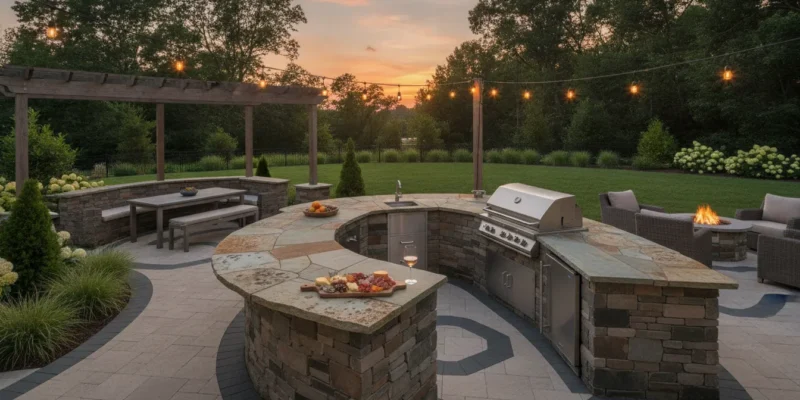
Outdoor cooking spaces are priced less like a single appliance and more like a small construction project. The final number depends on the footprint, site preparation, utilities, masonry, countertops, appliances, and how closely the kitchen is integrated with the patio and landscape.
Contact Gappsi through our contact page
For Long Island homeowners, an outdoor kitchen cost commonly falls between $5,000 and $50,000, while a basic setup may start around $3,000 to $6,000 and many custom-built projects land near the $13,000 to $17,000 range. Larger designs with granite, stainless steel appliances, added utility work, and custom masonry can exceed $20,000 to $30,000. These ranges are planning benchmarks, not a project quote, because each property has different access, grading, drainage, and utility conditions.
Gappsi approaches the budget as part of the design process, using concrete material selections and structural planning suited to Long Island’s seasonal conditions. Understanding the broad range first makes it easier to evaluate where your investment will have the greatest effect, beginning with the scope of the build itself.
What Does an Outdoor Kitchen Cost on Long Island?
For Long Island homeowners, a realistic outdoor kitchen cost can range from about $5,000 to $50,000, depending on the size, materials, appliances, site preparation, and level of customization. A national benchmark places the average custom-built setup near $13,000 to $17,000. These figures are useful planning anchors, but the final proposal should reflect the actual patio, utilities, access, and construction requirements at your property.
At the lower end, a basic outdoor cooking station may start around $3,000 to $6,000. This level may include a grill, a compact counter, and limited storage. It can work well when the patio is already prepared and utility connections are close to the proposed kitchen. It is not the same scope as a built-in masonry installation designed to coordinate with the rest of an outdoor living area.
- Basic setup: approximately $3,000 to $6,000 for a simpler cooking station with fewer components.
- Typical custom project: approximately $13,000 to $17,000 as a practical national average for a custom-built kitchen.
- Larger custom build: approximately $20,000 to $30,000 or more when the design includes extensive counters, storage, appliances, and site work.
- Complex installation: up to about $50,000 when the project includes substantial masonry, multiple appliances, granite or stainless steel components, or broader patio and landscape work.
The materials selected have a direct effect on both the estimate and the long-term performance of the kitchen. Gappsi designs custom outdoor kitchens with granite countertops, stainless steel grills, and masonry construction suited to the Long Island climate. Granite provides a durable work surface, while stainless steel is commonly selected for built-in cooking equipment and outdoor storage. Elaborate designs using these materials and larger appliance packages can pass $20,000 to $30,000, particularly when the installation requires additional preparation or utility coordination. Explore Gappsi’s custom outdoor kitchens.
It is also important to view the estimate as part of a longer-term outdoor living investment rather than focusing only on the initial purchase price. Custom masonry generally costs more upfront than a standardized island. But it can provide stronger durability and better continuity with an existing patio, retaining wall, pool area, or landscape design. Gappsi often integrates outdoor kitchen construction with larger landscaping and patio renovation projects, allowing the layout, drainage, materials, and circulation to be considered together. That coordinated planning can prevent costly changes later and create a more useful extension of the home’s living space.
Contact Gappsi through our contact page
For an accurate estimate, define the kitchen’s intended use first. A homeowner who mainly grills may need a different footprint than a family that wants refrigeration, a sink, serving space, storage, and seating for frequent gatherings. The right budget is the one that accounts for those daily needs while selecting materials that can withstand seasonal weather.
What Drives the Cost of a Custom Outdoor Kitchen?
Two outdoor kitchens can serve the same number of guests and have very different project totals. The difference usually comes from the scope of the build, the materials selected, the appliances included, and the condition of the site. BBQGuys places many outdoor kitchen projects in the $6,000 to $30,000 range, with more elaborate setups exceeding $30,000. That broad range reflects how quickly a custom design can expand beyond a simple grill island. See the BBQGuys cost overview for additional market context.
- Kitchen size and layout: A compact island with a grill and counter space requires less material and labor than a full outdoor kitchen with multiple work zones. Seating, storage, and room for a refrigerator or sink. Longer counters, corners, raised bars, and masonry walls all increase the build area.
- Cabinetry and storage: Weather-resistant cabinetry costs more than an open base, but it protects cookware, fuel accessories, and serving items from Long Island’s changing seasons. The number of doors, drawers, pullouts, and specialized storage sections affects both materials and installation time.
- Countertop materials: Granite, natural stone, and other durable surfaces add cost according to the material, thickness, edge profile, cutouts, and total square footage. Cutouts for a grill, sink, side burner, or faucet require careful fabrication and accurate field measurements.
- Built-in grills and appliances: Appliance selection can multiply the budget. A Lynx grill, for example, can run about three times the cost of a standard-brand grill. Refrigeration, burners, pizza ovens, sinks, ice makers, ventilation, and beverage centers add further cost, especially when each item needs its own opening and utility connection.
- Installation labor: A custom masonry kitchen is assembled on site rather than placed as a finished unit. Labor covers layout, framing or masonry, surface installation, appliance fitting, utility coordination, finish work, and testing. Complex designs require more skilled labor and more time.
- Site preparation and utilities: Existing patios, grades, drainage, gas lines, electrical service, water access, and permitting conditions can change the project requirements. If the kitchen is part of a larger patio or landscaping renovation, coordinating the work can improve efficiency, but it also expands the overall scope.
Gappsi evaluates these factors together instead of treating the appliance list as the entire estimate. Its approach combines Italian masonry craftsmanship with practical planning for the Long Island climate, including structural support, material transitions, drainage, and utility placement. Granite countertops and stainless steel grills may be central to the design. But their value depends on a base that is built correctly and a layout that works for the way your household cooks.
A site review can reveal cost differences that are difficult to identify from photographs alone. Gappsi can assess the patio, surrounding hardscape, access, grade, and utility routes before finalizing the design. Explore Gappsi’s custom outdoor kitchens to see how masonry construction can be integrated with the rest of an outdoor living project.
Construction vs. Prefab Outdoor Kitchens: What Each Costs
Prefab and custom masonry outdoor kitchens solve different planning problems. A modular island can provide a grill, counter space, and basic storage without the cost or construction time of a fully built installation. A masonry kitchen, by contrast, is designed around the property’s layout, utilities, traffic flow, and materials. The right choice depends on whether the priority is a lower initial outdoor kitchen cost or a permanent outdoor living feature that complements the home.
Prefab or modular islands commonly start around $2,000 to $6,000, although the final price changes with the grill, finish, countertop, delivery, utility connections, and site preparation. That range makes prefab attractive for homeowners who want a straightforward cooking station. It does not necessarily represent the complete installed cost, especially when a gas line, electrical service, drainage, or a new patio base is required.
| Factor | Prefab or modular island | Custom masonry kitchen |
|---|---|---|
| Typical starting point | About $2,000 to $6,000 for a basic island. | Often begins above a basic prefab setup and increases with site work and materials. |
| Design | Uses preset sizes, layouts, and finish selections. | Built around the property, patio, utilities, seating, and cooking needs. |
| Material options | Limited to the manufacturer’s available finishes and tops. | Can coordinate granite, natural stone, stainless steel, and surrounding masonry. |
| Long-term fit | Practical when a simple, movable, or smaller station is appropriate. | Better suited to a permanent outdoor living plan in the Long Island climate. |
Package pricing shows how quickly scope can change the budget. One outdoor kitchen package breakdown lists configurations from $9,999 to $50,000, moving from a small straight island to larger layouts with refrigeration, lighting, expanded appliances, and weather protection. Those figures are a useful reminder to compare inclusions, not just headline prices. A quote with a grill and countertop may exclude the same site work and utility connections included in a custom proposal. The package examples are documented by Moda Outdoor Living.
Why custom masonry costs more
Custom construction includes more decisions and more labor. The builder may need to prepare or reinforce the base, coordinate gas and electrical connections. Shape the island to the patio, and finish the structure with materials selected for outdoor exposure. Larger designs with granite countertops, stainless steel appliances, multiple work zones, or integrated seating can move into the $20,000 to $30,000-plus range, depending on scope and selections.
Gappsi approaches this work through custom masonry, using structural planning and durable materials such as granite and stainless steel. In the Long Island climate, that construction costs more upfront than a basic modular unit. But it can last longer, coordinate with the property’s hardscape, and hold value better over time. Gappsi can also integrate the kitchen with a patio or broader landscape renovation rather than treating it as a freestanding appliance island. Review the custom outdoor kitchen service when comparing a complete build with a prefab purchase.
Outdoor Kitchen Cabinetry, Countertops, and Size Costs
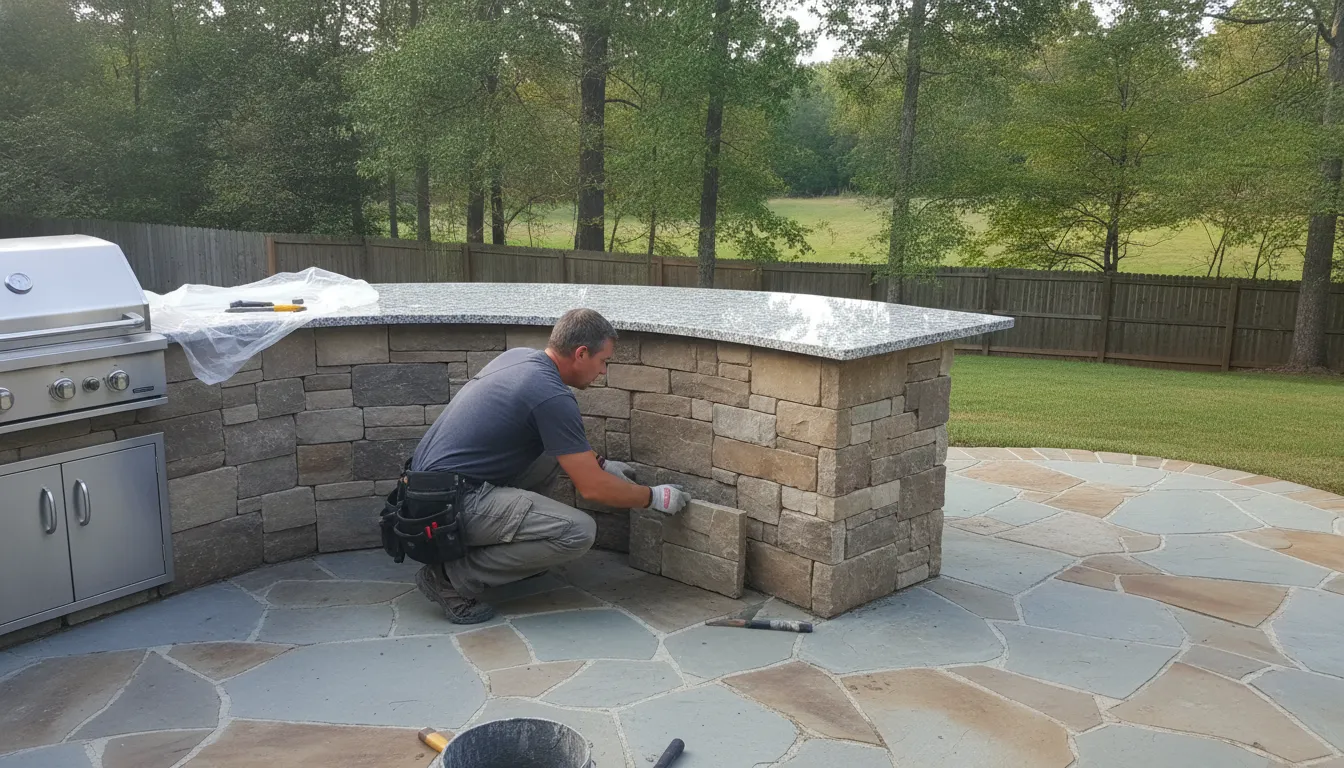
Footprint, cabinetry, and countertop selection shape an outdoor kitchen cost before appliances and labor are added. A compact cooking station with one work surface uses fewer materials than a full installation with a grill, refrigerator, sink, storage, and seating. On Long Island, the layout also needs to work with the existing patio, drainage plan, utility access, and circulation around the cooking area.
How much does kitchen size affect the budget?
Size affects more than the number of countertop square feet. A longer run requires additional framing, doors, shelves, trim, masonry, and finishing work. It may also require more excavation or adjustments to the patio and surrounding landscape. A small island can keep the project focused on grilling and preparation. A larger footprint can create separate zones for cooking, washing, serving, and storage, but each zone adds construction and material requirements.
Before choosing dimensions, Gappsi can map the kitchen against the property and the way your household uses the space. The plan should leave comfortable clearance around open doors and the grill while preserving a direct route between the home, dining area, and pool or patio. If the kitchen is part of a broader renovation, integrating the work with the patio can help coordinate site preparation. Gappsi often plans outdoor kitchens alongside landscaping and patio projects, rather than treating the island as a disconnected addition.
What should weather-resistant cabinetry include?
Outdoor cabinetry must withstand rain, humidity, temperature swings, and daily exposure to cooking residue. The frame, hinges, fasteners, doors, and interior storage all need to be selected for exterior use. Weather-resistant frames help protect the structure, while well-planned drawers and doors keep utensils, cookware, fuel accessories, and serving items organized.
Cabinet quantity should follow the cooking plan, not fill unused space. Storage beneath the grill may be enough for a focused station. A larger kitchen may justify dedicated drawers, a waste compartment, and storage near the refrigerator or sink. Gappsi uses masonry construction with durable components so cabinetry fits the structure and the Long Island setting. That approach can cost more upfront than a basic modular island, but it addresses the long-term performance of the complete installation.
Which countertop materials change outdoor kitchen cost?
Granite countertops provide a hard work surface with a natural stone appearance, while stainless steel offers a practical option around grills and food-preparation areas. Porcelain and other natural stone surfaces can coordinate the kitchen with surrounding paving. Review Gappsi’s porcelain and natural stone pavers and natural stone options when developing a consistent patio palette.
Material pricing depends on the selected slab, edge details, cutouts, thickness, support, and installation. Granite and stainless steel can increase the total compared with simpler surfaces, especially when the design includes a sink, cooktop, or multiple appliances. Gappsi can separate these component costs in the design proposal so you can compare the footprint, cabinetry, and countertop decisions instead of evaluating one unexplained total.
Built-In Grills and Appliances: Adding to the Budget
The cooking equipment often creates the largest swing in an outdoor kitchen cost. A simple built-in grill can anchor a compact island, while a complete appliance suite requires more cabinetry, counter space, utility connections, ventilation planning, and installation time. That difference matters when you are comparing an outdoor kitchen concept with a finished construction budget.
Brand selection also changes the equipment allowance. Research for outdoor kitchen packages notes that a Lynx grill costs about three times as much as a standard brand. That does not automatically make it the right choice for every homeowner, but it shows why two kitchens with similar footprints can have very different totals. Compare burner configuration, cooking surface, warranty, fuel type, rotisserie options, and replacement-part support rather than judging the grill by its width alone.
- Built-in grill: The core cooking appliance, with the enclosure, trim kit, gas connection, and required clearances included in the design.
- Outdoor refrigerator: Adds cold storage and convenience, but also requires an appropriately protected electrical connection and a cabinet opening sized for the unit.
- Ice maker: Useful for frequent entertaining, although it adds another appliance, water supply, drainage, and service consideration.
- Sink: Improves prep and cleanup, but plumbing access and drainage can substantially affect site work.
- Warming drawer or pizza oven: These features expand the kitchen’s cooking range and can require additional electrical, gas, counter, and ventilation planning.
A full appliance suite that includes a refrigerator, ice maker, sink, warming drawer, and pizza oven is more than a list of upgrades. It changes the scope of the project. The island may need to be longer or configured in an L shape. And each appliance must be coordinated with the masonry, countertop cutouts, utility routes, and access doors. A package with a professional grill, full suite, pizza oven, running water, and upgraded electrical is a materially larger build than a six-foot island with one grill.
Gappsi designs custom outdoor kitchens around how the space will be used, with stainless steel grills, granite, and masonry selected as part of the overall plan. The company frequently integrates outdoor kitchens with patios and landscaping, so appliance decisions should be made before the surrounding work is finalized. Review Gappsi’s custom outdoor kitchens to see how the cooking area can be coordinated with the broader outdoor living design.
When setting the allowance, price the appliance package separately from the structure and countertops. Then confirm fuel, water, drainage, power, ventilation, cabinet dimensions, and manufacturer clearances with the builder. This approach makes it easier to see whether you are adding one useful feature or committing to a larger kitchen system that will move the total budget into the higher end of the project range.
How to Budget Your Outdoor Kitchen Build on Long Island
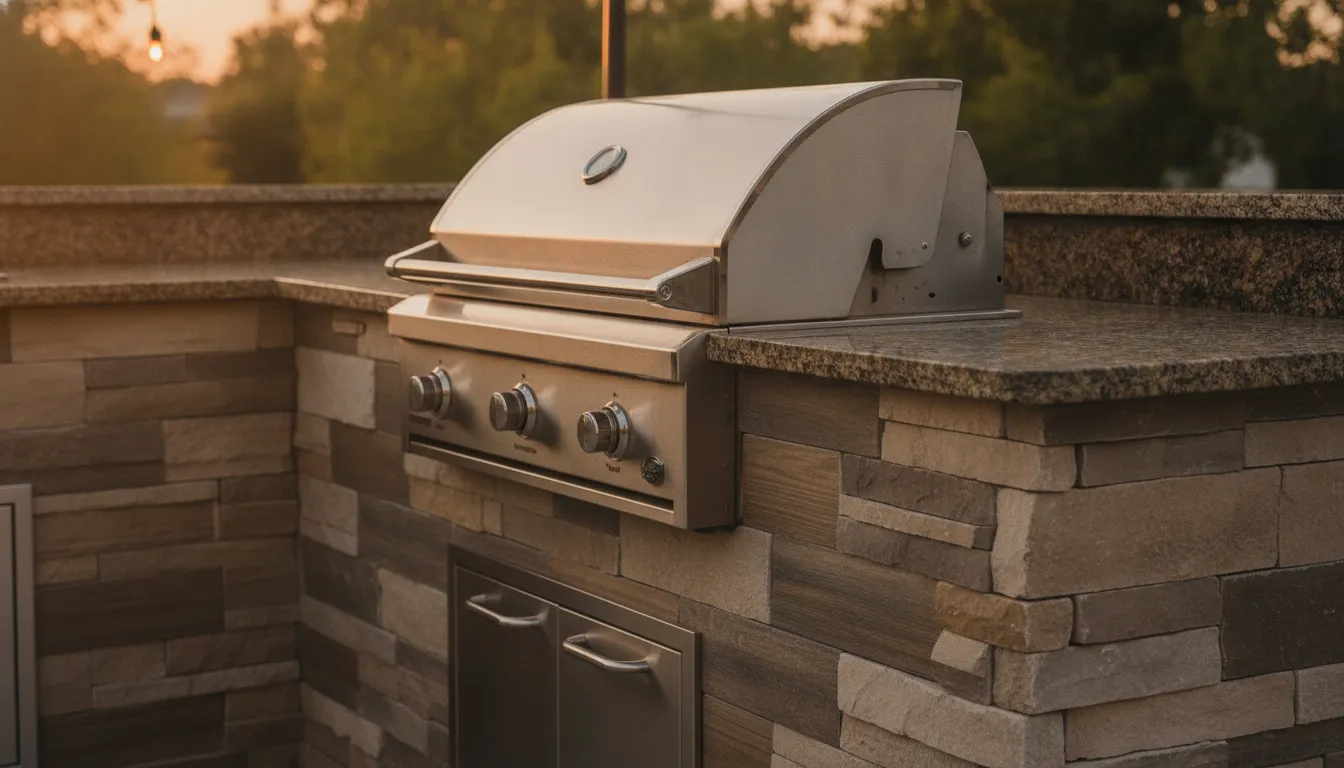
A reliable budget starts before you choose a grill or countertop sample. Use a written scope, verify the site, and account for the systems that make the kitchen safe and functional. For planning purposes, many custom outdoor kitchens fall between $5,000 and $50,000, while larger designs with substantial masonry, appliances, and countertops can exceed $20,000 to $30,000. A professional assessment turns that broad outdoor kitchen cost range into a project number that fits your property.
- Define the scope and size. Decide whether you need a compact grilling station, a straight run of cabinets, or a larger entertaining area with seating, refrigeration, storage, and serving space. Measure the proposed footprint and list each function before discussing finishes. A basic setup may start around $3,000 to $6,000, but added counter length, masonry, shade structures, and appliances move the budget upward. A clear scope prevents you from comparing a small island with a complete outdoor room.
- Set a range for every component. Separate the budget into structure, countertops, cabinetry or storage, grill and appliances, utilities, site preparation, and installation labor. This makes tradeoffs visible. You may choose fewer appliances while preserving the counter space you use most, or phase a refrigerator and beverage center for a later date. Elaborate custom designs can pass $20,000 to $30,000, so component-level planning matters more than relying on a single package price. The final estimate should show what is included, not just a total.
- Choose materials for the Long Island climate. Compare the maintenance and service life of each finish, not only its purchase price. Granite countertops, stainless steel appliances, and masonry construction create a durable assembly, but each affects the initial investment. Custom masonry typically costs more upfront than a modular option, while offering stronger durability and value retention when properly designed for local seasonal conditions. Gappsi uses Italian masonry techniques as part of its structural hardscaping approach.
- Plan gas, water, power, and drainage. Identify utility access at the beginning. A gas line, electrical circuit, water connection, lighting, drainage, or required ventilation can affect both the layout and the excavation plan. Utility work should be coordinated with the patio and landscape design instead of added after the structure is complete. This is especially important when the kitchen is part of a broader outdoor renovation.
- Schedule a site assessment. Have a builder review grade, soil, existing paving, access for materials, drainage, property constraints, and connections to the house. Site conditions can change the amount of preparation and labor required. Gappsi provides end-to-end planning that coordinates the kitchen with masonry, patios, and other outdoor living work. To discuss your property, Contact Gappsi through our contact page for a project assessment.
- Add a contingency before approving the design. Reserve part of the budget for concealed site conditions, utility adjustments, drainage improvements, material changes, or permit-related requirements. Then review the scope and allowance schedule with your builder. A documented contingency is more useful than an artificially low estimate that leaves no room for necessary work. Gappsi can help align the design, materials, utilities, and installation plan before construction begins.
Contact Gappsi through our contact page
Frequently Asked Questions
What is the average cost to build an outdoor kitchen?
Most custom outdoor kitchens fall between $5,000 and $50,000, with many custom-built projects clustering around $13,000 to $17,000. The final budget depends on the kitchen size, masonry, countertop material, appliances, utility access, and site preparation. These published cost ranges provide a planning reference, not a fixed Long Island quote.
Is it cheaper to build or buy an outdoor kitchen?
Prefab or modular islands generally cost less at the start, with published estimates beginning around $2,000 to $6,000. A custom masonry kitchen requires a larger initial investment, but it can be designed around the patio. Utilities, and home, while durable masonry is better suited to long-term use in the Long Island climate. Compare the published prefab and custom ranges before choosing.
How much does an outdoor kitchen cost per square foot?
There is no dependable single per-square-foot price because a compact kitchen with a built-in grill can cost very differently from a larger installation with refrigeration. Storage, gas, electrical work, and stone countertops. As a broad planning guide, basic setups may start around $3,000 to $6,000, while elaborate designs can exceed $20,000 to $30,000. The source cost breakdown illustrates how scope changes the total.
Does an outdoor kitchen increase home value?
A well-built outdoor kitchen can expand usable living space and return a meaningful portion of its cost at resale. Particularly when its stone and masonry materials complement the home. Value depends on workmanship, design, maintenance, and buyer demand, so plan the kitchen for everyday use rather than resale alone. Gappsi can coordinate the kitchen with a broader patio or landscaping project for a cohesive result.
Schedule Your Long Island Outdoor Kitchen Consultation
A clear plan helps you align the kitchen layout, masonry, countertops, appliances, and site work with the budget you have in mind. Gappsi can review your property and discuss practical options for a custom outdoor kitchen on Long Island. To schedule a free outdoor kitchen consultation, Contact Gappsi through our contact page