


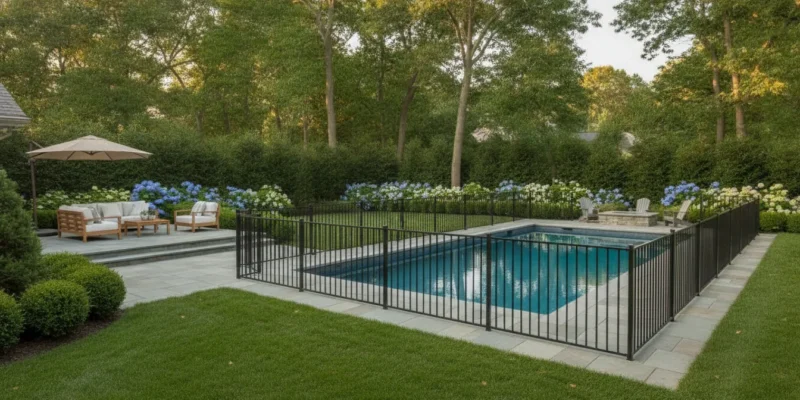
A pool fence should make the swimming area safer without making the backyard feel closed in. On Long Island, the design also needs to account for New York State requirements. Town or village review, gate hardware, paver edges, drainage, landscaping, and the way your household moves through the property. Choosing the material before mapping those conditions can create avoidable work later.
Contact Gappsi through our contact page
The best pool fence for a Long Island home is a code-conscious, four-sided barrier with a self-closing, positive self-latching gate. New York State sets a four-foot baseline, while local rules may add requirements. Material choice should reflect visibility, privacy, maintenance, site grading, gate use, and coordination with the paver deck.
This guide compares mesh, glass, aluminum, vinyl, and ornamental metal. It also explains the local code questions, cost drivers, and design checks that Gappsi reviews with homeowners in Nassau and Suffolk Counties.
What should a Long Island pool fence accomplish?
A Long Island pool fence should separate the pool from the house, yard, and normal routes through the property. The barrier needs a continuous layout, a properly operating gate, and enough clearance for inspection and maintenance. New York State rules provide a starting point, but the responsible town or village building department confirms the complete requirement.
The first goal is access control. The Centers for Disease Control and Prevention recommends four-sided pool fencing that separates the water from the house and uses a self-closing, self-latching gate. A fence that uses the home as one side may not provide the same separation as a complete enclosure. The final layout must account for every route a child, visitor, or pet could take toward the pool.
New York State requires a fence or other barrier at least four feet high around a swimming pool. The state rule also addresses gate closure, positive latching, and latch-handle height. These details matter at the same time as the fence material. An attractive barrier does not meet the practical goal if a gate drags on the deck, fails to close, or leaves the latch difficult to operate.
How should the gate fit daily use?
Place the gate where adults can reach the pool area comfortably while avoiding a direct, uncontrolled route from a back door. Check the swing direction, landing surface, latch clearance, furniture placement, and distance from pool equipment. A paver edge, planter, retaining wall, or landscape growth should not obstruct the gate. The route should remain usable when the deck is wet and when the yard is being maintained.
Review side gates, basement walkouts, patio stairs, and doors from the home before finalizing the fence line. A gate alarm, door alarm, or pool alarm may provide an additional safeguard where required or appropriate. Those devices do not replace a properly planned barrier or active adult supervision. Gappsi can coordinate the fence conversation with a larger swimming pool design and installation plan when the projects are connected.
Why do local rules matter beyond the state baseline?
Nassau and Suffolk properties are reviewed by local building departments as well as New York State. A town or village can apply more restrictive rules for height, openings, setbacks, alarms, permits, materials, or inspections. Confirm the rule for your parcel before purchasing a system or drilling into a completed deck. The New York State fencing regulation is a useful starting point, not a substitute for local approval.
Gappsi can help organize the fence around the pool, hardscape, and landscape plan. The local authority remains responsible for interpreting and approving the code requirements for the property.
Contact Gappsi through our contact page
Which pool fence materials work with a paver deck?
Mesh, glass, aluminum, vinyl, and ornamental metal can all serve as pool fence materials, but each supports a different combination of visibility, privacy, maintenance, and design character. Aluminum keeps open sightlines, mesh provides removable flexibility, glass preserves views, vinyl adds privacy, and ornamental metal creates a defined architectural edge.
Start with the view from the kitchen, living room, patio, and lawn. Then consider how often the fence will be cleaned, whether seasonal removal is realistic, where the gate will open, and how posts will meet the paver pattern. A small sample can look different when it is repeated around an irregular pool or installed beside a contrasting natural stone border.
| Material | Useful characteristics | Planning questions |
|---|---|---|
| Mesh | Light visual presence and removable options for households that need seasonal flexibility. | Who will remove, store, and reinstall it? Are sleeves, posts, and the approved use plan consistent? |
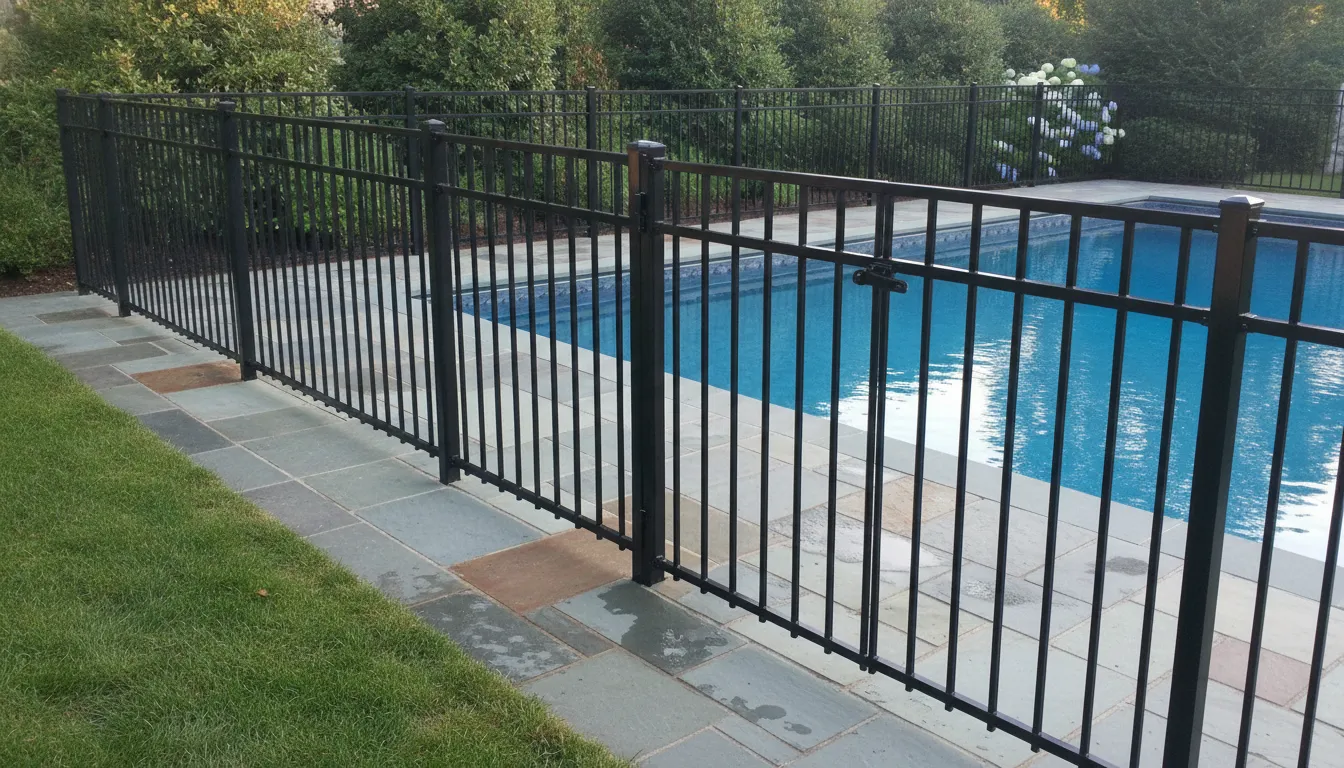
| Aluminum | Open sightlines, defined boundaries, and limited painting compared with some metal systems. | How will the finish, rail spacing, gate hardware, posts, and paver joints align? |
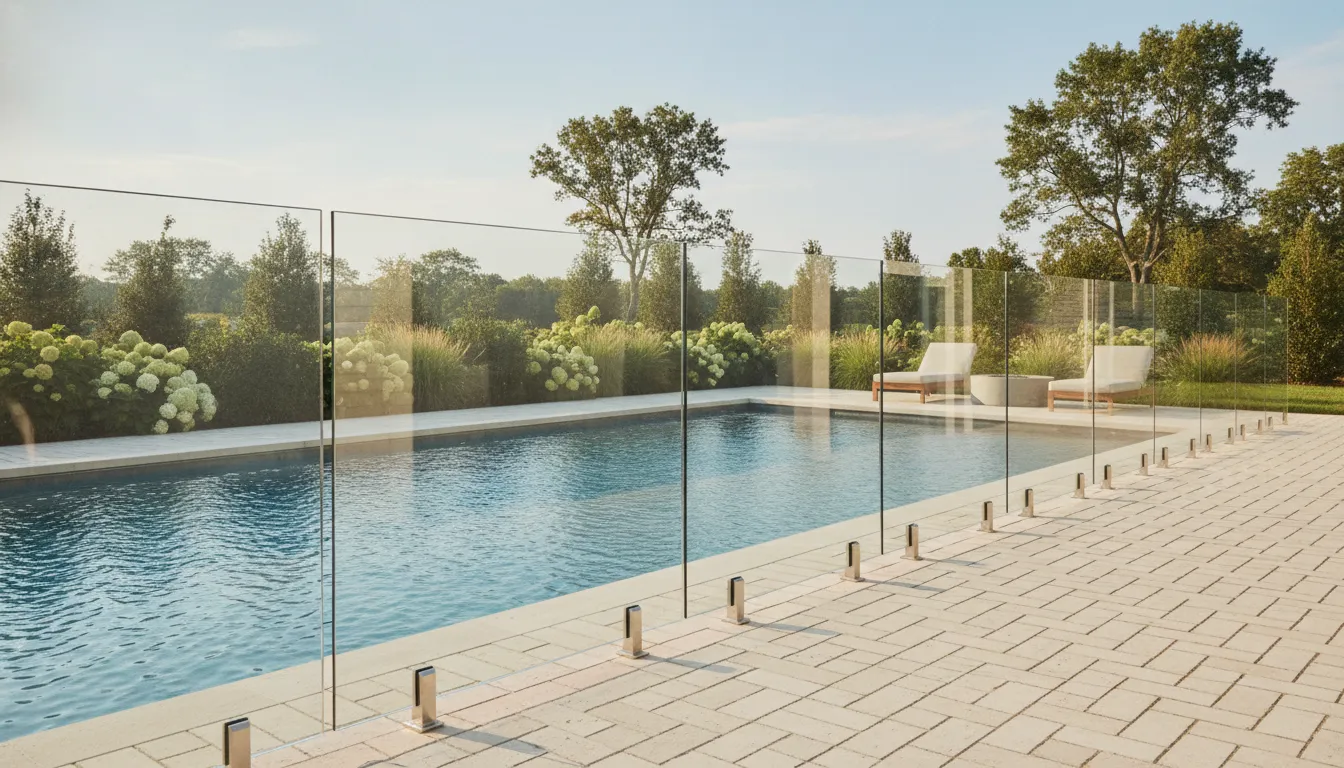
| Glass | Clear views across the pool area and a visually open deck edge. | Can the household keep panels clean? Are splash zones, drainage, and hardware access planned? |
| Vinyl | Privacy-oriented profiles and a surface that does not require frequent painting. | Will its larger visual footprint fit corners, transitions, gate clearance, and the yard? |
| Ornamental metal | Architectural character that can relate to railings, lights, and other metal details. | Is the exterior finish suitable, and will walls, steps, beds, and paver borders leave a continuous barrier? |
Aluminum often suits homeowners who want a defined boundary without blocking the view of the pool. Glass can keep a carefully detailed deck visually open, although it requires regular cleaning. Mesh may suit a household that can manage removal and storage. Vinyl may support privacy, while ornamental metal can reinforce a traditional or formal landscape. Every option still requires code and gate review.
Gappsi’s guide to fencing materials for Long Island properties offers additional context. Compare the pool-specific route, hardware, and maintenance plan rather than selecting from appearance alone.
How do New York State and village codes shape the plan?
Use New York State requirements as the baseline, then confirm the full rule with the applicable town or village building department. The review should cover the four-foot barrier, gate closure, positive latch, latch-handle height, openings, alarms, setbacks, permits, and inspection steps for the specific property.
Code review belongs at the beginning of the project. A fence route that works on a level deck may require different detailing on a sloped yard. When pavers meet lawn, or when a retaining wall changes the grade, the barrier must remain continuous without creating an unintended opening. The fence route should also leave enough space to service pool equipment and inspect the gate.
- Map the property. Mark the pool, house doors, patios, stairs, equipment pads, property lines, retaining walls, planting beds, and possible gate locations.
- Confirm the state baseline. Review the four-foot barrier, self-closing gate, positive latch, and latch-handle requirements in the New York fencing regulation.
- Ask the local building department. Confirm stricter rules for height, openings, materials, alarms, setbacks, permits, and inspections.
- Test the daily route. Check gate swing, latch access, walking clearance, furniture placement, equipment access, and adult sightlines.
- Coordinate the installation. Resolve post locations, deck drilling, grading, drainage, and transitions before ordering materials or disturbing pavers.
The New York pool safety information also discusses barriers and additional safeguards. This article provides general information, not legal advice. The local building department determines what is approved for your property. Gappsi can coordinate design and construction questions, while the authority having jurisdiction makes the final code decision.
What affects pool fence cost on Long Island?
Pool fence cost on Long Island depends on linear footage, material, gates, hardware, deck access, grading, drainage, obstacles, site preparation, and permit requirements. A measured site review is more useful than a universal price because two pools with similar dimensions can require very different installation work.
Linear footage is the first major factor. A four-sided barrier around a large or irregular pool uses more material than a compact layout. Curves, angles, tight corners, elevation changes, and multiple gates can increase fabrication and labor. An existing wall or structure may affect the route, but it should only count as part of the barrier when the local authority confirms that it qualifies.
Material and installation methods also change the scope. Mesh may involve sleeves, seasonal handling, storage, and reinstallation. Aluminum and ornamental metal require posts, rails, gates, finishes, and suitable attachment points. Glass uses panels and specialized hardware, with cleaning and drainage access to consider. Vinyl can have a larger physical footprint that affects corners, transitions, and gate clearance.
Deck conditions deserve a separate review. Drilling through pavers or concrete, protecting finished surfaces, moving planting, working around pool equipment, and preserving drainage can add preparation steps. Narrow side yards, stairs, retaining walls, buried utilities, and limited staging space can change the installation sequence. Include permits and inspections in the budget conversation instead of relying on a generic online estimate.
For related hardscape planning, review Gappsi’s porcelain and natural stone paver services. A coordinated fence and deck plan can reduce conflicts between post locations, paver joints, drainage paths, and future repairs. Homeowners considering an existing stone surface can also review paver sealing guidance as part of the maintenance discussion.
How can a pool fence complement pavers and landscaping?
A pool fence complements pavers when the posts, gate, finish, transitions, drainage, planting, and circulation are designed as one system. The goal is a continuous barrier that looks intentional, leaves the gate usable, protects finished surfaces, and preserves access for maintenance and future hardscape work.
Begin with the primary views into the pool. Glass can preserve sightlines from the home and patio. Aluminum can define the pool edge while keeping the deck visually open. Vinyl can create more privacy, and ornamental metal can relate to railings, lighting, or other architectural details. Gappsi considers the wider outdoor plan so the fence does not look like an isolated addition.
Post placement is particularly important around pavers. Align posts with the deck geometry where possible, and avoid placing them at visually awkward points in contrasting pavers. When a fence meets a stair, retaining wall, lawn, planting bed, or house wall, design that transition before installation. Keep the barrier continuous while allowing enough room to inspect hardware and complete future repairs.
Drainage and planting need the same attention. The fence line should not create a low spot where rainwater, mulch, or soil collects around posts. Plants should not grow into the gate swing or hide the latch. Low-growing shrubs and grasses can soften the perimeter, but they need room for pruning and inspection. Avoid thorny plants beside a frequently used gate.
Plan for maintenance beyond the first season. Glass needs regular cleaning to stay clear. Pavers may be reset or extended, so record post locations and preserve access for hardscape work. If removable mesh is considered, decide who will remove, store, and reinstall it. Confirm that the system’s use fits the approved safety plan.
Gappsi’s travertine paver information can help homeowners compare color, texture, and surface transitions. The objective is not a perfect material match. It is a fence, deck, landscape, and gate system that remains safe and coherent as the property changes.
How do you choose the right pool fence for your property?
Choose a pool fence by matching the approved barrier design to the household, pool location, visibility goals, maintenance tolerance, privacy needs, and paver layout. Make the final selection after local code review and a site check, not from material appearance alone.
Start with the household and pool layout
A pool close to the home needs a route that separates water from doors, patios, and normal paths through the yard. A freeform pool, raised spa, narrow side yard, or pool beside a retaining wall may need more careful gate and post planning. If children regularly visit, discuss the difference between a permanent four-sided enclosure and a removable barrier used during selected periods.
The CDC pool safety guidance supports separating the pool from the house with a four-sided fence. New York State also sets a four-foot minimum and a 40-inch latch-handle height. Confirm current local requirements before selecting a system, particularly when the property has unusual access points or existing structures.
Match visibility, privacy, and maintenance
Choose glass when preserving an open view is important and regular cleaning is acceptable. Choose aluminum when you want defined boundaries, open sightlines, and limited painting. Consider vinyl when privacy and a more substantial profile matter. Choose ornamental metal when the fence should reinforce the architecture of the landscape. Consider mesh after discussing installation, removal, storage, and the approved safety plan.
Gappsi can compare these options alongside the pool, pavers, landscape, and access conditions. Homeowners planning several parts of the property can review Gappsi’s masonry design and construction services and the Contact Gappsi through our contact page for the next planning step.
Contact Gappsi through our contact page
Frequently Asked Questions
How high does a pool fence need to be in New York?
New York State requires a pool fence or other barrier at least four feet, or 48 inches, high. The gate must close automatically and latch positively, and the latch handle must be at least 40 inches above grade under the state requirement. Ask the applicable town or village building department to confirm stricter local rules. Read the New York fencing regulation.
Is a removable mesh pool fence appropriate for a Long Island home?
Removable mesh can provide flexibility when a household needs a barrier during visits or selected periods, but it must be installed, maintained, and used consistently. The CDC recommends a four-sided fence that separates the pool from the house. A permanent enclosure may provide a more consistent baseline for an active pool, subject to local approval and site conditions. See Gappsi’s swimming pool safety fence information.
Which pool fence material works best with pavers?
Aluminum often coordinates well with concrete pavers and natural stone because it provides open sightlines and a defined edge without frequent painting. Glass can preserve views but needs regular cleaning. Vinyl can add privacy, while ornamental metal can support a traditional architectural style. The best selection depends on code, deck geometry, visibility, maintenance, and the home’s landscape design.
Do pool fences require alarms in addition to gates?
In some situations, New York safety guidance may call for pool, door, or gate alarms in addition to a fence or barrier. Requirements depend on the property and local jurisdiction. Ask the applicable building department which safeguards, permits, and inspections apply before construction. Alarms can add another layer of protection, but they do not replace a complete barrier or supervision. Review New York pool safety information.
Plan your Long Island pool fence with Gappsi
A well-planned pool fence should support safety, local approval, daily circulation, and the look of the paver deck. Gappsi can help Long Island homeowners compare mesh, glass, aluminum, vinyl, and ornamental metal, then coordinate the selected system with the pool, hardscape, grading, drainage, and landscape.
Bring your pool dimensions, existing deck details, access points, and local code questions to the first conversation. A site-specific review can identify the practical scope before materials are ordered or finished surfaces are disturbed.