


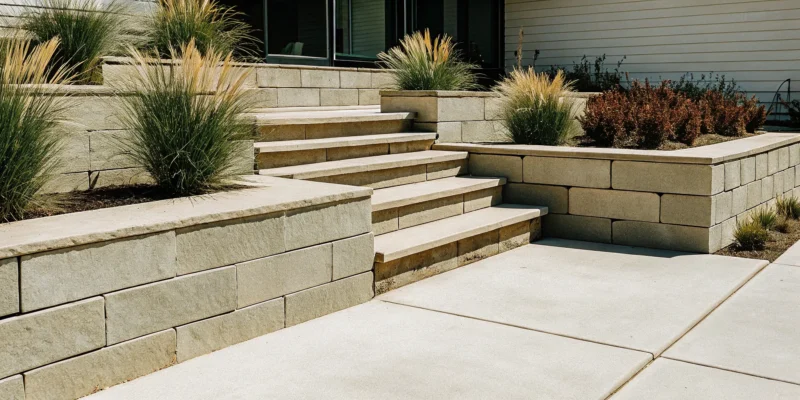
That sloped yard on your Long Island property might feel like a lost cause. It’s the part of your lawn where chairs won’t sit flat and every landscaping idea seems impossible. But what if you could transform that challenging grade into the perfect spot for a new patio, a terraced garden, or even the foundation for a swimming pool? A retaining wall is the key to unlocking this hidden potential. Specifically, using large retaining wall blocks provides the structural power and aesthetic weight needed for such a transformation. They are engineered to hold back earth with incredible force, creating beautiful, functional, and level spaces where none existed before.
Key Takeaways
- Choose Blocks for Function and Form: The right large block depends on your wall’s height and load demands; options like engineered SRW blocks offer efficiency, while natural stone provides a unique look. Select the material that meets your project’s structural needs first.
- Prioritize Proper Site Prep and Drainage: A successful retaining wall is built on a solid foundation. A professional site assessment, a well-designed drainage system, and adherence to local Long Island permit rules are non-negotiable steps to prevent wall failure.
- Budget for a Professional Build: The total cost includes materials, specialized labor, and heavy equipment. While DIY may seem cheaper, investing in a professional installation ensures your wall is built safely and correctly, protecting your property and saving you from expensive future repairs.
What Are the Main Types of Large Retaining Wall Blocks?
When you start planning a retaining wall, you’ll quickly discover that not all blocks are created equal. The type of block you choose will affect your wall’s appearance, strength, and installation process. From engineered concrete systems to timeless natural stone, each option has a specific purpose. Understanding these differences is the first step to building a wall that is both beautiful and structurally sound for your Long Island property.
Your project’s scale, the slope of your yard, and your personal style will all guide your decision. Let’s walk through the main types of large retaining wall blocks so you can feel confident choosing the right material for your home.
Segmental Retaining Wall (SRW) Blocks
Segmental Retaining Wall blocks, or SRWs, are engineered concrete units designed to interlock with one another. This system creates a strong, stable wall without needing mortar. The real advantage of using large SRW blocks is efficiency. Some large-format blocks can cover up to eight square feet of wall face at a time, which means your wall comes together much faster.
This quicker installation can significantly reduce labor costs, making it a practical choice for large-scale projects. SRW systems are a go-to for professional masonry construction because they combine strength with a streamlined building process, giving you a durable wall in less time.
Precast Concrete Blocks
Precast concrete blocks are manufactured in a controlled factory setting, which ensures every block is uniform in size, strength, and color. These blocks are often designed with reinforced cores and clever interlocking shapes that fit together securely. This design is what gives them incredible structural stability.
Because of their strength, precast blocks are an excellent choice for taller retaining walls or walls that need to support heavy loads, like the area around a driveway or patio. Their consistent quality means you get a reliable, high-performance wall that looks clean and uniform. You can explore a variety of manufactured porcelain and natural stone options that offer similar consistency and durability for your outdoor spaces.
Modular Block Systems
Modular blocks are a versatile and popular choice for residential projects. As the name suggests, these blocks are designed as part of a system where the pieces fit together seamlessly. They are particularly effective for building walls on sloped properties, allowing you to create level tiers or manage erosion with ease.
One of the best things about modular blocks is the design flexibility they offer. They come in a wide range of colors, textures, and sizes, so you can achieve a look that perfectly complements your home’s style. As you consider different retaining wall materials, modular systems provide a great balance of function and aesthetic appeal.
Natural Stone Blocks
For a timeless and truly one-of-a-kind look, nothing compares to natural stone. Large natural stone blocks or beams are ideal for substantial projects, such as creating terraced hillsides or building massive retaining walls that need to withstand serious pressure. Each stone has unique colors, textures, and shapes, adding organic character to your property.
While they can be more challenging to install due to their weight and irregular shapes, the result is a stunning, high-end feature that blends beautifully with the environment. Integrating large stone blocks is a hallmark of expert landscape design, creating focal points that are both functional and breathtakingly beautiful.
Specialty Blocks (Corner, Dual-Face, and Cap Blocks)
Specialty blocks are the finishing pieces that give your retaining wall a polished, professional look. You’ll need corner blocks to create clean, sharp turns and angles in your wall’s design. For freestanding walls that are visible from both sides, like a low seating wall on a patio, dual-face blocks provide a finished texture on every surface.
Finally, cap blocks are used to finish the very top row of the wall. They create a smooth, flat surface that completes the structure and protects the joints below. These essential components are available at the Gappsi Store and are key to transforming a basic wall into a beautifully integrated landscape feature.
The Advantages of Using Large Retaining Wall Blocks
When you’re planning a retaining wall for your Long Island property, the materials you choose will have a huge impact on the project’s timeline, cost, and final appearance. While smaller blocks have their place, large retaining wall blocks offer some serious benefits that are hard to ignore. They provide a powerful combination of strength, efficiency, and style that makes them an excellent choice for a wide range of landscaping projects.
From transforming a sloped yard into a functional outdoor living area to creating stunning terraced gardens, large blocks deliver a professional and long-lasting result. Their substantial size not only makes a visual statement but also contributes to a more streamlined construction process. Let’s look at the key advantages that make these blocks a go-to for homeowners and professional builders alike.
Quicker Installation and Lower Labor Costs
One of the most practical benefits of using large retaining wall blocks is the speed of installation. Because each block covers a significantly larger surface area, your wall comes together much faster than it would with smaller, more numerous units. For example, some large blocks can cover up to eight square feet per unit. This efficiency means fewer hours on the job, which can lead to substantial savings on labor costs.
This simplified process makes construction more efficient from start to finish. Our expert masonry teams can build your wall with precision and speed, minimizing disruption to your property and your daily life. A faster build means you get to enjoy your beautiful new landscape sooner.
Superior Durability and a Longer Lifespan
Large retaining wall blocks are built to last. Their sheer mass and weight provide incredible stability, ensuring your wall can withstand the pressures of soil and the challenges of Long Island’s weather. Made from high-density, wet-cast concrete or solid natural stone, these blocks are engineered for robust tensile strength and long-term performance.
This inherent durability means your retaining wall will stand strong for decades, resisting shifting and cracking far better than smaller alternatives. They are designed to endure freeze-thaw cycles without deteriorating, giving you peace of mind and a structure that requires very little maintenance. Investing in high-quality porcelain and natural stone blocks ensures a beautiful and enduring addition to your property.
Greater Structural Strength for Taller Walls
If your project involves a significant slope or you envision a tall, impressive wall, large blocks are the superior choice. Their size and weight give them immense structural integrity, allowing you to build much higher walls than you could with standard-sized blocks. In many cases, large blocks can be used to construct gravity walls up to 14 feet high without needing geogrid reinforcement.
For even taller or more complex projects, these blocks can be combined with geogrid to safely build walls over 50 feet high. This strength is essential for safely holding back large amounts of earth and is a key reason they are used in ambitious landscape design projects. This capability opens up a world of possibilities for creating dramatic, multi-level outdoor spaces.
More Design Flexibility and Usable Space
Beyond their structural benefits, large retaining wall blocks are incredibly versatile. They are the perfect tool for turning a sloped, difficult-to-use yard into valuable, flat real estate. By terracing a hillside, you can create new, functional areas for a patio, a garden, or even a beautiful new swimming pool. This not only makes your yard more enjoyable but can also add significant value to your home.
These blocks also offer a wide range of aesthetic options to match your home’s style. You can choose from various colors, textures, and finishes, from the clean lines of modern precast concrete to the timeless beauty of natural stone. This design flexibility allows you to create a wall that is not just a structural element but a stunning feature of your landscape.
5 Things to Consider Before Choosing Your Blocks
Choosing the right blocks for your retaining wall is about more than just looks. It’s a decision that affects the wall’s strength, longevity, and cost. Before you fall in love with a particular style, it’s important to think through the practical side of your project. Considering these five key factors will help you and your contractor select the perfect large blocks for a wall that is both beautiful and built to last.
Wall Height and Load Demands
The height of your wall is the first factor to consider, as it directly influences the type of block you’ll need. A simple, low garden wall has very different requirements than a tall structural wall holding back a significant amount of earth. As a wall gets taller, the pressure from the soil behind it, known as the load, increases dramatically. For walls over a few feet high, you’ll need large, heavy blocks specifically engineered for structural applications. These projects aren’t for weekend DIYers; they require extensive design and engineering to ensure they are safe and stable. A professional masonry contractor can calculate the load demands and specify the right block to handle the pressure for years to come.
Your Property’s Soil and Slope
Every property is unique, and the conditions of your land play a huge role in retaining wall construction. The type of soil you have, whether it’s sandy and loose or dense with clay, affects how water drains and how much pressure is exerted on the wall. Likewise, building on a steep slope presents more challenges than building on a gentle one. A thorough site assessment is critical to identify these factors. An experienced landscape designer will analyze your property’s specific soil and slope to create a plan that ensures your wall is built on a solid foundation and can withstand the forces of nature, preventing future issues.
Planning for Proper Drainage
One of the most common reasons a retaining wall fails is poor drainage. When water gets trapped in the soil behind a wall, it creates immense hydrostatic pressure. This pressure can cause the wall to bulge, crack, or even collapse entirely. Proper drainage isn’t an optional add-on; it’s an essential part of the wall’s structure. This typically involves installing a gravel backfill and perforated pipes at the base of the wall to give water an escape route. Taking the time to plan for drainage from the start will save you from the headache and expense of having to restore a failed wall down the road.
Block Size, Weight, and Equipment Requirements
Large retaining wall blocks are not something you can just toss in the back of your truck. These blocks are incredibly heavy, with some weighing thousands of pounds. Moving and placing them correctly requires specialized heavy equipment, like excavators with lifting clamps, and operators who know how to use them safely. This is a key reason why building a large block wall is a job for professionals. They have the right tools and expertise to handle the materials safely and efficiently. You can see examples of this equipment in action on the Gappsi YouTube channel, which shows how these massive projects come together from start to finish.
Local Long Island Permits and Regulations
Before you break ground, it’s crucial to understand your local building codes. On Long Island, most towns and villages in Nassau and Suffolk counties require a permit for retaining walls over a certain height, which is often around three or four feet. Taller walls almost always require plans stamped by a licensed engineer to ensure they are designed safely. Navigating these regulations can be confusing, as the rules can vary from one municipality to another. Working with an experienced local contractor is your best bet, as they will be familiar with the specific permit requirements in your area and can manage the application process for you, ensuring your project is fully compliant.
How Much Does a Large Block Retaining Wall Cost?
Figuring out the budget for a large block retaining wall involves more than just the price of the blocks. The total cost depends on the materials you choose, the complexity of the installation, and other factors like site preparation and permits. Understanding these components will help you plan your project and avoid surprises down the road. Let’s break down the main expenses you can expect.
The Price of Blocks and Materials
The materials themselves are a primary cost driver. For most residential retaining wall projects, you can expect to pay between $20 and $55 per square foot. If your design includes large concrete blocks and a wall over four feet tall, the price might lean toward the higher end of that range, from $30 to $55 per square foot, partly because it requires heavy machinery to install. The specific type of block also matters. While standard concrete blocks are cost-effective, premium options like textured or colored blocks and beautiful natural stone will have a different price point. Your choice will ultimately balance your aesthetic goals with your budget.
Budgeting for Installation and Labor
Labor is a significant part of your retaining wall budget, typically ranging from $20 to $60 per square foot. This cost reflects the skill needed to build a wall that is not only attractive but also structurally sound and long-lasting. A professional team handles everything from excavating the site and preparing the base to placing heavy blocks and installing proper drainage. For larger projects, this requires operating machinery like excavators and skid steers. While DIY might seem tempting, improper construction can lead to wall failure. Investing in professional installation ensures the job is done right the first time, saving you from costly repairs later.
Accounting for Extra or Hidden Costs
Beyond blocks and labor, a few other costs can pop up. If your retaining wall is over three or four feet high, you will likely need a building permit from your local Long Island town, which can cost anywhere from $100 to $600. You should also factor in site-specific needs. If your property has significant drainage issues, addressing them will add to the cost but is crucial for the wall’s stability. Additionally, if you are replacing an old, failing wall, the demolition and removal can sometimes be more complex and expensive than starting from scratch. A thorough site evaluation can help identify these potential expenses early on, including any necessary restoration work.
Finding the Best Value on Long Island
Getting the best value for your project is about finding a balance between quality and cost. While you can find materials at big-box retailers, the true value often comes from a partner who can manage the entire process. A full-service provider ensures the materials are top-notch and the installation is flawless, which prevents expensive issues in the future. At Gappsi’s supply yard, you can explore a wide selection of high-quality blocks and stones firsthand. By sourcing materials and expert installation from one trusted Long Island company, you get a cohesive plan, streamlined execution, and a single point of contact, ensuring your investment results in a beautiful and durable retaining wall.
Where to Find Large Retaining Wall Blocks on Long Island
Once you have an idea of what you need, finding the right blocks on Long Island is straightforward. Your best option depends on the scale of your project, your budget, and how much expert guidance you want. From specialized design showrooms to large home improvement stores, you can find a great fit for your retaining wall.
Gappsi’s Showroom and Supply Yard
The best way to choose a material is to see it in person. At the Gappsi showroom, you can explore a curated collection of high-quality retaining wall blocks, from manufactured concrete to gorgeous natural stone. Seeing the materials firsthand allows you to appreciate their true color and texture. More importantly, our team of masonry experts can offer personalized advice, helping you select the perfect block for your property’s style and your wall’s structural needs. We provide a complete solution, from supplying the materials to designing and building the final structure.
Local Masonry Supply Stores
Long Island is also home to several dedicated masonry supply yards that cater to contractors and experienced homeowners. These suppliers typically stock a wide inventory of professional-grade blocks from various manufacturers, giving you plenty of options to compare. While they may not offer the integrated design services of a company like Gappsi, their staff is often very knowledgeable about the products they carry. They can be a great resource if you already have a detailed plan and simply need to source high-quality materials for your project.
Big-Box Retailers
For smaller, more straightforward projects, you can find a good range of large retaining wall blocks at big-box retailers. Stores like Home Depot and Lowe’s are conveniently located throughout Long Island and offer competitive pricing. This makes them a practical choice if you’re on a tight budget or handling a simple DIY wall. You can browse a solid selection of blocks online or in-store, and they often provide discounts for bulk purchases, which can help you save on costs.
Related Articles
- Three level retaining wall long island – Gappsi Group
- Learn About Quality Retaining Walls for Your Long Island Backyard – Gappsi Group
- Paving Stones: Services, Types, Colors, Patterns Long Island – Gappsi Group
Frequently Asked Questions
Can I build a large block retaining wall myself? For a small garden wall under a couple of feet high, a DIY approach can be manageable. However, when you start working with large, heavy blocks, the project becomes a job for professionals. These blocks weigh hundreds or even thousands of pounds and require heavy machinery to move and place correctly. More importantly, a professional ensures the foundation is properly prepared and the drainage is installed perfectly, which are critical steps for building a safe and long-lasting wall.
How do I know if I need an engineer for my retaining wall? A good rule of thumb is that most towns on Long Island require engineered plans for retaining walls over three or four feet tall. You will almost certainly need an engineer if the wall is supporting a heavy load, like a driveway, or is part of a complex tiered design. An experienced local contractor will know the specific codes in your area and can manage the entire permitting and engineering process for you, ensuring your project is safe and compliant.
What’s more important: the look of the block or its strength? You should never have to sacrifice strength for style. The best approach is to find a block that delivers both. The first step in any project is to determine the structural needs based on the wall’s height and what it will be holding back. This will give you a category of suitable, strong blocks. From there, you can explore the different colors, textures, and finishes to find the perfect look that complements your home and landscape.
How can I be sure my new wall will have proper drainage? Proper drainage is a non-negotiable part of a professional retaining wall installation. Your contractor should create a drainage system behind the wall using a specific type of gravel backfill and a perforated pipe along the base. This system gives water an escape route, preventing pressure from building up behind the wall, which is the most common cause of failure. When you discuss your project, make sure this is a clear part of the construction plan.
Are natural stone blocks better than concrete blocks? One isn’t necessarily better than the other; they just serve different goals. Natural stone provides a timeless, one-of-a-kind beauty that is perfect for high-end, organic landscape designs. However, it can be more expensive and complex to install. Engineered concrete blocks offer incredible strength, uniformity, and a wide variety of styles at a more predictable price point. The best choice depends on your budget, your property’s style, and the overall vision for your project.