


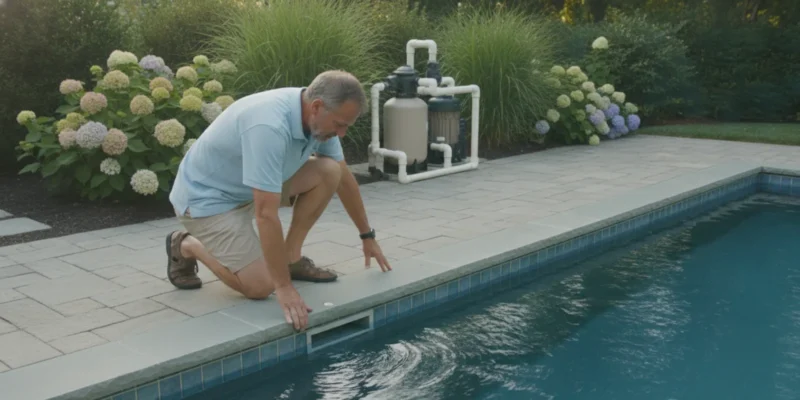
A pool that keeps losing water raises a practical question: is the change normal evaporation, water use, or a leak? This guide to pool leak repair shows Long Island homeowners how to observe the pattern, separate clues from conclusions, and prepare for an informed inspection.
Contact Gappsi through our contact page
Water loss alone does not identify a source. Evaporation, splash-out, filter backwashing, water features, and leaks can all lower the level. Begin by documenting what happens rather than applying a patch or assuming that a visible crack is the cause. A short, consistent record can help a professional focus the assessment.
How can you tell when pool leak repair may be needed?
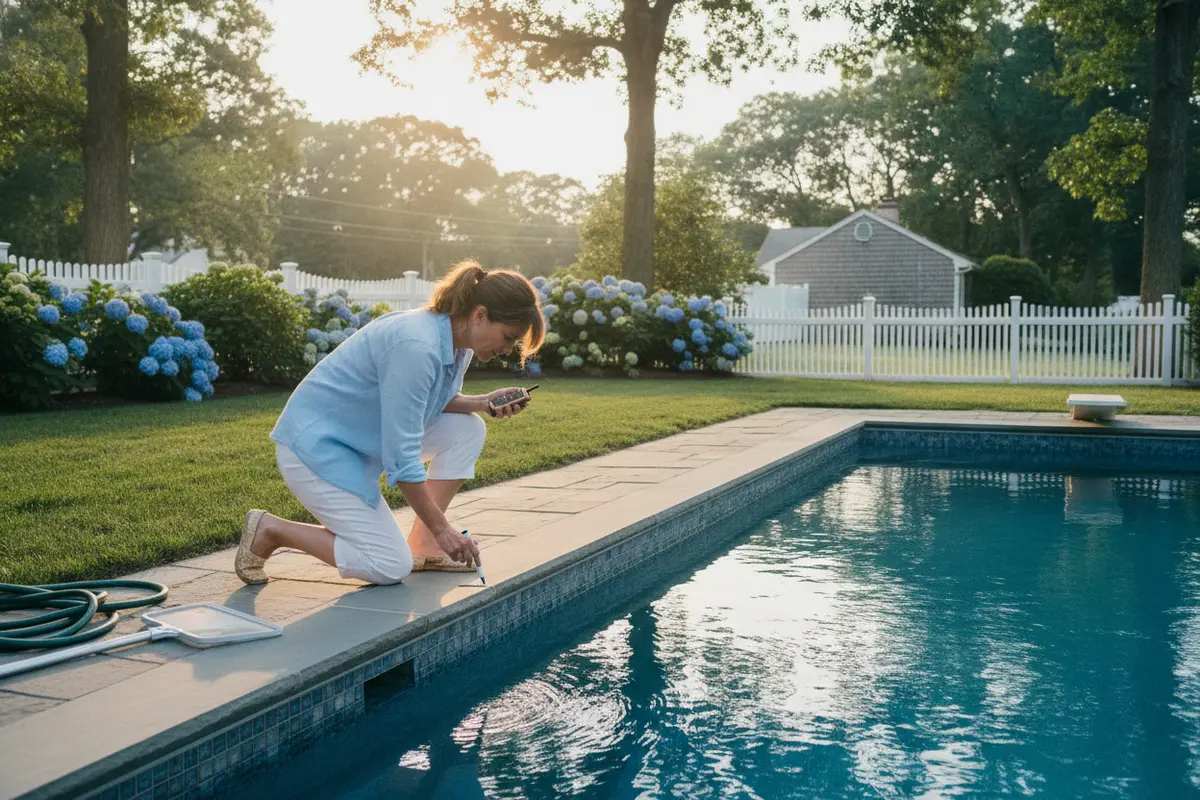
Choose a repeatable observation routine. Mark the water level with a removable marker or take a photograph from the same position at roughly the same time each day. Record water added and note weather, swimming, cleaning, and feature use. A single measurement can be affected by a recent swim or maintenance cycle; several comparable observations provide better context.
- Note the water level and date, and photograph the waterline.
- Record whether the circulation pump was running and its schedule.
- Write down rain, strong wind, heat, swimming, and water-feature operation.
- Note filter cleaning or backwashing, if applicable, and any water discharged during maintenance.
- Look for persistent damp soil, puddles, or moisture near equipment, but do not treat those signs as proof.
- Record air at returns, a pump that struggles to stay primed, or changes in equipment performance.
Consider ordinary sources of loss before drawing a conclusion. Wind and sun affect evaporation, while play and splashing move water out of the pool. A waterfall or other feature can also change water exposure and circulation. If the loss is persistent and repeatable after these factors are recorded, a professional assessment is a reasonable next step.
Keep the observations comparable. If you take one reading after several hours of swimming and another after a quiet day, the difference may not tell you much. Use a consistent measuring point, note unusual conditions, and avoid adding water without recording when and approximately how much. This is not a substitute for a leak test. It is a way to give an inspector a clearer account than “the pool seems low.”
Contact Gappsi through our contact page to discuss your pool project and share the pattern you have recorded.
What does a bucket comparison show before pool leak repair?
A bucket comparison can help distinguish likely evaporation from additional pool water loss. Set a stable bucket on a pool step where it will not float or tip. Fill it with pool water to a marked level and mark the pool water level on the outside of the bucket. Keep the pool and bucket exposed to similar conditions. After a day or two, compare the amount each level changed.
- Pick a period without rain or unusual pool use.
- Keep circulation and water features in the same condition throughout the comparison, if safe and practical.
- Mark both levels clearly and record the start time.
- At the end, compare the drop in the pool with the drop in the bucket.
If the pool level drops more than the bucket level, leakage becomes more plausible. The comparison cannot locate a leak, prove a specific cause, or account perfectly for differences in exposure and circulation. Treat it as a screening observation, not a repair diagnosis. Stop and seek advice if setup or pool conditions make the test unsafe.
Do not drain the pool to investigate. Draining may create structural or groundwater-related risks that depend on construction and site conditions. Ask a qualified pool professional what inspection is appropriate for the particular pool.
Does water loss change when the circulation system runs?
Whether the level changes differently with the pump operating can help organize the next questions. Only compare operating and non-operating periods if the pool system can be used safely and the comparison will not put equipment at risk. Keep other conditions as consistent as possible and record the duration of each period.
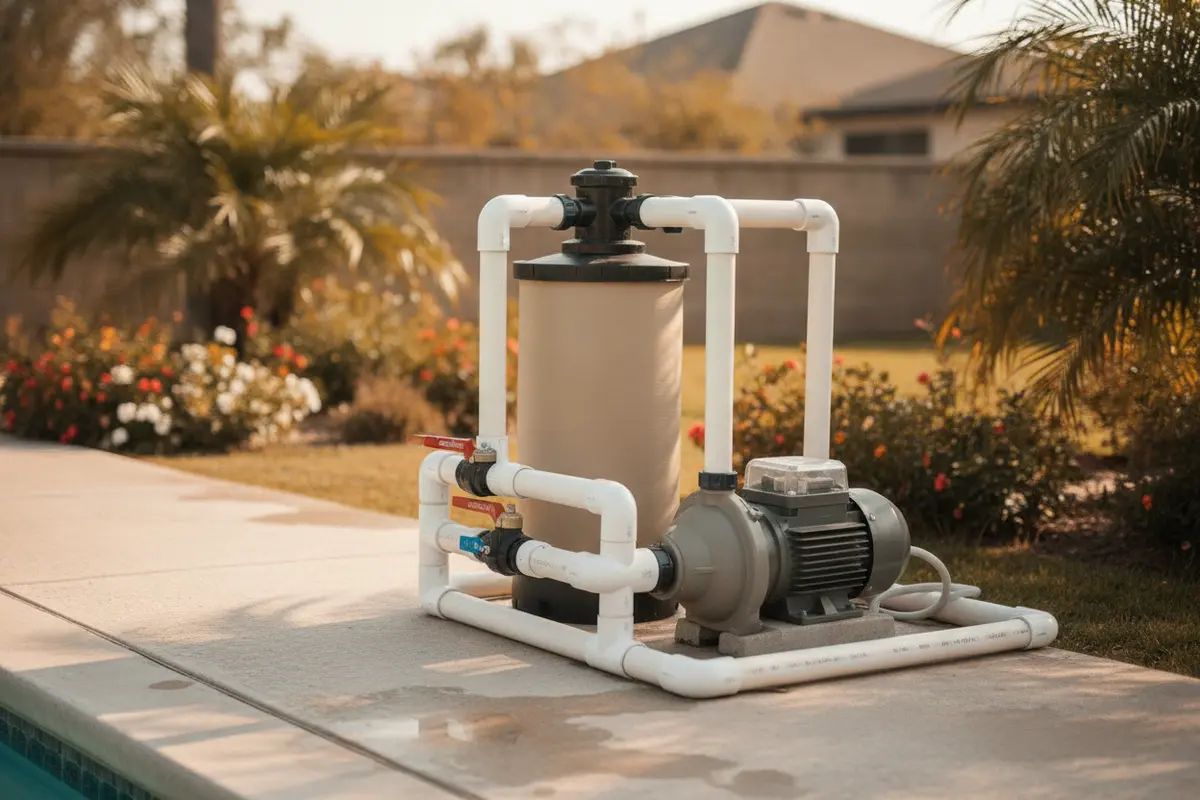
Loss that seems greater while the pump runs can make pressure-side plumbing or equipment connections worth checking. Loss that continues with the system off may point attention toward the shell, fittings, or another source. These are patterns to report, not proof of a leak location. A professional may need to inspect fittings, equipment, and plumbing and use appropriate tests to confirm a source.
Do not open electrical equipment or take apart pressurized plumbing to perform a homeowner test. Pool pumps combine water and electricity, and pressure can release unexpectedly. If the pump loses prime, water is escaping heavily, or electrical concerns appear, avoid unsafe operation and get professional guidance. The U.S. Consumer Product Safety Commission provides general safety information at its official website; that resource is not a pool leak diagnosis.
Which areas should a pool leak repair inspection consider?
A pool includes several possible leak locations. The useful inspection depends on pool construction, visible symptoms, equipment layout, and when the water loss occurs. A visible crack may deserve attention, but it does not automatically explain all water loss. Likewise, water near a pump may come from an equipment connection, a discharge route, or an unrelated source.
| Possible area | Clues to document | Questions for the assessment |
|---|---|---|
| Shell or finish | Visible cracking, damaged finish, or loss that continues when circulation is off | What inspection or testing can determine whether the surface is the source? |
| Skimmer, light, or return fitting | Moisture around a fitting or level change that appears to slow near a particular height | Will the fitting, seal, and nearby surface be evaluated together? |
| Circulation plumbing | Loss that seems greater with the pump on, air at returns, or damp ground near a line | Which line or operating condition is suspected, and what test can verify it? |
| Filter and equipment connections | Water around a pump, filter, valve, union, or waste route during operation | Can the system be observed in operation and the discharge route checked? |
Use this comparison to describe what you have noticed, not to diagnose the problem yourself. For instance, a damp patch near equipment is more useful when paired with a photograph, the pump schedule, and a note about whether the area is wet only during operation. That context helps avoid confusing irrigation or rainwater with a pool-related issue.
How should you prepare for an inspection?
Prepare a concise timeline rather than trying to investigate every component. Include the first date you noticed the change, how often you add water, and whether the pattern changes when the pump runs. Share any recent repair, work near plumbing, filter maintenance, or change in use of a spa or water feature.
- Water-level notes, photographs, and dates.
- Pump schedule and notes about operating or non-operating periods.
- Photos of equipment, visible damage, fittings, and damp areas.
- Pool type and approximate age, if known.
- Recent maintenance, repairs, backwashing, or nearby excavation.
- Weather, irrigation, and water-feature details that could explain wet ground or water loss.
Before the visit, ask what access is needed and what the proposed inspection can establish. Ask whether findings will be documented and whether any test requires changing how the pool operates. A clear explanation of limits matters: an observation may narrow possibilities without proving the source. Keep people away from open equipment and do not remove covers or expose electrical components.
A useful handoff can be brief. For example: “The waterline dropped on three days without rain. I added water on Tuesday. The pump ran its usual schedule, and the soil beside the equipment was damp after operation.” Include dates and photographs when available. Avoid presenting a guess as fact. The person assessing the pool can use the details to decide what to inspect first.
How can you compare a proposed pool leak repair plan?
Repair scope should follow the evidence. A fitting seal, a plumbing repair, and work to a pool surface are different tasks. Before authorizing work, ask the provider to identify the suspected location, describe the evidence, explain the proposed method, and state how the result will be checked. If the source has not been confirmed, ask what remains uncertain and what additional inspection is recommended.
Request a written scope that identifies included work and exclusions. Clarify any access needs, including whether decking, landscaping, or equipment may have to be moved. If the proposed work affects adjacent surfaces, ask who handles that work and how the area will be left. A written record makes it easier to compare proposals on scope rather than on a broad label such as “leak repair.”
There is no universal price for every leak. Cost depends on the source, pool construction, access, and extent of the work. A repair to an exposed fitting differs from locating and reaching a buried line. Ask what conditions could change the scope, whether additional work needs separate approval, and what follow-up observation is recommended after completion.
It is also useful to agree on a simple post-repair check. Ask what water-level behavior to monitor, under what operating conditions, and for how long before reporting that the symptom continues. Do not assume that one quiet day confirms a repair; weather, use, and circulation can change the observed level. Follow the instructions supplied for the specific work.
What site conditions around a Long Island pool should you mention?
Outdoor conditions can complicate the record. Rain may alter the level, while sun and wind affect evaporation. Irrigation, drainage, and changing soil moisture can make a wet area hard to interpret. Note recent rainfall, sprinkler schedules, and whether water collects in the same location after other outdoor water use.
Also describe the hardscape and planting around the pool. If access to a suspected line could affect a patio, steps, or planting bed, mention that before work is planned. Gappsi’s pool patio examples and pool remodeling information offer context for adjacent project settings, but they do not diagnose a leak or establish a repair method.
If you are considering broader work at the same time, review relevant examples such as pool house projects, shallow pool areas, or pool safety cover resources. A leak repair may need no additional improvements, so keep separate decisions separate unless the site plan gives a clear reason to coordinate them.
For related outdoor project context, Gappsi has examples of backyard projects and porcelain patio work. These pages concern adjacent settings and materials, not a promise that a particular repair is available or suitable. Keep the conversation focused on the documented water loss and the inspection needed to assess it.
Which mistakes can make a suspected leak harder to assess?
- Calling every level change a leak. Record weather, use, maintenance, and feature operation before concluding that water is escaping.
- Patching before locating the source. A surface product will not correct a plumbing or equipment problem, and may obscure useful evidence.
- Draining without advice. Pool construction and groundwater conditions matter; do not use draining as a diagnostic shortcut.
- Ignoring equipment-area moisture. Photograph it and note whether it appears during pump operation, while remembering that other water sources are possible.
- Changing several conditions at once. If pump schedule, water features, and pool use all change, it becomes harder to connect a symptom to a cause.
- Accepting an unclear scope. Ask what was tested, what is believed to be leaking, what work is included, and how the outcome will be reviewed.
Which next step makes sense for your pool?
If observations are consistent with ordinary water loss and the level stabilizes, continue monitoring under comparable conditions. If loss is repeatable, seems linked to pump operation, or appears with persistent wet ground or equipment trouble, share the record and arrange an assessment. The goal is to identify the source before choosing among shell, fitting, plumbing, or equipment work.
Keep decisions in sequence: document the symptom, ask what inspection is appropriate, understand the evidence, and then review a written scope. A single clue such as a damp patch, a crack, or a changing waterline does not establish the repair. If more than one issue is present, ask that each be described separately so the proposed work addresses a clear problem.
Contact Gappsi through our contact page to discuss your pool project
Frequently Asked Questions
How much water loss means a pool has a leak?
No single amount proves a leak for every pool. Compare pool and bucket levels under similar conditions, track water added, and note weather, use, and pump operation. A professional assessment is needed to confirm the source.
Can I use pool putty or sealant to stop a leak?
Only if the leak location and material are suitable for that product and method. Applying a patch before identifying the source may leave plumbing or equipment problems unchanged. Ask a qualified professional to assess the area first.
Should I keep running the pump if I suspect a leak?
That depends on the symptoms and equipment. If the pump loses prime, water escapes heavily, or electrical concerns appear, avoid unsafe operation and seek professional guidance. Do not open electrical or pressurized equipment yourself.
Can a leak affect the pool patio?
Escaping water may affect nearby soil or surfaces, but a damp patio alone does not prove the source. Record where and when moisture appears and have the pool, equipment, and nearby drainage considered together.
Plan your next step with Gappsi
Posted by Gappsi Group
Contact Gappsi through our contact page
Clear notes and a focused conversation can help you decide what assessment to request next.