


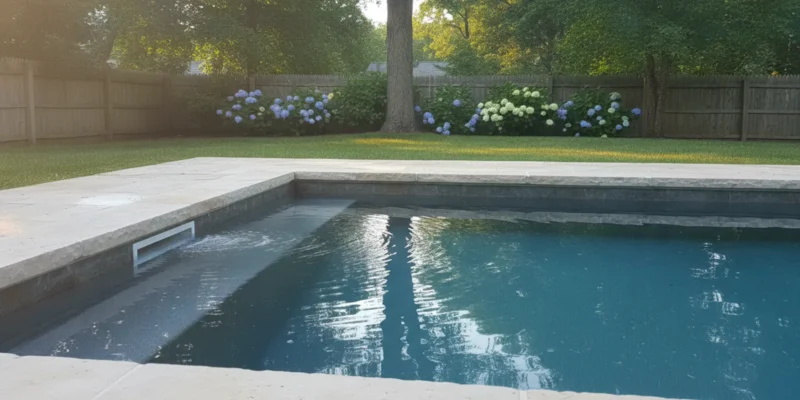
A pool skimmer draws surface water and floating debris toward the circulation system. For Long Island homeowners, pool skimmer replacement may be appropriate when the body, throat, or connected plumbing has failed and a durable repair is not practical. A crack by itself does not prove that the skimmer is causing water loss, so diagnosis should come before demolition or replacement.
Contact Gappsi through our contact page to discuss your pool concern
When should you consider replacing a pool skimmer?
Replacement is worth discussing when an inspection finds a broken skimmer body or throat, extensive cracking, failed connections, or separation that cannot be corrected with a compatible repair. A skimmer can also merit closer evaluation if water loss appears to stop near the opening, if the unit has shifted, or if the surrounding pool structure shows movement. Those are reasons to investigate, not proof of a particular failure.
Look for a pattern rather than one isolated symptom. Note the water level and when it changes, whether the pump is running, whether the water level stabilizes at a particular point, and whether the skimmer draw or equipment behavior changes. A professional can use that history alongside a physical inspection to decide what to test next. Gappsi’s pool remodeling information is a relevant starting point for discussing related pool work.
What signs can you check before arranging an assessment?
Start with what is visible and accessible. Look at the opening, lid, basket, throat, nearby coping, and the joint between the skimmer and pool surface. Do not reach into equipment or remove parts that are difficult to access. A loose lid or clogged basket is not the same as a damaged skimmer body, and each points to a different next step.
- Cracks or broken edges: Note their location, length, and whether they appear to extend through the throat or visible body.
- Gaps or displacement: Record any separation at the pool edge, movement of the skimmer, or nearby coping that appears raised or shifted.
- Water-level pattern: Write down the level at the start and end of observations, along with the time interval and pump status.
- Changes in circulation: Describe weak surface draw, air in the system, or a change in pump sound. Such symptoms can have causes elsewhere.
- Recent changes: Mention nearby construction, freeze-thaw damage, impact, or other work if you know it occurred.
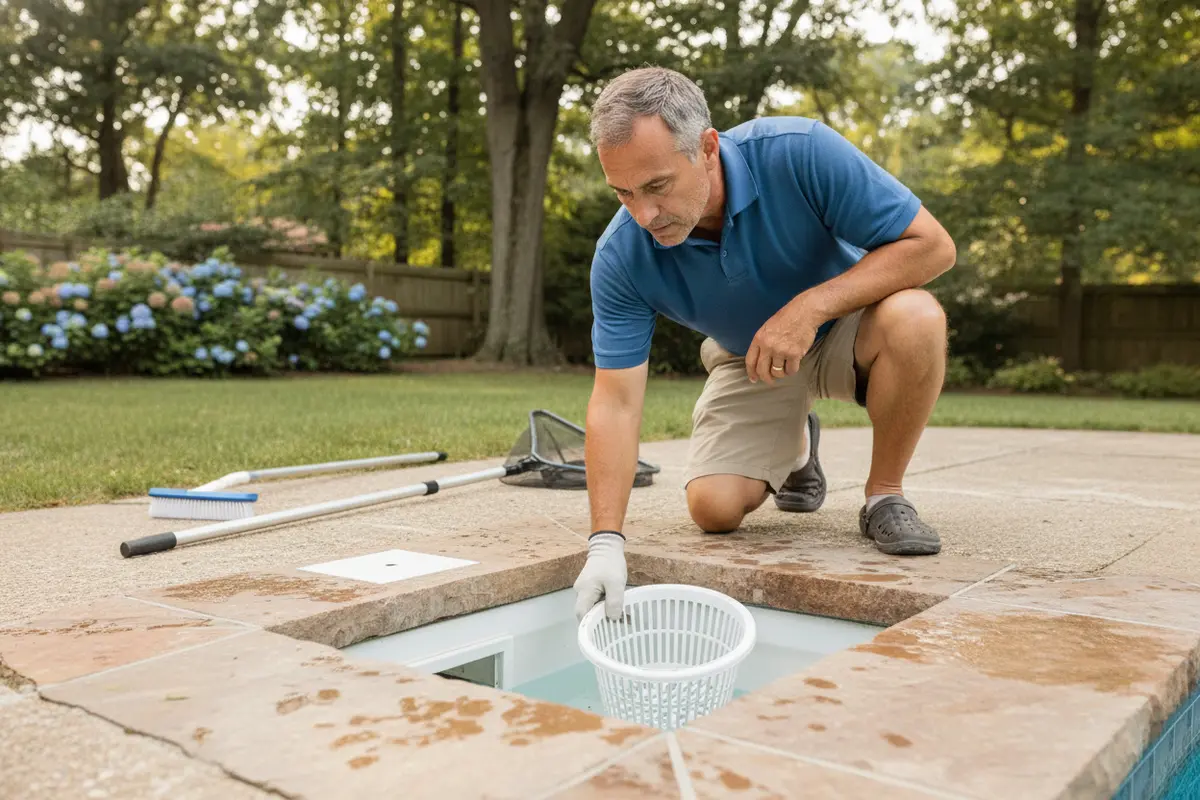
Take clear photographs in daylight, including one close view and one wider view showing the adjacent surface. If the pool is next to a pool patio, document any movement or cracking there as well. A surface defect may be related to access or surrounding conditions, but it does not identify a leak source on its own. If a pool includes a waterfall, a change in sheer descent flow can be useful background for the inspection, though it is not a skimmer test.
Could something other than the skimmer cause the same symptoms?
Yes. Pool water can be lost at another fitting, a return line, a light niche, a shell surface, or another connection. Poor surface draw may reflect a low water level, a blocked basket, a valve setting, or a circulation issue elsewhere. Water also leaves a pool through normal use, splash-out, and evaporation, so a falling level alone does not identify the source.
Tell the evaluator whether a symptom occurs only while the pump runs, after it stops, or under either condition. Also note whether the water level appears to settle near the bottom of the skimmer opening. That observation may help guide testing, but it is not a stand-alone diagnosis. If the level drops quickly, equipment loses prime, or there is a safety concern, avoid operating affected equipment and seek qualified guidance rather than repeatedly restarting it.
A simple observation log can make a site visit more useful. Record the date and time, water level relative to a fixed point such as the tile line, whether the pump was on, recent weather or heavy pool use, and any visible change near the skimmer. Take pictures from the same position when possible. Do not deliberately run equipment that is losing prime or let the water fall below a safe operating level just to collect more data. If the pool has a marked fill line, use it as a visual reference rather than relying on memory.
For example, a homeowner might notice that the level falls over several days but cannot tell whether the skimmer is responsible. Notes showing that the pump schedule changed, the pool was used heavily, or water loss continued while equipment was off can help narrow the conversation. They do not establish the source by themselves, but they give the evaluator a clearer timeline. Include the location of any crack in each photo, and avoid applying sealant before the inspection unless a qualified professional directs you to do so.
When the source is unclear, ask what observations or tests support the diagnosis and what alternatives have been considered. A careful evaluation can prevent work on the skimmer when a different component is responsible. This is especially useful before coping or deck material is disturbed.
Can a skimmer be repaired instead of replaced?
Sometimes. A limited defect in an accessible area may be suitable for repair if the surrounding body and connections remain sound and the repair material is compatible with the pool construction. Replacement becomes a stronger possibility when damage is extensive, the throat or body is broken, the connection has failed, or a repair would not provide a dependable result. The location of the defect, construction type, plumbing condition, and access all affect the decision.
| What inspection finds | Possible direction | What to ask |
|---|---|---|
| Loose lid or basket problem, body intact | Correct or replace the affected component | Can the issue be resolved without opening the surrounding surface? |
| Small, accessible defect in otherwise sound material | Evaluate a compatible localized repair | What makes this repair suitable, and how will it be checked? |
| Broken throat, extensive body damage, or failed connection | Assess replacement scope | What coping, deck, and plumbing access will be needed? |
| Water loss but no confirmed skimmer defect | Identify the source before selecting work | What evidence connects the loss to this location? |
This table is a discussion aid, not a remote diagnosis. Ask the contractor to show the defect and explain why the proposed option addresses it. If repair is not recommended, ask whether the reason is the extent of damage, the location, access, or the condition of the connection. If replacement is proposed, clarify the expected limits of work before approval.
What does pool skimmer replacement involve?
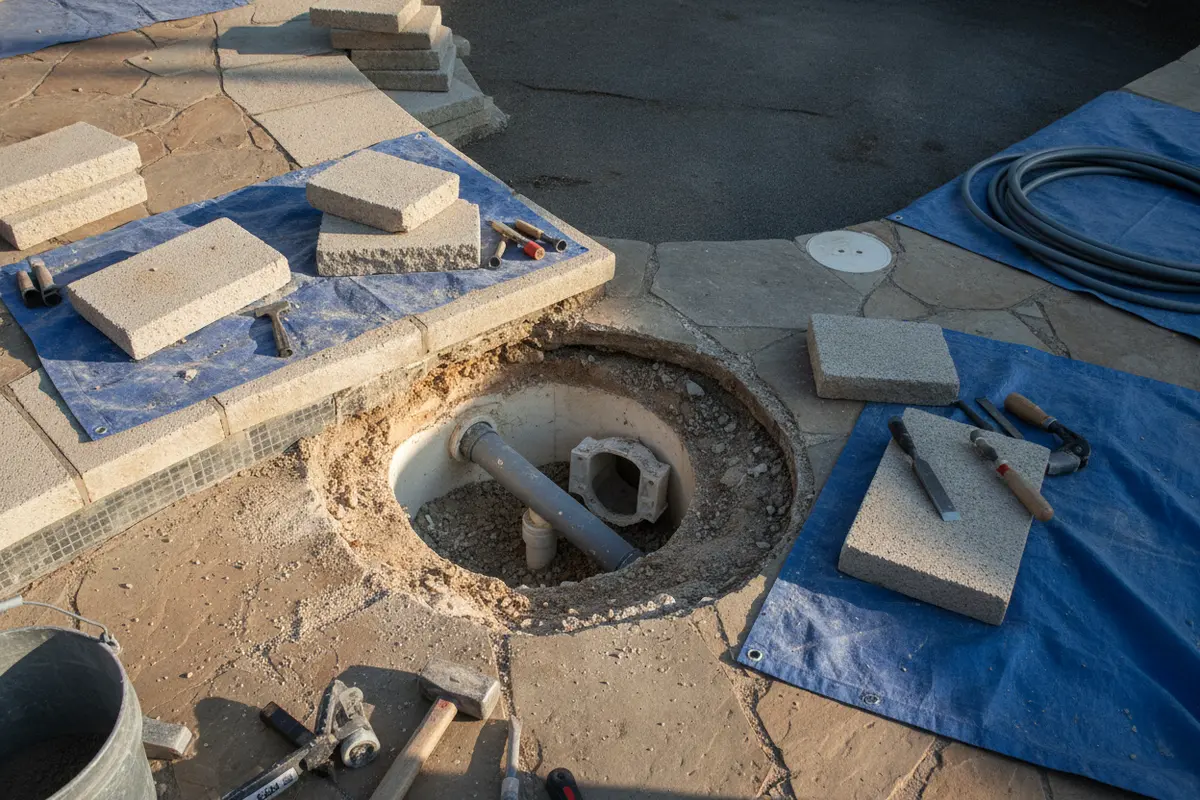
The process depends on pool construction and the way the skimmer was installed. The work generally starts by confirming the failed component and planning access. Nearby coping or deck material may have to be removed carefully to reach the skimmer and its plumbing. The damaged unit is then addressed, compatible connections are made, and the work is checked before the surface is closed and restored. The exact sequence and amount of surface work can vary by site.
- Confirm the diagnosis and scope. Identify what has failed, what testing supports that finding, and what parts of the pool system are included.
- Plan access and protect the area. Review the likely removal area, protection for nearby finishes, and how people and pets will be kept away from an open work zone.
- Expose and address the skimmer. Carefully open the necessary area, remove or repair the affected components, and make connections suitable for the existing system.
- Check the work before restoration. Ask how operation and connections will be examined before the opening is covered.
- Restore the surrounding finish. Review the coping or deck repair, joints, transitions, and any material match that can reasonably be achieved.
Testing before restoration matters. Once the area is closed, access to the connection may be more difficult. Ask what check will be performed and what the result will show. Clarify who handles each part of the work, including surface removal, plumbing, replacement components, testing, and finish restoration. For homeowners considering a larger pool remodeling project, discussing the sequence can help avoid disturbing newly completed work.
How can you compare a repair proposal with a replacement proposal?
Compare the explanation and scope, not just the name of the proposed work. A clear proposal should connect the observed condition to the recommended work. It should distinguish what is known from what may be discovered after access is opened. If an estimate includes surface restoration, ask what material and area are included and how the finished edge will meet the existing surface.
For example, imagine a pool that loses water and has a visible crack near the throat. One proposal may recommend replacement immediately; another may recommend checking whether the crack extends into the body and whether a connection is leaking. The useful comparison is whether each recommendation explains its evidence, how it will address the suspected failure, and what happens if opening the area reveals additional damage. Neither the visible crack nor the estimate title answers those questions by itself.
- Request a plain-language explanation of the confirmed defect and any remaining uncertainty.
- Ask whether a repair is feasible and, if not, why it is not considered suitable.
- Separate access, skimmer components, plumbing, testing, and finish restoration in the scope.
- Clarify what is excluded and how changes will be discussed if concealed conditions appear.
- Ask what the site will look like at the end of each work stage and when the pool can be assessed for return to use.
Photograph the existing coping and keep any information you have about its material. When the skimmer is surrounded by a broader patio area or other hardscaping, discuss sequencing and finish coordination before work begins. If a pool project includes a pool house, note access routes and any shared work area when coordinating the schedule.
How should Long Island homeowners plan the work?
Plan around access, the condition found, weather, materials, and other scheduled pool work. There is no single schedule that fits every installation. Ask when the pool may need to be lowered or equipment isolated, what areas must remain clear, and what conditions would change the sequence. Do not lower pool water or alter equipment settings unless the person responsible for the work advises it.
Before a site visit, clear loose items from the pool edge and keep children and pets away from visible damage. Share the pool construction type if known, a short timeline of symptoms, the water-level notes, and the photographs. If the pool is being prepared for a seasonal closure, coordinate the assessment with any pool safety cover planning; a cover does not diagnose or fix a skimmer. For broader yard coordination, the backyard project category may help frame related improvements, but the skimmer defect should be evaluated on its own merits.
For general pool and water safety information, homeowners can consult the New York State Department of Health. This general resource does not diagnose a skimmer or replace site-specific direction about operating a particular pool.
What should you ask before approving replacement?
Use the conversation to establish what is included and how the result will be evaluated. These questions can make a recommendation easier to understand:
- What observation or test confirms that the skimmer is the source of the issue?
- Which part has failed: lid, throat, body, fitting, or connected plumbing?
- Could a repair address the condition, and what is the reason for choosing replacement instead?
- What coping or deck material may be removed, and what restoration is included?
- How will the connections be checked before the work area is closed?
- What concealed conditions could change the scope, and how will those changes be explained?
- What should remain off or inaccessible during work, and who will confirm the pool is ready for normal operation?
Clear answers help you distinguish a confirmed repair need from a provisional plan. They also set expectations for the transition between the skimmer, coping, and surrounding surface. Contact Gappsi through its contact page when you are ready to discuss the concern, and review pool patio considerations if nearby surfaces are part of the project.
Contact Gappsi through our contact page to discuss an evaluation
Frequently Asked Questions
How can I tell whether a pool skimmer is leaking?
Visible cracks or separation can raise concern, but water loss can come from several parts of a pool. Record the level, timing, and pump status, then have the suspected source assessed rather than treating one symptom as confirmation.
Does every cracked skimmer need replacement?
No. The location and extent of the crack, the condition of the body and connections, and the feasibility of a compatible repair all matter. Ask for an explanation of why repair or replacement fits the observed damage.
Will replacing a skimmer disturb the patio?
It may. Access can require removal of nearby coping or deck material, depending on the installation and connection. Before work starts, clarify what may be removed and how the area will be restored.
Can I keep using the pool while waiting for an assessment?
That depends on the damage, water level, and equipment behavior. If there is substantial water loss, exposed damage, equipment trouble, or an electrical concern, stop using affected equipment and seek qualified guidance.
Posted by Gappsi Group
Contact Gappsi through our contact page to discuss your pool skimmer
A careful diagnosis helps Long Island homeowners choose a suitable repair or replacement scope and understand what the surrounding pool area may require.