


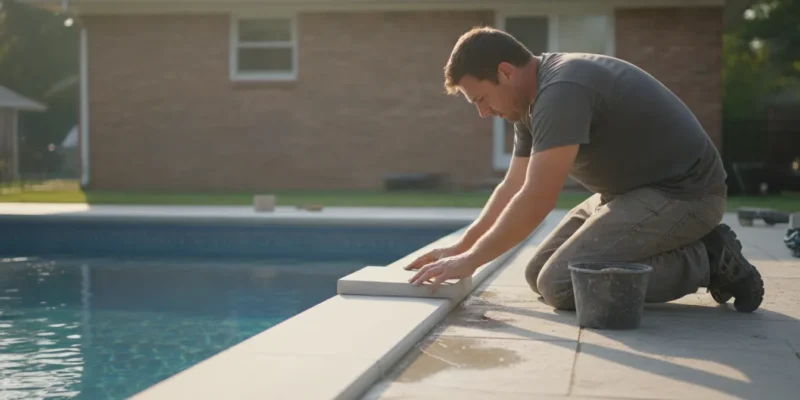
Porcelain pavers for pool copings Long Island NY homeowners ask about are a different piece from the patio underfoot. The coping is the cap on the pool wall. It is the edge swimmers grip, the line that sheds splash water, and the frame that meets the deck. Gappsi stocks Italian porcelain made for that edge, including Porcelain pavers for pool copings Long Island ny, at the Smithtown showroom on West Jericho Turnpike.
Talk with Gappsi about porcelain pool coping for your yard
A sound choice starts with the piece, not the catalog photo. Bullnose, square edge, and drop-face pieces sit on the bond beam in different ways. Thickness, texture, and the joint at the waterline decide whether the edge stays tight through a Nassau or Suffolk winter. The patio can be planned beside it. The coping has to be specified on its own.
What Do Porcelain Pavers for Pool Copings Long Island Ny Projects Need?
Porcelain pavers for pool copings Long Island NY pools use are exterior pieces cut or formed to cap the shell. They are not a field paver turned on its side. Gappsi’s porcelain line includes a pool steps and wall coping group, separate from the large patio formats such as 24×24 and 48×48. That split matters. A coping piece has a finished nose, a set thickness, and a face meant to be touched.
The cap does three jobs at once. It covers the top of the pool wall. It gives hands and feet a defined edge. It sends splash water toward the deck instead of down the back of the shell. If the piece is thin, slick, or open at the back joint, the rest of the backyard can still look finished while the edge fails first.
Long Island is the reason the spec is strict. Nassau and Suffolk winters cycle through freeze and thaw. Water that sits in a joint can open it. Porcelain that is rated for exterior wet use resists that better than a porous stone, but only when the piece itself is the exterior product. Indoor tile, even in a matching color, does not belong on a pool wall.
Exterior porcelain is the category to ask for. Bring the pool plan, the waterline tile, and a photo of the house masonry to Smithtown. Giuseppe Abbrancati’s team can pull coping pieces next to patio samples so the edge and the deck are chosen together, not matched from memory later.
Which Porcelain Coping Piece Fits the Pool Edge?
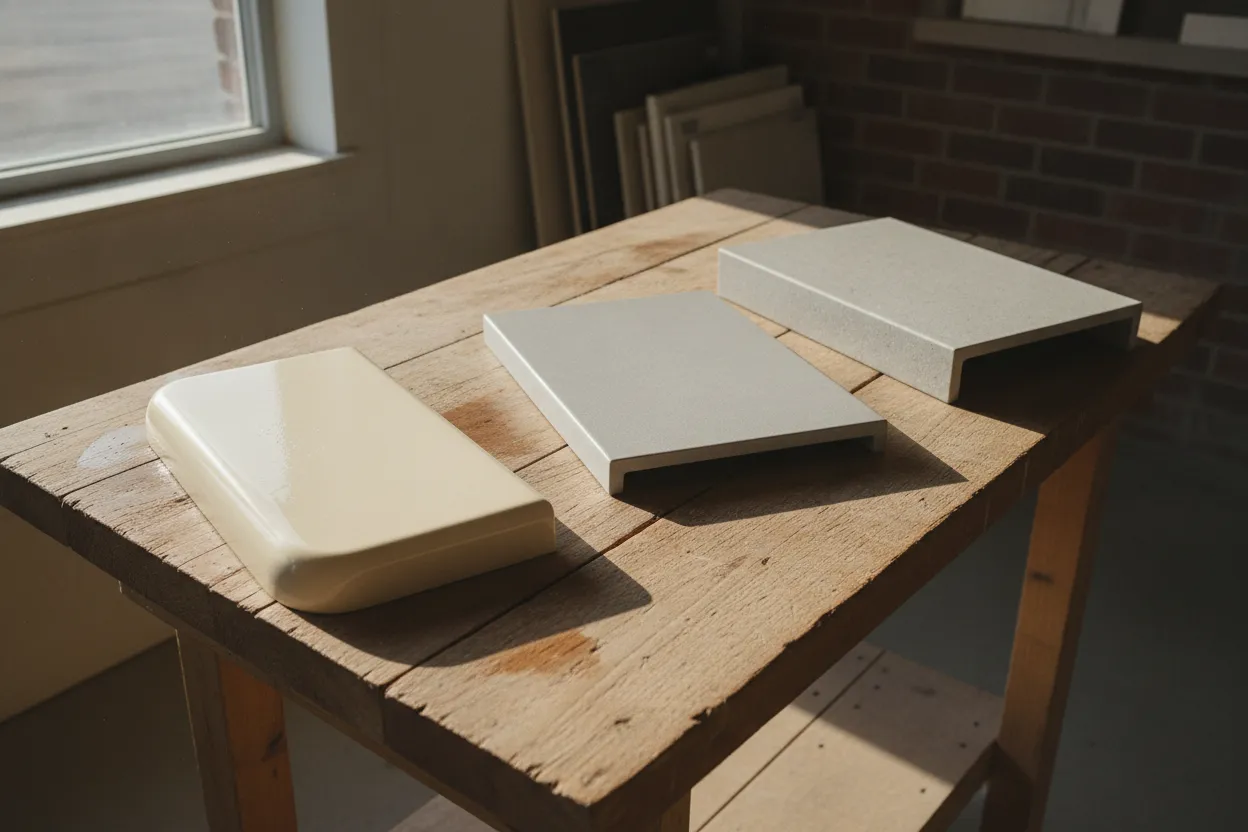
The piece shape is the decision most homeowners feel every time they sit on the pool. Three profiles cover nearly every Gappsi pool edge.
| Coping piece | Edge feel | Best fit | Watch-out |
|---|---|---|---|
| Bullnose. | Rounded nose, easy to grip and sit on. | Family pools and curved shells. | Needs a consistent radius so the curve does not look faceted. |
| Square edge. | Crisp 90-degree line. | Geometric, modern pools. | A sharp arris can feel hard in the hand unless it is eased. |
| Drop-face. | Thick front that covers the wall top. | Raised beams and spas. | The drop must clear the waterline tile, not land on it. |
Bullnose is the default when people will sit on the edge or pull themselves out. The round nose is kinder on hands and hides small alignment shifts on a freeform gunite shell. Square edge reads cleaner on a rectangle, but the corner should be eased so it is not a knife against a forearm. Drop-face hides the mortar bed and gives a spa or raised wall a heavier frame.
Thickness is the next check. Patio porcelain on this site runs from about three-quarter inch up through 2-inch pieces. Coping is often a different thickness from the field paver, because it has to cover the beam and meet the waterline tile. Do not assume the 24×24 patio paver can be cut into a nose. Ask for the coping piece in that color, then confirm it is stocked in the radius or straight length the shell needs.
Color should be read wet, in daylight, next to the waterline tile. A gray that looks soft in the showroom can go cold beside blue water. A cream that looks warm can flash against a dark plaster. Gappsi displays both the outdoor pavers and the indoor tile in Smithtown, so the waterline, the coping, and the patio can sit on one table.
How Should the Coping Meet the Waterline and the Deck?
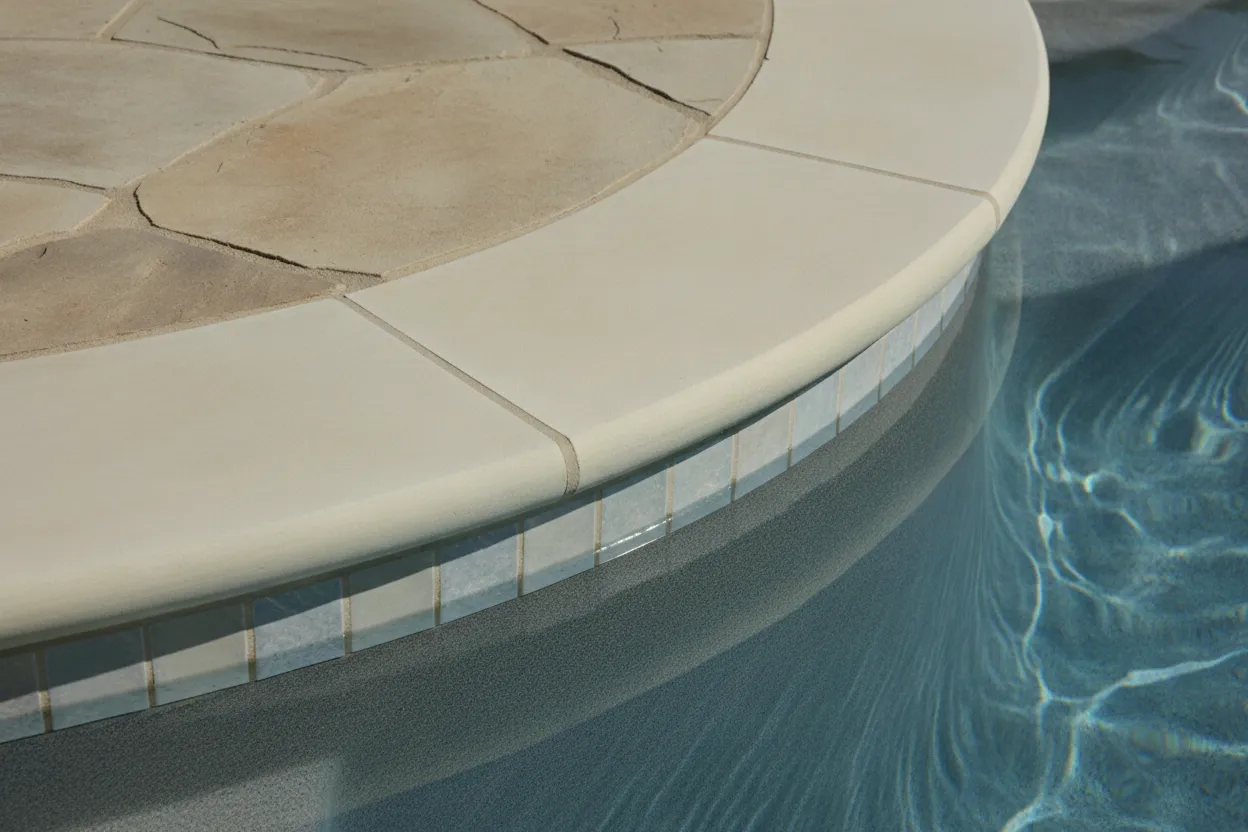
The coping fails or holds at two joints: the front joint at the waterline tile, and the back joint where the deck begins. Both have to be drawn before the first piece is set.
- Confirm the bond beam is sound, level, and wide enough for the coping piece plus a back joint.
- Set the waterline tile so its top lands just under the coping nose, with a full bed and no hollow spots.
- Dry-lay the coping around the shell, including steps and the skimmer, before any thinset is mixed.
- Bed each piece fully. A hollow spot under a nose is where winter water collects.
- Keep the back joint open to the deck drainage pitch, not buried under the first paver course.
- Tool the joints and wash the haze the same day, before it locks into the texture.
The front joint is a movement joint, not a hairline grout line. Pool water, summer heat, and a January freeze all pull on it. A flexible sealant made for wet, submerged edges lasts longer there than a rigid grout. The back joint has a different job. It lets the deck move without shoving the coping forward into the water.
Pitch is small and easy to get wrong. The top of the coping should shed water back toward the deck drains, not toward the pool and not into a pond behind the beam. If the patio is porcelain too, that pitch is planned with the patio layout. If the patio is bluestone, travertine, or another stone, the stone course stops at the back joint and does not cantilever over the coping.
Steps and spas use the same rules at a smaller scale. A tread needs a nosing a foot can trust, and a spa wall often wants the drop-face so the beam is covered. Gappsi builds gunite, vinyl liner, and fiberglass pools, and the coping detail changes with the shell. The design stage is the time to lock the edge, before steel and plumbing fix the beam height.
Plan the pool edge with Gappsi’s pool design team
How Do You Judge Wet Grip on Porcelain Pool Coping?
Coping is wet more often than the patio. Splash, sunscreen, and a hose all land on a narrow strip that people step on while turning. A smooth, polished face is the wrong product for that strip, even when the color is perfect.
Ask for the product’s wet-use classification, not a guess from the finish name. The Tile Council of North America explains that dynamic coefficient of friction is not the same thing as slip resistance. ANSI A326.3 groups hard surfaces by use, including an Exterior, Wet class. A measured number compares products. It does not promise that a wet foot will never slip. Shoe wear, slope, soap, and how the joint drains all change the result.
For the coping itself, use a simple field check at the showroom:
- Wet the sample and press a bare hand across the nose, not just the flat top.
- Reject a face that feels soapy when wet, even if the dry sample has a visible texture.
- Prefer a light texture on the top and an eased or rounded nose.
- Keep the same texture on the steps. A slick tread next to a textured coping is a common miss.
The International Association of Plumbing and Mechanical Officials put a measurable wet-walkway criterion into the 2021 Uniform Swimming Pool, Spa, and Hot Tub Code, using ANSI A326.3. That code is a model, not an automatic Long Island permit rule. It is still the right question to ask a supplier: is this face meant for a wet exterior walk, and can you show the test class? Gappsi can pull that answer on the pieces in Smithtown before you order a radius.
Heat is the other comfort test. Dense porcelain in a light or mid color stays more comfortable under a July sun than many dark stones. Dark charcoal can still get hot. If the pool is in full sun on the South Shore, look at the lighter faces in the same family before you commit to a near-black edge.
Where Does Porcelain Coping Stop and the Patio Start?
Matching the coping to the patio is a design choice. Specifying the coping is a construction choice. They should not be collapsed into one.
One path uses the same porcelain color on the nose and the field, with the coping piece in a bullnose or square edge and the patio in a large format. The pool reads as one surface. That only works when both products are the exterior line and the back joint is still honored. A single grout line with no movement joint will telegraph a crack by the second winter.
The other path contrasts them. A porcelain nose in one color frames a bluestone or travertine deck, or the reverse. This is common on traditional North Shore houses, where the patio wants natural stone and the waterline wants a tighter, more even edge. The contrast looks intentional only when the nose width is consistent and the stone does not creep onto the beam.
If you are still choosing among stone, concrete, porcelain, and brick, start with the pool coping materials guide. If the deck is already porcelain and you are laying out formats, drainage, and upkeep, use the porcelain patio and coping guide. This page stays on the edge piece.
Gappsi is both supplier and installer, which is the practical advantage on a coping order. Radius pieces, step treads, and field pavers need to come from one lot when the color has to match. Splitting the order between a patio installer and a pool crew is how homeowners end up with a nose that is one shade off the deck. The porcelain collection is the place to see the formats, including the pool steps and wall coping group.
Review coping pieces at the Smithtown showroom
Frequently Asked Questions
Can any porcelain paver be cut and used as pool coping?
No. A field paver can be cut for a straight deck edge, but pool coping needs a finished nose, a thickness that covers the bond beam, and a face rated for wet exterior use. Gappsi stocks pool steps and wall coping as their own porcelain group for that reason. Cutting a patio paver into a nose usually leaves a sharp arris and an open cut edge at the water.
Does porcelain pool coping need sealing on Long Island?
Exterior porcelain is dense and is not sealed the way bluestone or travertine is. The joints still need the right materials. Use a movement-capable sealant at the waterline and a proper back joint at the deck. Those joints, not a sealer on the porcelain face, are what keep freeze-thaw water out of the beam.
Will porcelain coping work on a freeform gunite pool?
Yes, if the piece is a bullnose or another radius-friendly profile and the crew dry-lays the curve before setting. Square-edge pieces fight a freeform shell and leave wide wedge joints. Gappsi builds gunite shells and can set the beam width to the coping piece during design, which is easier than forcing a stock nose onto a finished wall.
How do I compare grip between two coping samples?
Wet both samples and feel the nose with a bare hand, then a wet foot if the showroom sample is large enough. Ask which ANSI A326.3 use class the face carries, and treat Exterior, Wet as the relevant conversation for a pool edge. The Tile Council of North America is clear that a friction number alone does not promise no one will slip. Texture, slope, and drainage still decide the edge.
Choose the Coping Piece Before the Patio Is Ordered
Porcelain coping is a small share of the pool budget and a large share of how the pool feels in the hand. Pick the nose, the thickness, and the waterline joint while the shell is still on paper. Then match or contrast the patio on purpose.
Gappsi has designed outdoor work on Long Island since 1987, from the Smithtown showroom out across Nassau and Suffolk. Bring the pool sketch, look at the coping pieces wet, and line them up with the waterline tile before anyone orders a radius. You can see installed edges in the porcelain installation gallery and the masonry setting in the masonry design and construction work.