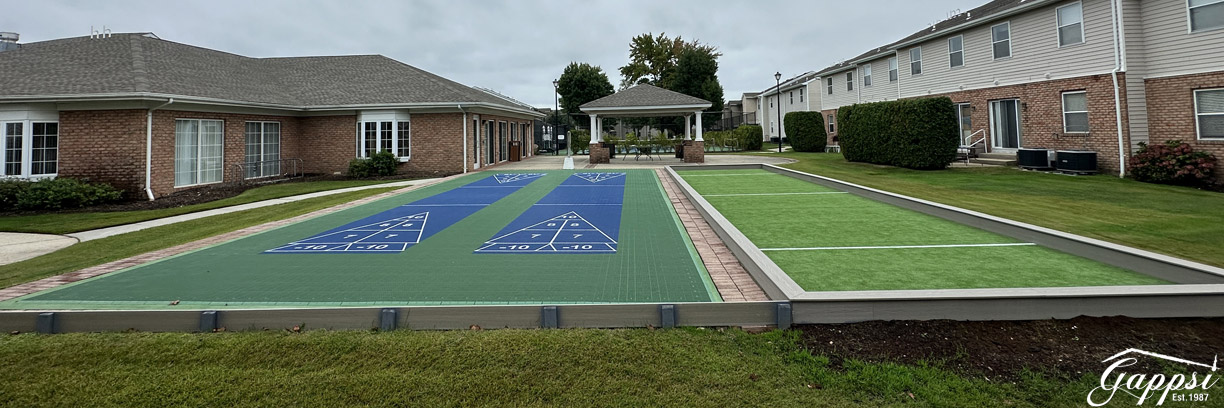
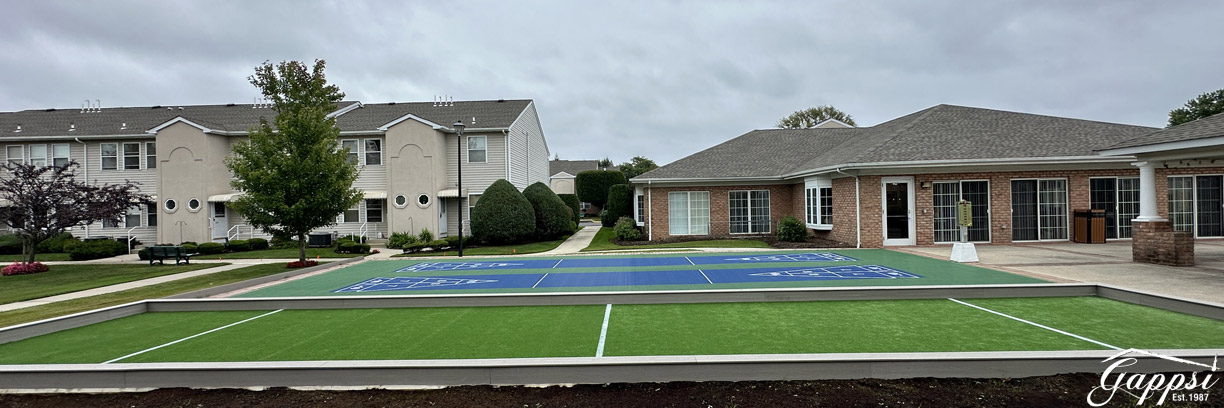
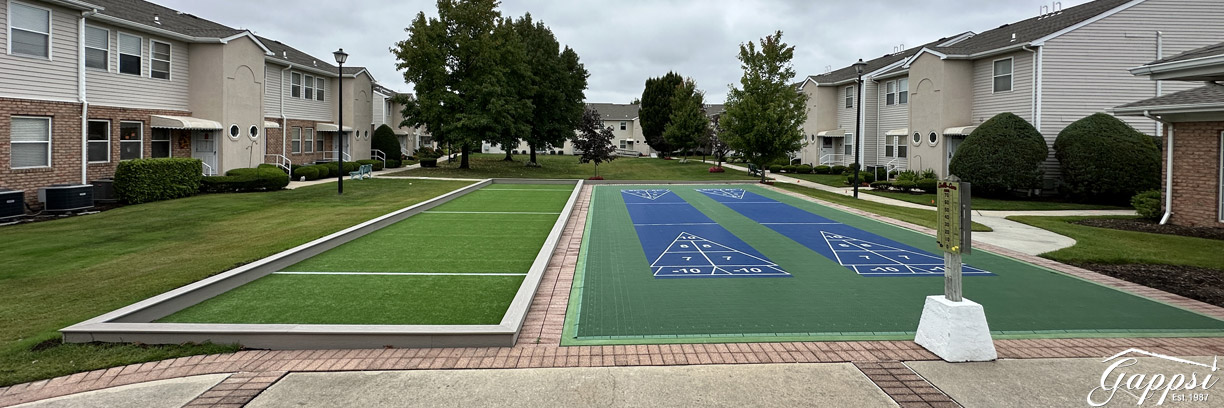
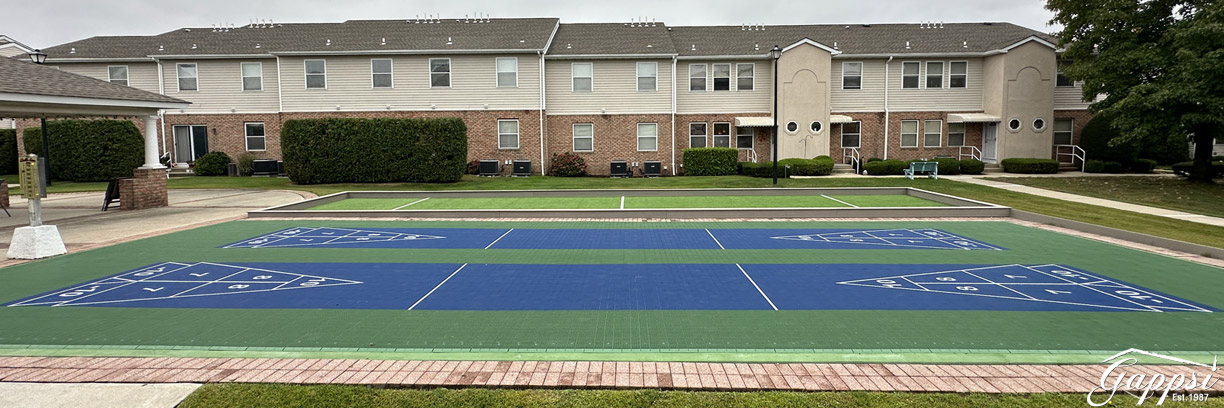
Multipurpose Sports Game Courts in Atlantic Beach, N.Y.

View Gappsi’s YouTube Channel for Videos of Multipurpose Sports Game Courts In Atlantic Beach, N.Y.

Multipurpose Sports Game Courts are becoming popular in residential and community spaces due to their flexibility and ability to accommodate various sports. Designed with adaptable surfaces and customizable layouts, these courts can transform from a volleyball sports game court to a tennis court and even accommodate newer, fast-growing sports like pickleball sports game courts.

What is a Multipurpose Sports Game Court?

A multipurpose sports game court features a single playing surface with multiple lines painted to separate the fields for each activity. These courts are designed to maximize the use of limited space by allowing numerous activities in the same area.

One of the main features of these courts is their adjustable net systems, which include moveable, adjustable, and removable nets. This flexibility makes multipurpose sports game courts ideal for various activities, as the nets can be easily adapted to different sports, giving users a fully customizable experience.

This adaptability offers homeowners and communities a practical solution for maximizing space, encouraging physical activity, and accommodating the preferences of multiple users. Instead of maintaining separate courts for each sport, multipurpose sports game courts bring them together, offering a space-saving solution.

multipurpose-sports-game-courts-atlantic-beach-2What Sports Can Be Played on a Multipurpose Sports Game Court?

A multipurpose sports game court is suitable for playing many sports, including basketball, tennis, pickleball, volleyball, badminton, hockey, dodgeball, and paddle tennis. In cold climates, some multipurpose sports game courts can also be flooded in the winter to create ice rinks.

Most people enjoy playing more than one sport. Those who like basketball may also like pickleball, badminton, or a good tennis match. Playing different sports keeps you active, and you never get bored playing the same old game. A family in a community might want to shoot hoops and then play doubles pickleball. This is when a multipurpose sports game court comes into play.

For those with a backyard court designed for multiple sports, it keeps everyone active while improving at their chosen sport. At first, it may seem tricky to turn one court into numerous courts, but it is becoming more popular and manageable with the correct planning. There are considerations when installing a multipurpose sports game court, like if you want actual regulation dimensions or scale it down depending on the area it will be built on. Having a court with multiple use options helps to get the most value out of a court.

multipurpose-sports-game-courts-atlantic-beach-1

Considerations for Multipurpose Sports Game Courts

Several key factors must be considered to ensure durability, safety, and versatility when designing a multipurpose sports game court. One of the most important aspects is the surface material, which must be durable enough to withstand various sports.

Court markings are essential for proper gameplay. These lines should be noticeable but thoughtfully arranged to avoid overwhelming players with too many overlapping lines. Some courts also incorporate retractable nets for tennis and volleyball, adding to the court’s flexibility.

Safety features are also a priority. Non-slip surfaces help prevent injuries, while adequate lighting and fencing ensure safe play.

Weather resistance is crucial, especially for outdoor courts in varying climates. The court must be designed to withstand heavy rain, heat, and cold. Effective drainage systems and UV-resistant coatings protect the court surface, ensuring long-lasting integrity and usability.

multipurpose-sports-game-courts-atlantic-beach-4Atlantic Beach, N.Y Multipurpose Sports Game Court

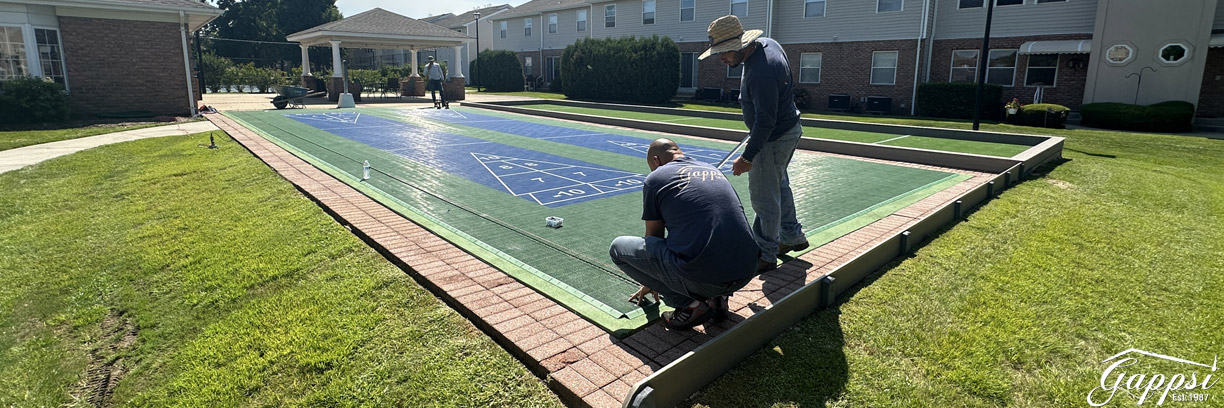
A new multipurpose pickleball sports game court was built in Atlantic Beach, NY. The court will be used for pickleball, badminton, and volleyball. The installed netting is adjustable to different heights for different games of play. The court can also be used as a racquetball sports game court.  The netting is in the center, so the two walls in the background can be used as two separate racquetball courts. Our team utilized a light blue color for the outdoor outside perimeter of the court and dark blue for the pickleball court inlay.

Additionally, we surrounded the court with synthetic turf fringe, which creates a nice, clean look between the sports game court tiles and the fence. Synthetic turf borders are best for sports game courts because they can separate fields, mark boundaries, or contain infill material. 

Multipurpose Sports Game Courts Are the Future

Installing a multipurpose sports game court in your backyard or community park automatically increases the property’s value. If you have a sports game court at your home, your family will stay active and healthy. If you have a promising athlete in the family, they will also have unlimited access to the court to improve their game.

Community courts are a safe place for families to gather and socialize with others in their neighborhood. A sports game court makes an area more desirable for parents looking for a place to raise their family. Sports game courts in local parks are a great way to introduce different sports for youth athletics. The best part is how healthy regular exercise is for people of all ages.

So, for those considering getting the most out of an investment like a sports game court, consider the added benefit of turning one court into multiple courts. With the proper planning and outlook, this is very attainable. This is the latest multipurpose sports game court built by Gappsi in Atlantic Beach, NY.

SCHEDULE A MEETING TODAY WITH GAPPSI

multipurpose-sports-game-courts-atlantic-beach-2

Share this page:

College Basketball Court Installation Brooklyn NY

View Gappsi’s YouTube Channel for Videos of College Basketball Court Installation in Brooklyn, N.Y.

College Basketball Court Installation at New York College of Technology in Brooklyn, N.Y. Indoor basketball courts are usually polished wood. However, the vast majority of NBA courts are made from hard maple (also known as “sugar maple” and “rock maple”). Hard maple offers the best combination of hardness and durability, with some level of shock absorption to reduce the impact on players’ knees and ankles when running and jumping.

The playing surface of outdoor basketball courts is usually made from concrete, asphalt, or synthetic turf. Most courts in parks around the United States are made from asphalt, which is hardwearing and provides a fast and high bounce, similar to a wood-like hard maple.

college-basketball-court-installation-brooklyn-nyWhether it is a competitive court for professionals or a gymnasium for student-athletes, basketball floors must have optimal friction (surface finish effect), ball rebound, and provide a degree of shock absorption (force reduction).

Between the rough fouls and constant movement, basketball is a physical sport. The most crucial safety consideration of any sports surface is shock absorption, or the ability of the floor to absorb the energy of an impact.

Aside from performance characteristics, decisions about basketball floors often depend on the answers to key questions. One of the most important is whether the court will be used for other activities or exclusively for basketball.

Some basketball floors need to accommodate other sports and non-sporting activities. A resilient sports surface may be the best gym floor option. Since protective coverings are unnecessary, these surfaces typically require less effort to transition to other activities.

College Basketball Courts – NCAA Regulations

Our recent project at the New York College of Technology in Brooklyn, NY, involved replacing the wood flooring and painting the NCAA regulation basketball game lines. The NCAA dictates the dimensions of a college basketball court in the United States.

College basketball courts are the same size as NBA courts—94 feet long and 50 feet wide. However, the free throw lane/key is 16 feet wide in the NBA and FIBA but 12 feet wide for college basketball courts. In addition, the 3-point line in the NBA is 23 feet 9 inches from the hoop, while in the NCAA, it is 20 feet 9 inches.

college-basketball-court-installation-brooklyn-ny4Basketball Court Zones and Areas

  • Perimeter Lines – Sidelines & Endlines—The lines that run the length of the basketball court and mark the boundary are called the “sidelines,” while the lines marked out behind each backboard are called the “landlines,” or sometimes the “baselines.”  Most senior basketball courts, including those used in the NBA and US colleges, have 94ft (28.65m) long sidelines and 50ft (15.24m) extended deadlines.
  • Center Circle / Jump Circle—The center circle, sometimes called the “jump circle,” is marked out directly in the center of the court and used for the “tip-off” at the start of each game. NBA courts use center circles with a diameter of 12 feet (3.66 meters).
  • The Free Throw Line – As the name suggests, the free throw line designates where a player should stand when taking a free throw or “foul shot.” On NBA courts, the distance between the free throw line and the point on the floor directly underneath the backboard is 15ft (4.57m).
  • The 3-Point Line—One of the essential markings on the basketball court, the 3-point line dictates whether a booming shot from open play scores 2 or 3 points. Shots taken from outside the 3-point line area are worth 3 points, and those successfully executed from within the 3-point line are worth 2 points.  On NBA courts, the 3-point line is 23 feet 9 inches (7.24 meters) away from the basket, except in the corners of the arc, which is 22 feet (6.71 meters) away.  The distance of the 3-point line changed in the NBA during the 1990s, making it 22 feet instead of 23 feet in the corners to encourage higher-scoring games. The distance from the side of the 3-point line to the sideline is 3 feet (0.91m).

College Basketball Court Installation Brooklyn, NY

college-basketball-court-installation-brooklyn-ny3In our recent project, we utilized black paint for all the lines on the court and blue paint for the keys. The floor was replaced with a new wood flooring. Aside from being noiseless, the floor has a more bouncy cushion system below. We installed the university logo right in the center of the court in blue and yellow. This logo required many passes to create the final design. This is the latest sports game court built by Gappsi in Brooklyn, NY.

Build Your Residential or Professional Basketball Court With Gappsi

You may not have 94 feet of flat asphalt or indoor floor space, but don’t worry; half-court setups can be as fun. Whether you want to paint your court or apply a pre-made solution, sticking to the official dimensions will take your pickup games to the next level.

SCHEDULE A MEETING TODAY WITH GAPPSI

college-basketball-court-installation-brooklyn-ny2

Share this page:

Batting Cage Installation Near Me: A NY Homeowner’s Guide

A backyard batting cage doesn’t have to be a generic, standalone structure. It can be a fully customized part of your dream backyard, designed to fit your space and your family’s specific needs. Whether you envision a professional-grade training facility for a serious athlete or a fun, retractable system for weekend practice, the possibilities are endless. Customization allows you to choose the perfect size, materials, and even add features like integrated lighting. When you start looking for a “batting cage installation near me,” you’re looking for a partner who can bring that unique vision to life. This guide covers the custom options available for your Long Island home.

https://youtu.be/1JD5L6HkXEs

View Gappsi’s YouTube Channel for Videos of Quality Backyard Batting Cage | Laurel Hollow, N.Y.

When it comes to improving your swing, consistency is key, and a backyard batting cage is your best solution. Having the proper setup at home can make all the difference for baseball and softball players looking to take their skills to the next level. Enter the backyard batting cage—a game-changing addition to your training arsenal—no more trips to the local batting cage or worrying about limited practice time. With your practical batting cage, you can train whenever you want.  Installing a batting cage in your backyard can be a great way to practice your swing and improve your batting skills. However, some additional factors must be considered to ensure the cage is safe, sturdy, and able to withstand the elements.

quality-backyard-batting-cage-installation-in-laurel-hollow-nyWhat to Look for in a Backyard Batting Cage

Selecting the perfect backyard batting cage involves more than just finding a net.

Frame and Material Durability – A sturdy batting cage frame is the backbone of any good cage. Look for frames made of galvanized steel or powder-coated materials to withstand weather conditions and frequent use. Lightweight options like aluminum frames are ideal for portability but may lack the strength required for heavy-duty practice.

Netting and Tensile Strength – The quality of the batting cage net is critical. Polyethylene netting is popular for its durability and resistance to UV rays and moisture, making it suitable for outdoor use. Cage netting with high tensile strength can handle consistent hits without wear and tear.  The type of netting you choose for your batting cage is essential. Make sure you select a netting material that is durable and appropriate for the kind of balls you will be hitting. The age of your players, amount of use, and weather conditions can be determining factors for choosing the right net.

quality-backyard-batting-cage-installation-in-laurel-hollow-ny-1Size and Space – Consider the right size for your space and training needs. Standard backyard cages are 35–70 feet long and 10–14 feet wide. Smaller indoor batting cages are ideal for limited spaces, while larger outdoor batting cages are great for serious players with expansive backyards.

Customizing Your Backyard Batting Cage

One of the best parts about adding a batting cage to your backyard is that it doesn’t have to be a generic, one-size-fits-all solution. You can create a training space that perfectly matches your yard, your budget, and your athletic goals. Custom-built batting cages offer incredible flexibility in design, allowing you to create a setup that feels like a natural extension of your home and landscape. Whether you’re dreaming of a dedicated training zone for a future pro or a fun, multi-use space for the whole family, customization is what makes it truly yours. At Gappsi, we specialize in transforming outdoor spaces, and we see a batting cage as another opportunity to design something both functional and beautiful for your property.

Permanent vs. Retractable Systems

Your first big decision is whether you want a permanent or retractable batting cage. A permanent structure is a great choice for serious athletes who need a dedicated space for daily practice. These systems are built with durability in mind, featuring sturdy frames that are anchored to the ground to withstand Long Island’s weather year-round. On the other hand, if your backyard serves multiple purposes for family gatherings, gardening, or other activities, a retractable system might be the perfect fit. These cages can be easily pulled back or taken down, freeing up valuable yard space when you’re not training. The right choice depends entirely on your space and how you plan to use it.

Custom Designs for Every Player

Beyond the frame, you can tailor every aspect of your batting cage. You get to choose the ideal size, the best materials for the frame and netting, and any additional equipment you might need. This includes features like automated pitching machines that can be integrated directly into the design. The accessories and specifications can be selected to meet the needs of any player. This level of personalization ensures that the final product is perfectly suited for its intended use, providing the right environment for effective and enjoyable practice sessions.

From Family Fun to Professional Training

The beauty of a custom design is its ability to cater to different skill levels. For a family looking for a fun weekend activity, a slightly smaller cage with standard netting might be all you need. It provides a safe and contained area for kids and adults to practice their swing. For a high school or college athlete with serious ambitions, the design can be much more specific. This could mean a full-length 70-foot cage, professional-grade synthetic turf that mimics a real field, and heavy-duty netting designed to handle powerful hits day after day. The goal is to create a space that supports the player’s development at every stage.

Integrating Additional Features

A batting cage doesn’t have to be an isolated feature in your yard. You can integrate it seamlessly into your overall landscape design to enhance both its usability and its appearance. Think about how you’ll access the cage and how you can make the surrounding area more inviting. Adding thoughtful features can transform a simple practice area into a complete athletic zone that adds value to your property. This is where working with a full-service outdoor living company can be a huge advantage, as we can plan the batting cage as part of a larger, cohesive backyard project.

Lighting and Paver Walkways

To get the most out of your investment, consider adding features that extend its use. Installing lighting allows for practice sessions to continue safely into the evening, which is a huge benefit for busy students and adults. Creating a clean, durable path to the cage is also important. A beautiful paver walkway not only keeps mud and grass out of the cage but also elevates the look of the entire area. These additions make the space more functional and visually appealing, turning your batting cage into a true backyard highlight.

The Batting Cage Installation Process Explained

Seeing a batting cage come to life in your backyard is an exciting process. While it might seem complex, a professional installation follows a clear and methodical series of steps to ensure a safe, durable, and high-performing final product. From the initial planning to laying down the turf, each phase is critical for the longevity and stability of your new training facility. Understanding these steps can help you know what to expect and appreciate the craftsmanship that goes into building a quality batting cage. A professional team will handle all the details, making the process smooth and stress-free for you.

Step 1: Site Evaluation and Design

Everything starts with a detailed site evaluation. Before any work begins, an expert will visit your property to assess the proposed location. They will check the ground for levelness, identify any potential drainage issues, and look for overhead obstacles like tree branches or power lines. This is also the stage where the final design and layout are confirmed. Based on the evaluation and your specific needs, the installer will determine the optimal placement and dimensions for your batting cage, ensuring it fits perfectly within your yard and meets all safety requirements.

Step 2: Ground Preparation and Framing

Once the design is finalized, the physical work begins with ground preparation. Proper ground prep is the foundation of a stable and long-lasting batting cage. This step may involve excavating, leveling, and grading the area to create a solid base. After the ground is ready, the team constructs the frame. A sturdy frame, typically made from galvanized steel, is assembled and securely anchored. This framework is engineered to hold the netting taut and withstand strong winds and the force of thousands of baseballs or softballs over time.

Step 3: Net and Turf Installation

With the frame securely in place, the next steps bring the cage to life. High-quality, durable netting is carefully hung and secured to the frame, ensuring there are no gaps or weak points. This creates the safe, enclosed space needed for practice. Finally, the flooring is installed. While natural grass is an option, most high-use cages benefit from high-quality synthetic turf. It provides a consistent, low-maintenance playing surface that can handle heavy foot traffic and all weather conditions, making your cage ready for use whenever you are.

How Long Does Installation Take?

A common question homeowners have is about the installation timeline. While every project is unique, most standard backyard batting cage installations take between three to seven days to complete. The exact duration depends on several factors, including the complexity of the design, the amount of site preparation required, and, of course, the weather. A simple, pre-fabricated cage on a level site will be on the shorter end of that range, while a large, custom project with extensive groundwork and additional features may take longer.

Understanding Batting Cage Installation Costs

When planning for a backyard batting cage, one of the first questions that comes to mind is about the cost. It’s important to view it as an investment in your property and your family’s athletic development. The price of a batting cage installation can vary significantly based on a wide range of factors, so there isn’t a single sticker price. The final cost reflects the quality of materials, the size of the cage, and the complexity of the installation. Understanding the key variables that influence the price will help you set a realistic budget and make informed decisions about your project.

Key Factors That Influence the Final Price

Several key factors will determine the final cost of your batting cage. The size is a major component; a longer and wider cage will naturally require more materials and labor. The type of materials used also plays a big role. For example, a heavy-duty galvanized steel frame will cost more than a lighter-weight aluminum one. The quality of the netting and the type of turf surface you choose will also impact the price. Finally, the amount of site preparation needed and any custom features, like lighting or paver walkways, will be factored into the overall cost.

Why a Custom Quote is Essential

Because of all these variables, it’s nearly impossible to get an accurate price without a professional consultation. An online calculator or a price list can only provide a rough ballpark figure. To get a true and accurate estimate for your specific project, you need a custom quote from an experienced installer. A professional will conduct a site evaluation, discuss your specific needs and material preferences, and then provide a detailed proposal that outlines all the costs involved. This ensures there are no surprises and that the quote accurately reflects the scope of your unique project.

Permits and Professional Installation: What to Know

Before you break ground on your new batting cage, it’s important to consider the logistical side of the project, including permits and the hiring of a professional. These details are crucial for ensuring your installation is safe, compliant with local laws, and built to last. Taking the time to address these administrative and practical matters upfront can save you from significant headaches down the road. A smooth project is a well-planned project, and navigating the rules and regulations is a key part of that planning process, especially here on Long Island where local ordinances can be specific.

Do You Need a Permit for a Batting Cage in Long Island?

This is a critical question, and the answer often depends on where you live. Regulations for structures like batting cages can vary from one town or village to another across Nassau and Suffolk County. Some municipalities may classify a permanent batting cage as an accessory structure that requires a permit, while others may not. It is essential to check with your local building department to understand the specific rules in your area. An experienced local installer will be familiar with these regulations and can often guide you through or handle the permitting process on your behalf.

The Importance of a Licensed and Experienced Installer

While a DIY approach might seem tempting for some projects, a batting cage installation is best left to the professionals. Hiring a licensed and experienced installer is your best guarantee for a safe and durable structure. A professional ensures that the cage is built to code and can withstand the elements and the rigors of regular use. They have the right equipment, knowledge of the best materials, and the expertise to handle any challenges that arise during site preparation and construction. This protects your investment and, more importantly, ensures the safety of everyone using the cage.

Serving Homeowners in Nassau and Suffolk County

For homeowners on Long Island, finding an installer with local experience is key. A company like Gappsi, which has been serving Nassau and Suffolk County since 1987, understands the unique environmental conditions and local building codes of the area. We have a long track record of building high-quality outdoor living and recreation spaces for your neighbors. When you work with an established local professional, you’re not just getting a batting cage; you’re getting peace of mind that your project is being handled by experts who are committed to quality and compliance right here in your community.

GAPPSI SPORTS GAME COURTS – BACKYARD BATTING CAGES

Type of Cage – Trapezoid Batting Cage: A space-efficient option with slanted sides, making it easier to assemble and maintain.

  • Commercial Batting Cage: Heavy-duty and designed for team practice or extended training.
  • Indoor Batting Cage: Perfect for training in garages or other enclosed spaces, especially during harsh weather, these batting cages are typically smaller.
  • Outdoor Batting Cage: Built for backyard use, with weather-resistant materials to handle the elements.

Weather Conditions and Location – If your area experiences frequent rain, use cages with weather-resistant frames and netting. UV-protected netting will ensure longevity in sunny climates.  When installing a batting cage in your backyard, it’s essential to consider the potential impact of weather conditions such as wind and snow. If you live in an area with high winds, install your batting cage in a location sheltered from the wind. Consider supporting the frame by using guy wires or sandbags at the base. You may also want to choose a heavier netting material to prevent it from tearing in strong winds. In areas with heavy snowfall, make sure the frame is sturdy enough to handle the weight of snow and ice buildup. We recommend you remove the netting during the winter months to prevent damage from wind, snow, and ice.

quality-backyard-batting-cage-installation-in-laurel-hollow-ny-2

quality-backyard-batting-cage-installation-in-laurel-hollow-ny-3In our recent project in Laurel Hollow, N.Y., we installed the Premier Douglas Backyard Batting Cage in Laurel Hollow, NY.  The classic, durable Douglas® Batting tunnel frame has withstood the test of time and has been manufactured for over 30 years. With the Douglas® Batting Tunnel frame, your poles can be set at your desired length and adjusted to fit custom net widths.

Synthetic Artificial Baseball Turf

We installed the home plate mat with a surface mount that could be moved around depending on the player. The carpet is red maroon, and the home plate and stripes are inserted with white turf. We used polyethylene to wrap the rest of the batting cage’s field and green synthetic turf around the sides for the rest of the batting. The artificial turf is durable, protecting the flooring or ground in the cage from wear and damage. It requires much less maintenance than actual turf.

No matter how big or small your backyard batting cage or sports facility is, installing artificial turf in your batting cages is an investment that will protect your investments and assets and help keep your cages in great shape for the long run. Artificial turf is flexible, durable, and designed to take on the wear and tear of heavy use. Whether you’re looking for synthetic turf for outdoor batting cages or just batting cage turf for sale, Gappsi has you covered. Plus, that investment doesn’t have to break the bank.

quality-backyard-batting-cage-installation-in-laurel-hollow-ny-4The batting cage has six columns of 4-inch posts installed in 24 x 24 x 36-inch footings. The custom netting is 14 feet wide, 12 feet high, and 55 feet long. In the center of the batting cage, we inserted a custom New York Yankee Baseball logo cut out of the white synthetic turf. We also supplied a pitching machine with protective netting. Three steel cables run the length of the batting cage, and the netting hangs off of them. The batting cage was landscaped all the way around.

This is the latest backyard batting cage built by Gappsi in Laurel Hollow, NY.

quality-backyard-batting-cage-installation-in-laurel-hollow-ny-5

SCHEDULE A MEETING TODAY WITH GAPPSI

Frequently Asked Questions

How long does it take to install a backyard batting cage? The timeline for a standard installation is usually between three and seven days. This can change depending on a few things, like how much ground preparation is needed, the complexity of your custom design, and weather conditions. A straightforward project on a level site will be quicker, while a more involved build with features like lighting or extensive groundwork might take a bit longer.

What’s the difference between a permanent and a retractable batting cage? A permanent cage is a fixed structure with a frame that is anchored into the ground, making it a durable, year-round training space for serious athletes. A retractable system, on the other hand, is designed to be easily taken down or pulled back. This is a great option if your yard serves multiple purposes and you need to free up space when the cage isn’t in use.

Do I need a permit to build a batting cage on Long Island? It depends on your specific town or village. Regulations for accessory structures like batting cages vary across Nassau and Suffolk County. Some areas require a permit, while others do not. The best first step is to check with your local building department. An experienced local installer can also help you understand the requirements for your area.

Why is synthetic turf a good choice for a batting cage floor? Synthetic turf is a popular and practical choice because it provides a consistent, low-maintenance surface that stands up to heavy use. Unlike natural grass, it won’t develop worn-out patches from foot traffic, and it drains well, so you can use the cage soon after it rains. It gives you a clean, professional-looking surface that’s ready for practice in any weather.

Can I get a batting cage that fits my specific training needs? Absolutely. Customization is one of the biggest benefits of a professional installation. You can choose the exact dimensions, select the right frame and netting materials for your player’s skill level, and even integrate features like a pitching machine. Whether it’s for family fun or serious athletic training, the cage can be designed to meet your specific goals.

Key Takeaways

  • Customization creates the perfect fit: A backyard batting cage doesn’t have to be one-size-fits-all; it can be designed for your specific needs. You can choose between a permanent structure for serious training or a retractable system for a multi-use yard, tailoring the size, materials, and features to your goals.
  • Professional installation ensures safety and longevity: The installation process is critical, involving site evaluation, ground preparation, and expert assembly. Hiring a licensed professional guarantees your cage is built correctly to withstand weather and heavy use, protecting your investment and ensuring player safety.
  • Plan the logistics before you build: To avoid surprises, get a custom quote based on a site evaluation to understand the true cost, which is influenced by size, materials, and site conditions. It is also essential to check with your local Long Island building department about permit requirements before construction begins.

Related Articles

Share this page:

At Home Lacrosse Field with Synthetic Turf Dix Hills NY

View Gappsi’s YouTube Channel for Videos of At Home Lacrosse Field with Synthetic Turf in Dix Hills, NY

Lacrosse is one of the fastest-playing, hardest-hitting games around; why not build an at-home lacrosse field with synthetic turf? You can expect ball speeds up to 100 mph flying through the air, hitting the ground at various angles, and lots of running. That means the key to keeping lacrosse players protected and performing their best is a safe, durable playing surface that can stand up to the most challenging and fastest hits game after game.

Home Lacrosse Field with Synthetic Turf

In our recent project in Dix Hills, N.Y., our team built a miniature lacrosse field in a private backyard. We installed porcelain tiles diagonally to lead to the driveway’s entrance and added 4-inch strips of synthetic turf between the tiles.

Porcelain paver stepping stones and artificial turf can be a low-maintenance way to create a lush, natural-looking outdoor space.  One of our favorite low-maintenance elements to add to any artificial grass project is paving stones. Whether that comes as spaced-out stepping stones between the turf, a paving stone patio, or a walkway, it gives your yard more functionality and adds another dimension. In recent years, the hardscaping industry has increased in designs, materials, and tools. People used to think of paving stones as a monotonous pattern of bricks, but today, it has become an art form, and we have embraced that here at Gappsi.at-home-lacrosse-field-with-synthetic-turf-dix-hills-ny1

For your next project, consider adding paving stones to your backyard because they are better suited to higher-traffic areas (compared to artificial grass). The only real limitation of synthetic turf is that it tends to develop a “wear pattern,” in which you can see more wear from the high-traffic areas. For example, adding stepping stones or a pathway would make sense if you always walk a particular path to your car or garage.

Strengthen Your Short Game with a Putting Green

Imagine the freedom of your backyard or basement putting green—perhaps a mini hole or short course. Practicing is convenient, and let’s face it now: your house looks extraordinary. We installed a putting green in the corner using Radici synthetic turf. Radici Sport develops and manufactures innovative artificial turf for the professional and amateur sports world and landscape applications, ensuring high reliability and long-term performance. Radici Synthetic grass is 100% made in Italy, and Gappsi imports it directly from the manufacturer.  Gappsi designs and constructs custom residential and commercial golf greens using high-quality, durable, artificial turf. We deliver an unrivaled experience that combines exceptional performance and elevated aesthetics.

Dominator Double Horn Light for Your Home Lacrosse Field with Synthetic Turf

We installed the Dominator Double Horn Light. This light setup illuminates the entire field at night, just like daylight. The Dominator square aluminum light pole enhances visibility with quality outdoor court lighting. Illuminate your playing field with Dominator LED lights to experience extended playtime and optimal brightness.

The key features of the Dominator Double Light series include:
  • Durable Construction: Built with high-strength aluminum extrusion housing and impact-resistant polycarbonate lenses, these light bars are designed to withstand harsh conditions.
  • Water and Dust Resistance: They are IP67 rated, offering protection against water and dust intrusion, making them suitable for off-road adventures.
  • Beam Options: Available in spot, flood, or combination beam patterns to suit various lighting needs.
  • Mounting Flexibility: Equipped with both side and bottom mounting options and stainless steel hardware for versatile installation.
  • Longevity: Featuring a 50,000-hour life rating, ensuring long-term performance.

Out-of-Bounds Netting (or out-of-play netting)

As part of the installation for the in-home lacrosse field, we installed out-of-bounce netting behind the goal net to prevent the ball from going next door. We also striped the court with permanent white lines.

Out-of-bounds netting (or out-of-play netting) is used in various sports and recreational activities to enhance safety, improve the spectator experience, and protect property. Here’s why it’s commonly used:

1. Safety – Protect Spectators: In sports like baseball, hockey, lacrosse, and golf, balls or pucks can fly at high speeds. Netting acts as a barrier to prevent injuries.  You also protect players.  Netting can prevent stray balls from interfering with play or hitting players in training areas or fields.
2. Improved Gameplay – Maintain Focus by keeping balls or other equipment within the play area; netting reduces interruptions and ensures smoother gameplay.  Defined Boundaries: Netting marks the out-of-bounds area, making it easier for players and referees to judge play.
3. Property Protection – Prevents damage to nearby property, such as cars, windows, or other structures, especially in urban or community settings.
4. Enhanced Spectator Experience – Fans can watch the game without worrying about being struck by stray balls or pucks, making the experience safer and more enjoyable.
5. Compliance with Regulations – Many sports leagues and venues must install netting to comply with safety regulations and reduce liability risks.
6. Cost-Effectiveness – Reducing incidents of damage or injury can save money in the long term by minimizing lawsuits, medical costs, and repairs.

Out-of-bounds netting balances safety and visibility, ensuring players and spectators enjoy the game with minimal risk.

This is the latest synthetic turf lacrosse sports game court built by Gappsi in Dix Hills, NY.

at-home-lacrosse-field-with-synthetic-turf-dix-hills-ny2

SCHEDULE A MEETING TODAY WITH GAPPSI

Share this page:

Porcelain Pavers Installation on Driveway in Smithtown NY

View Gappsi’s YouTube Channel for Videos of Porcelain Pavers Installation on a Driveway in Smithtown NY

Porcelain paver installation on the driveway in Smithtown, NY, is Gappsi’s latest project.  Porcelain pavers dominate the paver market with their unmatched resistance and easy maintenance.

Why are Porcelain Pavers so Good for Driveways?

Outdoor porcelain pavers are similar to indoor porcelain tiles, only thicker and more durable. They are frost-resistant, skid-resistant, stain-resistant, and easy to clean.  Porcelain pavers are highly resistant and virtually maintenance-free. This is due to their manufacturing process. They are made using a unique combination of materials: feldspar, kaolin, high-quality clay, quartzitic sand, and water.  These materials are mixed and heated to become indistinguishable. The material is left to dry.  Then, after adding pigments and patterns, it is cooked under extreme pressure and high temperatures of up to 1,200 degrees Celsius.  Here is where the magic happens. The high temperatures cause the kaolin to undergo a process called vitrification. This process turns the kaolin into a fine glass surrounding the final porcelain material. This gives it incredible smoothness and resistance.  It makes porcelain a non-porous material that does not need to be sealed.  Aside from not requiring sealing, being a non-porous material makes porcelain pavers incredibly easy to maintain. That, combined with its high resistance, makes porcelain pavers a top choice.

Porcelain Paver Driveway Applications

Porcelain paver driveways are among the most efficient options available. Their resistance can easily withstand the heavy weight required for vehicular applications and can always be cleaned to look pristine. Porcelain pavers are incredibly durable and resistant to scratches, stains, and fading, making them ideal for outdoor use in high-traffic areas. They are also non-porous, which means they resist mold, mildew, and bacteria growth, making them easy to clean and maintain.

porcelain-pavers-installation-on-driveway-smithtown-1In addition to their durability, porcelain pavers are versatile in design and can mimic the look of natural stone, wood, or concrete. This means you can achieve the desired aesthetic without the high maintenance and cost of natural materials.

Whether you want to create a stunning outdoor patio, walkway, or pool deck, Gappsi has the perfect porcelain paver for your project. Our team of experts is dedicated to providing exceptional customer service and helping you find the ideal paver to bring your vision to life.

The design options for porcelain pavers are also vast. They come in various colors, patterns, and textures, offering the flexibility to complement different landscaping styles. Whether you prefer a sleek modern look, a rustic aesthetic, or something in between, a porcelain paver design will match your vision.

Porcelain Pavers Installation on Driveways is Cost-Effective

While porcelain pavers may have a higher initial cost than some alternatives, their long-term cost-effectiveness is notable. Their durability, low maintenance requirements, and resistance to wear and tear make them a cost-effective solution over their lifetime.

They last longer and lose less value over time. The higher initial investment quickly pays for itself over a year or so. APorcelain is also more affordable than other options because it avoids the need for sealing and expensive cleaning products.

Concrete is the most popular paver material. Like porcelain, concrete can last for years with proper care and maintenance. However, unlike porcelain, concrete requires sealing and will fade and lose its aesthetic appeal.

porcelain-pavers-installation-on-driveway-smithtown-2By choosing a porcelain paver driveway, you’re paying upfront for not having to worry about maintenance, with the certainty that the investment will add lasting value.

Porcelain Pavers in Outdoor Landscapes

Porcelain pavers dispel the myths surrounding their use in outdoor landscaping. Understanding their realities allows you to confidently explore their possibilities for enhancing outdoor living spaces.

Porcelain Pavers Installation on Driveway | Smithtown, NY

This is Gappsi’s latest driveway installation for this residence in Smithtown, NY. We used Belgium pavers, which are 4×8 in size and made of split-faced and tumbled limestone. Our design used various colors, including black, gray, and silver. Our team also used the stone for the apron and the borders of the driveway.

The center-filled driveway utilized 6×12, 3-cm-thick porcelain pavers. These resemble the color of porphyry stones, our hard granite, but they are manufactured porcelain 3 cm thick. They are suitable for vehicle areas. The material is very durable and strong. They are one and a quarter inches thick, so you can drive over them with a car.

Porcelain Paver Installation Process

Proper installation is crucial to ensure their longevity and performance.

  1. Preparation: The first step is to prepare where the pavers will be installed. This involves excavating the existing surface and ensuring that it is appropriately leveled.
  2. Base: A stable base is critical for installing porcelain pavers. A layer of crushed stone or sand is a base material to provide stability, support, and proper drainage.
  3. Leveling: After laying the base material, it’s time to level it accurately using a compactor or hand tamper.
  4. Edging: Edging is necessary to prevent the pavers’ lateral movement over time. Depending on preference, plastic or metal edging can be used.
  5. Laying Porcelain Pavers: The last step involves laying porcelain pavers on top of the prepared surface and intermittently checking for leveling accuracy.

porcelain-pavers-installation-on-driveway-smithtown-3At the base of the driveway, we used 10 inches of oversized gravel topped with final gravel. Then, we installed the porcelain over 2 inches of a dry pack mix, a combination of sand and cement leveled in a dry form. The pavers were installed over this layer, filling the joints with polymeric sand.

Porcelain driveway pavers are an excellent choice for homeowners who want a durable, stylish, and low-maintenance option. By using porcelain pavers, you can create a driveway that is not only functional but also aesthetically pleasing. This is the latest Gappsi porcelain pavers installation for a driveway.


porcelain-pavers-installation-on-driveway-smithtown-4

SCHEDULE A MEETING TODAY WITH GAPPSI

Share this page: