


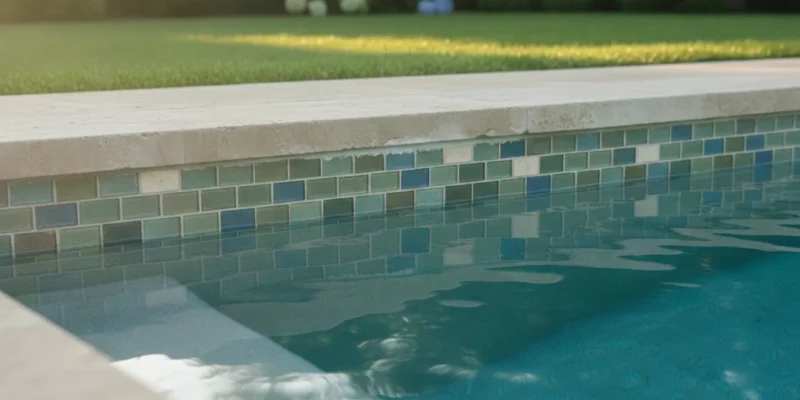
Pool waterline tile cleaning Long Island homeowners can do themselves starts with naming the film on the tile. A soft gray scum line from oils and sunscreen wipes off with a tile-safe cleaner. A hard white crust is calcium scale, and it needs a different method. Glass mosaic and glazed ceramic can both be dulled by the wrong acid, pumice, or metal brush. The plaster just below the tile can etch even faster.
Contact Gappsi through our contact page if the waterline is etched, loose, or past a light cleaning.
Posted by Gappsi Group.
What Is Sitting on the Waterline Tile?
The band of tile at the water surface collects whatever floats. Body oils, sunscreen, and pollen leave a soft film. Hard water and a high calcium level leave a chalky crust. The two look similar from the deck, and they do not come off the same way.
Run a fingernail across a dry spot above the water. Scum smears and smells slightly oily. Scale feels gritty and does not smear. Green or black specks in the grout are usually algae or mold in a porous joint, not a stain inside the glaze. If the tile face is pitted, cloudy, or missing glaze, cleaning will not restore it. That is a replacement question, not a scrubbing question.
Long Island fill water and evaporation both push minerals toward that line. Salt systems do not stop it. A salt chlorine generator still leaves calcium in the water, and a poorly balanced pH can drop scale on glass tile just as it does on ceramic. The salt water and chlorine pool comparison covers how those systems differ. It is not a tile cleaning guide, so treat chemistry here as the reason the line came back, not as a full water-care manual.
How Should Pool Waterline Tile Cleaning on Long Island Start?
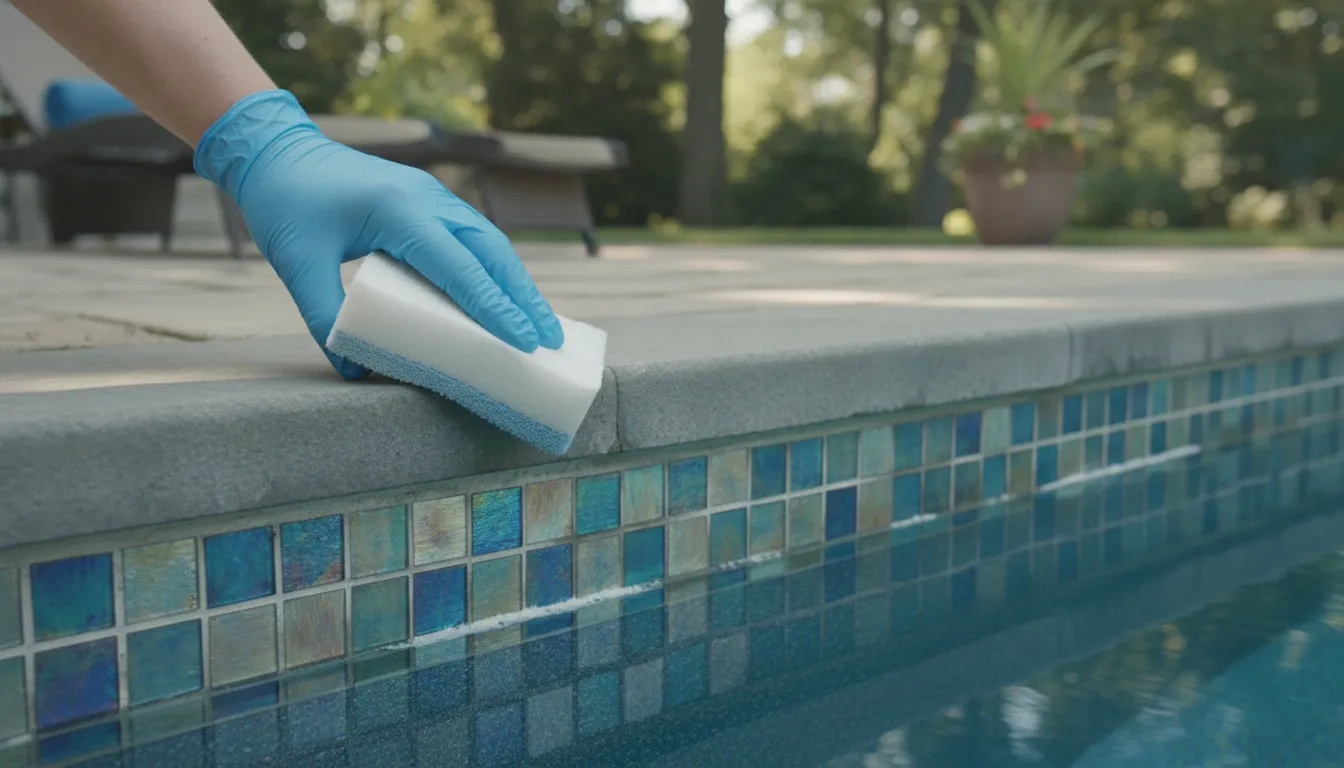
Start with the least aggressive method that can work. Lower the water an inch or two below the line so you are not washing product straight into the pool. Use a nylon brush or a non-scratch sponge and a cleaner labeled for pool tile. Work a short section, rinse, and check the glaze before you move on.
Skip steel wool, a wire brush, and any powder meant for glass cooktops. Those cut the face of glass mosaic and leave a dull path you cannot polish out. Also skip bathroom grout dye and indoor steam coloring. The indoor tile and grout cleaning service is built for bathroom and kitchen floors, not a pool that stays full of treated water.
- Brush loose debris off the dry tile with a soft nylon brush.
- Apply a pool-tile cleaner and let it sit only as long as the label allows.
- Scrub with a non-scratch pad, then rinse into a bucket rather than back into the pool when the product says to.
- Refill to the normal operating level and run the filter so any residue that did reach the water is circulated and tested.
If the film returns within a week, the water is still carrying oils or the tile was never fully cleaned. A second light pass is reasonable. A third pass in the same week usually means the crust is scale, or the water balance needs attention before more scrubbing.
When Is Scale a Cleaning Job, and When Is It Damage?
Light calcium that still lets you see the tile color can often be lifted with a scale remover made for pools, used on a small test spot first. Heavy scale that has turned the glaze white, or that has crept down onto the plaster, is no longer a sponge job. Acid strong enough to melt that crust can also etch the finish under the tile.
| What you see | Likely cause | First move | Stop and call a builder if |
|---|---|---|---|
| Soft gray or brown film. | Oils, sunscreen, or pollen. | Use a nylon brush and a pool-tile cleaner. | Stop if the film stains the glaze after two cleanings. |
| Thin white chalk at the water edge. | Calcium scale from high hardness or pH. | Try a labeled scale remover on a test tile. | Stop if the test spot turns dull or pitted. |
| Hard white crust over glass or ceramic. | Scale left for a season or more. | Do not grind it off. | Stop if the glaze is cloudy or the crust reaches the plaster. |
| Green or black film in the joints. | Algae or mold in porous grout. | Brush the joint and balance the water. | Stop if joints are missing or the tile is loose. |
| Pitted, crazed, or popped tiles. | Age, freeze movement, or a failed bond. | Stop cleaning that area. | Call if any tile moves or the coping above it has shifted. |
A pumice stone sold for pool tile can lift thin scale on some ceramic, and it can also frost glass mosaic in one stroke. Test a hidden corner, keep the stone wet, and stop at the first dull spot. Never use it on the plaster, quartz, or pebble finish below the waterline. That surface is the pool interior, and it belongs to a different repair. The marble dust pool finish guide explains how those interiors are built and why an acid wash is a renovation, not weekly maintenance.
Which Cleaners Can Etch Tile or Release Fumes?
Muriatic acid, vinegar poured by the gallon, and off-the-shelf rust or calcium removers made for kitchens are the usual mistakes. A small labeled dose on a wet tile is not the same as dumping acid along the waterline while the pump is off. Acid that reaches unbalanced pool water can cloud the finish, and acid mixed with chlorine can release gas.
The CDC reviewed pool chemical injuries that sent people to emergency departments. Inhaling fumes was among the most frequent injuries. For a home pool, the agency’s guidance is direct. Follow the label. Wear protective gear. Keep chemicals away from children and pets. Never mix different pool chemicals. That guidance is in the CDC’s May 17, 2019 summary of pool chemical injuries in public and residential settings.
Read the product label for the surface. A remover that is safe on raw concrete coping can haze glass tile. A deck cleaner meant for travertine is the wrong bottle for the waterline. Deck care is covered in the travertine pool deck cleaning guide. Keep that work on the deck, and keep waterline products on the tile.
Practical limits for a homeowner pass:
- Work with the pump running unless the label says to turn it off, and keep swimmers out until the water tests in range.
- Do not mix a chlorine shock with an acid cleaner in the same bucket or along the same tile course.
- Store each chemical in its own labeled container, off the ground, and out of the sun. Long Island shed temperatures in July can sit well above what many labels allow.
- If a tile cleaner spills into the pool, stop, circulate, and test pH and sanitizer before anyone swims.
How Does Long Island Water Make the Line Come Back?
Cleaning the tile without checking the water only resets the clock. Calcium hardness, pH, and total alkalinity decide whether minerals stay dissolved or fall out on the warm tile at the surface. Evaporation through a hot July concentrates what is already in the pool. Topping off from a hard well or a municipal supply adds more.
Saltwater pools on the island are common, and they are not immune. The generator makes chlorine from salt. It does not remove calcium. If the line returns as white crust within a few weeks of a careful cleaning, have the water tested before you buy a stronger acid. Chasing scale with acid while hardness stays high etches the tile and leaves the next crust thicker.
Equipment matters only as far as circulation and sanitizer. A weak filter or a dirty cell does not scrub tile, but poor circulation lets film sit in dead corners at steps and benches. The inground pool equipment guide is the place for pumps, filters, and heaters. Use it when the water will not hold a reading, not as a substitute for cleaning the band itself.
Request a Gappsi pool review through our contact page when the same line keeps returning after the water has tested in range.
How Do You Clean Waterline Tile Without Harming the Finish?
Match the tool to the material. Glazed ceramic tolerates a nylon brush and a labeled tile cleaner. Glass mosaic shows every scratch, so stay with a soft pad and stop if the shine drops. Natural stone tile at the waterline, including some limestone and marble pieces, can etch from the same acid that a porcelain glaze survives. If you do not know the material, treat it as glass until someone who installed it can say otherwise.
Keep cleaners off the coping and the deck. Bluestone, travertine, and porcelain coping each react differently, and a drip line of acid can mark them in a single afternoon. Material choices for that edge are laid out in the natural stone pool coping guide and the porcelain pool deck guide. This article does not repeat those comparisons. The only point here is to protect the edge while you clean the tile under it.
Grout at the waterline is often sanded and more porous than the tile. A soft film in the joint will brush out. Missing grout, a hollow sound when you tap the tile, or a tile that rocks means water is behind the bond. Scrubbing will not fix that, and acid can drive the failure faster. Indoor grout coloring products do not belong on a pool joint.
When Should Cleaning Stop and Replacement Start?
Stop cleaning when the tile is loose, cracked through the body, or etched so the pattern is gone. A single cracked piece at a step can be a spot repair. A whole course of popped glass mosaic, rust bleeding from behind the tile, or coping that has shifted usually means the bond coat or the beam under it has moved. That is renovation work.
Gappsi builds and renovates gunite pools across Long Island, including tile and coping as part of a new pool or a rebuild. See the Long Island swimming pool design and build page for the construction scope, and the gunite pool renovation guide for what a rebuild includes. An acid wash of a commercial plaster pool, documented in the marble acid wash and marble dusting article, is a finish renovation. It is not the method for a homeowner scum line.
There is no honest flat price for waterline replacement in this article. The cost turns on tile type, how many linear feet have failed, whether the coping comes off, and whether the plaster edge has to be cut back. A cleaning visit and a retile are different jobs. If a light, label-safe cleaning does not change the line, get the water tested and then decide. Do not escalate to undiluted acid to avoid that call.
Contact Gappsi through our contact page before you replace waterline tile or open the plaster edge.
Frequently Asked Questions
How do I clean pool waterline tile on Long Island?
Lower the water slightly, then use a nylon brush or non-scratch pad with a cleaner labeled for pool tile. Identify scum versus scale first. Oils wipe off. Hard calcium needs a scale product tested on one tile, and it should be stopped if the glaze dulls.
Can I use vinegar or muriatic acid on pool tile?
Do not pour household vinegar along the waterline or mix acid with chlorine. A scale product made for pools, used on a test spot and kept off plaster and coping, is the limit for a homeowner pass. Heavier acid work belongs with someone set up to protect the finish and handle fumes.
Will a pumice stone scratch glass waterline tile?
It can. Pumice may lift thin scale on some ceramic and frost glass mosaic immediately. Keep the stone wet, test a hidden corner, and stop at the first dull spot. Never use pumice on the plaster or pebble finish below the tile.
Why does the white line come back after I clean it?
The tile was cleaned, and the water was not. High calcium, high pH, or steady evaporation will drop scale again, including on saltwater pools. Test hardness, pH, and alkalinity before a stronger chemical. If the crust returns while the water is in range, the tile surface may already be etched and holding mineral in the pits.
When should waterline tile be replaced instead of cleaned?
Replace it when tiles are loose, cracked through, or etched so the color is gone, or when coping movement and hollow tile point to a failed bond. Cleaning cannot rebuild glaze. Gappsi can review that edge as part of a pool renovation rather than as another scrub.
Contact Gappsi through our contact page to talk through a waterline that cleaning will not restore.