


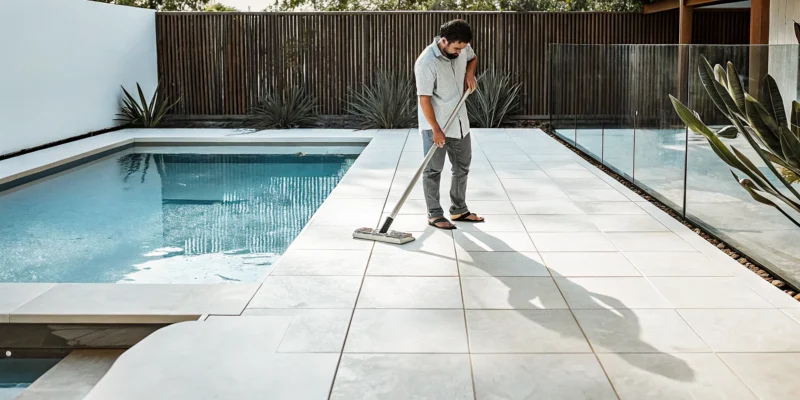
A travertine pool deck is the ultimate statement in outdoor luxury. Its rich, earthy tones and unique texture create a stunning foundation for your entire backyard oasis, turning a simple swimming pool into a personal resort. But as a natural stone, it requires a specific kind of care to maintain its beauty. You wouldn’t use a harsh scrub brush on a silk shirt, and the same principle applies here. Knowing how to clean a travertine pool deck correctly is less about hard work and more about using the right, gentle techniques. This guide will walk you through the simple, safe steps to protect your investment, ensuring your beautiful stone looks as pristine as the day it was installed.
Key Takeaways
- Gentle Cleaning is Non-Negotiable: Travertine is a sensitive natural stone, so you must avoid acidic or harsh chemicals like vinegar and bleach. Always use a pH-neutral cleaner and a soft-bristled brush to prevent permanent etching and scratches.
- Sealing Creates a Protective Shield: Because travertine is porous, applying a penetrating sealer is essential to block stains, repel moisture, and make cleaning easier. You can test your sealer by splashing water on the stone; if it beads up you are protected, but if it soaks in, it is time to reseal.
- Proactive Maintenance Prevents Major Problems: Small, consistent habits like sweeping regularly and wiping up spills immediately are your best tools for everyday care. For deep-set stains or widespread damage, calling a professional restoration service is the safest way to protect your investment.
Why Choose Travertine for Your Pool Deck?
If you’ve ever admired a stunning, high-end pool area, there’s a good chance you were looking at a travertine deck. This natural stone is a top choice for creating luxurious outdoor spaces, and for good reason. Travertine brings an earthy, timeless elegance that transforms a simple backyard into a personal resort. Its beautiful, subtle variations in color and texture mean no two decks are exactly alike, giving your space a truly custom feel that feels both organic and sophisticated. It’s the kind of detail that makes a property stand out.
Beyond its good looks, travertine is incredibly practical. It’s a durable material that stands up well to the elements, ensuring your investment lasts for years with the right care. One of its most celebrated features is its ability to stay cooler to the touch than many other paving materials, a welcome relief for bare feet on hot summer days. When you’re designing your dream backyard, choosing the right materials is key to achieving the perfect blend of beauty and function. Travertine is a fantastic option that complements gorgeous swimming pools and creates a cohesive, upscale environment. But like any natural material, its unique character comes with specific care requirements. Understanding these needs is the first step to keeping your deck looking pristine for every pool party and quiet afternoon.
Understanding Travertine’s Unique Needs
So, what makes travertine special? Think of it as a cousin to marble. It’s a porous natural stone, meaning it has tiny, microscopic holes in its surface. This porosity is what helps it absorb water and stay cool, but it’s also what makes it sensitive. Travertine is composed mainly of calcite, a mineral that reacts poorly with acids and harsh chemicals. Using the wrong cleaner, like vinegar or a citrus-based product, can cause “etching,” which looks like a dull, discolored spot on the stone’s surface. This doesn’t mean it’s a high-maintenance material, just that it requires a gentle touch. Knowing how to properly clean and protect it is all it takes to maintain its beauty. If you ever feel unsure, professional restoration and sealing services can ensure it’s done right.
Gather Your Cleaning Supplies
Getting your travertine ready for a good cleaning is a lot like prepping for a recipe. You want to have all your ingredients and tools laid out before you begin. This simple step makes the whole process smoother and ensures you’re not scrambling for something mid-scrub. Having the right supplies on hand is the key to cleaning your deck effectively without accidentally causing any damage. It’s all about working smarter, not harder, to protect the beautiful natural stone you invested in. Let’s walk through exactly what you’ll need to get the job done right.
The Right Tools for the Job
First, let’s assemble your cleaning kit. You don’t need a lot of fancy equipment, just the right items to treat your stone with care. Grab a soft-bristled broom or brush, a garden hose with a spray nozzle, and a bucket of warm water. You will also need a gentle, pH-neutral cleaner specifically designed for natural stone. A few soft cloths or a mop will be useful for application and drying. For any stubborn, stuck-on gunk, a plastic scraper is a great tool to have, since metal can easily scratch the travertine. If you have a pressure washer, you can use it, but only on its lowest possible setting to avoid damaging the stone’s surface.
Choosing a Safe, pH-Neutral Cleaner
This is the most important part of your supply list. When you’re choosing a cleaner, you must use one that is pH-neutral. This simply means the formula is not acidic, like vinegar, or highly alkaline, like bleach and ammonia. Harsh cleaners can etch the stone, which means they chemically burn the surface and leave behind permanent dull spots or discoloration. Think of it like using the wrong product on your skin, it can cause a bad reaction. Always read the label to confirm a cleaner is safe for natural stone like travertine. Protecting your investment starts with using products that gently clean without stripping away the stone’s natural finish.
Chemicals That Can Damage Travertine
To keep your travertine looking its best, it’s just as important to know what not to use. Steer clear of any generic household cleaners that contain acid, ammonia, or bleach. While these are great for disinfecting other areas of your home, they are your travertine’s worst enemy. These chemicals will corrode the calcium carbonate within the stone, causing it to break down over time. This damage is often irreversible and can ruin the luxurious look of your pool deck. When in doubt, stick to water or a dedicated stone cleaner. If you encounter a particularly tough stain, our professional restoration and sealing services can help without risking damage to your deck.
Your Step-by-Step Guide to Cleaning a Travertine Deck
Keeping your travertine pool deck looking pristine is easier than you might think. With the right approach and a little routine care, you can protect your investment and ensure it remains a stunning centerpiece for your backyard. This simple, six-step process will guide you through a safe and effective cleaning that preserves the natural beauty of your stone. Forget harsh chemicals or aggressive scrubbing, the key is a gentle touch. Following these instructions will help your beautiful natural stone pavers look their best for every pool season.
Step 1: Prep the Area
Before you get started, the first step is to completely clear the deck. Move all your patio furniture, lounge chairs, planters, and pool toys to another area, like the lawn. This gives you an empty canvas to work with and ensures you can clean every inch of the stone without obstruction. It also prevents any cleaning solution from accidentally splashing onto your belongings. Think of it as a fresh start for your entire pool area. This is also a great opportunity to wipe down your furniture and check for any dirt or mildew that could transfer back onto your newly cleaned deck.
Step 2: Sweep Away Debris
Next, you’ll want to remove all the loose dirt and debris. You can use a leaf blower for a quick clear, or grab a soft-bristle push broom. Using a soft-bristled broom is important, as stiff or wire bristles can easily scratch the surface of the travertine. Start at one end of your deck and work your way methodically to the other, sweeping away leaves, twigs, and dirt. Pay special attention to the corners and the edge along your swimming pool, as this is where debris loves to collect. A thorough sweep is essential for preventing scratches during the scrubbing phase.
Step 3: Give It a Good Rinse
Once the deck is clear of debris, give the entire surface a good rinse with a garden hose. You don’t need a high-pressure nozzle for this, just a gentle, steady spray is perfect. The goal is to wash away any fine dust left over from sweeping and to wet the stone. Rinsing also helps cool the surface of the travertine, which is especially important on a sunny day. A cooler surface prevents your cleaning solution from evaporating too quickly, giving it the time it needs to work effectively without drying onto the stone.
Step 4: Apply Your Stone Cleaner
Now it’s time to apply your cleaner. It is critical to use a pH-neutral cleaner that is specifically formulated for natural stone like travertine. Acidic or highly alkaline products, including vinegar or bleach, can etch and permanently damage the stone’s surface. To avoid having the cleaner dry before you can scrub it, work in small, manageable sections of about five by five feet. Mix your cleaner according to the manufacturer’s instructions and apply it evenly to your first section. If you’re unsure which product to use, our team can help you with professional cleaning and sealing services.
Step 5: Gently Scrub the Surface
With the cleaner applied to your first section, it’s time for a gentle scrub. Use a soft-bristle brush or a deck brush with nylon bristles, never a wire brush. Scrub the surface in soft, circular motions to lift dirt out of the stone’s natural pores and textures. This gentle agitation is usually all you need to remove everyday grime without harming the travertine. Apply light, consistent pressure, and pay a little extra attention to any grout lines or areas that seem to hold more dirt. A little bit of elbow grease here goes a long way in restoring your deck’s clean appearance.
Step 6: Rinse Thoroughly and Let It Dry
As soon as you finish scrubbing a section, rinse it thoroughly with your garden hose. You want to make sure you wash away all the cleaning solution and the dirt you just loosened. Any residue left behind can leave a hazy film or become sticky, attracting more dirt later on. Rinse until the water runs completely clear, then you can move on to apply cleaner to the next section. Once you have cleaned and rinsed the entire deck, simply let it air dry completely. Step back and enjoy your beautifully clean travertine.
Avoid These Common Travertine Cleaning Mistakes
Your beautiful travertine deck is an investment, and keeping it looking its best means knowing what not to do. Following the right cleaning steps is important, but avoiding common mistakes is just as critical to prevent accidental damage. Even with the best intentions, using the wrong tool or chemical can cause permanent etching, scratching, or staining. Before you start scrubbing, let’s walk through a few pitfalls to sidestep so you can protect the natural beauty of your stone for years to come. Taking a moment to understand these common errors will save you from costly repairs down the road.
Using Harsh or Acidic Cleaners
The number one rule of travertine care is to avoid anything acidic. Cleaners containing lemon, vinegar, or other acids will react with the calcium carbonate in the stone, causing a chemical burn known as etching. This creates dull, discolored spots that can’t simply be wiped away. The same goes for harsh, alkaline cleaners like ammonia or bleach, which can also strip the sealer and damage the stone’s surface. Always stick with a pH-neutral cleaner specifically formulated for natural stone to ensure you’re cleaning your deck safely without compromising its finish.
Pressure Washing with Too Much Force
While a pressure washer can seem like a quick fix for a dirty deck, it can do more harm than good if you’re not careful. Travertine is a porous and relatively soft stone, and a high-pressure stream of water can easily etch the surface, blast out the joint sand, or even chip the edges of the pavers. If you decide to use a pressure washer, use the widest fan tip available and keep it on the lowest possible pressure setting. A gentle rinse is all you need. When in doubt, it’s often safer to let professionals handle the deep cleaning and restoration work.
Scrubbing with Abrasive Brushes
Put down that wire brush. Using abrasive scrubbing tools, including stiff nylon bristles or scouring pads, is a fast way to create fine scratches all over your travertine deck. These scratches will dull the stone’s finish and collect dirt, making your deck look perpetually grimy. Instead, always choose a soft-bristled brush or a microfiber mop for any scrubbing you need to do. This will be effective enough to lift dirt from the stone’s pores without scratching the surface. Gentle but consistent effort is the key to keeping your travertine looking pristine.
Letting Cleaner Dry on the Stone
When you’re cleaning your deck, especially on a warm or sunny day, it’s easy for the cleaning solution to dry before you have a chance to rinse it off. This is a mistake you’ll want to avoid, as dried cleaner can leave behind a hazy film, streaks, or soap scum that is difficult to remove. To prevent this, work in small, manageable sections. Apply your cleaner, gently scrub the area, and rinse it thoroughly before the solution has a chance to dry. Then, you can move on to the next section, ensuring a clean, residue-free finish across the entire deck.
Skipping Regular Sealing and Maintenance
Sealing your travertine isn’t a one-and-done task. A high-quality sealer is your deck’s best defense against stains, water damage, and fading, but it wears down over time. Skipping this crucial maintenance step leaves your porous stone vulnerable to everything from spilled drinks to mold growth. You can perform a simple water test to check your sealer: just splash a little water on the surface. If it beads up, your sealer is still working. If it soaks in and darkens the stone, it’s time to reseal. Regular cleaning and sealing is the most effective way to protect your investment.
How to Remove Tough Stains from Travertine
Even with the most diligent cleaning routine, tough stains can happen. A tipped-over glass of red wine, grease from the grill, or a rusty planter can leave a mark that a simple wash won’t fix. Don’t worry, your beautiful travertine deck isn’t ruined. Most stubborn stains can be managed with the right technique and a little patience. The key is to identify the type of stain and use a targeted approach that is safe for natural stone. Below are methods for tackling the most common culprits, from oily spots to mineral deposits. For anything that seems too set-in, our professional restoration and sealing services can handle even the most difficult stains.
Getting Rid of Oil and Grease
Oil and grease from sunscreen, lotions, or barbecue splatters can quickly penetrate porous travertine, leaving dark, unsightly spots. To draw these deep-set stains out, you can create a poultice. Simply mix an absorbent powder like baking soda with a pH-neutral stone cleaner until it forms a thick paste, similar to the consistency of peanut butter. Apply a thick layer of the paste directly onto the stain, extending it slightly beyond the edges. Cover the area with plastic wrap and tape down the sides to keep the poultice moist. Let it sit for 24 to 48 hours, which gives it time to pull the oil out of the stone. Afterward, remove the plastic, let the paste dry completely, and then gently scrape it off and rinse the area thoroughly with water.
Removing Algae, Mold, and Mildew
Organic stains from algae, mold, or mildew are common in damp, shady areas of a pool deck. These green or black blemishes not only look bad but can also make the surface slippery. To treat them, use a stone-safe cleaner specifically designed for removing algae, or create your own solution with water and hydrogen peroxide. Apply the cleaner to the affected area and gently scrub with a soft-bristled brush. Avoid using wire brushes, as they can easily scratch the travertine. Working the cleaner into the stone will help lift the stains. Once you’re finished scrubbing, rinse the area completely with clean water to wash away all residue and loosened grime. Regular cleaning helps prevent these organic growths from taking hold.
Treating Rust Stains
Rust stains, often caused by metal patio furniture, planters, or forgotten tools, can leave behind stubborn orange and brown marks. It’s important to use a rust remover that is specifically formulated for use on porcelain and natural stone. Standard rust removers are typically highly acidic and can etch or permanently damage your travertine. Before you begin, always test the product on a small, inconspicuous spot to ensure it doesn’t discolor the stone. Carefully follow the manufacturer’s instructions, apply the product to the rust stain, and let it work for the recommended time. Once the stain has lifted, rinse the area thoroughly with water to neutralize and remove all traces of the chemical cleaner.
Dealing with Efflorescence
Have you ever noticed a hazy, white, powdery substance on your travertine? That’s efflorescence. It’s a deposit of natural mineral salts that are carried to the surface by water and left behind when the water evaporates. While it’s not harmful, it can cloud the beauty of your stone. Luckily, it’s usually easy to remove. You can often scrub it away with a soft, dry brush. If that doesn’t work, use a mild, pH-neutral stone cleaner and a soft brush to gently wash the area. It is crucial to rinse the surface thoroughly afterward to remove any loosened salt residue. Persistent efflorescence can sometimes point to an underlying moisture issue, so if it keeps returning, it may be time to consult with a masonry professional.
Why Sealing Your Travertine Deck Is a Must
Think of cleaning your travertine deck as the first step and sealing it as the essential follow-up. Travertine is a beautiful, natural stone, but it’s also porous. This means it has tiny, microscopic holes that can absorb liquids. Around a pool, that includes chlorinated water, sunscreen, spilled drinks, and oils. Over time, this absorption can lead to stubborn stains, discoloration, and even the growth of mold or algae within the stone itself. Sealing your deck creates a protective barrier that helps keep your investment looking pristine for years to come.
Sealing doesn’t just prevent stains; it also makes your regular cleaning routine much easier. When your deck is properly sealed, dirt and spills sit on the surface instead of soaking in, allowing you to simply wipe or rinse them away. It’s a proactive step that saves you from intensive scrubbing later on. If you want to ensure your beautiful travertine continues to be the centerpiece of your backyard, sealing is a non-negotiable part of its maintenance plan.
How a Penetrating Sealer Works
A penetrating sealer is your travertine’s best friend. Unlike a topical sealer that just forms a film on the surface, a penetrating sealer soaks into the stone and blocks its pores from the inside out. This process creates an invisible shield that stops liquids from seeping deep into the travertine. It effectively repels water, oils, and other potential staining agents without changing the stone’s natural texture or appearance. This is why professional restoration and sealing is so crucial for protecting the longevity and beauty of your outdoor surfaces. By blocking moisture, it also helps prevent freeze-thaw damage during cold Long Island winters.
Signs It’s Time to Reseal
Sealer isn’t a one-and-done application; it wears down over time due to foot traffic, weather exposure, and UV rays. As a general rule, you should plan to reseal your travertine deck every one to three years. The exact timing depends on your specific circumstances. A deck that gets a lot of direct sun and heavy use during the summer will likely need sealing more often than one that’s partially shaded. Instead of just marking a date on the calendar, pay attention to how your deck looks and feels. If you notice it’s getting harder to clean or that water spots are lingering, it’s probably time to think about resealing.
The Water Test: Is Your Deck Protected?
If you’re not sure whether your sealer is still doing its job, there’s a simple test you can perform in seconds. Just sprinkle a few drops of water onto a few different areas of your dry travertine deck. If the water beads up on the surface like it would on a freshly waxed car, your sealer is still working effectively. However, if the water quickly darkens the stone and soaks in, it’s a clear sign that the protective barrier has worn off. This means your deck is vulnerable to stains and moisture damage, and it’s definitely time to apply a fresh coat of sealer.
How to Seal Your Travertine Pool Deck
Sealing your travertine is the final, crucial step to protect your investment. Think of it as a shield for your beautiful stone, guarding it against stains, water damage, and the effects of weather. While it might sound intimidating, sealing is a straightforward process that you can handle with a little patience and the right technique. Following these steps will ensure your sealer goes on smoothly and provides long-lasting protection, keeping your pool deck looking pristine for years. If you’d rather leave it to the experts, our team offers professional restoration and sealing services to get the job done perfectly.
Step 1: Start with a Clean, Dry Surface
You can’t seal over dirt. Before you even think about opening a can of sealer, your travertine deck must be completely clean and dry. Any dust, stains, or moisture you trap under the sealer will be locked in, which can lead to discoloration and other issues down the road. Follow the cleaning steps we outlined earlier and then give your deck at least 24 hours of good, dry weather to air out. The stone needs to be dry not just on the surface, but all the way through. This ensures the sealer can penetrate deeply into the pores of the travertine and bond correctly, giving you the best possible protection.
Step 2: Apply the Sealer Evenly
The goal of sealing is to fill the microscopic pores of the travertine, which stops liquids from soaking in. Always read the instructions on your specific sealer, as application methods can vary. Generally, you can use a low-pressure garden sprayer, a paint roller with a short nap, or even a microfiber cloth to apply a thin, even coat. Work in small, manageable sections to maintain a wet edge and prevent lap marks or streaks. Don’t try to apply a thick layer; you want the stone to absorb the sealer, not for it to sit on top like paint. You can find high-quality sealers and application tools at the Gappsi Store.
Step 3: Remove the Excess and Let It Cure
Some penetrating sealers require you to wipe away any excess product that hasn’t soaked into the stone after about 10 to 15 minutes. Check your product’s directions. This step is important because it prevents a sticky or hazy film from forming on the surface as it dries. Once your application is complete, the final step is to simply let it cure. Curing time is critical, so follow the manufacturer’s instructions carefully. This usually means keeping all foot traffic, furniture, and pets off the deck for at least 24 to 48 hours. This allows the sealer to fully harden and create a durable, protective barrier for your natural stone pavers.
Your Travertine Cleaning and Sealing Schedule
Keeping your travertine pool deck looking its best does not require a complicated calendar. Think of it as a simple routine, much like landscaping or pool maintenance. By staying on top of a few key tasks, you protect your investment and ensure your outdoor space is always ready for relaxation or entertaining. A consistent schedule for cleaning and sealing is the secret to preserving that beautiful, natural stone finish for years to come. Here’s a straightforward timeline you can follow.
How Often to Clean
For everyday upkeep, a quick sweep once a week is usually enough to handle leaves, dust, and other loose debris. If your deck sees a lot of action, like after a pool party, it’s a good idea to give it a rinse with a garden hose. This washes away any sunscreen, oils, or spilled drinks before they have a chance to settle. We recommend a more thorough cleaning twice a year. A deep clean in the spring gets your deck ready for summer, while another in the fall clears away the season’s grime. This simple routine prevents buildup and keeps your travertine looking fresh.
How Often to Seal
Sealing is your deck’s best defense against stains and moisture. A good rule of thumb is to reseal your travertine every one to three years, but this can vary based on sun exposure and foot traffic. There’s a simple way to check if your sealer is still working: the water test. Just splash a little water on the surface. If it beads up, you’re still protected. If the stone darkens and absorbs the water, it’s time to reseal. When you do, remember to apply the sealer only after a deep clean, once the deck is completely dry. This ensures you get the best possible protection for your beautiful natural stone.
Simple Tips for Everyday Travertine Care
Keeping your beautiful travertine deck looking its best doesn’t have to be a huge chore. With a few simple habits, you can prevent stains and damage before they happen, making your seasonal deep cleans much easier. These small steps go a long way in preserving the natural elegance of your stone and protecting your investment for years to come. It’s all about working smarter, not harder, to maintain that stunning poolside look.
Sweep and Rinse Often
This might sound basic, but a quick daily sweep is your travertine’s best friend. Loose dirt, fallen leaves, and gritty debris can act like sandpaper underfoot, causing tiny scratches that dull your stone’s finish over time. By sweeping them away regularly, you stop potential stains and scratches in their tracks. After sweeping, giving the deck a quick rinse with your garden hose washes away any fine dust left behind. This simple routine takes just a few minutes but is one of the most effective ways to protect your deck. Consistent care is the secret to keeping your outdoor surfaces looking pristine, and it’s a core part of our approach to restoration and sealing.
Tackle Spills Right Away
Picture this: you’re enjoying a barbecue, and a splash of red wine lands on your deck. Don’t wait. Travertine is a porous natural stone, which means it can absorb liquids and stain easily. The key is to act fast. Gently blot the spill with a clean cloth, working from the outside in to avoid spreading it. Then, clean the spot with a little water and a pH-neutral stone cleaner. Always remember to test any new cleaning product on an inconspicuous area first. Quick action prevents a small mishap from becoming a permanent mark on your beautiful porcelain and natural stone surfaces.
Use Furniture Pads to Prevent Scratches
Your patio furniture helps create a perfect outdoor oasis, but it can also be a primary source of scratches on your travertine deck. Heavy metal chairs or tables dragged across the surface can leave deep, unsightly gouges that are difficult to repair. An easy fix is to place felt or rubber pads on the bottom of all furniture legs. This allows you to move chairs and loungers without worrying about scratching the stone. It’s also a good habit to lift furniture instead of dragging it whenever you rearrange your space. Protecting your deck this way ensures it remains a beautiful backdrop for all your outdoor structures, like pavilions and pergolas.
Know When to Call in the Pros for Restoration
While regular cleaning is key to maintaining your travertine deck, some situations require a professional touch. Think of it as protecting your investment. A beautiful travertine deck is a major feature of your home, and bringing in an expert for tough jobs ensures it stays that way for years to come. Ignoring serious issues or trying to fix them with the wrong methods can lead to permanent damage and much costlier repairs. If you spot deep-set stains, widespread discoloration, or damage to the stone itself, it’s time to consider professional help. Experts have the tools and experience to tackle problems that household cleaners can’t handle, restoring your deck’s original beauty safely and effectively.
When Your Deck Shows Signs of Serious Wear
If your travertine deck has been neglected for a while or has visible damage, a professional assessment is your best first step. Look for issues like cracked or loose pavers, widespread mold that comes back quickly after cleaning, or stains that have soaked deep into the stone. A professional can determine if individual tiles need to be replaced or if a more comprehensive renovation is in order. For these bigger jobs, an expert can provide a full restoration and sealing service that goes far beyond a surface clean, addressing the root of the problem and preventing future issues.
The Risk of Etching and Permanent Damage
One of the biggest risks of DIY restoration is “etching.” This happens when an acidic or harsh chemical cleaner reacts with the calcium carbonate in the travertine, creating dull spots that look like chemical burns on the stone’s surface. Unfortunately, this damage is permanent and can’t be scrubbed away. High-pressure washing can also cause pitting or strip away the stone’s natural finish. Fixing etched travertine is a delicate process that requires specialized polishing and honing techniques. Trusting an expert who understands the nuances of natural stone is crucial to avoid making a small problem much worse.
Why Professional Equipment and Knowledge Matter
Professionals bring more than just a pressure washer to the job. They have access to commercial-grade, pH-neutral cleaners and specialized equipment designed for delicate stone. They know exactly what pressure levels are safe for travertine and how to treat specific stains, from rust to oil, without harming the stone. A seasoned masonry expert can also spot underlying issues, like poor drainage causing mildew growth, and recommend a lasting solution. Their expertise ensures the job is done right the first time, saving you time, money, and the stress of potentially damaging your beautiful pool deck.
Frequently Asked Questions
How often should I be deep cleaning versus just sweeping my travertine deck? Think of it in two parts: daily upkeep and seasonal resets. A quick sweep or rinse a few times a week is perfect for handling everyday dust and leaves that can cause scratches. For a deep clean with a stone-safe cleaner, plan on doing it twice a year, once in the spring to get ready for summer and again in the fall to clear away grime before winter. This routine prevents major buildup and makes maintenance feel much more manageable.
Can I really damage my travertine with the wrong cleaner? What should I use instead? Yes, absolutely. This is the most important thing to remember. Travertine is a natural stone that reacts badly to acids and harsh chemicals. Cleaners with vinegar, lemon, bleach, or ammonia will chemically burn the surface, leaving permanent dull spots called etching. Always use a cleaner that is specifically labeled as pH-neutral and safe for natural stone. When in doubt, warm water and a soft brush are your safest bet.
Is it safe to use a pressure washer on my travertine deck? You need to be extremely careful with pressure washers. While they seem like a fast solution, the high-pressure stream can easily damage the soft, porous surface of travertine, causing pitting or chipping. If you choose to use one, you must set it to the lowest possible pressure setting and use a wide fan tip. A gentle rinse is always a safer alternative, but if you must pressure wash, proceed with caution.
My sealer test failed and water is soaking in. What’s my next step? If water is soaking into your stone instead of beading up, it’s a clear sign your deck is no longer protected and it’s time to reseal. Your next step is to first give the deck a thorough cleaning using the methods we discussed. After it is completely clean and has had at least 24 hours to dry, you can apply a fresh coat of a high-quality penetrating sealer. This will restore its protective barrier against stains and moisture.
I have a stain that won’t come out with regular cleaning. Is my deck ruined? Don’t panic; your deck is almost certainly not ruined. Many tough stains like oil, rust, or deep-set organic growth just need a more targeted approach than a general cleaning can provide. You can try creating a poultice for oil stains or using a specialized rust remover for stone. However, if you’re hesitant or the stain won’t budge, it’s a perfect time to call a professional restoration service. They have the tools and expertise to remove stubborn spots without risking damage to the stone.