


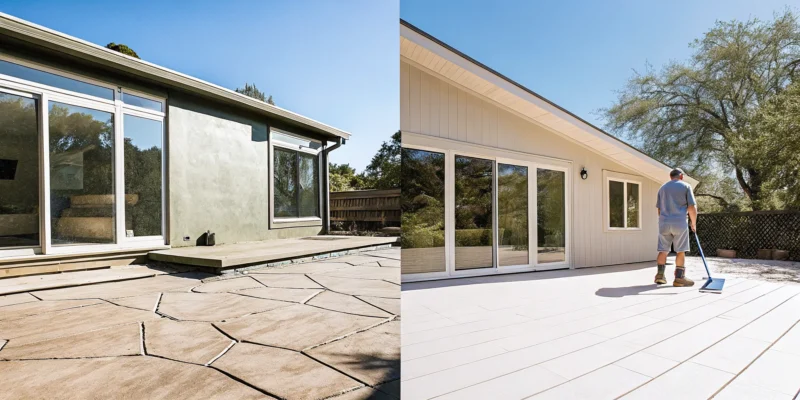
Here on Long Island, our patios have to endure a lot, from hot summer sun to the punishing freeze-thaw cycles of winter. This is a critical factor to consider when you’re thinking about putting stamped concrete over an old patio. While an overlay can provide a stunning cosmetic upgrade, its durability in our climate is a serious concern. If moisture gets between the new overlay and the old slab, freezing temperatures can cause it to crack, peel, and fail within just a few years. A thin overlay is especially vulnerable. This guide provides an honest look at the risks and limitations, helping you decide if an overlay is a durable choice for your home or if investing in a more permanent solution like pavers is the wiser long-term decision.
Key Takeaways
- Your Existing Concrete Must Be Solid: An overlay is a fantastic cosmetic fix for a stable, sound patio, but it cannot solve underlying structural issues. If your current slab has deep cracks, is sinking, or is uneven, an overlay will only mirror those problems.
- Weigh the Risks of Our Climate: For homeowners on Long Island, the freeze-thaw cycle is a major concern. Moisture can seep between the old and new concrete layers, freeze, and cause the overlay to crack, peel, or flake, making it a potentially short-term solution.
- Proper Installation and Maintenance Are Key: The final look and durability of an overlay depend entirely on expert preparation and application. To keep it looking great, you must also commit to a simple maintenance routine, which includes resealing the surface every two to three years.
What Is Stamped Concrete?
Stamped concrete is a versatile and popular choice for patios, walkways, and driveways. It’s concrete that has been patterned, textured, or colored to resemble other high-end materials like brick, slate, flagstone, or even wood planks. Think of it as getting the look of natural stone without the same price tag or maintenance demands. While a fresh pour is common, many homeowners wonder if they can get this look without the hassle and cost of tearing out their old, boring concrete slab. This is where a stamped concrete overlay comes into play.
An overlay is a thin layer of a special cement mixture that goes directly on top of your existing concrete. It’s a way to completely transform the surface, covering minor imperfections and adding a beautiful new design. While it sounds like a perfect fix, it’s not a magic wand. The success of an overlay depends entirely on the condition of the concrete underneath it. For a project to last, the original slab must be structurally sound. This is why a professional assessment is so important before you commit to this type of project. At Gappsi, we can help you determine if an overlay is the right fit or if another solution, like our beautiful porcelain and natural stone pavers, would be a better long-term investment for your home.
How Do Stamped Concrete Overlays Work?
A stamped concrete overlay involves applying a special cement-based product over your existing concrete. First, the surface has to be meticulously prepared, which usually means grinding it down to create a rough texture for the new material to grip onto. After a bonding agent is applied, the overlay material is spread across the surface. While it’s still wet, large, flexible stamps with your chosen pattern are pressed into it.
The most important thing to understand is that the overlay is only as strong as the concrete it’s sitting on. If your current patio has deep, structural cracks, is sinking in spots, or is heaving from frost, an overlay will just mirror those problems. The new layer will inevitably crack and fail right along with the faulty base. A professional masonry contractor will always inspect the existing slab first to ensure it’s a suitable candidate.
Important Thickness Limitations
When it comes to overlays, thickness is a critical factor for durability, especially here on Long Island with our freeze-thaw cycles. A very thin overlay, say around two inches or less, may not hold up for more than a few years. These thin layers lack the structural integrity to withstand the expansion and contraction that happens when water freezes and thaws. This can lead to cracking and delamination, where the top layer peels away from the base.
Another major challenge is getting the new layer to bond perfectly with the old concrete. If the bond isn’t strong, moisture can get between the layers, freeze, and pop the overlay right off. This can lead to chipping and flaking almost immediately. Because of these risks, it’s crucial to have an expert evaluate your project. Sometimes, a full replacement is the more reliable and cost-effective choice in the long run.
Can You Stamp Over an Existing Concrete Patio?
If you’re looking at a dull, aging concrete patio and dreaming of something new, you might be wondering if you have to go through a full demolition. The great news is that you can often apply a stamped concrete overlay directly on top of your existing slab. This process involves pouring a thin layer of a special cement-based material over the old concrete and then stamping it with a pattern to mimic stone, brick, or other textures. It’s a fantastic way to get a fresh look without the cost and hassle of a complete tear-out. However, this method isn’t a magic fix for every situation. The success of an overlay depends entirely on the condition of the concrete underneath it.
When an Overlay Is a Good Idea (and When It’s Not)
A stamped overlay is a perfect solution when your existing concrete is structurally sound but just needs a cosmetic update. If the surface is stained, discolored, or has a few minor hairline cracks, an overlay can cover those imperfections beautifully. The key is that the underlying slab must be stable. An overlay is not a good idea if your patio has major structural problems. This includes large, deep cracks, severe crumbling, or sections that are heaving and uneven. Covering up these issues is like putting a band-aid on a broken bone; the problems will just transfer to the new surface, causing it to crack and fail quickly. A professional masonry assessment is the best way to know for sure.
The Prep Work: Cleaning, Repairs, and Bonding
Proper preparation is the most critical step for a successful and long-lasting stamped overlay. You can’t just pour new material over a dirty, damaged surface and expect it to stick. The strength of the new layer is completely dependent on the strength of the old concrete it’s bonded to. The process starts with a thorough cleaning to remove any dirt, grease, or old sealants that could prevent adhesion. Next, any minor cracks or spalling areas must be repaired and filled. Finally, a bonding agent is typically applied to the old concrete. This primer acts like double-sided tape, ensuring the new overlay forms a powerful, permanent bond with the existing slab.
Factoring in Moisture, Temperature, and Timing
Environmental conditions play a big role in how a stamped concrete overlay is installed and how well it holds up over time, especially here on Long Island. The material needs to be applied within a specific temperature range to cure correctly. Too hot, and it dries too fast; too cold, and the curing process stalls. Moisture is another critical factor. The existing slab must be dry, and the weather forecast clear. For durability, the thickness of the overlay matters. A thin overlay might not withstand our freeze-thaw cycles for long. This is why working with a team that understands the right materials and application techniques for our climate is so important. When an overlay isn’t the right fit, porcelain and natural stone pavers offer another durable and beautiful alternative.
Stamped Concrete Patterns and Design Options
One of the best parts of choosing a stamped concrete overlay is the incredible range of design possibilities. This isn’t just a simple resurfacing job; it’s a chance to completely redefine your patio’s style. You can replicate the look of high-end materials at a fraction of the cost, matching your home’s architecture and your personal taste. From the timeless appeal of classic stone to the clean lines of modern wood planks, the right pattern can transform your outdoor space.
The process involves pressing molds into the fresh concrete overlay to create texture and pattern. When combined with custom colors and finishes, the results are stunningly realistic. Whether you dream of a rustic European courtyard or a sleek, contemporary deck, there’s a stamped concrete design that can bring your vision to life. At Gappsi, our design team can walk you through the options and help you select a look that complements your home and landscape perfectly. We have the expertise to create intricate designs that truly look like authentic masonry.
Classic Looks: Brick, Stone, and Cobblestone
If you love a timeless, traditional aesthetic, you can’t go wrong with patterns that mimic classic materials. Brick patterns, like herringbone or running bond, offer a warm and familiar look that’s perfect for colonial or ranch-style homes. For a more organic feel, flagstone and slate patterns create the impression of natural, hand-laid stone, adding rustic charm to any patio. Cobblestone stamps are another popular choice, bringing a touch of old-world European elegance to walkways and patio borders. These patterns are excellent at hiding minor imperfections and provide a textured, non-slip surface. They pair beautifully with lush landscaping and traditional home exteriors, giving you a sophisticated look that never goes out of style.
Modern Styles: Wood Planks and Tiles
For those with a more contemporary taste, stamped concrete can deliver clean lines and minimalist textures. Wood plank patterns have become incredibly popular, offering the warm, inviting look of a wood deck without any of the maintenance headaches like staining or splintering. You can choose from various plank widths and grain textures to achieve a look that ranges from rustic barn wood to sleek, modern hardwood. Another modern option is a large-format tile or cut stone pattern, which creates a sophisticated and spacious feel. Seamless textures, which provide a subtle, stone-like finish without grout lines, are perfect for a truly minimalist design. These modern styles are a fantastic alternative to traditional porcelain and natural stone pavers.
Customizing Your Color and Finish
The pattern is just the beginning. What truly brings stamped concrete to life is the color. We can use integral color, which is mixed into the concrete itself, to create the base tone. Then, we apply a secondary color with a powdered “release agent” before stamping. This release agent not only prevents the stamps from sticking but also settles into the low spots of the pattern, creating realistic highlights and shadows. This technique adds incredible depth and variation, making the texture pop. For example, a fieldstone pattern with a charcoal release creates a rich contrast that looks just like natural stone. You can see examples of these beautiful finishes in our project videos on the Gappsi YouTube channel.
The Pros of a Stamped Concrete Overlay
If your existing concrete patio is structurally sound but looks a little tired, a stamped concrete overlay can be a fantastic solution. This approach offers a way to completely refresh your outdoor space without the cost and chaos of a full demolition. It’s a popular choice for homeowners who want the high-end look of materials like natural stone or wood planks but are working with a concrete slab that’s still in good shape. By applying a new layer over the old, you get a durable, beautiful surface that can transform your patio, pool deck, or driveway.
The benefits are compelling, especially when you consider the savings in time and money. An overlay project is typically much faster than a complete replacement, meaning less disruption to your daily life and more time enjoying your new space. With expert masonry design, you can achieve a custom look that perfectly matches your home’s style. From mimicking the appearance of cobblestone to creating a sleek, modern finish, the design possibilities are vast. Let’s walk through the three biggest advantages of choosing a stamped concrete overlay for your next project.
Save Money Compared to a Full Replacement
One of the most attractive benefits of a stamped concrete overlay is the potential for significant cost savings. A full replacement involves breaking up and hauling away the old concrete, preparing the base, and pouring a brand new slab, all of which adds up in labor and material costs. An overlay, on the other hand, uses your existing concrete as a foundation. This process requires fewer materials and less intensive labor, making it a more budget-friendly option. You can achieve a premium finish for a fraction of the price of installing new stone or pavers, allowing you to allocate more of your budget to other parts of your backyard oasis.
Get a Brand-New Look Without Tearing Everything Out
An overlay gives you the power to completely change the appearance of your patio without the messy and time-consuming process of demolition. Instead of living with a construction zone for weeks, the overlay process is much quicker and less invasive. This means you can get a surface that mimics beautiful porcelain and natural stone pavers, classic brick, or even rustic wood planks, all applied directly over your old concrete. It’s a design upgrade that delivers a major visual impact with minimal disruption, letting you get back to enjoying your outdoor living area much sooner. It’s the perfect way to get a fresh start without starting from scratch.
Enjoy Lower Maintenance Than Pavers or Stone
Compared to individual pavers or natural stones, a stamped concrete overlay is remarkably easy to maintain. Because it’s a solid, continuous surface, you won’t have to worry about pulling weeds from grout lines or resetting stones that have shifted over time. The surface is sealed after installation, which protects it from stains, weather, and daily wear and tear. This protective layer makes cleaning simple, as dirt and spills can usually be washed away with a hose and a mild detergent. Periodic cleaning and sealing is all it takes to keep your stamped concrete looking its best for years, giving you more time to relax and less time on upkeep.
The Cons of a Stamped Concrete Overlay
While a stamped concrete overlay might seem like a quick and budget-friendly fix, it comes with some serious potential downsides. These issues are especially important for Long Island homeowners to consider, given our specific climate. Before you decide, it’s crucial to understand the risks involved with simply covering up an old patio instead of replacing it. An overlay might not be the durable, long-term solution you’re hoping for. From structural instability to the effects of our cold winters, let’s walk through the common problems you could face so you can make the best choice for your home.
Potential Bonding and Adhesion Issues
One of the biggest gambles with an overlay is whether the new layer will properly bond to the old concrete. Think of it like trying to put a sticker on a dusty surface; it just doesn’t stick well. The new concrete overlay can struggle to adhere to the existing patio, leading to a weak bond. This often results in the new surface peeling, chipping, or developing widespread cracks not long after installation. It’s a frustrating problem because it means the money you spent on a fresh look is quickly wasted, leaving you with a patio that looks worse than before.
The Impact of Long Island’s Freeze-Thaw Cycles
Here on Long Island, we are all too familiar with harsh winters. Our freeze-thaw cycles are a major enemy of concrete overlays. When moisture seeps into tiny imperfections or cracks between the old and new layers, it freezes and expands, creating immense pressure. This process forces the layers apart, causing significant cracking and flaking. A thin, 2-inch overlay is particularly vulnerable and may only last a few years in our climate before it starts to fail. This is a critical factor that makes overlays a risky choice for any outdoor surface in our area.
Why Damaged Concrete Can’t Be Covered
Covering a damaged patio with an overlay is like putting a bandage on a broken bone. It simply hides the problem, but it doesn’t fix it. An overlay’s strength is completely dependent on the condition of the concrete beneath it. If your existing patio has major cracks, is uneven, or is sinking, those structural issues will transfer directly to the new layer. The overlay will crack and fail in the exact same spots. A truly lasting solution requires a solid foundation, which often means removing the old, damaged slab and starting fresh with professional masonry work.
Understanding Warranty Limitations
The lack of a solid warranty is a major red flag for stamped concrete overlays. Many contractors are hesitant to guarantee their overlay work for the long term because these known issues make failure so common. If a company won’t stand behind its work with a strong warranty, it suggests they don’t have confidence in the product’s durability. This leaves you, the homeowner, with all the risk. In contrast, a full patio replacement using high-quality porcelain and natural stone pavers comes with the peace of mind of a reliable installation and a product built to last.
How Much Does a Stamped Concrete Overlay Cost?
Figuring out the budget for a stamped concrete overlay is a top question for most homeowners, and the answer is that it really depends. The final price tag can vary quite a bit because every project is unique. To give you a ballpark idea, one homeowner reported receiving a quote of around $9,000 for a 550-square-foot area. While this provides a helpful reference point, your actual cost will depend on several specific factors related to your patio.
The total size of your space is the most obvious variable, but the current condition of the concrete slab and the complexity of the design you choose also play a significant role. A simple, single-color pattern on a small, well-maintained patio will naturally cost less than a multi-colored, intricate design over a larger area that needs extensive repairs first. Think of it like painting a room: a smooth, primed wall is much quicker and easier to paint than one with holes and peeling paint that needs a lot of prep work. The same principle applies here. The best way to get an accurate number for your project is to have a professional assess the site. Our team at Gappsi can provide a detailed quote based on your specific needs and design vision for any masonry project.
What Factors Influence the Price?
The biggest factor influencing the cost of an overlay is the condition of your existing concrete. Before any new layer can be applied, a contractor must prepare the surface by removing any weak or loose sections and cleaning it thoroughly. If your current patio has a lot of cracks that need filling or requires significant patching, the added labor and materials will increase the price. The complexity of your chosen stamp pattern and color scheme also affects the cost. A more detailed stamp or a design with multiple, hand-applied colors requires more skill and time, which is reflected in the final quote.
Comparing Overlay vs. Replacement Costs
When you look at the numbers, choosing a stamped concrete overlay is almost always a more affordable way to update your patio compared to a full replacement. Tearing out an old concrete slab is an expensive and labor-intensive job. The process involves demolition, hauling away heavy debris, and potentially repairing your surrounding lawn or garden beds that can get damaged during removal. An overlay allows you to get a fresh, modern look for your outdoor space without the high cost and major disruption of a complete tear-out, making it a very cost-effective solution.
Maintaining Your Stamped Concrete Overlay
A stamped concrete overlay gives you a beautiful, high-end look with less fuss than other materials, but a little upkeep is key to keeping it that way. Think of it like protecting any other investment in your home. With Long Island’s mix of sunny summers and icy winters, a simple maintenance routine will ensure your patio looks fantastic for years to come. The good news is that it doesn’t take much. Just a bit of cleaning, periodic resealing, and some common-sense precautions will preserve the color and integrity of your new surface, letting you spend more time enjoying your outdoor space and less time working on it.
Unlike pavers that can shift or grow weeds, a stamped overlay is a solid surface that simplifies your yard work. Following a few basic steps will protect your patio from the elements and daily use, keeping the pattern crisp and the color vibrant. It’s a small effort that pays off by maintaining your home’s value and curb appeal. We’ll walk through exactly what you need to do to keep your stamped concrete looking brand new, so you can feel confident in your choice for years.
Simple Cleaning and Stain Removal Tips
Keeping your stamped concrete overlay looking fresh is surprisingly simple. For general upkeep, a quick sweep with a broom or a rinse with a garden hose is often all you need to clear away leaves, dirt, and other debris. For a deeper clean, you can use a mild detergent mixed with water and a mop. This regular cleaning prevents grime from building up and dulling the surface of your patio. If you run into a tougher spot like a grease spill from the grill, it’s best to act quickly. For stubborn issues that don’t lift with simple soap and water, professional restoration and sealing services can restore your patio’s original look without damaging the surface.
Resealing: How Often and Why It’s Crucial
The sealer is your stamped concrete’s most important line of defense. It’s a protective layer that shields the surface from moisture, UV rays, stains, and daily wear and tear. Over time, this barrier wears down. To keep your overlay protected, it’s essential to reapply a high-quality sealer every two to three years. The exact timing can depend on how much foot traffic your patio gets and its exposure to the elements. Resealing not only protects the concrete but also revitalizes the color and sheen, making the pattern pop just like it did on day one. It’s a critical step that extends the life of your overlay and keeps it looking its best through every season.
Protecting Your Patio from Damage
One of the great things about a stamped concrete overlay is that you don’t have to worry about weeds growing in joints or individual pavers shifting. However, the surface itself still needs some care. You can prevent scratches by placing felt pads under the legs of heavy patio furniture and avoiding dragging sharp or heavy objects across the patio. During the winter, avoid using harsh de-icing salts, which can eat away at the sealer and damage the concrete. Sand is a much safer alternative for creating traction on icy spots. By taking a few simple precautions, you can easily protect your patio from accidental damage and ensure it remains a beautiful, functional part of your home for a long time.
Is a Stamped Concrete Overlay the Right Choice for You?
Deciding on the best way to refresh your patio involves weighing appearance, budget, and long-term durability. A stamped concrete overlay can be a fantastic solution, but it isn’t the right fit for every situation, especially with Long Island’s variable weather. Before you commit, it’s important to look at your existing concrete slab and consider your goals for the space. Are you looking for a quick cosmetic update, or do you need a solution that will stand the test of time?
Thinking through a few key questions can help you determine if an overlay is your best option or if you should explore other materials. Let’s walk through what makes a patio a good candidate for an overlay, when you might be better off with pavers, and how to find a professional you can trust to do the job right.
Signs an Overlay Is a Perfect Fit
A stamped concrete overlay is the perfect choice when your existing concrete patio is structurally sound but just needs a facelift. If your slab is free of major cracks, heaving, or crumbling but looks stained, faded, or just plain boring, an overlay can completely transform it. Think of it as a way to get a brand-new look without the cost and hassle of a full demolition. According to experts at Solomon Colors, a stampable overlay is a great method to update and improve the appearance of old concrete. It’s an ideal solution for covering minor surface imperfections and giving your outdoor space a fresh, modern design.
When to Choose Pavers or Natural Stone Instead
While an overlay sounds great, it has its limits. In climates with freeze-thaw cycles like ours on Long Island, overlays can be less durable than other options. Some homeowners have found that thinner overlays may only last a few years before showing wear. If your existing concrete has significant damage, an overlay is just a temporary fix. For a more permanent and resilient solution, you should consider installing beautiful porcelain and natural stone pavers. Pavers are incredibly durable, and if one ever gets damaged, it’s easy to replace just that single piece. This makes them a smart, long-term investment for any patio or walkway.
How to Pick the Right Contractor for the Job
Applying a stamped concrete overlay is a detailed process that requires skill and precision. While it might seem like a potential DIY project, industry professionals strongly recommend hiring an experienced contractor to ensure a high-quality finish. The prep work, mixing, application, and stamping all have to be done correctly for the overlay to bond properly and look its best. When vetting contractors, ask to see a portfolio of their previous overlay projects and check their references. A reputable home improvement company will have the expertise to assess your existing slab and execute the job flawlessly, giving you a beautiful patio that lasts.
Related Articles
- Who does stamped concrete walkways, driveways and patios Long Island? – Gappsi Group
- Reviews on stamped concrete | company long island – Gappsi Group
- Best Pool Deck Stone by a Long Island Patio Contractor
- Slip Resistant Patio Pavers Long Island: 2026 Guide
- Find the Best Concrete Contractors on Long Island NY
Frequently Asked Questions
How long will a stamped concrete overlay really last on Long Island? The lifespan of an overlay is the biggest question, and it really depends on a few key things. In our climate, with its tough freeze-thaw cycles, a thin or poorly installed overlay might only last a few years before it starts to show signs of cracking or peeling. For a durable result, the overlay needs to be thick enough, the original concrete slab must be in great shape, and the installation has to be done perfectly. This is why a professional job is so important; it’s the best way to maximize the life of your new patio.
My patio only has a few small cracks. Can I still get an overlay? This is a great question because the type of crack matters. If you have minor, hairline cracks that are stable (meaning they aren’t getting wider or shifting), they can usually be repaired before the overlay is applied. However, if you have larger, structural cracks where the concrete is separating or one side is higher than the other, an overlay is not a good solution. The new layer will just crack right along with the faulty base, so a full replacement is a much better long-term investment.
Is a stamped concrete overlay slippery when it gets wet? This is a valid safety concern, especially for patios around pools or for families with kids. The texture created by the stamping process actually provides more grip than a perfectly smooth, troweled concrete surface. For extra peace of mind, a non-slip additive can be mixed into the final sealer coat. This creates a slightly gritty texture, much like fine sand, that gives you excellent traction without changing the look of the patio.
How is an overlay different from just painting or staining my concrete? Think of paint or stain as a purely cosmetic fix, like a coat of nail polish. They are thin coatings that sit on the surface and can easily chip, peel, and fade over time. A stamped concrete overlay is a completely different product. It’s a new, durable layer of a cement-based material that is physically bonded to your old patio. It adds real texture and thickness, creating a brand new surface that is far more resilient and long-lasting than any paint or stain could be.
Can I apply a stamped concrete overlay myself to save money? While the temptation to DIY is understandable, this is one project best left to the professionals. Applying an overlay correctly requires specialized knowledge, expensive equipment like concrete grinders and large stamps, and precise timing. The surface preparation has to be perfect for the new layer to bond, and the stamping must be done quickly before the material sets. A failed DIY job can end up looking terrible and costing you more to have it removed and fixed than it would have to hire an expert from the start.