


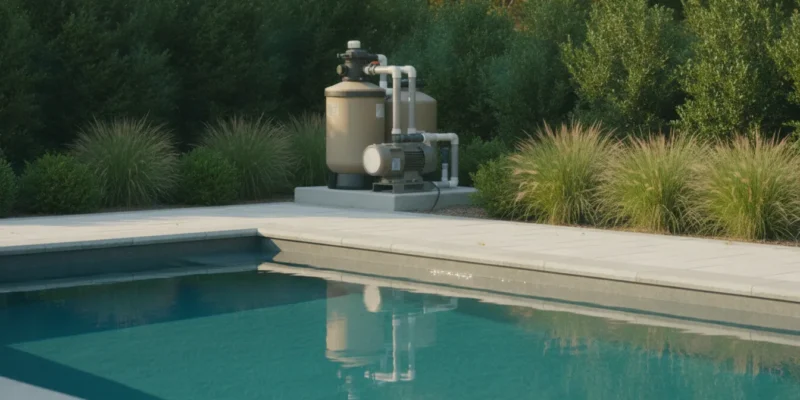
Choosing equipment for an inground pool is not simply a matter of picking a pump from a catalog. Your circulation, filtration, sanitation, heating, cleaning, and control systems must work together with the pool’s size, plumbing layout, usage, and Long Island weather. A mismatch can create avoidable maintenance and operating problems.
Contact Gappsi through our contact page
The right pool equipment system typically includes a pump, filter, sanitation method, cleaner, and controls, with a heater, cover, lighting, or swim-jet features selected around how your household will use the pool. A design-build team can coordinate those choices before installation.
Understanding what each component does makes it easier to evaluate proposals and identify the systems your project actually needs. Start with the core equipment that keeps an inground pool circulating, clean, comfortable, and ready to use.
What Pool Equipment Does an Inground Pool Need?
An inground pool depends on several connected systems, not one piece of equipment. The pump moves water through the plumbing, the filter removes suspended debris, and the sanitation system helps keep the water suitable for swimming. Heating, cleaning, lighting, and covering systems then shape how comfortable and convenient the pool is to use. For a Long Island homeowner, those choices should be planned with the pool shell, plumbing layout, electrical service, gas availability, climate, and intended swimming season in mind.
Gappsi approaches this as one design and construction project rather than a product list. Its Long Island swimming pool design and construction service can coordinate the pool structure with the equipment pad, controls, finish details, and startup process.
The core circulation and water-care systems
Circulation begins with the pump, skimmer, drains, return lines, valves, and controls. Together, these components move water from the pool, through the treatment equipment, and back into the basin. Correct plumbing design matters because the equipment must work as a connected system, not as isolated devices.
Filtration catches particles that sanitation alone does not remove. Common filter categories include cartridge, sand, and diatomaceous earth, often called DE, filters. The right choice depends on the pool design, expected use, available service access, and the homeowner’s preferred maintenance routine.
Sanitation manages microorganisms and water chemistry. Gappsi’s equipment scope includes salt chlorine generators and ozone systems. A salt chlorine generator still supports chlorine-based sanitation, so it should not be presented as a chlorine-free system. Ozone can be selected as part of a broader water-care plan, with the final setup coordinated with the primary sanitation method and the pool’s controls.
Heating, cleaning, and everyday comfort
Heating extends the practical swimming season and improves comfort during cooler weather. Gas heaters and heat pumps are both options, but the best fit depends on how often the pool will be used, the desired season, the site’s gas and electrical planning, and the overall project design.
Cleaning equipment may include skimmers, brushes, vacuums, and robotic cleaners. These tools address leaves, dust, and settled debris that circulation and filtration may not remove by themselves. LED lighting supports evening visibility and changes the appearance of the pool area without relying on oversized fixtures. A pool cover can also help protect the water between uses, while reducing exposure to leaves and weather.
Some homeowners may also consider optional comfort equipment, such as swim jets for resistance swimming or upgraded automation for scheduling and monitoring. These additions should be evaluated alongside the pool’s purpose, available space, and long-term service needs.
- Pump and circulation plumbing: moves water through the system.
- Filter: captures suspended particles using cartridge, sand, or DE media.
- Sanitation system: supports water care through chlorine generation, ozone, or a coordinated combination.
- Heater or heat pump: adds water-temperature control for the intended swimming season.
- Cleaning tools or robotic cleaner: handles debris that the main circulation system leaves behind.
- LED pool lighting: improves visibility and supports the evening design.
- Cover: protects the pool between uses and simplifies routine care.
- Optional automation or swim jets: adds control or exercise features when appropriate.
The equipment pad should remain accessible for inspection and maintenance, with enough room for safe connections and future service. Planning these details before construction helps prevent a crowded layout, awkward plumbing, or equipment that does not match the way the household expects to use the pool.
How Do You Choose the Right Pool Pump and Filter?
The pump and filter are the working core of a swimming pool circulation system. Choosing them is not simply a matter of matching a product to the pool’s gallon capacity. The correct pool equipment must work with the pool’s dimensions, plumbing layout, water features, heater, sanitizer, expected use, and available service space.
Start with the idea of turnover. Turnover describes how long the circulation system takes to move the pool’s water through the filter. It is a design concept, not a universal pump setting. A professional evaluates the pool volume, intended circulation schedule, pipe diameter, fittings, elevation changes, and features such as waterfalls or spa jets. The goal is a system that provides appropriate circulation without forcing the pump to work against unnecessary resistance.
Flow resistance comes from the entire hydraulic path. Long pipe runs, narrow plumbing, elbows, valves, heaters, filters, and water features all affect how readily water moves. A pump selected without considering that resistance may circulate inadequately, operate noisily, or require more maintenance. Oversizing can also create problems, including excessive flow through equipment that was not designed for it. The equipment schedule should therefore be based on the complete plumbing design rather than a product label alone.
Filter selection depends on the water-quality goals and the homeowner’s preferred maintenance routine. The main media categories include:
- Cartridge filters use removable elements that can be taken out and cleaned. They are often considered when straightforward maintenance and a practical equipment layout are priorities.
- Sand filters use graded filter media and are cleaned through a backwashing process. The installation must account for the plumbing and drainage requirements of that process.
- DE filters use diatomaceous earth to provide fine filtration. They require careful handling of the media and a maintenance plan suited to the property.
There is no single best filter for every Long Island pool. A cartridge design may suit one household’s cleaning preferences, while a DE or sand system may make more sense for another pool’s layout and operating plan. The same applies to pumps. Gappsi’s documented equipment brands include Pentair, Hayward, Raypak, Jandy, Sta-Rite, Autopilot, Dolphin, and Waterways. These names are examples of supported equipment categories, not a claim that one brand or model is universally right.
Service access deserves attention before construction begins. Filters need room for removal and cleaning, pumps need safe access, and valves and controls should remain reachable after the surrounding patio, planting, and enclosure work is complete. Ask for the equipment location, plumbing plan, electrical requirements, and startup responsibilities to be explained as part of the proposal.
Contact Gappsi through our contact page
For a closer look at the installation process, review Gappsi’s professional pool equipment installation guidance. Coordinating sizing, plumbing, controls, and access during the design stage helps the finished system operate as one connected part of the pool rather than as a collection of separate products.
Which Pool Heater Is Best for Your Long Island Backyard?
Heating decisions should begin with how your household will use the pool, not with a single product label. On Long Island, a pool may be used for a short period in spring and fall, throughout the warmer months, or on a more deliberate schedule for family gatherings and frequent swimming. The right pool equipment plan depends on the desired season, target water temperature, pool size, available utilities, and the physical layout of the equipment area.
Gas heaters are often considered when homeowners want responsive, on-demand heating for planned swims or occasional temperature changes. They can fit a use pattern where the pool is not heated continuously, but the installation must account for the appropriate gas supply, venting, clearances, and local requirements. Those details belong in the design phase, especially when the equipment pad is being placed near the home, a patio, or property boundaries.
Heat pumps draw heat from the surrounding air, so outdoor conditions matter. They can make sense for homeowners who plan to maintain a comfortable temperature over a longer period instead of heating the pool only before a specific event. Their suitability depends on the local weather, the intended swimming season, electrical planning, equipment location, and the homeowner’s expectations for heating response. A heat pump should be evaluated as part of the complete circulation and control system, not as an isolated appliance.
| Consideration | Gas heater | Heat pump |
|---|---|---|
| Best fit | Planned swims, occasional heating, or a preference for responsive temperature changes. | Longer seasonal use with a plan to maintain a set temperature. |
| Weather relationship | Less dependent on the immediate outdoor air temperature. | Performance and heating response depend on outdoor air conditions. |
| Utility planning | Requires evaluation of gas availability, sizing, venting, and clearances. | Requires evaluation of electrical capacity, placement, airflow, and clearances. |
| Design questions | How often will the pool be heated, and how quickly should it respond? | How long will the season last, and what temperature should be maintained? |
A solar-ready approach may also be worth discussing during planning, even when solar heating is not part of the immediate installation. Space, plumbing routes, controls, and future access can influence whether a later addition is practical. The same principle applies to a pool cover, which can support heat retention and should be considered alongside the heater rather than after the equipment pad is finalized.
There is no universal best heater for every backyard. Gappsi evaluates the pool’s dimensions, usage pattern, weather exposure, utility connections, equipment location, and broader design before recommending a system. That integrated process helps align the heater with the pumps, filters, automation, and startup plan instead of forcing one component to compensate for another.
What Do Salt, Ozone, and Automation Systems Do?
Sanitation equipment helps keep pool water clear and suitable for swimming, but it does not replace the basic work of circulation, filtration, and water testing. Each system addresses a different part of pool operation. A salt chlorine generator produces chlorine from dissolved salt as water passes through its cell. It is still a chlorine-based system, not a chlorine-free alternative. The generator can make chlorine production more consistent, while the pool owner or service professional still needs to monitor the water and maintain the equipment.
An ozone system adds another sanitation support process. It introduces ozone into the circulation line, where the gas can help oxidize certain contaminants before the water returns to the pool. Ozone is best understood as a supplement to the primary sanitizer, not a reason to stop maintaining appropriate chlorine levels. The generator, cell, and related plumbing also need inspection so the system continues operating as designed.
How do these systems work with filtration and circulation?
Circulation moves water through the pump, filter, heater, and treatment equipment. Filtration removes suspended particles, such as dirt and other debris that the filter can capture. Sanitation systems address microorganisms and organic contaminants that filtration alone does not remove. If the pump is not moving water effectively, a salt cell or ozone unit cannot treat the full pool properly. A dirty filter can also restrict flow and place additional strain on the circulation system.
This is why equipment selection should be planned as a connected system rather than as a list of individual products. Pump capacity, plumbing layout, filter type, sanitation method, heater, and control equipment all need to work together. Gappsi’s documented pool equipment scope includes pumps, filters, heaters, salt chlorine generators, ozone systems, and modern automation systems. The right combination depends on the pool design, expected use, available utilities, and the homeowner’s preferred maintenance routine.
What does pool automation control?
Automation controls can place routine equipment functions in one interface. Depending on the installed system, controls may coordinate pump schedules, filtration, heating, lighting, and sanitizer support equipment. This can make it easier to adjust settings and identify an operating issue than managing each component separately. Automation does not mean the pool runs without oversight. Sensors can drift, chemical feed components can require service, and a programmed schedule may not suit every change in weather or usage.
Regular testing remains essential. Check the water according to the equipment manufacturer’s guidance, keep the water balanced, clean or backwash the filter as required, and inspect the circulation and sanitation components. A salt system can simplify chlorine production, and ozone can provide additional treatment support, but neither system excuses skipped testing. During a new pool installation or equipment upgrade, Gappsi can evaluate the complete equipment plan so sanitation, filtration, circulation, and controls are matched to the project.
How Can Pool Equipment Reduce Maintenance and Energy Waste?
Efficient operation starts with matching each component to the pool’s design and the way your household uses it. An oversized pump can move more water than the plumbing and filter require, while an undersized system may need longer run times to maintain circulation. A properly planned setup supports clean water without making every operating decision a daily chore.
Programmed schedules help keep circulation consistent. Your installer can coordinate pump operation, filtration, heating, sanitation, and cleaning around typical use patterns. Seasonal adjustments may also make sense. A pool used frequently in July may need a different schedule than one used occasionally in early spring or fall. Automation can make those changes easier to manage, but it still needs sensible settings and periodic review.
Clean filters are another essential part of efficient pool equipment. As debris accumulates, water has a harder time passing through the filter. Watch the pressure indicator and follow the filter manufacturer’s cleaning guidance rather than waiting for cloudy water or weak circulation. The correct cleaning method depends on whether the system uses cartridge, sand, or DE filtration.
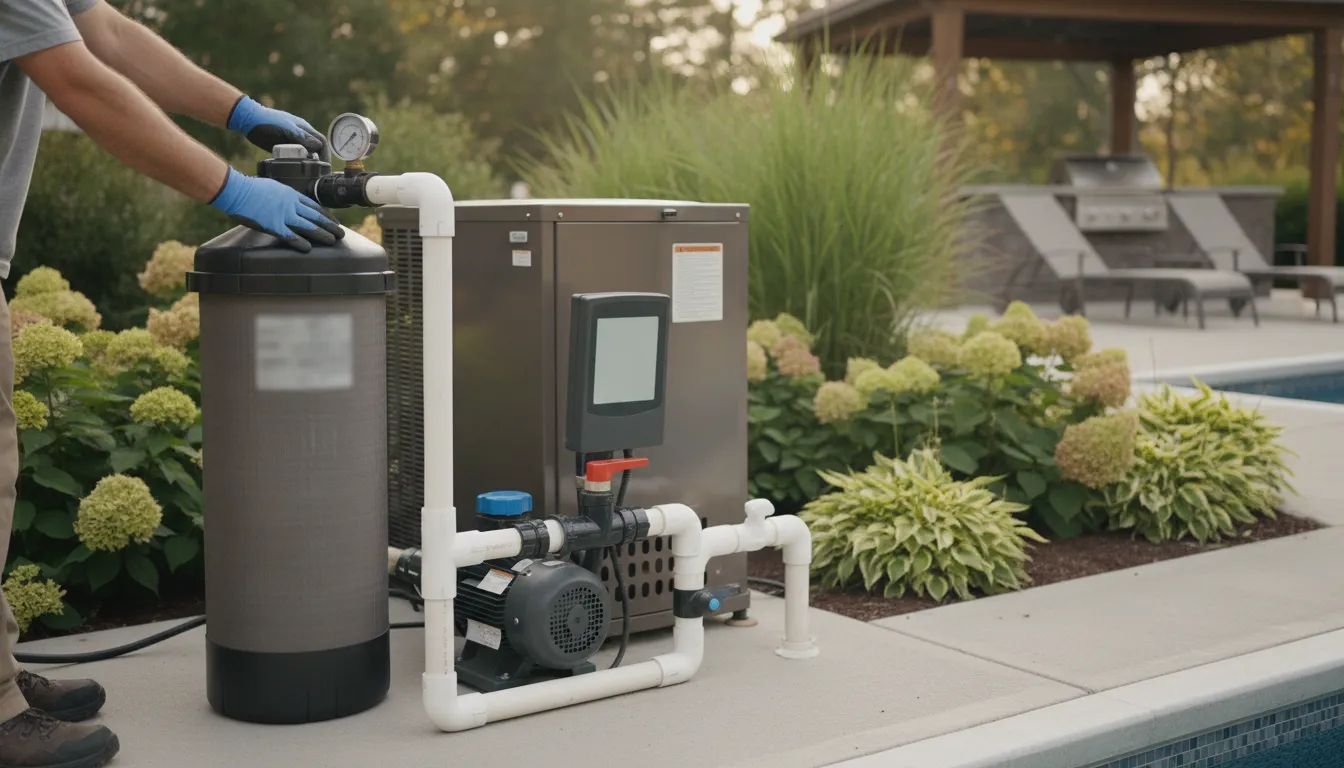
Several supporting choices can reduce routine work as well. A properly fitted pool cover can limit debris entering the water and reduce exposure when the pool is not in use. LED lighting provides clear evening illumination with a lower operating demand than older lighting designs. A robotic cleaner can handle regular debris collection, reducing the amount of manual brushing and vacuuming required between service visits.
Service access should be planned before construction is complete. Pumps, filters, heaters, automation controls, and valves need enough room for inspection, cleaning, and eventual replacement. Crowding equipment into an inaccessible corner may save space at first, but it can make ordinary maintenance slower and more disruptive. Good plumbing layouts and labeled controls also help technicians diagnose issues without unnecessary adjustments.
For an existing pool, start with an evaluation rather than replacing components at random. A technician can review the pump, filter, plumbing, controls, cleaner, and lighting as one system. If the equipment is aging or poorly matched, see this guide to upgrading older pool equipment before deciding what should change. The goal is a system that is easier to operate, service, and maintain over its useful life.
What Should You Budget for Pool Equipment Planning?
Pool equipment should be budgeted as part of the complete installation, not treated as a last-minute shopping list. The right allowance depends on the pool’s design, the way your household will use it, and the infrastructure required to operate each system safely. A small pool with limited features will have different requirements from a larger gunite pool with heating, automation, lighting, and an automatic cover.
Equipment is only one part of a complete pool project. Homeowners should request a written scope rather than compare isolated pump, heater, or filter figures that may not include installation or supporting work.
Which variables affect the equipment allowance?
A proposal should connect every equipment choice to the physical design and intended use of the pool. Ask the builder to explain how the following items affect the project:
- Pool type, dimensions, and features: Water volume, depth changes, spas, tanning ledges, waterfalls, and swim jets influence circulation and equipment requirements.
- Plumbing and circulation: The scope should identify the pump, filter, plumbing runs, valves, and equipment pad, including access for future service.
- Electrical and fuel needs: Heating, pumps, automation, lighting, and other components may require electrical planning. Gas heaters also require appropriate gas-line coordination, while heat pumps have their own electrical requirements.
- Sanitation and water control: Ask whether the design includes a salt chlorine generator, ozone system, conventional chlorine approach, automation, sensors, and any dosing equipment.
- Comfort and protection: Heating, LED lighting, covers, and cleaning equipment should be listed separately so you can see which are essential, optional, or planned for a later phase.
- Permits, startup, and service: Confirm that permits, inspections, commissioning, water balancing, owner instruction, and service access are included or clearly excluded.
What should a complete proposal show?
Request model or category details for the pump, filter, heater, sanitation equipment, automation controls, lights, cover, and cleaner. The proposal should also show labor, delivery, electrical and gas work, plumbing, permits, startup, warranty responsibilities, and any site preparation. Brand options may include manufacturers such as Pentair, Hayward, Raypak, Jandy, or Sta-Rite, but the most recognizable name is not automatically the correct fit. Sizing, compatibility, placement, and access matter just as much.
For a Nassau or Suffolk County project, an integrated design-build plan helps keep these dependencies visible from the beginning.
Contact Gappsi through our contact page
Frequently Asked Questions
What equipment is needed for an inground pool?
An inground pool needs a pump for circulation, a filter for removing suspended debris, and a sanitation system to manage water quality. Most projects also require plumbing controls, skimmers, returns, and a method for cleaning the pool. Depending on how you plan to use the pool, you may add a gas heater or heat pump, cover, LED lighting, automation, or a robotic cleaner.
What is the best pool equipment for a Long Island home?
The best setup depends on the pool’s size, plumbing design, usage schedule, desired swimming season, available gas or electrical service, and maintenance preferences. A properly matched system from a documented brand such as Pentair, Hayward, Raypak, Jandy, or Sta-Rite can be a sound starting point, but brand selection alone does not replace project-specific sizing.
What are the must-haves for a pool?
The essential components are circulation, filtration, sanitation, safe electrical and plumbing connections, and controls that let the system operate correctly. Heating, automatic cleaning, lighting, and a cover are practical additions rather than universal requirements. Planning service access at installation is also important because technicians need room to inspect, clean, and replace components.
What are the names of common pool equipment components?
Common components include the circulation pump, filter, skimmer, return jets, salt chlorine generator, ozone system, heater, heat pump, cleaner, automation controller, LED light, and pool cover. Filters are commonly categorized as cartridge, sand, or diatomaceous earth, often called DE. The right combination should be selected as one coordinated system, not as unrelated products.
Plan Your Pool Equipment With Gappsi
The right pool equipment should fit your backyard, pool design, comfort preferences, and plans for maintenance. Gappsi can help you review those needs as part of a coordinated Long Island pool project.