A Stunning Multisport Game Court Built in Commack, NY by Gappsi

View Gappsi’s YouTube Channel to view A Stunning Multisport Game Court Built in Commack, NY by Gappsi

Creating a backyard that blends beauty, recreation, and durability is an art, and Gappsi continues to perfect it with every project. Their latest transformation in Commack, NY, is a valid showcase of craftsmanship, design innovation, and multifunctional outdoor living. This newly completed multisport game court brings together basketball, pickleball, mini golf, volleyball, badminton, and a custom-built practice wall, all in a cohesive, highly engineered layout.

Designed to offer year-round fun for the entire family, this project is more than a court.  A private recreation complex built right at home.

A Vision of Recreation From Every Angle

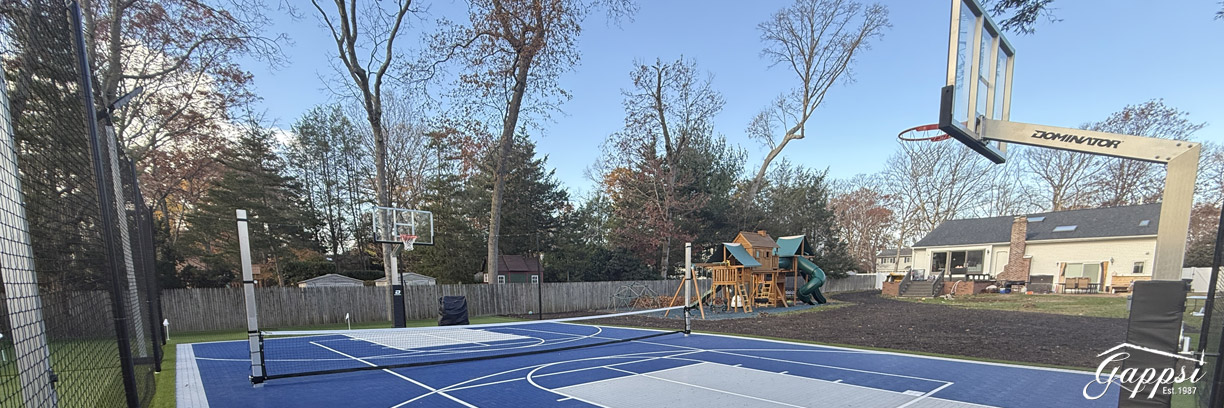
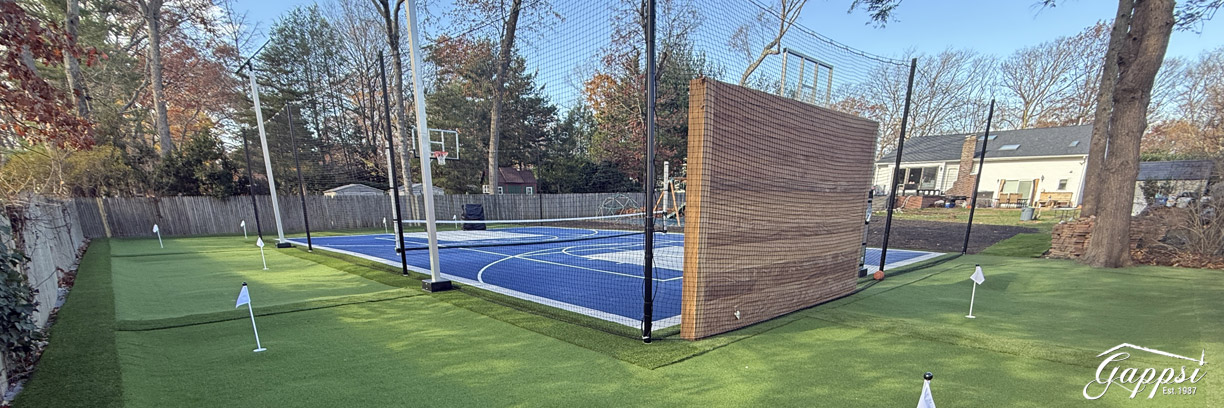
The centerpiece of this Commack project is a full-size, vibrant basketball court, carefully positioned to enhance playability, safety, and visual appeal through the surrounding features. The layout was designed not only for performance but also to maximize the available space and turn it into an all-ages sports retreat.

And surrounding that basketball court? A beautifully sculpted mini golf course that wraps entirely around the perimeter of the court. It’s dynamic, flowing, and brings a fun, relaxing atmosphere that balances the competitive nature of the basketball and pickleball areas.

This combination of active and leisure activities creates a space that truly offers something for everyone.
vibrant basketball courtA Fully Custom Mini Golf Course

To build the mini golf course, Gappsi used premium-grade synthetic turf selected for both performance and longevity:

Putting Green Turf

  • Installed in the main play areas
  • Provides a true-to-roll ball response
  • Designed for smooth, consistent speed

Fringe Turf

  • A slightly taller, realistic turf
  • Frames the putting surface
  • Adds visual depth and improves ball play

The entire mini golf layout includes several holes equipped with flags, offering a variety of shot types and putting challenges. What makes this installation particularly impressive is the carefully sculpted undulation throughout the mini golf floor. The elevation changes and contours create a dynamic playing experience akin to a professional putting green, adding both challenge and fun to the design.
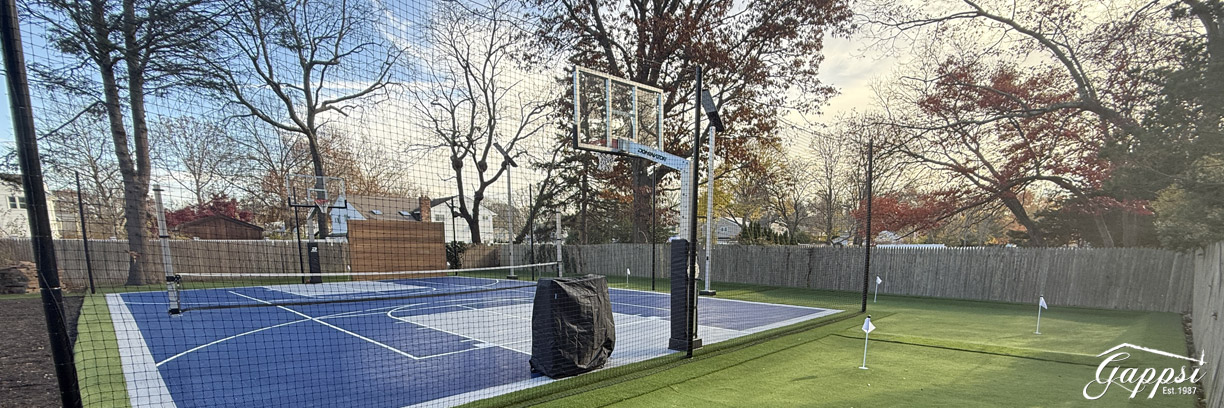
sculpted mini golf course

A Multi-Use Basketball and Pickleball Court

At the heart of this project lies the multisport game court, built using TopCourt Mateflex tiles in a custom blend of blue and gray. These tiles offer:

  • Shock absorption
  • Slip resistance
  • Fast drainage
  • Year-round durability
  • A comfortable feel underfoot

The court is fully striped for basketball and pickleball, making it easy for players to transition between sports. With precision striping, the layout maintains the visual clarity and regulation spacing needed for both games.
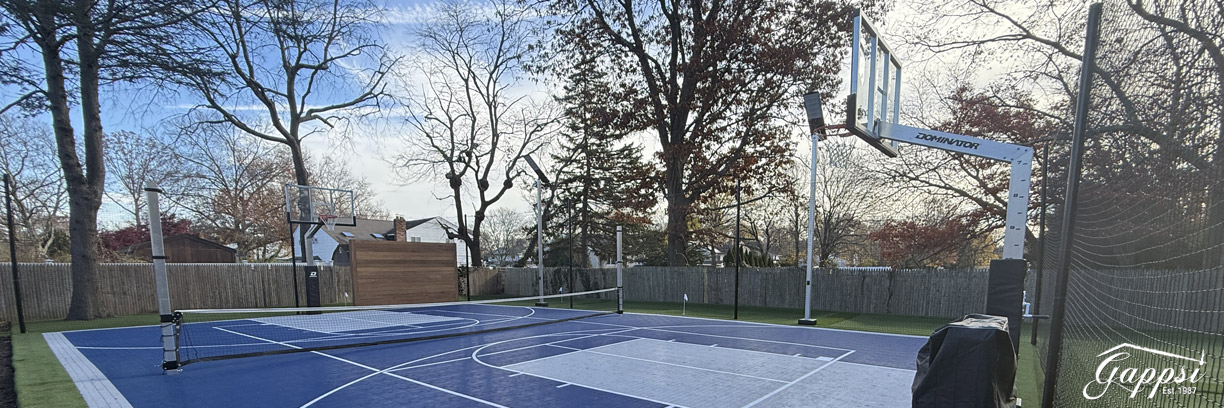
TopCourt Mateflex tilesProfessional Grade Basketball Hoops

The court features two Dominator basketball hoops, installed at opposite ends to support full-court play. Dominator hoops are known for:

  • Heavy-duty construction
  • Superior stability
  • Smooth, consistent rebound
  • Long-lasting outdoor performance

These premium hoops complete the professional-level feel of the basketball experience.

Multi-Sport Net System for Pickleball, Badminton & Volleyball

To expand the court’s versatility, Gappsi installed a center multisport net system. This adjustable net transforms the court for:

  • Pickleball
  • Badminton
  • Volleyball

The system is easy to raise, lower, or remove depending on the sport being played.  It makes this court one of the most flexible outdoor athletic installations available.
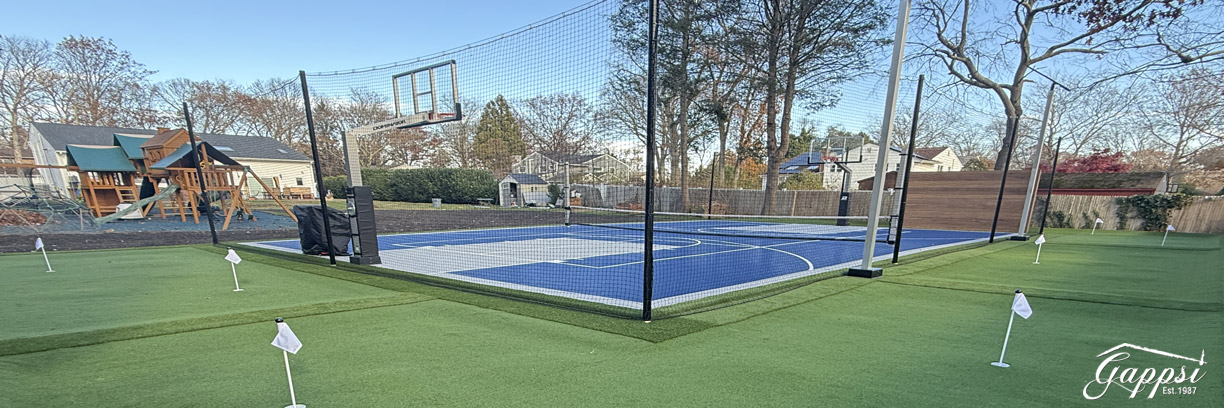
Multi-Sport Net System for Pickleball, Badminton & VolleyballSafety & Enhanced Play with 14-Foot Out-of-Bounds Netting

Around the outer edge of the play area, Gappsi added 14-foot out-of-bounce netting, a crucial feature for both convenience and safety. This netting:

  • Keeps balls inside the court
  • Protects surrounding areas
  • Adds a professional sports-complex appearance

This installation also includes two solar-powered lights facing the house, providing nighttime visibility while maintaining energy efficiency. With solar lighting, the court remains usable long after sunset without increasing electricity costs.

A Brazilian Cumaru Wood Practice Wall

One of the standout custom features of this project is the practice wall, built with beautiful Brazilian Cumaru wood. Cumaru is prized for its:

  • Extreme durability
  • Resistance to rot, insects, and weather
  • Rich color and grain
  • Long-lasting structural strength

The practice wall is finished on both sides, offering functionality and a polished aesthetic from any viewing angle. Whether used for solo practice, drills, or warmups, it’s a high-end addition that elevates both performance and visual appeal.
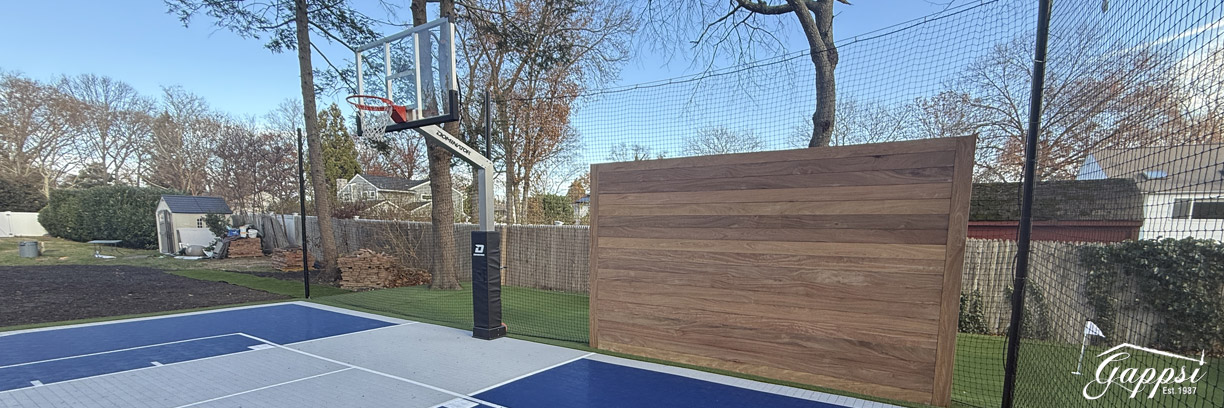
Brazilian Cumaru WoodMaterials and Craftsmanship That Last

Gappsi uses only premium-grade materials and proven installation techniques for long-term performance. From the sports tiles to the turf, the wood elements, and the netting system, every component was selected to withstand heavy use and harsh New York weather while maintaining its beauty.

This multisport game court is built not only for today’s enjoyment but for many years of family memories, friendly competitions, and weekend gatherings.

A Complete Backyard Transformation in Commack, NY

This multisport game court installation is a testament to Gappsi’s ability to merge sport, leisure, and design into one harmonious space. With:

  • A full basketball/pickleball court
  • Mini golf course wrapping the perimeter
  • Adjustable multi-sport net system
  • Brazilian Cumaru practice wall
  • Premium Dominator equipment
  • Solar lighting and 14-foot containment netting
  • High-performance Mateflex sports tiles

…it’s one of the most comprehensive and visually stunning backyard recreation projects in Commack, NY.

Homeowners now enjoy a private sports oasis that supports fitness, family time, and endless fun, all crafted with the highest level of detail and expertise.
private sports oasis that supports fitness, family time, and endless funIf you’re considering a multisport game court or custom outdoor recreational area for your property, Gappsi can bring your vision to life with unmatched quality and design innovation.
SCHEDULE A MEETING TODAY WITH GAPPSI

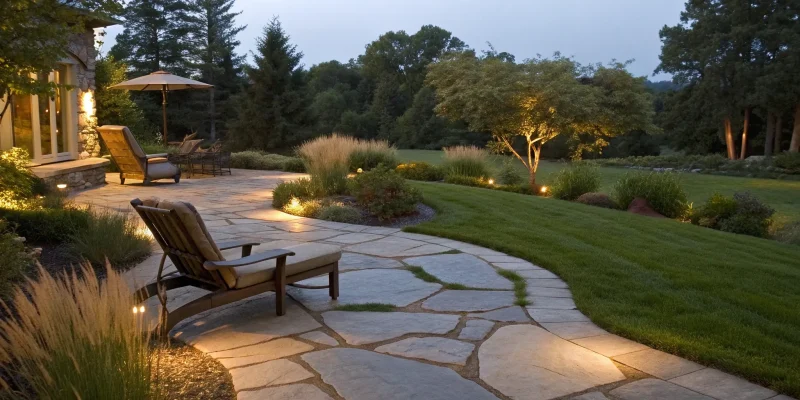
A finished stone patio built on a lawn, the result of a step-by-step DIY guide.

How to Build a Stone Patio on Grass That Lasts

A great outdoor space can completely change how you experience your home, and a stone patio is the perfect foundation for that new lifestyle. It’s the anchor for your outdoor dining set, the spot for your fire pit, and the stage for countless memories. If you’ve been looking at an underused part of your lawn and dreaming of something more, you’re in the right place. This isn’t just a construction project; it’s about creating a personal retreat. Our guide on how to build a stone patio on grass step by step provides the clear, actionable instructions you need to turn that vision into a reality, ensuring your new space is not only beautiful but also built to withstand our local seasons.

Key Takeaways

  • Build a Rock-Solid Base First: The most common patio failures come from a weak foundation. Prevent sinking and shifting by properly excavating, adding materials in layers like gravel and sand, and thoroughly compacting each layer before moving on.
  • Get the Layout and Slope Right: Before placing a single stone, ensure your patio slopes gently away from your house to manage drainage. Start by setting the border stones to create a sturdy frame, then work inward, constantly checking that your stones are level.
  • Finish Strong to Ensure Durability: The final steps lock your entire patio together. Use polymeric sand to fill the joints, which hardens to prevent weeds and shifting, and install edge restraints around the perimeter to keep the structure secure for years.

Gathering Your Supplies: What You’ll Need for a Stone Patio

Before you can break ground on your beautiful new patio, you need to get organized. Having all your materials and tools ready to go will make the entire process smoother and more enjoyable. Think of it as setting yourself up for success from day one. This step involves more than just picking out pretty stones; it’s about choosing the right materials for Long Island’s climate, gathering the correct tools for the job, and creating a realistic budget. Let’s walk through exactly what you’ll need to get started.

Choosing Your Patio Materials

When it comes to selecting the stone for your patio, you have some fantastic options. Popular choices like bluestone, flagstone, and slate offer timeless appeal and durability. For a sturdy patio that lasts, aim for stones that are between 1.5 and 2 inches thick. It’s also crucial to choose a material that can handle our local weather, especially the freeze-thaw cycles we experience on Long Island. Gappsi offers a wide selection of high-quality porcelain and natural stone specifically suited for our climate, ensuring your patio looks great for years to come.

The Right Tools for the Job

Having the right equipment on hand is non-negotiable for a successful DIY patio project. Here’s a checklist of the essential tools you’ll need to gather:

  • Tape measure, stakes, and string for marking your layout
  • Shovel and pickaxe for excavation
  • Wheelbarrow for moving materials
  • 4-foot level to ensure a proper slope
  • Hand tamper or a rented plate compactor for a solid base
  • Rubber mallet for setting stones
  • Masonry saw with a diamond blade for cuts

Don’t forget to grab safety gear like goggles, a dust mask, and ear protection, especially when you’re operating power tools.

How to Estimate Material Needs and Budget

Let’s talk numbers. For a DIY project, you can generally expect to spend between $4 and $7 per square foot on materials. For a 12×16-foot patio, you’ll need about 192 square feet of stone. It’s a smart move to buy 5-10% extra to account for any cuts or mistakes. You’ll also need about 3 tons of crushed stone for a 3-inch base and 1 ton of stone dust for a 1-inch setting bed. If you’d rather leave the heavy lifting and complex calculations to the pros, our masonry design and construction team is always here to help create a detailed plan and estimate for you.

Prepping the Ground: How to Prepare Your Lawn for a Patio

A beautiful stone patio starts from the ground up. The secret to a patio that stays level and looks great for years isn’t just the stone you choose—it’s the solid foundation you build beneath it. Skipping or rushing the prep work is the number one reason patios sink, shift, or become uneven over time. Taking the time to properly prepare your lawn creates a stable base that can handle foot traffic, patio furniture, and Long Island’s changing seasons without budging.

Think of it like building a house; you wouldn’t start without a solid foundation, and your patio is no different. This process involves four key stages: marking your layout, clearing the area, digging out the base, and compacting the soil. Each step builds on the last to ensure a durable, professional-looking result. While it requires some muscle, getting the groundwork right is the most important investment you can make in your new outdoor space. For intricate designs or large-scale projects, our masonry experts are always here to help build the perfect foundation.

Step 1: Mark Your Patio’s Layout

First things first, you need to define the exact shape and size of your future patio. Grab some wooden stakes and a ball of string to outline the perimeter right on your lawn. This visual guide helps you see the final footprint and ensures your lines are straight and your curves are smooth. Once you have the shape marked, double-check your measurements.

Now for a crucial detail: drainage. You need to plan for a slight slope that directs water away from your house’s foundation. A good rule of thumb is to create a grade of about a quarter-inch for every foot of patio. For example, a 12-foot patio should be about three inches lower on the side farthest from your home. This simple step prevents pooling water, ice buildup, and potential water damage to your house.

Step 2: Clear Away Grass and Plants

With your layout marked, it’s time to clear the area. You’ll need to remove every bit of grass, weeds, and other vegetation within the staked-out perimeter. For smaller patios, a sharp spade or shovel will do the trick. If you’re working with a larger space, consider renting a sod cutter to make the job faster and easier.

Be thorough here. Make sure you dig up the roots, not just the surface greenery. Any roots left behind can decompose and create air pockets, causing the ground to settle unevenly later. They can also sprout new weeds that push up through the joints of your patio. Once everything is removed, use a rake to clear away loose debris and create a relatively flat surface for the next step. A clean slate is essential for a professional landscape design.

Step 3: Dig Out the Foundation

Now it’s time to start digging. You need to excavate the entire patio area to a consistent depth to make room for the base materials. The total depth depends on the layers you’ll be adding. A standard patio base requires about four to six inches for a gravel layer, one inch for a sand layer, plus the thickness of your pavers.

For example, if you’re using two-inch-thick pavers, you’ll need to dig down about seven to nine inches total. This ensures your finished patio will sit flush with the surrounding lawn. Use a tape measure to check the depth as you go to keep it uniform across the entire area. This excavation creates the basin that will hold the crushed stone and sand that form your patio’s unshakeable support system for your chosen porcelain or natural stone.

Step 4: Compact the Soil for a Solid Base

After you’ve finished digging, you’re left with exposed soil, also known as the subgrade. Before you add any base material, this soil needs to be tightly compacted. This step is absolutely critical because it prevents the pavers from sinking or shifting over time. Any loose soil will settle eventually, creating dips and uneven spots in your beautiful new patio.

For small areas, you can use a hand tamper—a tool with a heavy, flat metal base and a long handle—to firmly press the soil down. For larger patios, it’s worth renting a plate compactor from a local tool rental shop. Go over the entire area several times until the ground is firm, level, and solid underfoot. A properly compacted subgrade is the bedrock of a patio that will last a lifetime.

How to Build a Rock-Solid Patio Base

Now that you’ve prepped the ground, it’s time to build the foundation. Think of the base as the unsung hero of your patio—you’ll never see it, but it does all the heavy lifting. A strong, well-compacted base is what prevents your beautiful stones from shifting, sinking, or becoming uneven over time. Skipping or rushing these steps is the number one reason patios fail, so give this stage the attention it deserves. It’s the difference between a patio that looks great for a season and one that lasts for decades.

Building a solid base involves creating a few distinct layers that lock together to form a stable platform. You’ll start with a weed barrier, add a thick layer of crushed stone for drainage and support, and finish with a thin layer of sand to create a perfectly level bed for your pavers. While it requires some muscle, getting the base right is completely achievable. If you’d rather leave the heavy lifting to the pros, our masonry experts are always here to build a foundation that stands the test of time.

Lay Down Landscape Fabric

First, roll out a layer of landscape fabric over the entire excavated area. This simple step serves two important purposes: it acts as a barrier to stop weeds from growing up through the joints of your patio, and it keeps your gravel base from mixing with the soil underneath. Make sure to overlap any seams by at least six inches to ensure there are no gaps. The fabric is permeable, so it will still allow water to drain through while keeping your layers separate and clean. This small detail goes a long way in maintaining the integrity of your patio base for years to come.

Add and Level the Crushed Stone Layer

Next comes the crushed stone, which will make up the bulk of your patio’s foundation. You’ll want to use ¾-inch crushed stone, also known as crusher run. Don’t just dump it all in at once. The key to a stable base is to add the stone in 2- to 3-inch layers, compacting each one thoroughly before adding the next. For the best results, rent a plate compactor—it will save you a ton of time and effort. Your goal is to build a firm, interlocking base that is between 4 and 6 inches thick after compaction.

Spread the Sand or Stone Dust

Once your crushed stone base is compacted and level, it’s time for the final layer: about one inch of coarse sand or stone dust. This layer acts as a setting bed, creating a smooth, cushioned surface that makes it easier to set your stones perfectly flat. To get it perfectly level, you can lay two pipes or 1-inch wooden dowels on either side of the area and drag a straight 2×4 across them. This technique, called “screeding,” removes any high spots and fills in low ones, giving you an ideal surface to work with.

Compact Each Layer for Maximum Stability

Compaction is not a step you can afford to skip. It’s what locks all the base materials together and removes air pockets that could lead to settling later on. You already compacted the soil after digging, and you need to apply that same diligence here. Each 2- to 3-inch layer of crushed stone must be compacted until it’s solid before you add the next. A properly compacted base won’t have any give when you walk on it. This meticulous process ensures your patio remains stable and level through freezing winters and hot Long Island summers.

Choosing Your Stones: What Are the Best Options for Your Patio?

Selecting the right stone is one of the most exciting parts of planning your patio. This isn’t just about picking a durable surface; it’s about choosing the foundation for your future outdoor memories. The material you choose sets the entire mood for your space, influencing everything from its style and color palette to its long-term durability. Think of your patio as an extension of your home’s interior—the right stone will create a seamless flow between indoors and out, adding both beauty and value to your property.

Your decision will likely come down to three things: the look you want to achieve, your budget, and how you plan to use the patio. Are you dreaming of a rustic, charming retreat for quiet mornings, or a sleek, modern entertainment area for hosting friends and family? Do you need a surface that can stand up to heavy foot traffic and poolside splashes? Answering these questions will help narrow down your options. Let’s walk through some of the best and most popular choices to help you find the perfect fit for your Long Island home.

Classic Charm: Bluestone and Natural Stone

If you’re aiming for a timeless, elegant look, you can’t go wrong with natural stone. Materials like bluestone and flagstone offer an authentic, organic beauty that manufactured products can’t replicate. Each stone is unique, with subtle variations in color and texture that add character and depth to your patio. Bluestone is a local favorite for its rich, blue-gray tones that feel right at home in any landscape. For the best results, look for stones that are between 1.5 and 2 inches thick to ensure they’re sturdy enough for foot traffic. Exploring different natural stone options can help you find the perfect material to create a classic outdoor living space.

Modern & Durable: Concrete and Porcelain Pavers

For those who prefer a more modern aesthetic or need a highly durable surface, concrete and porcelain pavers are excellent choices. Concrete pavers are incredibly versatile, coming in a huge range of shapes, colors, and sizes that allow for complete creative control. They are also a cost-effective option. Just be sure to choose a textured finish to provide good grip and prevent slips. Porcelain pavers are a premium choice known for their incredible strength and low-maintenance qualities. They resist stains, mold, and fading, and their non-slip surface makes them a safe and stylish option for any patio or walkway. Gappsi’s masonry experts can help design and install a paver patio that lasts for decades.

Elegant Choices: Travertine and Slate

Travertine and slate are two other natural stones that bring a touch of luxury to any backyard. Travertine offers a warm, earthy look with beautiful swirling patterns that evoke Mediterranean villas. One of its best features is that it stays cool to the touch even in direct sun, making it an amazing choice for patios around swimming pools. It’s naturally non-slip, but sealing it is a good idea to protect it from stains. Slate provides a sophisticated, layered look with deep, rich colors. While it’s a stunning choice for a patio, it can be more brittle than other stones, so it’s best reserved for areas with foot traffic rather than driveways.

A Quick Guide to Stone Size and Thickness

The size and thickness of your stones are just as important as the material itself. The general rule is that the amount of weight the surface needs to bear determines its thickness. For a standard patio that will only see foot traffic and patio furniture, stones that are around 1.5 inches thick are usually sufficient. However, if your patio might need to support something heavier, or if it’s adjacent to a driveway, opting for a thickness of at least 2 inches is a safer bet. This extra thickness provides the strength needed to prevent cracking and shifting over time, ensuring your patio remains a beautiful and stable feature of your home.

Laying the Stones: A Step-by-Step Guide

With a solid base in place, you’re ready for the most satisfying part of the project: laying the stones. This is where your vision for an outdoor oasis truly comes to life. While the foundation you just built is the unsung hero, the pattern and placement of your stones are what everyone will see and admire. Taking your time here is key to achieving a professional, long-lasting finish. The process isn’t complicated, but it does require attention to detail, especially when it comes to slope, borders, and leveling.

Whether you’ve chosen classic bluestone or modern porcelain pavers, the basic principles are the same. You’ll want to work methodically, checking your work as you go. Think of it like putting together a large, heavy puzzle. Each piece needs to fit just right to create a beautiful and stable surface. If you’re feeling unsure about getting the details perfect, remember that this is where expert masonry craftsmanship really shines. But if you’re ready to tackle it yourself, let’s walk through the steps to lay a patio that looks great and stands the test of time.

Get the Slope Right for Proper Drainage

Before you lay a single stone, you need to think about water. Proper drainage is non-negotiable for a durable patio. Without it, water can pool on the surface, seep into your home’s foundation, or create icy patches in the winter. To prevent this, your patio must slope away from your house at a rate of about 1/8 to 1/4 inch for every foot of distance. For example, a 10-foot patio should be about 1.25 to 2.5 inches lower at the outer edge than it is against your house. You can set this slope using guide strings tied to stakes to ensure your entire patio follows this gentle grade.

Begin with the Border Stones

Every great picture needs a frame, and your patio is no different. Installing the border stones first creates a sturdy perimeter that holds everything else in place. This frame prevents the interior stones from shifting or spreading apart over time, a common issue known as “creep.” Start by laying the stones along your guideline, tapping them firmly into the sand base with a rubber mallet. Once the border is set, you can install paver edging—typically made of plastic or metal—along the outside edge. Secure this edging into the ground with heavy-duty landscape spikes to lock your border stones in place.

Lay the Interior Stones

Now you can start filling in the main area of your patio. Begin at a corner, preferably against the house, and work your way outward. Place each stone gently onto the sand bed, leaving a small, consistent gap of about 1/4 inch between them for jointing sand later. Don’t press or slide them into place, as this can disrupt the smooth sand layer underneath. Use a level to check each stone as you go. If a stone is too high, tap it down with a rubber mallet. If it’s too low, lift it and add a small amount of sand underneath until it’s perfectly even with its neighbors.

Keep Gaps and Levels Consistent

As you continue laying stones, consistency is your best friend. Use a long level across several stones at once to check for evenness and ensure you’re maintaining the correct slope. Small inconsistencies can become major tripping hazards, so take the time to get it right. Pay close attention to the gaps between the stones, keeping them as uniform as possible for a clean, professional look. Don’t worry if you have to lift and reset a stone a few times to get it perfect—patience during this stage will pay off for years to come.

The Finishing Touches: How to Fill Joints and Secure Edges

You’ve laid the last stone, and your patio is finally starting to look like the real deal. Now it’s time for the final steps that will lock everything together and ensure your hard work stands the test of time. Filling the joints and securing the edges are what separate a good patio from a great one. This stage is all about creating stability, preventing weeds from creeping in, and giving your patio a clean, professional finish. Taking your time here will prevent shifting, wobbling, and other issues down the road. Whether you’re using classic bluestone or modern porcelain pavers, these finishing touches are essential for a durable and beautiful outdoor space.

Filling Joints with Sand

Once your stones are perfectly placed, the next step is to fill the gaps between them. This does more than just fill a void; it creates friction that locks the stones together. For a classic approach, stone dust is an excellent choice. It packs down tightly, helps deter weed growth, and still allows for the tiny, natural movements a patio needs to make with the changing seasons. It’s a much better option than regular sand, which can wash away easily and attract ants. Simply sweep the stone dust across the surface of your patio, using a push broom to work it into every joint until they are completely full.

Using Polymeric Sand for a Stronger Hold

If you want an even stronger, more low-maintenance finish, consider using polymeric sand. This is a special blend of sand with a polymer additive that hardens when you add water. It creates a firm, durable bond between the stones that’s fantastic at preventing weeds and protecting against insect damage. Applying it is straightforward: you sweep it into the joints just like regular sand, but it’s crucial to use a leaf blower to remove every last grain from the surface of the stones before misting with water. This prevents a hazy film from forming. For a perfect application and long-term protection, professional restoration and sealing services can ensure your patio is sealed correctly from day one.

Secure the Perimeter with Edge Restraints

Your patio’s perimeter is its first line of defense against shifting and spreading. Without a strong edge, the outer stones can slowly move outward under pressure, creating gaps and an unstable surface. This is where edge restraints come in. These are sturdy strips of plastic, steel, or aluminum that you install around the entire border of the patio. You’ll want to secure them firmly into the ground with heavy-duty landscape spikes. This creates an invisible frame that holds everything tightly in place. Proper installation of these restraints is a key part of professional masonry work and is a non-negotiable step for a long-lasting patio.

Keeping Your Patio Perfect: A Simple Maintenance Guide

Your beautiful new stone patio is finished, and now it’s time to enjoy it. With just a little regular care, you can keep it looking as good as the day you laid the last stone. A simple maintenance routine protects your investment and prevents small issues from becoming big headaches, ensuring your outdoor space remains a stunning retreat for years. From quick clean-ups to seasonal tasks, staying on top of patio care is straightforward and rewarding. Here’s a simple guide to help you keep your patio in pristine condition through every season.

Routine Cleaning and Weed Prevention

The easiest way to keep your patio looking fresh is with regular cleaning. A quick sweep every few days clears away leaves and debris before they can stain the stone, and a rinse with a garden hose washes away surface grime. Pay close attention to the joints between stones, as this is where weeds love to sprout. Pull them immediately before their roots get established and shift your pavers. Filling the joints with sand or fine gravel is a great way to discourage weed growth from the start, making your upkeep even easier.

Seasonal Care and Sealing

To give your patio an extra layer of defense, consider sealing it. A quality sealer protects your porcelain and natural stone pavers from stains, harsh weather, and UV rays, and it can even make the stone’s colors appear more vibrant. This isn’t a monthly task—applying a sealer every few years is usually enough. If you’d rather leave it to the experts, professional restoration and sealing services can ensure the job is done perfectly, giving you long-lasting protection. Always follow the product instructions for the best results.

How to Handle Minor Repairs and Settling

Even with a perfectly installed base, it’s a good idea to check on your patio stones occasionally. Every few months, look for any pavers that have shifted or settled, creating an uneven surface. Catching a wobbly stone early is a simple fix—you can often lift it, add a little more sand underneath to level it, and set it back in place. Addressing these minor adjustments as they appear prevents them from turning into larger, more complicated repairs. Consistent care is key to keeping your patio safe, stable, and beautiful.

Common Pitfalls: Mistakes to Avoid When Building Your Patio

Building a stone patio is an exciting project that can completely transform your backyard. But after putting in all that effort, the last thing you want is to see your beautiful new space sink, shift, or hold puddles of water. A few common missteps, especially in the early stages, can lead to major headaches down the road. Let’s walk through the biggest mistakes people make so you can be sure your patio is built to last. Getting these details right from the start is the secret to a patio that looks great and stays stable for years to come. When done correctly, a patio becomes a lasting feature of your home, which is why professional masonry services focus so heavily on getting the foundation right.

Skipping Steps in Base Preparation

Think of your patio’s base as its foundation—it’s the most important part of the entire project. Rushing this step is a recipe for disaster. A solid base prevents the stones from sinking and shifting, ensuring a level surface that lasts. This involves more than just digging out some dirt. You need to build up the base in layers, typically starting with a layer of ¾-inch gravel. Each layer must be compacted thoroughly before adding the next. It might feel tedious, but this process creates the stable, unshakeable support your beautiful natural stone pavers need. Cutting corners here will almost certainly lead to an uneven, wobbly patio in just a season or two.

Ignoring Compaction and Drainage

Two other critical elements that often get overlooked are compaction and drainage. First, let’s talk drainage. Your patio must have a slight slope—about 1/8 to 1/4 inch per foot—leading away from your house. This gentle grade ensures that rainwater runs off instead of pooling on the surface or seeping into your home’s foundation. Second, proper compaction is non-negotiable. Every layer of your base, from the soil at the very bottom to the final layer of sand, needs to be tightly compacted. This removes air pockets and creates a dense, solid ground that won’t settle over time. Ignoring this can cause your pavers to sink and become uneven, creating tripping hazards and requiring costly restoration and sealing services later on.

Related Articles

Frequently Asked Questions

How deep do I actually need to dig for my patio foundation? A good rule of thumb is to add up the layers. You’ll need about 4 to 6 inches for your compacted crushed stone base, 1 inch for the sand or stone dust layer, plus the thickness of your chosen stone. So, if you’re using 2-inch thick pavers, you should plan to dig down about 7 to 9 inches. This depth is crucial for creating a stable foundation that can withstand Long Island’s freeze-thaw cycles without shifting.

Can I skip the crushed stone base and just use sand? I would strongly advise against it. While it might seem like a tempting shortcut, using only sand will almost certainly lead to a patio that sinks and becomes uneven over time. The crushed stone layer is what provides the real structural support and drainage. Sand alone doesn’t lock together to create a stable base, meaning your beautiful stones will shift and settle with foot traffic and weather changes.

What’s the big deal about polymeric sand versus regular sand for the joints? Think of polymeric sand as a super-powered version of regular sand. It contains a polymer that hardens when you add water, effectively locking your stones together like a flexible grout. This creates a much stronger surface that helps prevent weeds from growing through the cracks and stops ants from setting up shop. Regular sand can wash out during heavy rain and doesn’t offer the same level of stability.

How do I handle cutting stones for the edges or around obstacles? For clean, precise cuts, you’ll want to rent a wet masonry saw with a diamond blade. Trying to use other tools can result in cracked stones and a lot of frustration. Always wear your safety gear, including goggles and a mask, as cutting stone creates a lot of dust. For tricky curves or shapes, you can create a template out of cardboard first, trace it onto the stone, and then carefully follow the line with the saw.

Is sealing my new stone patio really necessary? While it’s not strictly mandatory, sealing your patio is a smart move to protect your investment. A good quality sealer acts as a shield, helping to prevent stains from things like spilled drinks or grill grease. It also protects the stone from weather damage and UV rays, which can cause fading over time. Sealing makes routine cleaning much easier and keeps your patio looking vibrant for years to come.

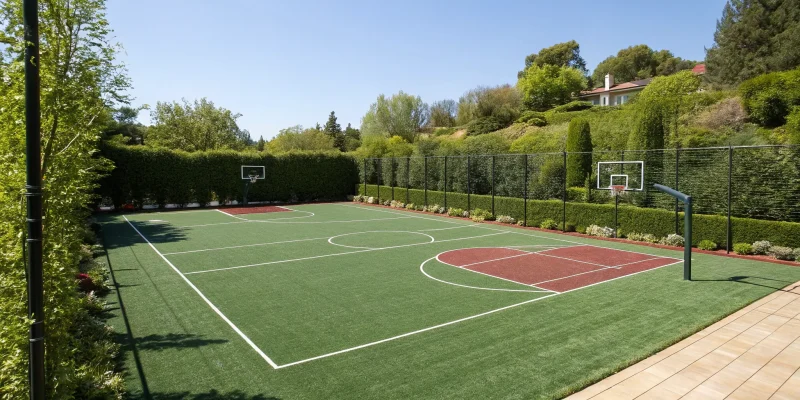
A custom multisport game court with a basketball hoop, synthetic turf putting green, and pro-grade surface.

How to Design Your Dream Multisport Game Court

Why limit your backyard to a single activity? A simple basketball hoop is fun, but a true multisport game court transforms your space into a versatile arena for endless entertainment. One thoughtfully designed court can host a fast-paced pickleball match in the morning, a family volleyball game in the afternoon, and even a putting contest on an integrated turf green in the evening. This flexibility means the fun never gets old. As your family’s interests change, the court adapts right along with them. It’s the most innovative way to maximize your yard’s potential, giving you a dozen different ways to play without needing a dozen different spaces.

Key Takeaways

  • Maximize Your Yard with a Single, Versatile Court: A custom multisport game court transforms one area into a hub for countless activities. By incorporating features like adjustable nets, custom line markings, and integrated turf, you create a flexible space that adapts to your family’s favorite games, from basketball to pickleball and even mini-golf.
  • Invest in Pro-Grade Materials for a Better, Safer Game: The quality of your court’s surface and equipment directly impacts playability and safety. Professional-grade materials like interlocking tiles and rust-proof hardware provide superior shock absorption, consistent performance, and the durability to withstand years of play and harsh weather.
  • A Smart Plan and Simple Upkeep Protect Your Investment: A successful court project begins with thoughtful planning that includes layout design, local permits, and a clear budget. Once built, a simple routine of regular cleaning and equipment checks is all it takes to keep your court in top condition, ensuring it remains a lasting source of family fun.

What Makes a Custom Multisport Game Court a Great Investment?

Adding a multisport game court to your backyard is about more than just creating a place to play—it’s an investment in your family’s lifestyle, health, and the long-term value of your home. Think of it as the ultimate backyard upgrade, a central hub for activity and connection that pays dividends for years to come. Instead of a space dedicated to a single activity, a custom court offers the flexibility to adapt to your family’s changing interests, from a fast-paced game of basketball one day to a friendly pickleball match the next.

This versatility is what makes a multisport game court so special. It’s a space that encourages everyone to get outside, stay active, and spend quality time together, away from screens. It becomes the go-to spot for after-school fun, weekend tournaments, and neighborhood get-togethers. Beyond the immediate enjoyment, a professionally designed game court is a significant asset. It enhances your property’s appeal, making your home stand out and adding tangible value should you ever decide to sell. It’s a feature that offers a unique blend of personal enjoyment and smart financial sense.

One Court, Endless Games

The beauty of a multisport game court lies in its incredible versatility. Why limit your backyard to just a basketball hoop or a tennis court when you can have a space that accommodates a wide range of activities? A single, thoughtfully designed court can host everything from basketball and volleyball to pickleball and badminton. This flexibility means the fun never gets old. As your kids grow and their interests change, the court adapts right along with them. It’s a smart use of space that maximizes your backyard’s potential, giving you endless options for recreation without needing a massive yard.

Fun for the Whole Family, All Year Long

A home sports game court is a powerful tool for bringing people together. It naturally encourages exercise, helps everyone burn off steam, and provides a healthy outlet for friendly competition. More importantly, it fosters connection and creates a space where lasting memories are made. Imagine your kids and their friends playing for hours, or hosting a weekend barbecue where the main event is a family volleyball tournament. These are the moments that matter. A custom court provides a safe, convenient, and endlessly entertaining reason for everyone to put down their devices and enjoy the fresh air together.

Add Lasting Value to Your Home

When it comes to home improvements, a multisport game court is a feature that truly adds value. It’s a unique amenity that can make your property much more attractive to potential buyers, especially families. In a competitive real estate market, having a professionally installed game court can set your home apart and justify a higher asking price. It’s not just a patch of asphalt; it’s a lifestyle feature that signals a home built for fun, activity, and family life. This kind of addition enhances your property’s overall appeal and can provide a solid return on your investment.

Key Features of a Modern Multisport Game Court

A modern multisport game court is so much more than just a slab of concrete with a basketball hoop. It’s a dynamic space designed for endless fun, activity, and friendly competition. The best courts are thoughtfully planned to accommodate a variety of sports and activities, making them a true centerpiece for your backyard. Think about it: one dedicated area that can host a pickup basketball game, a competitive pickleball match, and even a round of mini-golf, all in the same afternoon. This level of versatility is what makes a custom court a fantastic addition to any home. By combining smart design with high-quality materials, you can create a hub for family entertainment that will be enjoyed for years. It’s about creating a space that brings people together, encourages active lifestyles, and adds real value to your property. From the playing surface under your feet to the adjustable nets that switch between games, every element is chosen to maximize your enjoyment and the court’s functionality. Let’s look at the key features that transform a simple court into a premier athletic space that your family will love.

A Central Hub for Basketball

At the heart of most multisport game courts is a dedicated basketball area. This space often serves as the central hub, with other games and activities planned around it. A typical design includes two high-quality basketball hoops, one at each end, with court lines for regulation play. But the smart design doesn’t stop there. The same space can be striped for other games, like pickleball, creating a multi-use surface that’s always ready for action. This approach maximizes every square foot, allowing you to switch from a game of hoops to a pickleball match in minutes. It’s the perfect foundation for your family’s custom game court.

Integrating Turf for Mini Golf

Why limit your court to just ball sports? One of the most creative ways to enhance your court is by integrating a custom putting green. Imagine a mini-golf course wrapping around the perimeter of your basketball court. We can build this using different types of synthetic turf—a smooth putting green turf for the main area and a taller turf for the fringe. This adds an entirely different kind of activity to your backyard, perfect for a relaxing afternoon or for entertaining guests. It’s a fantastic way to add visual interest and even more fun without the constant maintenance of natural grass.

Adjustable Nets for More Ways to Play

Versatility is the name of the game, and nothing adds more flexibility than an adjustable net system. We can install a multiport netting system that easily changes height, instantly preparing your court for a new sport. In just a few moments, you can set it up for a fast-paced game of pickleball, raise it for badminton, or get it ready for a volleyball match. This simple feature dramatically expands the number of activities your family can enjoy. It ensures that your court appeals to everyone, regardless of their age or athletic interests, making it a truly inclusive space for play.

Professional-Grade Surface Materials

The surface you play on makes all the difference in terms of performance, safety, and durability. That’s why we use professional-grade materials like VersaCourt tiles. These tiles feature a patented interlocking system that creates an exceptionally uniform and durable surface, perfect for everything from basketball and tennis to shuffleboard. This type of surface provides better shock absorption than concrete, which is easier on your joints and helps reduce the risk of injury. Investing in a high-quality, durable surface ensures your court can handle intense play and all types of weather while providing a safe environment for years of fun.

How Adjustable Netting Unlocks Your Court’s Potential

A great multisport game court is all about versatility. While a basketball hoop is a fantastic centerpiece, the real magic happens when you can instantly transform the space for a completely different game. This is where a high-quality adjustable netting system comes in. It’s the feature that turns your court from a single-use area into a dynamic hub for endless activities. Instead of being locked into one sport, you have the freedom to play whatever you’re in the mood for, whenever you want. It’s about creating a space that grows with your family’s changing interests.

The versatility of adjustable netting maximizes your court’s functionality. Unlike rigid, permanent fixtures that can be limiting, a modern netting system can be easily modified to suit different sports, ensuring your court is always ready for action. This flexibility allows you to get the most out of your investment, creating a space that serves every member of your family, from young kids learning the basics to adults enjoying a competitive match. With a professional sports game court, you can host a neighborhood pickleball tournament one day and a family volleyball match the next, all in the same space. It’s the ultimate way to bring everyone together for some active fun.

Set Up for a Pickleball Match

Pickleball has become incredibly popular, and an adjustable net makes it easy to join the fun without building a dedicated court. The system allows for a quick and easy setup, so you can get a game going in minutes. Simply lower the net to the official pickleball height of 34 inches at the center, and you’re ready to play. This flexibility means you don’t have to commit precious yard space to a permanent, single-sport fixture. Instead, your court can adapt to your interests, making it easy to enjoy a spontaneous match with friends and family whenever the mood strikes.

Switch to a Game of Volleyball

Ready for a different challenge? With the right adjustable netting, transitioning from pickleball to volleyball is seamless. The net can be raised to accommodate the specific height requirements for volleyball, badminton, or any other net sport you enjoy. This simple adjustment completely changes the dynamic of your court, opening it up to a new world of games. It’s an ideal feature for families with diverse interests, ensuring there’s always something for everyone to play. The right fences and netting system is designed for durability and ease of use, so you can spend less time on setup and more time playing.

Adjust the Net Height for Any Sport

The true beauty of an adjustable net is its ability to adapt to any game or player. You can set the height for official tennis practice, lower it for the kids to invent their own game, or find the perfect level for a casual game of badminton. This versatility not only enhances the fun but also improves safety. Unlike rigid fencing, the soft netting is designed for active play environments. It ensures your court is always ready for action, no matter what game is on the agenda. This adaptability is what makes a multisport game court a lasting source of entertainment for your entire family.

What Games Can You Play on a Multisport Game Court?

One of the best things about designing a custom multisport game court is the sheer number of activities you can pack into one space. It’s not just a basketball court or a tennis court—it’s a flexible arena for whatever game your family is in the mood for. With smart design choices like adjustable nets, custom line markings, and versatile surfaces, your backyard can become the go-to spot for everything from intense competition to casual weekend fun. A single court can easily accommodate a wide range of sports, making it a dynamic hub for an active lifestyle.

Basketball, Tennis, and Other Court Classics

A multisport game court is the perfect foundation for all the classics. We can design a space with a central basketball court, complete with high-quality Dominator hoops for everything from a game of H-O-R-S-E to a full-court press. With the right dimensions and striping, that same area can host a tennis match or a fast-paced game of street hockey. The beauty of a custom game court is its versatility. You can easily switch from shooting hoops to practicing your backhand without needing separate spaces for each activity. It’s all about creating a layout that supports your family’s favorite sports.

Practice Your Putting on a Turf Green

Why limit your court to just bouncing balls? We can integrate a dedicated putting green right alongside your main court area. By using high-quality synthetic turf, we can create a realistic green that’s perfect for practicing your short game or enjoying a friendly putting competition with the family. This adds an entirely different kind of activity to your backyard, offering a more relaxed and focused way to enjoy the outdoors. It’s a fantastic feature for golf enthusiasts and a fun, low-impact game that everyone from kids to grandparents can play together.

Serve Up Some Pickleball and Volleyball

Pickleball has become incredibly popular, and a multisport game court is the ideal place to play. We can paint lines for both basketball and pickleball on the same surface, so you can switch games in an instant. With an adjustable net system, you can set the perfect height for a pickleball match and then raise it for a lively game of volleyball or badminton when friends are over. These net-based sports are incredibly social and perfect for backyard parties and family gatherings. Your court can quickly become the neighborhood hotspot for friendly competition.

Get Creative and Invent Your Own Games

Your multisport game court is a blank canvas for fun. Beyond the official rules of tennis or basketball, the durable, all-weather surface is perfect for classic kid-friendly games like hopscotch, four square, or just letting them zoom around on scooters. You can even invent your own family games. The customizable design allows you to create a space that truly fits your lifestyle. Because the surfaces we use are built for safety and durability, you can feel confident letting your family’s imagination run wild, creating memories that will last for years to come.

Why We Build with Dominator Products

When you invest in a custom multisport game court, the quality of the equipment is just as crucial as the surface you play on. After all, what’s a basketball court without a hoop that can handle a serious game, or a pickleball court with a sagging net? That’s why we partner with Dominator for our court equipment. We’ve seen firsthand how their products stand up to years of competitive play and the unpredictable Long Island weather. Their commitment to professional-grade quality means your court will be ready for action whenever you are.

Building exceptional turf and game courts is about more than just laying down a surface; it’s about creating a complete, long-lasting experience. Dominator’s focus on rugged construction and durable, rust-proof materials gives us—and you—confidence that your investment is built to last. From heavy-duty basketball hoops to pro-level pickleball posts, their equipment provides the reliability and performance needed to turn your backyard into the ultimate sports destination. We choose our partners carefully, and Dominator consistently delivers the quality our clients deserve.

Rust-Proof Aluminum for Durability

One of the biggest enemies of outdoor equipment is rust. Here on Long Island, with humid summers and wet winters, metal components can quickly corrode if they aren’t made from the right materials. Dominator solves this problem by constructing their in-ground posts from long-lasting, rust-proof aluminum. This means your basketball hoop and net posts won’t just look great on day one—they’ll maintain their structural integrity and clean appearance for years to come. You won’t have to worry about unsightly rust stains or weakening that could compromise safety. It’s a smart design choice that ensures durability and reduces long-term maintenance.

Heavy-Duty Hoops for Serious Play

If you have aspiring athletes in your family, a flimsy, store-bought basketball hoop just won’t cut it. Dominator’s in-ground basketball hoops are designed for players who are serious about their game. With professional specs and rugged construction, these hoops offer the stability and performance you’d expect from a professional court. The heavy-duty build can withstand aggressive play, from powerful shots to slam dunks, without rattling or wobbling. This creates a more authentic and satisfying playing experience, allowing you and your family to practice and compete on a hoop that feels just like the real thing.

Pro-Level Posts for Pickleball

Pickleball is a game of precision, and nothing disrupts a match faster than a droopy, unstable net. Dominator’s in-ground posts are engineered specifically for permanent pickleball courts, providing the perfect tension and stability for regulation play. These posts are set securely into the ground, ensuring your net stays at the correct height without sagging in the middle. This professional-level setup guarantees a consistent and fair playing surface every time you step onto the court. It’s this attention to sport-specific detail that makes a custom-built court feel truly premium and ready for competitive action.

Stainless Steel Hardware That Lasts

It’s often the small details that determine a product’s lifespan, and hardware is a perfect example. While the main posts might be aluminum, the nuts, bolts, and other fasteners that hold everything together can be weak points for rust. Dominator addresses this by using stainless steel hardware across their systems. This combination of rust-proof aluminum and corrosion-resistant stainless steel ensures that every single component is built to endure the elements. It prevents the hardware from seizing up or failing, making any future adjustments easy and keeping the entire structure secure and safe for years of play.

Why is Synthetic Turf a Perfect Fit for Your Court?

When you’re designing a multisport game court, the surface is everything. While hard surfaces are perfect for games like basketball and pickleball, integrating sections of synthetic turf can completely transform the space. Think of it as the ultimate utility player for your backyard. High-quality synthetic turf gives you a soft, green, and incredibly versatile area for everything from a personal putting green to a spot for soccer drills or field hockey practice. It’s a fantastic way to add more activities to your court without the constant work that a natural lawn demands.

Modern turf looks and feels remarkably like the real thing but comes with a long list of benefits that make it a smarter choice for an active family. It’s designed for performance, safety, and longevity, ensuring your court is ready for fun whenever you are. It blends seamlessly with other court surfaces and your surrounding landscape, creating a cohesive and professional look for your entire backyard entertainment space. Unlike natural grass, which can become a patchy, muddy mess under heavy use, synthetic turf maintains its pristine appearance year-round. This means you get a consistently beautiful and functional surface that adds real value and usability to your home, making it a worthwhile investment for any family that loves to play outdoors.

More Durable Than Natural Grass

Let’s be honest: natural grass just can’t keep up with the demands of a sports game court. The constant running, jumping, and scuffing would quickly turn a beautiful lawn into a patchy, muddy mess. Synthetic turf, on the other hand, is built for this. It’s engineered to withstand heavy, repeated use without showing signs of wear and tear. The fibers are resilient, so they won’t get matted down or ripped out, even during the most intense games. It also holds up beautifully against Long Island’s weather, from the summer sun to winter frosts. This durability means your court will look pristine and play perfectly for years, without the need for reseeding or patching.

Ready for Play in Any Weather

One of the biggest frustrations with a natural grass playing surface is its unreliability. A heavy rainstorm can leave your lawn soggy and unplayable for days. With synthetic turf, that’s a problem of the past. It’s designed with a sophisticated drainage system that allows water to pass through quickly, so the surface dries out almost immediately after the rain stops. This means no more canceled games or muddy footprints tracked into the house. Your court is always ready for action, whether it’s a sunny afternoon or a cool morning after a downpour. This all-weather accessibility ensures you get the maximum use and enjoyment out of your investment, all year long.

Less Time on Maintenance, More Time Playing

A natural lawn is a part-time job. It needs constant mowing, watering, fertilizing, and weeding to stay healthy and look good. When you install synthetic turf, you get all that time back. The maintenance is incredibly simple—an occasional rinse with a hose to clear off dust or a quick sweep to remove leaves is usually all it takes. You can say goodbye to your lawnmower and sprinkler system. Instead of spending your weekends doing yard work, you can spend them actually using your court, playing with your kids, and making memories. It’s a low-maintenance solution that fits perfectly into a beautifully designed landscape.

A Safer, More Comfortable Surface

When your family is playing hard, safety is a top priority. Modern synthetic turf is designed with safety in mind. Many systems include a cushioned underlayer that helps absorb impact, making falls and tumbles a little softer than they would be on hard-packed dirt or pavement. This can help reduce scrapes, bruises, and more serious injuries. The surface itself is also perfectly even and consistent, with no hidden divots or holes that could cause someone to trip or twist an ankle. This creates a reliable and comfortable playing field where everyone can feel confident giving it their all, from the youngest players to the adults.

How Custom Surfaces Improve Your Game

The surface of your multisport game court is more than just the ground you play on—it’s the foundation for every game. The right material directly impacts performance, safety, and how much you’ll enjoy your court for years to come. While concrete and asphalt were once the standard, they can be unforgiving on the joints and prone to cracking over time with Long Island’s weather cycles. Today’s advanced surfaces are engineered for sport, offering superior playability, shock absorption, and durability that old-school materials just can’t match. They transform a simple play area into a professional-feeling arena.

Choosing a high-quality, custom surface for your turf and game court is one of the most important decisions you’ll make in the design process. A premium surface ensures a consistent ball bounce for a true game feel, provides better cushioning to protect against injuries, and creates a safer environment for your family and friends. Think of it as an investment not just in your property, but in better play, more fun, and total peace of mind. With the right surface, you get a professional-grade experience that looks incredible and is built to last through countless seasons of play.

The Benefits of Top Court Met Flex Tiles

We use Top Court Met Flex tiles because their patented interlocking system creates an exceptionally uniform and durable surface. This seamless design ensures a consistent and predictable ball response, whether you’re shooting hoops, playing tennis, or starting a pickleball match. Unlike asphalt, there are no cracks or uneven spots to worry about. The tiles are engineered to provide the ideal balance of traction and give, allowing for quick pivots and movements without straining your joints. This professional-grade surface is perfect for a wide range of sports, giving you a reliable and high-performance court right in your backyard.

Designing Your Court’s Color Scheme

Your court should be an extension of your home’s style, not just a functional space. With custom court tiles, you can design a color scheme that complements your landscape and personal taste. Choose your favorite team colors, add permanent lines for different sports, or create a unique pattern that makes your court truly one-of-a-kind. Beyond aesthetics, these specialized surfaces are designed with safety in mind. They are made to handle the impact of intense play, absorbing shock to reduce stress on your body. This means you and your family can play longer and more comfortably, with less fatigue and risk of strain.

Built to Handle Any Weather

A great backyard court is one you can use whenever you want, without worrying about the weather. Our court surfaces are built to withstand Long Island’s diverse climate, from the hot summer sun to freezing winter temperatures. The materials are UV-stable to resist fading, so your court’s vibrant colors will last for years. The open-grid design allows water to drain through quickly, preventing puddles and letting you get back to playing soon after it rains. This durable, low-maintenance design means you’ll spend less time on upkeep and more time enjoying your court with family and friends, season after season.

Safe, Slip-Resistant Surfaces

Safety is always a top priority, especially when it comes to sports. Our court surfaces feature a slip-resistant texture that provides excellent grip, even in damp conditions. This significantly reduces the risk of falls and injuries, allowing everyone from young kids to adults to play with confidence. The tiles also offer slight vertical flex, which helps absorb impact and lessens the strain on players’ knees and ankles during high-energy games. This combination of shock absorption and secure footing creates a safer and more comfortable playing environment for athletes of all ages.

How to Plan Your Custom Multisport Game Court

Bringing a custom multisport game court to your backyard is an exciting project, and a little bit of planning is all it takes to make sure the final result is exactly what you dreamed of. Thinking through the key details ahead of time ensures a smooth process from the first measurement to the first game. We’ll walk you through the four essential steps to plan your perfect court: mapping out your space, understanding local rules, picking the right materials, and setting a clear budget and timeline.

Measure Your Space and Design the Layout

First things first, let’s look at your space. Grab a tape measure and get a clear idea of the available area in your yard. A multisport game court is brilliant because it uses a single playing surface with different colored lines to mark out various games, letting you get the most out of your space. Think about what sports your family will play most often. Is basketball the top priority, or are you a family of pickleball fanatics? Your answer will help guide the design. Our team can help you create a custom layout that fits your yard’s dimensions and your family’s favorite activities, ensuring every inch of your new game court is ready for action.

Understand Local Zoning and Permits

Before breaking ground, it’s important to check in on local regulations. Building a game court is a construction project, and most towns in Long Island have specific zoning laws and permit requirements you’ll need to follow. This might include rules about how far the court needs to be from your property line, drainage requirements, or even restrictions on lighting. You can typically find this information on your local municipality’s website. The good news is you don’t have to sort through this alone. As part of our process, we handle all the necessary building permits and applications, ensuring your project is fully compliant and hassle-free from the start.

Choose the Best Materials for Your Needs

The materials you choose for your court surface are a huge factor in its performance, safety, and longevity. You want a surface that can handle everything from intense games to Long Island’s changing seasons. We use high-performance materials like Top Court Met Flex tiles, which provide excellent traction and shock absorption to keep players safe. For surrounding areas or a dedicated putting green, our synthetic turf is a durable, low-maintenance option. Selecting the right materials is key to creating a court that not only looks professional but is also built to last for years of family fun.

Create a Realistic Budget and Timeline

Finally, let’s talk numbers and schedules. A custom multisport game court is an investment that adds incredible value and endless entertainment to your home. Having a clear budget in mind from the beginning helps guide decisions on the court’s size, materials, and special features. It’s also helpful to have a general timeline. The construction process can be affected by things like permit approvals, weather, and the complexity of your design. We believe in total transparency, so we’ll work with you to establish a detailed project plan and budget, ensuring there are no surprises along the way. You’ll know exactly what to expect and when you can start planning your first game.

How to Keep Your Court in Top Condition

Your new multisport game court is going to be the heart of your backyard, a place for countless games and memories. To make sure it stays in prime condition for years of fun, a little bit of regular maintenance is all you need. Think of it as a simple routine that protects your investment and keeps the court safe and ready for play at a moment’s notice. Consistent care prevents small issues from becoming bigger problems, ensuring your court looks and performs its best through every season.

Keeping your court clean and well-maintained is about more than just appearances. A clear surface is a safe surface, free from slippery wet leaves or debris that could cause a fall. Regular upkeep also preserves the integrity of the court materials, extending their life and saving you from more significant repairs down the road. By spending just a few minutes each week on simple tasks, you ensure that your court remains a source of joy and activity for your family, rather than another item on your to-do list. It’s a small commitment that pays off with every game played.

Simple, Regular Cleaning Tips

The foundation of great court care is keeping the surface clean. Debris like leaves, twigs, and dirt can hold moisture and become slippery, so it’s best to clear them away regularly. Once a week, a quick pass with a leaf blower or a soft-bristled broom is usually enough to do the trick. If you notice any standing water after it rains, sweep it off to prevent the surface from softening over time. A simple hosing down with clean water can also help wash away any fine dirt or dust that builds up, keeping your court’s colors vibrant and its surface ready for action.

How to Care for Your Court Seasonally

As the seasons change here on Long Island, your court’s needs will, too. In the fall, be extra diligent about clearing wet leaves, as they can stain the surface if left to sit for too long. It’s also a good idea to inspect the court after major storms or temperature shifts for any signs of wear. A proactive step you can take is to trim any overhanging tree branches. This not only reduces the amount of leaves and debris that fall onto the court but also prevents potential damage from falling limbs during a storm. A little seasonal attention ensures your court weathers the elements beautifully.

Maintaining Your Equipment

Your court’s surface isn’t the only thing that needs a check-up. Your equipment, from the basketball hoop to the pickleball net, plays a huge role in your family’s enjoyment and safety. Make it a habit to regularly inspect your gear. Check that net posts are secure, the basketball hoop is stable, and all hardware is tight. Wipe down surfaces to remove any dirt or grease that might have accumulated. Ensuring your equipment is in top shape means every game is played as it should be—safely and with gear that performs at its best.

Protecting Your Court’s Surface for Years to Come

To ensure the longevity of your court, it’s important to address any minor issues before they escalate. If you spot a small crack or see any paint starting to peel, getting it repaired promptly will prevent further deterioration. This proactive approach is the best way to protect the surface. Of course, starting with high-quality materials makes all the difference, as the durable surfaces used in our sports game courts are designed to withstand the elements. For any deeper cleaning or repairs, professional restoration and sealing services can revitalize your court and keep it looking brand new.

Related Articles

Frequently Asked Questions

How much space do I really need for a multisport game court? This is one of the most common questions we get, and the answer is more flexible than you might think. You don’t need a massive estate to create an amazing play area. The beauty of a custom court is that we design it to fit your specific yard and your family’s favorite activities. A compact space can be perfect for a dedicated pickleball court or a half-court for basketball, while a larger area can accommodate full-court games and even a surrounding putting green. It all starts with a smart layout that makes the most of what you have.

What makes a professional surface like Top Court tiles better than just painting lines on concrete? The difference is all about performance and safety. While concrete is a hard, unforgiving surface that can be tough on your joints, our tile systems are engineered for athletics. They have built-in shock absorption that cushions landings and reduces the strain on knees and ankles, which means you can play longer and more comfortably. These surfaces also provide a consistent ball bounce and superior traction, creating a safer and more authentic game experience that you just can’t get from a simple concrete slab.

Can we actually use the court during the winter on Long Island? Yes, you absolutely can. Our court surfaces are built to handle Long Island’s weather, including the freeze-thaw cycles of winter. The materials are incredibly durable and won’t crack like asphalt can. Plus, the open-grid design of the tiles allows for excellent drainage, so snowmelt and water don’t pool and create icy patches. As long as the surface is clear of snow, it’s ready for a game, giving you a place for outdoor activity all year long.

How long does the planning and installation process typically take? The timeline for a custom court can vary depending on a few factors, like the complexity of your design and the local permit process. We handle all the permit applications to make things as smooth as possible for you. Once we begin, we work efficiently to bring your design to life. During our initial consultation, we’ll give you a clear and realistic timeline based on your specific project so you know exactly what to expect from start to finish.

Is a multisport game court difficult to maintain? Not at all. In fact, it’s significantly easier to care for than a traditional lawn. The main task is simply keeping the surface clear of debris like leaves and twigs, which a quick pass with a leaf blower can handle. An occasional rinse with a garden hose will wash away any dust and keep the colors looking bright. Because the materials are so durable and designed for the outdoors, you’ll spend far less time on upkeep and much more time enjoying the court with your family.

A clean tile floor with perfectly restored grout lines after cleaning and coloring.

How to Master Tile Grout Cleaning and Coloring

Are you craving a kitchen or bathroom refresh but not ready for the cost and chaos of a full renovation? You might be surprised by the impact of focusing on one small detail: the grout. A thorough cleaning can instantly brighten a room, while changing the grout’s color can completely transform the aesthetic of your space. This guide explores the powerful and budget-friendly project of tile grout cleaning and coloring. We’ll show you how to tackle stubborn stains, choose the perfect new color, and apply it for a flawless, professional-looking finish that makes your old tile look brand new again.

Key Takeaways

  • Match your method to the mess: While a homemade paste is great for routine cleaning, deep-set stains and large areas often require professional equipment to achieve a truly uniform and deep clean without hours of scrubbing.
  • Don’t skip the sealer: Cleaning is only half the battle. Applying a quality grout sealer is the most important step to protect your work, creating a barrier against future dirt and moisture that keeps grout looking fresh for years.
  • Recolor for a cost-effective update: If cleaning doesn’t restore your grout’s original look, a grout colorant is a game-changer. It covers stubborn stains and lets you change the color entirely, giving your tiled space a fresh look for a fraction of the cost of a remodel.

What is Grout Cleaning and Coloring?

Let’s talk about the unsung hero of your tiled surfaces: grout. It’s the material filling the gaps between your tiles, and when it’s clean, it makes your floors, backsplashes, and showers look sharp and fresh. But over time, that once-pristine grout can become a real eyesore. Grout cleaning is the process of removing all the built-up dirt, grime, and mildew that has settled into its porous surface. It’s more than just a surface wipe-down; it’s a deep clean that restores the original color and hygiene of your grout lines.

Grout coloring, on the other hand, is a fantastic way to give your space a complete facelift without a full renovation. Think of it as a makeover for your tile. You can change the color of your grout by staining it to match the original shade, or you can get creative and choose a completely new color to create a bold, fresh look. Whether you’re dealing with stubborn stains that won’t lift or you’re just ready for a change, grout coloring can make your tiled areas look brand new again. It’s a simple concept with a huge impact.

Why Does Grout Get So Grimy?

Ever wonder why grout seems to be a magnet for dirt? It’s because most grout is cement-based and naturally porous. Imagine a tiny sponge—it soaks up everything it comes into contact with. In the kitchen, it’s mopping up spills, grease, and food particles. In the bathroom, it’s absorbing soap scum, moisture, and mildew. Over time, this buildup leads to discoloration and stains. If you’ve noticed that your grout has stubborn stains, a funky smell, or visible mold, it’s a clear sign that it needs a deep cleaning to get back to its former glory.

Professional vs. DIY: Which is Right for You?

When your grout needs attention, you have two main paths: roll up your sleeves and do it yourself, or call in a professional. A DIY approach can be cost-effective if you have the time and patience. It usually involves a good cleaner, a stiff brush, and a lot of elbow grease. For the best results, you’ll want to apply the cleaner and then gently scrub the grout before rinsing it well. However, cleaning grout by hand is tough work and often can’t remove the deep-down dirt that’s trapped deep inside. Staining grout can also be tricky, and a less-than-perfect application can look messy. If you’re short on time or dealing with seriously stained grout, hiring a professional is often the best choice.

What’s the Cost of Professional Grout Cleaning?

If you’ve decided the DIY route isn’t for you, you’re probably wondering what to budget for a professional service. Hiring a pro is an investment in your home, saving you time and ensuring the job is done right with commercial-grade equipment and solutions. The final price tag can vary quite a bit depending on the size of your space and the condition of your grout, but let’s break down what you can generally expect. Understanding the costs helps you make an informed decision and appreciate the value that comes with a professional touch.

Breaking Down the Price

So, what kind of numbers are we talking about? For a comprehensive cleaning and sealing job in a smaller area—think two bathrooms and a kitchen backsplash—you can typically expect to pay between $200 and $600. If you’re tackling a larger floor space, the cost might range from $350 to over $900. Some companies price by the square foot, usually falling between $1.75 and $4.00. Others might charge an hourly rate of $30 to $60 per person. Since a standard job takes a few hours, it’s a manageable project. Remember, a professional seal lasts for years, making it a smart move for protecting your tile and a key part of any home restoration and sealing project.

What’s Included in a Pro Service

When you hire a professional, you’re paying for more than just a good scrub. The service typically includes a deep, thorough cleaning to lift away all the built-up grime, followed by the application of a high-quality grout sealer. This sealer is the real hero—it creates a protective barrier that helps prevent future stains, mold, and mildew from settling in. In the long run, this saves you from more frequent deep cleans. The final cost will depend on factors like the total square footage, the type of porcelain and natural stone you have, and even the size of the tiles, as smaller tiles mean more grout lines to treat.

Your DIY Grout Cleaning Toolkit

If you’ve decided to tackle grout cleaning yourself, having the right supplies makes all the difference. You don’t need a whole workshop of tools, but a few key items will separate a frustrating Saturday from a satisfying project. Before you head to the store or start mixing up concoctions, let’s walk through the best cleaners and tools for the job. Think of this as your essential shopping list for bringing your tile back to life.

Whether you’re dealing with dingy kitchen floors or stained shower walls, the right approach starts with the right products. From powerful store-bought formulas to simple homemade solutions, you have options. And if you’re looking for a total refresh, grout colorants can completely change the look of your space.

Homemade vs. Store-Bought Cleaners

When it comes to choosing a cleaner, you can go the DIY route or grab something off the shelf. A popular and effective homemade solution is a simple paste of baking soda and hydrogen peroxide with a drop of mild dish soap. This combination is great for lifting everyday grime and brightening grout lines without harsh chemicals. The downside? It requires a bit more patience and scrubbing to get the job done.

For more stubborn stains, a commercial product like Zep Grout Cleaner & Brightener can deliver impressive results with less effort. These formulas are designed to cut through tough buildup quickly. However, many are acidic, so you shouldn’t use them for routine cleaning. Their thin consistency can also make them tricky to apply on vertical surfaces like shower walls without dripping. The best approach is to find a grout cleaner that matches your tile type and the level of grime you’re facing.

Grout Colorants and Must-Have Tools

If cleaning alone doesn’t restore your grout’s original vibrancy, or if you’re simply ready for a new look, a grout colorant is your best friend. These products work like a stain, painting over the existing grout to give it a fresh, uniform color. Many formulas also double as a sealer, which protects your grout from future stains and saves you an extra step. A quality grout stain can keep your tile looking sharp for years.

To apply it correctly, you’ll need a few basic tools. Always start with chemical-resistant gloves and eye protection for safety. You can apply the colorant with a small, stiff-bristled paintbrush or a narrow toothbrush. Work in small, manageable sections, pressing firmly to ensure the colorant soaks in evenly. Keep a damp cloth handy to wipe any excess off the tile surface before it dries.

DIY vs. Hiring a Pro: Making the Call

Deciding whether to tackle grout cleaning yourself or to call in a professional really comes down to your specific situation. There’s no single right answer, but weighing the time, cost, and desired results will help you make a confident choice. A DIY approach can be incredibly satisfying and budget-friendly if you have the patience and the right tools for the job. On the other hand, hiring a professional service guarantees a deep, thorough clean with commercial-grade equipment, saving you a weekend of scrubbing on your hands and knees.

Think about the scale of your project and your comfort level. Cleaning the grout in a small powder room is one thing; restoring the tile floors throughout your entire home is another beast entirely. Let’s break down the key factors to consider so you can figure out the best path forward for your home.

Factoring in Time, Effort, and Skill

If you’re up for a hands-on project, cleaning your own grout can be a great weekend task. A simple and effective DIY cleaner can be made by mixing two parts baking soda with one part hydrogen peroxide and a little dish soap. After spreading it on the grout lines, you’ll need to put in some serious elbow grease with a scrub brush. It’s a straightforward process, but it requires time and physical effort. Remember to always put safety first—when working with any cleaning agents, it’s smart to wear chemical-resistant gloves and eye protection to keep yourself safe from splashes.

Comparing Results and Long-Term Value

A thorough DIY cleaning can make a huge difference, but professional equipment often achieves a deeper, more consistent result. The real game-changer for long-term value, whether you DIY or hire a pro, is sealing. Applying a quality grout sealer creates a protective barrier against dirt and moisture. This simple step can double the time between deep cleanings, extending the fresh look from one or two years to as many as four. If your grout is permanently stained, a grout colorant can make it look brand new again. For a finish that truly lasts, professional restoration and sealing services ensure the job is done right from the start.

When to Call in the Professionals

Sometimes, calling a professional is the smartest move. If your grout has deep-set, stubborn stains that won’t lift, or if you’re dealing with a very large tiled area, a pro team can save you a lot of time and frustration. Many experts recommend a professional deep cleaning about once a year just to maintain your tile and keep it in top condition. Tasks like coloring grout can also be tricky; achieving a uniform, flawless finish often requires a steady hand and experience. If you want guaranteed results without the hassle, bringing in a professional service is a reliable choice.

Your Step-by-Step Guide to DIY Grout Cleaning

Ready to tackle that grout yourself? It’s completely doable with the right approach. Think of it as a project you can complete in an afternoon that will make a huge difference in how your floors or shower look. We’ll walk through the process step-by-step, from getting your space ready to the final rinse. Following these steps will help you get a professional-looking clean without damaging your tile or grout. Let’s get started.

Prep Your Space and Suit Up

First things first: safety and prep. Before you even open a bottle of cleaner, protect yourself. Always wear chemical-resistant gloves and eye protection, because even homemade solutions can irritate your skin and eyes. Next, clear the area of any furniture, rugs, or decor. Give the floor a good sweep or vacuum to remove any loose dirt and dust. This ensures your cleaner can go to work directly on the grout stains without getting bogged down by surface-level grime. A clean slate is the best way to start.

How to Test and Apply Cleaners

Now that you’re prepped, it’s time to choose your cleaner. Whether you’ve mixed up a DIY paste or bought a commercial product, don’t go all-in just yet. Find a small, hidden spot—like behind a door or under an appliance—to test the cleaner. Apply a small amount and let it sit for the recommended time. This quick check ensures it won’t discolor or damage your grout or tile. Once you’ve confirmed it’s safe, apply the cleaner evenly along the grout lines. A small brush or a pump sprayer works great for getting consistent coverage.

Scrubbing and Steaming Techniques

This is where the magic happens. After letting the cleaner sit for a few minutes, it’s time to scrub. Use a stiff-bristled grout brush and work in small sections, scrubbing gently to lift the dirt. If you prefer a chemical-free method, a steam cleaner is an amazing tool. It uses hot, pressurized steam to sanitize and blast away grime with very little effort on your part. For either method, once you’ve scrubbed a section, rinse it thoroughly with clean water and a cloth to remove all the loosened dirt and cleaning solution.

Let it Dry: The Importance of Ventilation

Patience is key for this final step. Your grout needs to be completely dry before you walk on it or apply a sealer. Trapping moisture under a sealer can lead to mold and mildew. Open up windows and doors or use a fan to create good airflow and speed up the drying process. Depending on the humidity, this could take several hours or even a full day. Once it’s bone-dry, you can admire your work. If the job feels bigger than you thought, professional restoration and sealing services can ensure a perfect, long-lasting finish.

Ready for a New Look? How to Color Your Grout

If your tile is in great shape but the grout is looking tired, coloring it is a brilliant way to refresh your space without a major renovation. This project can make old tile look brand new and give your room a clean, updated feel. With a little patience, you can achieve a professional-looking finish that completely transforms your kitchen or bathroom.

Pick the Perfect Grout Colorant

Choosing your new grout color is the fun part. Grout colorants come in a huge variety of shades, from classic neutrals like white, gray, and beige to bold colors that make a statement. You can match your tile for a seamless look or choose a contrasting color to make the tile pattern pop. For a modern farmhouse vibe, try dark gray grout with white subway tile. Many colorants also double as a sealer, which is a great way to protect your grout from future stains and save yourself an extra step in the process.

The Application Process from Start to Finish

For the best results, start with exceptionally clean grout. Scrub away any dirt or old sealer and let it dry completely before you begin. To keep things neat, use painter’s tape to protect the edges of your tile, especially if you have porous natural stone. Always test the colorant in a small, hidden area first to make sure you love it. When you’re ready, apply the colorant carefully with a small brush, staying within the grout lines. Let it set according to the product directions, then wipe any excess off the tiles with a damp cloth.

Seal Your Work for Lasting Color

The final step is protecting your hard work. If your colorant didn’t include a sealer, you’ll need to apply one after the color has fully cured. A grout sealer creates an invisible shield that repels moisture, dirt, and spills, preventing them from soaking in and creating new stains. This crucial step keeps your new color looking vibrant for years and makes future cleaning much simpler. For a durable, long-lasting finish, you can also explore professional restoration and sealing services to ensure your grout is perfectly protected.

What to Expect from a Professional Grout Service

So, you’ve decided to hand the job over to the experts. Smart move. When you hire a professional service, you’re not just paying for someone to scrub your floors—you’re investing in their specialized equipment, high-grade products, and the experience to get the job done right without damaging your tile. They can tackle years of built-up grime in a fraction of the time it would take you, delivering a level of clean that’s tough to achieve on your own. Let’s walk through what you can expect when the pros show up at your door.

The Pro Equipment and Techniques

Forget a simple mop and bucket. Professionals come armed with some serious gear. Their process usually starts with an inspection to identify your tile type and choose the best cleaning method. Next, they’ll apply a powerful, pH-balanced cleaning solution to the grout lines, which works to break down all the dirt, grease, and bacteria hiding in the pores.

The real magic happens with their equipment. Most pros use a high-pressure hot water extraction system. This tool blasts hot water deep into the grout to dislodge stubborn grime while a powerful vacuum sucks up the dirty water immediately. This method is incredibly effective and ensures no messy residue is left behind, leaving you with sparkling clean tile and grout lines.

How Professionals Color and Seal Grout

If your grout is permanently stained or you’re just ready for a new look, a professional service can help with that, too. Beyond cleaning, they can apply a color sealant to your grout lines. This isn’t just a paint job; it’s a durable sealant that recolors your grout to a uniform shade. You can restore its original brightness or even change the color completely to better match your decor.

After cleaning or coloring, the final and most crucial step is applying a professional-grade grout sealer. This clear coat acts as a protective barrier, blocking out moisture, dirt, and spills. Sealing your grout makes it much easier to maintain and helps prevent future stains, keeping your floors looking fresh for years to come.

Explore Gappsi’s Restoration Services

For homeowners on Long Island, getting a professional clean is just one piece of the puzzle. At Gappsi, we see grout and tile care as part of a bigger picture: making your entire home a place you love. Our teams are experts in bringing surfaces back to life, whether it’s the tile in your kitchen or the natural stone on your patio.

We offer comprehensive restoration and sealing services that go beyond a surface-level clean. We handle everything from deep cleaning and color sealing to repairing cracked grout and replacing damaged tiles. It’s all part of our commitment to providing complete home and landscape solutions that protect your investment and keep your property looking its best.

How Often Should You Really Clean Your Grout?

Let’s be honest, cleaning grout probably isn’t at the top of your list of favorite weekend activities. But keeping it clean is one of the best ways to make your tile floors, backsplashes, and showers look fresh and well-maintained. The right cleaning schedule prevents stubborn stains and grime from building up, which saves you a lot of scrubbing in the long run.

How often you need to clean depends entirely on where the tile is. A high-traffic kitchen floor that sees daily spills will need more attention than the tile in a rarely used guest bathroom. The key is to find a rhythm that works for your home, combining regular light maintenance with occasional deep cleans. While weekly upkeep can be a simple DIY task, a yearly deep clean is often best left to professionals who have the right tools to restore your grout to its original glory. This combination of care ensures your beautiful tile work always looks its best.

A Simple Maintenance Schedule for Your Home

Consistency is your best friend when it comes to grout. Instead of waiting for grime to become a major project, you can follow a simple schedule to keep things manageable. For high-moisture areas like your shower, a quick weekly spray with a pH-neutral cleaner can prevent mildew from taking hold. For floors and backsplashes, a monthly scrub with a grout brush and a suitable cleaner should be enough to handle everyday dirt.

To truly keep your tile and grout in top condition, it’s a great idea to schedule a professional deep cleaning about once a year. Experts use specialized equipment to remove the deep-set dirt that DIY methods can’t reach. This annual service is the secret to maintaining that brand-new look and protecting the investment you’ve made in your home’s restoration and sealing.

Telltale Signs Your Grout Needs Help

Sometimes, your grout will send you clear signals that it needs more than just a quick wipe-down. If you notice any of these signs, it’s time to plan for a deep cleaning. The most obvious indicator is discoloration. If the grout in your high-traffic areas is noticeably darker than the grout along the walls, that’s a clear sign of built-up dirt and grime.

You should also look out for any spots of mold or mildew, which often appear as black, pink, or green specks in damp areas. Beyond being unsightly, this can be a health concern. Stubborn stains from things like coffee, wine, or rust that don’t lift with regular cleaning are another sign it’s time for a more powerful approach. Finally, if you notice a persistent musty odor, it could be coming from bacteria trapped in the porous grout lines.

Common Grout Cleaning Mistakes to Avoid

Getting your grout clean is satisfying, but it’s easy to make a few missteps that can cause more harm than good. The right technique and products make all the difference between sparkling grout lines and a damaged floor. Before you start scrubbing, let’s cover the common mistakes that can set you back, ensuring you get the best results without accidentally damaging your beautiful tile. Knowing what not to do is just as important as knowing what to do.

Harmful Products That Can Damage Your Tile

When faced with tough grout stains, it’s tempting to reach for the strongest cleaner you can find, like bleach or other harsh chemicals. Please don’t! These products can be too aggressive, breaking down the protective sealant on your grout and leaving it even more vulnerable to future stains and moisture. Acidic cleaners are another one to watch out for. While they might seem effective, they can slowly eat away at the grout itself and cause permanent damage to certain types of natural stone, like marble or travertine. Always opt for a pH-neutral cleaner or one specifically formulated for grout to be safe.

Application Mistakes That Won’t Get You Clean Results

Even with the right cleaner, your technique matters. One of the most common mistakes is skipping the prep work. Always sweep or vacuum the floor first to get rid of any loose dirt, dust, and hair. If you don’t, you’ll just be turning that debris into a muddy mess as you start cleaning. Another crucial step is to test your cleaner on a small, hidden spot first—like under an appliance or in a closet—to make sure it doesn’t discolor your grout or tile. When you’re ready to clean, apply the solution, scrub gently, and rinse thoroughly with clean water to remove all residue. If you find the stains are too set-in, it might be time to call for professional restoration and sealing services.

Keep Your Grout Looking Great: Long-Term Care Tips

Once you’ve put in the work to get your grout sparkling clean, the last thing you want is for it to get grimy again right away. The secret to maintaining that fresh, clean look isn’t about doing a deep clean every weekend. It’s about building a few simple habits into your routine and knowing when it’s time for a more significant touch-up like sealing or recoloring.

A little proactive care goes a long way in preventing stubborn stains and buildup, saving you time and effort down the road. Think of it as maintenance for one of your home’s key features. By staying on top of it, you can keep your tiled surfaces looking their best for years and protect the investment you’ve made in your home’s beauty.

Simple Daily and Weekly Habits

Keeping your grout clean starts with your regular cleaning routine. Before you even think about mopping, always sweep or vacuum the floor to get rid of loose dirt and debris. If you mop over grit, you’re essentially creating a muddy mixture that settles right into your grout lines. After you’ve mopped, do a final rinse with clean water to wash away any leftover cleaning solution residue. When you do a more targeted grout cleaning, apply your cleaner and use a small brush to gently scrub the lines. The key is to be thorough but not aggressive. Always finish with a good rinse to remove all the cleaner, and remember to wear chemical-resistant gloves and eye protection to stay safe.

When to Reseal and Recolor Your Grout

Sealing your grout is one of the best things you can do to protect it. A quality grout sealer creates a barrier that repels moisture, dirt, and stains, making your weekly cleaning much easier and more effective. As a general rule, you should plan to reseal grout in high-traffic areas like entryways and kitchens every six months. For lower-traffic spots, like a guest bathroom, resealing every one to two years is usually enough. If you’ve cleaned your grout and it still looks discolored, a grout colorant can work wonders. It’s like a fresh coat of paint that covers old stains and can give your tile a whole new look. A professional restoration and sealing can ensure the job is done right for a finish that lasts.

Related Articles

Frequently Asked Questions

Is grout sealing really that important after cleaning? Yes, absolutely. Think of it this way: cleaning gets rid of the existing mess, but sealing prevents future messes. Grout is naturally porous, like a sponge, so without a sealer, it will quickly absorb spills, dirt, and moisture all over again. Applying a quality sealer creates a protective barrier that keeps grime on the surface, making your regular cleaning much faster and more effective. It’s the single best step you can take to keep your grout looking fresh for years, not just weeks.

Can I just use bleach to get my white grout clean? I know it’s tempting to reach for bleach when you see tough stains, but it’s one of the worst things you can use on grout. While it might whiten the surface temporarily, it’s a harsh chemical that can break down the grout itself, making it brittle and even more porous. It can also damage the sealant and even discolor certain types of tile. It’s always better to use a pH-neutral cleaner or a product specifically designed for grout to get a deep clean without causing long-term damage.

My grout is clean, but it’s still stained. What are my options? This is a really common problem, especially with older grout. Sometimes, stains from things like rust or oil can set in permanently. When that happens, your best option is a grout colorant. A colorant is essentially a stain that you apply directly over your existing grout lines. It covers up the old, stubborn stains and gives you a fresh, uniform color. You can match the original shade or choose a completely new one to update the look of your entire room.

How long does a professional grout cleaning and sealing service usually take? The exact time depends on the size of the area, but it’s generally a pretty efficient process. For an average-sized space, like a kitchen and two bathrooms, a professional team can typically complete a deep cleaning and sealing job in just a few hours. They use powerful equipment that works much faster than scrubbing by hand. You’ll just need to factor in some drying time afterward before you can walk on the floors or use the shower.

How do I know which cleaner is safe for my specific type of tile? That’s a great question, because the wrong product can do some serious damage. The most important rule is to avoid acidic cleaners, like vinegar, on natural stone such as marble, travertine, or limestone. For most ceramic and porcelain tile, a pH-neutral or alkaline-based cleaner is a safe bet. No matter what, your best move is to always test any new cleaner on a small, hidden spot first to see how your tile and grout react before you commit to the entire area.

Cambridge Paver Color Transformation & Urethane Sealing | Gappsi Brightwaters NY

View Gappsi’s YouTube Channel to view Cambridge Paver Color Transformation & Urethane Sealing | Gappsi Brightwaters, NY

Paver Color Transformation for outdoor living spaces can be central to how homeowners enjoy their properties today.  This is especially true in places like Long Island, where patios and backyard areas are used for entertainment, relaxation, cooking, and gathering with family and friends. Over time, however, even the best hardscape materials begin to show signs of wear or no longer fit a homeowner’s preferred aesthetic. That’s where professional restoration, staining, and sealing services come in.

In this project, Gappsi completed a dramatic transformation of a Cambridge paving stone patio in Brightwaters, NY.  They turned an outdated color palette into a sleek, modern gray finish. What began as a typical Toffee Onyx surface featuring salmon-brown undertones blended with gray became a contemporary monochromatic look that completely refreshed the backyard.

This process not only updated the color but also protected the stones.  It added depth, enhanced durability, and unified the entire hardscape design. Here’s a detailed look at how the transformation was achieved.

cambridge-pavers-color-transformation--urethane-sealing-brightwaters-nyUnderstanding the Original Surface: Cambridge Toffee Onyx Pavers
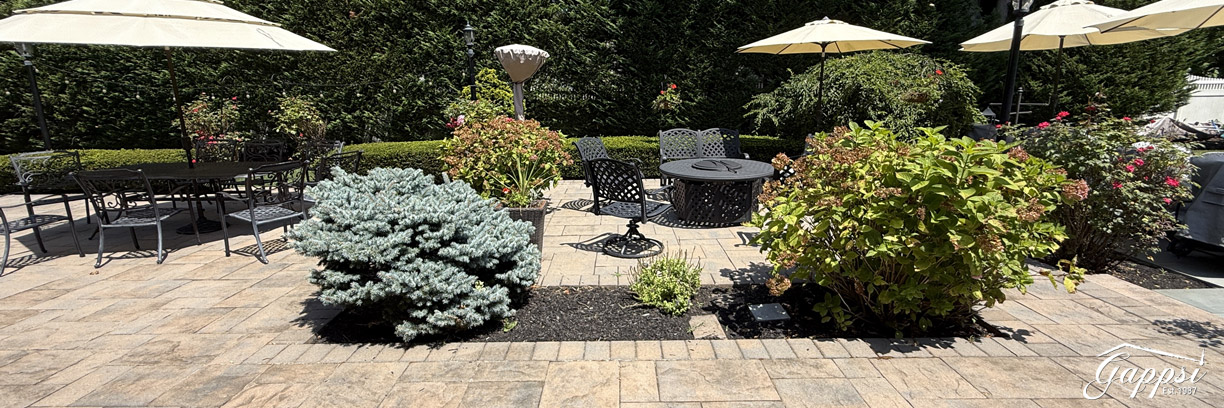
Cambridge Pavers in the Toffee Onyx color blend are known for their multi-toned appearance, combining shades of salmon, brown, and gray. While attractive to many homeowners, some eventually prefer a more modern or neutral appearance, especially as outdoor trends shift toward cooler, more uniform tones.

Over time, UV exposure, weather, and foot traffic can also dull the surface, making color restoration or enhancement necessary. In this case, the clients wanted to eliminate the warm salmon hues and transition to a solid gray finish.

Step 1: Professional Cleaning to Prepare the Surface

The first step was a thorough cleaning of the entire patio and surrounding hardscape. Proper cleaning is crucial because:

  • It removes dirt, algae, mold, and surface contaminants.
  • It lifts old residues, enabling fresh stain to penetrate properly.
  • It prepares the surface for even sealer absorption.

Gappsi uses commercial-grade equipment and environmentally safe cleaning solutions to ensure pavers are fully prepared without damaging the material before any paver color transformation.

Once the patio was thoroughly cleaned and dried, it became ready for the next phase: custom color transformation.

Cambridge Pavers in the Toffee Onyx color blend are known for their multi-tonedStep 2: Creating Color Samples for Client Approval
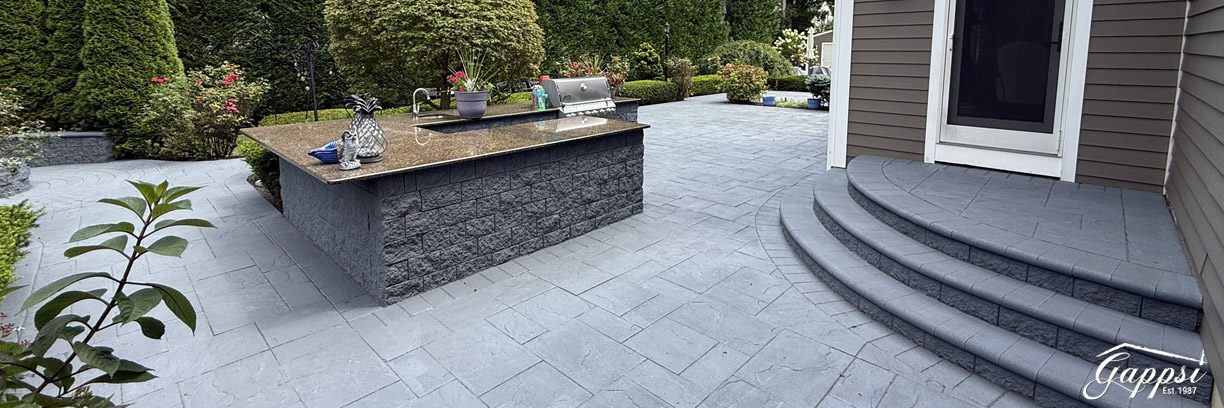
Because color staining is a permanent and noticeable change, Gappsi prepared several gray sample options to show the homeowner exactly how the finished product would look. This is a critical step in the process; it ensures:

  • The new color aligns with the homeowner’s vision
  • The client understands the depth, tone, and finish of the stain
  • The selection blends well with existing structures like the firepit, stoop, and retaining walls

After reviewing samples, the client selected a custom combination of two gray tones: Slate Gray and Gray Washed.

Step 3: Custom Staining to Eliminate Salmon Tones

The transformation required full-surface staining to remove the warm undertones of the Toffee Onyx pavers completely. This technique allows homeowners to dramatically change the color of their pavers without removing or replacing them, a complete paver color transformation.

Using a specialized urethane-compatible stain, Gappsi evenly coated the patio, transitioning the stones from their original brown-salmon hues to the chosen shades of gray. This process effectively “reset” the color palette and created a cleaner, more contemporary appearance.

The staining work extended beyond the patio to ensure a cohesive look across the entire outdoor living area. This included:

  • The retaining wall of the island
  • The firepit area
  • The stoop and bullnose
  • The island walls and surrounding structures

Every surface was blended to match the new gray color scheme, creating a complete backyard makeover.

Custom Staining to Eliminate Salmon TonesStep 4: Sealing with Premium Urethane Sealer

After staining was complete, the next step was to seal the entire hardscape with a high-quality urethane sealer. Unlike basic acrylic sealers, urethane provides:

  • Superior durability
  • A long-lasting protective barrier
  • Enhanced color richness
  • Excellent resistance to UV, stains, and weathering
  • A more premium finish and depth

For this project, Gappsi applied three coats of urethane sealer to achieve maximum protection and the richest color results.

The sealer helps lock in the stain while providing enhanced protection from:

  • Oil and food spills
  • Sun fading
  • Water penetration
  • Wear from foot traffic
  • Seasonal freeze-thaw cycles

The final finish delivered both beauty and long-term durability.

The Final Result: A Complete Modern Look for Paver Color Transformation

The completed project resulted in a striking transformation. What was once a warm-toned Cambridge Toffee Onyx patio now presents as a contemporary gray outdoor environment, clean, cohesive, and visually refreshed.

The uniform gray palette pairs perfectly with modern outdoor furniture, stainless-steel appliances, and today’s trending backyard design styles. The urethane sealer adds a subtle sheen that enhances the pavers’ texture and elevates the space’s overall aesthetic.

cambridge-pavers-color-transformation--urethane-sealing-brightwaters-ny-3This project showcases what’s possible when homeowners want to update their outdoor living area without tearing out and replacing existing pavers. Through expert staining and sealing, Gappsi delivered a like-new surface at a fraction of the cost of rebuilding.
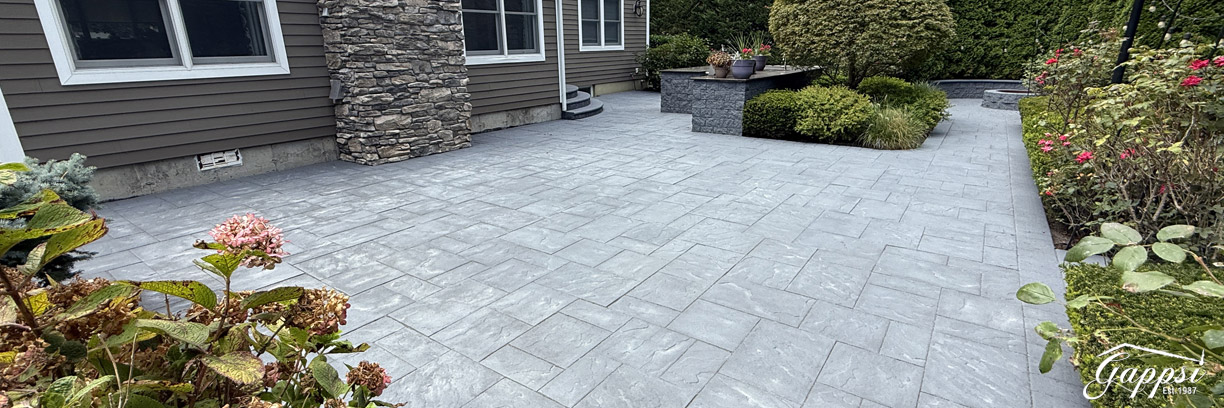
Why Homeowners Choose Gappsi for Paver Sealing and Color Restoration

Gappsi is known throughout Nassau and Suffolk Counties for professional expertise in:

  • Paver cleaning
  • Paver staining and color restoration
  • Sealing with high-grade urethane sealers
  • Repairs and joint stabilization
  • Complete backyard design and masonry services

With decades of experience and a reputation for craftsmanship, Gappsi has become the go-to contractor for homeowners seeking long-lasting results and premium materials.

Paver Sealing and Color RestorationTransform Your Pavers Without Replacing Them
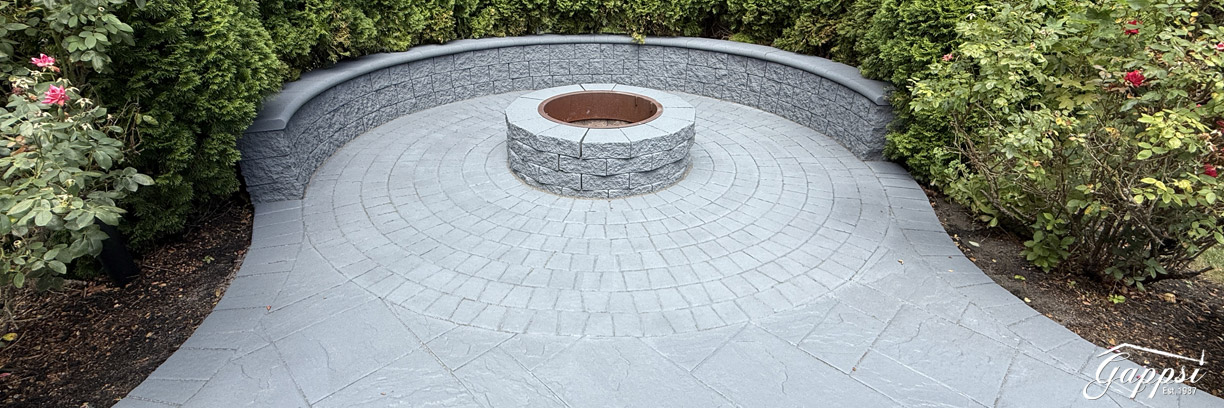
If your patio or walkway looks faded, outdated, or no longer fits your style, color changing and sealing may be the perfect solution. Whether you want a natural enhancement, a deeper tone, or a complete color overhaul, Gappsi can deliver stunning results customized to your vision.

This Brightwaters, NY project is just the latest example of how staining and sealing can completely transform a backyard.

Contact Gappsi Today

📍 Serving all of Long Island, NY — Nassau & Suffolk Counties
🌐 www.gappsi.com
📞 Call now for a free consultation and estimate!

SCHEDULE A MEETING TODAY WITH GAPPSI

Transform Your Pavers Without Replacing Them