


If you can dream it, a gunite pool can likely become it. This is the biggest advantage of choosing gunite for your backyard. You are not limited to pre-made shapes or standard sizes. Instead, you get complete design freedom. Do you want a freeform lagoon with a waterfall? A sleek, modern rectangle with a tanning ledge? Or a unique shape to fit a tricky corner of your yard? Gunite makes it all possible. This level of personalization is why so many homeowners choose this option. Let’s look at how a skilled gunite pool builder in Sag Harbor, NY, can turn your unique vision into a stunning reality.
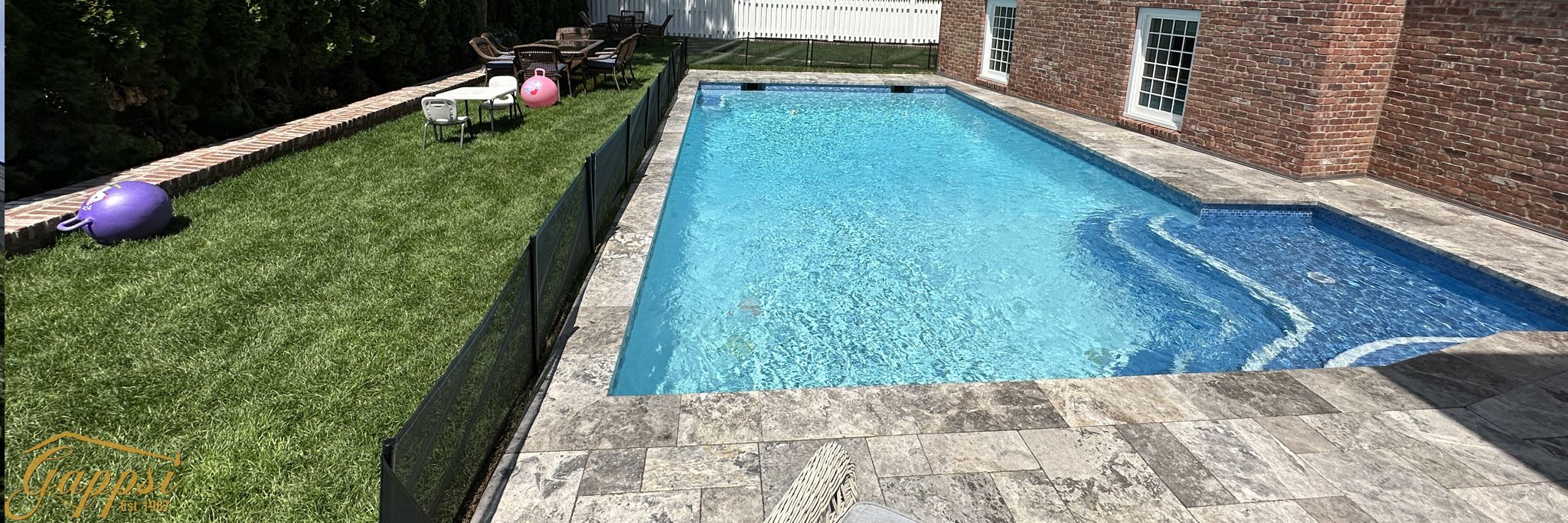 Thinking about adding a gunite pool construction close to home? If you are installing a pool in your backyard, there are many types to choose from. As you research information on a potential new backyard swimming pool, you will often encounter the term “gunite.” Gunite swimming pools are popular because they are highly durable and they can be created in just about any shape.
Gunite is a concrete blend of sand, cement, and water that’s applied through a high-pressure hose. Once it dries, gunite becomes rock hard, forming a thick, solid structure. It is exceedingly durable, so swimming pools made of this substance are built to last.
Gunite Pool Construction Benefits
- Built to Last: Concrete is durable and porous, allowing the plaster-coated shell to hold water, provide stability, and be replastered when needed, adding to its longevity.
- Variety of Finishes: Various materials can be added to pool surfaces made of concrete or plaster, including tile, stone, and man-made textures.
- Variety of Features: Attach waterfalls, custom steps, and so much more to the pool design.
- Versatility: Gunite pools give you the ability to customize the shape of the pool. This is perfect for those wanting an extremely deep or large pool, or a pool with custom tanning ledges.
Gunite Pool Construction Backyard Design Sag Harbor NY
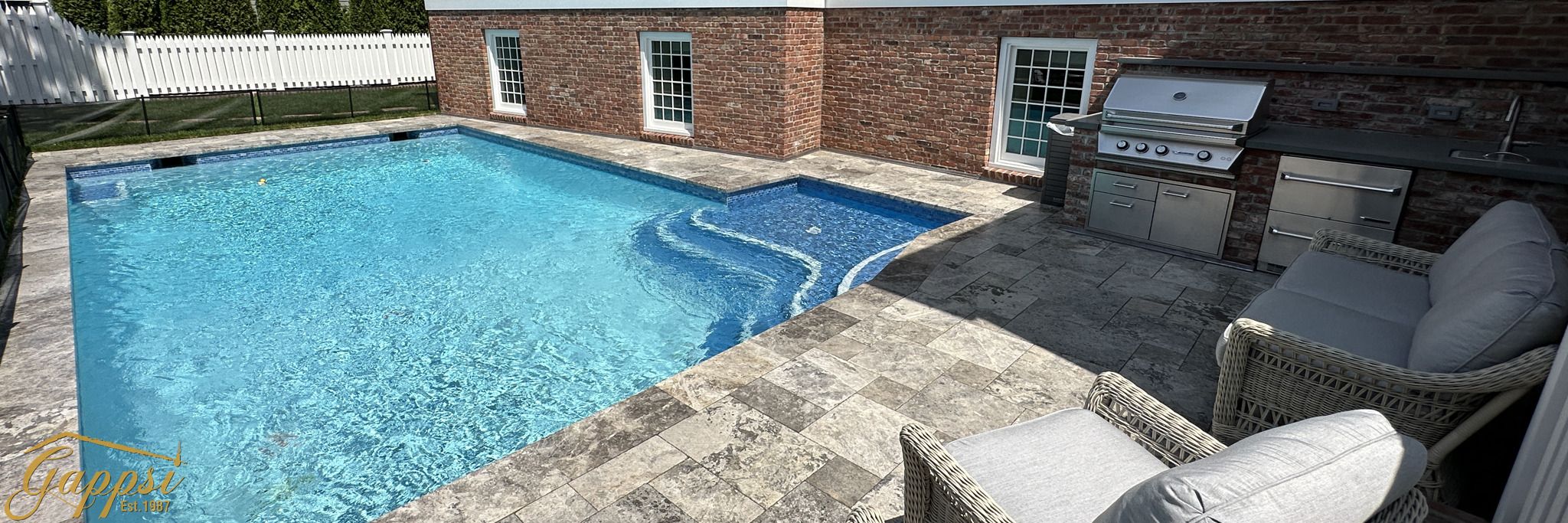
Our team at Gappsi designed and installed a gunite pool close to the home in Sag Harbor NY. We built the patio with G044 Limestone and installed a sundeck in the shallow area of the pool. The stairs within the pool design were free-formed to accommodate the backyard. The sun deck and stairs were veneered with glass tiles. The same glass tiles were used in the waterline of the pool.
What Makes Gunite Pools a Premier Choice?
When you start exploring options for a new backyard pool, the term “gunite” comes up frequently, and for good reason. Gunite pools are widely considered a premier choice because they offer a unique combination of strength, flexibility, and lasting beauty. Unlike pre-molded fiberglass pools or vinyl liner options, gunite pools are built completely on-site. The process involves spraying a mixture of sand, cement, and water over a rebar framework, which creates a solid, seamless, and incredibly strong structure. This method allows for virtually unlimited design possibilities.
This design freedom is what truly sets gunite apart. You are not limited to standard shapes or sizes. Whether you envision a freeform lagoon with a natural rock waterfall, a sleek geometric design for a modern aesthetic, or a custom layout that perfectly fits an unusual backyard space, a gunite swimming pool can bring that vision to life. This level of customization extends to features like built-in tanning ledges, benches, and custom steps, allowing you to create a pool that is perfectly tailored to how you and your family want to relax and play. It’s an investment in a durable structure and a personalized backyard oasis.
Industry-Recognized Quality and Durability
One of the most significant advantages of a gunite pool is its exceptional durability. Industry experts agree that “Gunite pools are known for being very strong, lasting a long time, and allowing for many design choices.” This strength comes from its monolithic construction, where the concrete shell is created as one continuous piece. This process results in a fortified structure that can withstand ground movement and the test of time far better than other pool types. The steel rebar grid provides immense tensile strength, while the dense gunite application offers incredible compressive strength, creating a pool built for generations of enjoyment. The interior finish, typically plaster, pebble, or tile, can be updated over the years, essentially giving your pool a brand new look without having to replace the entire structure. This ability to be refinished adds to its longevity, making it a wise long-term investment for your home.
Efficient Construction Process
While any pool installation is a significant project, you might be surprised to learn that “Gunite pools are built faster than traditional concrete pools.” The traditional “shotcrete” or cast-in-place method requires building extensive wooden forms to pour the concrete into, which is a time-consuming and labor-intensive process. The gunite application method, however, is much more direct. After the area is excavated and the rebar framework is in place, a specialized team can spray the gunite mixture directly onto the frame, sculpting the pool’s shape as they go. This efficiency means less time with a major construction zone in your backyard and a quicker timeline to your first swim. The curing process for gunite is also highly effective, allowing for the subsequent phases of plumbing and finishing to begin in a timely manner.
Why Choose Gappsi as Your Gunite Pool Builder in Sag Harbor?
Choosing the right builder for your gunite pool is just as important as choosing the pool type itself. A pool is a complex system, and its quality and longevity depend entirely on the expertise of the team that builds it. For homeowners in Sag Harbor, selecting a local builder with a proven track record is key. A company with deep roots in the community will understand the specific soil conditions, local building ordinances, and aesthetic preferences of the area. This local knowledge is invaluable for ensuring a smooth construction process and a final product that seamlessly integrates with your property and lifestyle.
Gappsi is more than just a pool builder; we are a comprehensive backyard design and construction company. This means we see the bigger picture. Your pool doesn’t exist in a vacuum. It’s the centerpiece of a larger outdoor living environment. Our expertise in masonry, landscaping, and patio design allows us to create a cohesive and functional space where every element works in harmony. From the pool decking to the surrounding gardens and outdoor kitchen, we design and build complete backyard transformations that reflect your personal style and enhance your home’s value.
Over Three Decades of Local Experience
When you partner with Gappsi, you are choosing a company with a deep and lasting connection to Long Island. As our team proudly states, “Gappsi Inc builds custom gunite swimming pools and designs backyards in Sag Harbor, NY.” We have been serving homeowners across Suffolk and Nassau counties since 1987, giving us an unparalleled understanding of what it takes to build exceptional outdoor spaces in this unique environment. This extensive experience means we have navigated the specific challenges and opportunities that come with building on Long Island, from coastal weather considerations to local township regulations. Our long history in the community is a testament to our commitment to quality and customer satisfaction, providing you with peace of mind knowing your investment is in the hands of seasoned professionals who are your neighbors.
A Commitment to Safety and Building Codes
A beautiful pool is only a great pool if it is built safely and correctly. The construction process involves significant excavation, electrical work, and plumbing, all of which must be handled with the utmost care. At Gappsi, we prioritize safety above all else, understanding that “Their team is well-trained and follows all safety rules and building codes.” This commitment is not just about compliance; it’s about protecting your family, your property, and our construction team throughout the entire project. Adhering strictly to local building codes is non-negotiable. Our deep familiarity with Sag Harbor’s specific codes ensures that your project will pass all inspections without delays, avoiding costly rework and future legal issues. This is a core part of our professional promise for any home improvement project we undertake.
Expert Craftsmanship and High-Quality Equipment
The final quality of your gunite pool depends on two things: the skill of the hands that build it and the quality of the materials used. At Gappsi, we excel at both. Our craftsmen are artisans who take immense pride in their work, from the precise shaping of the gunite shell to the meticulous placement of each tile. This dedication is visible in every detail, but a pool also needs a powerful and reliable heart. That is why “They use high-quality Hayward Expert Line products for pool equipment like pumps, filters, and heaters.” Using top-tier equipment ensures your pool operates efficiently, saving you time and money on maintenance. We believe a premium pool deserves premium components, which you can explore at the Gappsi Store, guaranteeing a superior ownership experience for years to come.
Visualize Your Dream Pool with 3D Renderings
When considering a gunite pool, one of the most exciting parts is seeing your design before construction even starts. It can be tough to picture how a sketch will translate to your actual backyard. That’s why we use advanced 3D renderings to provide a realistic preview of your finished project. This technology allows you to explore the limitless customization options available with a gunite pool, from unique shapes to specific finishes and features. You can see exactly how your new pool will look and feel, ensuring the final result is a perfect match for your home and personal style. This process helps you make informed decisions and feel confident that the beautiful pool you see on screen is the one you’ll be enjoying for years to come.
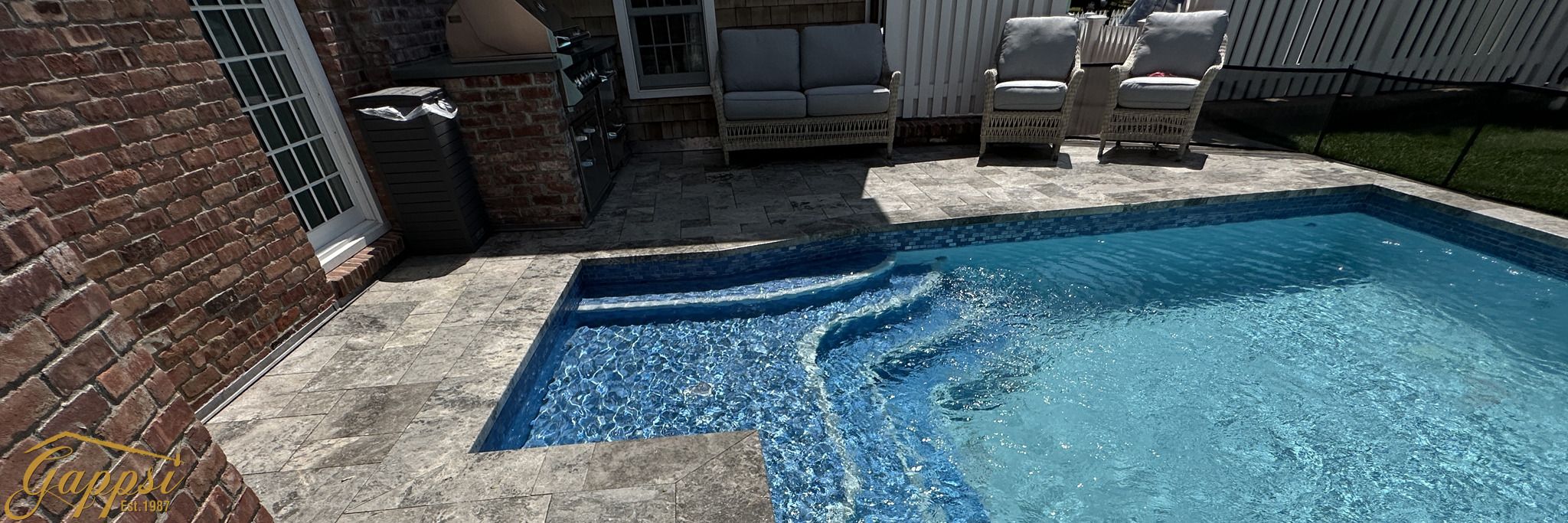 What are the advantages of glass tiles?
The tiles reflect the light to give your pool the appearance of being brighter and larger. Glass tile is impervious to liquids and resistant to staining and discoloration, which means cleaning generally only requires a simple wipe down. If you dislike mold with a passion then this is a great choice for your bathroom or swimming pool.
Cooking Island Adds Functionality!
A cooking island was installed near the pool and home. Included in the design was a Twin Eagles Grill, an outdoor refrigerator, and a built-in sink, the cooking island adds to the small backyard’s functionality. A wall with bricks was added at the edge of the property to accommodate the fence as well. This was a very detailed project and the latest design from Gappsi in Sag Harbor NY.
Why Have Your Pool Close To Your Home?
The problem is that people don’t anticipate exactly how they will eventually use their pool, and weigh that properly against other factors. Here are five reasons you might want to keep your pool close at hand.
Space: In this home located in Sag Harbor, space was why the pool was installed close to the home. Not everyone has the luxury of a large backyard, in many cases, placing the pool close to the house is the only option. However, even when you have some area to work with, keeping the pool tucked into a corner close to the house might be the most efficient use of space. Why not save the rest of your yard for other activities?
Convenience: You’re going to be making many trips to and from your pool. About half of them, you’re going to be dripping wet. It’s hard to overstate how handy it is for swimmers to have easy access to a shower and toilet. If you plan to entertain, or just eat meals on your pool patio, it’s also convenient to have the kitchen close by. Another convenience is having a garage or other storage area nearby helping make pool maintenance a bit easier.
Understanding the Value of Your Pool Investment
How a Gunite Pool Can Increase Your Home’s Value
Investing in a new pool is a big decision, and it’s natural to wonder about the return on that investment. Beyond the countless hours of fun and relaxation, a well-built gunite pool can significantly increase your home’s market value. Unlike other pool types, gunite pools are seen as a permanent, high-end feature. Their incredible durability and premium finish make them a major draw for potential buyers who are looking for a move-in-ready backyard oasis. Think of it not just as an expense, but as a long-term enhancement to your property that adds tangible value and appeal for years to come.
One of the biggest reasons gunite pools add so much value is their design flexibility. You are not limited to standard shapes or sizes. Instead, you can create a completely custom pool that flows with your property’s unique layout and your home’s architectural style. Whether you dream of a freeform lagoon, a sleek modern rectangle, or integrated features like tanning ledges and waterfalls, gunite makes it possible. This ability to create a one-of-a-kind backyard retreat is something we specialize in at Gappsi, ensuring your new swimming pool becomes a seamless and beautiful extension of your home.
The strength of gunite is another key factor in its value. Constructed from a powerful mixture of sand, cement, and water, a gunite shell is built to last for decades. This robust construction stands up to the changing seasons here on Long Island, resisting ground movement and wear far better than other materials. Homebuyers recognize this longevity and are often willing to pay a premium for a pool they know will not require major repairs anytime soon. It is a testament to quality craftsmanship that provides peace of mind and solidifies the pool as a permanent, valuable asset to your home.
CONTACT US TODAY TO PLAN FOR NEXT SUMMER
Aesthetics: A pool is more than just a recreational area. When thoughtfully designed, it’s also great eye candy for your property. Keeping the pool close to the house allows you to enjoy the scenery more – which is especially nice in warmer climates where you can keep your pool open most or all of the year. Many people also love the sound of water, and incorporate things like waterfalls to produce perfectly tranquil background noise for their home.
Privacy: In many cases, a simple fence doesn’t provide the sort of privacy people want for their swimming pool. Trees, shrubs, and other plants are needed to fill in the gaps. However, this is much less of an issue when the pool is close to the house, which serves as the ultimate view-blocker.
Safety: While safety comes last on the list, it’s a primary concern for parents of young children who are thinking about building an inground pool. Having the swimming pool right outside your door makes it much easier to see and hear everything that goes on in it. Just as important, it allows you to get to the scene quicker if an accident happens. When it comes to pool safety, it’s no exaggeration to say that every second counts.
We have gathered together the most talented designers and craftsmen to help create “A True Masterpiece” right in your very own backyard. Contact us TODAY for a FREE consultation to get started on your backyard Masterpiece.
 SCHEDULE A MEETING TODAY WITH GAPPSI
View Gappsi’s YouTube Channel For Videos Of Gunite Pool Construction Close To Home Sag Harbor NY
https://youtu.be/hNCAQIDzwPk
Frequently Asked Questions
What really makes a gunite pool different from a fiberglass or vinyl liner pool? The biggest difference is that a gunite pool is built completely from scratch in your backyard, while fiberglass and vinyl liner pools use pre-manufactured components. A fiberglass pool is a single, pre-molded shell that gets lowered into place, which limits your options for shape and size. A gunite pool, however, is constructed on-site by spraying a concrete mixture over a steel framework. This process gives you complete freedom to design any shape, depth, or custom feature you can imagine, making it a truly permanent and personalized part of your home’s landscape.
I have a small or awkwardly shaped yard. Is a gunite pool still an option for me? Yes, absolutely. In fact, this is one of the best reasons to choose gunite. Because it’s custom-built, a gunite pool can be designed to fit perfectly into unique spaces. We can create flowing, organic shapes that navigate around existing landscape features or design a sleek pool that tucks neatly into a tight corner. The design process, which includes 3D renderings, allows us to show you exactly how a custom pool can maximize your yard and turn a challenging space into a stunning feature.
How long does the whole process take, from design to swimming? While the gunite application itself is relatively quick, building a high-quality pool is a multi-stage project. The total timeline depends on the complexity of the design, permitting, and weather. The process generally involves a design phase, excavation, plumbing and steel installation, applying the gunite, a curing period for the shell, and then the final finishes like tile, coping, and plaster. An experienced builder manages this entire sequence for you, ensuring each step is completed correctly and efficiently to get you swimming as soon as possible.
What kind of long-term maintenance is involved with a gunite pool? All swimming pools require regular care, such as balancing the water chemistry and keeping it clean. The durable interior finish of a gunite pool is very resilient, but its main long-term maintenance task is that it will eventually need to be replastered. This is typically done every 10 to 15 years and is a great opportunity to update the look of your pool with a fresh new surface. Using high-quality pumps and filters from the start also makes a big difference in simplifying your daily and weekly upkeep.
Why is it better to hire a company that does more than just install pools? A pool is the heart of your backyard, but it doesn’t exist on its own. It needs a patio, landscaping, and proper drainage to feel complete and function correctly. When you hire a company that only builds the pool, you are left to manage all the other contractors for the surrounding work. By choosing a comprehensive design and build firm, you get a single, cohesive vision for your entire outdoor space. We ensure the pool, patio, plantings, and lighting all work together seamlessly, saving you the headache of coordinating different teams and guaranteeing a beautiful, unified result.
Key Takeaways
- Embrace Full Customization with Gunite: Gunite’s construction process means your pool’s design is only limited by your imagination. This method provides complete freedom for custom shapes, sizes, and features, resulting in a strong, permanent structure that adds lasting value to your property.
- Partner with a Comprehensive Builder: The success of your project relies on your builder’s skill. Working with an experienced team ensures your pool is built correctly and safely, while also integrating it perfectly with your patio and landscaping for a complete backyard transformation.
- Consider Pool Placement for Daily Life: The location of your pool matters more than you might think. Placing it closer to your home can offer major benefits, including easier access for entertaining, better privacy from neighbors, and improved safety by keeping it within clear view.
Related Articles
- Gunite Pool Contractor | Sag Harbor NY 11963 – Gappsi Group
- Gunite Swimming pool builders in Sag harbor East End Long Island NY – Gappsi – Gappsi Group
- Your Expert Gunite Pool Builder in Sag Harbor, NY
- Gunite Swimming Pool Construction in Nassau and Suffolk Count
- Custom Quartzite Gunite Pool & Spa Finish in Sag Harbor by Gappsi – Gappsi Group
 Limestone and Travertine both are well-suited for high-traffic areas. However, in general terms, Limestone has more strength as compared to Travertine. It is less likely to crack or break whereas Travertine is more brittle and is more prone to breaking. Every natural stone requires maintenance and care. If installed and cared for correctly, they can last for decades!
 Standing The Test Of Time
 Life With Natural Stone
 Pool Coping
 We just completed this gunite remodeling in Northport NY. We removed the old patio and installed new coping, new porcelain tiles and a waterfall. We paved the entire patio with the New G044 white and gray limestone. Very beautiful stones, everybody loves them. In the pool we installed porcelain tiles 6″ water line porcelain tiles. We marble dusted the pool with dark gray marble dust. The spa was also remodeled and re marble dusted with all new equipment . New pump, new filters, new ozone system, new salt chlorine generator. The color of the marble dust with the reflection of the sky gives a very deep blue color to the pool water . The next step is the landscaping. We will be doing some planting and trees behind the waterfall.