Backyard Renovations Complete With A Pergola In East Northport NY

Backyard Renovations Complete With A Pergola East Northport NY (2)The most favorable time to begin your backyard renovations runs from late spring to early fall, in most areas.

Your backyard is not just an outdoor space; it’s a canvas for creativity. With the right inspiration and planning, you can transform your backyard into a haven that reflects your personality and lifestyle.  Outdoor furniture, lighting, plants, and water features can all be incorporated to enhance the beauty of your home while adding value. The possibilities for designing your backyard are endless, and with the right ideas and inspiration, you can create a functional and beautiful space that meets your needs and desires.

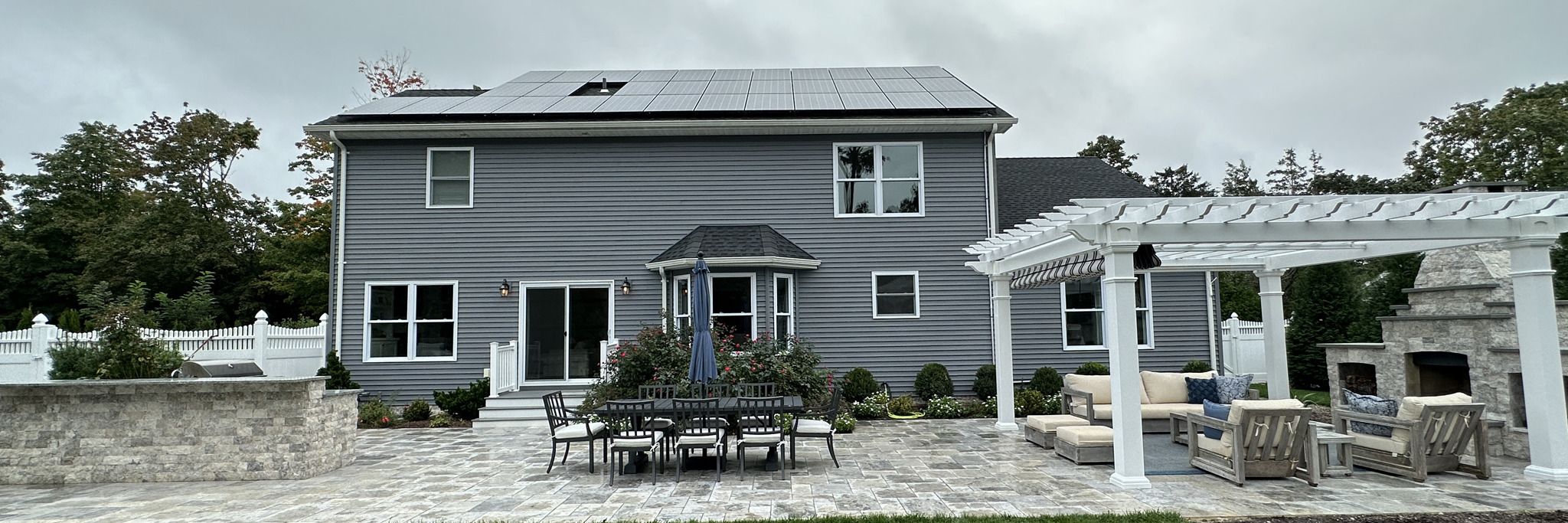
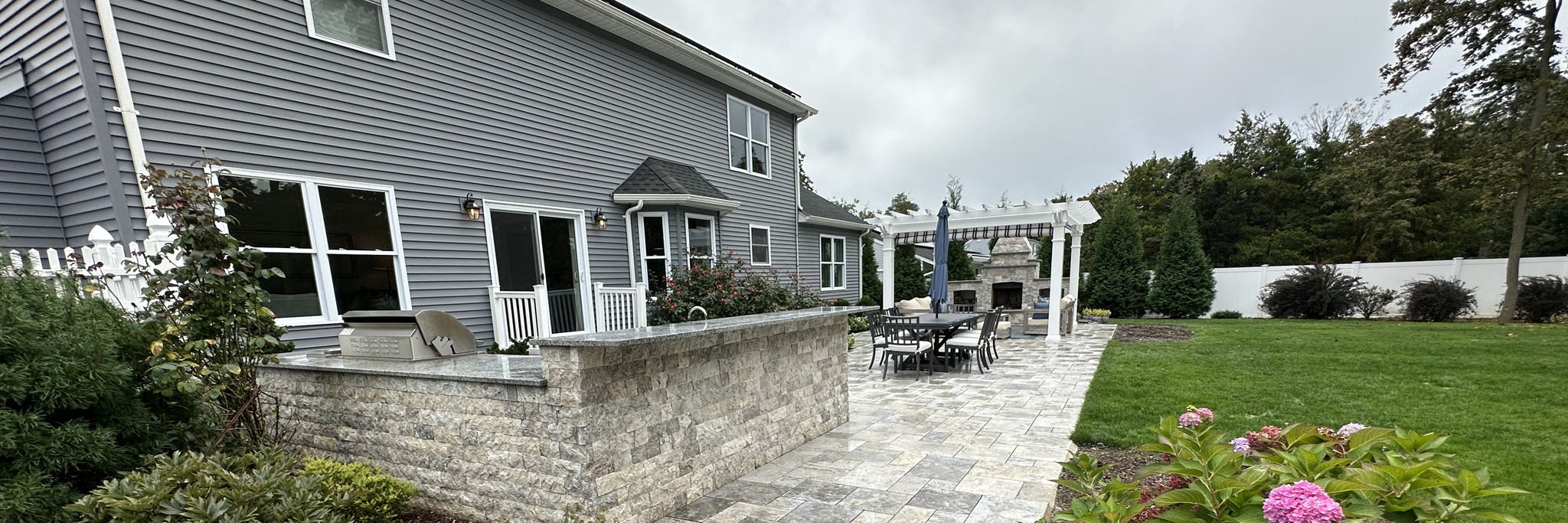
Gappsi’s latest backyard renovation design was located in East Northport, NY.  Our team started by installing a new limestone patio.  It was paved with the Limestone G044 selected from the Gappsi Natural Stone Collection.  The stone pavers are a combination of grays, whites, and beige colors with a marbleized look.

Outdoor Kitchens

An outdoor kitchen should be seriously considered for your backyard.  An outdoor kitchen can be combined with a bar to create a complete dining area. The backyard bar design ideas are limitless!  Just grab some stools, and you’re good to go.  Plus, if you want your outdoor living room to be the place where loved ones gather.   An outdoor kitchen will ensure you’re always the host, no matter the occasion! It is the most functional feature you could add to your backyard.  You’ll use it to grill delicious food.  An outdoor grill station is something you can use and enjoy right away.  Regardless of whether the rest of your backyard is complete or not everyone will have a memorable time and it will be in your backyard!

Backyard Renovations Complete With A Pergola East Northport NY (3)We installed an L-shaped outdoor kitchen with travertine silver color four-inch high random length stone veneers. On the countertop, we used polished granite including a raised bar area for additional seating. To complete the outdoor kitchen we installed a Twin Eagles bar sink, a Summit refrigerator, all Twin Eagles stainless steel cabinets, and a Delta Grill including a side burner.

Fire Pits | Fireplace

There’s nothing quite like cozying up to a warm fire especially when it’s in your own backyard!  We installed a fireplace in the back and a vinyl pergola.  We installed a wood-burning fireplace and veneered it with the same silver travertine in a random pattern.  Added to the design is a combination of boxes on both sides of the fire chamber to store the wood. The fireplace was custom-designed. Gappsi’s team used bluestone treads for each mantel on the fireplace and over the wood box.

Backyard Renovations Complete With A Pergola East Northport NY (1)Water Features | Fountains

If you’re going for a high-end aesthetic with your backyard design.  A water feature is going to be a must-have!  Just about any option you choose is going to increase the serenity of your space.  If you already have a swimming pool.  One of the more popular options is installing a stone waterfall to pour directly into the pool. The possibilities are endless! There are water walls, streams that can run through your entire yard, courtyard fountains, staircase waterfalls, and others! Regardless of what you choose, it is important to ensure you work with your backyard, not against it.

Country Lane Vinyl Pergola With EZShade

Next Gappsi added a pergola near the fireplace area to add a seating area to enjoy the crackling of the fire.  Country Lane makes this pergola along with the EZShade System that rolls on tracks.

You can use it to protect yourself from the sun during the hot summer days.  It is like an umbrella and also protects from dampness coming over the sitting area.

A Pergola Compared To A Gazebo – What Is the Difference?

Pergolas shade owners from the sun’s rays and enclosed styles can keep you dry during periods of rain showers. Pergola is an Italian word with ancient origins deriving from the Latin term “pergola” which means latticework or trellis structure that supports climbing plants. They are distinguishable from gazebos because of their differing dimensions. A gazebo is a freestanding structure with open sides, and a roof, and typically constructed in hexagonal or octagonal shapes. Pergola structures consist of parallel columns that hold up an open roof or grid of beams, rafters, or latticework.

Pergolas can be customized to include retractable grommet curtains for privacy, incandescent lighting for nighttime lounging, picturesque box planters or hanging planters filled with fragrant herbs or flowers, and ornate trellises for fast-growing vines to climb.
Backyard Renovations Complete With A Pergola East Northport NY (4)How Do I Choose The Right Pergola Design For My Backyard?

The main thing to keep in mind is that you want your pergola to match your home and yard aesthetic. If you’re living in a traditional home, for example, you probably don’t want to select a sleek, contemporary, steel pergola. You also want to be mindful of size.

Do Pergolas Add Value to Your Home?

Before investing in one, many homeowners wonder if a pergola will add value to their home. While there are many caveats, in short, the answer is yes. A pergola has the potential to add value to your home, with many estimates putting the return on investment at somewhere around 50% to 80%.

How Do You Make A Pergola Look Nice?

Gappsi is an authorized dealer for Country Lane, Included in their product line are pavilions and gazebos. Visit our showroom to see our Country Lane display.  This is the latest pergola installation with a fireplace, patio, and outdoor kitchen all completed with limestone selected from the Gappsi natural stone collection.

SCHEDULE A MEETING TODAY WITH GAPPSI

View Gappsi’s YouTube channel for videos of Backyard Renovations Complete With A Pergola

Share this page:

Limestone Rustic Patio And Pool

Limestone-Rustic-Patio-And-PoolLimestone rustic patio and pool decks make the perfect choice for homeowners when designing their backyards.  Limestone is a type of sedimentary rock composed predominantly of calcium carbonate and varying amounts of clay, silt, and sand. The varying amounts of these other minerals determine the color of the stone, which can range from blue to red and green. Limestone is significantly dense and renowned for being a heavy, hard-wearing material. There are many types of limestone that may have been subjected to different surface treatments, display different textures, contain different amounts of fossils, and bear different degrees of permeability. Therefore, certain types of limestone will be better suited to your patio floor than others.

Why Choose Limestone?  Limestone is a well-used building material for several reasons:

  1. Strength – Limestone has a compressive strength of 180 MPa, while concrete has a compressive strength of 30 MPa.
  2. Shaping – While limestone is strong and hard, it is still soft enough to cut into different shapes for pool coping and other building projects.
  3. Aesthetic – Limestone comes in a variety of colors and textures that work with any design. Natural tans, buffs, and grays can have hues of pink, blue, and rust in the veining.
  4. Weathering – Limestone has the ideal porosity to handle the water and New York weather, making it a perfect pool stone.
  5. Durability – Limestone is also suitable for high-traffic areas such as patios.
  6. Safety – Not only does limestone last, but it also provides an element of security. The texture of the natural stone is not as slippery as tiles and other building materials, reducing the risk of falls.

Advantages For Patios And Pools Using Limestone

Limestone is a hard material that fairs well under exposure to the elements, making it an excellent candidate for patio floors. It is easy to cut and convenient to work with, minimizing costly complications during installation and contributing toward a flawless finished product.

Limestone can be obtained in unique and striking colors that can make a patio much more memorable. However, it can also be sourced in even colors for the creation of a uniform surface against which other features stand out. In addition to this aesthetic versatility, limestone bears a very fine texture that appears soft and smooth to the eye.

Limestone-Rustic-Patio-And-Pool1Limestone Disadvantages For Patios And Pools

Take note that limestone may not be a good candidate for your poolside, as it can be damaged by acid. While many homeowners find limestone desirable because of its beauty and longevity, it is important to seal any limestone that may come into contact with acid and be cautious handling chemicals near unsealed limestone.

Limestone is more susceptible to fading than many other natural stone variants, like sandstone. This can be combated through treatments and sealing. However, if you opt for a dark limestone variant, you may find that gradual fading gives it a time-worn look that is packed with timeless character.

Should you desire a very specific shade for your patio floor and cannot find limestone in that color, don’t settle for another shade before you have perused other types of natural stone.

Limestone Pool Coping Long Island NY

Pool coping is not the place to cut corners. Substandard pool coping can lead to problems with the structural integrity of your pool and create safety risks. Coping is what keeps water away from the pool’s shell. If water goes behind the pool walls, the structure is at stake.

Other Pool Coping Benefits

If pool coping breaks away easily, you and your guests can cut yourselves getting in and out of the pool. Keep everyone safe with coping that lasts.  A solid pool coping helps keep debris from falling into the pool and improves cleanliness.  Plus, if you want to add an automatic cover to your pool, the coping will simplify the process.

Works Well With Water

Why are we discussing water and swimming pools in the same sentence as if they don’t naturally go together?

When selecting your pool materials, water is one of the main considerations. The pool surface, walls, and floor must be waterproof.

Consider this: An average size swimming pool contains between 18,000 and 20,000 gallons of water. If left uncovered, around two inches of that water evaporates each week. Using porous materials could result in even more water seeping from the pool.

Limestone-Rustic-Patio-And-Pool2Natural stone tiles, if sealed properly, are essentially waterproof!

The Century Effect – Not only are natural stones water-friendly, but they also stand the test of time.

Bathing pools have a long history going back to ancient Rome and Greece. Early pool builders used tightly fitted terracotta bricks for the pool walls and floors. Bathers at Pamukkale, the site of ancient Turkish thermal springs, enjoyed the beauty of travertine terraces that still exist today.

If you build your pool deck from bricks or concrete, both common building materials, you may get a few decades of use before making major repairs. Take it from the Turks, the Greeks, and the Romans—choose natural materials. They’ll last longer.

Also, stones won’t fade over time. In fact, unlike concrete and humans, stones weather the effects of time and end up looking even more beautiful.

Limestone Rustic Patio And Pools in Plandome Manor NY

Gappsi’s latest Limestone Rustic Patio And Pools in Plandome Manor NY included a complete backyard design and installation.  We installed a new vinyl pool equipped with an automatic cover for ease and convenience for the homeowner.   Our team built two retaining walls with poured concrete and veneered with natural stone. The cooking island was built using all Delta Appliances which can be found in our online store. For the patio, we used G046 limestone and G045 blue limestone for the pool coping all selected from the Gappsi Natural Stones Collection. In addition, we kept the top of the wall with matching coping to the pool. This was a very large wall project but our team at Gappsi has the experience and knowledge. To complete the project the area was very beautifully landscaped by our team at Gappsi. To add to the depth and beauty of the property on the second level we built a circular patio with G046 brown limestone and a fire pit built with matching stones and added a Breeo Smokeless Stainless Steel Fire Pit. This was a very beautiful project to design and build with many details.  

SCHEDULE A MEETING TODAY WITH GAPPSI

View Gappsi’s YouTube channel for videos of Limestone Patio And Pool

Limestone-Rustic-Patio-And-Pool-YouTube

Share this page:

Retractable Pool Safety Cover: A Homeowner’s Guide

The initial cost of a swimming pool is just one part of the overall financial picture. Ongoing expenses for heating, water, and chemicals can add up significantly each season. Many homeowners accept these as the standard costs of pool ownership, but they don’t have to be. An automatic cover is a powerful investment that actively reduces these recurring bills. By preventing heat and water from evaporating and blocking sunlight that consumes chlorine, a pool safety cover retractable system can cut your operational costs by up to 70%. It’s one of the few pool upgrades that pays for itself over time.

Automatic-Retractable-Safety-Pool-CoversThe benefits of owning a swimming pool equipped with Automatic Retractable Safety Pool Covers are many. Homeowners in the market looking to purchase a swimming pool sometimes are not educated by their pool contractors.  Most often they focus on items that are less important for the large investment. A safety auto-cover is one item.  The benefits it offers far surpass the cost of buying one, you just need to educate yourself on them. Often consumers don’t purchase it mainly because the contractor does not take the time to educate the consumer on the benefits a safe electric auto-cover offers.

At Gappsi, as experienced pool builders and residential outdoor living designers and builders.  We have incorporated and built many backyards with swimming pools equipped with automatic retractable safety pool covers. We have calculated that operating and owning a swimming pool without an auto-cover is.  It would cost more than paying principal and financing charges if you have to get financing to install a safety auto-cover on your new swimming pool.

An automatic pool cover is a reliable and convenient way to keep your family safe around the pool.  It also is helpful in preserving its water level, chemistry, and heat for longer.

These retractable electric pool covers are effective safety barriers for your children, prevent debris from falling into your pool, and reduce your maintenance and heating costs. With a simple turn of a key or touch of a button, your warm, clean pool will be ready to go for a fun day of swimming.

Understanding the Safety Features of Retractable Covers

Meeting Official Safety Standards

When you’re thinking about a pool, safety is naturally the first thing on your mind, especially with little ones or pets around. That’s why automatic retractable covers are such a game-changer. These aren’t just flimsy sheets to keep leaves out; they are serious pieces of safety equipment. Reputable automatic pool covers are engineered to meet strict safety standards, often carrying certifications like UL listing and ASTM approval. This means they have been independently tested and verified to provide a reliable barrier. When we design and build swimming pools for families across Long Island, we always emphasize that a certified safety cover is one of the most important investments you can make for your backyard oasis and your peace of mind.

What is ASTM F1346 Certification?

You’ll often see the term “ASTM F1346” when looking at safety covers, and it’s a big deal. This is a specific performance standard developed by ASTM International that outlines the safety requirements for pool covers. To earn this certification, a cover must pass a series of rigorous tests, including weight support, drainage capabilities, and resistance to opening without the key or switch. Essentially, it confirms that the cover is strong enough to prevent a child from falling into the water. Think of it as an official seal of approval that guarantees the cover you’re installing is a true safety device, not just an accessory.

Why a Tarp Isn’t a Safety Cover

It’s really important to understand the difference between a standard winter tarp and a certified safety cover. A simple tarp, often held down with water bags, is only designed to keep debris out of the pool during the off-season. It offers no protection against accidents and can even be a hazard, as it can trap someone underneath the water if they fall on it. A true safety cover, on the other hand, is anchored securely to the deck and is built to meet the strict ASTM F1346 standards. It’s specifically designed to prevent accidental drowning, making it a completely different class of product.

Built to Protect: Weight Capacity and Durability

One of the most impressive things about automatic safety covers is their incredible strength. These covers are built to withstand a significant amount of weight, providing a sturdy barrier over the water. In fact, to meet safety standards, they are tested to hold a minimum of 485 pounds. This means that in the event a child, pet, or even an adult accidentally walks onto the cover, it is designed to support them. This level of durability comes from using high-quality, robust materials, a principle we apply to all our projects, from porcelain pavers to the pool covers we install. It’s this built-in strength that allows you to relax, knowing your pool is securely protected.

A “Horizontal Fence” for Ultimate Peace of Mind

Many safety experts refer to an automatic pool cover as a “horizontal fence,” and it’s the perfect description. While a traditional fence around the pool is a great safety measure, it has limitations. Gates can be left open, and some fences can be climbed. An automatic cover, however, forms a complete, impenetrable barrier directly over the water’s surface, isolating it entirely. When the cover is closed, there is no way to access the pool water. This makes it one of the most effective safety options available, providing a constant layer of protection that a vertical fence simply cannot match. It’s this total coverage that gives homeowners an unparalleled sense of security.

Advanced Security and Access Control

Beyond their physical strength, modern automatic pool covers come with advanced security features that give you complete control over who can access your pool. These systems are designed to prevent unauthorized or unsupervised use, adding another critical layer of safety. Instead of a simple on/off switch that anyone can flip, you can opt for systems that require a specific action or code to operate. This technology transforms your pool cover from a passive barrier into an active security system that you manage, ensuring your pool is only used when you want it to be. It’s a smart addition to any modern home, much like the integrated systems we incorporate into our home remodeling projects.

Preventing Unauthorized Access

To ensure your pool cover isn’t opened without your knowledge, many systems come with a keyed switch or a digital keypad. The keyed option is simple and effective: the cover cannot be retracted without the physical key, which you can keep in a secure place. A keypad takes this a step further, requiring a specific code to be entered before the cover will move. This is an excellent feature for families with curious children or for when you have guests over, as it makes it impossible for someone to open the pool on a whim. It puts the control firmly in your hands.

Digital Keypads and Alerts

For the ultimate in control and awareness, some of the most advanced systems offer even more. Imagine your pool cover sending a notification directly to your phone if it’s opened or if it has been left open for too long. This is possible with smart-enabled digital keypads and control systems. These alerts provide real-time information about the status of your pool, so you always know it’s secure, even when you’re away from home. This level of connectivity and oversight offers a new dimension of peace of mind, fully integrating your pool’s safety into your connected lifestyle.

Heat, Water, and Chemical Retention

While protecting your children is always our top priority, our automatic pool covers do so much more. We use a special fabric and webbing inside the track to insulate your pool

This insulation helps to prevent evaporation and loss of heat. With these covers, you won’t need to top off your pool water quite as often, and the water will stay warmer for longer. This helps you operate your heater more efficiently and keep the pool at a comfortable swimming temperature for a much longer swimming season!

Gappsi retractable pool covers are also opaque, and completely block out sunlight while the pool is closed. Sunlight exposure makes sanitizing chemicals like chlorine break down more quickly in the water, as well as contributes to the growth of algae.

Building a New Pool or Have an Existing pool? Does your pool qualify for an automatic pool cover based on your pool shape and layout?

  • New Build – Yes ✔

If you are building a new pool, you can incorporate an automatic pool cover into your build.

  • Existing Pool – Maybe?

It will depend on your pool’s shape and deck layout. Read more about the system below to see if your existing pool can accommodate one.

Quantifiable Savings for Your Pool

Thinking about the budget is a huge part of any home project, and an automatic pool cover is an investment where the numbers really speak for themselves. While there’s an upfront cost, the long-term savings are significant. For starters, you can cut your pool heating costs by up to 70%. The cover acts as a powerful insulator, trapping warmth so your heater doesn’t have to work as hard. It also prevents about 90% of water evaporation, which means less time and money spent refilling your pool. On top of that, by blocking sunlight, the cover can lower your chemical usage by 60%. This not only saves you money but also contributes to a healthier swimming environment. When you add up the savings on heat, water, and chemicals, the cover often pays for itself, making your swimming pool more affordable to own and operate for years to come.

Customization: Designing a Cover to Match Your Style

An automatic pool cover is a smart, functional addition to your backyard, but that doesn’t mean it has to look purely utilitarian. Gone are the days of clunky, obvious pool covers that detract from your beautiful outdoor space. Today’s systems are designed to be as stylish as they are safe. You can customize nearly every aspect of your cover to ensure it complements your home’s aesthetic and integrates perfectly with your pool and patio design. Think of it as another design element, not just a piece of equipment. From the color of the fabric to the way the tracks are hidden, you have the control to create a look that is both secure and sophisticated, ensuring your backyard remains a stunning retreat.

At Gappsi, we believe that safety and style should always go hand in hand. When we help homeowners design their dream swimming pools, we consider how every component works together to create a cohesive and beautiful environment. An automatic cover is a key part of that equation. We can help you select options that match your existing materials and design preferences, making the cover feel like an intentional part of your overall landscape. The goal is to have a cover that provides complete peace of mind without compromising the visual appeal you’ve worked so hard to achieve. It’s about creating a space that is safe, efficient, and undeniably yours.

Durable Fabrics in a Range of Colors

The cover itself is made from an incredibly strong and durable vinyl fabric, designed to withstand the elements and hold significant weight. But strength doesn’t mean a lack of style. This fabric is available in a wide spectrum of colors, allowing you to choose one that either blends in with your water color and coping or provides a striking contrast. You can select from classic blues and grays for a subtle look, or go with a tan or green to match your surrounding landscape. This choice allows you to make a design statement and ensure the cover enhances, rather than hides, the beauty of your pool area when it’s closed.

Seamless Integration with Your Pool Deck

One of the best features of a modern automatic pool cover is how discreet it can be. The entire system is designed to be as unobtrusive as possible. When you want to enjoy your pool, the cover retracts and disappears. According to Latham Pools, “The cover rolls up into a hidden spot at one end of the pool.” With the flip of a switch or the press of a button, a motor activates and the cover glides open or closed along a set of tracks. This seamless operation means your pool is ready for swimming in moments, and secured just as quickly when you’re done, all without disrupting the clean lines of your pool deck.

Concealed vs. Surface-Mounted Tracks

The tracks that guide the cover are a critical component, and you have options for how they are installed. For the most integrated and flawless look, tracks can be concealed beneath the pool’s coping. This is easiest to accomplish during a new pool construction or a major renovation. The tracks are built right into the pool’s edge, making them virtually invisible. If you have an existing pool, surface-mounted tracks are a great alternative. These low-profile tracks are installed on top of the deck. While they are visible, modern designs are sleek and can be color-matched to your patio to minimize their appearance and maintain a polished look for your outdoor space.

Lid Options for a Flawless Finish

When the cover is retracted, it rolls into a housing at one end of the pool. This housing is covered by a lid, and this is another opportunity for customization. The lid conceals the motor and the rolled-up cover, protecting them from the elements and foot traffic. Standard options often include durable, powder-coated aluminum that can match the track color. For an even more high-end and integrated finish, you can opt for a tray-style lid that can be inlaid with the same porcelain or natural stone pavers used on your patio. This makes the housing lid disappear completely into your pool deck, creating a truly seamless and luxurious finish.

The Investment: Cost and Long-Term Value

When considering an automatic pool cover, it’s natural to focus on the initial price. However, it’s more accurate to view it as a long-term investment in your home, safety, and lifestyle. The upfront cost is balanced by significant annual savings and priceless peace of mind. An automatic cover is one of the few pool additions that actively pays you back over time. By reducing expenses on heating, water, and chemicals, the cover helps offset its own cost. More importantly, it provides an unparalleled layer of safety that you can’t put a price on. It transforms your pool from a source of potential worry into a secure and easy-to-manage asset for your family to enjoy.

Think about the daily and seasonal tasks of pool ownership. You spend time and money keeping the water clean, balanced, and warm. An automatic cover drastically cuts down on that effort and expense. It acts as a barrier against dirt and debris, meaning less time skimming and vacuuming. It also serves as a giant solar blanket, trapping heat and preventing evaporation. Over the years, these benefits add up to substantial savings and more time simply enjoying your pool. It’s a smart, practical upgrade that enhances your pool experience from every angle, delivering value day after day, season after season.

Understanding the Initial Cost

The initial investment for a professionally installed automatic pool cover typically falls between $10,000 and $20,000. Several factors influence the final price, including the size and shape of your pool. Rectangular pools are the most straightforward and cost-effective to cover. Custom shapes, steps, or other unique features may require a more complex track and cover design, which can increase the cost. The level of customization you choose, such as concealed tracks and stone-inlaid lids, will also play a role in the final price. While it’s a significant purchase, it’s important to weigh this cost against the immediate safety benefits and long-term financial savings it provides.

Planning for Long-Term Maintenance

The long-term value of an automatic cover becomes clear when you look at the numbers. According to industry data from Latham Pools, these covers can reduce your pool heating costs by up to 70% by preventing heat from escaping the water’s surface. They also slash water evaporation by as much as 90%, saving thousands of gallons of water each year and reducing the need to refill your pool. Furthermore, by blocking sunlight, the cover can lower your chemical consumption by up to 60%. This not only saves money but also creates a more pleasant swimming environment with fewer chemicals. These combined savings can be substantial, making the cover a financially savvy choice for any pool owner.

The Professional Installation Process

Installing an automatic pool cover is not a DIY project. It is a precise and technical process that requires specialized knowledge to ensure the system operates safely, reliably, and effectively for years to come. The installation involves mechanics, electrical wiring, and careful integration with your pool structure and decking. A professional installer understands the exact specifications required for the cover to function as a true safety device. They ensure the tracks are perfectly aligned, the fabric is tensioned correctly, and the motor is calibrated for smooth operation. Attempting to cut corners with an improper installation can compromise the cover’s safety features and potentially void its warranty, making professional installation an absolute necessity.

At Gappsi, our teams are experts in integrating these systems into both new and existing pools. We manage the entire process, ensuring that every detail is handled with precision. From the initial measurements to the final calibration, we coordinate all aspects of the installation. Our experience in masonry and pool construction allows us to seamlessly incorporate the cover’s housing and tracks into your patio, creating a polished and professional result. By entrusting the installation to a seasoned team, you can be confident that your investment is protected and that your pool cover will provide the safety and convenience you expect.

Why You Need a Professional Installer

The most important reason to hire a professional is safety. Automatic pool covers are certified to meet specific safety standards, like ASTM F1346, but they only function as a proper safety barrier if installed correctly. As Latham Pools notes, “These covers must be installed by professionals to make sure they work correctly and follow all safety rules.” A professional ensures that the cover is strong enough to support weight, that there are no gaps where a child or pet could slip through, and that the operating mechanism is secure. This expertise guarantees that your cover performs as intended, providing a reliable barrier and ultimate peace of mind for your family.

The Role of a Licensed Electrician

Because an automatic pool cover is an electric-powered system that operates near water, proper electrical work is critical for safety. The installation process requires the expertise of a licensed electrician to run power to the motor and keypad. This is not just a recommendation; it’s a requirement for a safe and code-compliant installation. A licensed electrician will ensure that all wiring is properly grounded, protected by a GFCI (Ground Fault Circuit Interrupter), and sealed from moisture to prevent any risk of electrical shock. This crucial step protects both the equipment and, more importantly, the people using the pool, ensuring your system is as safe as it is convenient.

Automatic-Retractable-Safety-Pool-Covers1Examples of Pools that CANNOT have automatic covers:

  • Raised Walls (some exceptions can be made, see pools that can have auto covers)
  • Spas that stick up higher than the pool height
  • The deck is not one level – end to end.
  • Raised Rocks/ Dive Rocks at the edge of the pool

Examples of Pools that CAN have automatic covers:

  • One Level from End to End
  • No Changes in Elevation

Other Pool Cover Options

While an electric pool cover for your inground pool is a great option that we highly recommend, we know it is not always the ideal solution for every pool. Other great options are available, including mesh safety covers, pool safety nets, and pool safety fences, which all provide their own unique benefits for you and your loved ones.

Winterizing Automatic Retractable Safety Pool Covers

Although during the winter your pool cover requires less attention, water and/or snow will build up on the cover. If the water level in the pool is not properly maintained, serious damage to the cover can occur. Properly maintaining a pool’s water level prevents excess weight on the top surface of the cover that can cause damage to the cover system.

During the winter, make at least monthly inspections of the pool’s water level and make sure the cover pump is operating properly so that water on top of the cover does not build up. Even a few inches of water on top of the cover is an enormous weight and can pull the cover and guide it into the pool. In situations where the water level is too low, you should add water to the pool immediately to better support the water or ice that is on the cover. Your cover will survive any normal winter if these simple precautions are taken.

Make sure your water is chemically balanced before covering the pool for extended periods of time. Double-check the water after the chemicals had a chance to mix completely. This may require checking the pool water a day or two after chemicals have been added. When covering the pool for long periods of time, turn down ozone generators and chemical feeders to their lowest level. The constant long-term build-up of ozone can damage the fabric. Place the cover pump on the cover to remove melted snow.

Automatic-Retractable-Safety-Pool-Covers2Vinyl Pool With AutoCover and Large Natural Stone Pool Pavers

Located in Brightwaters Long Island Gappsi added to an existing 16 x 34 vinyl liner pool built with concrete walls.  We built a sundeck on one side of the pool and steps across the entire sundeck with a bench on each side of the stairs. Additionally, we installed two water bubblers on the sundeck and led lights in the pool. Gappsi installed the automatic retractable safety pool covers for the homeowner too.

The patio consists of G045 limestone selected from the Gappsi stone collection roman pattern for the patio and rock-faced tumbled coping for the pool edges. We also built a gas fire pit for the family to enjoy. The wall is veneered with natural stones and the coping is matching to the pool coping with the G045 2 inches of rock-faced and tumbled coping.  Latest backyard design and installation by Gappsi. 

Mesh Safety Covers

Mesh safety covers are a popular choice for their convenience and ease of use. As the name suggests, they are made from a durable, woven material that is lightweight and easy to handle. Their primary advantage is that they allow rainwater and melted snow to drain directly into the pool, eliminating the need to pump water off the surface. This feature keeps the cover from sagging under the weight of accumulated water. While they are excellent at keeping leaves, twigs, and other large debris out, some very fine silt and sunlight can get through. This might mean a little more cleanup when you open your pool for the season, but for many Long Island homeowners, the low maintenance during the off-season is a worthwhile trade-off. Choosing the right cover depends on your specific swimming pool and lifestyle, and a mesh cover offers a great balance of protection and practicality.

Solid Safety Covers

If you’re looking for maximum protection, a solid safety cover is an excellent option. Unlike mesh covers, solid covers are made from a non-permeable material that completely blocks all sunlight, water, and debris from entering your pool. This is a huge advantage for keeping your pool water clean and clear through the winter, which can significantly reduce the amount of chemicals and cleaning needed when you reopen it in the spring. Because the cover is solid, it does require a small pump to remove any rainwater or melted snow that collects on top. Without a pump, the weight of the water could damage the cover. This type of cover provides a formidable barrier, ensuring nothing gets into your pool until you’re ready to use it. You can find accessories like cover pumps at specialty retailers like the Gappsi Store to make maintenance simple.

SCHEDULE A MEETING TODAY WITH GAPPSI

VIEW OUR VIDEO OF AUTOMATIC RETRACTABLE SAFETY POOL COVERS

https://youtu.be/BtDo2JWkvN0

Frequently Asked Questions

Is an automatic pool cover really a safety device? Yes, absolutely. A professionally installed automatic cover is one of the most effective safety barriers you can have for your pool. Unlike a simple tarp, these covers are made from incredibly strong, durable material and are anchored to your deck. They are engineered to meet strict safety standards, like ASTM F1346, which means they can support the weight of a child or even an adult, preventing accidental falls into the water. Think of it as a horizontal fence that completely isolates the pool.

Will an automatic cover work on my existing pool? It depends on your pool’s design. Automatic covers work best with rectangular pools on a single level. If your pool has features like raised walls, an attached spa that sits higher than the pool, or significant changes in elevation around the deck, it might not be a candidate for this type of cover. However, for many existing pools, a surface-mounted track system is a great option. The best way to know for sure is to have a professional assess your specific layout.

How much can I realistically save with an automatic pool cover? The savings are quite significant and one of the biggest long-term benefits. By acting as a barrier against evaporation, you can reduce water loss by up to 90%. The cover also traps heat, which can lower your heating costs by as much as 70%. Furthermore, by blocking sunlight, it prevents chlorine from breaking down quickly, cutting your chemical usage by up to 60%. While there’s an initial investment, these combined savings on water, energy, and chemicals mean the cover can pay for itself over time.

Can I customize the cover to match my backyard’s style? Definitely. Modern automatic covers are designed to be both functional and stylish. The vinyl fabric comes in a variety of colors, so you can choose one that blends with your patio or provides a nice contrast. The tracks can often be concealed under your pool coping for a seamless look, especially with new construction. Even the lid that hides the rolled-up cover can be customized. You can choose a standard aluminum lid or a tray designed to be inlaid with your patio’s stone, making it virtually disappear.

What kind of maintenance does an automatic cover require? These systems are designed for convenience, but they do need some basic care. It’s important to keep the tracks clear of dirt and debris to ensure the cover glides smoothly. During the winter, you’ll need to use a small pump to remove any rain or melted snow that collects on the surface, as the weight can strain the system. You should also periodically check that your pool’s water level is correct, as it helps support the cover. Following these simple steps will keep your cover operating safely and effectively for years.

Key Takeaways

  • Prioritize safety with a certified barrier: An automatic cover is a true safety device, meeting strict ASTM F1346 standards to support weight and prevent accidental entry, unlike a standard tarp. It functions as a “horizontal fence” for ultimate peace of mind.
  • Invest in long-term savings: An automatic cover is an investment that pays for itself. It drastically reduces recurring pool costs by cutting heating expenses up to 70%, water evaporation by 90%, and chemical usage by 60%.
  • Integrate style with function: You don’t have to sacrifice aesthetics for safety. Modern covers offer customization with various fabric colors, concealed tracks, and lid options that can be inlaid with your patio stone for a completely seamless look.
Share this page:

How to Choose a Deck and Patio Contractor on Long Island

A new deck or patio is more than just an addition to your house; it’s an investment in your home’s value and your family’s lifestyle. It’s the future setting for summer barbecues, quiet morning coffees, and evenings with friends. To ensure this investment pays off for years to come, it’s important to make smart decisions from the start. This guide covers everything from material selection to design complexity, helping you understand the long-term value of your choices. We’ll help you ask the right questions so you can confidently hire a deck and patio contractor long island who will build a beautiful, lasting space for you to enjoy.

Choosing The Right Stone For A Pool Deck

Natural-Limestone-Patio-And-Pool-Long-Island-NYWhen choosing the right stone such as a natural limestone patio and pool Long Island NY it’s important to embrace some practical and aesthetic considerations.  Whether it’s an elegant light-colored limestone perfect for a hot summer day, a natural fieldstone emulating the feel of a deep woods swimming hole, or reclaimed granite with its timeless weathered beauty, the following points will help in selecting the best stone for a pool deck or patio area.

The Four S’s to Consider

  • Style – The overall appearance of a pool deck and patio may vary depending on style. It could be sophisticated versus a more rustic look and feel.  The sophisticated style generally has clean lines while a rustic style offers an earthy feel and look with more natural, rougher lines.
  • Surface –  The texture of the stone has a big impact on the look as well as the feel of your patio surface.
    • A split face surface, like a reclaimed plank paver, gives a rustic look to the area.
    • A natural cleft surface comes from stones that are split by man along a natural seam in the stone.  This gives the surface an organic feel with a flatter surface compared to a rough split surface.
  • Shapes and Patterns – Stone shapes, whether irregularly shaped or straight edge squares and rectangles, may completely change the design of a pool deck as different design patterns will also,
  • Scale – It is important to think about the size of the stones. Deciding on small, medium, or large stones determine the look and feel of a pool deck area.

PRO TIP: If the deck space is large, consider using larger-sized pieces to give it a grand feeling. Smaller pieces may be used for more intricate patterns and offer a more sophisticated look.

  • Color – Natural stone comes in a variety of colors in addition to color combinations. Deciding on the stone consider if the pool is in direct sunlight for large amounts of time, then a lighter-colored stone would be good to keep the temperature down. Choose a color or color theme that relates to your home, or office building, as well as other stones in the nearby area.

The Right Stone For The Right Condition

A complement to the surrounding landscape, natural stone pool coping is as practical as it is attractive. Natural stone is durable and resists freeze-thaw cycles.

  • Heat Underfoot – Comfortable underfoot is important when choosing a stone for a pool deck and patio. Which type of stone will help to keep the surface cooler? The answer is a stone with less heat absorption. In general, lighter-colored stones have less heat absorption.
  • Freeze-Thaw – If the pool will be located in a freeze-thaw weather zone, be sure to pick a stone with lower water absorption for the pool deck. Granites, basalts, and porphyry top the charts in this category and will hold up to all weather conditions. We have also hand-picked some freeze-thaw-resistant limestones and sandstones that will work well.
  • Slip Resistance – The last thing you want is a slippery stone for a pool deck and patio. Luckily, adjustments to surface texture and joints can make a huge difference when it comes to creating a slip-resistant deck.

In addition to considering the appearance of the texture, consider the effect it has on the perceived slipperiness of a stone. Man-made surfaces provide excellent grip and some split surfaces tend to be less slippery. In general, stone surfaces with indentations and irregularities provide a better grip.

Planning and Budgeting for Your Long Island Deck or Patio

Creating the perfect deck or patio is an exciting project, but it all starts with a solid plan and a realistic budget. Thinking through the details before you begin ensures the process goes smoothly and you end up with a space you love without any financial surprises. From picking the right time to build to understanding how your design choices impact the final price, a little preparation goes a long way. Let’s walk through the key steps to get your project started on the right foot, so you can focus on enjoying your new outdoor oasis.

The Best Time to Build

Timing your project can have a surprising impact on your budget. On Long Island, the peak season for outdoor construction runs from May to August. During these months, contractors are in high demand, which often means higher prices and longer waiting lists. If you can plan ahead, consider scheduling your build during the off-season, typically between November and February. Contractors are often less busy during this period and may offer discounts of 10-15% to keep their crews working. Planning your project in advance allows you to secure a spot on a professional’s schedule and take advantage of potential savings.

How Design Complexity Affects Cost

The design of your deck or patio is one of the biggest factors influencing its cost. A simple, single-level rectangular design with standard railings will always be the most budget-friendly option. As you add complexity, the price tag grows. Features like curves, multiple levels, intricate patterns, or built-in elements like benches and planters require more materials and significantly more labor. Working with an experienced masonry and design team can help you find the perfect balance between your dream design and your budget, creating a beautiful space that is both functional and affordable.

A Phased Approach to Building on a Budget

If your dream outdoor space feels just out of reach financially, consider building it in phases. This approach allows you to get the core structure built now and add the finishing touches later as your budget allows. You can start with the main deck or patio foundation and surface. Then, in the following years, you can add features like custom lighting, built-in seating, an outdoor kitchen, or even a stunning pergola to provide shade. This strategy makes a large project more manageable and lets you enjoy your space sooner while planning for future enhancements.

Understanding the Costs of Building a Deck or Patio

Figuring out the cost of a new deck or patio can feel overwhelming, as prices depend on size, materials, and design complexity. However, breaking down the expenses into categories like labor, permits, and materials can make the numbers much clearer. While every project is unique, understanding these core components will help you create a realistic budget. This knowledge empowers you to have informed conversations with your contractor and make choices that align with your financial goals, ensuring there are no unexpected costs along the way.

Average Project Costs

While costs vary based on your specific location and project details, it’s helpful to have a general idea of what to expect. For example, a basic 12×12 foot deck built with pressure-treated wood framing and composite decking might cost between $7,000 and $10,000. This estimate typically includes the necessary permits and inspections. Of course, a larger, more complex design using premium materials will cost more. The best way to get an accurate figure for your vision is to get a detailed quote from a reputable local builder who can assess your property and discuss your specific needs.

Labor and Permit Fees

When budgeting for your project, remember that materials are only part of the equation. Labor typically accounts for a significant portion of the total cost, often ranging from $15 to $35 per square foot. Additionally, most towns on Long Island require a building permit for deck construction, with fees usually falling between $400 and $1,200. Working with an experienced company like Gappsi ensures that all necessary permits are secured and inspections are handled correctly, preventing potential fines or legal issues down the road.

Material Costs Breakdown

The material you choose for your deck or patio surface is a primary driver of the overall cost. Your selection will affect not only the initial price but also the long-term maintenance requirements and lifespan of your outdoor space. From traditional pressure-treated pine to high-end PVC and elegant natural stone pavers, there is a wide range of options available. Understanding the price-per-square-foot for each can help you decide which material best fits your budget and aesthetic preferences, allowing you to make a confident and informed choice for your home.

Pressure-Treated Pine

Pressure-treated pine is one of the most common and affordable decking materials, typically costing between $3 to $6 per square foot. This wood is chemically treated to resist rot, fungus, and wood-boring insects, making it a durable choice for its price point. While it is a great budget-friendly option, it does require regular maintenance, including annual cleaning and staining or sealing every few years to protect it from the elements and maintain its appearance. It’s a solid choice for homeowners looking for the classic look of wood without a high initial investment.

Cedar

Cedar is a beautiful softwood that is naturally resistant to rot and insects, making it a popular choice for decking. It costs more than pressure-treated pine, generally running from $8 to $12 per square foot. Many homeowners love cedar for its rich color and distinct aroma. To maintain its vibrant hue, you’ll need to clean and seal it regularly; otherwise, it will weather to an attractive silvery-gray patina over time. Cedar offers a great middle-ground between the affordability of pine and the low maintenance of composite materials.

Composite Decking

Composite decking is an increasingly popular choice for homeowners who want a low-maintenance solution. Made from a blend of wood fibers and recycled plastics, it’s designed to resist fading, staining, scratching, and mold. The cost for composite materials ranges from $5 to $14 per square foot, depending on the brand and quality. While the upfront cost is higher than most wood options, you’ll save money and time on maintenance over the life of the deck, as it never needs to be sanded, stained, or sealed. It just requires occasional cleaning with soap and water.

PVC Decking

For the ultimate in durability and low maintenance, PVC decking is a top-tier choice. Unlike composite, PVC decking contains no wood fibers, making it completely resistant to moisture, rot, and insects. It’s also highly resistant to scratches and stains. This premium performance comes with a higher price tag, typically ranging from $10 to $20 per square foot. Homeowners who choose PVC value its longevity and the peace of mind that comes with knowing their deck will look great for decades with minimal upkeep, making it a worthwhile long-term investment.

Long-Term Maintenance Costs

When selecting materials, it’s crucial to think beyond the initial purchase price and consider long-term maintenance costs. Wood decks require regular care, with staining and sealing costs averaging $0.50 to $1.50 per square foot every few years. In contrast, composite and PVC decks only need occasional cleaning, which costs about $0.10 to $0.30 per square foot. Over the lifetime of your deck, these savings can be substantial. If you prefer to have a professional handle the upkeep, Gappsi offers expert restoration and sealing services to keep your outdoor surfaces looking their best.

The Cost of Replacing vs. Building New

If you have an old, deteriorating deck, you might be weighing whether to replace it or start fresh. It’s important to know that replacing an existing deck often costs 25-35% more than building a new one from scratch. This additional cost comes from the labor required for demolition and the fees for hauling away and disposing of the old materials. Factoring these expenses into your budget from the start will help you accurately plan for the project and avoid any financial surprises when it’s time to rebuild your outdoor living space.

Deck and Patio Material Options

Choosing the right materials is one of the most important decisions you’ll make for your new deck or patio. The material determines not only the look and feel of your space but also its durability, maintenance needs, and overall lifespan. With options ranging from classic woods to modern composites and timeless natural stones, there’s a perfect fit for every style and budget. Taking the time to explore these choices will ensure you create an outdoor area that you and your family can enjoy for many years to come.

Common Wood and Composite Materials

For a deck or patio to withstand Long Island’s diverse weather, from hot summers to freezing winters, it’s essential to use strong, low-maintenance materials. Traditional woods like pressure-treated pine and cedar offer natural beauty but require consistent upkeep. For a more hands-off approach, composite and PVC decking provide excellent durability and resistance to the elements without the need for regular staining or sealing. At Gappsi, we prioritize using high-quality materials from our Gappsi Store to ensure every outdoor space we build is designed to last and look beautiful for years.

Material Lifespan

The lifespan of your deck is directly tied to the material you choose. A well-maintained wood deck, such as one made from pressure-treated pine or cedar, can typically last between 10 and 20 years. However, composite and PVC decking offer significantly greater longevity. Because they are engineered to resist rot, moisture, and insects, these materials can easily last over 30 years with minimal care. While they come with a higher upfront cost, their extended lifespan and low maintenance needs often make them a more valuable investment in the long run.

Natural-Limestone-Patio-And-Pool-Long-Island-NY3WIDE JOINTS VS MANY JOINTS

Wide joints between pavers or joints that have grass or other vegetation growing between them make the overall pool deck surface less slippery.

When there are many joints, your feet are always touching multiple joints which helps you naturally grip the surface and it is, therefore, more slip-resistant.

Pool Deck Materials We LOVE at Gappsi

Limestone – The luxurious feel and look of limestone make it a great choice for a pool deck.

Sandstone – A sedimentary rock composed of sand-size grains of mineral, rock, or organic material. Many sandstone materials are great for pool decks as their split surfaces are naturally slip-resistant. Colors range from beige to brown to gray-blue.

Granite – A coarse-grained igneous rock, granite has a high content of quartz and feldspar giving it a speckled appearance. One of the most durable quarried stones from around the world, granite is nearly always massive, hard, and tough.

Bluestone – Bluestone is actually a sandstone with a deep blue color but also appears with other hues such as shades of gray and brown. Bluestone is known for its advantageous price point. Natural cleft bluestone is quite slip-resistant.

Travertine – A form of limestone deposited by mineral springs, especially hot springs. Travertine often has a fibrous or concentric appearance and exists in white, tan, cream-colored, and even rusty varieties.

Marble – Marble can have beautiful pattern movement within the stone and comes in a wide variety of colors from white to salmon to gray, blue, green, and black.

Natural-Limestone-Patio-And-Pool-Long-Island-NY2Limestone Patio And Pool Long Island NY

Kidney-shaped gunite swimming pools remodeled in Center Island NY. We installed new stairs across the shallow area and porcelain tiles in the water line. The pool was totally remodeled with new plumbing and a new finish. We used super blue diamond bright and tile markers on the edge of the steps. The patio consists of G44 limestone in a french pattern and two inches of G044 Marble Limestone all selected from the Gappsi natural stone collection. Very beautiful property, a very beautiful setting. The latest gunite remodels by Gappsi.

SCHEDULE A MEETING TODAY WITH GAPPSI VIEW OUR VIDEO OF A NATURAL LIMESTONE PATIO AND POOL LONG ISLAND NY

https://youtu.be/hel_u2kVv18  

Beyond the Deck: Other Outdoor Structures to Consider

A beautiful deck or patio is a fantastic foundation, but it’s often just the beginning of creating a truly functional and inviting outdoor living area. Adding vertical structures and other features can define different zones, provide comfort, and add significant character to your backyard. Think of these additions as the finishing touches that transform a simple space into a personal retreat. They can provide shade on a sunny day, create a focal point for your landscape, or introduce the soothing sounds of nature right outside your door.

Pergolas, Pavilions, and Gazebos

Adding an overhead structure can instantly make your patio or deck more usable and visually appealing. While they all provide a sense of enclosure and style, they serve slightly different functions. A pergola uses a slatted roof to offer partial shade, creating a beautiful play of light and shadow. A pavilion has a solid roof, providing complete protection from sun and rain, making it ideal for an outdoor dining or living room. Gazebos are charming, freestanding structures that can act as a quiet escape in a corner of your garden. These pavilions and pergolas not only offer comfort but also add a strong architectural element to your landscape.

Outdoor Kitchens

Take your backyard entertaining to the next level by creating a dedicated outdoor kitchen. This goes far beyond a standalone grill, incorporating elements like countertops for food prep, a sink for easy cleanup, storage cabinets, and even a refrigerator or pizza oven. An outdoor kitchen becomes a social hub, allowing you to cook and mingle with guests without ever leaving the party. Our masonry experts can design and build a custom kitchen using durable, weather-resistant materials that seamlessly integrate with your new patio and the style of your home, making al fresco dining a regular pleasure.

Ponds and Water Features

There is something inherently calming about the sound of moving water. Incorporating a water feature can transform the ambiance of your backyard, masking neighborhood noise and creating a peaceful, serene atmosphere. This could be anything from a small, elegant fountain to a cascading waterfall or a full-fledged pond with fish and aquatic plants. A well-placed water feature acts as a stunning focal point and attracts birds and butterflies, adding life and movement to your garden. It’s a wonderful way to complete your landscape design and make your outdoor space a true oasis.

Choosing a Deck and Patio Contractor on Long Island

Once you have a vision for your outdoor space, the most important decision you’ll make is choosing the right team to bring it to life. A new deck or patio is a significant investment in your home, and the quality of the installation is just as important as the materials you choose. The right contractor will not only deliver a beautiful, durable final product but will also make the entire process smooth and stress-free. Finding a trustworthy partner is key to ensuring your project is a success from the initial design to the final walkthrough.

DIY vs. Hiring a Professional

The idea of building your own deck or patio can be tempting, especially if you’re handy and looking to save on labor costs. However, these projects are often more complex than they appear. They require a deep understanding of structural integrity, local building codes, and proper site preparation to prevent future issues like shifting or water damage. A professional contractor brings years of experience, specialized tools, and an efficient team to the job. Hiring a pro is an investment in peace of mind, ensuring your new outdoor space is built safely, correctly, and will provide enjoyment for years to come.

What to Look for in a Contractor

When you start your search for a contractor on Long Island, you’ll find many options. To narrow down the field, it’s helpful to have a checklist of what separates a good contractor from a great one. A little research upfront can save you from headaches down the road and help you find a company that aligns with your vision and values. Focus on a few key areas to ensure you’re hiring a reputable, skilled, and reliable professional who will treat your home with respect.

Experience, Awards, and Certifications

Look for a contractor with a long and stable history in your community. A company that has been serving Long Island for decades, as Gappsi has since 1987, has a proven track record and a deep understanding of local soil conditions, weather patterns, and building regulations. Experience matters. Additionally, check for certifications from material manufacturers. For example, a “Trex Pro Platinum” builder has demonstrated the highest level of skill with that specific product. These credentials show a commitment to quality craftsmanship and ongoing education in the industry.

Warranties and Financing Options

A reputable contractor will always stand behind their work with a solid warranty. This is your protection and their promise of quality. Be sure to ask for details on the warranties they provide for both their labor and the materials they use. A strong warranty is a clear sign that the company is confident in the durability of its projects. It’s also wise to inquire about financing options. Many established companies offer flexible payment plans that can make your dream project more attainable without straining your budget.

The Value of a Free Consultation

A consultation should be much more than just a quick estimate. It is your opportunity to interview the contractor, discuss your ideas in detail, and see if you have a good rapport. A great contractor will listen carefully to your needs, ask thoughtful questions, and offer creative suggestions you may not have considered. They should provide a clear, itemized proposal that outlines the entire scope of the project. Use this meeting to gauge their professionalism, communication style, and passion for their work.

Visiting a Physical Showroom

While online galleries are helpful, nothing compares to seeing materials in person. A contractor with a physical showroom demonstrates a level of stability and commitment. Visiting a showroom allows you to touch and compare different types of porcelain and natural stone, see the true colors of composite decking, and visualize how different combinations will look. At the Gappsi Store, for example, you can explore a vast selection of high-quality materials firsthand, which helps you make more confident and informed decisions for your project.

Frequently Asked Questions

How can I make my dream patio more affordable without cutting corners? The best way to manage costs is to think about your project in phases. You can start by building the main patio or deck structure now and then add features like a pergola, outdoor kitchen, or custom lighting in the following years. Another great strategy is to simplify the design. A classic rectangular shape will always be more budget-friendly than a complex design with curves and multiple levels because it requires less labor and material waste.

Is composite or PVC decking really worth the higher upfront cost compared to wood? This is a great question that comes down to long-term value. While wood has a lower initial price, it requires consistent maintenance like staining and sealing every few years, which costs both time and money. Composite and PVC decking, on the other hand, only need occasional cleaning. Over the 30-plus year lifespan of a composite or PVC deck, the savings on maintenance can easily make up for the higher upfront cost, making it a smart investment for many homeowners.

For a pool deck, what is the most important thing to consider when choosing a stone? While the look of the stone is important, safety and comfort should be your top priorities for a pool deck. You’ll want a stone with a naturally slip-resistant texture to prevent accidents on wet surfaces. It’s also wise to choose a lighter-colored stone, as it will absorb less heat from the sun and be more comfortable for bare feet on hot summer days. A great material choice successfully balances beautiful style with these practical needs.

My current deck is old and worn out. Is it better to repair it or completely replace it? Deciding whether to repair or replace an old deck depends almost entirely on the condition of its underlying structure. If the foundation and frame are still solid, you might be able to simply replace the surface boards and railings. However, if there is any structural damage, a full replacement is the safest option. Keep in mind that a full replacement often costs more than building a new deck from scratch due to the added labor of demolition and disposal.

What’s the real benefit of visiting a showroom instead of just looking at pictures online? Seeing materials in person is a completely different experience than viewing them on a screen. In a showroom, you can see how light hits different stone textures, feel the difference between composite and PVC decking, and compare the true colors of various materials side-by-side. This helps you make a much more confident decision for a permanent addition to your home, ensuring the final result is exactly what you envisioned.

Key Takeaways

  • Select materials based on long-term value: Consider how options like natural stone or composite decking will affect future maintenance, durability, and overall lifespan, not just the upfront cost.
  • Plan your project strategically to manage costs: Building during the off-season, opting for a simpler design, or constructing your space in phases are effective ways to make your dream patio or deck more affordable.
  • Hire the right contractor to ensure quality: A successful project depends on a professional with extensive local experience, solid warranties, and a physical showroom where you can see materials firsthand.

Related Articles

  • Outdoor Living News: Pools, Fire Pits & Renovations | Gappsi Inc
  • Patio & Pergola Design Ideas for Long Island Backyards | Gappsi Inc
Share this page:

Backyard renovated Smithtown NY

Backyard-renovated-in-Smithtown-NYBackyard renovated in Smithtown NY

This is a complete backyard renovation. We replaced all the natural grass with the synthetic grass. Patio and Walkway were installed with G44 Gappsi Limestone.   At the beginning we did an enclosed area as a dog run.  As we go through the backyard the pool patio is all surrounded by limestone and synthetic grass. The fire pit with  a marble top. All the columns for the pavilion were veneered with the silver travertine very close matching colors to the blue limestone.  The coping of the pool is a 2 inch thick limestone. The outdoor kitchen is under the pavilion, all veneered with random large size silver travertine tumbled veneer. There is a bar area on this side completed with smoker, sink and storage cabinets. The entire backyard was completed with synthetic grass. Even the slide was installed over the grass and secured into a concrete base. Free maintenance backyard. Gappsi is a complete  backyard designer from landscaping, masonry and gunite and vinyl swimming pools, home remodeling and construction, synthetic turf, sports courts, putting greens, basketball courts, bocce courts and dog run playgrounds.. Gappsi knowledgeable and experienced personnel can help you create the yard of your dream.   We also provide  These services in the following areas of Eastern Long-Island – Western long-Island  – North-Shore long-Island – South-Shore long-Island, Suffolk County,  Nassau County,  Glen Cove, Hempstead, North Hempstead, Oyster Bay, Babylon , Huntington,  Islip, Smithtown,  Brookhaven, Southampton,  Riverhead,  East Hampton, Southold, Old Brookville, Old Westbury, Mill Neck, Nissequogue, Lloyd Harbor,  Muttontown, Coldspring Harbor,  East Norwich and both Nassau and Suffolk County

Share this page: