


Here on Long Island, our backyards are our sanctuaries. They’re where we host barbecues, watch our kids play, and unwind after a long week. Lately, a new sound is joining the summer buzz: the distinct pop of a pickleball game. From Montauk to Manhasset, homeowners are converting parts of their yards into private courts. But with property values in Nassau and Suffolk counties being a constant topic, every upgrade needs to be a smart one. This brings up a critical point for any local homeowner considering the project: does a pickleball court increase home value in our unique market?
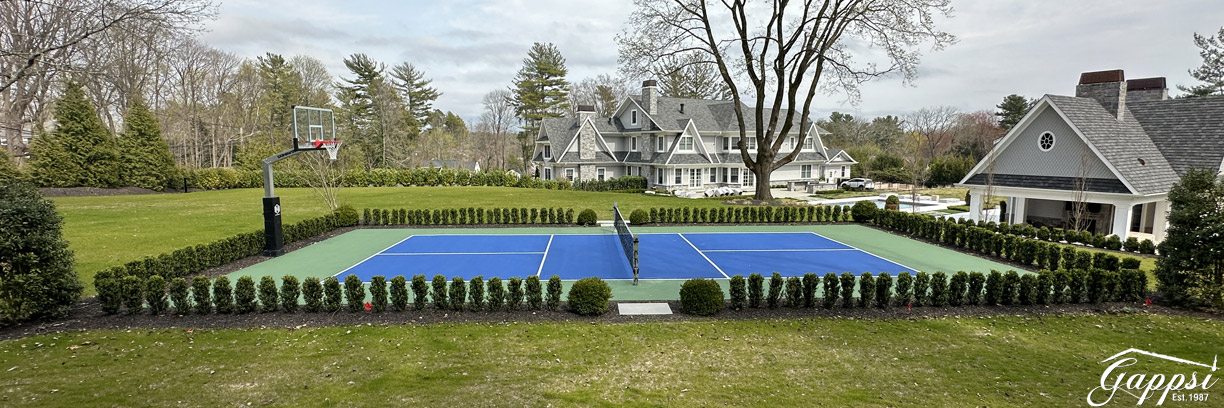 Pickleball courts at home increase home values for homeowners who are constantly on the lookout to boost their property’s resale value. Investing in recreational amenities, particularly a tennis or pickleball court, can be a game changer.
His and her sinks, open floor plans, and pools used to be the hottest trends in real estate. Then the trend was signature golf courses and beach clubs. Now all eyes are on pickleball courts. These days, if you want to sell your house, build a pickleball court. That’s right. A recent spike in keyword search data from Zillow shows pickleball courts are the hot new commodity people want in a new place to live.
What Real Estate Agents Are Saying
Real estate agents are witnessing a trend where homeowners are reconfiguring their spaces to accommodate pickleball courts. They are even converting driveways or repurposing existing sports facilities on ultra-luxury properties. Pickleball courts at home increase home values.
As a homeowner when you add a pickleball court you immediately boost your property value. Adding a tennis or pickleball court to a property is similar to upgrading a kitchen or bathroom – it can provide an instant boost in value. The logic is simple: recreational spaces are attractive features that potential buyers are willing to pay extra for.
Pickleball is a popular sport across various age groups and demographics. The USA Pickleball Association notes a surge in the sport’s popularity. Homes equipped with courts cater to a broad audience, potentially speeding up the sale process. It allows homeowners and their families to engage in a fun, healthy activity without leaving their property.
Pickleball Sports Game Courts Impact on Landscape and Space
It is essential to consider the overall impact on the landscape. A well-designed court can enhance the aesthetic appeal of a property. Strategic placement and landscaping around the court can create a serene, resort-like ambiance. However, homeowners must ensure they have ample space so that the court doesn’t feel cramped or diminish the utility of the backyard. While adding a pickleball court is a significant investment, the benefits of property value, lifestyle upgrades, and potential income make it a worthy consideration.
What are the different types of Pickleball Court playing surfaces and which one is right for you?
- Asphalt
- Concrete
- Mateflex Court Tiles
If you’ve decided to improve your space with a pickleball court, the next step is to find a style that supports your desired level of play. If joint protection and beginner-friendly playability are the priorities for your outdoor court, our versatile Mateflex Court Tile surface is the way to go. Asphalt and concrete courts provide the reliable and durable surface performance you need if you’re searching for high-velocity ball bounce and tournament-level player traction. Check out our design gallery of Sports Game Courts.
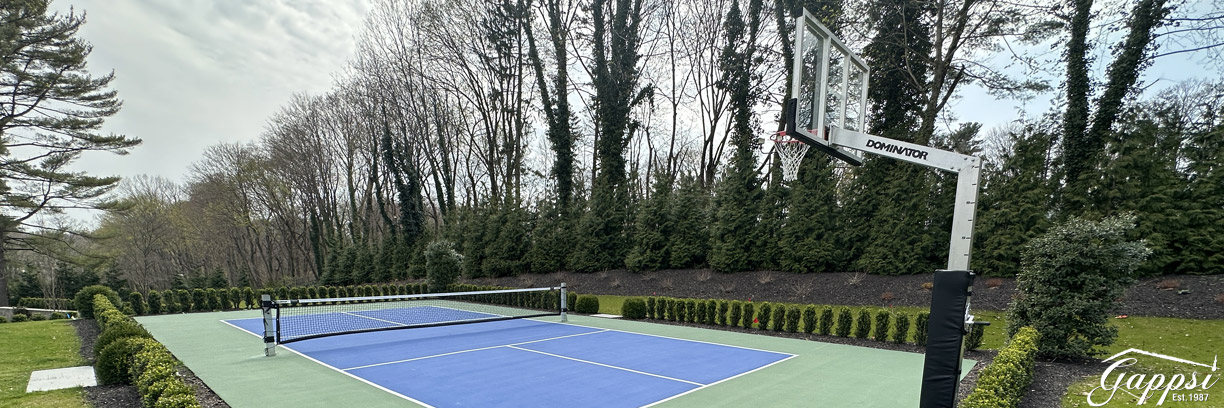 Why Choose Asphalt Court Surfaces
Fast installation: One of the main advantages of using an asphalt surface for pickleball courts is the quick installation. Asphalt can be laid in a matter of days, allowing for a fast turnaround time for court construction. This is particularly advantageous for those who want to have their pickleball court ready for use as soon as possible.
Less costly: Asphalt is less expensive than other court materials such as concrete or clay, making it a more budget-friendly option.
Easily maintained: Asphalt surfaces are relatively easy to maintain, which is important for a pickleball court with frequent use. Regular sweeping and cleaning can help to keep the court free of debris while sealing every couple of years can help to protect the surface from weathering and cracking. Any necessary repairs can be easily made by filling in cracks or holes with asphalt patching material.
Weather-resistant: Asphalt can withstand various weather conditions without becoming damaged or deteriorating.
Why Choose a Concrete Court
Durability: Concrete surfaces are incredibly durable and can withstand heavy use. It lasts longer than asphalt. This makes them an ideal choice for pickleball courts with a lot of activity. Concrete surfaces are also resistant to weathering, which helps to extend their lifespan and reduce maintenance costs.
Low maintenance: Concrete surfaces require minimal maintenance. Regular sweeping and cleaning can help to keep the court free of debris, while periodic sealing can help to protect the surface from weathering and staining. Any necessary repairs needed can be easily made by filling in cracks or holes with concrete patching material.
Cost-effective: While the initial installation cost may be higher than asphalt, the long-term durability and low maintenance requirements of concrete can help to reduce costs over time.
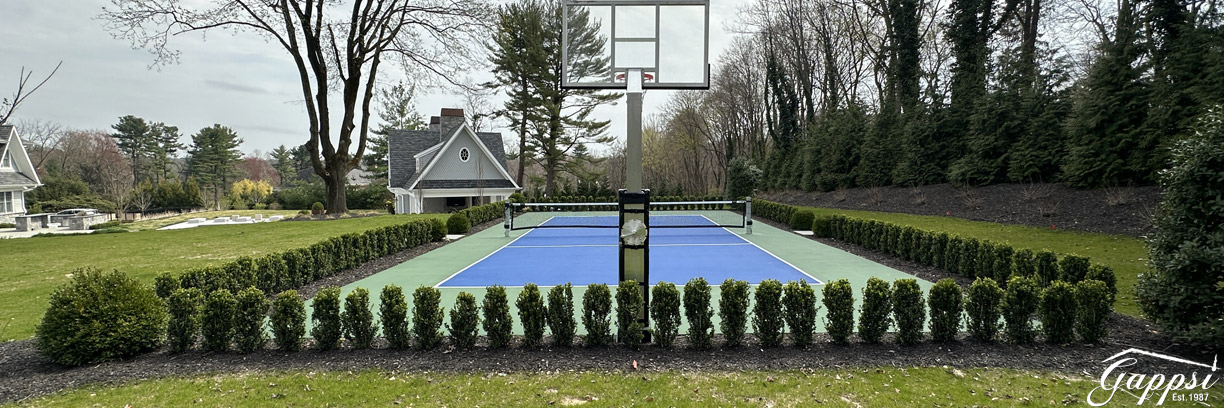 Why Choose Mateflex Sports Game Court Tiles
Sports game court tiles are eco-friendly tiles that can be installed over most existing floor surfaces to provide a variety of game courts. These sports tiles are water-resistant making them the perfect choice for both indoor courts and outdoor courts. These tiles are also available in a variety of color combinations and textures so you can create a unique look.
Versatility – One of the key strengths of sports game court tiles is their adaptability. They can be installed over various base materials, including concrete and asphalt, making them an ideal choice for facilities that host multiple sports. This versatility extends to both indoor and outdoor settings, accommodating sports like basketball, tennis, volleyball, and more. The ability to quickly convert and adapt these spaces is particularly beneficial for multi-purpose sports complexes.
Maintenance – Sports game court tiles are designed for ease of maintenance. Unlike traditional court surfaces that may require specialized maintenance routines, these tiles can be cleaned with simple, non-abrasive cleaning solutions. This ease of upkeep not only saves time but also reduces the long-term maintenance costs associated with sports flooring.
Ultimately, the right material surface type for your outdoor pickleball court comes down to preference and available budget. We take the time to compare each surface type in detail and provide everything from foundation preparation to the finishing touches like net placement and striping. With every custom court, we create, you can expect transparent pricing, organized guidance, and a willingness to adapt to your specific needs and requests with courtesy and experience.
Pickleball Court Built in Glen Head NY
Gappsi recently built a pickleball sports game court in Glen Head NY. The Pickleball court was installed using a recycled concrete base and three and a half inches (3 1/2 inches) of compacted asphalt, then painted with California Sports Surfaces court paint.
We used a dark blue for the Pickleball court area and a dark green for the out-of-bounce area. The court was striped with white lines to finish it.
We installed an adjustable Dominator multisport court netting. For this application, we adjusted the net for Pickleball. The client wanted the court to be just for Pickleball. However, the extension can always be added to adjust the netting to be badminton or volleyball.
Our team installed an all-aluminum adjustable Dominator basketball hoop. The Dominator Hoop is a professional-grade, in-ground basketball hoop perfect for your home driveway, backward, playground, or more.
The landscape for the court was designed to resemble an English garden with boxwood edging that was installed all around the perimeter of the Pickleball Sports Game Court. This is the latest sports game court built by Gappsi in Glen Head located in Nassau County NY.
Pickleball’s Popularity and the Rise of Home Courts
It seems like everywhere you turn, someone is talking about pickleball. What started as a niche backyard game has exploded into a mainstream sport, and for good reason. It’s easy to learn, incredibly social, and provides a great workout without the high-impact strain of sports like tennis or running. This accessibility has fueled its rapid growth, making it a favorite pastime for people of all ages. As its popularity continues to climb, more and more homeowners are looking to bring the fun to their own backyards by building personal courts, creating a convenient and private space for practice and play.
A Sport for Everyone
One of the best things about pickleball is that almost anyone can play. The court is smaller than a tennis court, the paddles are lightweight, and the game’s pace can be as relaxed or as competitive as you want it to be. The USA Pickleball Association has noted a massive surge in the sport’s popularity, and it’s easy to see why. It’s a game that bridges generational gaps, allowing grandparents to play with their grandchildren and friends of varying athletic abilities to enjoy a match together. This broad appeal means that a home with a pickleball court instantly becomes a hub for family fun and social gatherings.
Community and Health Benefits
Beyond being a fun activity, pickleball offers significant health and community benefits. It’s a fantastic way to stay active, improving cardiovascular health, balance, and agility. Having a court at home removes the barriers of travel and scheduling, making it easy to fit in a quick game whenever you have a spare moment. It allows you and your family to engage in a fun, healthy activity right on your property. This convenience fosters a more active lifestyle and creates a natural gathering spot for friends and neighbors, strengthening community bonds one friendly match at a time.
Does a Pickleball Court Increase Home Value? The Great Debate
When considering a major home improvement project, the question of return on investment always comes up. With pickleball courts, the answer isn’t exactly straightforward. While some buyers see a private court as a luxury amenity they’re willing to pay a premium for, others might view it as a maintenance hassle or a poor use of yard space. The debate is active, with valid points on both sides. Ultimately, whether a pickleball court adds value depends heavily on your specific property, your local market, and the preferences of potential buyers.
The Argument for a Value Increase: Appealing to a Growing Market
For many, adding a pickleball court is a smart move. Think of it like upgrading your kitchen or finishing your basement—it’s an investment in your home’s lifestyle appeal. Recreational spaces are attractive features that can make a property stand out. As the sport’s popularity grows, so does the pool of potential buyers who would see a private court as a major perk. A home equipped with a court caters to this expanding audience, which could lead to a faster sale and a higher offer from the right buyer who values health, wellness, and at-home entertainment.
The Counterargument: Why Some Buyers Are Not Interested
On the other hand, a pickleball court isn’t a universally desired feature. Some potential buyers might not play the sport and would prefer a large, open lawn for gardening, a play structure for kids, or even space for a future swimming pool. There’s a real disagreement about whether courts are a net positive for a home’s appeal. For buyers who don’t share the passion for pickleball, the court could be seen as something they’d have to pay to remove, potentially making your home less attractive to them than one with a more traditional backyard.
The Noise Factor and Its Impact on Property Value
One of the biggest complaints associated with pickleball is the noise. The distinct “pop” of the ball hitting the paddle can be a source of irritation for neighbors, especially if games are frequent. This has become a point of contention in many communities. In fact, some real estate experts believe that homes located directly across from busy public pickleball courts could see a decrease in value due to the constant sound. When building on your own property, it’s a crucial factor to consider for maintaining good relationships with your neighbors and preserving the peaceful enjoyment of everyone’s homes.
Return on Investment vs. Personal Enjoyment
When you weigh the pros and cons, the best advice is to build a pickleball court because you and your family will genuinely use and enjoy it. While it might add financial value, its primary return is in the lifestyle enhancement it offers. Don’t expect to recoup the entire cost of installation when you sell your house. Instead, view it as an investment in your family’s health, happiness, and social life. If you get years of fun out of it, the court has already paid for itself in memories and well-being, with any potential increase in home value being a welcome bonus.
Space and Maintenance Considerations
A pickleball court is a significant addition to your property, and it needs to be planned thoughtfully. It’s not just about having enough space for the court itself, but also ensuring it integrates well with your overall landscape. A well-designed court can absolutely enhance the aesthetic appeal of your property, especially with strategic landscaping to create a beautiful, resort-like feel. However, if it’s squeezed into a small yard, it can feel cramped and overwhelm the space. Proper planning with an experienced team ensures the court complements your home rather than detracting from it.
Planning Your Perfect Home Court
Once you’ve decided to move forward, the planning phase is where your vision starts to take shape. This is the time to think about the practical details that will turn a patch of your yard into a professional-quality court. From getting the dimensions just right to choosing the ideal location and surface, each decision plays a role in the final outcome. Careful planning at this stage ensures your court is not only fun to play on but also safe, durable, and perfectly suited to your property and playing style.
Essential First Steps: Dimensions and Orientation
Before you can break ground, you need a solid plan for the court’s layout. This involves more than just marking out a rectangle; it requires thinking about how players will move, where the sun will be, and what kind of experience you want to create. Getting these foundational elements right is key to building a court that you’ll love for years to come. It’s about creating a space that is both functional for gameplay and harmonious with its surroundings, ensuring maximum enjoyment and safety for everyone who plays.
Standard Court Dimensions
A regulation pickleball court measures 20 feet wide by 44 feet long for both singles and doubles play. However, the playing area is only part of the equation. You need to account for the out-of-bounds area, known as the overrun. For comfortable and safe play, it’s recommended to have at least 5-8 feet of extra space on all sides of the court. This brings the total recommended footprint to a minimum of 30 by 60 feet, giving players plenty of room to move without risk of injury.
Proper North-South Orientation
One of the most overlooked but critical aspects of planning an outdoor court is its orientation. Whenever possible, you should position your court so it runs north to south lengthwise. This simple step has a huge impact on playability. A north-south orientation prevents the rising or setting sun from shining directly into a player’s eyes during morning or evening games. It’s a professional tip that ensures you and your guests can play comfortably at any time of day without battling sun glare on every serve and return.
Indoor Court Requirements
If you have the space, an indoor court offers the advantage of year-round play, regardless of the Long Island weather. You can convert a large garage, a barn, or even build a dedicated structure. The key requirement for an indoor court is ceiling height; you’ll want at least 18-20 feet of clearance to allow for lobs and high shots. Proper lighting is also essential to eliminate shadows and ensure good visibility. Finding a style that supports your desired level of play is the next step, whether it’s a simple painted floor or a professional tile system.
Choosing the Right Surface for Your Long Island Home
The surface you choose for your court will have the biggest impact on ball bounce, player comfort, and long-term maintenance. In Long Island, you need a surface that can withstand our varied climate, from hot summers to freezing winters. The most common options are asphalt, concrete, and modular sport tiles, each with its own set of benefits. Your decision will likely come down to your budget, desired performance, and aesthetic preferences. Working with a professional can help you explore the options and select the perfect surface for your home.
### Adding the Finishing Touches: Fencing and Lighting
Once your court surface is ready, the final details will bring your vision to life. Fencing is a popular addition that helps keep the ball in play and creates a polished, professional look for your court. While not always necessary, especially if your yard has natural barriers or plenty of open grass, a dedicated fence defines the space and prevents you from chasing stray shots. At Gappsi, we can help you select from various fencing options that complement your landscape design. If you dream of playing after sunset, installing LED court lighting is a must. This allows for evening matches with family and friends, extending your playing time well into the night. For safety and proper installation, it’s crucial to have a licensed electrician handle the lighting setup.
Breaking Down the Cost of a Home Pickleball Court
Understanding the financial investment is a key part of planning your home pickleball court. The total cost can vary widely based on site conditions, material choices, and added features. Generally, homeowners can expect the project to fall within a certain range, but it’s the specifics that will determine your final budget. The most significant expenses typically involve preparing the ground, pouring the base surface like concrete or asphalt, and applying the final acrylic layers. From there, extras like professional lighting, perimeter fencing, and premium net systems will influence the overall price. Working with a comprehensive design and construction team ensures you get a clear, detailed quote that covers every aspect of the build from start to finish.
Average Investment for a Private Court
So, what’s the bottom line? Building a private pickleball court in your backyard is a significant home improvement project, and the investment reflects that. On average, you can expect the cost to range from $30,000 to $50,000. This range accounts for a standard-sized court with quality materials and professional installation. Factors that can push your cost toward the higher end of that spectrum include extensive excavation or grading work, the addition of retaining walls, high-end surfacing options, and premium accessories. A project manager can help you get a quote tailored to your property’s specific needs and your personal design preferences, ensuring there are no surprises along the way.
A Sample Cost Breakdown
To give you a clearer picture, let’s break down the potential costs for a standard 30×60 foot court. Keep in mind that these are estimates, and your actual costs will depend on your specific project details and material selections. This breakdown helps illustrate where the major investments lie and how different components contribute to the final price tag. It’s a great starting point for budgeting and helps you prioritize which features are most important for your dream court.
Concrete Base
The foundation of your court is critical, and a professionally poured concrete slab provides a durable, long-lasting base. For a 30×60 foot area, the concrete work alone can cost around $9,000. This includes site preparation, forming, and pouring the slab to the correct specifications for proper drainage and a level playing surface.
Permanent Net
While you can use a portable net, a permanent, in-ground net system offers superior stability and a more professional feel. The cost for a quality permanent net, including installation, is typically around $1,000. This is a worthwhile investment for a court that will see regular use.
Fencing
As mentioned, fencing is a functional and aesthetic choice. A standard chain-link or vinyl fence around the court perimeter can cost approximately $5,000. The price will vary based on the height of the fence and the materials you choose.
Professional Surfacing
Applying the acrylic color coating, striping the lines, and ensuring a non-slip texture is a job for specialists. Professional surfacing for a pickleball court often costs around $7,000. This step is what gives your court its classic look and optimal playability.
LED Lighting
For those who want to play at night, installing a proper lighting system is essential. The cost for LED court lighting, including the fixtures, poles, and electrical work by a licensed professional, can be about $7,000. This addition truly maximizes the usability of your court.
Long-Term Care and Maintenance for Your Court
Building a pickleball court is an investment in your home and lifestyle, and like any valuable asset, it requires some care to keep it in top condition. The good news is that modern court surfaces are designed for durability and require relatively minimal upkeep. Regular cleaning to remove leaves, dirt, and debris will prevent staining and keep the surface safe for play. Periodically checking for and addressing any minor issues, such as small cracks or fading lines, will extend the life of your court and ensure it remains a beautiful and functional feature of your property for years to come. With a little attention, your court will be ready for a match whenever you are.
Expected Lifespan of a Well-Built Court
When you invest in a professionally constructed pickleball court using high-quality materials, you can expect it to last for a very long time. A well-built court has an impressive lifespan, potentially lasting anywhere from 10 to 30 years before needing a major resurfacing. The key to this longevity lies in the quality of the initial build—from the properly compacted base to the durable acrylic surface layers. Choosing an experienced builder who understands the nuances of sports court construction ensures that every layer is built to withstand years of play and exposure to the elements, giving you decades of enjoyment.
Seasonal Maintenance for Long Island Weather
Here on Long Island, our four distinct seasons mean your outdoor court will face everything from summer sun to winter ice. The freeze-thaw cycles common in our colder months can be particularly tough on court surfaces, sometimes leading to small cracks over time. It’s a good practice to inspect your court each spring to identify and repair any cracks that may have formed. Gappsi offers professional restoration and sealing services to address these issues and protect your investment. Keeping the surface clean of leaves and debris in the fall will also prevent moisture from getting trapped, which helps minimize winter damage and keeps your court looking its best year-round.
SCHEDULE A MEETING TODAY WITH GAPPSI
View Gappsi’s YouTube Channel for Videos of Pickleball Courts at Home Increase Home Values | Glen Head NY
https://youtu.be/gi-yMYZEH3Y
Frequently Asked Questions
How much yard space do I actually need for a pickleball court? While the official playing area is 20 by 44 feet, you’ll want more room than that for a safe and enjoyable game. We recommend a total footprint of at least 30 by 60 feet. This extra space, called the overrun, gives players enough room to chase down shots without running into a fence or landscaping. A professional can help you assess your property to find the best placement that works with your yard’s unique layout and slope.
So, will a court guarantee an increase in my home’s value on Long Island? There’s no simple yes or no answer to this, as it really depends on the buyer. For a family that loves pickleball, a private court is a massive selling point that could lead to a higher offer. However, a buyer who would prefer a large garden or open lawn might see it as a feature they’d have to remove. The best approach is to build a court because you and your family will get years of enjoyment from it. Think of it as an investment in your lifestyle first; any potential bump in home value is a great bonus.
Which court surface is best for dealing with Long Island’s weather? Each surface has its advantages for our climate. Concrete is incredibly durable and stands up well to our freeze-thaw cycles, making it a long-lasting choice. Asphalt is another popular and weather-resistant option that can be more budget-friendly. For excellent drainage and joint-friendly play, Mateflex court tiles are a fantastic choice, as they handle rain well and individual tiles can be replaced if needed. The right fit really comes down to your budget and how you envision using the court.
My neighbors are close by. How can I minimize the noise? The distinct “pop” of the pickleball is a valid concern in our Long Island neighborhoods. Strategic placement is your best first step—positioning the court as far from your neighbors’ homes as possible makes a big difference. You can also use landscaping to your advantage. Planting a dense row of shrubs or installing a solid fence can act as a natural sound buffer, helping to keep the peace while you enjoy your game.
How long does the whole process take, from planning to playing my first game? Building a court is a multi-step process, and the timeline can vary. The biggest factors are the condition of your site and the type of surface you choose. If your yard needs significant grading, that will add time. An asphalt court can be installed relatively quickly, while a concrete base needs time to cure properly. Generally, you can expect the project to take a few weeks, but a detailed consultation will give you a much more precise schedule based on your specific property.
Key Takeaways
- Prioritize Personal Enjoyment Over ROI: While a pickleball court can attract the right buyer, its most reliable return is the fun it offers your family. Build a court because you’ll use and love it, and consider any potential increase in home value a welcome bonus.
- Strategic Design Dictates a Court’s Success: A great court is more than just a slab of concrete. Critical details like a north-south orientation to avoid sun glare, adequate space for safe play, and the right surface material are essential for long-term usability and enjoyment.
- Budget for the Full Project and Future Care: Plan for the entire scope of the project, from the foundation to finishing touches like fencing and lighting, which typically ranges from $30,000 to $50,000. Remember to also account for simple seasonal maintenance to protect your investment for decades.
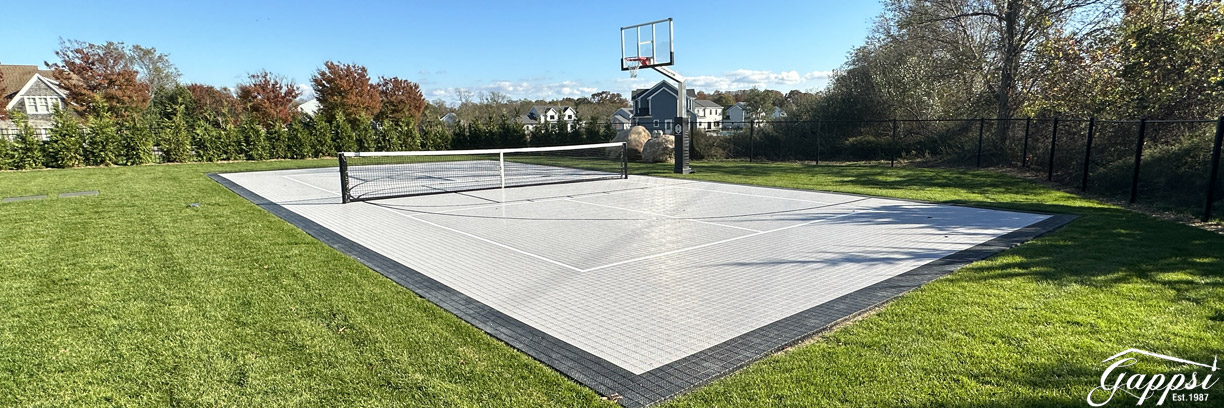 Pickleball basketball sports game courts in Suffolk County are becoming more popular. Turn your basketball court into a multi-sport game court. Every game court we install is custom-built to meet the unique needs of your family and your home or backyard. Our residential backyard game court surfaces are designed to have superior shock absorption that makes it easier on your knees and joints and have longer-lasting material, consistent ball bounce, and natural water drainage. Gappsi offers an array of colors, designs, and accessories and can add a family crest or team logo for a personal touch.
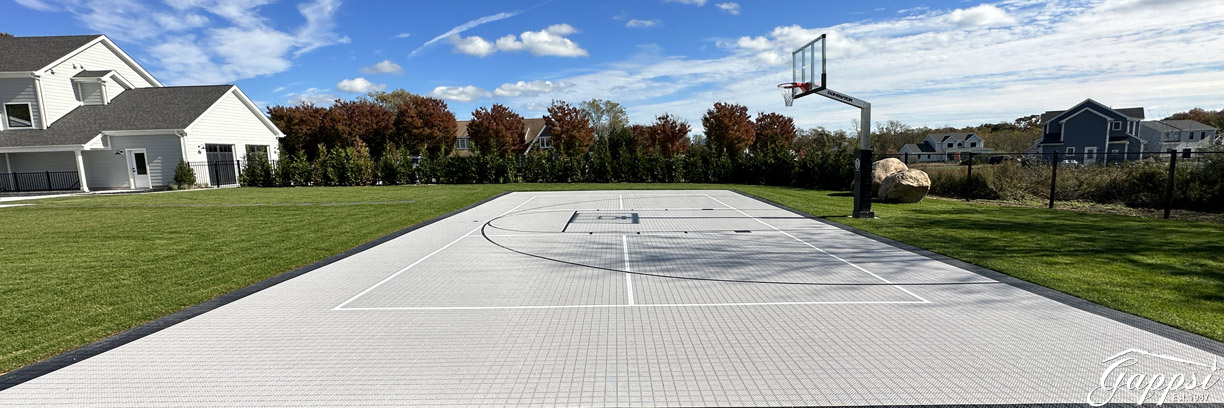 Pickleball and Basketball Combo Sports Game Court
 Sports Game Court Foundation Options