


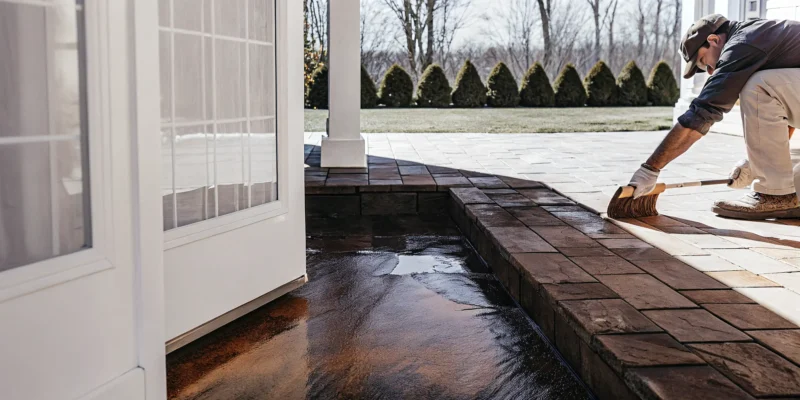
Sealing pavers cost depends on much more than square footage. Surface condition, paver material, cleaning needs, joint repairs, sealer choice, access, and weather can all change the scope. For Long Island homeowners, an accurate estimate begins with an inspection rather than a generic rate.
National price ranges provide context, but they cannot show whether a patio needs stain treatment, a driveway has lost joint sand, or an old coating must be removed. Gappsi combines material knowledge, restoration experience, and outdoor construction expertise to define the work before quoting it.
What does sealing pavers cost?
Consumer cost guides commonly price professional paver cleaning and sealing by the square foot. Published ranges vary widely because some estimates include only straightforward cleaning and coating. Others include joint stabilization, repairs, difficult stain removal, or old coating removal. Smaller projects may also have a higher effective rate because setup, protection, and cleanup are required regardless of area.
The most useful question is not simply the rate per square foot. Ask what work is included in that rate. A detailed quote should separate standard preparation from condition-driven restoration and clearly identify exclusions.
| Pricing variable | Lower-scope condition | Higher-scope condition |
|---|---|---|
| Surface condition | Routine soil and sound pavers | Oil, rust, efflorescence, or failed coating |
| Joint condition | Stable, mostly full joints | Lost sand, weeds, or movement |
| Access | Open driveway or patio | Tight gates, stairs, or protected pool area |
| Finish | Compatible standard system | Specialized material or appearance needs |
Seven factors that change sealing pavers cost
1. Total paved area
Area affects cleaning time, joint sand, sealer quantity, and labor. Contractors should measure the actual surface instead of relying on rough dimensions. Borders, walkways, steps, and connected areas can add meaningful square footage. An accurate measurement also helps a contractor order the right amount of product.
2. Existing surface condition
A sound surface with routine dirt requires less preparation than pavers with embedded oil, rust, organic staining, efflorescence, or heavy growth. Preparation matters because applying sealer over contamination can lock in an unattractive result. Deep or varied stains may require testing and more than one treatment.
3. Old sealer and coating failure
Cloudiness, peeling, whitening, or uneven gloss may show that a previous coating is failing or incompatible. Adding another coat is not a shortcut in those cases. Testing and removal may be needed before a new system can be considered. Coating removal is more involved than routine cleaning and can have a major effect on price.
4. Joint sand and repairs
Missing joint material, loose pavers, edge movement, or settled areas add work beyond cleaning. Gappsi’s sealing process can include polymeric sand joint stabilization after proper preparation. A quote should state whether joint work is included and whether larger repairs will be priced separately.
5. Paver material
Concrete pavers and natural stones do not behave identically. Porosity, density, finish, and sensitivity influence cleaning pressure, absorption, product compatibility, and sealer selection. Material identification is therefore an important early step.
6. Sealer type and finish
The product, coverage rate, desired appearance, and number of coats affect materials and labor. Gappsi recommends water-based urethane sealers for best results, but every surface should still be checked for compatibility. A test area can help the homeowner understand how a finish will look.
7. Access and weather planning
Tight access, nearby pools, planting beds, walls, and outdoor kitchens require careful protection. Drying and curing also need a suitable weather window. Long Island humidity and rain forecasts can influence scheduling and application strategy.
What is included in a professional paver sealing quote?
A complete quote should describe the process, not just the final coat. Ask whether the following stages are included and how condition-related work will be handled.
- Inspection and material identification. The contractor identifies the paver or stone, evaluates drainage, notes failed coatings, and tests uncertain areas.
- Site protection. Adjacent walls, plantings, pools, doors, and furnishings are protected or moved as required.
- Cleaning and stain treatment. Gappsi uses high-volume, low-pressure hot water cleaning at 200 degrees Fahrenheit and a chemical-free cleaning approach where appropriate.
- Repairs and joint preparation. Loose material is removed, visible problems are addressed, and joints are prepared for stabilization.
- Polymeric sand installation. Joint sand is installed when included in the scope and suited to the surface.
- Drying and weather check. The surface must be ready for the selected coating. Applying sealer when moisture remains can cause problems.
- Sealer application and curing. The chosen product is applied according to system requirements, then protected during curing.
Skipping preparation may lower an estimate, but it can also reduce the quality and consistency of the result. A detailed process gives homeowners a fair way to compare proposals.
Why preparation often determines the final price
Preparation is where a sealing project gains a strong foundation or develops avoidable problems. Pavers need to be clean enough for the selected product to perform as intended. They also need to be dry enough for application. Neither requirement can be judged from square footage alone.
Stains need the right treatment
Oil, rust, leaf tannins, food spills, and organic growth behave differently. One cleaning method will not address every condition. A contractor may need to test a small area, repeat treatment, or explain that a deep stain may improve without disappearing completely. That attention changes labor time, but it also creates clearer expectations.
Joint condition changes the scope
Joint sand helps support the relationship between individual pavers. If joints are low, washed out, or filled with weeds, the scope may include removal of loose material and new polymeric sand. Steps, borders, and settled sections should also be reviewed. Sealer should never be presented as a repair for structural movement.
Moisture cannot be rushed
After cleaning, the surface needs an appropriate drying period. Shaded areas, dense materials, poor drainage, humidity, and recent rain can extend that period. A responsible schedule allows conditions to be evaluated instead of forcing application into an unsuitable window.
How paver material and sealer choice affect price
Material knowledge matters because a product that performs well on one paved surface may be inappropriate for another. Gappsi works with Cambridge, Nicolock, Techo-Bloc, Unilock, EP Henry, Rinox, and Belgard concrete pavers. The team also works with bluestone, travertine, marble, limestone, granite, and sandstone.
Natural stone varies in porosity and finish. Dense granite does not absorb products in the same way as a more porous stone. Travertine, limestone, marble, sandstone, and bluestone each deserve evaluation before cleaning and coating. Test areas can help confirm appearance and compatibility.
Finish expectations also affect the specification. Some homeowners want subtle protection with minimal visual change. Others prefer color enhancement or a more noticeable sheen. Discuss appearance, slip considerations, maintenance, and the existing surface before selecting a system. Learn more about Gappsi’s pavers and natural stone expertise.
Is DIY paver sealing really less expensive?
DIY sealing can reduce immediate labor expense when the surface is small, sound, and simple. However, comparing a bucket of sealer with a professional proposal overlooks cleaning equipment, stain treatment, joint material, application tools, protective supplies, disposal, and the homeowner’s time.
The largest financial risk is often creating a result that must be stripped and corrected. Sealing over trapped moisture, contamination, efflorescence, or a failing coating can cause cloudy or uneven areas. Applying too much product or selecting an incompatible system can also create problems.
Homeowners considering DIY work should identify the material, check the existing finish, confirm the weather window, and follow manufacturer instructions. A professional assessment is the safer starting point for natural stone, a failed coating, widespread stains, movement, or a large pool surround.
Long Island conditions to discuss before sealing
Nassau and Suffolk County properties experience seasonal temperature changes, coastal moisture, winter freeze-thaw cycles, tree debris, and varied drainage conditions. These factors do not automatically make every project more expensive. They do make a site-specific conversation valuable.
Ask the contractor to note low areas, downspout discharge, irrigation overspray, shade, and sections exposed to heavy traffic. A driveway may need extra attention where vehicles sit. A pool surround may require careful product selection and protection of coping, water, and nearby features. A wooded patio may need more organic stain treatment than an open terrace.
The goal is a scope that fits the property instead of the same process everywhere. Gappsi’s design-build and materials background helps connect restoration choices with how the paved area was constructed and used.
How to compare paver sealing estimates
Ask what preparation is included
Confirm whether each estimate includes stain treatment, cleaning, removal of loose joint material, minor repairs, and polymeric sand. Ask how delicate areas, walls, pools, plantings, and outdoor furnishings will be protected.
Compare the proposed sealer system
Look for the product type, intended finish, number of coats, and compatibility with your paver material. A lower estimate may specify one basic coat while another includes a material-specific system and more preparation.
Clarify exclusions and follow-up
Request written details on repairs, moving furniture, access, drainage concerns, coating removal, and excluded areas. Clear estimates reduce surprises. See Gappsi’s guide to cleaning and sealing pavers for more process details.
How to protect your paver sealing investment
Gappsi recommends waiting at least one year before sealing a new installation and generally resealing every three to five years. Actual timing depends on material, exposure, traffic, drainage, and the previous coating.
- Clean spills promptly: Oil, rust, organic debris, and food stains become harder to address after they remain in place.
- Watch the joints: Replacing lost joint material early can help limit movement and weed growth.
- Address drainage issues: Standing water and persistent moisture can affect the surface and coating performance.
- Avoid automatic resealing: Inspect the existing finish first. Adding sealer over a failing coating may create a larger project.
Save the product name, application date, number of coats, and contractor scope. Those details help the next professional evaluate compatibility and make a better recommendation. Photos taken after the work also provide a useful reference.
Questions to ask during an onsite consultation
A productive consultation should leave you with a clear understanding of the surface, the proposed process, and the choices that affect price. Ask the contractor to identify the paver material and explain any uncertain areas. Request a description of the current coating, if one exists, and whether a small test area is recommended.
Discuss how stains, joints, drainage, settled pavers, and edges will be handled. Ask what must be completed before work begins, including moving furniture or limiting irrigation. Confirm how long people, pets, furniture, and vehicles must remain off the surface during curing.
Finally, ask which parts of the scope are firm and which could change after cleaning reveals the surface more clearly. A transparent contractor should explain those possibilities without promising that every stain or preexisting defect will disappear. This conversation helps homeowners compare the value of each estimate rather than focusing only on the lowest total.
Frequently asked questions about sealing pavers cost
Does sealing a driveway cost more than sealing a patio?
It can. A driveway may have more square footage, vehicle stains, and heavier wear. A patio may involve tighter access, furniture, pool edges, or delicate natural stone. Condition and scope matter more than the label alone.
Is cleaning included before paver sealing?
Professional sealing should begin with suitable preparation, but proposals vary. Confirm the cleaning method, stain treatments, joint work, drying plan, and exclusions in writing.
How often should pavers be resealed?
Gappsi generally recommends resealing every three to five years after waiting at least one year on a new installation. Exposure, traffic, paver type, drainage, and the existing coating can change the schedule.
Can natural stone pavers be sealed?
Many natural stones can be sealed, but porosity, finish, and product compatibility must be considered. Travertine, bluestone, limestone, granite, marble, and sandstone should be evaluated before choosing a sealer.
Request a Long Island paver sealing consultation
Gappsi has served Long Island property owners since 1987 with an integrated approach to masonry, restoration, materials, and outdoor living. Visit Gappsi’s Restoration & Sealing Services page or call 631-543-1177 to request a consultation for your Nassau or Suffolk County property.