


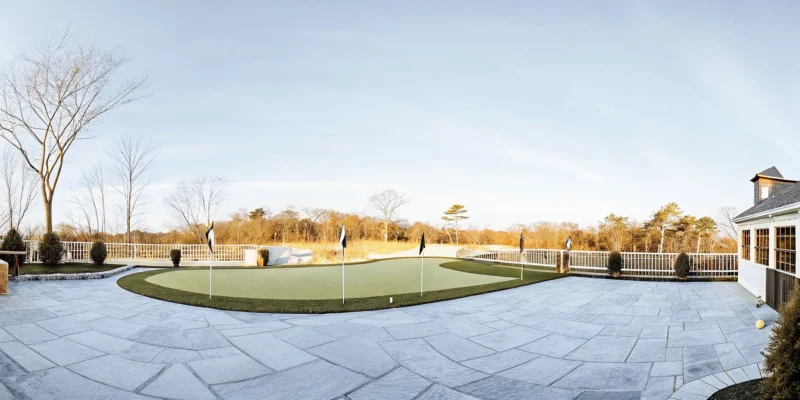
A backyard putting green succeeds or fails long before the turf is installed.
To choose a putting green builder on Long Island, compare more than finished-project photos. Look for a builder who evaluates grading, drainage, access, and the surrounding landscape before developing a design. Ask how the planned contours, cup locations, fringe, and chipping areas support the way you want to practice. Review material samples, base-preparation details, edge treatments, and a written scope that explains what is included. A strong builder should also show relevant local work, explain the installation sequence, and provide clear care guidance. This checklist helps Nassau and Suffolk County homeowners compare proposals based on design quality, construction detail, and fit for the property rather than price alone.
Use the following questions during consultations to find a team capable of creating a green that plays well and belongs in your outdoor space.
Putting green builder Long Island checklist: start with site planning
The first useful conversation is about your property, not turf color. A builder should walk the proposed area, note how people move through the yard, and understand nearby patios, pools, plantings, utilities, and structures. The green must work as part of the landscape while leaving practical access for installation.
Evaluate space and access
Share how you expect to use the green. A dedicated golfer may want varied putts and chipping practice, while a family may value an inviting layout for casual play. Ask how the available footprint affects shot variety, safety, and circulation. The team should also identify how equipment and materials can reach the work area without unnecessary disruption.
Discuss grading and drainage early
Long Island properties vary, so the drainage plan should respond to observed site conditions. Ask where runoff currently travels, how the proposed contours affect water movement, and whether adjacent hardscapes or planting beds need consideration. Good planning protects both playability and the surrounding yard.
- Identify the primary practice and entertainment goals.
- Review access from the street to the installation area.
- Map nearby patios, pools, walkways, trees, and planting beds.
- Confirm how grading and drainage will be addressed.
How do you compare putting green builders?
A polished portfolio is a starting point, not the entire decision. Compare how each builder thinks through your site and translates your goals into a specific plan.
| What to compare | What a strong proposal shows | Warning sign |
|---|---|---|
| Local experience | Relevant completed work and knowledge of Long Island properties | Only generic product photos |
| Design process | A site-specific layout tied to your practice goals | A standard shape offered before evaluation |
| Construction scope | Clear details for preparation, drainage, turf, seams, cups, and edges | Important work described only as “as needed” |
| Communication | A defined contact and clear process for decisions | No explanation of who manages the project |
Review comparable projects
Ask to see greens with a similar footprint, landscape setting, or practice objective. Look closely at transitions, edge finishing, and how each green fits its surroundings. If references are available, ask homeowners how the builder handled communication and the final walkthrough.
Compare scope, not just totals
Two proposals with different preparation, materials, and finish work are not directly comparable. Request enough detail to understand what each team will build and what decisions remain open.
What should your putting green design include?
A custom design should turn your golf goals into a useful sequence of shots. Before approving a layout, explain which parts of your short game you want to practice and who else will use the space.
Contours with a purpose
Breaks and slopes should create variety without making every putt frustrating. Ask the designer to explain how the contour plan supports straight putts, breaking putts, and different approaches to each cup. Cup placement should create distinct practice routes rather than repeat the same line.
Fringe and chipping options
When space allows, fringe and landing areas can expand the green beyond putting practice. Discuss the shots you want to play, the safe direction of play, and how balls will be contained within the yard. Thoughtful transitions can also make the green feel integrated with nearby lawn and planting.
Connection to the wider landscape
The most convincing greens look intentional from the patio, house, and gathering areas. Shape, stone edging, paths, lighting, and planting can help the installation complement the rest of an outdoor living plan. Explore Gappsi’s landscape design capabilities when the green is part of a larger backyard project.
Which materials and construction details matter most?
A convincing putting green starts below the visible turf. Ask each builder to explain the complete assembly, including excavation, compacted base, drainage strategy, turf system, seams, cup setting, and finished edges. The answer should be specific to your site rather than a one-size-fits-all description.
Judge the surface by how it plays
Putting turf should deliver a consistent roll that matches the way you want to practice. During the consultation, discuss preferred speed, expected shot types, and whether the green is mainly for focused practice, family play, or entertaining. Review physical samples and, when possible, completed projects. The color and texture should also complement nearby lawn, stonework, and planting beds.
Inspect the details you will not see later
Base preparation and drainage influence how well a green performs after rain and through changing Long Island seasons. Ask how the builder evaluates runoff, creates stable contours, secures edges, and keeps seams unobtrusive. If the green meets a patio, walkway, pool area, or planting bed, confirm how each transition will be finished.
- Request the proposed turf and fringe materials in writing.
- Ask where seams will be placed and how edges will be secured.
- Confirm the drainage and grading plan for your property.
- Clarify what care is recommended after installation.
What should the installation process look like?
- Consultation: The builder learns how you want to practice, entertain, and use the surrounding yard.
- Site evaluation: The team reviews measurements, access, grading, drainage, and nearby features.
- Design: You review the proposed shape, contours, cups, fringe, and landscape connections.
- Preparation: The crew excavates as required and constructs the planned base and drainage solution.
- Installation: Turf, cups, seams, edges, and transitions are fitted according to the approved design.
- Finishing: Surrounding areas are completed and the site is cleaned.
- Walkthrough: The builder reviews the finished green and explains recommended care.
Gappsi’s consultation-led design-build approach can help coordinate a putting green with other backyard elements. Homeowners planning a wider transformation can also review outdoor living ideas before the design meeting.
Questions to ask before signing a proposal
Use the final consultation to make sure the design, scope, and expectations are clear. A qualified putting green builder should be able to explain the reasoning behind the plan and document what is included.
- Can I review putting greens you have completed on Long Island?
- How will the design support the shots and practice routines I care about?
- What excavation, base preparation, grading, and drainage work is included?
- Which putting and fringe turf products are proposed?
- How will the green connect to patios, walkways, pools, or planting areas?
- Who will manage the project and communicate during installation?
- What site access, cleanup, and care guidance are included?
- How are design changes handled after work begins?
Compare proposals by scope and design quality, not just the bottom-line number. A detailed proposal makes it easier to see whether two builders are actually offering the same result.
Frequently asked questions
How much space does a backyard putting green need?
There is no single ideal size. A builder should shape the green around your available yard, desired shot variety, surrounding features, and safe circulation. Even a compact area can support useful practice when the design is intentional.
How long does a putting green installation take?
The schedule depends on design complexity, site access, preparation requirements, drainage work, and surrounding landscape improvements. Ask for a project-specific schedule after the builder evaluates your property.
Can a putting green include a chipping area?
Yes. A design can pair a putting surface with fringe, rough, and designated landing areas when space allows. Tell the builder which shots you want to practice so those areas can be planned together.
What maintenance does an artificial putting green require?
Artificial putting greens need less routine care than natural grass, but they are not maintenance-free. The installer should explain debris removal, brushing, inspection, and any seasonal care recommended for the selected system.
Plan a putting green that belongs in your backyard
The right putting green builder combines site planning, golf-focused design, durable construction, and thoughtful integration with the rest of your landscape. Taking time to compare those capabilities now can lead to a green that is enjoyable to practice on and attractive from every part of the yard.
Gappsi has served Long Island homeowners since 1987 with a consultation-led design-build approach. Visit the Gappsi website to schedule a consultation or plan a visit to the Smithtown showroom to discuss your Nassau or Suffolk County property.