


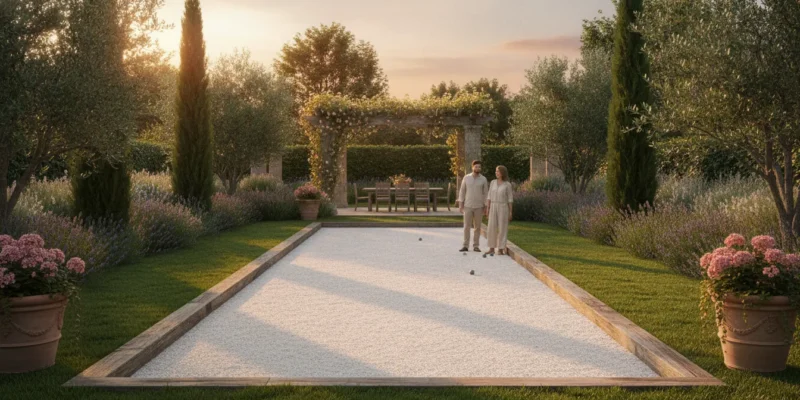
A backyard bocce court can be a simple recreational feature or a carefully engineered part of a larger Long Island outdoor living plan. The right result depends on more than the playing surface. Yard dimensions, soil conditions, drainage, edging, lighting, and the way the court connects to patios and planting areas all affect cost and long-term playability.
Before selecting materials, start by determining how much usable space the court can occupy and how players will move around it. That planning decision establishes the proportions, access, and construction approach for the rest of the project. Contact Gappsi through our contact page
What Size Bocce Ball Court Fits Your Long Island Yard?
The right dimensions depend on how you plan to play, how much level space your property offers. And how the court will fit with patios, planting beds, fences, and drainage paths. A full-size layout can deliver a more authentic playing experience. But a carefully scaled residential court can still provide room for accurate rolls and competitive games without taking over the yard.
How large is a regulation bocce court?
For organized recreational play, one commonly cited regulation measurement is 60 feet long by 12 feet wide. The Mayfield Heights, Ohio, recreational rules specify that all courts should be regulation size at 60 feet by 12 feet. Read the cited municipal bocce rules. Rice University recreation rules also define the standard court as 60 feet by 12 feet. Review the Rice University rules. US Bocce Federation standards are often presented with a longer footprint: approximately 91 feet long by 13 feet wide. A court-planning guide that cites the USBF lists the measurement as 86.92 feet by 13.12 feet, which reflects a slightly different official specification. See the US Bocce Federation. For a Long Island residence, either regulation-scale layout may require a substantial portion of the usable yard after setbacks, access routes, and surrounding clearances are considered.
Common residential bocce court sizes
Most homeowners choose a smaller court that preserves the proportions and playing zones while matching the property. Before selecting dimensions, measure the available area in both directions and account for the court border, walking space, gate access, and any grading work. A long, narrow side yard may accommodate a different footprint than a broad backyard.
- 40 feet by 10 feet: A compact option for smaller yards and casual games.
- 50 feet by 10 feet: A balanced residential size with a useful playing length.
- 50 feet by 12 feet: Adds width for comfortable movement and defined boundaries.
- 60 feet by 10 feet: Preserves regulation-like length where the yard is narrow.
- 60 feet by 12 feet: A regulation-style residential choice when the site allows it.
For many Nassau and Suffolk properties, a 40- to 60-foot length and 10- to 12-foot width offers the best balance. The final layout should be set after checking grade, surface drainage, mature roots, and access for construction equipment. Those practical constraints often matter more than choosing the largest possible footprint.
The Best Surfaces for a Bocce Ball Court: Oyster Shell vs Synthetic Turf
Surface selection affects how a bocce ball court looks, drains, plays, and fits into your maintenance routine. The two most practical choices for a Long Island backyard are crushed oyster shell and synthetic turf. Oyster shell delivers a traditional court character and a lower initial material cost. Synthetic turf creates a more uniform playing surface with less day-to-day upkeep. Both can work well when installed over a properly prepared base. For context, BocceMon’s surface comparison identifies oyster shell and artificial turf as the primary options for many residential courts. The right choice depends less on appearance alone than on how often the court will be used. How much maintenance you want to handle, and how the site manages stormwater.
| Factor | Crushed oyster shell | Synthetic turf |
|---|---|---|
| Cost | Lower upfront cost in many installations, although labor and edging still affect the final budget. | Higher upfront cost because of the turf product, preparation, and installation. |
| Maintenance | Needs regular raking, rolling, and occasional wetting to keep the surface settled and playable. | Low maintenance with no routine raking. Periodic cleaning and inspection keep the surface in good condition. |
| Playability | Provides a classic roll and can be adjusted as the material settles. Its condition changes if it becomes loose or uneven. | Offers a consistent roll and predictable footing across the court when the installation is level. |
| Drainage | Allows natural drainage when the layers below are graded and built correctly. | Can drain effectively through a properly designed base and permeable system. Turf alone does not solve drainage problems. |
| Durability | Can perform for years, but traffic and weather gradually move the loose material and require touch-ups. | Durable in changing weather and less affected by surface displacement from regular play. |
| Long Island weather | Rain, freeze-thaw cycles, and wind can shift shell material, making seasonal raking and leveling important. | Handles frequent use and wet weather with less surface movement, provided the base drains and the edges are secured. |
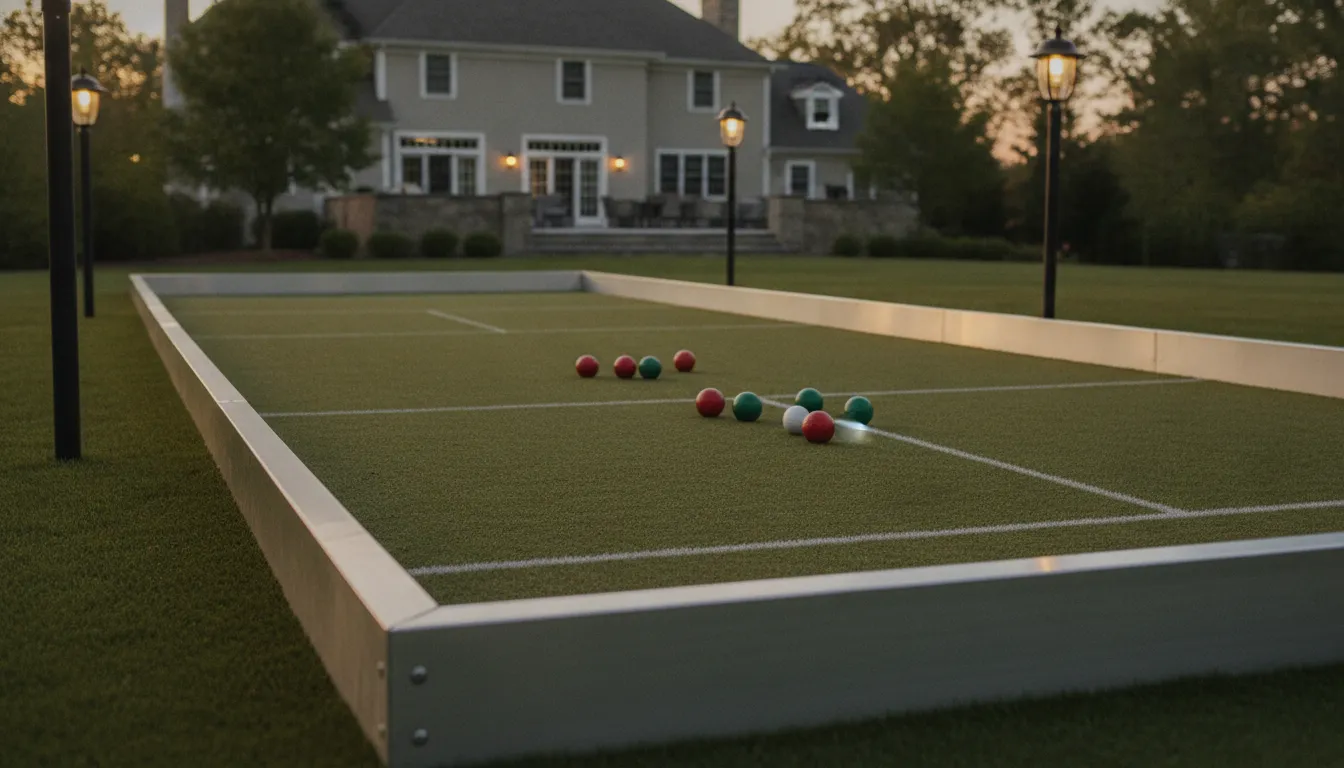
Choose oyster shell if you want the traditional appearance, natural drainage, and a lower starting cost, and you are comfortable maintaining the court. Choose synthetic turf if consistent play and reduced maintenance matter more than minimizing the initial investment. For many Long Island homeowners, synthetic turf is the stronger long-term recommendation for a frequently used court, while oyster shell remains a practical choice for homeowners who value its natural character and accept regular upkeep. A site review can determine which surface fits the drainage, grade, and landscape around your bocce court installation.
Building the Court Base, Borders, and Drainage
A bocce ball court performs only as well as the structure beneath its playing surface. The installation should begin with a carefully measured excavation and a level sub-base, commonly asphalt, concrete, or thoroughly compacted stone. This layer resists movement and settlement, helping the finished court maintain a consistent roll instead of developing soft spots, ridges, or low areas. Long Island weather makes drainage a primary construction concern. Rain, freeze-thaw cycles, and runoff from nearby patios or lawns can weaken the base if water remains trapped below the surface. The site plan should direct water away from the court while allowing the playing area to shed moisture efficiently. Depending on the property, that may involve grading, a stone drainage layer, perimeter drainage, or connections to an approved landscape drainage system. Addressing water flow before the surface is installed is far less disruptive than correcting standing water after the court is complete. The perimeter border keeps the base and playing material contained while giving the court a clean edge. A large 6-by-8-inch timber border is generally the more affordable choice and can suit a straightforward backyard installation. Aluminum or composite edging systems cost more initially, but they offer greater resistance to rot and moisture, along with straighter, more precise lines. The right option depends on the surrounding landscape, expected maintenance, appearance, and how permanently the court is intended to function. Border height and anchoring also matter. Edging should be set securely, aligned with the finished grade, and coordinated with adjacent paving or planting beds so it does not create an avoidable trip point. A properly built perimeter protects the surface from soil migration and makes routine brushing, raking, or turf maintenance easier. Gappsi combines site planning, masonry, base preparation, and border installation through one design-build process. Explore the company’s masonry design and construction service when the court needs to connect with patios, retaining walls, walkways, or other hardscape features.
How Much Does a Bocce Ball Court Cost to Build?
For a Long Island backyard, a residential bocce ball court commonly falls between $10,000 and $30,000. That range covers a wide variety of projects. From a straightforward recreational court with a practical surface to a larger installation with substantial base preparation, defined borders, and lighting. The final price depends on the site and the specifications, so an online range should be used for planning rather than treated as an exact quote. Site preparation is one of the largest cost variables. A contractor may need to excavate, grade, address drainage, and install a stable sub-base before placing the playing surface. Existing slopes, poor soil, restricted access, and the distance materials must be moved into the yard can all affect labor. On Long Island, proper drainage deserves particular attention because standing water can affect the court surface and its long-term playability. Surface selection also changes the budget. Crushed oyster shell can have a lower upfront cost, but the material must be properly graded and installed. And some oyster blends require substantial processing before they are ready for a court. Oyster surfaces also need periodic raking, rolling, wetting, or replenishment. Synthetic turf generally costs more at installation, especially when paired with a prepared base and specialized athletic-surface system, but it provides a consistent roll and reduces routine maintenance. Material choice is not limited to the playing surface. Borders help contain the court materials and establish clean edges. A basic timber border can be less expensive, while aluminum, composite, or other engineered edging systems may increase the initial investment. Larger courts, custom transitions, integrated planting areas, and decorative masonry can add both materials and installation time. Professional lighting is another common upgrade when the court is intended for evening use. For a simple residential layout, a budget near the lower end of the range may be realistic. A larger court with a more involved base, durable edging, a higher-grade oyster blend, synthetic turf, drainage work, or lighting can move toward $30,000 or more. The best way to narrow the number is to have the property evaluated before choosing a surface. Gappsi’s bocce court installation team can assess the backyard, compare material options, and prepare a site-specific quote that accounts for labor. Materials, access, and drainage rather than relying on a generic per-square-foot figure.
Lighting and Finishing Your Backyard Bocce Ball Court
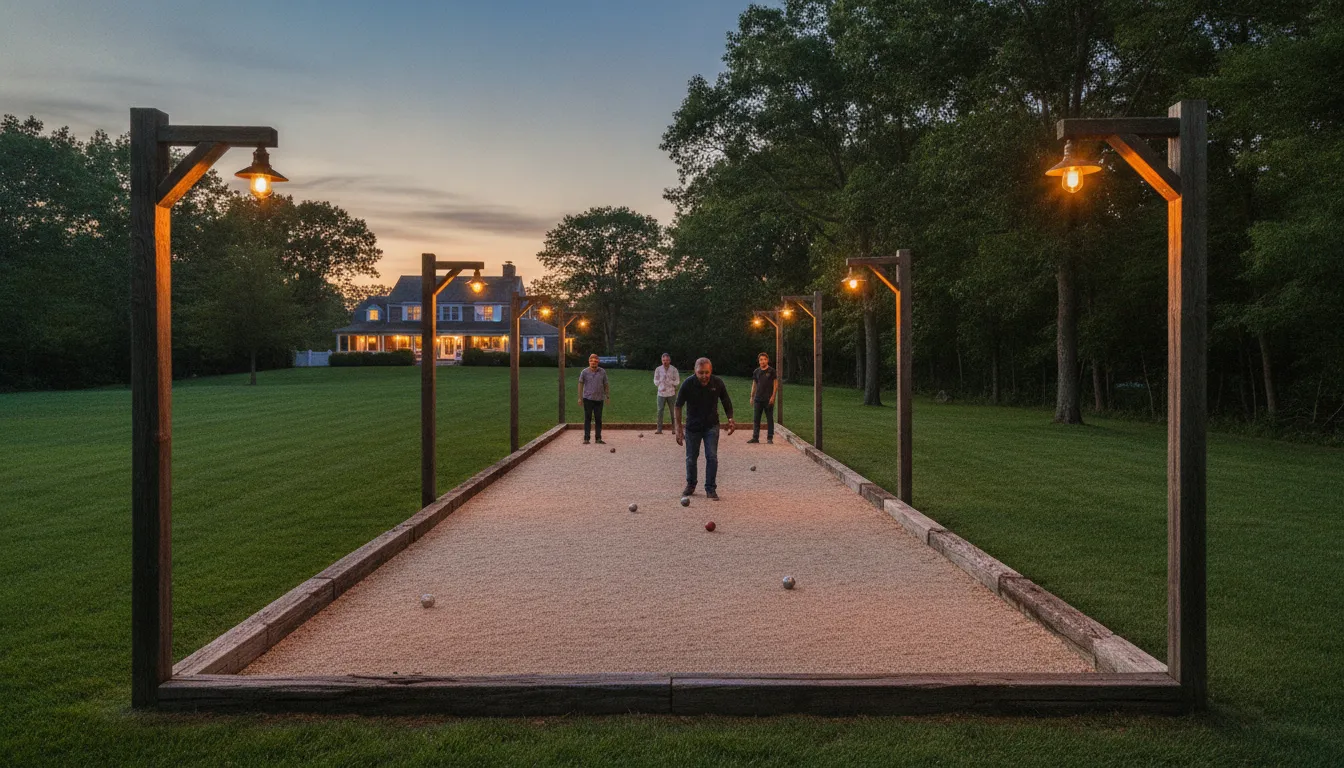
Professional outdoor lighting can extend play into Long Island evenings, but the goal is even visibility rather than maximum brightness. Pole-mounted or overhead fixtures positioned along the court provide more consistent coverage than isolated landscape lights. Use low-glare, shielded fixtures so players can track the pallino and bocce balls without looking into the light source. Keep poles and fixtures outside the active playing area, and coordinate their placement with the court borders, nearby trees, and seating. If the court may host organized or tournament-style play, lighting should be designed around the applicable governing standards. Overhead fixtures have height limitations above the court in regulated settings, so confirm those requirements before installing poles or wiring. A lighting designer can also account for shadows created by fencing, retaining walls, and surrounding structures. Weather-rated equipment, protected conduit, and properly located controls are important for a system that will remain reliable through Long Island’s wet, windy, and freezing conditions.
Finish the Edges for Clean Play and Easy Maintenance
Well-defined edges keep the playing surface from spreading into surrounding planting beds or lawn. Install durable edging with a consistent top line, then inspect transitions at the court entrances so players do not trip over raised corners or exposed fasteners. Edge cleanouts or accessible drainage points make it easier to remove leaves, shell buildup, and sediment after heavy rain. These small details help preserve the court’s shape and reduce seasonal maintenance. Plan comfortable seating near, but not directly beside, the playing surface. A bench gives players a place to wait between turns while keeping bags and drinks out of the court. For synthetic turf, remove leaves with a soft rake or blower and address stains promptly. Crushed oyster shell surfaces require periodic raking, rolling, and wetting to maintain a consistent roll. In either case, keep nearby trees trimmed and check the edges at the start of each playing season. Finishing choices that support drainage, visibility, and routine care will keep the bocce ball court ready for regular use.
Designing a Bocce Ball Court That Complements Your Long Island Landscape
A bocce ball court should feel like part of the backyard, not an isolated rectangle placed wherever space remains. On Long Island properties, the best location usually connects the court to an existing patio, outdoor kitchen, pool terrace, or primary lawn. Players stay close to guests, while spectators can follow the game without crossing planting beds or walking through the home. Start by studying how people already move through the yard. A court near a patio can extend the entertaining area, while a court along the edge of a lawn can create a defined transition between recreation and planting. Leave enough room beside the playing surface for circulation, seating, and equipment. Screening from a fence, hedge, or layered planting can also improve comfort without making the court feel closed in. The layout should account for drainage, afternoon sun, and views from the house before excavation begins. Material choices help connect the court to the rest of the property. A natural stone walkway can lead from the patio to the court entrance. And stone edging can repeat colors already used in a terrace, retaining wall, or outdoor kitchen. Bluestone, granite, or another selected masonry material can give the border a clear architectural line without competing with the playing surface. For related ideas, review Gappsi’s masonry design and construction services. The surrounding landscape should also be planned for maintenance. Keep loose mulch, falling leaves, and aggressive groundcovers away from the court edge. Low-growing plants, defined planting beds, and a stable walking surface reduce the amount of debris tracked onto the playing area. If synthetic turf is selected, it can connect visually with adjacent lawn areas while providing a distinct, consistent surface for play. Crushed oyster shell can work with a more traditional garden design, especially when paired with natural stone and simple timber or composite borders. Thoughtful integration can increase how often the backyard is used, which is often more valuable to homeowners than adding a feature without considering the larger plan. A well-positioned court may also strengthen a property’s outdoor-living appeal, although no landscape improvement guarantees a specific increase in resale value. Gappsi approaches the project as a design-build plan, coordinating court dimensions, base preparation, borders, paths, patios. Planting areas, and lighting so the finished court supports the entire outdoor setting rather than competing with it. Contact Gappsi through our contact page
Frequently Asked Questions
What dimensions work for a backyard bocce court?
A regulation court is 60 feet long by 12 feet wide. With the point line 4 feet from the backboard and the spock line 10 feet from it, according to published recreational rules (Mayfield Heights bocce rules). A Long Island backyard can use a shorter court. Often about 40 to 60 feet long and 10 to 12 feet wide, when property limits make full regulation dimensions impractical.
How much does a backyard bocce court cost on Long Island?
Plan on roughly $10,000 to $30,000 for a residential installation. The final price depends on excavation, drainage, the base, border material, surface, access conditions, and lighting. A simple oyster shell or turf layout will generally cost less than a larger court with engineered drainage, substantial edging, and electrical work.
Which surface is better, crushed oyster shell or synthetic turf?
Crushed oyster shell provides a traditional playing feel and natural drainage, but it needs periodic raking, rolling, and replenishment. Synthetic turf costs more at the outset, yet it delivers a consistent roll with less routine maintenance and holds up well through changing Long Island weather. The right choice depends on play preferences, maintenance time, and budget.
What base and drainage does a backyard bocce court need?
Start with a stable, properly graded base, such as compacted stone beneath an asphalt or concrete sub-base. Install the drainage plan before the playing surface and slope water away from the court. This preparation helps prevent settling, standing water, and uneven rolling after freeze-thaw cycles.
Can a bocce court include lighting and landscape borders?
Yes. Timber, aluminum, or composite borders can contain the surface and define the court against planting beds or paving. Outdoor lighting can extend evening play, but fixture placement and height should be planned to reduce glare and preserve clear sightlines.
Ready to Plan Your Long Island Bocce Ball Court?
A thoughtful site review can help align the court’s dimensions, surface, drainage, borders, and lighting with your backyard. To discuss your goals and next steps, call Gappsi at Contact Gappsi through our contact page to schedule a free consultation for your bocce ball court project on Long Island.