


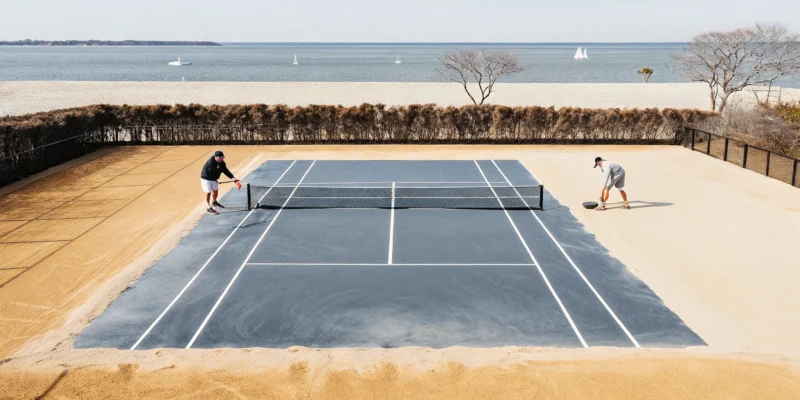
You wouldn’t hire a general plumber to fix a complex electrical issue, and the same logic applies to building a tennis court. This is a specialized construction project that requires more than just paving experience. It demands a deep understanding of site preparation, proper drainage, base stability, and surface application to ensure perfect playability and longevity. Choosing the wrong contractor can result in a court that cracks, puddles, or plays unevenly. That’s why selecting a premier tennis courts installer company on Long Island ny is the most critical decision you’ll make. We’ll show you how to identify a true specialist for your project.
Key Takeaways
- Hire a Specialist, Not a Generalist: A tennis court is a specialized construction project. Partner with an installer who has a proven portfolio of building Sports Games Courts to guarantee proper drainage, a level surface, and long-term durability.
- Match the Court to Your Lifestyle: The right court surface and design depend on your personal priorities. Consider your playing style, maintenance commitment, and player comfort to choose a court that you and your family will enjoy for years.
- Follow a Vetting Checklist: Protect your investment by verifying every potential installer’s credentials. Always ask for proof of license and insurance, review a portfolio of their work, and get a detailed, itemized estimate before signing a contract.
Finding Your Perfect Tennis Court Installer on Long Island
Adding a tennis court to your home is an exciting project. It’s a space for fun, fitness, and making memories with family and friends. But turning that vision into a reality requires finding the right team to build it. The installer you choose is the most important factor in your project’s success. They are your partner in creating a court that not only looks great but also plays perfectly and stands up to the Long Island weather. A great installer guides you through every step, from picking the right surface to understanding the construction process. They ensure your investment is a lasting one, giving you a professional-quality court you can be proud of.
A professional installer does more than just pour concrete or lay turf. They bring a designer’s eye and an engineer’s precision to your backyard. They’ll assess your property to find the best location, considering factors like sun orientation and drainage. They will also work with you to integrate the court seamlessly into your existing landscape, making it feel like a natural extension of your home. This partnership is about communication and trust. You should feel comfortable asking questions and confident that your installer understands your goals. With the right team, the construction process becomes a collaborative and rewarding experience, ending with a beautiful, functional court that will serve your family for decades.
Why Choosing the Right Partner Matters
A tennis court isn’t just a flat surface to play on; it’s a specialized project that demands craftsmanship and precision. The right partner understands that building a court requires specific methods that go beyond what a typical paving company offers. An expert installer brings specialized expertise to ensure proper drainage, a perfectly level surface, and durability for years of play. They also help you avoid common but costly mistakes, like choosing a surface based only on price instead of how you plan to use it. A team with a proven track record in building Sports Games Courts will deliver a final product that enhances performance and adds lasting value to your home.
What a Professional Installer Can Do for You
Hiring a professional installer is about more than just getting the job done. It’s about partnering with an expert who can manage every detail, from initial design to the final volley. A true professional brings a wealth of experience to the table, ensuring your court is not only beautiful and functional but also built to last. They handle the complexities of construction, navigate potential issues, and deliver a finished product that meets all the necessary standards for safety and playability. With a company like Gappsi, you get a team that specializes in creating custom outdoor spaces, turning your vision for a backyard tennis court into a tangible reality. They can build from the ground up, restore an old favorite, or design a versatile court for the whole family to enjoy.
New Court Construction From Scratch
Building a tennis court from scratch is a major project, but a professional installer makes the process seamless. They will handle everything from site evaluation and preparation to the final surface application. An expert team ensures the court has proper drainage, a stable base, and a perfectly level playing surface, all of which are critical for long-term durability and performance. Companies like Gappsi specialize in designing and building custom synthetic turf and sports games courts tailored to your property and playing style. They work with you to choose the right materials and layout, ensuring the final construction meets your exact specifications and provides a professional-quality playing experience right in your backyard.
Resurfacing and Repairing Your Existing Court
Over time, even the best-built courts can show signs of wear. Cracks, low spots, and faded lines can make a court unsafe and unpleasant to play on. A professional installer can breathe new life into your existing court with expert resurfacing and repair services. They can diagnose the root cause of issues, like cracking from poor asphalt quality, and apply the right solutions. Whether it’s filling cracks, leveling the surface, or applying a fresh coat of color and new lines, professional restoration and sealing services ensure your court is returned to top condition. This not only improves playability but also extends the life of your investment.
Designing a Multi-Sport Game Court
Why limit yourself to just one sport? A professional installer can help you design a versatile multi-sport game court that maximizes your backyard fun. By using adjustable nets, multi-sport line markings, and adaptable surfaces, you can create a space perfect for tennis, pickleball, basketball, and volleyball. This is a fantastic option for families or anyone who loves to entertain. An expert can help you plan the layout to ensure each sport can be played comfortably and safely. This approach transforms a simple tennis court into a comprehensive recreational hub for friends and family of all ages to enjoy year-round.
Adding Finishing Touches: Lighting, Fencing, and Landscaping
A great tennis court is more than just a playing surface. The right finishing touches are what make it a truly exceptional part of your home. A professional installer can integrate all the essential amenities to complete your project. This includes installing proper court lighting for evening matches and high-quality fences and netting for safety and ball containment. They can also work with you to incorporate beautiful and functional landscaping that helps the court blend seamlessly into your backyard’s aesthetic. These details not only improve the court’s functionality but also significantly enhance its visual appeal and your overall enjoyment.
Planning for Ongoing Maintenance
Once your court is built or resurfaced, a little maintenance goes a long way in preserving its quality. A professional installer won’t just finish the job and disappear. They will provide you with a clear plan for ongoing care to keep your court in prime condition for years. This can include simple tips for you to follow, like keeping the surface clear of debris, as well as a schedule for professional services like deep cleaning or periodic inspections. Establishing a long-term relationship with your installer ensures you have a trusted expert to call on for any future repairs or resurfacing needs, protecting your investment and guaranteeing countless hours of play.
How to Pick the Perfect Court Surface
Choosing the right surface for your new tennis or sports game court is one of the most exciting parts of the process. It’s about more than just color and appearance; the surface you pick will define how the game is played, how much maintenance is needed, and how comfortable it is for players. Think about your playing style, how much time you want to spend on upkeep, and the overall feel you’re going for.
Are you looking for a fast-paced game, or do you prefer a slower, more strategic match? Do you want a court that’s ready to go with minimal fuss, or are you okay with a little more maintenance for a classic feel? We’ll walk through the most popular options to help you find the perfect fit for your home and your game. Each surface has its own personality and benefits, so let’s find the one that’s right for you.
Classic Clay Courts
There’s a reason so many pros train on clay. Clay courts, like the popular green Har-Tru surface, are known for slowing down the ball. This creates longer rallies and gives you more time to perfect your form and strategy. If you love a thoughtful, tactical game, clay is a fantastic choice. The surface is also easier on your body, as you can slide into your shots, which reduces stress on your joints. Keep in mind that this classic experience requires a bit more care. Clay courts need regular watering and sweeping to stay in top playing condition, but for many enthusiasts, that ritual is part of the charm of owning one.
Durable Asphalt Courts
Asphalt is a tried-and-true choice for tennis and sports game courts, and for good reason. It’s a strong, durable material that provides a consistent, fast-paced game. If you enjoy a quicker style of play with a true ball bounce, an asphalt court is an excellent option. These courts are built to handle Long Island’s changing weather and are relatively low maintenance compared to clay. Should a crack appear over time, repairs are typically straightforward and cost-effective. Plus, you can customize the look with different color coatings to match your home’s aesthetic, creating a professional-looking court that’s ready for action whenever you are.
Modern Synthetic Courts
If you’re looking for a surface that combines performance, versatility, and low maintenance, a modern synthetic court is the way to go. These surfaces have come a long way, offering incredible playability and safety features. Options like synthetic turf can give you the feel of a pristine grass court without the constant mowing and watering. Other synthetic systems have built-in cushioning, which is a game-changer for reducing impact on your knees and ankles. This makes them a great choice for players of all ages. Because they are so durable and versatile, synthetic surfaces are also perfect for creating multi-sports game courts where you can play everything from tennis to basketball.
Key Factors to Help You Decide
Choosing a surface based only on how it looks is a common misstep. To make the best decision, you really need to think about your personal priorities. First, consider your playing style. Do you want a fast game, or do you prefer a slower pace that allows for longer rallies? Next, be realistic about your maintenance commitment. Are you prepared for the daily upkeep of a clay court, or do you need a low-maintenance option like asphalt or synthetic turf? Finally, think about player comfort. If you or your family members are concerned about joint impact, a cushioned synthetic court is an excellent investment in your long-term enjoyment. Considering these factors will help you select a court that you’ll love for years.
Breaking Down the Cost of a Long Island Tennis Court
Understanding the financial side of installing a tennis court is a crucial step in your planning process. A new court is a significant investment in your property and lifestyle, with costs that can vary based on your vision and existing landscape. Let’s walk through the key expenses so you can create a realistic budget.
Budgeting for a New Court Installation
Building a new tennis court from the ground up involves several cost factors. The final price tag depends on the court’s size, the surface material you choose, and the amount of site preparation needed. Think about excavation, grading, and drainage, which are all foundational to a long-lasting court. Additional features like professional lighting for evening matches, high-quality netting, and fencing also play a role in the total cost. Working with a full-service team helps you see the complete picture from the start, ensuring your project includes everything from initial design to the final touches for your sports games courts.
Understanding Resurfacing and Repair Costs
If you already have a tennis court that’s seen better days, resurfacing is an excellent way to bring it back to life without the cost of a full replacement. On Long Island, resurfacing and repairs can typically range from $8,000 to $12,000. This process usually involves fixing cracks, addressing any drainage issues, leveling the surface, and applying fresh paint and new lines. It’s a fantastic option for updating the look and playability of your court. Our expert restoration and sealing services can make an old, worn-out court feel brand new again, extending its life for many more years of enjoyment.
What Influences the Final Price?
Whether you’re building new or resurfacing, several key details will influence the final estimate. A contractor will assess the court’s age and current condition, looking for deep cracks, peeling paint, or poor drainage that needs correction. The existing base material, like asphalt or concrete, also affects the scope of work. While it can be tempting to choose a surface based on appearance or initial cost alone, this can be a mistake. A more durable, higher-quality material might cost more upfront but can save you money on future maintenance. A transparent quote should break down these factors, helping you make an informed decision for your home.
Your Checklist for Choosing the Best Installer
Finding the right installer is the most critical step in your tennis court project. This is your partner in bringing your vision to life, and their expertise will determine the quality and longevity of your court. A great installer does more than just build; they guide you through material selection, site preparation, and design, ensuring the final result meets your expectations and budget. To help you make a confident decision, we’ve put together a checklist of what to look for and what questions to ask. Think of this as your guide to vetting potential contractors so you can find a true professional who will deliver a court your family will enjoy for years to come.
Look for Proven Experience and Specialization
Tennis court construction is a specialized skill. You want a company with a proven track record of building and resurfacing courts specifically on Long Island. Ask to see a portfolio of their completed projects and inquire about their experience with different court surfaces. A seasoned installer will understand the local climate and soil conditions, which can impact the court’s foundation and longevity. Don’t hesitate to ask for references from previous clients. A company that is proud of its work will be happy to connect you with satisfied homeowners. Their experience with sports games courts will be evident in the quality of their past projects and their ability to answer your questions thoroughly.
Confirm Licensing, Insurance, and Warranties
Never work with a contractor who isn’t properly licensed and insured. This is non-negotiable, as it protects you from liability in case of accidents or property damage during construction. Ask for copies of their general liability insurance and workers’ compensation certificates. Additionally, inquire about warranties. A reputable installer will stand behind their work with a warranty that covers both materials and labor for a specific period. This shows they are confident in the quality of their craftsmanship and are committed to your long-term satisfaction. A strong warranty is a clear sign of a professional and trustworthy company.
Ask if They Use an In-House Team or Subcontractors
It’s important to know who will actually be on your property doing the work. Ask potential installers if they use their own dedicated in-house team or if they rely on subcontractors. While some contractors successfully manage subcontractors, an in-house team often provides more consistent quality control, clearer communication, and a more streamlined process. If they do use subcontractors, ask how they vet them and who is the main point of contact for your project. This is also a good time to discuss the project timeline. Ask for a realistic schedule and find out how they handle potential delays, such as those caused by weather.
Explore Their Customization Options
Your tennis court shouldn’t be a one-size-fits-all installation. The right partner will work with you to design a court that fits your property, playing style, and aesthetic preferences. Discuss your options for court size, surface type, and color combinations. You can also explore adding features like custom logos, multi-sport lines for basketball or pickleball, and integrated lighting for evening play. A great installer can also help ensure your new court is integrated into a beautiful landscape with surrounding patios, walkways, and plantings. This is your chance to create a truly personalized recreational space, so find a team that is excited to help you customize it.
Request a Clear, Transparent Estimate
Before signing any contracts, make sure you receive a detailed, itemized estimate in writing. A vague or verbal quote is a major red flag. The estimate should clearly break down all associated costs, including site preparation, materials, labor, fencing, lighting, and any other features you’ve discussed. This transparency helps you understand exactly what you are paying for and prevents unexpected charges down the line. Don’t be afraid to ask questions if something is unclear. A professional contractor will be happy to walk you through each line item to ensure you are comfortable with the investment before moving forward.
Red Flags to Watch For
As you interview potential installers, keep an eye out for a few warning signs. Be cautious of any company that provides a quote that is dramatically lower than the others; this could indicate they are using subpar materials or cutting corners on essential steps like site preparation. High-pressure sales tactics or demands for a large upfront cash payment are also red flags. A trustworthy professional will give you time to make an informed decision. Finally, if a contractor is hesitant to provide references, proof of insurance, or a detailed written estimate, it’s best to walk away and continue your search.
Start Your Tennis Court Project with Confidence
Starting a tennis court project on your Long Island property is a big decision, but it’s also incredibly exciting. To ensure your vision becomes a reality without any headaches, the most important step is partnering with a qualified contractor who specializes in court construction. An expert can guide you through choosing the right surface for your playing style and property, whether it’s a classic tennis court or a versatile multi-sports games court.
When you request quotes, a true professional will do more than just measure the space. They will assess the site, check for potential drainage issues, and discuss how you and your family plan to use the court. This detailed approach helps you avoid expensive mistakes down the line and ensures the final product is built to last. It can be tempting to choose an installer based on price alone, but this often leads to disappointment. Instead, focus on craftsmanship and the quality of the materials, as these factors have the biggest impact on your court’s performance and longevity.
Working with an experienced team that handles everything from design to installation makes all the difference. At Gappsi, we believe in a comprehensive approach to tennis court construction and repair. We manage the entire process with precision and care, from creating a custom design to building and maintaining your court. This allows you to feel confident and excited as you watch your dream court come to life, knowing it will be a source of enjoyment for years to come.
Related Articles
- Tennis Courts Designers in Nassau and Suffolk County, Long Island
- Custom Tennis Court Installers NY: Build Your Dream Court
- Laykold Tennis Court Installation in Long Beach, NY | Gappsi Inc
- Custom Tennis Courts NY: Your Project Guide
- Pro Tennis Court Repair Long Island: Built to Last
Frequently Asked Questions
How long does the whole process take, from design to completion? The timeline for a new court really depends on the specifics of your project. A straightforward resurfacing job might only take a week or two, while building a court from scratch can take several weeks. Factors like extensive site preparation, permit approvals, and unpredictable weather can affect the schedule. A professional installer will give you a realistic timeline upfront and keep you informed every step of the way.
My court is old and cracked. Do I have to tear it all out and start over? Not necessarily. In many cases, an old court can be brought back to life without a complete demolition. If the court’s foundation is still stable, an expert can repair cracks, level out low spots, and apply a brand new surface. This process, known as resurfacing, is much more cost-effective than a total rebuild and can make your court look and play like new again.
What’s the best court surface for a family that plays more than just tennis? For families who want versatility, a synthetic surface designed for multi-sports games courts is an excellent choice. These surfaces are often cushioned, which is great for reducing impact on joints for players of all ages. They are also incredibly durable and can be marked with lines for tennis, pickleball, and basketball, turning one area into a hub for all kinds of activities with very little maintenance.
Why can’t I just hire a good paving company to build my court? While a paving company is great at creating driveways, building a proper tennis court requires a different set of skills. Court construction is a precise science. It involves creating a perfectly flat plane with a very specific, almost imperceptible slope for drainage, which is critical for the court’s longevity and playability. A specialized court installer understands the unique base layers, surface materials, and finishing techniques needed to ensure a proper ball bounce and a safe playing experience.
How much space do I actually need for a tennis court? For a regulation tennis court, you’ll want a total rectangular area of about 120 feet by 60 feet. This provides the standard playing area plus the necessary out-of-bounds space for players to run and swing freely. However, if your space is limited, a good designer can work with you on custom dimensions or a layout for other sports games courts that can fit your specific property.