


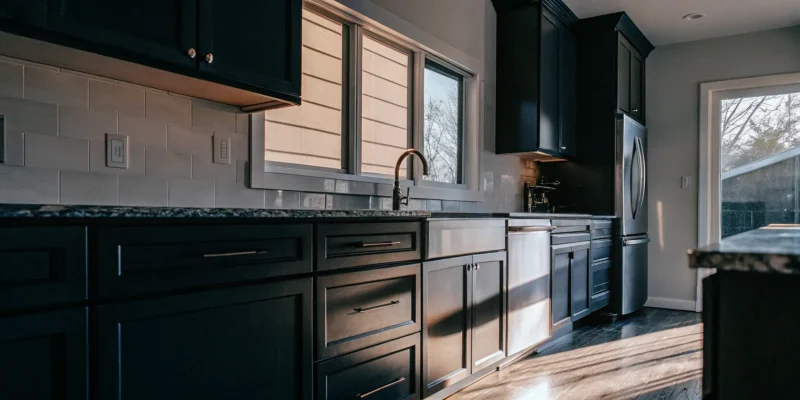
For Long Island homeowners, the best remodeling investment is not always the project with the highest price tag. The stronger choice depends on resale goals, neighborhood expectations, construction scope, and how long you plan to enjoy the space. A well-planned kitchen can improve daily function and make the main living area more useful, while a bathroom update can address comfort, condition, and buyer expectations.
In the latest National Association of Realtors Remodeling Impact Report figures cited for this comparison. A minor kitchen remodel recoups about 96% of its cost, compared with about 74% for a bathroom remodel. That means bathroom vs kitchen remodeling roi often favors the kitchen financially, although the right project for your Nassau or Suffolk home still depends on budget, condition, and buyer demand.
ROI also depends on controlling the scope and choosing improvements that fit the home rather than overbuilding for the neighborhood. Before comparing resale returns. It helps to establish what a kitchen remodel actually costs on Long Island in 2026 and why planning can take longer than many homeowners expect.
Bathroom Vs Kitchen Remodeling Roi: How Much Does a Kitchen Remodel Cost on Long Island in 2026?
For a full kitchen remodel on Long Island, a realistic 2026 planning range is $30,000 to $80,000 or more. The final investment depends on the kitchen’s size, cabinet and countertop selections, plumbing or electrical changes, appliance specifications, and whether walls must be opened or reconfigured. Local estimates place Long Island projects above many national averages because labor, permitting, delivery, and installation costs are higher in Nassau and Suffolk County markets.
Contact Gappsi for a project-specific kitchen remodeling estimate before you set a budget.
What does a $30,000 kitchen remodel typically include?
A project near the lower end of the range generally focuses on a defined refresh rather than a complete reconfiguration. Homeowners may keep the existing layout, update cabinets or replace them with standard cabinetry, install new countertops, improve lighting, and select moderately priced flooring and fixtures. Keeping plumbing and electrical locations in place can limit labor and reduce schedule risk.
When does a kitchen remodel exceed $80,000?
Costs rise quickly when the scope includes custom cabinetry, natural stone surfaces, premium appliances, structural changes, or extensive mechanical work. Moving a sink, range, or dishwasher can require additional plumbing and electrical coordination. A larger kitchen may also need more flooring, millwork, lighting, and finish materials. These choices should be evaluated together, because a low-cost cabinet package may not align with the labor required for a complex layout change.
Long Island homeowners should also budget time, not only money. Research summarized in the fact ledger indicates that kitchen projects can require more than nine months of planning, followed by slightly more than five months of work. Early design decisions help reduce change orders and make it easier to coordinate permits, ordering, demolition, and installation.
For a clearer scope, review Gappsi’s kitchen design and build approach, then compare the proposed investment with your home’s location and likely resale timeline. Kitchens are the most frequently renovated room, at 29% in one cited renovation survey, but cost control still matters when evaluating bathroom vs kitchen remodeling ROI.
How Much Does a Bathroom Remodel Cost on Long Island in 2026?
Bathroom remodeling budgets on Long Island vary sharply with the room’s size, finish level, and whether the work preserves the existing layout. A powder room may fall near the lower end, while a primary bathroom with relocated plumbing, custom tile, and a separate shower can approach the upper end. For 2026, a realistic local planning range is $8,000 to $75,000 or more. Long Island projects commonly run 20% to 35% above national averages because of local labor, permitting, logistics, and material costs.
Bathrooms are also among the most frequently renovated rooms in American homes. One academic summary reports that guest bathrooms account for 27% of renovations and primary bathrooms 25%, behind kitchens at 29%. That demand makes accurate budgeting important, especially when comparing bathroom vs kitchen remodeling ROI.
Where does the bathroom remodeling budget go?
Labor usually represents 35% to 40% of the total budget. Plumbing work on Long Island can cost $150 to $250 per hour, while electrical work commonly runs $100 to $175 per hour. Even a fixture replacement can cost $800 to $2,000 after service calls, materials, and installation. A new GFCI outlet, exhaust fan, lighting circuit, or vanity connection may add $500 to $2,500, depending on access and complexity.
Tile is another major variable. Tile installation labor averages $12 to $25 per square foot, and a 50-square-foot shower with an intricate pattern may require $1,500 to $3,000 in labor alone. Prefabricated shower systems generally cost less than a fully waterproofed, custom-tiled assembly. But the right choice depends on the design and the condition of the underlying walls and floor.
How does scope change the final price?
- Powder room refresh: Paint, flooring, lighting, and fixture replacement can keep the project near the lower range.
- Primary bath renovation: New tile, vanity, shower, tub, and electrical upgrades can move the budget into the midrange.
- Full gut remodel: Structural repairs, waterproofing, layout changes, and plumbing relocation can push costs beyond $75,000.
Before selecting finishes, confirm the existing plumbing, ventilation, electrical capacity, and subfloor condition. A design-build team can identify those conditions early and show how each scope decision affects both daily use and resale value. See Gappsi’s home remodeling services in Long Island for help planning the work.
Kitchen Remodeling ROI: What Long Island Homeowners Can Expect
For many Long Island homeowners. A kitchen remodel creates value in two ways: it can improve the home’s appeal to future buyers and make the space more useful every day. The National Association of REALTORS® Cost vs. Value data lists a minor kitchen remodel at approximately 96% return on investment. That figure is a national benchmark, not a promise of a specific resale increase, but it provides a useful reference when comparing project scope and budget. Learn more about kitchen design and build before making major selections.
Local home values make the percentage meaningful. Competitor market research places the median home value at about $840,000 in Nassau County and $690,000 in Suffolk County. A well-planned kitchen upgrade can therefore influence a substantial asset, especially when the existing kitchen is dated, poorly configured, or out of step with comparable homes nearby. Buyers often evaluate the kitchen early, so condition, layout, storage, and finish quality can affect both perceived value and marketability.
Why does a minor remodel often perform well?
The strongest percentage returns usually come from improvements that solve visible problems without overbuilding for the neighborhood. A minor remodel might retain a workable layout while updating cabinet fronts, countertops, appliances, lighting, flooring, or hardware. These changes can refresh the room without the added cost and construction risk of moving plumbing, removing walls, or creating a highly customized configuration. The national report’s 96% benchmark reflects this relationship between controlled investment and broad buyer appeal.
Kitchens are also a leading renovation priority. One academic summary of remodeling data found that kitchens were the most renovated room, at 29%, ahead of guest bathrooms at 27% and primary bathrooms at 25% (home renovation statistics). That demand can support resale interest, but the work still needs to match the home’s price point and the expectations of Nassau or Suffolk buyers.
How should homeowners view upscale kitchen projects?
An upscale remodel may return a lower percentage because the initial investment is much larger. However, a lower percentage can still represent a higher absolute dollar gain. For example, recovering 70% of a $100,000 project adds more resale value in dollars than recovering 96% of a $30,000 project. Even though the smaller project has the better percentage. The right choice depends on how long you plan to stay, the home’s current condition. Comparable properties, and whether the improvements deliver daily value as well as resale appeal.
Before setting a budget, compare the likely scope with nearby homes and prioritize durable materials, practical storage, and a layout that serves the household. A design-build consultation can help connect those choices to both your lifestyle and the Long Island market.
Bathroom Remodeling ROI: How It Compares to the Kitchen
For Long Island homeowners weighing bathroom vs kitchen remodeling ROI, the right choice depends on both percentage return and the amount of value the project adds in absolute dollars. A kitchen typically creates a stronger first impression and can add more perceived value to buyers, while a bathroom renovation may require less money upfront and can be completed in phases.
| Factor | Kitchen Remodel | Bathroom Remodel | Winner |
|---|---|---|---|
| Average Cost (LI 2026) | Varies substantially with cabinetry, appliances, layout changes, and materials. | Varies with fixture replacement, tile, plumbing, and room size. A phased scope can reduce the initial outlay. | Bathroom for a smaller starting scope |
| ROI % | 96% for a minor kitchen remodel, according to the National Association of Realtors. | 74% for a bathroom remodel, according to the National Association of Realtors. | Kitchen |
| Resale Value Added | Often adds more perceived value because the kitchen is a central gathering and entertaining space. | Improves daily function and buyer confidence, especially when an outdated or damaged bathroom is corrected. | Kitchen for broad buyer impact |
| Project Timeline | Usually longer and more disruptive. Kitchen planning can exceed nine months, with construction taking about five months. | Often easier to phase, particularly when the layout and plumbing locations remain unchanged. | Bathroom for flexibility |
| Scope Complexity | High when the project includes cabinetry, appliances, electrical work, flooring, and structural changes. | Moderate to high when waterproofing, plumbing relocation, ventilation, and custom tile work are involved. | Depends on the design |
| Buyer Appeal | Strong visual impact and a major influence on how buyers evaluate the home. | Strong practical appeal, with updated fixtures, storage, lighting, and finishes signaling careful maintenance. | Kitchen for perceived value |
The ROI figures are useful benchmarks, not guarantees. Actual results depend on neighborhood, workmanship, material choices, and whether the design matches the home. Nassau County homeowners should also investigate the county’s eight-year decreasing property tax exemption for assessable improvements to eligible one- and two-family houses. Review current eligibility and application requirements with the Nassau County Assessor before budgeting around the exemption. See Nassau County’s home improvement exemption information.
In practical terms, choose the kitchen when maximizing buyer-facing value is the priority. Choose the bathroom when you want a more manageable, phased improvement that addresses a clear functional or appearance problem. For either project, careful scope control matters more than selecting finishes simply because they are expensive. The National Association of Realtors benchmarks cited above are available on its remodeling resource page.
Which Remodel Adds More Value to Your Long Island Home?
The better investment depends on more than a headline ROI percentage. A kitchen remodel typically creates the stronger resale argument, while a bathroom remodel can deliver meaningful value with a smaller initial commitment. For Long Island homeowners, the right decision should account for the condition of the existing space. The project budget, and whether the home will be sold soon or enjoyed for many years.
Kitchen remodels generally lead on percentage return. The National Association of Realtors reports approximately 96% cost recovery for a minor kitchen remodel and about 81% for a major kitchen remodel. Kitchens are also the most frequently renovated room, representing 29% of reported home renovation projects. Compared with 27% for guest bathrooms and 25% for primary bathrooms, according to compiled renovation research. These figures reflect the kitchen’s role as a central gathering and entertaining space.
The tradeoff is a larger upfront investment. On Long Island, a kitchen project can begin around $30,000 and exceed $80,000, depending on cabinetry, appliances, layout changes, electrical work, and finish materials. A larger project may also require substantial planning before construction begins, so homeowners should evaluate both the financial return and the disruption to daily life.
Bathrooms offer a lower-cost path to visible improvement. A typical project may range from approximately $8,000 to $50,000 or more, depending on size, plumbing changes, tile, fixtures, and accessibility upgrades. The reported return is about 74%, but a well-designed bathroom can address outdated finishes, water damage, poor storage, or an impractical layout. Because work can often be completed in phases, it may suit homeowners who want to spread costs over time.
How should Long Island homeowners choose?
Start with the space that has the greatest functional problem. If the kitchen is dated, difficult to use, or out of proportion with comparable homes nearby, improving it may support stronger resale appeal. If the kitchen already functions well but the bathrooms are worn or undersized, a bathroom update may produce the more noticeable improvement for the money.
Homeowners planning to stay long term should also weigh daily enjoyment and durability, not resale value alone. Completing both projects as part of a coordinated whole-home plan can maximize overall property value, create a consistent design language, and improve the home’s market readiness. Gappsi can help develop that plan through its home remodeling services in Long Island, including design, material selection, and construction planning.
Factors That Impact Remodeling ROI in Nassau and Suffolk County
Return on investment depends on more than the room you choose. In Nassau and Suffolk, labor, approvals, tax treatment, and neighborhood expectations can materially change the result. Use these local checks before setting a remodeling budget or assuming a national ROI percentage will apply to your home.
-
Account for Long Island labor and project overhead
Local labor rates can raise the break-even point. Plumbers commonly run $150 to $250 per hour, while electricians may charge $100 to $175 per hour. A general contractor markup of 15% to 20% can cover scheduling, supervision, insurance, and coordination. Long Island remodeling costs may run roughly 20% to 35% above national averages. So an apparently attractive resale return can narrow if the scope expands or the project encounters hidden conditions.
-
Build the permit timeline into your ROI calculation
Permits can add six to ten weeks to a renovation timeline, according to Long Island renovation pricing research: permit timelines for Long Island projects. Delays can extend temporary housing, storage, financing, or lost-use costs. An experienced local contractor should identify which work requires approval, prepare the submission accurately, and sequence construction around the municipality’s process.
-
Consider Nassau’s home-improvement tax exemption
Nassau County offers an eight-year decreasing property tax exemption for certain assessable improvements to one- and two-family homes. Eligibility and application requirements matter, so confirm the current rules with the county assessor rather than treating the exemption as guaranteed savings. The county’s program details are available through the Nassau County home improvement property tax exemption page.
-
Measure the project against neighborhood comps
Local home values set a practical ceiling on what buyers may recognize. For planning purposes, Nassau’s median home value is about $840,000 and Suffolk’s is about $690,000, but individual neighborhoods can differ substantially. Compare your planned finishes and total investment with nearby homes that have recently sold or listed. Over-improving beyond neighborhood expectations can reduce the portion of the cost you recover, while an outdated kitchen or bathroom can make the home less competitive.
-
Choose a contractor who understands the local market
ROI improves when the design fits both Long Island building codes and buyer expectations. A contractor with local experience can anticipate inspection requirements, recommend durable materials suited to the property, and help prioritize improvements that support resale without inflating the scope. Review the full plan through a local home remodeling service in Long Island before comparing bathroom and kitchen options solely by headline ROI.
Frequently Asked Questions
Does a kitchen or bathroom remodel add more value to a home?
For many Long Island homes, a mid-range kitchen remodel produces the stronger resale return because the kitchen affects daily living, entertaining, and buyer appeal. A bathroom update can still add meaningful value, especially when it improves an outdated, poorly functioning, or insufficient space. The better choice depends on the home’s condition, neighborhood expectations, and whether the goal is resale or long-term enjoyment.
What is the average ROI for kitchen remodeling on Long Island?
There is no single Long Island average because scope, materials, project quality, and timing all affect the result. As a national benchmark, the National Association of Realtors reports a 96% cost recovery for a minor kitchen remodel in its Remodeling Impact Report. Use that figure as a planning reference, not a guaranteed return for every Nassau or Suffolk property.
What is the average ROI for bathroom remodeling on Long Island?
Bathroom returns vary by whether the project is a cosmetic refresh, a full renovation, or an upscale redesign. The National Association of Realtors reports a 74% cost recovery for a bathroom renovation as a national benchmark. Local labor, tile, plumbing, permitting, and the home’s price point can shift the actual result, so a project budget should be matched to nearby homes and buyer expectations.
How do remodeling costs compare for kitchens and bathrooms in 2026?
Kitchen remodels usually require the larger initial investment because they often involve cabinetry, appliances, countertops, lighting, flooring, and layout changes. Bathrooms may cost less overall, but Long Island bathroom projects can run 20% to 35% above national averages. With reported costs ranging from about $8,000 to more than $75,000. Get a scope-specific estimate before comparing ROI percentages.
Ready to Plan Your Long Island Remodel?
A project-specific conversation can help you weigh kitchen and bathroom remodeling priorities against your home’s layout, goals, and expected return. Schedule a free consultation with Gappsi to discuss the right next step for your property. Call 631-543-1177 to get started.