


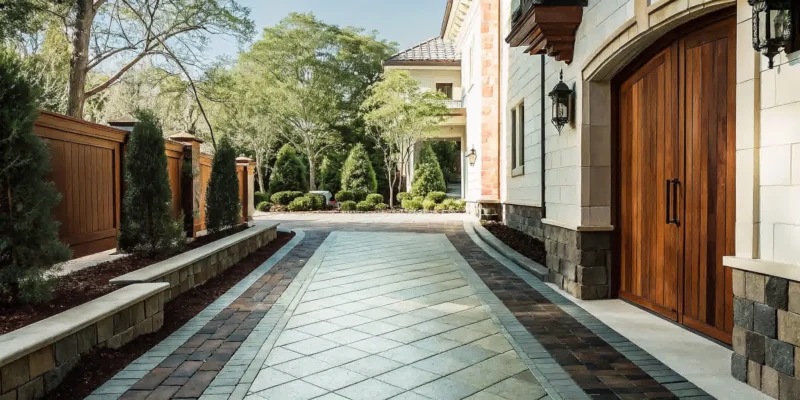
Choosing a driveway material on Long Island involves more than comparing colors in a showroom. Freeze-thaw cycles, coastal salt, drainage, traffic, and the character of your home’s architecture all affect how a surface performs over time. The right choice should balance appearance with a properly engineered base and practical maintenance.
Ready to start your paver driveway project? Schedule a free design consultation with Gappsi today and get expert guidance on the right materials for your Long Island home.
For paver driveways Long Island homeowners can choose concrete pavers for flexible design and value, porcelain for a uniform, low-maintenance finish, travertine for natural texture, bluestone for regional character, or granite for exceptional load-bearing strength. The best material depends on your site’s conditions, desired style, and long-term priorities.
Concrete pavers are often the starting point because their interlocking construction, broad selection of patterns, and ability to handle local freeze-thaw conditions make them adaptable for many homes. Begin by looking at how their strength, design range, and value compare with the other options.
Concrete Pavers for Long Island Driveways: Strength, Design, and Value
For many Nassau and Suffolk homeowners, concrete pavers balance driveway performance with design flexibility. Installed pricing commonly falls around $20 to $35 per square foot, depending on excavation, base preparation, pattern, access, and selected product. With proper installation and maintenance, a concrete paver driveway can provide an expected service life of roughly 25 to 50 years. For a broader breakdown of project variables, review this paver driveway cost guide.
Concrete pavers are also a practical response to Long Island’s freeze-thaw cycles. Unlike a monolithic concrete slab, an interlocking pavement system can flex slightly as the base and soil respond to seasonal temperature changes. That movement helps distribute vehicle loads and reduces the risk of one large crack spreading across the entire driveway. The result depends on the foundation beneath it, so excavation, drainage, and compaction matter as much as the visible paver.
What thickness should a driveway paver have?
Driveway installations should use vehicular-rated pavers at 60mm or thicker, selected for the expected passenger-vehicle traffic. Thickness alone does not make a driveway durable. A properly compacted aggregate base, a stable bedding layer, and secure perimeter restraints keep the paving units from shifting under turning wheels and repeated loading. The installation plan should also account for water movement rather than allowing runoff to collect beneath the surface.
How do the joints protect the driveway?
Polymeric sand joints lock the individual pavers together while retaining a degree of flexibility. When installed correctly, the material helps stabilize the surface, limit erosion between units, and discourage weed penetration. Routine cleaning and appropriate joint maintenance preserve that performance over time. If a paver is damaged by a vehicle, oil, or a severe impact, an individual unit can usually be lifted and replaced without removing the surrounding driveway.
Homeowners can choose from a wide range of colors, shapes, textures, and laying patterns. Common product lines available for Long Island projects include Cambridge, Nicolock, Techo-Bloc, Belgard, Unilock, EP Henry, and Rinox. That range makes it possible to coordinate the driveway with brick, stucco, natural stone, or other masonry details rather than settling for a single plain surface. Explore Gappsi’s masonry design and construction services to see how material selection can fit into a complete exterior plan.
What Makes Porcelain Pavers a Premium Choice for Driveways?
Porcelain pavers bring a clean, contemporary finish to a driveway while reducing the maintenance demands associated with more porous materials. Fully installed pricing typically falls between $28 and $45 per square foot, depending on the product, site preparation, layout, and installation conditions. That places porcelain above many concrete paver options, but the material offers a distinct combination of appearance, durability, and day-to-day simplicity.
A dense surface built for Long Island weather
Outdoor porcelain has a water absorption rate below 0.5%, making it virtually non-porous. Water, salt, oil, and other driveway contaminants have fewer opportunities to penetrate the surface. Porcelain is also frost-resistant, an important consideration for Nassau and Suffolk properties exposed to freeze-thaw cycles. Because the color and pattern are fired through the material rather than applied only to the surface, the installation maintains a consistent appearance across the driveway.
For vehicle areas, homeowners should specify a 20mm vehicular-rated product, not a thinner pedestrian paver. These systems are engineered for residential vehicle traffic when installed over the appropriate base. Some porcelain pavers can also be installed over an existing concrete slab when that slab is sound, which may reduce removal work and shorten the project timeline.
Modern scale with less upkeep
Porcelain is made in Italy and is available in large-format sizes, including options up to 48 by 48 inches. Larger modules create fewer visible joints and support the streamlined geometry often associated with modern and contemporary homes. The consistent color and texture also make it easier to coordinate a driveway with architectural concrete, stucco, stone veneer, or minimalist landscaping.
Unlike many natural stone applications, porcelain does not require sealing. Its stain-resistant surface usually needs only routine washing, while an R11 or higher slip-resistance rating can provide added traction in wet conditions. Review the full selection of Italian porcelain pavers available at the Gappsi showroom to compare formats, colors, and surface finishes before choosing a driveway system.
Natural Stone Driveway Options: Bluestone, Travertine, and Granite Compared
Natural stone gives a Long Island driveway a material character that manufactured products cannot reproduce. The right choice depends on the home’s architecture, how the driveway will be used, and how much variation and maintenance the homeowner is comfortable accepting. Each option also requires a properly prepared base and periodic sealing to protect the surface in a vehicle-access area.
| Material | Typical installed cost | Expected lifespan | Best characteristics | Planning considerations |
|---|---|---|---|---|
| Bluestone | $25 to $40 per square foot | 50 or more years | Blue-gray color, traditional appeal, flexible pattern options | Choose from a classic cleft finish or a smoother thermal finish. Color can vary between batches. |
| Travertine | $25 to $45 per square foot | 50 or more years | Stays cool underfoot and has naturally formed pitting that gives the stone character | Its porous surface needs sealing, and the sub-base must be well compacted for driveway loads. |
| Granite or Belgian block | $30 to $50 per square foot | 100 or more years | Hardest material, naturally slip-resistant, resistant to salts, chemicals, and oils | Hand-laid installation and difficult cutting can increase labor. The look suits formal properties, including Gold Coast estates. |
Bluestone for traditional Long Island architecture
Bluestone is quarried in New York and Pennsylvania and is often selected for its blue-gray tones, which complement colonial and other traditional Long Island homes. A natural cleft finish provides a more textured face, while a thermal finish creates a more controlled surface. NYSDOT specifications identify thermal finishes for certain bluestone pavers, along with durability and absorption standards: review the referenced bluestone specifications. Because the stone is natural, expect meaningful color variation. Herringbone and running-bond layouts can change the visual weight of the same material.
Travertine’s texture and granite’s endurance
Travertine brings a softer, warmer appearance and remains relatively cool in direct sunlight. Its natural pits are part of the material’s identity, but they also make sealing and routine care important in a driveway. Granite and Belgian block take the opposite approach. They provide dense, durable surfaces for heavy traffic and can handle exposure to road salt and common driveway chemicals. Granite is also hand-laid in many formal installations, creating a tailored edge or field pattern. For a project that must coordinate paving, masonry, drainage, and finish details, explore Gappsi’s masonry design and construction services.
Not sure which natural stone fits your home? Call Gappsi for a free consultation and material selection walkthrough for your Long Island driveway.
How Does Long Island’s Climate Affect Your Driveway Paver Choice?
Long Island driveways face more than vehicle traffic. Seasonal freezing, thawing, rain, coastal air, and regional soil conditions all influence how a paving system performs. The material matters, but drainage and base preparation matter just as much. Gappsi’s guidance notes that proper drainage helps prevent water from pooling and damaging driveway materials in Long Island’s variable climate.
Plan for freeze-thaw movement
When water enters porous stone or the joints beneath a driveway and then freezes, it expands. Repeated freeze-thaw cycles can gradually loosen units, widen joints, and create uneven areas. That does not automatically rule out natural stone, but it makes the installation system important. Concrete pavers are a practical option because they provide durability through Long Island’s freeze-thaw cycles. Materials should be selected with their absorption, finish, and intended vehicle use in mind.
Account for salt air and soil conditions
Homes near the North Shore, South Shore, and coastal communities also experience salt-laden air and winter deicing exposure. Salt can contribute to surface wear and weaken the performance of poorly protected materials or installation components over time. In Nassau and Suffolk, clay soils may drain slowly, so water needs a deliberate path away from the paved surface. A site evaluation should address slope, runoff, and any areas where water tends to collect.
Build flexibility into the driveway
A durable driveway typically needs a 6- to 8-inch compacted gravel base, adjusted to site conditions and expected loads. The base is the foundation of longevity, regardless of whether the surface is concrete pavers, porcelain, or natural stone. Interlocking pavers can distribute pressure and accommodate small movements more effectively than a monolithic concrete slab. Which is more likely to develop a single visible crack when the underlying surface shifts.
Polymeric sand joints add another layer of protection. The sand binds between the units, helps resist erosion, discourages weed penetration, and still allows the interlocking surface to retain some flexibility. For paver driveways Long Island homeowners expect to use for years. Matching the material to the climate and installing the drainage, base, and joint system correctly is the essential decision.
Paver Driveway Installation: What Long Island Homeowners Should Know
A durable driveway begins below the visible surface. For Long Island properties, the installation plan must account for drainage, soil conditions, vehicle loads, and the final design. Gappsi develops the project through complete 3D design services, stamped architectural drawings, and permit expediting, so the construction team can work from a clear, coordinated plan.
- Excavate and grade the site. The crew removes unsuitable soil and existing surface material to the required depth, then establishes the correct elevations and slope. Careful grading directs water away from the home and prevents low spots from holding moisture.
- Install and compact the gravel base. A properly prepared base is the most important factor in the longevity of a paver driveway, regardless of the material selected. Gappsi installs a compacted 6- to 8-inch gravel base in controlled lifts, creating a stable foundation for passenger vehicles and changing weather conditions.
- Secure the perimeter with edge restraints. The edge restraint system keeps the installation from spreading under repeated wheel loads. Gappsi’s patented Gappsi Edge Restraint System is incorporated at the perimeter before bedding material and pavers are placed.
- Place and screed the sand bedding layer. A consistent layer of bedding sand is screeded over the compacted base. This layer provides a level setting surface while allowing the pavers to lock together during final compaction.
- Set the pavers according to the design. Installers place each unit in the approved pattern, maintaining consistent alignment and joint spacing. Interlocking pavers distribute heavy loads more effectively than a solid paving surface, reducing the likelihood of the cracking associated with traditional concrete slabs. Review paver driveway design ideas for pattern and border inspiration.
- Cut edges and complete the detailing. Field cuts are measured and made along curves, steps, drains, and other transitions. This stage gives the driveway clean lines and ensures that perimeter pieces fit the design rather than relying on narrow or unstable fragments.
- Fill the joints with polymeric sand. Dry polymeric sand is swept into the joints and activated according to the product requirements. It binds the stones together, creating a solid yet flexible surface and helping limit erosion between pavers.
- Complete final plate compaction. The finished surface is compacted with the appropriate plate and protection method, seating the pavers into the bedding layer and locking the joints. If a natural stone detail such as bluestone is included, the specified finish matters too. NYSDOT specifications, for example, identify a thermal finish on the top face of bluestone unit pavers for texture.
This sequence gives homeowners a practical way to evaluate installation proposals: ask how the base, drainage, restraints. Cuts, and joint system will be handled, not only which paver will be visible at the surface.
Sealing and Maintenance: How to Protect Your Paver Driveway Investment
A thoughtful maintenance plan helps a Long Island driveway retain its color, joint stability, and drainage performance through salt air, winter freezing, and everyday vehicle traffic. The right schedule depends on the paving material, because concrete, natural stone, and porcelain do not respond to sealers in the same way.
When should a paver driveway be sealed?
For a new concrete paver driveway, wait at least one year before the first sealing. This gives the installation time to finish curing and allows residual moisture to escape. After that, most driveways benefit from resealing every two to three years, although exposure, traffic, and the condition of the surface should guide the final timing. Professional sealing commonly costs about $0.75 to $2.50 per square foot.
Preparation matters as much as the product. The surface should be pressure washed to remove dirt, organic growth, and residue, then allowed to dry fully. Damaged or low joints should be addressed before sealer is applied. For concrete pavers, polymeric sand replenishment may be needed every few years. Polymeric sand stabilizes the joints, helps limit weed penetration, and reduces erosion between stones.
Which sealer fits each driveway material?
Natural stone generally requires a penetrating sealer that enters the stone without leaving a heavy surface film. Travertine driveway pavers especially benefit from a quality sealant because their natural porosity can make them more vulnerable to staining in high-traffic areas. Bluestone, travertine, and granite typically need periodic evaluation and resealing, with the exact interval depending on absorption and wear.
Concrete pavers can use a film-forming sealer when the goal is to enhance color and add surface protection. However, the finish should be selected carefully to avoid an overly glossy appearance or a slippery surface. In coastal Nassau and Suffolk settings, salt air and freeze-thaw cycles can accelerate sealer breakdown, so inspect for fading, peeling, or water no longer beading on the surface.
Porcelain pavers have the lowest maintenance profile. They are non-porous and typically do not require sealing, needing regular washing instead. For a more detailed service plan, review Gappsi’s guide to cleaning and sealing stone patios and driveways.
Concrete pavers offer moderate maintenance, porcelain offers the least, and natural stone ranges from moderate to higher maintenance. Choosing the right sealer and maintaining the joints helps protect the installation without treating every material as if it were the same.
Frequently Asked Questions
Which materials work best for a Long Island driveway?
Concrete pavers offer flexible patterns and a practical balance of cost and performance. Porcelain provides a consistent, non-porous surface with low upkeep. Bluestone adds regional character, travertine brings natural texture, and granite suits homeowners who want a dense stone with strong load-bearing performance. The right choice depends on the home’s architecture, drainage, traffic, and preferred maintenance routine.
How much do different driveway paver materials cost?
Installed pricing varies with material, site preparation, access, pattern, edging, and drainage. The research range is about $20-$35 per square foot for concrete pavers, $28-$45 for porcelain, $25-$40 for bluestone, $25-$45 for travertine, and $30-$50 for granite or Belgian block. Treat these as planning ranges, not a project quote, because excavation and base work can materially change the total.
Can paver driveways withstand Long Island weather?
Yes, when the system is designed for freeze-thaw cycles, coastal moisture, and proper drainage. A compacted base is essential, and interlocking units can distribute vehicle pressure rather than concentrating it in one slab. Bluestone used in New York infrastructure projects is specified for absorption and durability standards by the New York State Department of Transportation.
What maintenance does each material require?
Regular sweeping, prompt stain removal, and inspection of joints help every driveway. Concrete pavers benefit from stable polymeric sand, while travertine and bluestone generally need periodic sealing. Porcelain typically needs only routine washing because it is non-porous and stain-resistant. Granite resists salt and oil, but it still deserves cleaning after winter exposure.
Can these pavers support cars and heavier vehicles?
Yes, provided the selected units and base are rated for vehicular use. Concrete pavers should have an appropriate driveway thickness, porcelain must be a vehicular-rated product, and natural stone needs a properly compacted sub-base. Granite is especially suited to heavy-load areas because its dense stone structure provides strong load-bearing capacity.
Ready to Choose the Right Driveway Pavers?
Material selection affects how your driveway looks, performs through Long Island weather, and fits your home’s design. Gappsi can help you compare concrete pavers, porcelain, travertine, bluestone, and granite based on your property and priorities.