


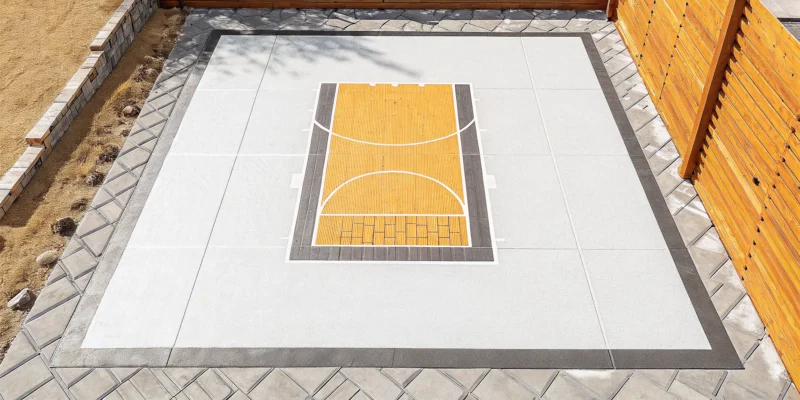
Your home should be a reflection of your family’s personality, and your outdoor space is no exception. A basketball court doesn’t have to be a generic slab of concrete. It can be a fully customized feature that showcases your style. You can choose the colors of your favorite sports team, add a family logo to the center circle, and even include lines for other sports like pickleball. The creative possibilities are what make a backyard basketball court installation so exciting. This guide will explore all the ways you can personalize your court, transforming it from a simple playing surface into a one-of-a-kind family destination.
Key Takeaways
- Get the Groundwork Right First: Before you think about colors, focus on the essentials: finding a level spot, planning for proper drainage, and checking local regulations. A professional site assessment is the best way to avoid future problems and ensure your court is built on a solid foundation.
- Match the Surface to Your Style of Play: Your court’s surface affects everything from safety to performance. Concrete is durable and fast, great for competitive play, while modular tiles offer better shock absorption and customization, making them ideal for families and multi-sport use.
- Know When to Call a Professional: While you can handle finishing touches like assembling the hoop, the most critical stages (excavation, grading, and base preparation) require expert precision. Hiring a professional ensures your court is built to last, preventing costly mistakes and guaranteeing a high-quality playing surface.
What Are the Best Surfaces for a Backyard Basketball Court?
Choosing the right surface for your backyard basketball court is one of the most important decisions you’ll make. It affects everything from the ball’s bounce and player safety to your budget and long-term maintenance. Think of it as the foundation for years of fun and friendly competition. The surface you pick will determine how the court plays, how it feels underfoot, and how well it stands up to Long Island’s changing seasons. There isn’t a single “best” option for everyone; the ideal choice really depends on your family’s needs, your aesthetic preferences, and how you plan to use the space. It’s a decision that directly impacts the quality of play and the overall enjoyment you’ll get from your investment.
The most common materials include traditional asphalt and concrete, modern modular tiles, and cushioned synthetic surfaces. Each comes with its own set of benefits and considerations. Are you building a court for a serious player who needs a consistent, fast bounce for training? Or is your goal to create a fun, multi-purpose play area for casual family games where safety is the top priority? Answering these questions will help you narrow down the options and find a surface that aligns with your vision. At Gappsi, we specialize in designing and installing custom sports game courts and can walk you through the pros and cons of each material to find the perfect fit for your home and lifestyle.
Asphalt
Asphalt is a classic choice for basketball courts, and for good reason. It’s generally one of the more budget-friendly options, and it provides a consistent, high ball bounce that many players are familiar with from playing at local parks. The installation is relatively quick, giving you a playable surface sooner. However, it does have its downsides. Asphalt is prone to cracking over time, especially with the freeze-thaw cycles we experience in New York. It also requires periodic sealing every few years to protect it from the elements and prevent it from fading. On hot summer days, the dark surface can absorb a lot of heat, making it uncomfortable to play on without a lighter-colored acrylic topcoat.
Concrete
A concrete court is a durable, long-term investment for any backyard. When installed correctly with a proper base, reinforcement, and control joints, a concrete slab can last for decades with very little upkeep. It provides a hard, fast surface that delivers an excellent and predictable ball response, making it great for competitive play. Unlike asphalt, concrete stays much cooler in the sun. The main drawback is its unforgiving nature; the hard surface offers no shock absorption, which can be tough on players’ joints. The initial installation is also a significant project that requires professional expertise from a masonry team to prevent future cracking and ensure a perfectly level playing field.
Modular Tiles
Modular tiles are a fantastic modern solution for backyard sports game courts. These interlocking plastic tiles are designed to be installed over a concrete or asphalt base, providing an instant upgrade. They offer superior shock absorption, which is much easier on the knees and ankles, making them a safer option for players of all ages. Another huge plus is their excellent drainage; rainwater flows right through the open-grid design, so the court dries quickly after a storm. Modular tiles also come in a wide variety of colors, allowing you to fully customize your court with team colors, logos, and unique line markings for a truly professional look.
Synthetic Turf
While not traditional for basketball, a high-quality synthetic surface offers incredible versatility and safety. These cushioned, rubberized surfaces provide the highest level of shock absorption, significantly reducing the risk of injury from falls. This makes them an ideal choice for families with young children or for creating a multi-sport game area where you might play pickleball, volleyball, and more. The ball bounce is softer than on a hard court, but the trade-off is a skid-resistant surface that performs well in all weather. Gappsi offers premium synthetic turf options that can transform your backyard into a safe and fun athletic zone that blends beautifully with your landscape.
Comparing Surfaces: Cost, Durability, and Upkeep
So, how do you choose? Start by thinking about your priorities. If budget is your primary concern, asphalt is often the most economical starting point. For maximum durability and minimal maintenance, concrete is a strong contender, though it provides the hardest playing surface. If player safety and customization are at the top of your list, modular tiles are an excellent all-around choice, offering a great balance of performance and joint-friendly play. For the ultimate multi-sport court with a focus on safety, a synthetic surface is unmatched. Each material has a different long-term maintenance requirement, so be sure to factor that into your decision to ensure your court looks and plays great for years.
How Much Will a Backyard Basketball Court Cost?
Figuring out the budget for your dream basketball court is one of the first and most important steps. The final cost can vary quite a bit because it depends on your specific vision and property. Think of it less as a single price tag and more as a collection of choices you get to make. The total investment covers everything from the court’s size and surface material to the site preparation and any custom features you add.
While a full-court installation can range from $10,000 to over $24,000, a half-court is often more budget-friendly, typically falling between $2,700 and $8,300. These numbers are a great starting point, but factors like your yard’s current condition and the specific materials you choose will shape your final quote. At Gappsi, we specialize in creating custom sports game courts that fit your family’s needs and your home’s unique landscape. Let’s break down the main components that influence the cost.
Breaking Down Costs: Half-Court vs. Full-Court
The most significant factor in your budget is the size of the court. A half-court is a fantastic and popular option for most Long Island backyards. It provides more than enough room for practicing free throws, playing one-on-one, or enjoying a game of H.O.R.S.E. with the family. Because it requires less material and labor, a half-court is a more accessible entry point for adding a basketball court to your home.
A full-court, on the other hand, is a much larger project and a bigger investment. It’s the perfect choice if you have a large property and want a space that can accommodate full-team games. The decision really comes down to how you plan to use the court and the space you have available.
How Surface Materials Affect Your Budget
Your choice of playing surface has a major impact on both the cost and the performance of your court. The most economical option is typically an asphalt base with an acrylic topcoat. This combination provides good traction and holds up well against the weather without the higher price of other systems. Concrete is another popular base material known for its durability, though it generally costs more than asphalt.
For a premium experience, many homeowners opt for modular tiles. These interlocking tiles offer superior shock absorption, excellent drainage, and vibrant color customization. While they represent a higher initial investment, their longevity and low maintenance can make them a worthwhile choice. Our expertise in masonry ensures that whatever surface you choose, it will be built on a solid, professionally prepared foundation.
What Drives the Cost Up?
Beyond the court’s size and surface, several other factors can influence the final price. The most critical is site preparation. A basketball court requires a perfectly flat, stable base, and the work needed to create it depends on your yard’s current state. If your property has a significant slope, poor soil, or drainage problems, more extensive excavation and grading will be necessary.
Site accessibility also plays a role. If heavy equipment can’t easily reach the construction area, the labor costs may increase. Other elements that add to the budget include retaining walls to create a level playing area, advanced drainage systems, and custom additions. Features like professional lighting for night games, high-end adjustable hoops, and custom-painted logos will also drive the cost up. Proper landscape design is key to addressing these site-specific challenges from the start.
What Size Should Your Backyard Basketball Court Be?
Deciding on the right size for your backyard basketball court is one of the most important first steps. The ideal dimensions depend on three main things: how much space you have, how you plan to use the court, and your overall budget. You don’t need a massive yard to create a fun and functional playing area. The key is to find the perfect balance between having enough room to play and preserving the rest of your outdoor living space for gardening, relaxing, or entertaining.
Whether you envision a full-court setup for serious competition or a smaller practice area for the kids to enjoy, there’s a solution that will fit your Long Island property. We can help you assess your yard and determine the best layout. Our team specializes in designing and building custom sports game courts that maximize your space and match your family’s lifestyle. From professional-style courts to more compact, family-friendly designs, let’s explore the most common sizes to help you find the perfect fit.
Standard Full-Court Dimensions
If you want the ultimate basketball experience right in your backyard, a full-court setup is the gold standard. This is what you see in professional games, with official NBA dimensions measuring 94 feet long by 50 feet wide. A court this size gives you enough room for full 5-on-5 games, allowing you to run plays and practice just like the pros. Of course, this option requires a significant amount of flat, open space, making it a major investment in both your property and your budget. For serious athletes or families who live and breathe basketball, having a regulation court at home is an incredible feature that provides an authentic playing experience for training and competition.
Common Half-Court Dimensions
For most homeowners, a half-court is the perfect solution. It offers an excellent balance of playability and space efficiency, making it the most popular choice for residential backyards. A typical half-court is around 47 feet by 50 feet, but we often design them in sizes like 30 by 50 feet to fit different properties. This setup gives you more than enough room for 3-on-3 games, shooting drills, and practicing your moves. You get the feel of a real court with a three-point line and a full key, all while preserving a good portion of your yard for other activities. It’s a practical and highly functional option that brings the fun of basketball home without taking over your entire yard.
How to Fit a Court in Your Yard
The first step to planning your court is to measure your available space. Remember to think beyond the court’s exact dimensions, as you’ll want at least a few feet of clearance on all sides for safety and out-of-bounds play. If a standard half-court won’t quite fit, don’t worry. We can design custom-sized sports game courts that work with your yard’s unique shape and size. Even a smaller area, like a 20-by-25-foot space, can become a great “key court” with a hoop and a free-throw line. This gives you a dedicated spot for shooting practice and one-on-one games. The goal is to create a functional playing surface that you and your family will love to use.
Where Should You Put Your Basketball Court?
Choosing the right spot for your backyard basketball court is just as important as picking the right surface. The location affects everything from your playing experience to your relationship with your neighbors. Before you break ground, it’s essential to think through a few key factors. Proper planning at this stage saves you from major headaches and extra costs down the road. A well-placed court will become a family-favorite spot for years, so let’s make sure we get it right from the start.
Finding Enough Space and Level Ground
First things first, you need to find a suitable spot in your yard. Before you start digging, it’s a great idea to have a professional evaluate whether your chosen site is right for a court. The ground must be as level as possible to ensure a safe and fair playing surface. Significant slopes or uneven terrain will require extensive excavation and grading, which can add to your project’s timeline and budget. A professional assessment will identify any potential issues and help you create a solid plan for your sports games courts installation.
Thinking About Drainage and Grading
Proper drainage is critical for the longevity and usability of your court. If the ground isn’t graded correctly, you’ll end up with puddles after every rainstorm, which can damage the surface and make it slippery. An uneven surface is also a safety hazard. A professional team will handle the necessary landscape design and grading to ensure water flows away from the court. You should also plan for enough space around the court itself. A buffer of at least three feet around the perimeter gives players room to move safely and provides space for spectators to watch the game.
Checking Long Island Zoning Laws and HOA Rules
This is the homework step you absolutely cannot skip, especially here on Long Island. Before any construction begins, you need to check your local town’s zoning regulations for things like setbacks, size limits, and permits. If you live in a community with a Homeowners’ Association (HOA), you’ll likely need their approval too. HOAs often have specific rules about structures like basketball courts and hoops. Getting all your permissions in order beforehand prevents potential fines or the heartbreaking possibility of having to remove a court that wasn’t approved.
Considering Noise and Your Neighbors
The sound of a bouncing basketball is the soundtrack to fun, but it might not be your neighbor’s favorite tune. Think about the acoustics of your yard and how the noise will travel. Placing the court further away from your neighbors’ property lines or homes is a considerate move. You can also use landscaping or fencing and netting to help absorb some of the sound and keep stray balls from ending up in their yard. A little thoughtful planning can go a long way in keeping the peace and ensuring your court is a source of joy for everyone.
How Can You Customize Your Basketball Court?
Building a backyard basketball court is exciting, but the real fun begins when you start making it your own. Customization is what transforms a simple playing surface into a signature feature of your home, one that reflects your family’s personality and style. This is your chance to go beyond the basics and design a space that’s not only functional for play but also a beautiful, integrated part of your landscape. From choosing team colors and adding a family logo to installing lights for nighttime games, the possibilities are truly endless. A custom court becomes more than just a place to play; it becomes a central hub for family fun, fitness, and making memories.
When you work with a professional team, you can design your court to your exact specifications. Think about how you’ll use the space. Will it be just for basketball, or do you want the flexibility for other activities? Do you have young kids who will be learning to play? Answering these questions will help you choose the right features. A well-designed court considers everything from aesthetics to practicality, ensuring you get a high-quality space you’ll love for years. Gappsi offers a wide range of options for sports games courts to help you create the perfect backyard setup.
Court Colors, Logos, and Line Markings
Your court’s appearance is one of the easiest and most impactful ways to customize it. You can choose colors that match your home’s exterior for a cohesive look or go bold with the colors of your favorite sports team. Many homeowners choose to add a personal logo, family initial, or custom graphic to the center circle, making the court truly one-of-a-kind.
Beyond aesthetics, the line markings are also customizable. While you’ll want standard basketball lines, you can also add lines for other sports like pickleball, volleyball, or tennis. This versatility turns your basketball court into a multi-sport hub for the whole family. A professional can ensure all lines are painted to regulation standards, giving your court a clean and polished finish.
Adding Lights for Night Play
Why let the fun stop when the sun goes down? Installing proper lighting is one of the best ways to get more use out of your backyard court. With well-placed lights, you can enjoy games with family and friends long into the evening, which is perfect for busy schedules and warm summer nights. LED lighting is a popular choice because it’s energy-efficient and provides bright, even illumination across the entire playing surface.
Proper installation is key to avoiding dark spots or uncomfortable glare. A professional can help you design a lighting plan that fits your court’s size and your property’s layout. Integrating lighting into your overall landscape design ensures the fixtures look great during the day and provide safe, effective light at night.
Installing Fencing, Netting, and Rebounders
Containment and convenience are just as important as the court itself. Installing fencing or netting around the perimeter is a smart move to keep the ball in play. This simple addition prevents you from constantly chasing stray balls down a hill, into your garden, or into a neighbor’s yard. It also adds a layer of safety, especially if your court is near a street or other potential hazards.
For those who love to practice solo, a rebounder system is a fantastic accessory. These nets attach to the hoop and automatically return the ball to the shooter, allowing for more efficient and focused training sessions. Gappsi can help you select and install high-quality fences and netting that blend seamlessly with your court and landscape.
Choosing Hoops, Backboards, and Multi-Sport Options
The basketball hoop is the centerpiece of your court, so it’s important to choose one that fits your needs. For serious players, a tempered glass backboard offers the best performance, similar to what you’d find in a gym. Acrylic is a more budget-friendly option that still provides a great playing experience. If you have kids, an adjustable hoop is a must, as you can easily change the height as they grow.
You can also find hoops with breakaway rims that can handle dunks without getting damaged. If you want to maximize your court’s utility, consider adding equipment for other sports. A multi-sport net system can be easily set up for games like volleyball or badminton, making your backyard the ultimate destination for active fun.
Planning Mistakes to Avoid Before You Build
Building a backyard basketball court is an exciting project, but the success of the final result hinges on careful planning. A few missteps in the early stages can lead to costly fixes and a court that doesn’t live up to your dreams. Taking the time to think through the details before breaking ground ensures your investment is sound and your court will be a source of enjoyment for years.
From the ground beneath the surface to the space around the perimeter, every choice matters. Homeowners sometimes get so focused on the final look, like colors and logos, that they overlook the foundational elements that are far more critical. Let’s walk through some of the most common planning mistakes we see and how you can sidestep them. By getting these details right from the start, you set yourself up for a smooth installation and a professional-quality court you can be proud of.
Skipping Soil Tests and Base Preparation
It’s easy to get excited about picking out your court colors, but the most important work happens before any surface is laid. One of the biggest mistakes you can make is skipping a soil test. The ground in your Long Island backyard might look stable, but a proper test reveals its true composition. This step is crucial because it determines the right way to build a foundation that won’t shift or settle over time.
Without a solid base, your court can develop cracks, low spots, or an uneven playing surface. Proper base preparation ensures your court has a stable foundation, preventing these issues and protecting your investment. A professional team will handle this, making sure the groundwork is perfect for a durable, long-lasting court.
Underestimating Your Drainage Needs
Water is a court’s worst enemy. If you don’t plan for drainage, you’ll end up with puddles that make the court unusable after it rains and can lead to surface damage, mold, or staining over time. Simply leveling the ground isn’t enough. A professionally installed court needs a slight, almost unnoticeable, slope to guide water away from the playing area.
Given Long Island’s weather, from summer thunderstorms to melting snow, having a solid drainage plan is essential. Depending on your yard’s specific layout, this might also involve installing French drains or other systems to keep the court and the surrounding area dry. Integrating this into your initial landscape design is the most effective way to manage water runoff from the start.
Ignoring Sun, Shade, and Weather
Think about where the sun falls in your yard throughout the day and across the seasons. Placing your court in an area with relentless, direct sun can make the surface uncomfortably hot and create a harsh glare during play. On the other hand, a spot that’s always in the shade might stay damp and be more prone to mildew. The goal is to find a balance.
Consider how you can use your landscape to your advantage. A few well-placed trees can offer afternoon shade for players and spectators. You could also incorporate a nearby pavilion or pergola to create a comfortable, shaded viewing area. Thinking about these elements ahead of time will make your court a much more pleasant place to spend time.
Not Leaving Enough Room Around the Court
When you’re measuring your yard, it’s tempting to maximize the size of the court itself. However, you need to plan for the space around it, too. A court without enough of a buffer zone can feel cramped and even be unsafe. Players need room to run out of bounds without crashing into a fence, a wall, or landscaping.
A good rule of thumb is to leave at least three feet of open space around the entire perimeter. This gives players a safe runoff area and provides room for spectators to place chairs or for you to add a bench. This extra space is also perfect for installing fencing and netting to keep the ball in play, creating a more functional and polished look for your entire sports game courts area.
Should You DIY Your Basketball Court Installation?
Taking on a home improvement project yourself can be incredibly satisfying. The idea of building your own backyard basketball court, from clearing the ground to sinking the first shot, has a definite appeal. It feels like a project that could save you money while giving you a great sense of accomplishment. However, installing a basketball court is a far more complex task than a typical weekend project. It involves landscaping, grading, and often concrete work, all of which require a high degree of precision to get right. A small mistake in the foundation can lead to major problems down the road, like cracks, poor drainage, or an uneven playing surface that’s both frustrating and unsafe.
Before you start digging, it’s important to honestly assess your skills, the tools you have available, and your tolerance for a project that could take weeks or even months. Do you have experience with excavation and ensuring a perfectly level surface? Are you prepared to operate heavy machinery or mix and pour tons of concrete? While the final steps, like painting lines or assembling a hoop, might seem manageable, the foundational work is what determines the court’s quality and longevity. For a project of this scale, weighing the pride of a DIY job against the guaranteed quality of a professional installation is a critical first step.
What You Can Realistically Do Yourself
If you’re set on getting your hands dirty, there are parts of a basketball court installation you can realistically handle. A DIY approach can be a rewarding project if you have the right skills and an existing, suitable surface. For instance, if you already have a level concrete patio or driveway, you could install modular tiles and assemble the hoop system yourself. Painting the lines for the key and three-point arc can also be a fun finishing touch. However, it’s crucial to be aware of the common pitfalls. Even a slight misalignment can create drainage issues, and an inconsistent surface can affect the ball’s bounce. Plan to play during the day, or make sure you have a plan for installing proper lighting.
When to Call a Professional
For most homeowners, calling a professional is the best path to a flawless and lasting basketball court. Key stages like site evaluation, ground leveling, and base preparation are not forgiving of mistakes. A professional team will assess your property to find the ideal location, ensuring it’s suitable for a court and won’t cause drainage problems for the rest of your yard. They have the expertise and equipment to properly prepare the base, which is the most critical factor for a durable surface. Underestimating the importance of this step can lead to cracks and an uneven court. By hiring experts, you can avoid costly errors and get high-quality sports games courts built to last for years of family fun.
How Do You Maintain a Backyard Basketball Court?
Your new backyard basketball court is a fantastic addition to your home, and with a little routine care, you can keep it looking and playing great for years. Proper maintenance protects your investment, ensures safety, and preserves the court’s performance. Think of it less as a chore and more as a way to keep the fun going season after season. The upkeep your court needs will depend on its surface, but most tasks are simple and straightforward. For bigger jobs like significant repairs or resurfacing, Gappsi’s restoration and sealing services can bring your court back to pristine condition.
Different surfaces have unique needs, from simple sweeping to periodic sealing. Whether you have a classic concrete court or modern modular tiles, a consistent maintenance plan is key. We’ll walk through the essential steps to care for your court, its lines, and all the hardware that makes the game possible. By staying on top of these tasks, you ensure your court remains the go-to spot for family fun and friendly competition. Let’s get into what it takes to maintain your beautiful new backyard sports games court.
Simple Cleaning and Crack Repair
Keeping your court surface clean is the first and most important step in maintenance. Regularly sweep away leaves, dirt, and other debris to prevent them from grinding into the surface and causing premature wear. For a deeper clean, you can gently power wash the court to remove any built-up grime. This simple step keeps your court looking fresh and ensures a safe, non-slip playing surface.
For concrete or asphalt courts, it’s also important to keep an eye out for small cracks. Addressing them early prevents water from seeping in, freezing, and expanding the damage, a common issue during Long Island winters. While you can handle basic cleaning yourself, professional masonry and repair experts can ensure cracks are filled correctly for a lasting fix.
Sealing the Surface and Repainting Lines
Over time, exposure to the elements can take a toll on your court’s surface and line markings. For asphalt and concrete courts, applying a protective sealant every few years is a great way to defend against UV damage, water penetration, and general wear and tear. This single step can significantly extend the life of your court and keep its color vibrant.
Faded lines can make even a well-maintained court look old. Repainting the lines every two to three years will restore that crisp, professional look and make gameplay clearer. If your court is starting to show its age, Gappsi offers professional cleaning and sealing services to revitalize the surface and repaint lines, making it look brand new again.
Caring for Modular Tiles
If you chose modular tiles for your backyard sports games court, you’re in luck, because their maintenance is incredibly simple. These durable surfaces are designed to withstand heavy use and all kinds of weather. Cleaning is usually as easy as hosing down the court to wash away dirt and dust that may have settled. The perforated design of the tiles allows water to drain right through, preventing puddles from forming.
One of the biggest advantages of a modular tile court is how easy it is to repair. Unlike a concrete slab, if a single tile gets damaged, you can simply pop it out and replace it with a new one. This makes long-term care for your sports games court both cost-effective and hassle-free.
Inspecting Hoops, Nets, and Hardware
Your court’s maintenance doesn’t stop at the surface. It’s a good idea to periodically inspect the hoop, backboard, and net to ensure everything is in safe, working order. Check any metal poles or hardware for signs of rust and tighten any bolts that may have loosened over time. A quick touch-up with rust-resistant paint can stop corrosion in its tracks.
Don’t forget the net. A torn or weathered net can bring down the whole look of your court. Luckily, replacing a basketball net is an easy and inexpensive update that instantly makes your hoop look fresh. You can see examples of high-quality, durable court components in action by viewing some of the projects on the Gappsi YouTube channel.
Is a Backyard Basketball Court a Good Investment?
Adding a basketball court to your backyard is a big decision, and it’s smart to think about it as an investment. Beyond the initial cost, you want to know what kind of return you’ll get, not just in dollars, but in enjoyment and lifestyle improvements. A well-designed court is more than just a slab of concrete; it’s a feature that can enhance your property and your family’s daily life. When you weigh the benefits, from potential property value to priceless family memories, you can see how a backyard court becomes a valuable addition to your Long Island home. It’s about creating a space that serves your family’s needs for fun, fitness, and connection, right in your own backyard.
Increasing Your Long Island Property Value
Any major home improvement project should be considered for its impact on your property’s value, and a basketball court is no exception. In a competitive market like Long Island, unique features can make your home stand out. A professionally installed basketball court is an attractive amenity that can set your property apart from others in the neighborhood. It signals a home that’s built for family life and recreation. With proper maintenance, a backyard court can last for many years, making it a worthwhile feature for homeowners who want to improve their property’s appeal. It’s a unique selling point that potential buyers, especially those with active families, will notice.
The Benefits for Health, Fitness, and Family
The value of a backyard basketball court goes far beyond finances. It’s an investment in your family’s health and happiness. Having a court just steps from your door provides an incredibly convenient way to stay active. Playing basketball offers an excellent cardiovascular workout and helps improve physical fitness for all ages. It encourages kids to put down their screens and get outside, and it gives adults an easy way to de-stress with a quick game. A backyard court becomes a natural gathering spot for family and friends, creating lasting memories of friendly competition and fun. Gappsi can help you design and install custom synthetic turf and sports game courts that become the heart of your home’s outdoor life.
Enjoying Year-Round Use and Versatility
A backyard basketball court isn’t just for basketball. With smart planning, it can be a versatile space for year-round activity. Choosing the right surface is one of the most important decisions to get right, as it determines the court’s durability and multi-sport potential. Many homeowners use their courts for other activities like pickleball, volleyball, or even as a safe, flat area for kids to ride scooters. By adding features like lighting for night games or a nearby seating area, you extend its usability even further. You can even create a complete outdoor entertainment zone by adding pavilions and pergolas for shade and relaxation, turning a simple court into a multi-functional hub for your family.
Build Your Dream Game Court with Gappsi
Creating the perfect backyard game court is an exciting project, and with the right partner, you can turn that vision into a reality. At Gappsi, we specialize in designing and building custom sports game courts that fit the unique landscape of your Long Island home and the way your family loves to play. We believe a game court is more than just a slab of concrete; it’s a place for fun, fitness, and making memories.
When you work with our team, you’re in control of the design. We collaborate with you on every detail, from choosing the ideal surface material and court dimensions to picking out custom colors, logos, and line markings. Whether you envision a classic half-court for basketball practice or a versatile multi-sport layout for the whole family, we have the expertise to build a durable, high-performance court that looks incredible and stands up to years of play. Our comprehensive approach covers everything from proper site grading and drainage to professional installation, so you can avoid common pitfalls and feel confident in your investment.
We handle the entire process with the care and precision your home deserves. Our experience building beautiful and functional outdoor spaces across Nassau and Suffolk Counties means we understand how to integrate your new game court seamlessly into your existing landscape. Let us help you create a stunning and personal sports destination right in your own backyard.
Related Articles
- Asphalt Basketball Court in Brentwood: A Case Study
- Basketball Courts Builder Long Island NY: A 2026 Guide
- Netting Solutions for Sports Courts & Batting Cages | Gappsi Inc
- Basketball Court Design Archives – Gappsi Group
- Basketball Court Construction Archives – Gappsi Group
Frequently Asked Questions
How long does it take to build a backyard basketball court? The timeline for building a court can vary quite a bit, as it depends on the complexity of your project. The most time-consuming part is the site preparation, which includes excavation, grading, and pouring a concrete base. The concrete alone needs several weeks to cure properly before any surface can be applied. Once the base is ready, installing modular tiles or painting the surface is relatively quick. Weather is also a big factor, so we always build in a buffer for potential rain delays.
What’s the best court surface for a family with kids? For families, I almost always recommend modular tiles. They provide excellent shock absorption, which is much gentler on joints and helps reduce injuries from falls. The open-grid design also means the court dries very quickly after it rains, so your kids can get back to playing sooner. While concrete is durable, it’s an unforgiving surface for younger players. Modular tiles offer a great balance of safety, performance, and fun customization with different colors.
My yard isn’t perfectly flat. Can I still get a court? Yes, you absolutely can. Most yards have some degree of slope, and this is a very common challenge we solve. The solution involves professional site work, including grading the land to create a perfectly level area for the court. In some cases, we may need to build a retaining wall to support the level surface. This is why a professional site evaluation is one of the first and most important steps; it allows us to create a solid plan for building a stable, long-lasting court on your property.
Do I really need a permit for a basketball court on Long Island? In most cases, yes. Nearly every town on Long Island has its own zoning regulations regarding structures like sports games courts. These rules can dictate the court’s size, its distance from your property lines, and whether you need a permit before construction begins. If you live in a community with an HOA, you will also need to get their approval. Checking these local rules is a critical first step that saves you from potential fines or other headaches later on.
How can I make my court useful for more than just basketball? Making your court a multi-sport hub is a fantastic way to maximize your investment. During the design phase, we can add painted lines for other sports like pickleball or four-square. Installing an adjustable-height hoop is another great feature, as it allows younger kids to play and can be lowered for other games. You can also add removable net posts for volleyball or badminton, instantly transforming the space for different activities.