


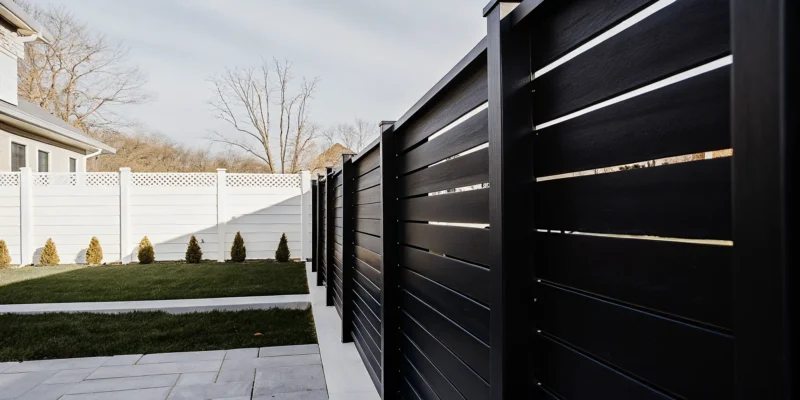
On Long Island, a fence has to do more than mark a property line. It should handle coastal conditions, support privacy where you need it, and fit naturally with patios, planting beds, pools, and outdoor entertaining areas. The right material can also reduce the recurring work associated with painted or deteriorating wood. Schedule a free design consultation to plan your fence, landscaping, and outdoor living layout together.
Those differences become clearer when you look at how each material responds to Long Island weather and how the fence can be coordinated with the spaces around it.
Why Composite and Aluminum Fencing Works on Long Island
Long Island fencing has to handle more than everyday wear. A fence may face coastal salt air in Nassau or Suffolk, heavy rain, summer humidity, winter freezing, and repeated freeze-thaw cycles. Those conditions can shorten the useful life of untreated wood, especially when moisture enters cracks, end cuts, and fastener holes. Composite and aluminum fencing options give homeowners a way to create privacy, define property lines, or improve security without accepting the same maintenance cycle as traditional lumber.
Coastal air and changing weather put materials to the test
Aluminum is particularly well suited to properties near the coast because it does not rust. That corrosion resistance matters where salt air and precipitation can accelerate deterioration in ferrous metals. With a properly applied finish, aluminum can remain a practical choice for everything from a front-yard boundary to a pool enclosure. Its structural integrity also remains strong through the temperature and humidity fluctuations common across Long Island. Composite fencing addresses a different set of problems associated with moisture and organic material. Wood plastic composite is designed to retain its shape instead of responding to wet and dry conditions in the same way as lumber. It does not warp, twist, or rot like traditional wood, and it resists the decay and insect damage that can affect a wood fence. Solid composite panels can also provide a consistent privacy barrier without the gaps or uneven boards that develop as wood changes over time.
Why wood can become a recurring maintenance project
Wood can look natural and inviting when new, but its performance depends on regular upkeep and exposure conditions. Moisture, sunlight, and seasonal movement may lead to staining, swelling, splitting, or soft areas. Freeze-thaw cycles can make existing weaknesses more noticeable, while coastal exposure adds another source of stress. Repairs may involve replacing boards, resetting posts, sealing surfaces, or addressing sections that no longer align. Composite and aluminum reduce those recurring concerns in different ways. Aluminum resists rust and climate-related corrosion, while composite avoids the warping and rot associated with traditional lumber. Neither material eliminates the need for sound design and installation. Posts still need appropriate foundations, drainage should be considered, and the fence layout should follow property lines and local requirements. A site assessment helps account for slopes, gates, utilities, and areas where water collects. For homeowners comparing materials, the right choice depends on the job. Aluminum offers open sightlines, a lighter structure, and a clean way to define a landscape. Composite is often the better fit when privacy and a solid visual barrier matter most. Both are selected for their ability to withstand the challenging Long Island climate while supporting a fence design that fits the home and surrounding landscape. Decades of laboratory and field testing by the USDA Forest Service back the core advantage of wood plastic composites: properly formulated WPC products hold up well under long-term outdoor moisture exposure. Which is exactly the condition that drives rot and decay in lumber.
How Do Composite and Aluminum Fences Compare on Privacy?
Privacy is often the clearest dividing line between these two materials. Solid composite panels block direct views into a backyard, patio, or pool area, while aluminum typically uses spaced pickets that define a boundary without closing off the view. The right choice depends on whether your priority is seclusion, visibility, security, or a balance of all three. Gappsi’s composite and aluminum fencing options can be configured around the way your property is used. Composite is usually the stronger privacy material because its panels create a continuous visual barrier. It can also provide a wood-like appearance without the rot and insect problems associated with traditional lumber. The material is engineered for durability and requires little maintenance, which helps keep a privacy fence practical over time. Composite is especially useful where you want to screen a seating area, outdoor kitchen, or pool equipment from neighboring properties. Aluminum takes a different approach. Its open design preserves sightlines, sunlight, and airflow while still marking the property line. It is commonly selected for security and aesthetic definition, particularly around front yards, driveways, gardens, and pools where homeowners want visibility. Close picket spacing and anti-climb features can improve safety for children and pets. But an open aluminum fence should not be treated as a substitute for a visual privacy barrier.
| Consideration | Composite privacy | Aluminum |
|---|---|---|
| Privacy level | High when installed with solid panels | Low to moderate, depending on picket spacing and layout |
| Visibility | Limits views through the fence | Maintains open sightlines and airflow |
| Security | Creates a visual barrier and defined enclosure | Supports boundary security, with close-picket and anti-climb options |
| Maintenance | Minimal care; does not warp, twist, or rot like traditional wood | Minimal care; occasional washing is typically sufficient |
| Best use case | Backyard privacy and pet containment; can also screen pool areas | Pool enclosure, front-yard definition, gardens, and visible property boundaries |
These categories are not rigid. Fence systems range from full privacy panels to decorative open designs, so a property can combine approaches. For example, solid composite may screen the rear yard while aluminum defines the front boundary or encloses a pool. Consider the views you want to preserve, the areas you want to conceal, and the maintenance level you prefer before selecting a layout.
What Maintenance Do Composite and Aluminum Fences Need?
For most Long Island homeowners, maintenance is largely a matter of keeping the fence clean and checking that its hardware remains secure. Aluminum and composite fencing do not require the recurring staining, sealing, and board replacement associated with many wood fences. That difference matters in a climate with changing temperatures, humidity, coastal air, rain, and winter weather.
Aluminum needs occasional washing
Aluminum fencing has a powder-coated finish designed to resist fading and chipping. In normal use, a quick wash with water and a mild cleaning solution is often enough to remove dust, pollen, salt residue, and other surface buildup. Gappsi describes aluminum fencing as requiring virtually no maintenance beyond occasional cleaning. Because aluminum does not rust, it is also a practical choice for properties exposed to moisture or salt air. During a seasonal inspection, look over the posts, rails, gate hinges, latches, and fasteners. Remove leaves or soil that collect around the base, and rinse away residue rather than scrubbing the finish with abrasive tools. If a gate begins to sag or latch unevenly, addressing the hardware early can prevent a small adjustment from becoming a larger repair. The aluminum itself is built to remain stable through Long Island’s temperature and humidity fluctuations.
Composite panels resist common wood problems
Composite fencing is similarly straightforward to care for. Modern composite materials use UV-resistant technology to help retain their color and structural integrity under sun exposure. They are also designed not to warp, twist, or rot like traditional lumber, and they resist rotting and insect damage. Routine care generally consists of washing the panels and checking posts, caps, and gate hardware for debris or unusual movement. Greenwood WPC adds another layer of protection with a co-extruded polymer shield around the composite material. This outer layer helps protect the panel from everyday exposure while preserving the appearance of a wood-inspired fence. You can review Gappsi’s composite and aluminum fencing options to compare panel styles and finishes.
How does this compare with wood fencing?
Wood fences typically need periodic staining or sealing to limit moisture absorption and slow weathering. Boards may also need replacement when they rot, warp, split, or suffer insect damage. Composite and aluminum do not eliminate every inspection or cleaning task. But they reduce the finish work and material repairs that can make wood fencing time-consuming over the years. For homeowners weighing composite and aluminum fencing Long Island properties, the right choice often depends on the desired privacy and appearance, balanced against how much ongoing maintenance they want to perform.
Choosing Between SleekFence, Greenwood, and Frame It All
Each system creates a different relationship between your property, the street, and the spaces behind the fence. The right choice depends on whether your priority is an open architectural edge, full privacy, or a panel design that combines structure with a more traditional fence profile.
SleekFence for a clean contemporary boundary
SleekFence contemporary aluminum fencing uses powder-coated aluminum and modern horizontal lines to create a restrained, architectural appearance. It works well around contemporary homes, patios, pools, and planting beds where you want the fence to define the property without visually closing it in. Aluminum provides a strong yet lightweight alternative to iron, which can simplify handling and installation while avoiding the maintenance burden associated with heavier metal fencing. Because the rails create an open, linear pattern, SleekFence is often a fit when you want security, boundary definition, and visibility rather than a solid privacy wall. The system can also be tailored with gates, decorative toppers, and custom post caps, allowing the details to coordinate with the home’s architecture and adjacent hardscape.
Greenwood for composite privacy and recycled content
Greenwood composite privacy fencing uses WPC boards with aluminum posts. Its solid panels can provide a stronger visual screen for yards, pool areas, outdoor dining spaces, or equipment that homeowners prefer to keep out of sight. Greenwood is available in classic and modern privacy profiles, as well as semi-privacy panels, so you can control how much light and visibility pass through the fence. The system is made with 90% recycled materials, giving homeowners a way to consider recycled content alongside privacy and appearance. Composite fencing is designed to resist common wood problems such as warping, twisting. And rot, while its wood-inspired surface can maintain a warmer look than an open metal fence.
Frame It All for flexible panel styles
Frame It All composite privacy fences offer several system directions within one product family. Riviera and Valla privacy options suit homeowners seeking a more enclosed boundary, while pre-assembled shadowbox panels create a defined fence line with a layered, finished appearance. This flexibility can help when the front, side, and rear portions of a property need related designs rather than an identical treatment everywhere. During design, compare the desired privacy level, sightlines, gate locations, and the visual weight of each panel against the home and landscape. A site-specific plan can combine an open aluminum run at the front with composite privacy where seclusion matters most.
How Fencing Enhances Landscaping and Outdoor Living Spaces
Fencing should support the way your property is used, not sit apart from the rest of the landscape. When its lines, materials, and gates are coordinated with patios, pools, planting beds, and outdoor lighting, the result feels intentional from the street to the backyard. Aluminum works especially well across landscaping styles, from minimalist modern designs to more traditional Long Island properties. While composite panels can define private areas with a solid, wood-inspired appearance. Explore Gappsi’s outdoor living projects for examples of how these elements can work together. Schedule a design consultation before selecting fence materials, colors, and gate locations.
Coordinate the fence with patios and pools
A fence can frame a bluestone patio, separate a pool area, or create a quieter section for dining and entertaining. The right height and openness depend on the purpose of each zone. Open aluminum pickets can provide definition without making a patio feel enclosed, while solid composite panels can screen seating areas from neighboring properties. Gates, post caps, and decorative toppers add another opportunity to connect the fence to nearby stonework, plantings, or the home’s exterior details. 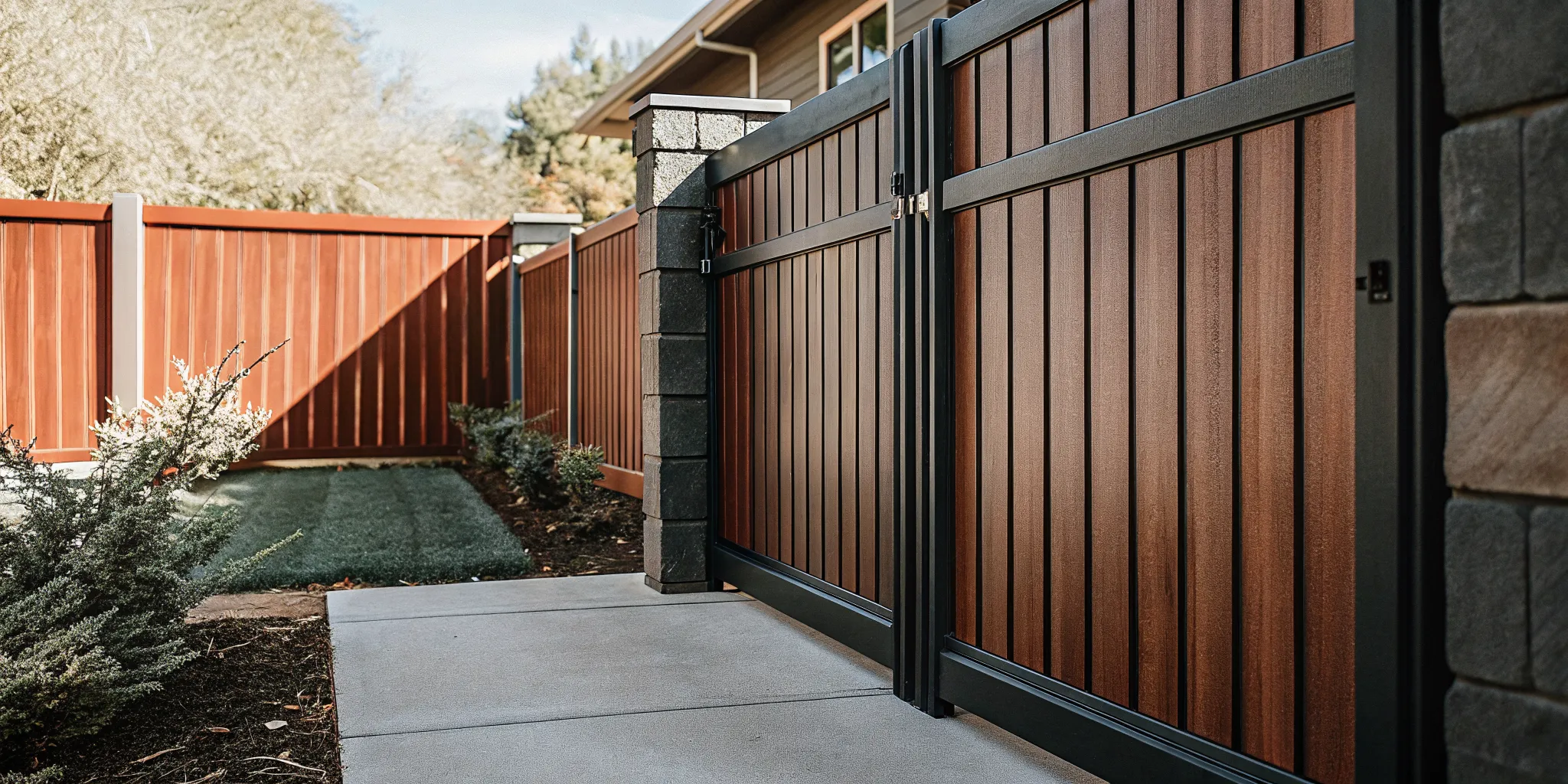
Plan around lighting, irrigation, and drainage
Fence installation should be planned alongside the systems that make an outdoor space functional. Path lights may need clear post and gate locations, irrigation lines should remain accessible, and drainage patterns should not be interrupted by new footings or panels. A professional site assessment can identify utility locations and drainage challenges before construction begins. On sloped property, careful installation helps the fence follow the land while maintaining consistent lines and usable gates. This attention to topography prevents the fence from looking disconnected from terraces, walkways, and planting beds.
Why a single design-build contractor can simplify the project
Using one contractor for fencing and related outdoor improvements keeps decisions connected. The same team can coordinate fence placement with patio elevations, pool boundaries, lighting runs. Irrigation access, and landscape transitions instead of asking separate contractors to solve conflicts after the fact. Gappsi’s design-build-supply model supports this coordination, including visual planning that helps homeowners review how the fence will relate to the broader property.
Account for curb appeal and local requirements
A well-proportioned fence can strengthen curb appeal by defining the property without competing with the architecture or plantings. Before work begins, confirm the property line, applicable setbacks, and local fencing ordinances. Permit requirements vary by municipality on Long Island. In the Town of Smithtown, for example, a permit is required before most residential fence installations. So it pays to check with the local building department early in the process. Gappsi can guide homeowners through property-line considerations and local regulations so the design is practical as well as visually consistent. See the Town of Smithtown fence permit FAQ for a local example.
Frequently Asked Questions
Which fence material offers more privacy?
Solid composite panels generally provide more privacy because they create a continuous visual barrier. Open-style aluminum fencing is better suited to defining property lines, improving visibility, and adding security without fully closing off a yard. The best choice depends on whether your priority is screening, openness, or a combination of both. Gappsi’s fencing guide describes composite as the privacy-focused option and aluminum as a choice for security and aesthetic definition.
How much maintenance do composite and aluminum fences require?
Both options require less routine care than traditional wood. Aluminum typically needs only an occasional wash, while its powder-coated finish helps resist fading and chipping. Composite fencing is designed to resist fading from UV exposure and does not warp, twist, or rot like lumber. Rinsing away dirt, salt, and plant debris during seasonal cleanup helps preserve either material.
Can these fences handle Long Island weather and coastal conditions?
Aluminum does not rust, making it a practical choice for properties exposed to coastal air or heavy precipitation. Composite fencing is engineered to resist common wood problems, including decay and insect damage. Site drainage, footing depth, slope, and exposure still matter, so the installation plan should account for the property’s specific conditions rather than relying on material selection alone. See the local material guidance.
Can fencing be coordinated with existing landscaping?
Yes. Fence height, panel style, color, gate placement, and the transition around planting beds can be planned with patios, pools, walkways, and other outdoor features. Aluminum can suit both modern and traditional landscapes, while composite panels can provide a consistent backdrop for planting. A site assessment helps the fence follow natural slopes and align with the property’s circulation.
Ready to Plan Your New Fence?
The right fence can bring privacy, structure, and a more cohesive finish to your Long Island property. Gappsi can help you compare composite and aluminum options, review your goals, and plan a design that fits the surrounding landscape. Schedule a free fencing design consultation with the Gappsi team by Contact Gappsi through our contact page.