


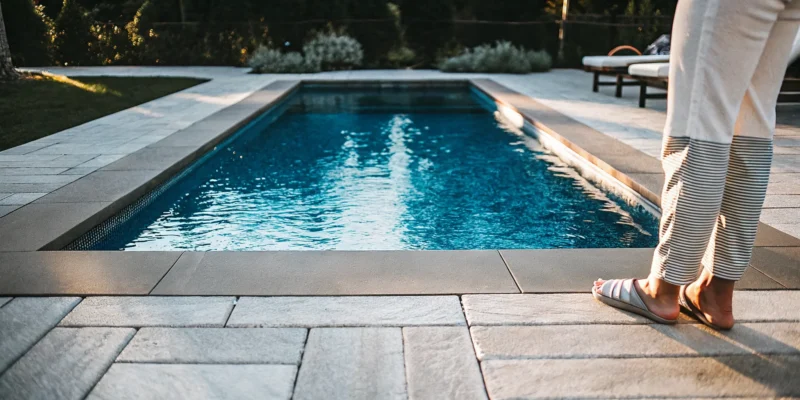
Pool decking has to handle more than appearance. On Long Island, it must stay comfortable under summer sun, provide dependable footing around wet surfaces, and tolerate seasonal freeze-thaw conditions. The material and installation method also need to work with the pool structure, coping, drainage, and surrounding masonry. Contact Gappsi through our contact page
Choosing between beige or silver travertine is only the beginning. The right decision depends on how the stone will meet a gunite pool edge. How the base will manage water and movement, and how regularly the surface will be cleaned and sealed. Those details establish why travertine is often considered for Long Island pool environments.
What Is a Travertine Pool Deck and Why Is It a Natural Choice for Long Island?
A travertine pool deck is an outdoor pool surface made from travertine pavers, a form of natural limestone created when mineral-rich water deposits layers of calcium carbonate over time. Its softly varied color, small surface voids, and natural texture give a pool surround more visual depth than a uniform poured slab. Beige and silver tones can also coordinate with gunite, coping, masonry walls, and planting throughout a Long Island backyard. Travertine is especially well suited to the area around a pool because it combines practical surface characteristics with a natural stone appearance. The material stays relatively cool to the touch in direct sunlight, which makes barefoot movement more comfortable during summer use. Gappsi identifies natural cooling as a key reason travertine is recommended for pool decks. Learn more about Gappsi swimming pools. 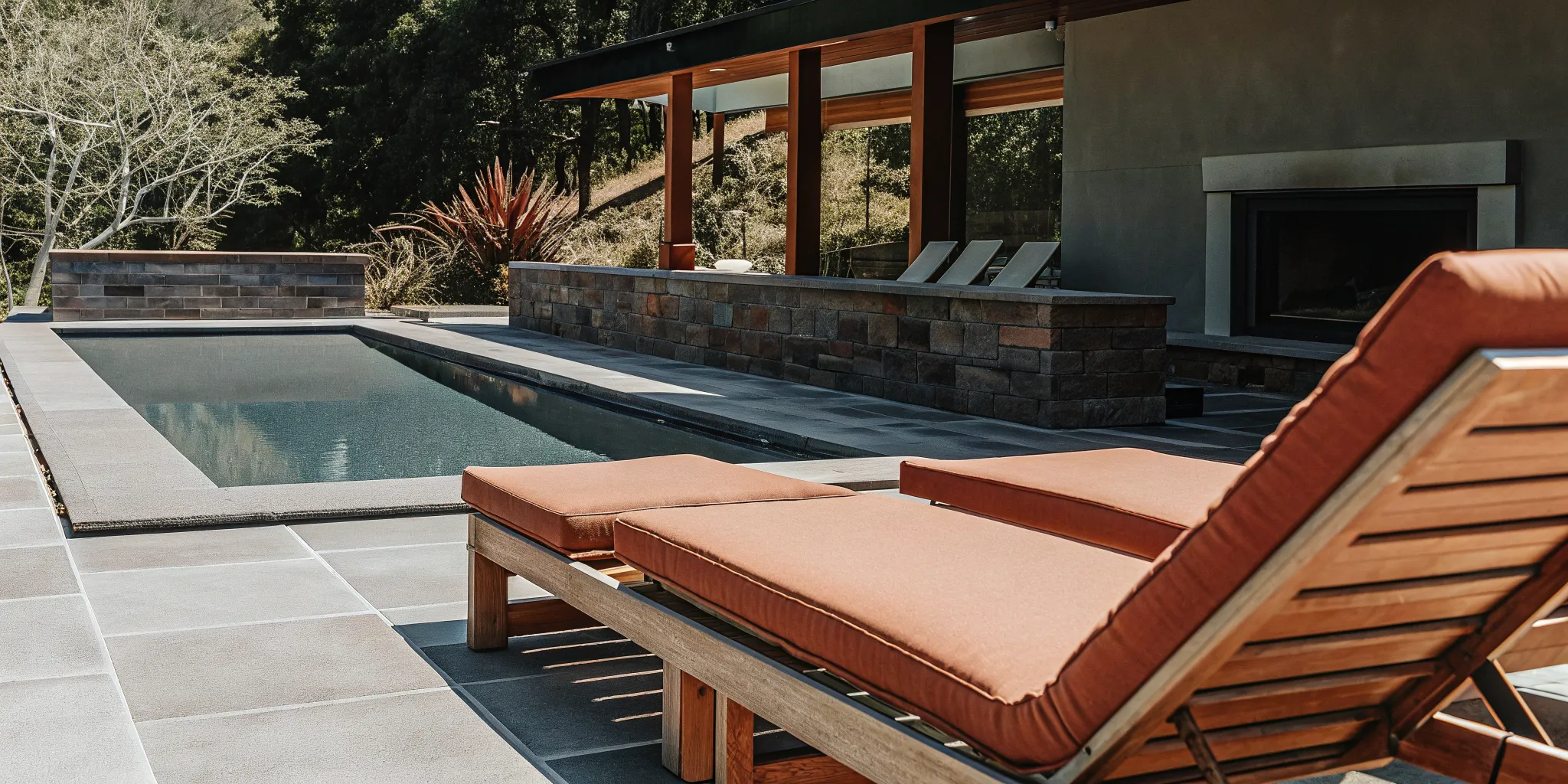
How does travertine handle water around a pool?
The stone’s textured surface provides natural slip resistance, an important consideration where swimmers regularly track water onto the deck. Proper finishing and sealing help maintain a non-slip surface suitable for a pool environment. Travertine pavers also handle routine water exposure well when the base, joints, drainage, and installation method are designed correctly.
What makes travertine a practical Long Island material?
Long Island pool decks face intense sun, seasonal temperature changes, and freeze-thaw conditions. Proper material selection and installation matter more than the label alone. Carefully selected travertine that is correctly installed can remain durable through freeze-thaw cycles, while a professional layout helps manage transitions at pool edges and other masonry connections. Gappsi coordinates masonry with pool construction so the deck, coping, and pool edge are planned as one system. The result is a surface that feels cooler than many conventional options, offers a naturally refined appearance, and supports safer circulation around the water. Periodic cleaning and sealing remain part of responsible care, but travertine does not require a complicated maintenance routine when it is installed and finished appropriately.
How Much Does a Travertine Pool Deck Cost per Square Foot?
A reliable cost per square foot for a Long Island travertine pool deck requires more than multiplying the deck area by a material price. The final quote reflects the stone selected, the condition of the site, the installation method, access, drainage, pool geometry, and the labor needed to prepare a stable base. A professional measurement and site review are necessary before anyone can price the work responsibly.
How do travertine grade and finish affect the estimate?
Beige and silver travertine pavers can differ in availability, sorting, color variation, thickness, and visual consistency. A selected grade with fewer noticeable variations may carry a higher upfront material cost, while a more varied stone can create a broader natural palette. Finish matters as well. Honed surfaces have a smoother appearance, while tumbled edges and texture create a softer, weathered look. The right choice should balance appearance, pool safety, maintenance, and the overall masonry design. Material quality is not simply an aesthetic decision. Properly selected and installed travertine is suited to pool environments, and a properly finished surface can provide natural slip resistance. Spending more upfront on stone that fits the site and installation plan may support longer-term value, especially in a climate with seasonal freezing and thawing.
What installation conditions change the cost?
Deck size affects total investment, but it is only one part of the calculation. A small, irregular pool area may require more layout and cutting work than a larger, straightforward rectangle. Existing concrete may allow a sand-set or mortar-set approach, depending on its condition, drainage, elevation, and structural suitability. If the base is uneven, cracked, poorly drained, or needs removal, sub-base preparation can add labor and materials before the pavers are installed. New gunite construction also requires careful coordination around coping, steps, drainage, and pool edges. Ask for a quote that separates stone selection, demolition or preparation, installation, coping, sealing, and related masonry work. That detail makes proposals easier to compare and helps ensure the finished deck performs as intended. 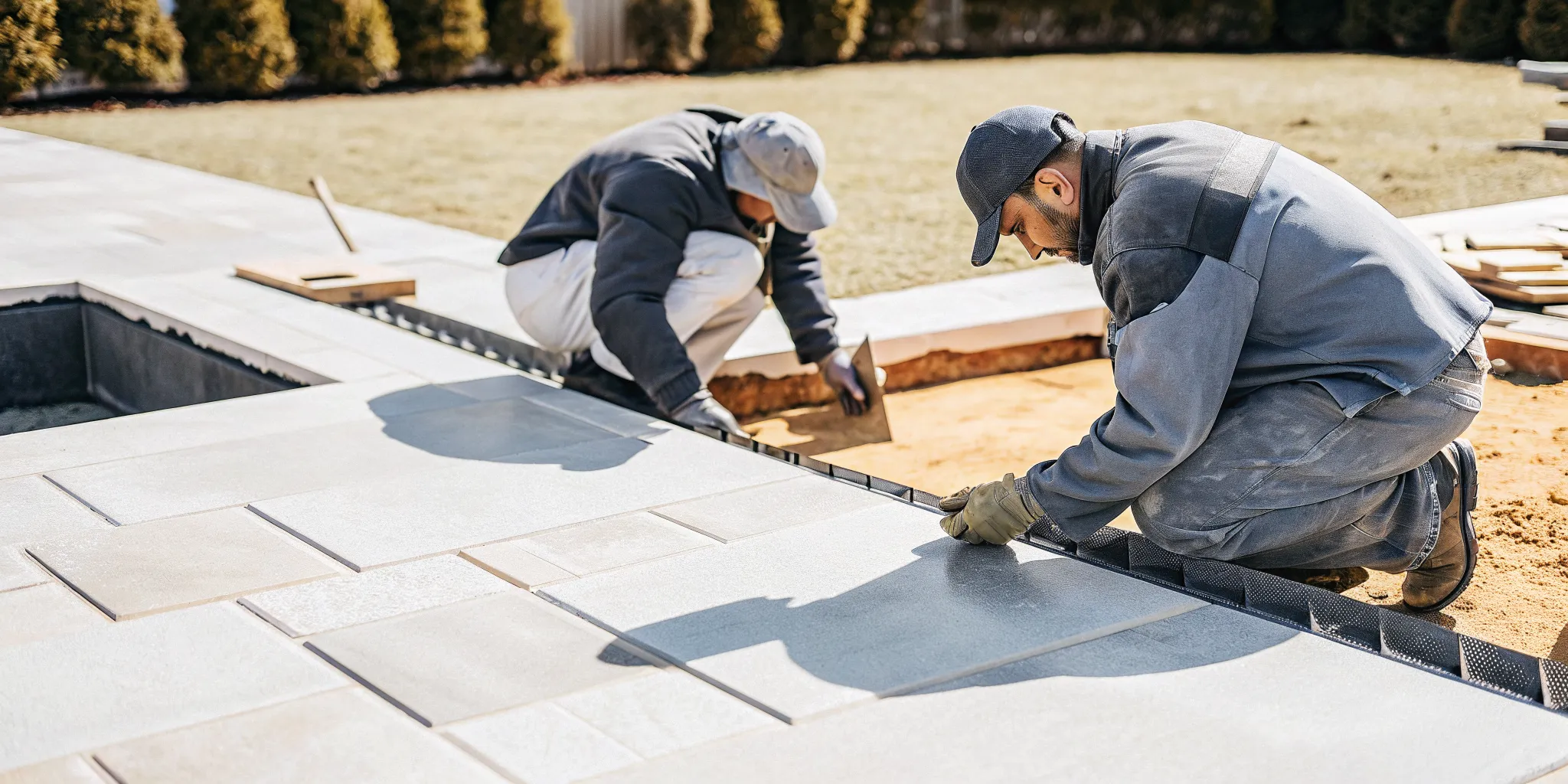
Travertine vs Concrete, Porcelain, and Bluestone for Pool Decks
Material choice affects how a pool deck feels underfoot, performs around water, and holds up through Long Island winters. Travertine offers a naturally textured surface and remains relatively cool in direct sunlight. When properly finished and sealed, it also provides useful slip resistance for pool environments. The best choice depends on how you weigh heat, maintenance, appearance, and installation requirements.
How does travertine compare with concrete?
Poured concrete can provide a broad range of colors, textures, and patterns, but its surface and color may change as it weathers. Travertine brings natural variation and can be installed as pavers, including over an existing concrete deck with either a sand-set or mortar-set method. That approach can simplify a renovation when the underlying slab is suitable. Concrete may be the practical choice for a continuous surface, while travertine is often better suited to homeowners who want a natural stone texture and cooler walking surface.
Is travertine a better choice than porcelain pavers?
Porcelain pavers offer consistent sizing and a clean, manufactured appearance, but they require careful specification and installation around pool edges. Travertine has more variation from piece to piece, which can make the finished deck feel less uniform but more connected to a natural-stone landscape. Bluestone provides a dark, structured look, though darker stone can feel warmer in strong sun. Compare samples in the actual pool setting before deciding.
| Material | Heat retention | Slip resistance when wet | Maintenance | Freeze-thaw durability | Appearance |
|---|---|---|---|---|---|
| Travertine | Generally stays cooler in direct sun | Naturally textured; improved with proper finish | Low maintenance; periodic cleaning and sealing | Durable when quality stone is properly installed | Natural variation in beige, silver, and related tones |
| Poured concrete | Can retain noticeable heat in sun | Depends on texture and finish | Periodic cleaning; surface upkeep may be needed | Depends on mix, drainage, joints, and installation | Uniform or patterned, with broad finish options |
| Porcelain pavers | Depends on color, profile, and exposure | Depends on the rated surface finish | Typically straightforward cleaning | Depends on product rating and installation system | Consistent sizes, colors, and manufactured patterns |
| Bluestone | Can feel warmer because of its darker color | Depends on finish and surface texture | Periodic cleaning and appropriate sealing | Depends on stone selection, drainage, and installation | Dark blue-gray tones with a more formal appearance |
For a detailed look at related options, review Gappsi’s natural stone pool decking guidance. Travertine is a strong fit when cooler surface temperatures, wet-foot traction, low routine maintenance, and natural variation matter. Its freeze-thaw performance still depends on correct stone selection, drainage, base preparation, and installation. Contact Gappsi through our contact page
How Is Travertine Decking Installed Around a Gunite Pool Edge?
A successful pool deck installation begins before the first travertine paver is set. The gunite shell, coping line, drainage plan, and masonry layout must be treated as one coordinated system. This is especially important at the pool edge, where small changes in elevation or alignment can create an uneven transition between the waterline, coping, and walking surface. Gappsi coordinates masonry with pool installation to create seamless transitions between deck materials and pool edges. Learn more about swimming pool construction and masonry coordination.
The installation sequence protects the pool edge
- Prepare the site and gunite edge. The crew confirms the finished elevations, checks the gunite edge and coping dimensions, and removes loose material or debris. The edge must be clean, stable, and properly coordinated with drainage before the deck base is installed.
- Build or verify the supporting base. Travertine pavers need a stable, properly graded foundation that can handle normal pool-deck foot traffic. Where the existing foundation is suitable, travertine may be installed over concrete using a sand-set or mortar-set method. The chosen assembly depends on the condition and layout of the base, as well as the required transition at the gunite shell. See the travertine paver installation options for additional context.
- Select the setting method. A sand-set system places pavers on a prepared bedding layer, while a mortar-set system bonds the pavers to the prepared surface. The installer selects the method with the pool structure, elevations, drainage, and long-term movement in mind. This decision should be made with the gunite and masonry crews, not after the pool edge is complete.
- Place and cut the pavers at the coping. The field pavers are laid according to the design, with cuts measured carefully around corners, curves, steps, and the coping edge. Consistent joint lines and a deliberate edge detail produce a cleaner transition than forcing irregular pieces into the final row.
- Fill joints and compact the surface. Joint sand is swept into the spaces between pavers, then the surface is compacted using equipment and protection appropriate for the stone. The goal is a stable walking surface without disturbing the coping or shifting the edge pieces.
- Seal the finished travertine. After the installation materials have set and the surface is clean and dry, the travertine can be sealed with a product appropriate for the stone and pool environment. Proper finishing helps support a non-slip surface, while periodic sealing and cleaning help maintain appearance and longevity, as noted in Gappsi’s pool material guidance.
The critical detail is coordination: the gunite crew establishes the pool structure, while the masonry team carries those elevations and lines into the deck. That shared plan helps the finished travertine surface meet the pool edge cleanly and perform as intended.
Does a Travertine Pool Deck Get Hot in the Sun?
A travertine pool deck can warm in direct sun, but it generally feels more comfortable underfoot than many dense paving materials. The stone’s natural structure helps it stay cool to the touch, even during sunny afternoons. That makes travertine a practical choice for the walkways, lounging areas, and pool edges where bare feet are common. The cooling benefit is not a promise that the surface will never warm. Shade, air movement, stone color, moisture, and the intensity of the sun all affect how it feels.
Why travertine feels cooler around a pool
Natural travertine is valued for its heat resistance and natural cooling properties in pool-deck applications. Its lighter beige and silver tones can also support a cooler visual and physical surface than very dark paving. The finish still matters. A properly selected and finished stone should provide texture for traction, while regular care helps preserve the surface in a wet pool environment. Gappsi identifies travertine as a pool-deck material that stays relatively cool in direct sunlight and offers natural slip resistance. Learn more about swimming pool materials and surrounds. Comfort underfoot is only one part of the decision. A Long Island deck also needs to handle seasonal temperature changes, water exposure, foot traffic, and movement at the pool edge. That is why the base, drainage, joint treatment, stone selection, and installation method matter as much as the surface material. A properly installed travertine system is designed to manage these conditions rather than relying on the stone alone.
How travertine handles Long Island freeze-thaw cycles
Well-selected, properly installed travertine can resist freeze-thaw conditions. Water that enters a paving system can expand as it freezes, so sound drainage and installation details are important for reducing stress, shifting, and cracking. This is especially relevant around a pool, where repeated wetting can increase exposure to seasonal changes. An academic study of travertine-based pervious concrete reported strength loss ranging from 11.39% to 17.93% after 25 freeze-thaw cycles, with the strongest resistance observed in one tested mixture. The study examined a specific pervious-concrete formulation, not every travertine paver or pool-deck assembly, so its results should not be treated as a direct lifespan guarantee. It does, however, provide useful evidence that travertine-based materials can retain substantial structural performance through repeated freezing and thawing when engineered appropriately. Read the PubMed study on travertine-based pervious concrete. For a durable installation, evaluate the stone and the complete assembly together. Confirm the substrate, slope, drainage, edge details, and setting method before work begins. Those decisions help a travertine deck remain comfortable in summer and stable through winter.
How to Clean and Maintain a Travertine Pool Deck
A travertine pool deck is relatively low maintenance, but a simple care routine helps preserve the stone’s color, texture, and service life. Periodic cleaning and sealing are recommended for travertine used around swimming pools, where sunscreen, leaves, soil, splashed chemicals, and standing water can collect on the surface. The goal is not to scrub aggressively. It is to remove residue without damaging the stone or reducing its natural slip resistance.
What is the safest way to clean travertine?
Begin with routine sweeping using a soft-bristle broom to remove grit, leaves, and other debris before it is ground into the surface. Follow with a rinse using a garden hose and allow the deck to drain and dry. For stuck-on grime near the pool waterline, use a soft brush and a pH-neutral stone cleaner mixed according to the product directions. Rinse thoroughly so cleaner residue does not remain in the travertine’s pores. Travertine is calcium-based, so acidic substances can etch it. Citrus, wine, vinegar, and harsh cleaning agents may leave dull spots or change the surface texture. Avoid acidic cleaners, abrasive powders, stiff wire brushes, and pressure-washing settings that can dislodge joints or damage the stone. If a spill occurs, blot it promptly rather than spreading it across the deck. 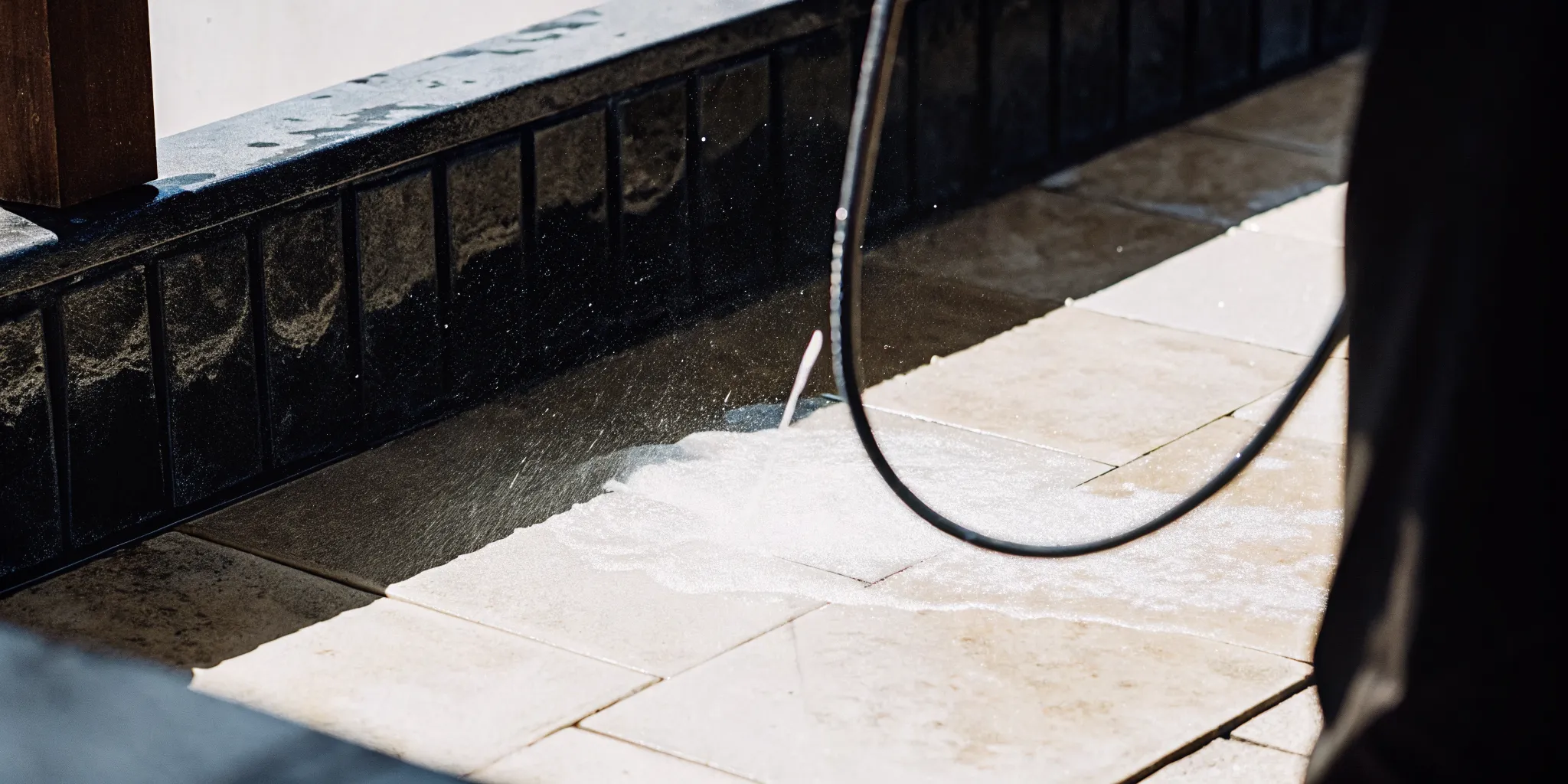
How often should travertine be sealed?
Periodic resealing helps maintain the appearance and longevity of a travertine pool deck. The right interval depends on the sealer, exposure, drainage, traffic, and how quickly water stops beading on the surface. Rather than applying a new coat over dirt, clean the deck first and let it dry fully. A masonry professional can evaluate whether the existing sealer is worn and select a finish that maintains the stone’s texture instead of creating a slick film. Watch the waterline and low points after storms or heavy pool use. White, powdery deposits may indicate efflorescence, while dark areas can reflect organic grime or persistent moisture. Address these conditions early with appropriate stone-care methods, then review drainage and joint conditions if the problem returns. With regular sweeping, careful rinsing, pH-neutral cleaning, and timely resealing, travertine remains an easy-care surface for a Long Island pool area. Contact Gappsi through our contact page
Frequently Asked Questions
Is travertine good for pool decks?
Yes. Natural travertine offers a relatively cool surface in direct sunlight and a naturally textured finish suited to pool areas. When it is properly sealed and finished, it can provide a non-slip surface for wet environments. Source: Gappsi swimming pools.
How much does a travertine pool deck cost per square foot?
There is no single price because the total depends on the stone grade, paver color such as beige or silver. Deck dimensions, existing foundation, edge details, drainage, and whether the installation is sand-set or mortar-set. A project-specific site review is the reliable way to compare the full installed cost.
Does travertine get hot in the sun?
Travertine stays relatively cool to the touch even in direct sunlight, which is one reason it is commonly selected around swimming pools. Actual comfort still depends on sun exposure, stone color, surrounding materials, and local weather. Source: Gappsi swimming pools.
Is travertine slippery when wet?
Proper stone selection, finishing, and sealing matter. According to Gappsi’s pool guidance, properly sealed and finished travertine provides a non-slip surface for pool environments. The installation should also address drainage and transitions around the pool edge. Source: Gappsi swimming pools.
How do you maintain a travertine pool deck?
Routine care is straightforward: remove surface debris, clean with products appropriate for natural stone, address spills promptly, and schedule periodic sealing. Travertine is considered low maintenance, but cleaning and sealing help preserve its appearance and longevity. Source: Gappsi swimming pools.
Ready to Plan Your Travertine Pool Deck?
A thoughtful deck plan helps align the travertine selection, pool edge details, and installation approach with your Long Island home. Schedule a free consultation with Gappsi to discuss your natural travertine pool deck design and installation. Contact Gappsi through our contact page to get started with the conversation and determine the right next step for your project.