


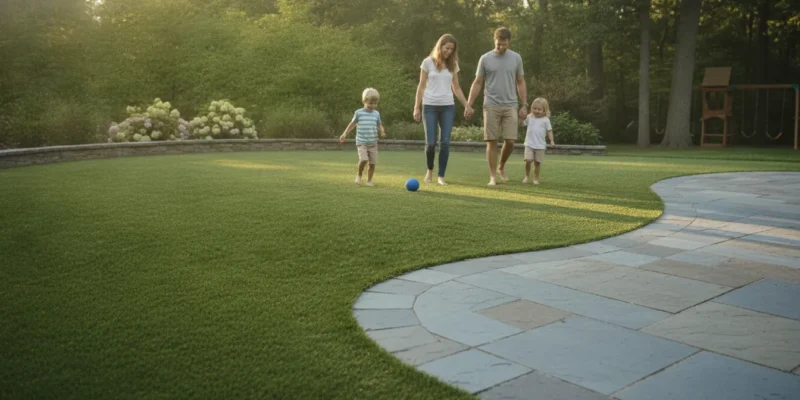
Artificial turf can keep a Long Island yard green through changing weather, but the installation price depends on far more than the roll of grass. The condition of the existing lawn, the slope of the property, drainage needs, equipment access, and the intended use of the space all shape the final scope. Homeowners in Nassau and Suffolk Counties who budget only for the turf material often underestimate the base work that sits beneath the finished surface. Contact Gappsi through our contact page for a free consultation and a site-specific artificial grass installation quote tailored to your property.
For homeowners in Nassau and Suffolk Counties, the most useful comparison is not simply one contractor’s price per square foot. It is what the proposal includes and how the installation is engineered to handle the property. Understanding those cost drivers makes it easier to compare options and avoid paying twice for preventable drainage or base-work problems. The sections below break down turf pricing, base preparation, drainage and pet-friendly choices, long-term maintenance, and the DIY-versus-professional decision so you can plan a realistic budget.
What Drives Artificial Grass Installation Cost on Long Island
The final artificial grass installation cost for a Long Island property depends on the conditions beneath and around the turf, not only on the roll of grass selected. A straightforward replacement over a level, prepared surface requires less work than a yard with compacted soil, uneven grades, poor drainage, or established sod. For homeowners in Nassau and Suffolk Counties, an accurate estimate should account for the full installation system and the specific demands of the site.
How does yard size affect the estimate?
Contractors measure the usable lawn area in square feet before calculating materials and labor. A larger yard requires more turf, base aggregate, infill, seams, edging, and hauling. Smaller or irregularly shaped areas can also require careful cutting and produce more material waste. Curved borders, planting beds, walkways, patios. And multiple turf sections add layout time because the installation must be fitted around existing features rather than rolled out as one rectangle.
Why does existing sod removal matter?
Natural grass usually cannot remain beneath a synthetic lawn. Site preparation commonly includes removing the existing sod, excavating to the required depth, and installing a stable drainage base. The amount of labor and disposal involved depends on how much lawn must be removed. How compacted the soil is, and whether roots, rocks, old edging, or other debris are present. Proper base preparation is critical to turf longevity because it creates the support layer beneath the finished surface.
What do excavation, grading, and drainage add?
Changes in elevation are a major cost variable. Grading creates the slope needed to direct water away from the home and prevents low spots from developing under the turf. If the existing ground is uneven, additional excavation, fill, compaction, or retaining work may be needed. Drainage improvements may include correcting the base, adding drainage materials, or addressing areas where water tends to collect. Proper site drainage helps prevent pooling, which protects the turf system and the surrounding landscape. Long Island soil and climate conditions make this evaluation especially important. A professional installation should be tailored to local soil types, slope, and expected weather so the base remains stable over time. These factors can vary between properties in Nassau and Suffolk, even when the lawns appear similar from the street. Material grade also changes the estimate. Turf varies in fiber construction, density, color, backing, and intended use. So the appropriate product depends on whether the area is a front lawn, play space, pet area, or another application. Comparing quotes is most useful when each one clearly separates turf, site preparation, grading, drainage, installation, and infill.
Artificial Grass Cost per Square Foot: What to Expect
For planning purposes, artificial grass installation cost commonly falls around $8 to $12 per square foot in the United States, according to industry pricing data from Gitnux. That range is a starting point, not a guaranteed Long Island quote. The final number depends on the turf construction, the intended use, the size and shape of the area, and the preparation required below the surface. The table below separates the turf material ranges most homeowners encounter. It is useful for comparing products, but it does not represent a complete installed price. Excavation, base stone, drainage work, edging, seams, labor, and infill may be quoted separately or included in a project total.
| Turf Grade | Cost per Sq Ft | Best For |
|---|---|---|
| Lawn standard | $4 to $8 | General lawns, play areas, and dog runs |
| Mid-tier turf | $4 to $7 | Everyday residential use with a fuller appearance |
| Premium-grade turf | $7 to $10+ | Higher-use lawns and projects needing denser fibers |
| Putting green or specialty turf | $8.50 to $12.50 | Putting greens and purpose-built recreational areas |
These material bands are consistent with published comparisons. A NexGen Lawns calculator places lawn or dog grass at approximately $4 to $8 per square foot and putting green installations at $8.50 to $12.50. Another pricing breakdown lists mid-tier turf at $4 to $7 and higher-grade turf at $7 to $10 or more. Those figures help explain why two products that look similar in a small sample can produce different estimates once the entire yard is measured. 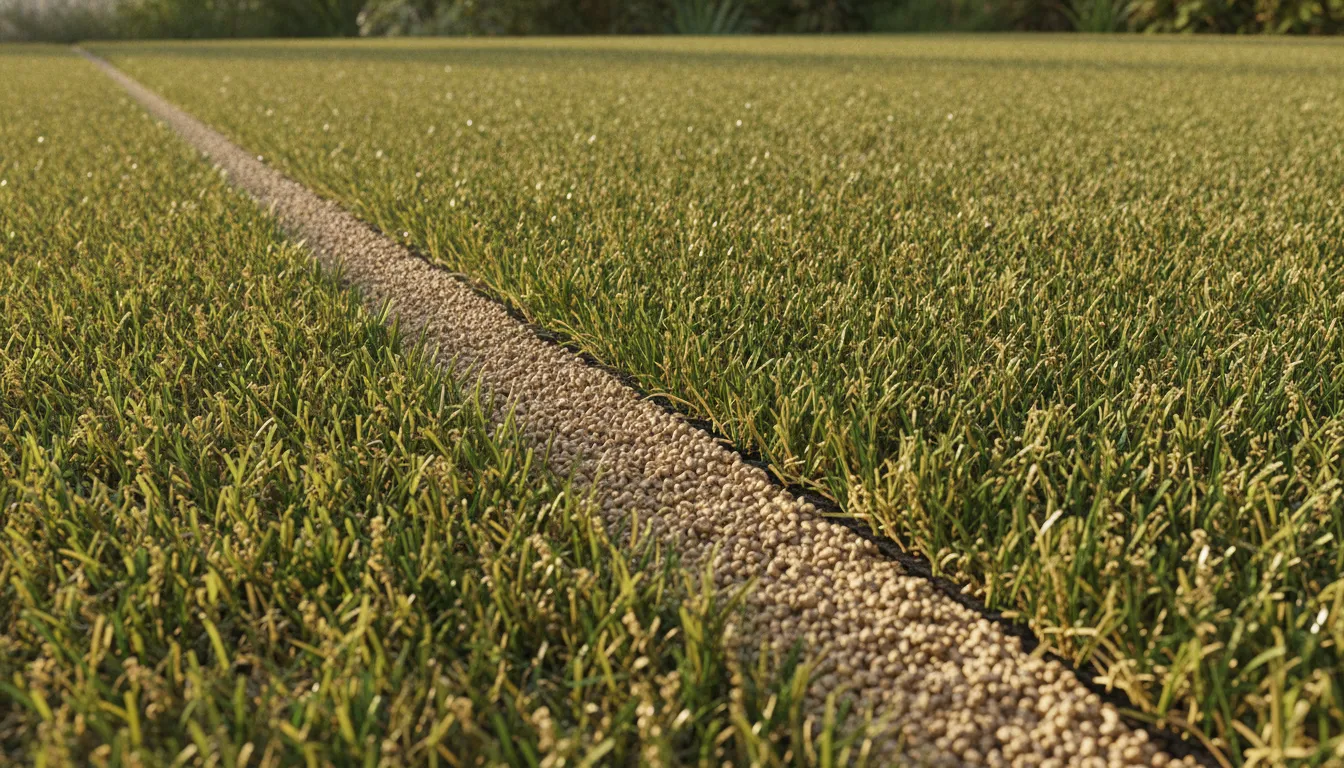 Material selection should follow the way you use the space. A lawn that receives occasional foot traffic may not need the same fiber density or backing as a busy dog area. A putting green also requires a different surface specification and installation approach than a landscape lawn. Infill helps stabilize the turf, adds ballast, and keeps fibers upright, so it is part of the system rather than a cosmetic extra. The right product also has to work with the planned drainage and base. For a realistic project budget, compare the complete scope instead of multiplying the turf price by square footage alone. On Long Island, a professional installer should account for existing sod, soil conditions, grading, drainage, transitions, and the finished edge. Ask whether each item is included in the proposal, then compare warranties, installation details, and materials on equal terms. That approach gives you a clearer view of the true artificial grass installation cost before work begins. Contact Gappsi through our contact page to review your projected square footage and get a detailed, site-specific estimate from Gappsi Group.
Site Prep and Base Work: The Hidden Cost of Artificial Grass
The visible turf is only one part of an installation. Beneath it, the crew must create a stable, well-draining surface that can handle rain, foot traffic, and seasonal changes. That preparation is why two projects with similar square footage can have very different totals when homeowners compare artificial grass installation cost. On Long Island, the first step may be removing existing sod, roots, and organic soil. Leaving that material beneath synthetic turf can create an unstable layer as it settles or decomposes. Depending on the property, preparation can also require excavating to the correct depth, clearing construction debris, and hauling the removed material away. These tasks add labor and disposal costs before the turf is ever unrolled.
Why excavation and grading matter
A level-looking yard is not always ready for turf. The subgrade must be shaped so water moves away from the home, retaining walls, patios, and other structures rather than collecting beneath the lawn. Proper grading is especially important on properties with existing low spots, transitions between hardscape and planting areas, or slopes that direct runoff toward the house. Long Island soil and weather conditions make this assessment more than a cosmetic step. Local soil characteristics affect how quickly water moves through the site, while heavy rain and freeze-thaw cycles can expose weak areas. A base designed without those conditions in mind may settle unevenly or leave water pooling under the turf. Gappsi notes that understanding local soil and climate is important for base longevity and drainage performance across Nassau and Suffolk Counties.
What does the compacted base add to the project?
After excavation and grading, installers typically place crushed stone or gravel to form a compacted stone base. The material is spread in lifts, moistened as needed, and compacted into a firm layer. This base supports the turf system, helps maintain the finished grade, and creates a path for water to move through the installation. Proper drainage is essential because standing water can lead to soft spots, odors, and premature wear. Base preparation commonly adds about $1.50 to $3.00 per square foot, depending on the existing site, depth required, access, disposal needs, and drainage corrections. That range is an allowance for the work, not a universal price. A small yard with clean, accessible soil may need less preparation than a larger property with compacted ground, buried debris, poor slope, or a failed existing lawn. When reviewing a proposal, ask whether sod removal, excavation, grading, disposal, drainage, and compaction are included. A detailed scope makes the quote easier to compare and helps prevent a low initial price from becoming a series of added charges. Professional synthetic turf installation services should address the base as carefully as the turf selected for the surface.
Drainage, Infill, and Pet-Friendly Artificial Grass Options
A turf system performs best when the layers beneath the blades are designed for the site. On Long Island, that means treating drainage as part of the installation rather than an afterthought. Soil, slope, and local weather conditions can affect how quickly water moves through the area, so the base and drainage design should be planned together.
How does the drainage layer prevent pooling?
After the existing lawn is removed and the area is excavated, the installer can build a compacted base that allows water to move away from the surface. A drainage layer may include a perforated material or planned gaps that give water a path through the turf system. The goal is to prevent water from sitting below the backing or collecting in low spots. Proper site drainage is essential because pooling can create odors, soft areas, and premature wear. It is also one reason local soil conditions matter when evaluating an artificial grass installation cost. A simple, well-draining site may need less corrective work than an area with poor grading or slow-draining soil. Drainage details should also account for nearby patios, planting beds, downspouts, and walkways. A professional assessment can identify where runoff is likely to collect and tailor the base to the slope and drainage requirements. Gappsi serves Nassau and Suffolk Counties, where familiarity with local site conditions helps support a durable base.
What does infill do for artificial grass?
Infill is spread between the turf fibers after the grass is secured. Materials such as silica sand and rubber add ballast, stabilize the surface, and help keep the fibers upright. Infill also gives the turf a more natural feel underfoot instead of leaving the blades unsupported and flat. The correct material and application depend on how the area will be used, including whether it is a lawn, play space, or pet area. For homes with dogs, consider a pet-focused turf system paired with a sanitary infill designed to support cleaning and odor control. These options can make routine maintenance easier, but they do not eliminate the need to remove solid waste and rinse the surface as needed. Homeowners comparing artificial grass for pets should review drainage, backing, infill, and cleaning requirements together rather than choosing by blade appearance alone. Artificial grass can provide a consistent surface without watering or mowing, while the right drainage and infill details help preserve that performance. Ask for an installation plan that explains the base, water path, infill material, and maintenance approach before comparing quotes.
How Much Do Artificial Grass Maintenance Costs Run?
One of the clearest differences between artificial grass and a natural lawn appears after installation. Synthetic turf does not need regular watering, mowing, or fertilization, so the ongoing work is limited to basic cleaning and occasional grooming. Industry estimates place annual maintenance for artificial grass at roughly $0.10 to $0.20 per square foot. That estimate gives Long Island homeowners a useful starting point when comparing the full cost of an artificial grass installation with the recurring cost of caring for living grass. For a 500-square-foot area, that range equals approximately $50 to $100 per year for routine maintenance. A larger 1,000-square-foot lawn would be about $100 to $200 annually. Actual upkeep depends on how the space is used, the amount of debris it receives, and whether pets regularly use the turf. Removing leaves, rinsing dust or residue, brushing high-traffic areas, and addressing spills promptly can help the surface remain clean and comfortable.
Where do the savings come from?
Natural lawns bring several repeating expenses. Watering adds to utility costs, particularly during dry summer periods. Mowing requires equipment, fuel, service, or a landscaping crew. Fertilizer, weed control, reseeding, and repairs for bare or muddy areas add more over time. Artificial grass removes those routine lawn-care categories from the maintenance budget. It also helps conserve water, which is an important consideration for homeowners who want to reduce their outdoor water use. Available industry research identifies water reduction as a major benefit of synthetic turf systems. The surface stays green through every season without the uneven growth, bare spots, and mud that can develop on natural grass. That consistency can reduce both maintenance spending and the time a homeowner gives to lawn care. The installation still needs to be done correctly, however. Proper grading, drainage, a stable base, secure seams, and suitable infill help prevent avoidable repairs. Gappsi’s synthetic turf installation services account for those site conditions during planning and construction.
How should homeowners measure the return?
Evaluate the project across an eight- to twelve-year planning period rather than looking only at the initial artificial grass installation cost. Add the expected annual maintenance, then compare it with the cumulative cost of water, mowing, fertilizer, seasonal repairs, and your own time for a natural lawn. The difference shows the potential return on investment over the life of the project. A professionally installed system may also continue providing a usable, attractive surface throughout the year, giving the savings a practical benefit beyond the spreadsheet.
DIY vs Professional Artificial Grass Installation: Which Saves More?
DIY artificial grass installation can look less expensive at first. For a straightforward lawn, material and basic installation costs may run about $4 to $8 per square foot. That figure does not automatically include every step required for a stable turf system, however. Removing sod, excavating to the right depth, building a compacted drainage base, joining seams, securing the edges, and applying infill all affect the finished result. A homeowner who skips one of those steps may save on the initial invoice while creating a larger repair expense later. Professional installation costs more upfront because the work addresses the entire site, not only the visible turf. Proper grading and drainage help prevent water pooling, while accurate cuts and seam work reduce visible joins and premature wear. Those details are particularly important on Long Island, where local soil and climate conditions can affect base stability and drainage. Gappsi’s guidance emphasizes durability, proper grading, and site preparation as part of a complete installation.
- DIY may make sense when: the area is small, accessible, relatively flat, and the homeowner has the tools and time to complete excavation, base compaction, cutting, seaming, and infill application correctly.
- Professional installation is usually the safer choice when: the site has a slope, drainage concerns, compacted soil, multiple turf areas, curved edges, pets, or transitions to patios and walkways.
- The overlooked DIY costs include: equipment rental, disposal of excavated material, replacement turf after cutting errors, additional base material, seam repairs, and time spent correcting an uneven surface.
- The professional value includes: a properly prepared base, secured edges, consistent seams, suitable drainage, and installation methods designed to support a longer service life.
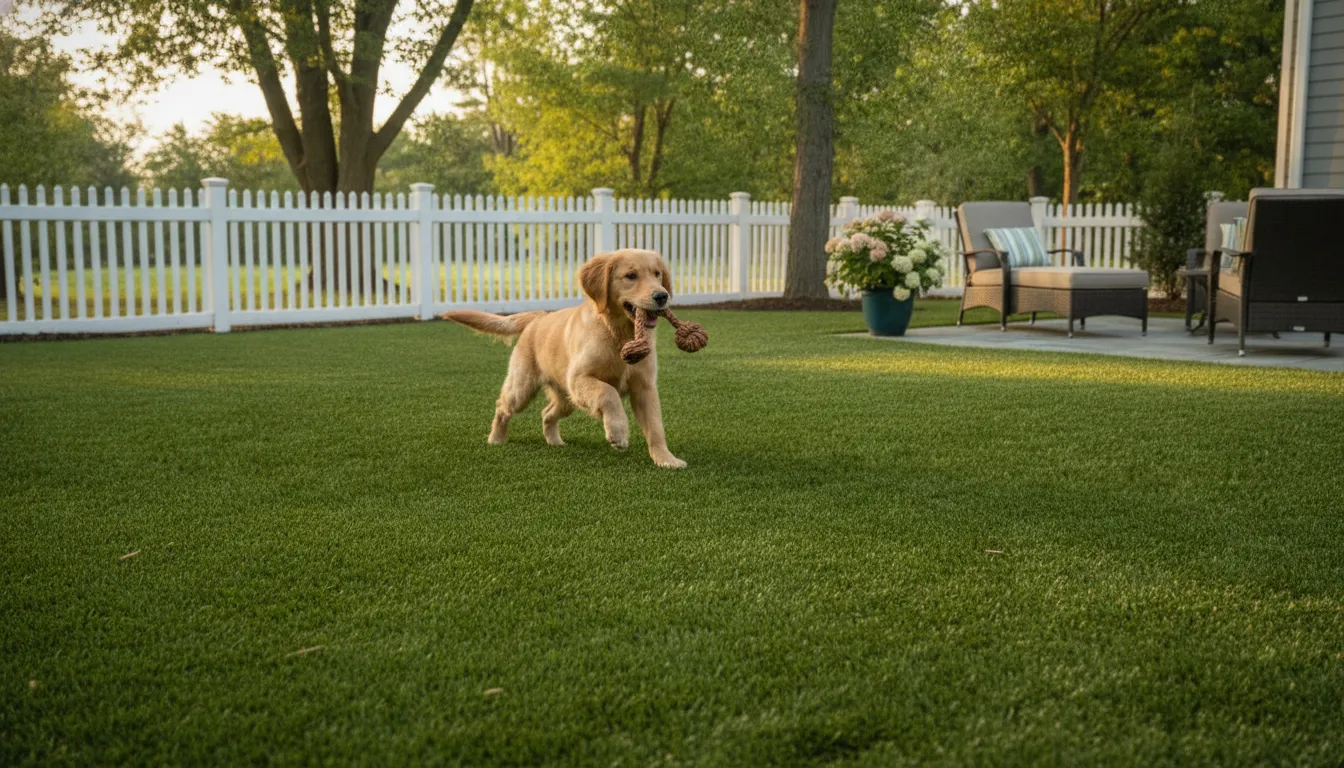 For pet areas, drainage and infill deserve additional attention. Infill helps stabilize the turf, keep fibers upright, and improve comfort underfoot. Poor drainage can leave odors, standing water, or muddy edges around the installation. These problems are difficult to correct after turf has been glued and secured. So the cheapest path is not always the lowest artificial grass installation cost over the life of the project. Professional installation can also be more cost-effective when the comparison includes reduced watering, mowing, and fertilization expenses. Synthetic turf requires far less annual maintenance than a natural lawn, with estimated maintenance costs of roughly $0.10 to $0.20 per square foot. The right decision depends on the site, but a careful installation protects the materials and helps the system deliver its expected durability. Review how to lay artificial turf before deciding whether your project is suitable for DIY work.
Is Artificial Grass Worth the Investment for Your Home?
The right artificial grass project is more than a lawn replacement. It can create a consistent, usable outdoor area for entertaining, pets, and everyday family time while reducing the recurring work associated with mowing, watering, and fertilizing. That combination makes the investment easier to evaluate than the installation price alone. Professional turf installation can also support property value by improving the appearance and function of an outdoor space. A neat, low-maintenance lawn is especially useful when it is designed as part of a larger plan rather than installed as an isolated rectangle. Gappsi’s project guidance identifies attractive, functional outdoor entertainment areas as a potential benefit of professional turf installation. The result depends on the property, design, and workmanship, so artificial grass should not be treated as a guaranteed return.
Where does the long-term value come from?
Durability and predictable upkeep are central to the cost-benefit calculation. A properly built turf system includes the appropriate base, secure edges, drainage, and infill. These details help reduce problems such as visible seams, premature wear, and water pooling. Artificial grass also eliminates routine mowing and can reduce water use, while annual maintenance is generally limited to cleaning and occasional care. Industry research estimates synthetic turf maintenance at approximately $0.10 to $0.20 per square foot annually, although actual costs vary by use and site conditions. Long Island homeowners should also account for the value of correct site preparation. Local soil, slopes, and drainage conditions affect how well the base performs over time. Paying for a plan that addresses those conditions can be more cost-effective than choosing the lowest initial bid and later correcting settlement, runoff, or drainage failures.
How can turf improve the whole outdoor layout?
Turf becomes more valuable when it works with the rest of the property. It can transition cleanly into landscape design, patios, walkways, planting beds, and outdoor structures. Curved edges and coordinated materials may add design complexity, but they can produce a more natural connection between the lawn and entertainment areas. Gappsi’s complete outdoor transformation model brings planning, material supply, and construction together under one provider, which can simplify coordination across those elements. Gappsi also uses 3D design visualization before construction so homeowners can review the proposed layout, transitions, and usable areas in advance. This helps clarify what the artificial grass installation cost includes and reduces surprises during construction. Serving Nassau and Suffolk Counties, Gappsi can evaluate the specific site before recommending a turf system. Visit the Gappsi homepage to review the broader design-build approach and decide whether artificial grass fits your property’s long-term goals. Gappsi’s team can review your site, layout, and drainage before you commit to a turf system, so you understand exactly what the artificial grass installation cost includes. Contact Gappsi through our contact page
Frequently Asked Questions
How much does it cost to have an artificial lawn installed?
Artificial grass installation cost depends on the turf system, square footage, site access, excavation, grading, drainage, infill, and design details. A broad U.S. reference range is $8 to $12 per square foot, but a Long Island project may fall outside that range when the existing lawn needs substantial base work. A site evaluation provides a more useful estimate than a material-only price. Industry pricing reference.
How much is 1,000 square feet of artificial grass?
Using the broad $8 to $12 per-square-foot reference, 1,000 square feet would represent approximately $8,000 to $12,000 before project-specific adjustments. The final quote should account for sod removal, excavation, drainage, edge restraints, seams, infill, labor, and disposal, not just the rolls of turf.
What factors influence artificial grass installation cost on Long Island?
The largest variables are the condition of the existing lawn, the amount of excavation and grading required. Drainage needs, turf selection, project shape, access for equipment, and integration with pavers or planting beds. Long Island soil and weather conditions also make a properly designed base and drainage plan important for long-term performance.
Is professional artificial grass installation worth the cost?
Professional installation can be worthwhile when durability, drainage, and a clean finish matter. The work includes preparing the base, securing and tensioning the turf, managing seams, and adding infill. These steps help reduce pooling, visible seams, wrinkles, and premature wear, issues that can make a low initial price more expensive to correct later.
Ready to Plan Your Artificial Grass Installation?
A site-specific review can help you choose the right turf, base preparation, and drainage approach for your Long Island property. Gappsi’s team can discuss your project, answer your questions, and prepare a free consultation and artificial grass installation quote. Contact Gappsi through our contact page