


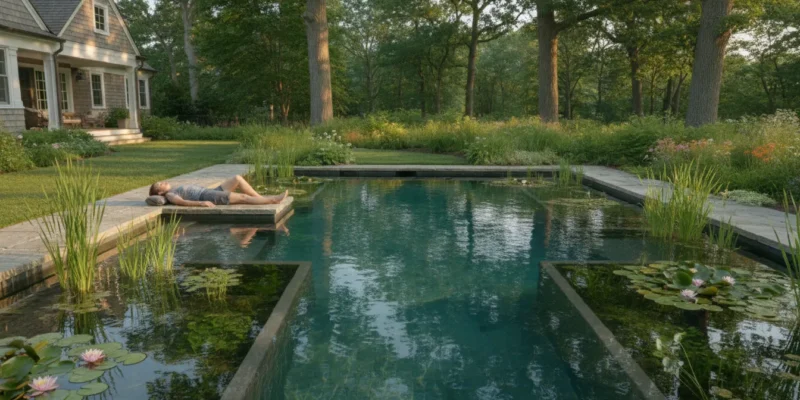
For Long Island homeowners, a pool can be more than a separate rectangle of treated water. It can be designed as part of the landscape, with stone, plants, and circulation working together to create a quieter, more natural setting. The key is understanding how that system fits your yard, maintenance expectations, and plans for using the pool.
Contact Gappsi through our contact page
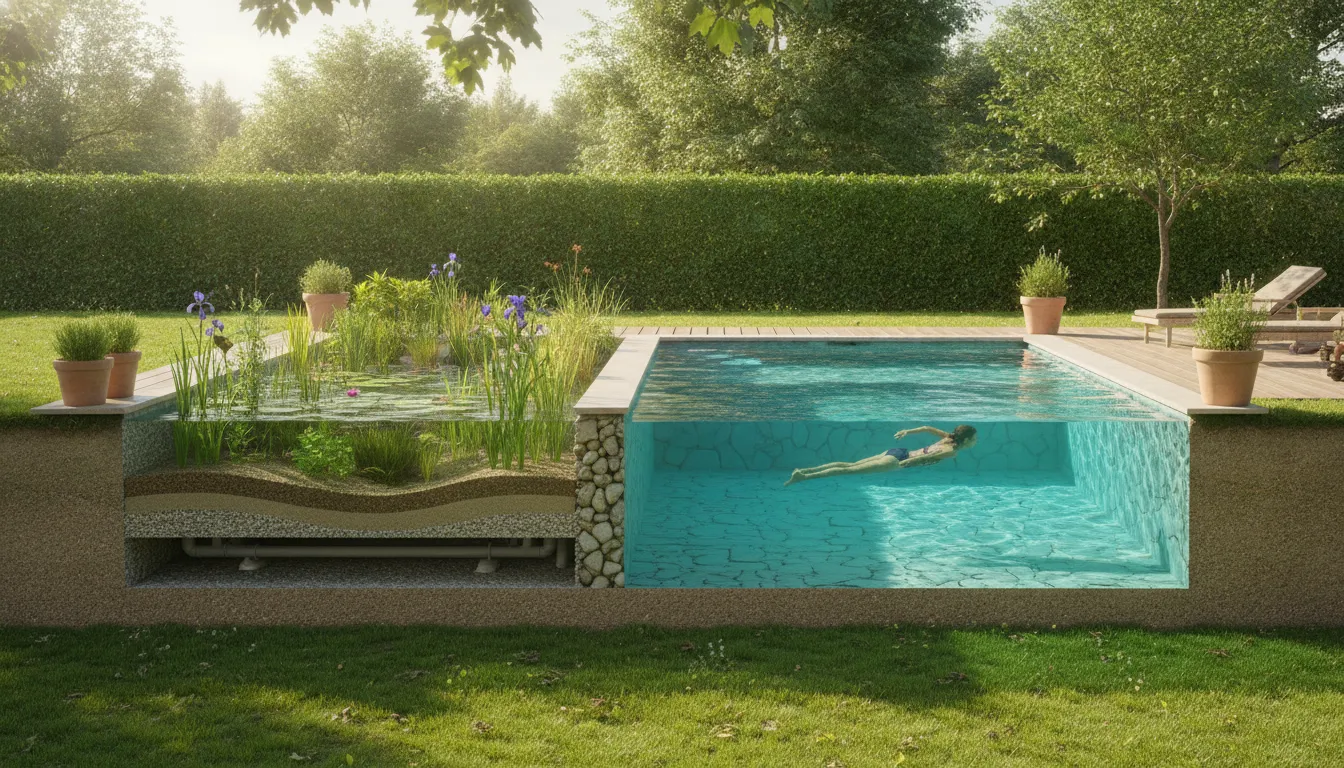
A natural swimming pool uses biological filtration and a plant-based regeneration zone instead of conventional chlorine treatment. Water circulates between the swimming area and the regeneration zone, where gravel, beneficial bacteria, and aquatic plants help support water quality. The regeneration zone commonly takes about 30 to 50 percent of the pool’s surface area, so its design must be considered from the beginning.
That balance of swimming space and living filtration is what separates this approach from simply adding landscaping around a standard pool. Before choosing materials or features, it helps to see how the circulation and regeneration zones function together.
What Is a Natural Swimming Pool, and How Does It Work?
A natural swimming pool is a designed swimming environment that uses biological filtration and a planted regeneration zone instead of relying on conventional chemical treatment alone. The swim area is separated from, or connected to, a shallow area filled with plants, gravel, and other filtration media. The result is a pool that combines a defined place to swim with a landscape feature that supports water treatment. For Long Island homeowners, the design must account for available yard space, drainage, circulation, and the relationship between the pool and surrounding hardscape.
The regeneration zone is a central part of the system, not an optional planting bed. It commonly occupies about 30 to 50 percent of the pool’s surface area, creating enough room for the biological processes that help maintain water quality. Submerged plants take up nutrients, while beneficial bacteria colonize the gravel bed and other media. Together, these elements form the living filtration system. The regeneration-zone concept and its typical proportions are documented in Gappsi’s natural swimming pool guidance at gappsi.com.
How does water move through the system?
A pump continuously circulates water between the swimming area and the regeneration zone. Water leaves the swim area, moves through the planted and gravel filtration zone, and returns cleaner to the pool. This circulation keeps the system active and helps distribute water throughout the biological media. Proper site planning is important because poor flow can leave portions of the regeneration zone underused.
Unlike a conventional pool system that depends primarily on chemical dosing and mechanical equipment, a natural pool works as a closed-loop system. Water is repeatedly cleaned as it passes through the filtration medium, rather than being sent away after each cycle. The approach can also reduce dependence on external filtration devices when the system is correctly designed, although pumps and routine maintenance remain part of responsible ownership.
Gappsi provides a design-build approach for Long Island projects, coordinating the pool, regeneration zone, planting, circulation, and surrounding masonry as one plan. That integration matters because the pool’s appearance and performance depend on the entire site, not just the swimming basin.
Contact Gappsi through our contact page
How a Natural Pool Filters Water Without Chlorine
A natural pool replaces routine chemical disinfection with a living filtration system. Water moves through a planted regeneration zone, where submerged aquatic plants work alongside gravel or other stone media. The media bed provides a surface for beneficial bacteria, while the plants take up nutrients and help support the wider aquatic ecosystem. A pump keeps water moving between the swimming area and the regeneration zone so the system can continually process the water rather than leaving it stagnant.
This is biological filtration, not simply a decorative pond placed beside a pool. The size, depth, circulation path, planting plan, and filtration media must work together. In a properly engineered design, organic material is broken down as water passes through the biological environment, then the cleaner water returns to the swim area. The result is a closed-loop approach that uses the regeneration zone as an active part of the pool infrastructure.
How does biological filtration differ from chlorine treatment?
Chlorine systems disinfect by adding an active chemical to the water. That approach can be effective, but chlorine reacts with organic contaminants and can form disinfection by-products. An EPA study on biological filtration in engineered natural ponds describes biological treatment as a viable way to maintain water quality while minimizing disinfection by-product formation: EPA research on biological filtration.
A chlorine-free system also avoids chloramines, the compounds associated with the familiar pool smell and with skin or eye irritation. This does not mean a natural pool is unmanaged or automatically safe under every condition. Water quality depends on sound circulation, appropriate plant and media selection, debris control, and ongoing observation. Research has characterized microbial populations associated with natural swimming pools, reinforcing why the biological system must be designed and maintained as an engineered water environment: PubMed microbial characterization study.
For Long Island homeowners, the practical difference is a swimming environment shaped by plants, stone, and circulation instead of a chlorine dosing routine. Gappsi can plan the filtration zone as part of the complete landscape, coordinating the pool structure with the surrounding hardscape and planting design.
Natural Pool vs Gunite Pool: Which Fits Your Backyard?
The right pool depends on more than the shape of the swimming area. It also depends on how you want water treated, how much landscape you can dedicate to the system, and how you plan to maintain the property. A natural swimming pool uses biological filtration and a plant-based regeneration zone, while a traditional gunite pool typically relies on a chlorine treatment system. Both can be carefully designed for a Long Island backyard, but they create distinctly different outdoor experiences.
| Consideration | Natural pool | Gunite pool |
|---|---|---|
| Water treatment | Biological filtration through a regeneration zone with plants, gravel, and beneficial bacteria. The water circulates through a closed-loop system without routine chlorine treatment. | A pump and filtration system work with chlorine or another sanitizer to control water quality. Chemical levels require regular testing and adjustment. |
| Water feel | Soft, natural-feeling water without chloramines, the chlorine by-products associated with eye and skin irritation. This can suit homeowners who are sensitive to pool chemicals. | Clean, familiar swimming water managed through a conventional sanitation program. The experience depends on maintaining the treatment system within its recommended ranges. |
| Appearance | A pond-like setting with aquatic plants, natural stone, and a separate regeneration zone. The larger overall footprint can make the pool feel like part of the landscape. | A highly customizable swimming area with flexible shapes, depths, finishes, coping, lighting, and surrounding hardscape. The design can be formal, contemporary, or integrated with an existing yard. |
| Maintenance | Maintenance centers on balancing the ecosystem, monitoring plant health, removing debris, and keeping water levels consistent. A well-designed system may reduce reliance on external filtration devices and energy over time. | Maintenance includes testing and balancing sanitizer and pH levels, cleaning filters, managing debris, and servicing mechanical equipment. Seasonal closing and opening procedures are also part of ownership. |
| Upfront cost | Costs vary with site conditions, size, and filtration complexity. Natural pools often cost more than a comparable swimming area because they need a larger surface and a dedicated filtration zone. | Gappsi’s published Long Island baseline for gunite swimming pools is $90,000 to $140,000. The final price depends on dimensions, finishes, access, excavation, equipment, and hardscape. |
| Winterization | The ecosystem can go dormant during cold months, so the system does not require winterization chemicals. Seasonal care still matters, including debris management and inspection. | Typically requires a conventional winter closing, including lowering or managing water, protecting equipment, and adding the products specified for the sanitation system. |
How should Long Island homeowners choose?
Choose a natural pool when chemical-free swimming, a softer visual transition into the landscape, and an ecological water system are central to the project. Allow enough room for the regeneration zone and plan for an experienced design team, since circulation and grading affect performance. Choose gunite when you want maximum control over the pool’s geometry, finishes, depth changes, and compact backyard layout. Reviewing swimming pool construction materials can also help clarify how construction choices affect the final project. Gappsi can evaluate the site, compare the two approaches, and coordinate the pool with the surrounding landscape.
How Much Does a Natural Swimming Pool Cost on Long Island?
There is no responsible one-size-fits-all price for a natural swimming pool on Long Island. Construction costs vary with the size of the swimming area, the size and complexity of the biological filtration system, and the conditions of the property. A narrow, straightforward site may require a very different plan from a sloped backyard with limited access, extensive excavation, or substantial surrounding masonry.
As a useful local reference point, Gappsi’s published baseline for a gunite pool on Long Island is $90,000 to $140,000. That range is not a quote for a natural system, but it helps establish the starting scale for a professionally designed pool project. A natural swimming pool will typically trend higher than a comparable gunite pool because it requires additional surface area and a dedicated filtration system.
How does the regeneration zone affect the budget?
The regeneration zone is one of the defining cost factors. It uses plants, gravel, and beneficial bacteria to support biological filtration, rather than relying on a conventional chemical treatment approach. In many natural pool designs, this zone accounts for approximately 30% to 50% of the total surface area. That means the project includes more excavation, waterproofing, edging, planting, circulation equipment, and finish work beyond the area used for swimming.
The exact proportion depends on the design and filtration strategy. A larger or more complex system can increase both installation time and equipment requirements. The goal is not simply to add a planted bed, but to create a balanced circulation system that moves water between the swimming area and regeneration zone. This is why filtration design should be evaluated alongside pool size, not treated as an afterthought.
Which site conditions change the cost?
Long Island properties can vary significantly in access, grade, soil, drainage, existing hardscape, and available yard space. A site assessment may reveal the need for retaining structures, revised drainage, difficult material delivery, tree protection, or careful integration with patios and planting beds. These conditions can influence the construction sequence and the amount of supporting work required.
When comparing proposals, ask what is included in the excavation, filtration, circulation, coping, planting, and surrounding hardscape allowances. Reviewing swimming pool construction materials can also clarify how different systems affect the broader project. Gappsi provides swimming pool services from design through construction, allowing the site, water system, and finished landscape to be planned as one project.
Design Considerations for a Long Island Backyard
Designing a natural swimming pool for a Long Island property requires more than selecting a shape and finish. The pool, regeneration zone, grading, planting, and surrounding hardscape must work as one system. That matters in both Nassau and Suffolk County, where backyard dimensions, drainage patterns, mature landscaping, and coastal weather conditions can vary significantly from one property to the next.
Start with the site, grading, and water circulation
A site assessment should establish how water moves across the property before excavation begins. Proper grading and drainage help protect the swimming area from unwanted runoff, while the layout must support consistent circulation between the swim zone and regeneration zone. Site design is critical because inadequate circulation can undermine the biological filtration process. The pump and flow paths should be planned around the property’s slope, available space, access points, and relationship to the house.
Long Island homeowners may need to balance a compact backyard with the space required for planted filtration. A regeneration zone commonly occupies a substantial portion of the overall system. So the design should resolve circulation and usable swimming space together rather than treating the planted area as an afterthought.
Use native planting to support the regeneration zone
Native aquatic and marginal plants can strengthen the ecological function of the regeneration zone while giving the pool a landscape-led appearance. Plants work alongside the gravel or other filtration media, where beneficial bacteria support water purification. Selecting plant material suited to the local climate can also make seasonal care more predictable and help the pool feel connected to the surrounding Long Island landscape.
The planting plan should be practical as well as attractive. It needs clear maintenance access, controlled edges, and enough separation between planted areas and the primary swimming space. A thoughtful arrangement can create a natural transition without allowing the regeneration zone to overwhelm a smaller property.
Integrate stone coping and the surrounding hardscape
Natural stone coping provides a durable edge at the waterline and helps connect the pool to patios, walkways, retaining walls, and outdoor living areas. Hardscape integration also influences how people enter the water, move through the yard, and use the space when they are not swimming. Materials should be selected for their texture, drainage behavior, durability, and relationship to the home’s existing architecture.
Many natural pools are designed to suggest a pond or lake, but the finished project still needs deliberate transitions and safe, comfortable circulation. Gappsi manages these details as an integrated design-build project, coordinating the concept, pool construction, planting, masonry, and finishing work from one plan to completion. Review Gappsi’s custom swimming pool designs to see how the pool can become part of a complete backyard rather than a separate feature.
Maintaining a Chemical-Free Natural Pool
Maintenance follows a different logic when the pool relies on living filtration instead of chlorine. Rather than repeatedly adjusting chemical levels, the goal is to keep the regeneration zone healthy and functioning. Plants, gravel, beneficial bacteria, circulation, and water level all work together as one managed ecosystem. This approach still requires attention, but the work is focused on supporting the system instead of treating the water after the fact.
Healthy aquatic plants are central to that balance. Native plants selected for the site can support filtration and add ecological value, but they should not be allowed to become overgrown or unhealthy. Routine care includes checking plant condition, trimming or thinning when needed, and watching for changes that could affect water movement through the regeneration zone. The maintenance principle is simple: preserve enough healthy plant growth to support filtration while keeping the zone open and active.
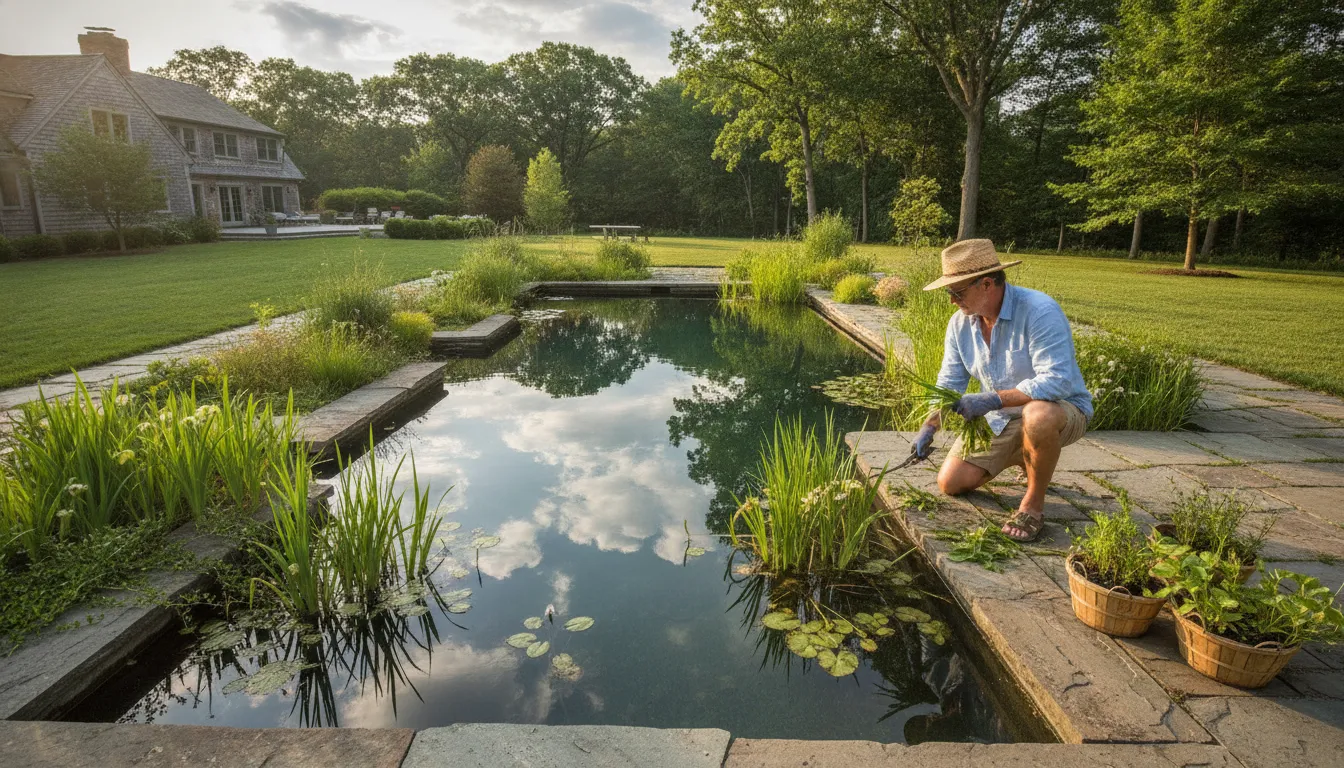
Debris is another practical concern. Leaves, fallen branches, and excess organic material should be removed from the swimming area and regeneration zone before they accumulate. Regular observation makes this easier, particularly after storms or during heavy fall leaf drop. A maintenance plan should also include checking pumps, skimmers, and circulation paths so water continues moving between the swim area and the regeneration zone. Proper circulation can help minimize unwanted wildlife activity, although a natural setting may still attract some local animals.
A simple seasonal routine can keep the system balanced:
- Inspect the swimming area and regeneration zone each week and remove debris as it appears.
- Check plant condition, trimming or thinning growth that blocks water movement.
- Verify pumps, skimmers, and circulation paths are clear and working.
- Monitor water levels and restore them to the design level after evaporation or heavy rain.
Consistent water levels matter because the filtration system must remain properly connected across the regeneration zone. Seasonal evaporation and heavy rainfall can change the balance, so levels should be monitored and corrected according to the system design. A well-designed natural pool may also use less external filtration equipment, which can reduce energy consumption over time. The exact savings depend on the equipment and design, but minimizing unnecessary mechanical filtration is one benefit of a functioning biological system.
Cold weather maintenance is different as well. The ecosystem goes dormant, so the pool does not need the same chemical winterization approach used for a conventional pool. Owners should still follow the builder’s recommendations for protecting pumps, circulation equipment, and physical components, while avoiding the assumption that winterizing chemicals are required. Gappsi can coordinate the design and ongoing considerations as part of a complete outdoor project. For related guidance, see our swimming pool maintenance guide.
Contact Gappsi through our contact page
Frequently Asked Questions
How does a natural swimming pool work?
A natural swimming pool circulates water between the swimming area and a separate regeneration zone. Submerged plants and gravel provide a setting for beneficial bacteria, creating a biological filtration process instead of relying on routine chlorine treatment. The regeneration zone commonly occupies about 30 to 50 percent of the pool’s surface area, so the site plan must allow enough room for effective circulation.
How expensive is it to build a natural pool?
There is no single price because the investment depends on pool size, filtration complexity, excavation, drainage, access, and the existing site. Natural systems may cost more than a conventional pool because they require a larger filtration landscape and more specialized design. Gappsi can evaluate the Long Island property and develop a scope around the homeowner’s goals.
Do natural swimming pools work?
They can work well when the swimming area, regeneration zone, pump system, plants, and filtration media are designed as one system. Biological filtration has also been studied in aquatic applications, including research on microbial populations associated with natural swimming pools (https://pubmed.ncbi.nlm.nih.gov/22608714/). Results depend on correct sizing, circulation, and ongoing ecosystem maintenance.
Do natural swimming pools attract mosquitoes?
Any outdoor water feature can affect local wildlife, but a properly designed natural pool uses circulation to reduce stagnant areas. Good site planning, moving water, plant management, and routine debris removal help limit mosquito-friendly conditions. Gappsi should review drainage, sun exposure, and surrounding landscape before construction.
What are the drawbacks of a natural pool?
The main tradeoffs are the larger footprint, higher design complexity, visible plant zones, and need to balance the living filtration system. Owners still monitor plant health, remove debris, and maintain water levels. The reward is a chemical-free swimming environment integrated with natural stone, planting, and the surrounding Long Island landscape.
Schedule Your Natural Swimming Pool Design Consultation
A natural swimming pool should balance the swim area, filtration zone, planting, and surrounding hardscape from the beginning. Gappsi can help you evaluate how a chlorine-free design may fit your Long Island backyard and priorities. To schedule a free consultation, Contact Gappsi through our contact page.